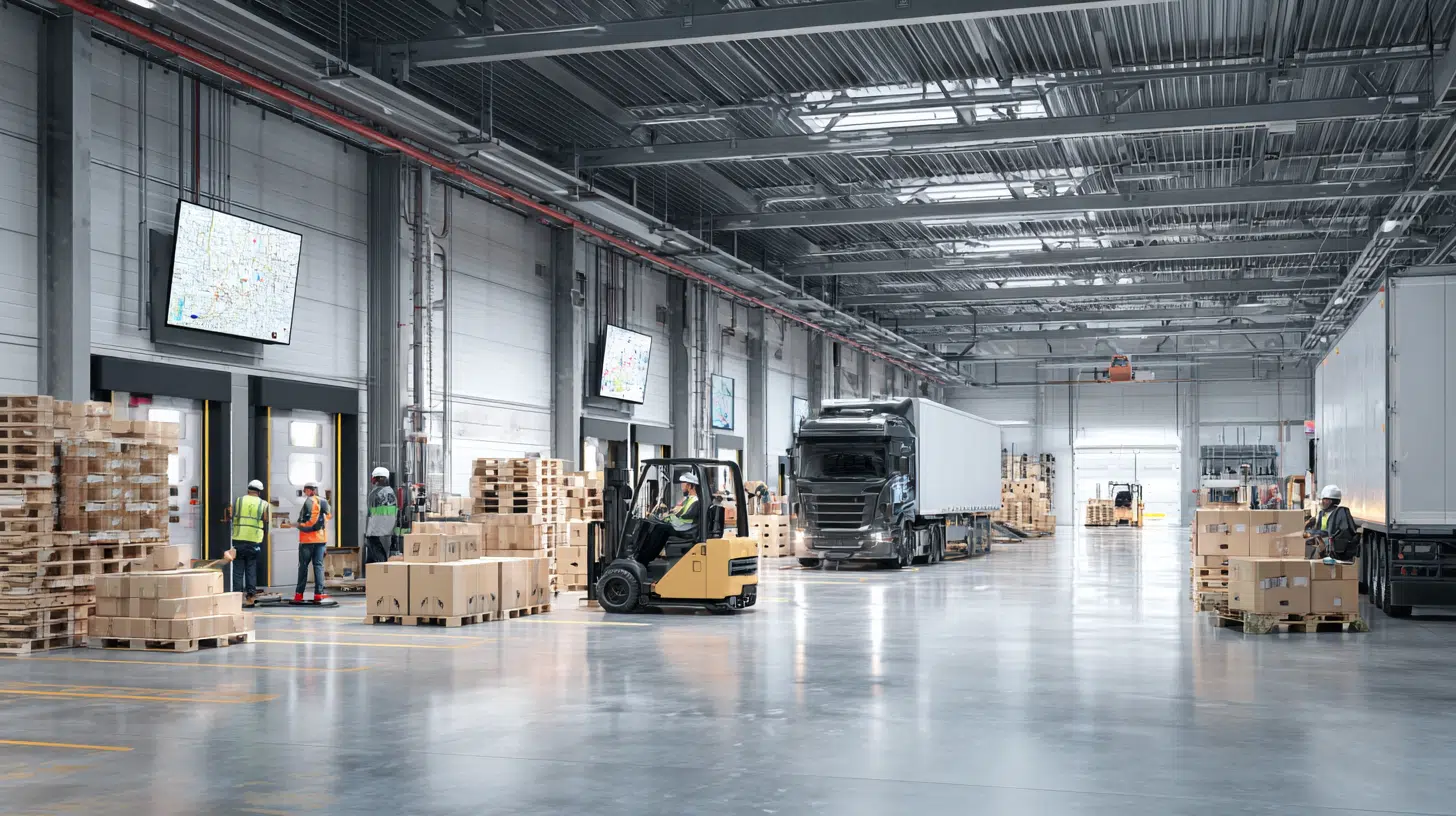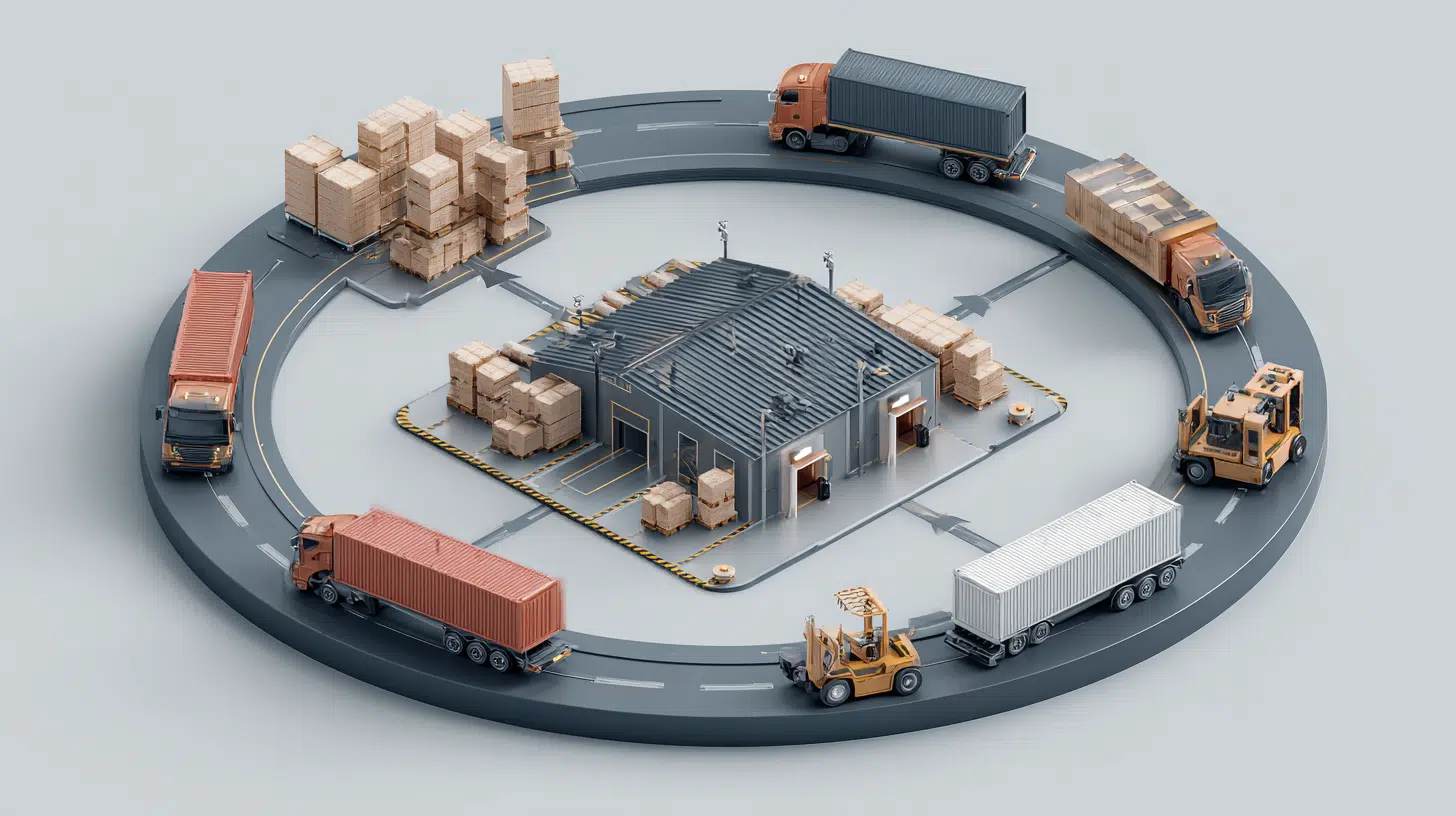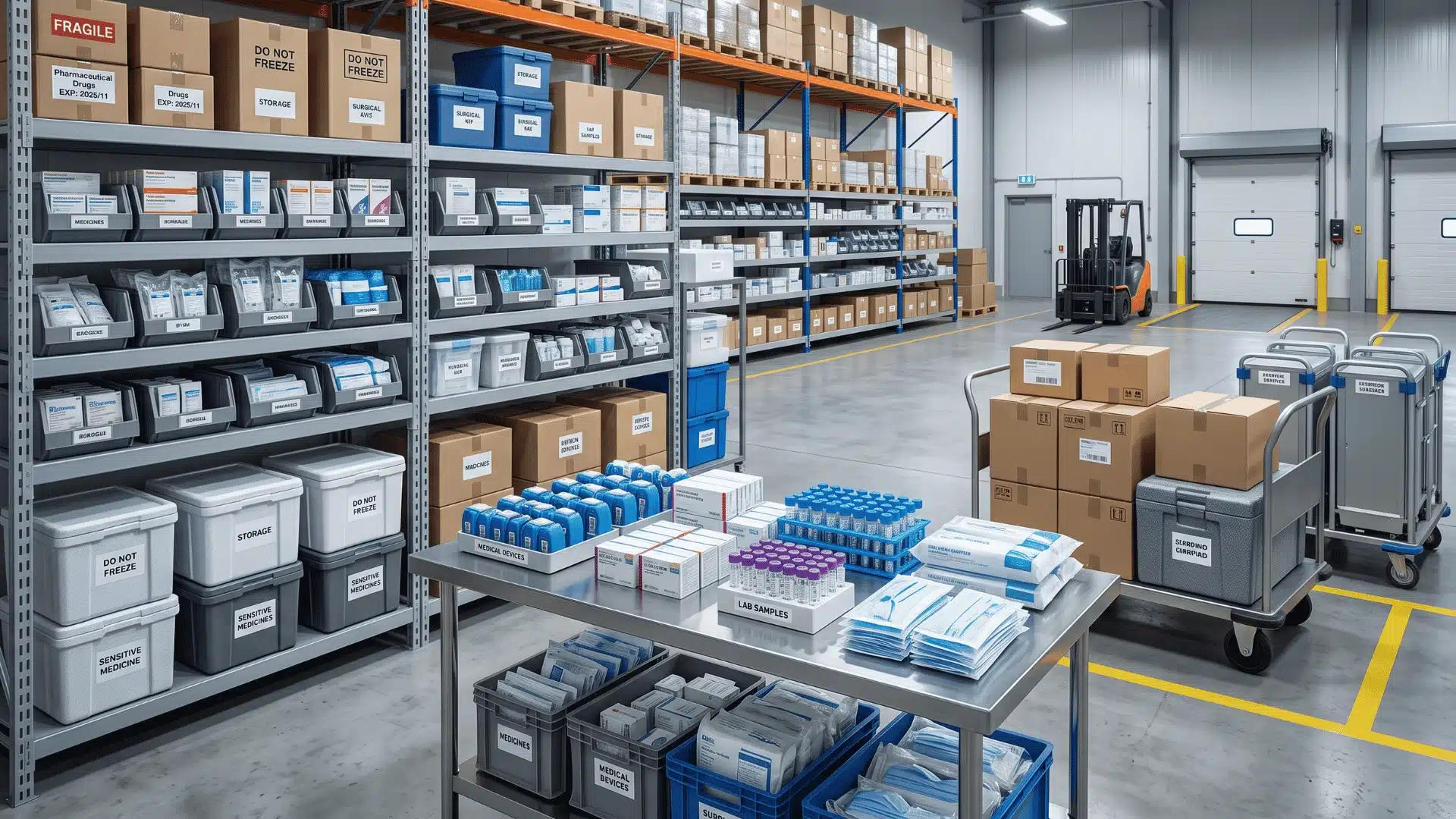
Healthcare depends on more than doctors, treatments, and medical facilities. Behind every successful procedure is a supply network that keeps essential products available at the right time.
Healthcare logistics manages this hidden system, where timing, accuracy, and coordination can directly affect healthcare operations.
Understanding how medical products move through the supply chain reveals the challenges involved and how technology is reshaping healthcare delivery processes.
What Is Healthcare Logistics?
Healthcare logistics is the process of managing, storing, and transporting medical products safely from manufacturers to healthcare facilities and patients.
It covers the movement of essential healthcare items such as medicines, medical devices, lab samples, and hospital supplies.
Unlike general logistics, healthcare logistics requires stricter controls because medical products can affect patient safety if they are damaged, delayed, or stored incorrectly.
General logistics mainly focuses on moving goods efficiently while controlling costs. Healthcare logistics also prioritizes product quality, safety, tracking, and regulatory requirements.
Healthcare products often need special handling because they may have specific storage conditions, short shelf lives, or strict delivery timelines.
Examples include:
- Medicines that require controlled temperatures to remain effective
- Medical devices that need careful packaging during transportation
- Lab samples that must reach testing facilities quickly
- Hospital supplies that need reliable availability during patient care
Healthcare logistics solutions help organizations manage these challenges by improving storage, transportation, tracking, and supply chain coordination.
How Does Healthcare Logistics Work?
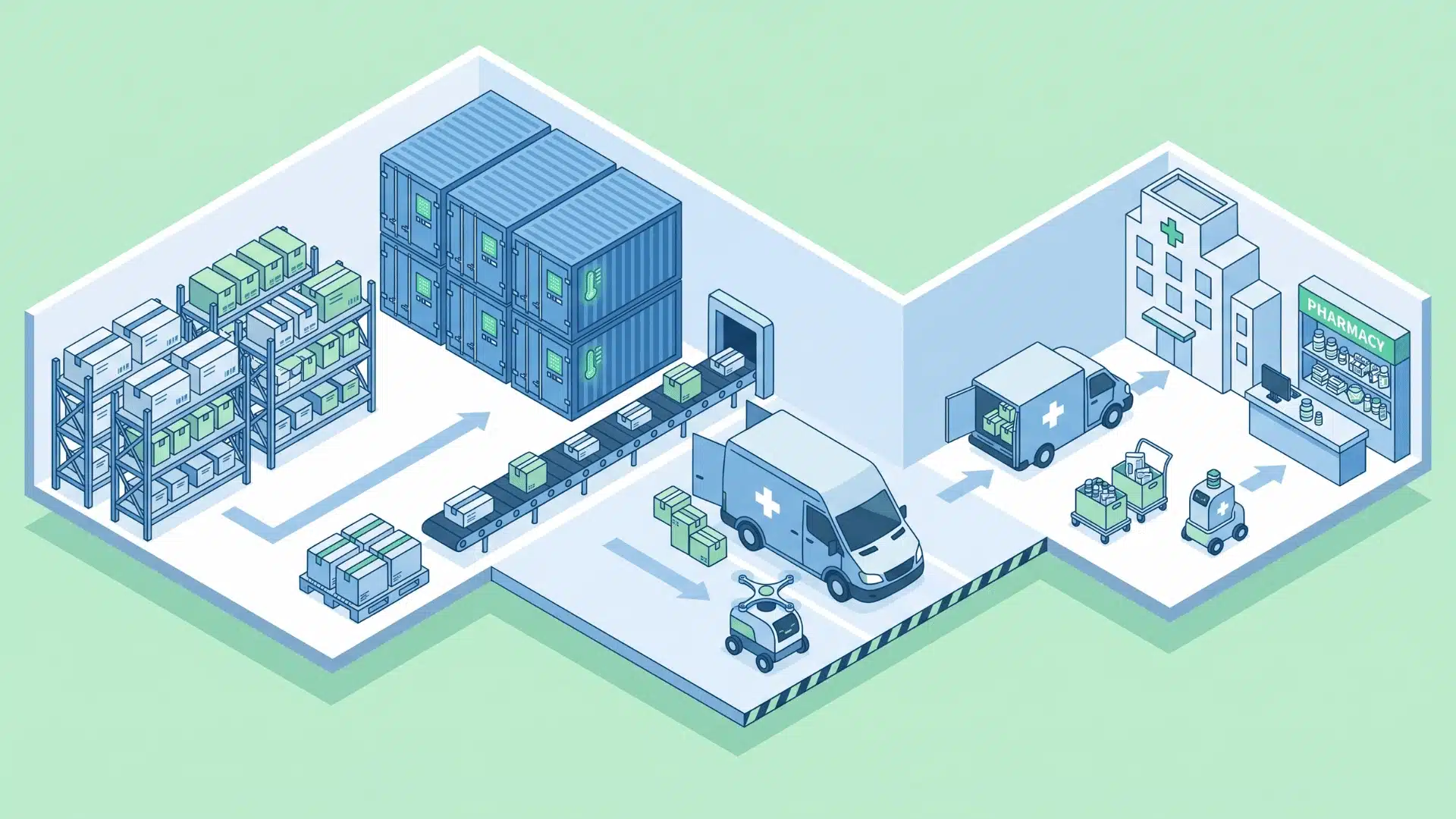
Healthcare logistics follows a structured process that moves medical products through planning, storage, transportation, and delivery while maintaining safety standards.
Step 1. Manufacturing and Supply Planning
Healthcare logistics begins with producing medicines, medical equipment, and other healthcare products based on expected demand.
Companies use demand forecasting to estimate future needs and prevent shortages. Inventory planning ensures enough supplies are available without creating excess stock.
Step 2. Storage and Warehousing
Medical warehouses store healthcare products under controlled conditions before distribution. These facilities manage inventory levels, product tracking, and proper organization.
Temperature requirements are critical for items like vaccines and certain medicines that need specific storage environments.
Step 3. Transportation and Delivery
Healthcare transportation moves products from warehouses to hospitals, pharmacies, clinics, and other healthcare locations.
Tracking systems monitor shipments, while proper packaging and handling protect products during delivery.
Step 4. Final Delivery to Patients
The final stage connects healthcare products with patients through pharmacies, home healthcare services, and urgent supply deliveries.
Reliable distribution helps patients receive medicines and medical support when they need them.
Types of Healthcare Logistics
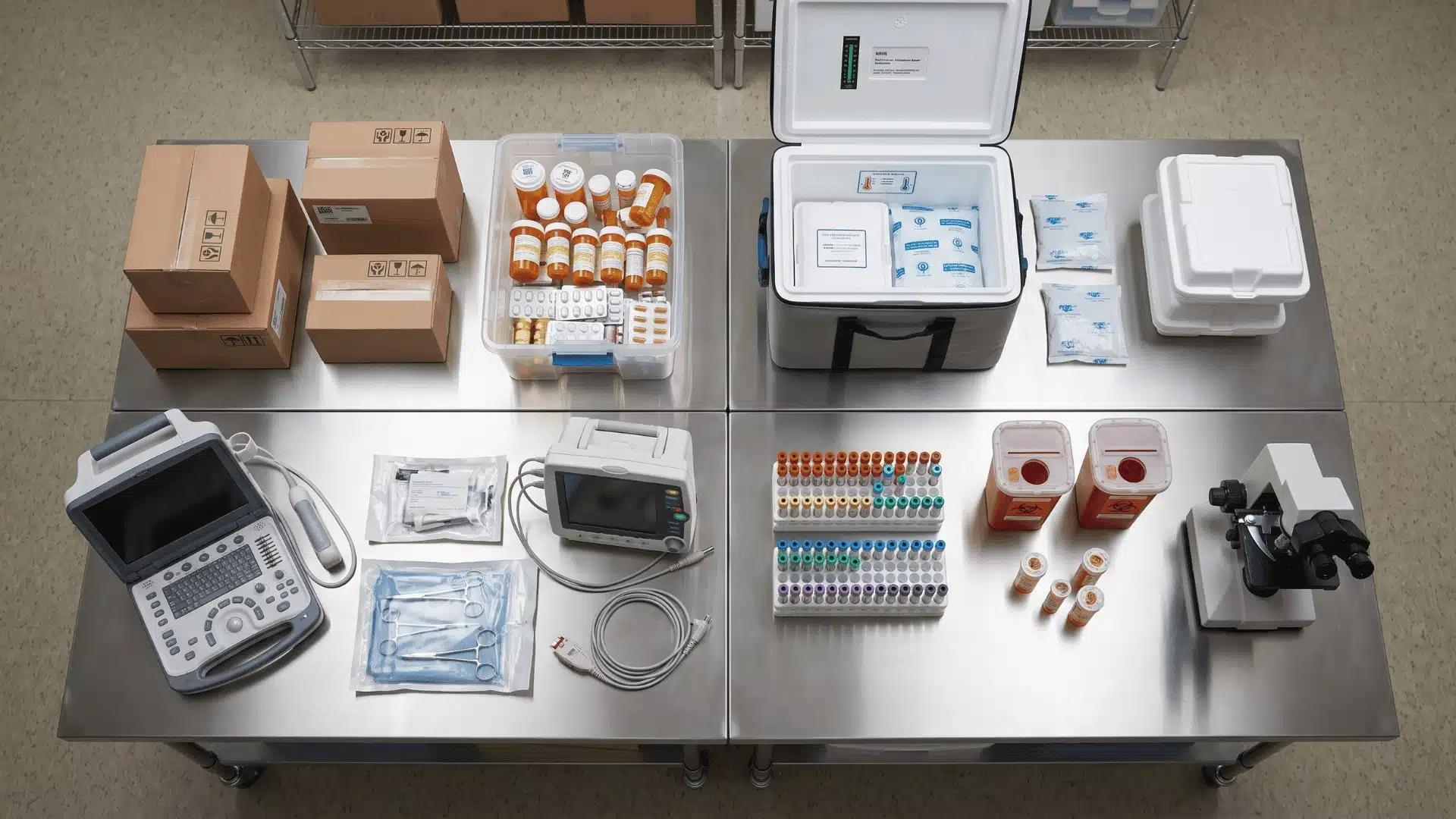
Healthcare logistics includes several specialized categories, each designed to handle different medical products, storage needs, and delivery requirements safely.
1. Pharmaceutical Logistics
Pharmaceutical logistics manages the storage and distribution of prescription medicines from manufacturers to healthcare providers and pharmacies.
It requires careful handling, proper documentation, and controlled storage conditions to maintain drug quality throughout the supply chain.
2. Cold Chain Logistics
Cold chain logistics focuses on temperature-sensitive products such as vaccines and biologics that need consistent conditions during storage and transport.
Temperature monitoring systems track changes and help prevent damage caused by incorrect storage or transportation environments.
3. Medical Equipment Logistics
Medical equipment logistics handles the movement of hospital machines, surgical equipment, and large medical devices.
These items often require specialized packaging, careful transportation, and proper installation support due to their size and complexity.
4. Laboratory Logistics
Laboratory logistics manages the transportation of blood samples, testing materials, and other diagnostic items.
Because many samples are time-sensitive, deliveries must be fast, secure, and properly tracked to maintain accuracy.
Temperature Control in Healthcare Logistics
Temperature control is a key part of healthcare logistics because some medical products can lose effectiveness when stored incorrectly.
Vaccines, biologics, blood products, and certain medicines need controlled conditions during storage and transportation.
Healthcare logistics teams use refrigerated storage, insulated packaging, and monitoring systems to track temperatures throughout the supply chain.
These controls help maintain product quality from manufacturing facilities to hospitals, clinics, and patient locations.
Different healthcare products require specific temperature ranges based on their ingredients, stability, and medical purpose.
| Healthcare Item | Required Temperature Range | Reason for Temperature Control |
|---|---|---|
| Routine vaccines | 2°C to 8°C | Maintains vaccine safety and effectiveness during storage |
| Frozen vaccines | -15°C to -25°C | Keeps temperature-sensitive vaccine components stable |
| Ultra-cold vaccines | -60°C to -90°C | Protects products requiring extremely low storage conditions |
| Biologic medicines | 2°C to 8°C | Prevents damage to sensitive biological ingredients |
| Red blood cells | 1°C to 6°C | Preserves blood quality before transfusion |
| Platelets | 20°C to 24°C | Maintains usability with controlled storage conditions |
| Frozen plasma | -18°C or below | Keeps blood components stable for medical treatment |
| Insulin products | 2°C to 8°C | Helps maintain medicine effectiveness before use |
Importance of Healthcare Logistics
Healthcare logistics helps maintain dependable medical supply chains by ensuring healthcare providers have the right products available when and where they are needed.
1. Protects Medical Product Quality
Proper storage, handling, and transportation help protect medicines, medical devices, and other healthcare products from damage.
Controlled conditions and careful processes maintain product safety and effectiveness throughout the supply chain.
2. Improves Patient Care
Reliable healthcare logistics ensures hospitals, clinics, and pharmacies receive necessary medicines, equipment, and supplies on time.
Consistent availability supports better treatment outcomes and helps healthcare teams provide timely patient care.
3. Reduces Shortages
Inventory planning and supply tracking help organizations identify needs and prevent shortages of essential medical products.
Stronger coordination reduces delays caused by missing supplies and increases overall supply availability.
4. Supports Emergency Response
Efficient logistics allows rapid delivery of medical supplies during emergencies, disasters, and urgent healthcare situations.
Quick coordination helps healthcare facilities respond effectively when demand increases unexpectedly.
Healthcare logistics plays a major role during large-scale health programs. According to the World Health Organization, around 50% of vaccines are wasted globally, with supply chain issues and temperature failures contributing to losses.
5. Helps Providers Operate Efficiently
Organized supply chains reduce waste, improve resource management, and simplify daily healthcare operations.
Efficient logistics allows providers to focus more time and resources on patient care.
Key Challenges in Healthcare Logistics
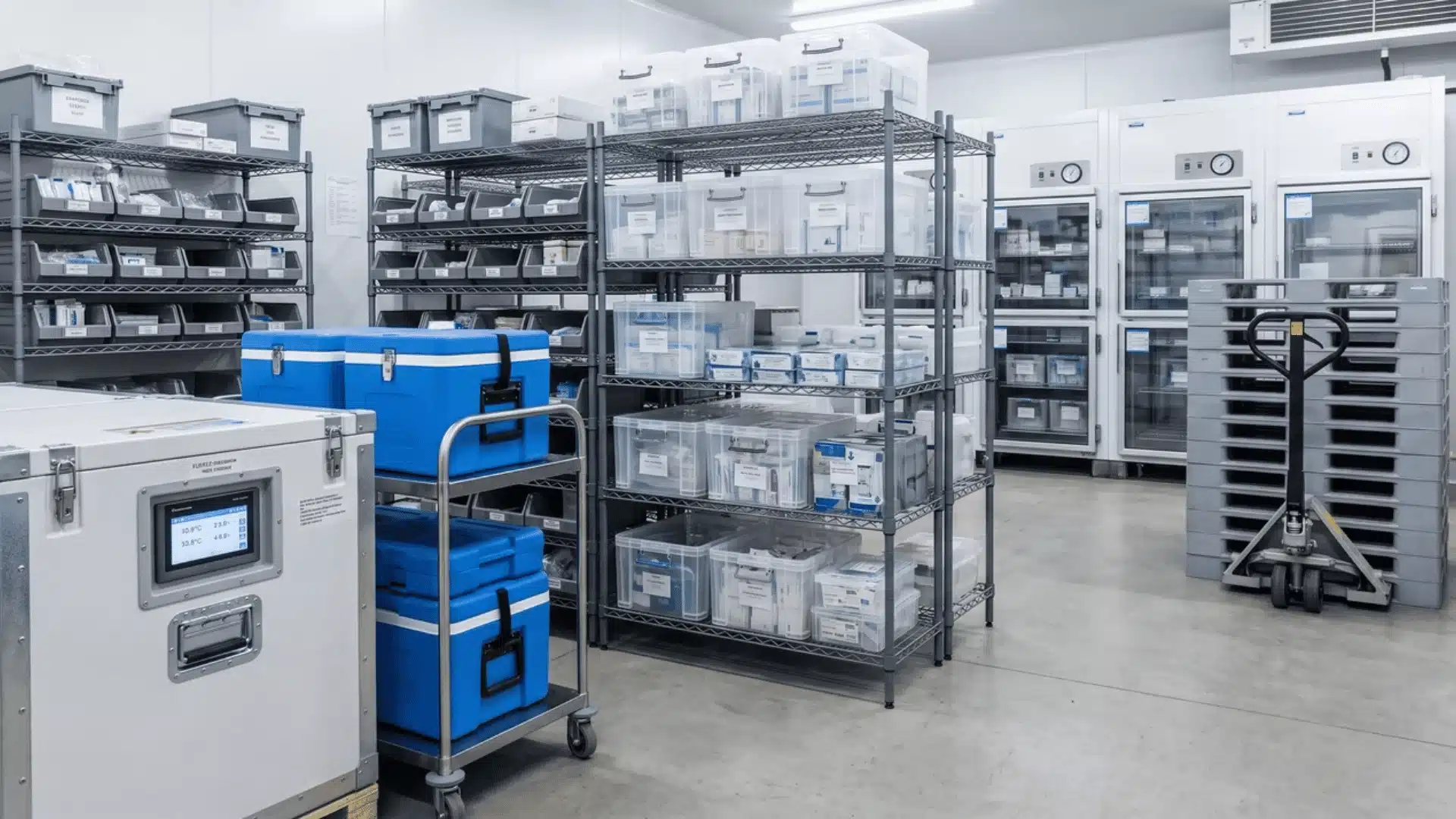
Healthcare logistics challenges can affect product safety, supply availability, and delivery timelines, making effective management essential for reliable healthcare operations.
1. Maintaining Temperature Control
Temperature-sensitive healthcare products require strict cold storage conditions to maintain their quality and effectiveness.
Products like vaccines and biologics need continuous monitoring during transportation to detect temperature changes and prevent damage.
2. Managing Supply Chain Disruptions
Healthcare supply chains can face shortages, delays, and unexpected disruptions caused by supplier issues or global events.
Backup planning, inventory management, and reliable suppliers help organizations maintain access to essential medical products.
3. Meeting Healthcare Regulations
Healthcare logistics must follow strict safety standards to protect products and maintain patient safety.
Accurate documentation and tracking requirements help verify product movement, storage conditions, and compliance throughout the supply chain.
4. Balancing Speed and Cost
Healthcare providers often need urgent deliveries for emergencies, but faster transportation can increase operational expenses.
The challenge is maintaining quick response times while controlling costs without affecting supply reliability.
Effects of Technology on Healthcare Logistics
Technology is reshaping healthcare logistics by improving visibility, decision-making, and operational control across complex medical supply networks.
AI and Predictive Planning
Artificial intelligence helps healthcare organizations analyze patterns and make better supply decisions.
Predictive planning uses demand data to estimate future requirements, helping reduce shortages and improve inventory availability.
IoT Tracking Systems
IoT tracking systems improve visibility across healthcare supply chains by monitoring products throughout storage and transportation.
These systems provide real-time temperature and location updates, helping teams identify issues before products are affected.
Automation and Robotics
Automation and robotics are improving warehouse operations by reducing manual tasks and increasing processing speed.
Automated warehouses can organize inventory, manage orders, and support faster fulfillment with fewer handling errors.
Healthcare Logistics vs. Traditional Logistics
Healthcare and traditional logistics share similar movement processes, but their priorities differ because medical products require specialized handling and controls.
| Area | Healthcare Logistics | Traditional Logistics |
|---|---|---|
| Product handling | Requires careful handling of medicines, medical devices, and sensitive healthcare products to protect quality. | Focuses on moving general goods with standard handling practices. |
| Storage requirements | Often needs controlled environments, such as cold storage for temperature-sensitive products. | Usually uses standard warehouses without specialized storage conditions. |
| Delivery urgency | Delays can affect patient care, making timely delivery a priority. | Delivery speed depends mainly on customer expectations and business needs. |
| Safety requirements | Requires strict procedures to prevent contamination, damage, and product failure. | Safety practices depend on product type and transportation needs. |
| Regulations | Must follow healthcare regulations, documentation rules, and tracking requirements. | Follows general transportation, storage, and business regulations. |
Healthcare logistics requires a higher level of control because medical products depend on precise handling, faster response, and stricter oversight.
Examples of Healthcare Logistics in Action
Healthcare logistics becomes most visible during critical situations where timely delivery, coordination, and product safety directly affect healthcare operations.
COVID-19 Vaccine Distribution
COVID-19 vaccine distribution showed how healthcare logistics supports large-scale public health programs.
Vaccines had to move from manufacturers to vaccination centers while maintaining strict storage conditions.
Some vaccines required ultra-cold storage near -70°C, while others needed refrigerated conditions between 2°C and 8°C.
Logistics teams managed cold storage facilities, temperature monitoring, shipment tracking, and delivery schedules to protect vaccine quality.
The global vaccination effort depended on coordination between manufacturers, governments, transportation providers, and healthcare facilities.
Hurricane Response and Emergency Medical Logistics
Hurricane response shows how healthcare logistics supports communities during emergencies. After major storms, supply chains must quickly deliver essential medical resources.
During Hurricane Katrina, healthcare logistics teams coordinated the movement of medicines, medical equipment, and emergency supplies to affected areas.
These operations required accurate inventory tracking, reliable transportation, and coordination between government agencies, healthcare providers, and relief organizations.
Temperature-sensitive products such as vaccines, insulin, biologic medicines, and blood products require controlled storage and transportation during emergency deliveries.
Vaccines and biologics often need 2°C to 8°C conditions, while blood products require specific ranges to maintain quality.
Future of Healthcare Logistics
Healthcare logistics is expected to become faster, smarter, and more integrated as technology advances supply chain operations.
- More automation: Robotics, automated warehouses, and digital systems will reduce manual tasks and improve accuracy in healthcare supply operations.
- Smarter supply chains: Data-driven tools will help predict demand, manage inventory, and prevent supply shortages before they affect healthcare providers.
- Better tracking systems: Advanced tracking will provide real-time visibility into product locations, storage conditions, and delivery status.
- Faster healthcare delivery: Growing healthcare demands will require quicker deliveries while maintaining safety, product quality, and compliance standards.
Conclusion
Healthcare logistics connects every stage of medical supply movement, from planning and storage to final delivery. It requires careful coordination because healthcare products demand accuracy, reliability, and strict quality control.
As healthcare systems grow more complex, better technology, smarter planning, and stronger tracking methods will shape how medical supplies reach providers and patients.
A well-managed healthcare logistics system does more than move products; it helps create a dependable support network behind everyday healthcare services.
See how smarter logistics practices can support faster, safer, and more reliable healthcare deliveries.
Frequently Asked Questions
What is the role of a healthcare logistics provider?
Healthcare logistics providers manage transportation, storage, tracking, and distribution processes to help healthcare organizations maintain reliable medical supply chains.
What is the difference between healthcare logistics and medical supply chain?
Healthcare logistics focuses on moving and storing medical products, while the broader supply chain includes sourcing, production, planning, and supplier management.
What skills are needed in healthcare logistics?
Healthcare logistics requires skills in inventory management, compliance, transportation planning, technology systems, and handling time-sensitive medical products.
Why is traceability important in healthcare logistics?
Traceability helps track medical products throughout their journey, supporting quality control, regulatory compliance, and quick responses to supply issues.