Commercial vehicle rules can get confusing fast, especially when one registration number is tied to several federal and state requirements. If you operate a truck, shuttle, bus, or another business vehicle, knowing when those rules apply can help prevent registration and compliance problems.
The question “what is a DOT number?” matters because this identifier connects a carrier with its safety and operating information. However, whether you need one depends on factors such as vehicle weight, passenger capacity, hazardous materials, and whether the operation is interstate or intrastate.
Here, you’ll learn what a USDOT number does, who may need one, how it differs from an MC number, and how the current FMCSA registration process works.
Understanding a DOT Number
A DOT number, officially called a USDOT number, is a unique identification number the Federal Motor Carrier Safety Administration (FMCSA) uses to identify a motor carrier or other registered entity.
The number identifies the company or regulated entity, not a specific vehicle. A carrier operating several qualifying vehicles generally uses the same USDOT number across its fleet.
FMCSA uses the number to connect an entity with safety information collected through inspections, crash investigations, audits, and compliance reviews. These requirements form part of the broader system behind commercial trucking operations and freight movement.
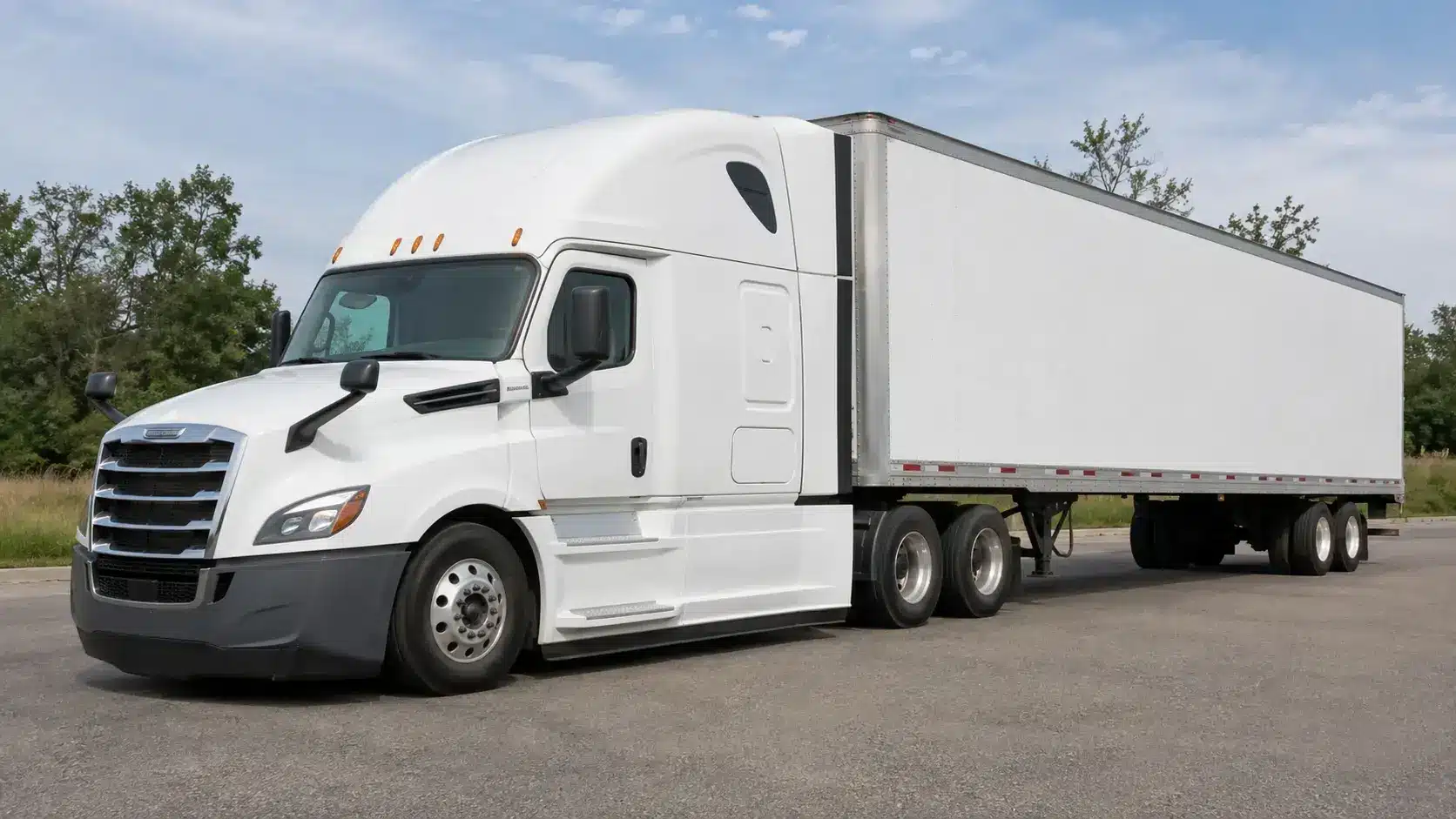
For covered commercial motor vehicles in interstate commerce, federal marking rules generally require the carrier’s legal or trade name and USDOT number to appear on both sides of the self-propelled vehicle. The markings must be clearly visible and legible.
A USDOT number should not be confused with a safety certification or permission to conduct every type of transportation operation. It primarily functions as an identifier tied to the carrier’s federal registration and safety information.
What Is a DOT Number Used For?
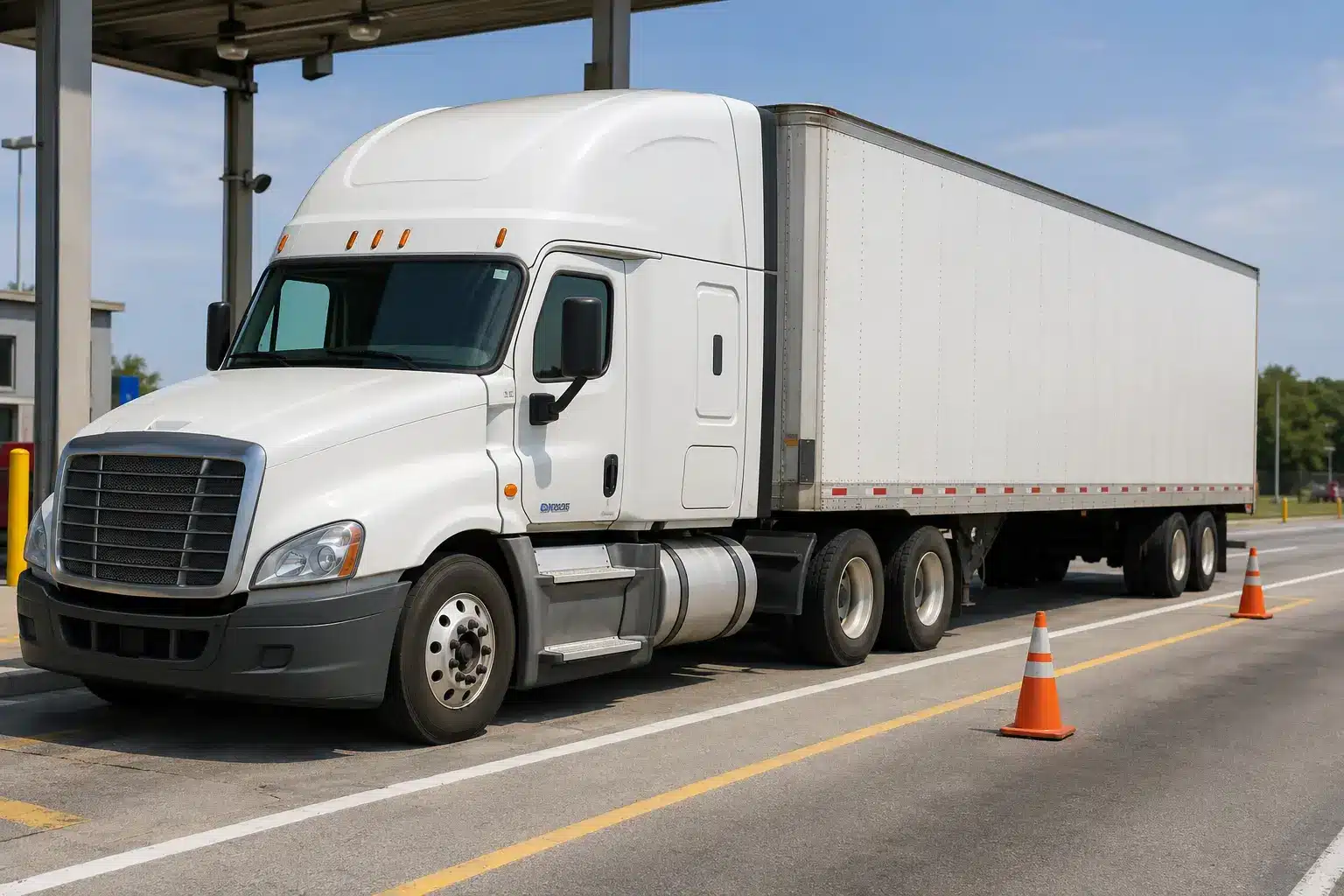
A USDOT number gives FMCSA a consistent way to identify a carrier and connect it with safety and operating information.
The carrier’s record can include:
Roadside inspections: Inspection results can become part of the carrier’s safety history and identify recurring vehicle, driver, equipment, or documentation problems.
Reportable crashes: Qualifying crashes involving commercial motor vehicles may become part of the information FMCSA uses to evaluate carrier safety.
Safety violations: Violations involving areas such as vehicle maintenance, driver qualifications, hours of service, or cargo securement may affect the carrier’s safety record.
Compliance reviews: FMCSA can examine company records and safety practices through audits, investigations, or compliance reviews.
Company information: Registration records can include the carrier’s legal name, address, operation type, fleet information, cargo classifications, and other business details.
The number itself does not mean a carrier has passed a safety certification. Instead, it provides an identifier through which FMCSA can collect and monitor relevant registration and safety information.
Who Needs a USDOT Number?
The requirement depends on more than the vehicle itself. Weight, cargo, passenger capacity, and operating area all affect whether a business needs a USDOT number.
A qualifying commercial motor vehicle used in interstate commerce generally requires a USDOT number, although specific federal and state requirements can vary by operation.
Interstate commerce also does not necessarily mean the vehicle crosses a state border. A shipment can be part of interstate transportation even when a particular driver operates entirely within one state.
1. Vehicles Meeting the Weight Limit
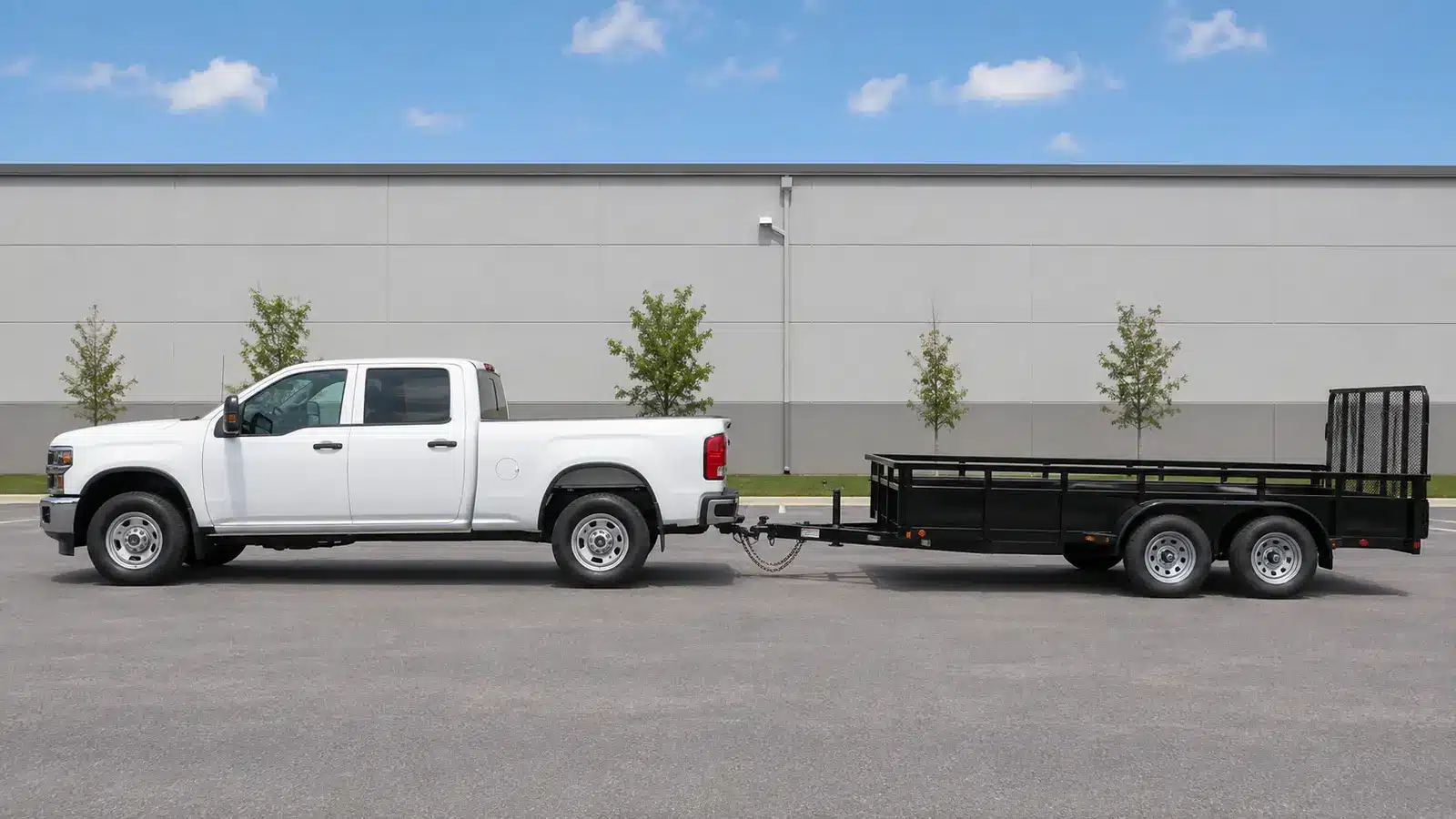
For interstate operations, a vehicle or vehicle combination can meet the federal commercial motor vehicle threshold when its GVWR, GCWR, GVW, or GCW reaches 10,001 pounds or more, using the greater applicable figure.
That means trailers can affect the calculation. A pickup operating by itself might remain below the threshold, while the same pickup combined with a sufficiently rated or loaded trailer may meet it.
Understanding straight truck weight classes can make these thresholds easier to interpret, but operators should check the actual ratings and operating weights of their own equipment.
The 10,001-pound threshold alone does not determine every USDOT requirement. Passenger transportation, hazardous materials, interstate operations, and state-specific intrastate rules can create separate registration requirements.
2. Vehicles Carrying Passengers
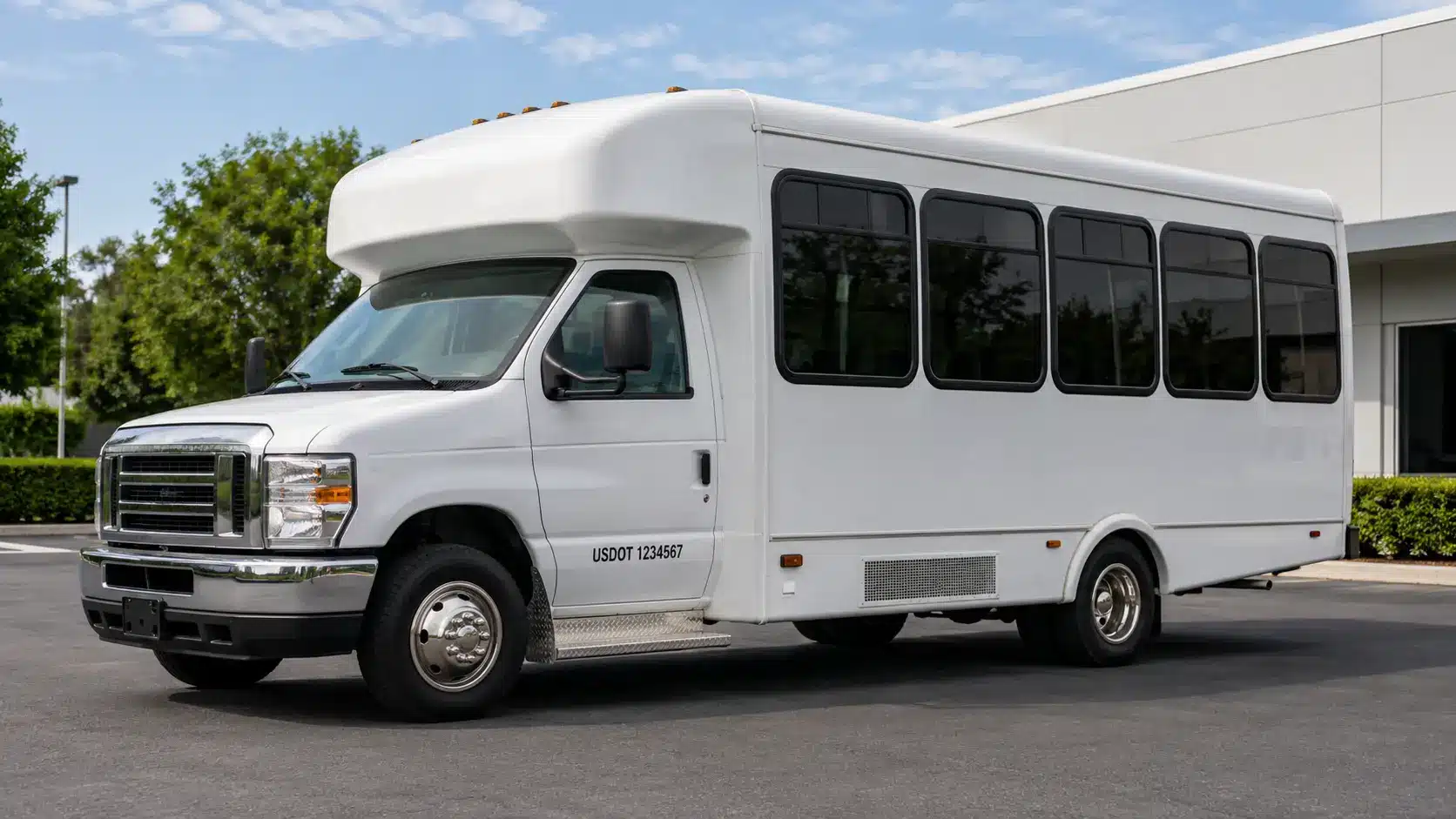
Passenger capacity can trigger federal requirements even when a vehicle weighs less than 10,001 pounds.
In interstate commerce, the FMCSA commercial motor vehicle definition covers a vehicle that is designed or used to transport more than eight passengers, including the driver, for compensation.
It also covers a vehicle designed or used to transport more than 15 passengers, including the driver, when it is not used to transport passengers for compensation.
These rules can apply to shuttle operators, bus companies, tour services, and other businesses transporting groups of passengers.
Passenger carriers should also determine whether separate operating authority, insurance, or state requirements apply to their operation.
3. Vehicles Carrying Hazardous Materials
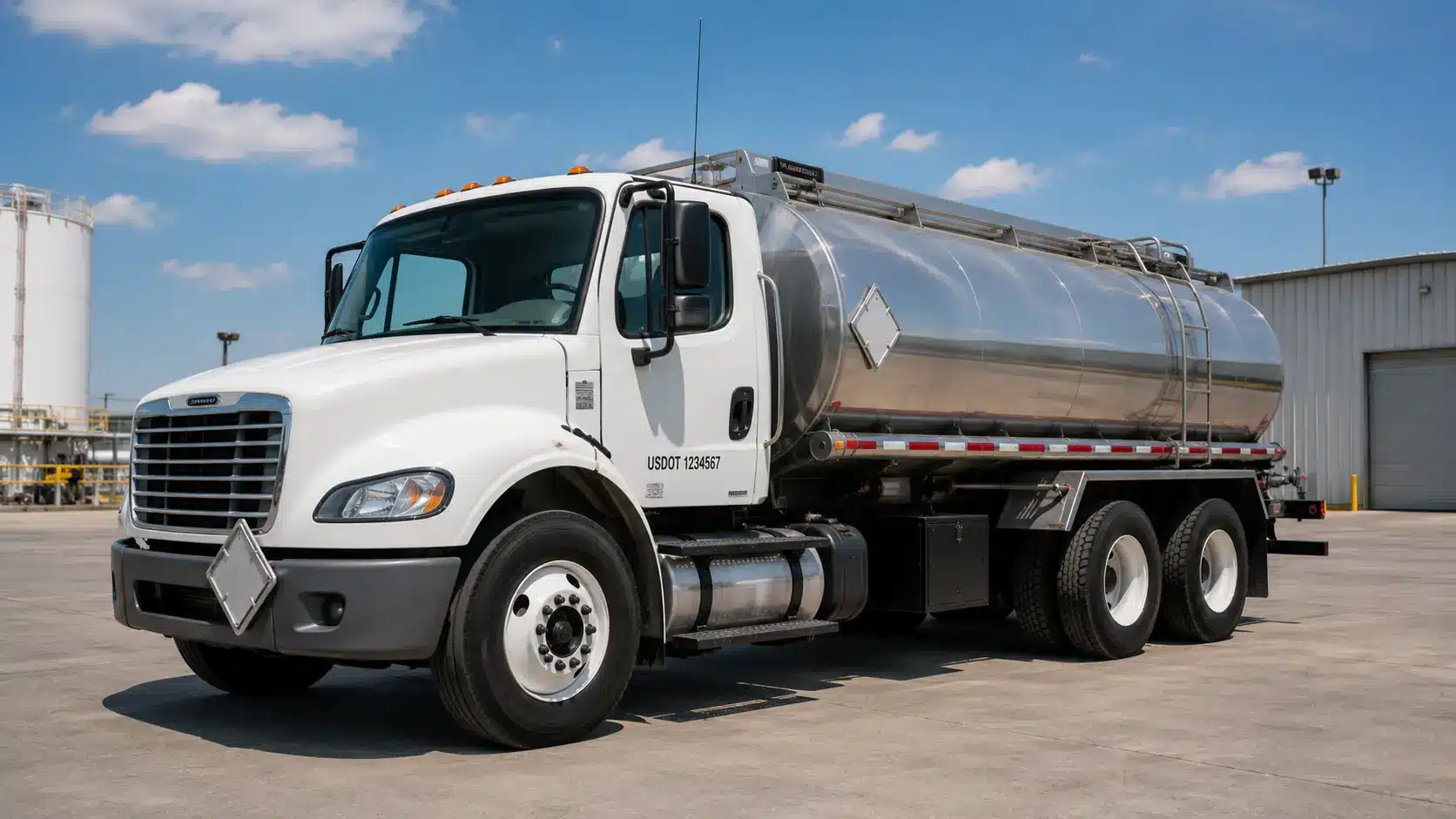
Hazardous-material requirements depend partly on whether the transportation is interstate or purely intrastate, so carrying placarded hazardous material should not automatically be described as creating the same federal USDOT requirement in every situation.
For interstate commerce, a vehicle is included in FMCSA’s commercial motor vehicle definition when it transports hazardous material in a quantity requiring placarding under federal hazardous-material regulations. This trigger can apply even if the vehicle weighs less than 10,001 pounds.
For intrastate commerce, the federal USDOT rule is narrower. FMCSA specifically requires registration for commercial intrastate hazardous-material carriers transporting the types and quantities that require a Hazardous Materials Safety Permit, or HMSP, under 49 CFR 385.403.
The HMSP requirement covers certain higher-risk shipments, including specified quantities of explosives, highway route-controlled radioactive materials, certain toxic-by-inhalation materials, and certain large bulk shipments containing methane. The rule applies to these covered materials in both interstate and intrastate commerce.
An intrastate carrier that does not meet the federal HMSP trigger may still need a USDOT number if its state requires one. Carriers should therefore check both FMCSA requirements and the rules of the state where they operate.
DOT Number vs. MC Number
A USDOT number and an MC number are not interchangeable. They perform different functions within federal motor-carrier regulation.
| Point | USDOT Number | MC Number |
|---|---|---|
| Main purpose | Identifies an entity for FMCSA registration and safety records | Identifies certain operating authority granted by FMCSA |
| Issued by | FMCSA | FMCSA |
| Connected with safety information | Yes | Not its primary purpose |
| Automatically grants operating authority | No | Associated with covered operating authority |
| Commonly relevant to | Qualifying regulated entities and carriers | Certain for-hire interstate operations |
For example, a private motor carrier transporting its own property may need a USDOT number without needing for-hire operating authority.
A company transporting property for compensation in interstate commerce may need both a USDOT number and applicable operating authority. Businesses working with a freight transportation broker should also distinguish the carrier’s safety registration from the authority required for the specific operation.
The launch of Motus in 2026 did not eliminate MC, MX, or FF docket numbers. FMCSA has discussed potentially changing how operating authorities are identified in the future, but it did not implement that proposal with Motus’s initial release.
How to Get a DOT Number
FMCSA changed its registration process in 2026. Motus: USDOT Registration System is now the system used by new and existing registrants for registration actions. The previous Unified Registration System, or URS, was permanently taken offline as part of the transition. Motus became available to new and existing registrants in May 2026.
Obtaining the USDOT number itself directly through FMCSA remains free. Other registrations, such as certain operating authorities, can involve separate fees.
The current process generally involves these steps:
- Confirm the registration requirement: Determine whether the operation requires a USDOT number based on interstate or intrastate activity, vehicle weight, passenger capacity, hazardous materials, and applicable state requirements.
- Create or access a Login.gov account: Motus uses Login.gov credentials. Users completing their first Motus setup must also complete the required Login.gov identity verification process.
- Create a Motus user profile: After signing in through Login.gov and completing identity verification, enter the information required for the individual user profile.
- Create the company account: New registrants must provide business information and complete the required business-verification process before managing registration actions through the company account.
- Start a new registration: Select the new-registration workflow in Motus and provide accurate information about the business, vehicles, drivers, cargo, operations, and other requested details. Motus supports applications for new USDOT numbers and applicable operating authorities.
- Review and submit the information: Check legal names, addresses, operation classifications, cargo types, vehicle information, and other entries before submitting the registration.
- Keep the registration records: Save confirmation information and maintain access to the Motus company account so you can complete future updates and registration actions.
Businesses should use FMCSA’s official registration resources before paying a third-party filing company. FMCSA does not charge for obtaining the USDOT number itself, although a private registration service may charge its own service fee.
Existing USDOT number holders can also use Motus to claim their current record and link it to a company account rather than applying for a replacement number. Existing registrants generally keep their current USDOT numbers.
How to Keep Your USDOT Number Active
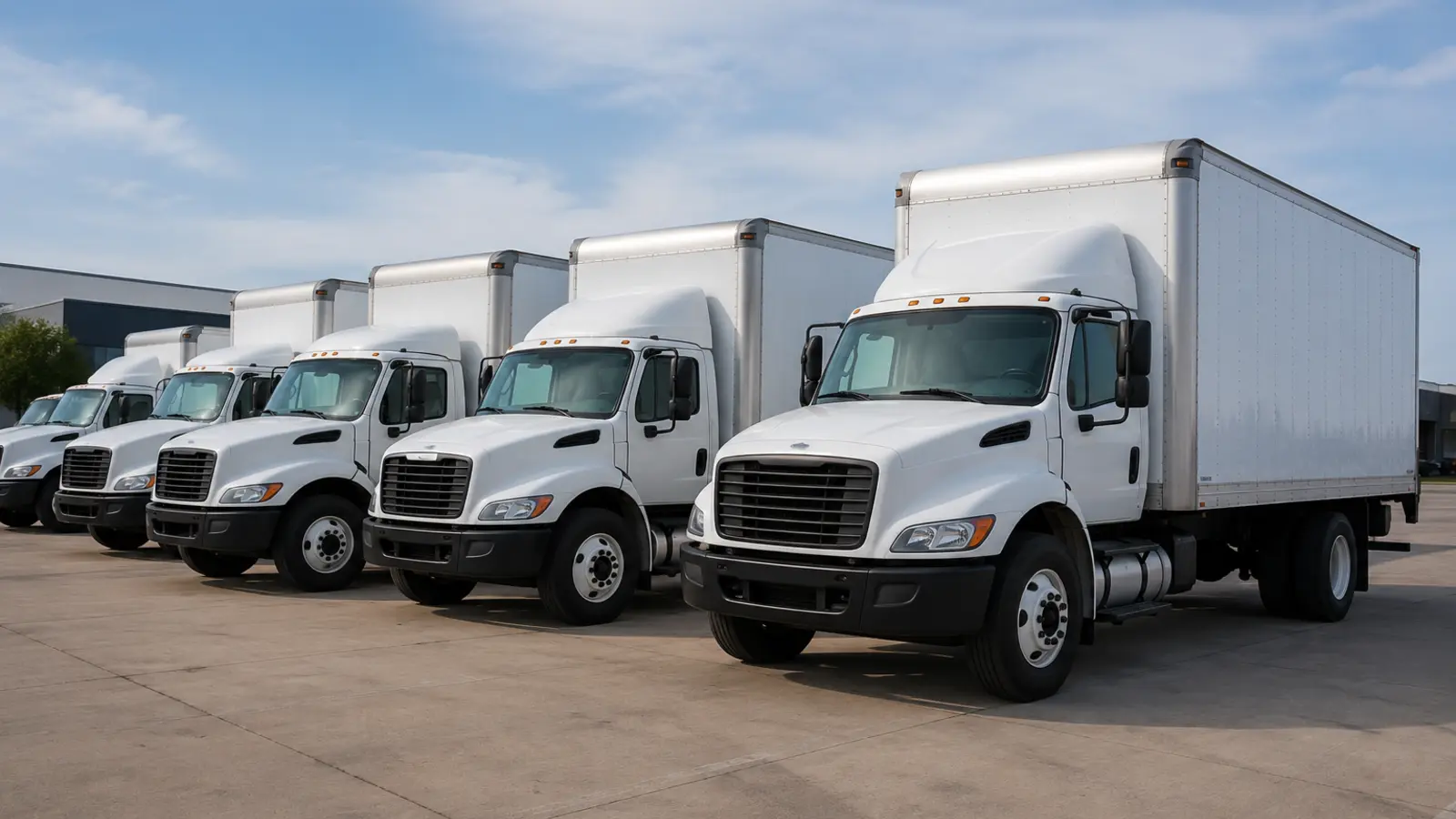
Getting a USDOT number is only part of maintaining federal registration. Carriers must also keep their FMCSA information current as their business or operations change.
FMCSA requires covered entities to submit a biennial update every 24 months, even when the company’s information has not changed. The required filing month is based on the last digit of the USDOT number, while the next-to-last digit determines whether the update falls in an odd- or even-numbered year.
Motus now supports biennial updates and other registration-management actions.
File the Biennial Update
The biennial update keeps FMCSA’s registration information aligned with the carrier’s current operation. Carriers should review details such as:
- Legal or trade name
- Business address and contact information
- Vehicle and driver information
- Cargo classifications
- Operation type
- Operating status
The update is required even if nothing has changed. Failure to complete required updates can result in registration problems, including potential deactivation or civil penalties under applicable FMCSA rules.
Report Business Changes
Important business and operating changes should also be reflected in the carrier’s FMCSA record, rather than leaving outdated information on file.
Changes can include:
- Legal business name
- Business or mailing address
- Operation classification
- Fleet information
- Cargo classifications
- Company status
Motus allows registered entities to update company information, submit biennial updates, manage registrations, reactivate or inactivate a USDOT number when applicable, and track registration actions.
Keeping the record accurate also reduces the risk that inspectors, regulators, brokers, insurers, or business partners encounter information that no longer reflects the carrier’s operation.
Conclusion
A USDOT number is more than a number displayed on a commercial vehicle. It gives FMCSA a unique identifier for a regulated entity and connects that operation with registration and safety information.
If you are determining what is a DOT number and whether your business needs one, check vehicle weight, passenger capacity, hazardous-material activity, and the complete origin and destination of the transportation. Don’t overlook state rules, because some intrastate carriers may also need USDOT registration.
For new registrations in 2026, use FMCSA’s Motus system rather than the discontinued URS process. Completing the required Login.gov identity verification and keeping company information current can help prevent avoidable registration issues later.
Frequently Asked Questions
Does a USDOT Number Expire?
A USDOT number does not have a standard expiration date, but covered carriers must maintain an accurate registration record and complete the required biennial update every 24 months. Failure to meet update requirements can affect the carrier’s registration status.
Does a Pickup Truck Need a DOT Number?
A pickup used in interstate commerce may require a USDOT number when its GVWR, GCWR, GVW, or GCW reaches 10,001 pounds or more. Trailer ratings and weights can affect the combination calculation. State intrastate requirements may also apply.
How Much Does a USDOT Number Cost?
FMCSA does not charge a fee to obtain the USDOT number itself directly through its registration system. Separate operating-authority applications or private registration services may involve fees, so businesses should confirm exactly what they are paying for.
Is a DOT Number the Same as an MC Number?
No. A USDOT number identifies an entity within FMCSA’s registration and safety systems, while an MC docket number is associated with certain operating authority. Motus continues to use operating-authority docket numbers as of 2026.