Most basements stay dry for years, right up until the one storm that changes everything. I have seen it happen to homeowners who assumed their pump would simply work when needed.
That assumption is where things go wrong. Sump pump maintenance is not about waiting for a failure to tell you something is off. It is about knowing your system well enough to catch small problems early.
You do not need a strict routine to get this right, but you do need a basic sump pump maintenance schedule you actually follow. I have put together what really matters, based on what works and what tends to get overlooked.
You will know exactly where to start.
What Sump Pump Maintenance Actually Involves
Sump pump maintenance means checking a few key parts regularly so the pump works when you need it most. This includes testing the float switch, clearing debris from the basin and check valve, and confirming the discharge line outside is not frozen or blocked.
Most manuals suggest checking the system twice a year. In practice, homeowners in flood-prone areas test it every one to two months, especially before storm season.
You should also test the battery backup separately, since power outages often happen during the same storms that trigger heavy pump use.
Skipping sump pump maintenance is one of the most common reasons pumps fail when you need them. Since basement flooding can also point to drainage or plumbing problems beyond the pump itself, repeated water issues deserve a closer look.
How Often Should You Do Sump Pump Maintenance?
Sump pump maintenance works best on a schedule, not a once-a-year afterthought. A basic function and float check every 3 to 4 months is a solid baseline, with a full pump and pit cleaning once a year.
A full pump and pit cleaning once a year also fits naturally into an annual water safety routine, giving you a regular point to check the system before problems develop.
The SSPMA recommends the same intervals: clean the inlet screen every 3 to 4 months and clean the pump and pit annually, with more frequent care for special-use systems.
When | What You Actually Need to Do | Why It Matters |
|---|---|---|
Every 3 to 4 months | Test operation, float switch, and inlet screen | Catches blockages before they cause a failure |
Before wet or storm season | Test pump, discharge line, and battery backup | Storms bring both heavy rain and power outages |
Once a year | Clean pump and pit, inspect the whole setup | Removes silt and debris that build up slowly |
After unusual conditions | Recheck after outages, flooding, or a suspected blockage | Confirms the pump still cycles correctly |
More frequently | High-use, dirty, or problem-prone systems | Washing machine discharge and sediment clog faster |
What Does a Useful Sump Pump Maintenance Routine Actually Look Like?

Sump pump maintenance doesn’t usually mean dismantling the entire system every few months. Most checks simply confirm that water can enter the pit, trigger the pump, and leave the property the way it is supposed to.
1. Check the Power Before Touching Anything
It sounds obvious, but power issues are one of the most common reasons a pump fails silently between storms. Before any hands-on work, confirm the pump actually has power and is safe to handle.
- Confirm it’s plugged in
- Check the breaker or GFCI hasn’t tripped
- Inspect the cord for damage
- Unplug before cleaning
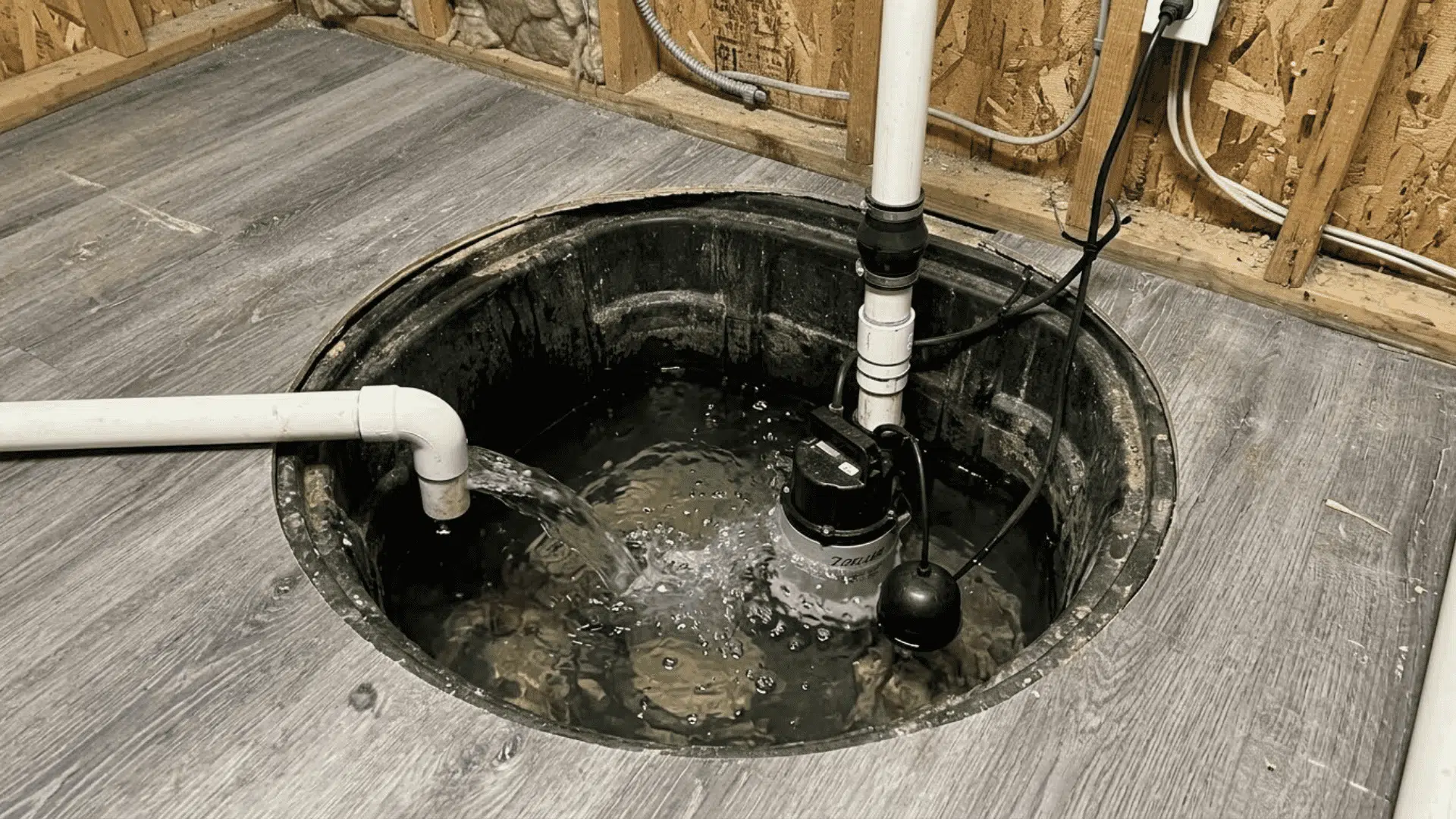
2. Pour Water Into the Pit and Watch a Full Cycle
This is the single most useful test in the entire routine, and also the one most people rush. A pour test only counts if you watch it start to finish, not just the moment it kicks on.
- Watch the float rise
- Confirm the pump starts
- Confirm water leaves through the discharge line
- Watch the pump shut off on its own
3. Make Sure the Float Can Move Freely
The float switch is the pump’s trigger, so anything restricting it restricts the whole system. A float that’s tangled, tilted, or resting against the pit wall may never rise high enough to activate the pump at all, even though the motor itself is perfectly fine.
- Check for debris around the float
- Look for cord tangling
- Confirm the float isn’t rubbing the pit wall
- Confirm the pump sits level
4. Clear Debris From the Pit and Intake
Sediment builds up slowly, so it is easy to skip until it becomes a problem. Grit, gravel, and fine debris settle at the bottom of the pit over time and can work their way into the intake screen, gradually reducing how efficiently the pump moves water.
- Remove visible dirt or gravel every few months
- Pull the pump once a year
- Clean sediment from the pit
- Clean the intake screen
5. Check the Check Valve and Discharge Line
This is where water is supposed to leave for good, so it’s worth confirming it actually does. A pump can run perfectly and still fail the homeowner if the discharge line is clogged, frozen, or letting water flow backward into the pit.
- Confirm water exits outside
- Check for clogs or ice
- Tighten loose joints
- Watch for water flowing back into the pit
6. Test the Backup Pump and High Water Alarm
A battery backup or alarm that’s never been tested is really just an assumption sitting in the pit. Having dependable backup power matters most when a storm knocks out electricity at the same time water is entering the basin.
A battery backup or alarm that’s never been tested is really just an assumption sitting in the pit, and the only time that assumption gets checked is usually during a power outage.
- Confirm the backup engages if the primary fails
- Check battery condition
- Trigger the alarm to confirm it works
Why Some Sump Pumps Need More Attention Than Others
Sump pump maintenance isn’t one-size-fits-all. Two homeowners can follow the same schedule and still get different results, because the real workload depends on how much water and debris each system actually handles.
A pump that rarely runs can look fine while a stuck float or corroded connection develops unnoticed. A pump that runs often during storms needs closer attention to cycling and discharge flow, not less. Pits that collect silt quickly need faster cleaning, regardless of the usual interval.
Extra drainage sources, cold climates, and radon-sealed pits each add their own demands. The right sump pump maintenance routine follows what your system faces, not a generic calendar.
DIY vs. Professional Sump Pump Maintenance

An annual service contract isn’t the only way to keep a simple sump pump checked, but some systems justify professional attention more than others.
Maintenance Area | Usually Reasonable to DIY | Better Left to a Professional |
|---|---|---|
Activation | Pour-water test | Pump will not activate |
Float switch | Check float travel | Repeated electrical trips |
Pit & basin | Remove accessible debris | Damaged wiring |
Discharge line | Inspect exterior discharge | Check valve or pipe repair |
Alarm system | Test water alarm | Pump cannot keep up |
Backup power | Observe backup operation | Unknown or complicated backup system |
General cleaning | Basic annual cleaning when accessible | Sealed radon system you cannot properly reseal |
Noise & wear | Look for rust or unusual noise | Recurring mechanical noise or vibration |
What Sump Pump Owners Say Works in Real Life
Ask real sump pump owners about maintenance, and the same points keep surfacing: the float fails more than the motor, idle pumps still need testing, and a clean pit with a working backup matters more than any fixed schedule.
The float on these is what usually fails, not the motor (assuming it’s a solid cast iron pump). If it never runs, I’d test it to make sure it works every 6-12 months or so. – dsizzz
The best service is making sure the backflow works, the float doesnt get trapped, and the hose is not crushed. So in a dry time you fill it up and watch it work a few cycles. – ForTheObviousReasons
You don’t maintain a sump pump; you could ensure the pit is clean from debris that gets in there occasionally, but a pump will work until it doesn’t – like mine yesterday at 6 am. Luckily, I have an alarm and backup submersibles to use while I replaced it. – VonGeisler
You could invest in a battery backup pump, which would also kick in if the primary pump fails. A cheaper option (assuming you trust your power supply) is to install a second normal pump with a higher float switch to kick on if the primary can’t keep up or fails. – abfarrer
Just do it yourself. Pour water in and see that it pumps out. If it doesn’t then you should change the pump. Basement watchdog from home depot sells ones with backups built in. – bman5600
Sump Pump Maintenance Habits That Cause More Problems
The checklist tells you what to do. These are the slip-ups that happen while doing it, the kind that quietly undo an otherwise good maintenance routine.
- Forgetting the plug: Pumps get unplugged for cleaning and never plugged back in, leaving the pit unprotected until the next rain.
- Sound without proof: Hearing the motor run isn’t confirmation. Water must exit the discharge line for the test to count.
- Water returning inside: Discharge water flowing back toward the foundation instead of away from it usually means grading or pipe issues, not pump issues.
- Improper radon reseal: Opening a radon-sealed lid to check the pump and closing it loosely can undo the seal without anyone noticing.
- Blocked float travel: Moving the pump or cord during cleanup can wedge the float against the pit wall, so it never rises far enough to trigger.
- Untested backup battery: A backup system that’s never been tested is really just an assumption sitting in the pit.
Most sump pump failures trace back to one of these habits, not the pump itself. A five-minute check twice a year catches nearly all of them before they become a wet basement.
Final Thoughts
A dry basement usually comes down to a few honest checks done at the right time, not luck. You do not need to overhaul anything or turn this into a project.
A little regular attention is what keeps a pump reliable. Sump pump maintenance works best when it becomes a habit, not an afterthought.
I have found that sticking to a basic sump pump maintenance schedule removes most of the guesswork. You start noticing small changes before they become real problems, and that alone saves you from a lot of stress later.
If you have been putting this off, use it as your reason to finally test your pump this week. A few minutes now can save you a flooded basement later.
Frequently Asked Questions
How Long Does a Sump Pump Typically Last?
Most sump pumps last about 7 to 10 years, depending on usage, water table conditions, and how often the motor cycles during heavy rainfall or storms.
Why Does My Sump Pump Pit Smell Bad?
A smelly pit usually points to stagnant water, bacterial buildup, or dried residue sitting at the bottom. Regular cycling and periodic cleaning usually resolve the odor quickly.
Does a Sump Pump Need Its Own Dedicated Outlet?
Yes, most electrical codes require a dedicated, grounded outlet for a sump pump. Sharing circuits with other appliances increases the risk of tripped breakers during heavy use.
Will a Sump Pump Significantly Raise My Electric Bill?
Not usually. Sump pumps draw power only while running, so typical monthly costs stay low unless the pump cycles constantly because of an underlying drainage problem.