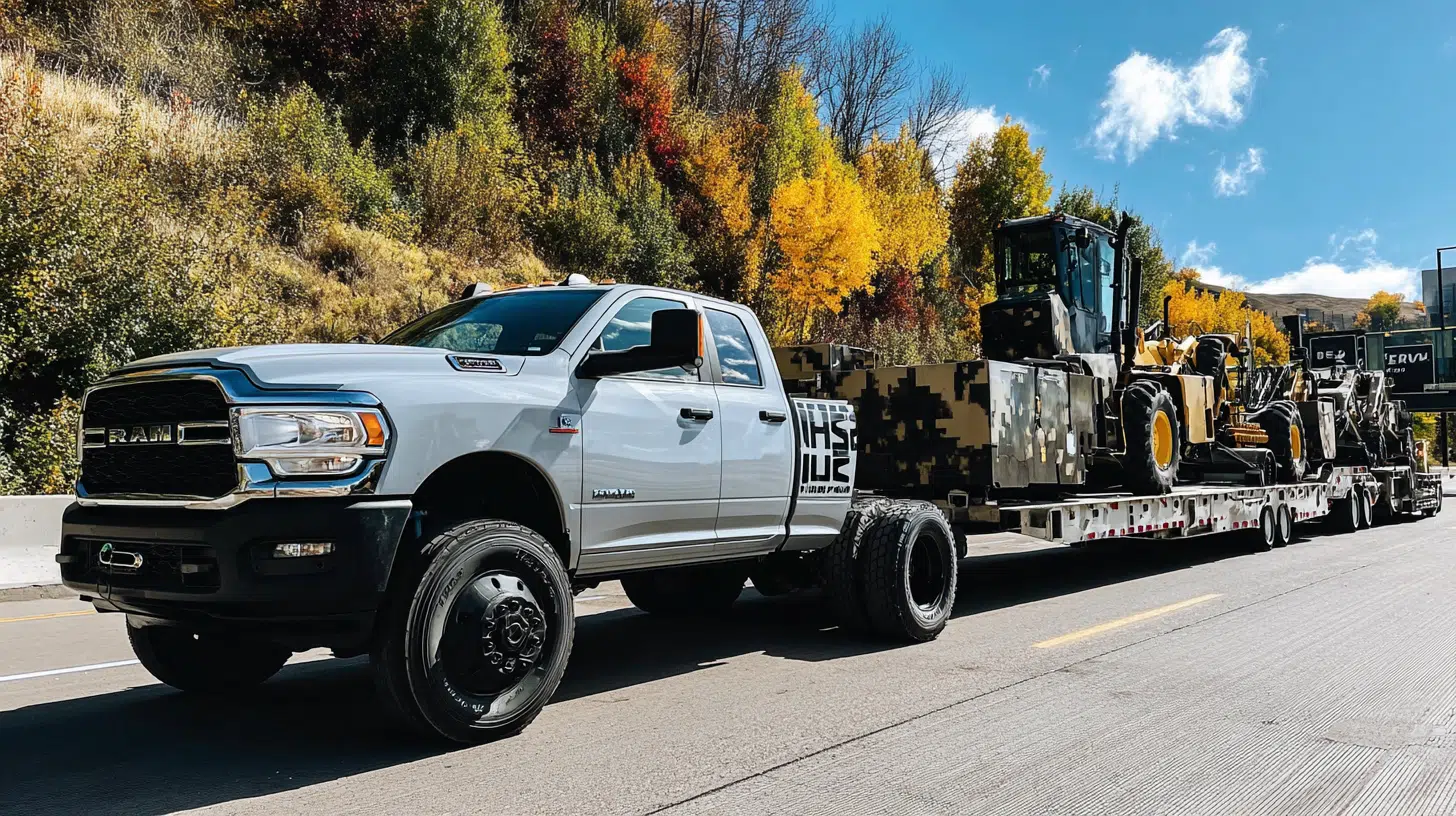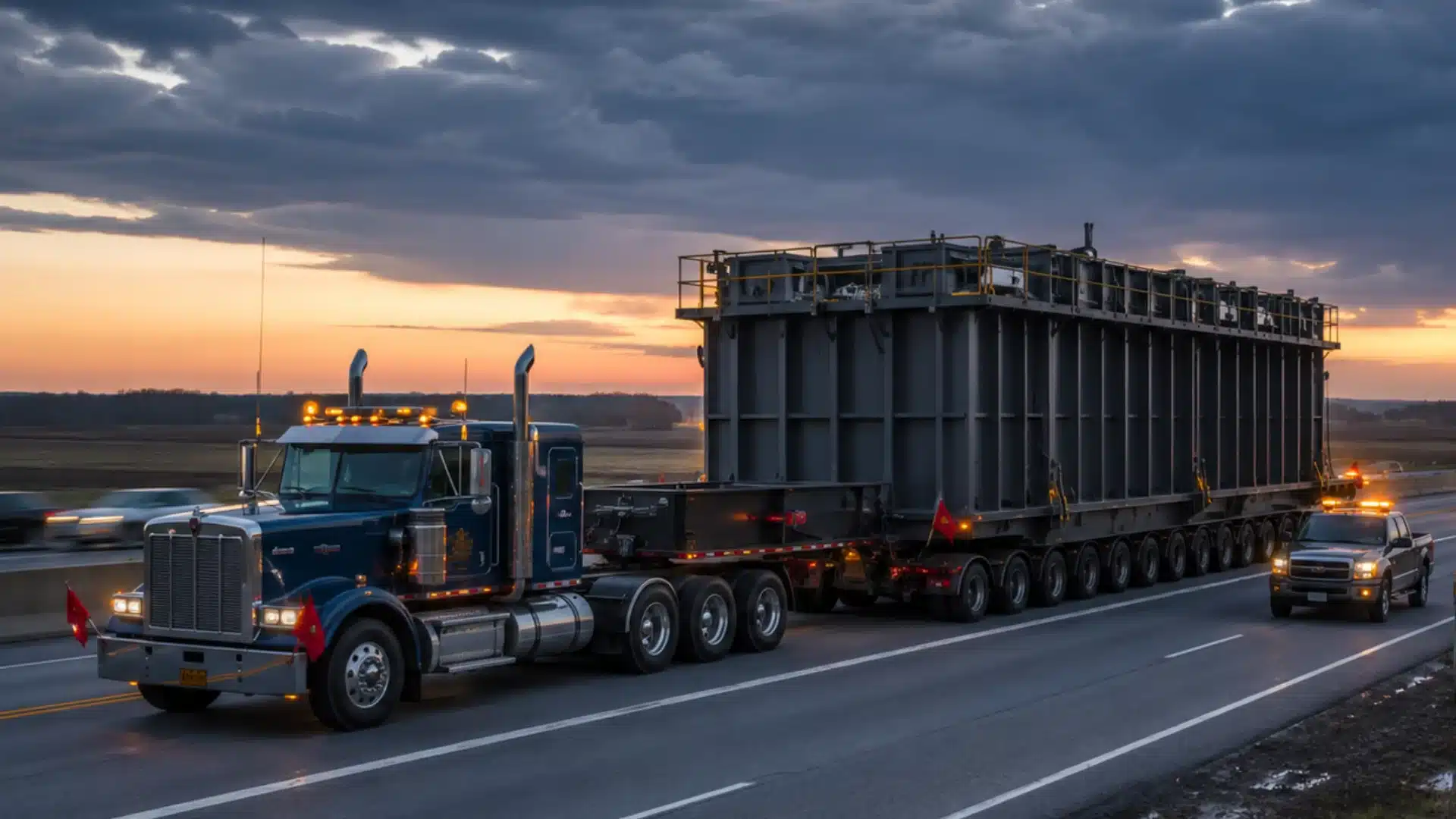
Seeing a massive piece of cargo move down the highway can make you wonder how it is even allowed on the road.
Escort vehicles, warning lights, banners, and careful lane changes all signal that the shipment follows a different set of rules.
I find these transports easier to understand once the measurements and permit levels are broken into simple terms.
A wide-load truck is not defined by appearance alone; it must exceed specific legal width limits before extra requirements apply. Those limits can change by state, route, and load size, which is why preparation matters.
Here’s what actually determines whether a load counts as wide, what happens once it crosses that line, and why the requirements get stricter the wider a load gets.
What Qualifies as a Wide-Load Truck?
A load is legally considered wide if it exceeds the standard width limit for public roads: 8.5 feet (102 inches). Anything narrower fits within a normal travel lane without special handling.
Anything wider encroaches on the space designed for oncoming or adjacent traffic, which is why the classification exists in the first place. That 8.5-foot line isn’t identical everywhere.
A handful of states allow slightly wider loads to move without a permit on certain multi-lane highways, so the exact cutoff can shift by a few inches depending on where the truck is traveling.
It’s also worth noting that width is only one trigger among several; a load can just as easily become “oversized” because of its height, length, or how much it weighs, even if it’s well within the normal width range.
How Load Width Affects Permits and Escorts
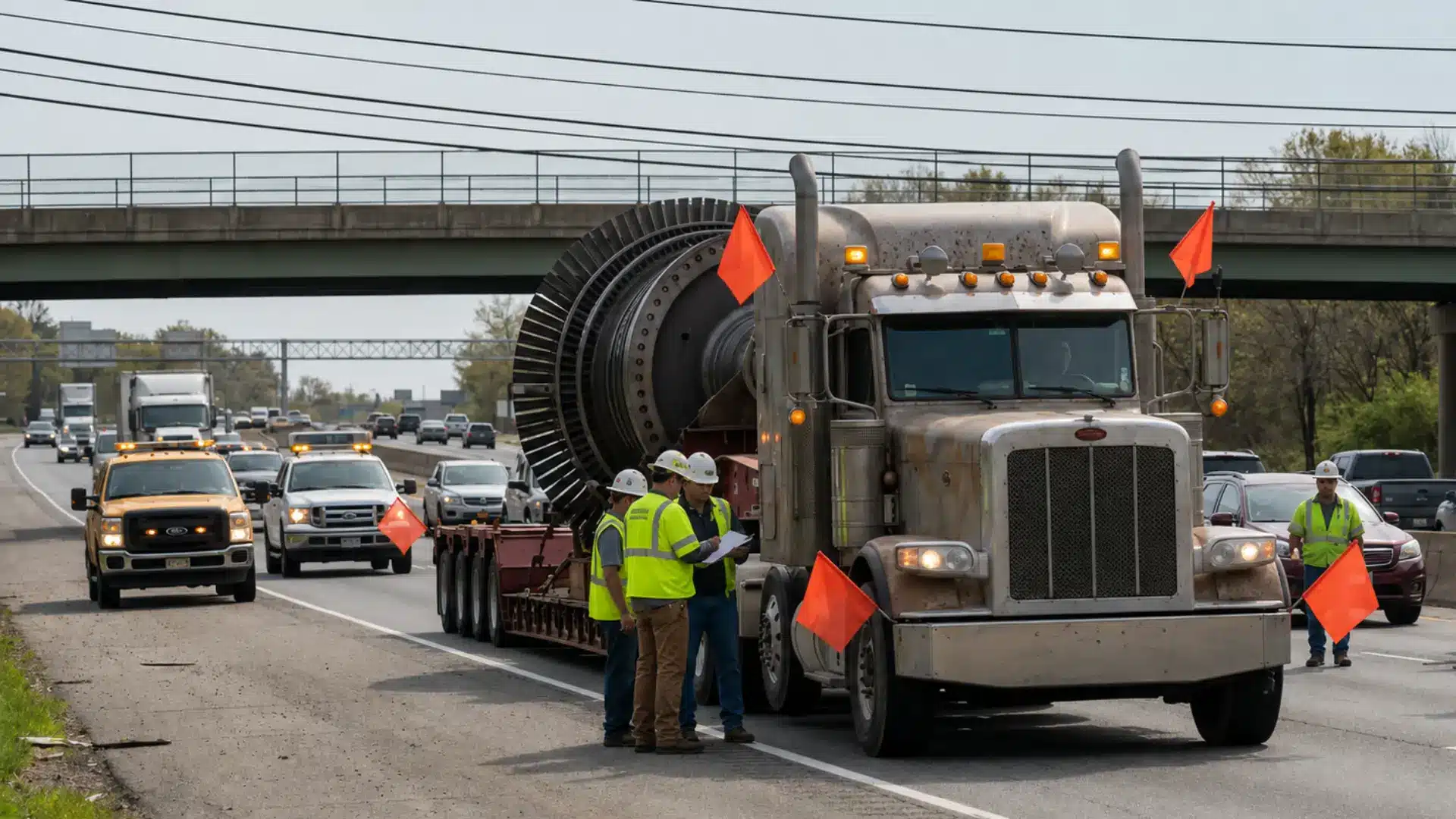
Once a load exceeds 8.5 feet, permit and escort rules increase in stages. Because most U.S. lanes are about 12 feet wide, wider loads leave less room for nearby traffic.
As the load approaches lane width, states may require escort vehicles in addition to signs, lights, and permits.
1. Loads up to 10 Feet Wide
At this width, a permit is typically required, but escort vehicles usually aren’t. Signage and lighting are generally enough to alert nearby traffic. At this width, a permit is typically required, but escort vehicles usually are not.
Signage and lighting are generally enough to alert nearby traffic. Travel may still be limited to certain routes, daylight hours, or lower-traffic periods.
2. Loads Between 10 and 14 Feet Wide
This is where pilot cars tend to enter the picture. States commonly require a front escort, a rear escort, or both, since a load in this range is wide enough to need advance warning for oncoming vehicles and following traffic alike.
States commonly require a front escort, a rear escort, or both, since the load needs added warning for oncoming and following traffic. Route surveys may also be required to identify narrow roads, bridges, or other clearance issues.
3. Loads Over 14 Feet Wide
Beyond 14 feet, the requirements expand further. Police escorts, utility crews to lift overhead lines out of the way, and travel restricted to daylight hours all become common.
A handful of states apply stricter rules even below these general bands, so these tiers should be treated as typical rather than universal; the relevant state DOT is always the final word.
As the load becomes wider, permits, escort vehicles, route checks, and travel restrictions increase to keep the shipment and surrounding traffic safe.
Wide Load vs. Oversized Load: What’s the Difference
The terms sound similar, but they describe different aspects of a shipment. Understanding the distinction makes it easier to interpret permits, warning signs, and transport regulations.
| Aspect | Wide Load | Oversize Load |
|---|---|---|
| Meaning | Refers only to loads that exceed the legal width limit. | Any load exceeding legal width, height, length, or weight limits. |
| Scope | A specific type of oversize load. | A broad term for loads beyond legal size or weight limits. |
| Relationship | Every wide load is considered an oversize load. | Not every oversize load is wide. It may only exceed height, length, or weight limits. |
| Permit Requirements | Based on exceeding the legal width threshold. | Based on whichever dimension or weight exceeds the legal limit. |
| Escort and Safety Rules | Determined by the load width and applicable state regulations. | Vary according to the specific dimension or weight that exceeds the limit. Multiple violations can increase requirements. |
| Road Signage | May display “Wide Load.” | May display “Oversize Load,” although the terms are often used interchangeably in practice. |
| Common Example | A prefabricated home section that exceeds the legal width limit. | A tall crane, an extra-long wind turbine blade, heavy equipment like an overweight transformer, or a wide prefabricated home. |
Knowing whether a shipment exceeds width alone or multiple legal limits helps explain why permit conditions, escort vehicles, travel restrictions, and route planning can differ from one load to another.
Why Wide Load Regulations Matter
None of this exists to slow carriers down for its own sake. The rules are built around one goal: keeping other drivers safe around a vehicle that can’t maneuver, brake, or occupy the road the way a standard-width truck can.
Permit costs and exact fees are a common point of confusion, and for good reason: they vary significantly from state to state and often depend on the load’s width, route, and travel distance rather than a flat rate.
Enforcement and penalties follow the same pattern; what counts as a minor paperwork issue in one state can carry a real fine in another.
Checking the specific state DOT’s current rules before a move is the only reliable way to plan around this, since no single national figure applies.
Wide Load Truck Safety Equipment and Signage
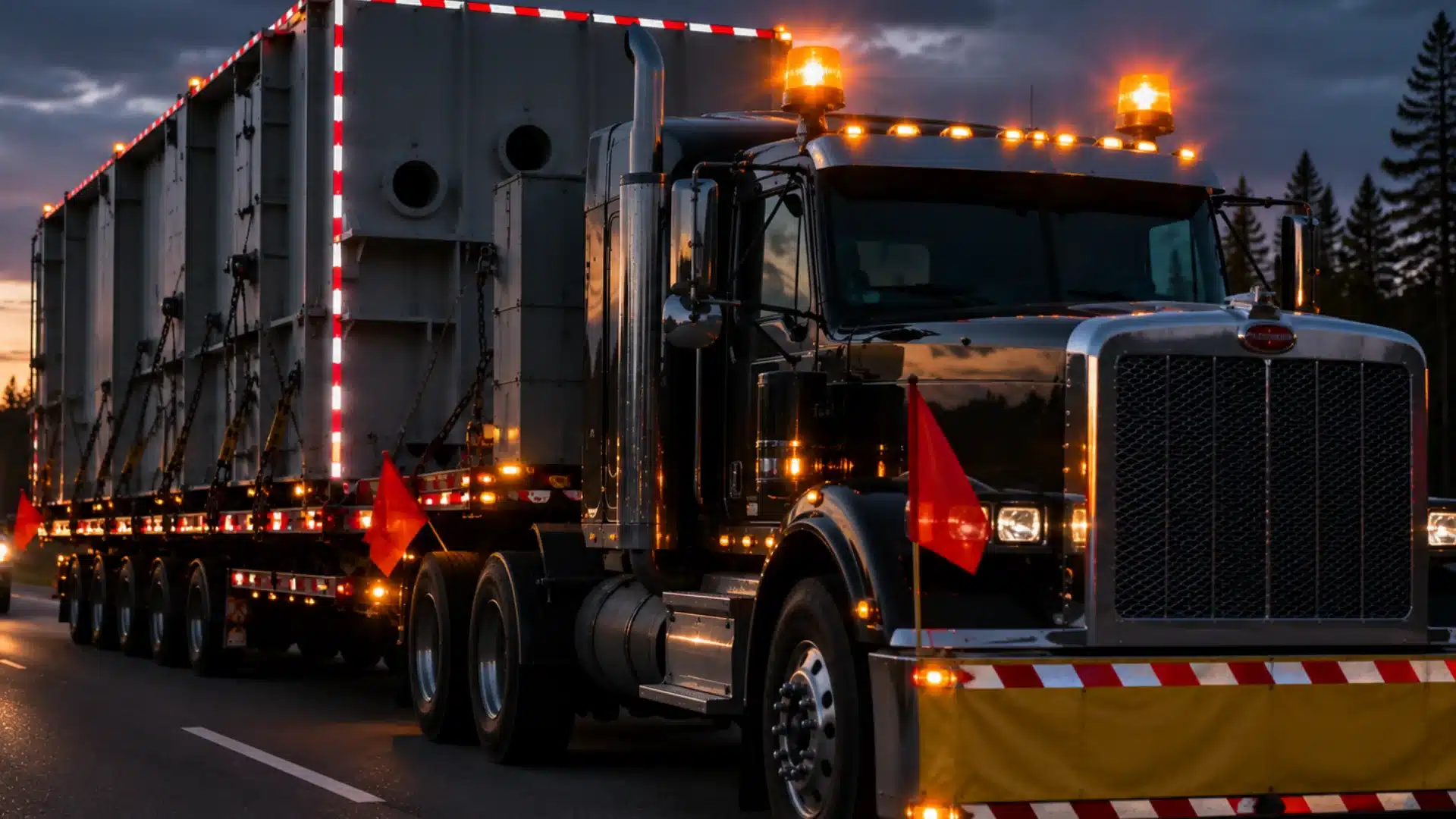
Beyond permits and escorts, every wide load truck needs specific equipment attached before it’s legal to move, and most of it exists to make the load visible from every angle, in every direction, at any hour.
- An “Oversize Load” or “Wide Load” banner mounted on the front and rear of the vehicle or load
- Flashing amber beacon lights, typically visible from at least 500 feet
- Red or orange warning flags are attached to the corners where the load extends beyond the trailer
- Reflective tape or markings along the load’s widest edges for nighttime visibility
- A CB radio in the cab to stay in contact with pilot cars and other traffic along the route
None of this equipment is optional. Missing even one piece is enough to turn a routine roadside inspection into a delayed or rejected permit.
Conclusion
For me, the easiest way to understand these transport rules is to focus on safety, size, and route planning rather than getting lost in technical wording.
Once a shipment exceeds the standard 8.5-foot width, the permit process, travel limits, signage, and escort requirements begin to make far more sense.
A wide-load truck is not simply a larger vehicle on the road. It is part of a carefully planned movement designed to protect the driver, the cargo, and everyone nearby.
The exact rules for a wide load can still vary by state, so checking local requirements before departure is always worth the effort.
What part of wide-load transportation do you find most confusing? Share your experience or questions in the comments below.
Frequently Asked Questions
How much does a wide load permit cost?
Permit costs vary significantly by state and depend on the load’s width, route, and travel distance. Rather than a single fee, most states charge based on a combination of factors and may add costs for special routing surveys. Checking the relevant state DOT website is the most reliable way to get an accurate figure.
Can wide loads travel at night?
It depends on the state and the load’s width. Many states restrict travel of wide and oversize loads to daylight hours, especially for the widest loads, though some allow limited nighttime movement with extra lighting or escorts. Local DOT regulations should always be checked before scheduling a night move.
Do all wide loads need a police escort?
Not necessarily. Police escorts are typically reserved for the widest loads, often those exceeding 14 feet, or for routes involving complex intersections or utility lines. Many wide loads require only standard pilot car escorts, or no escort at all, depending on the state and the specific width.
What happens if a wide load exceeds its permit limits?
Exceeding the dimensions or route listed on a permit can result in fines, vehicle impoundment, or liability if it leads to an accident. Carriers are expected to match their actual load dimensions to what’s stated on the permit, since enforcement checks along the route are common.