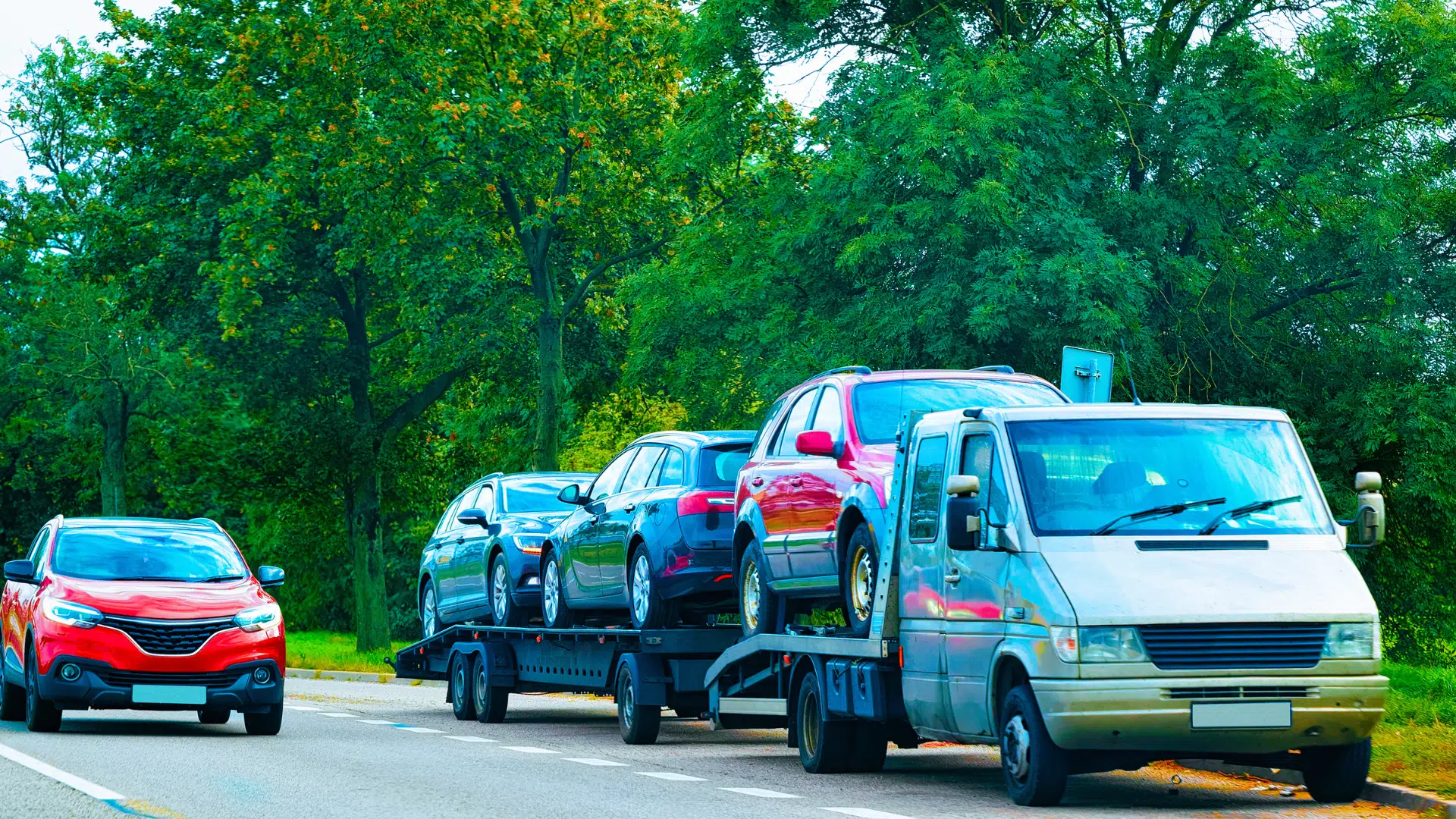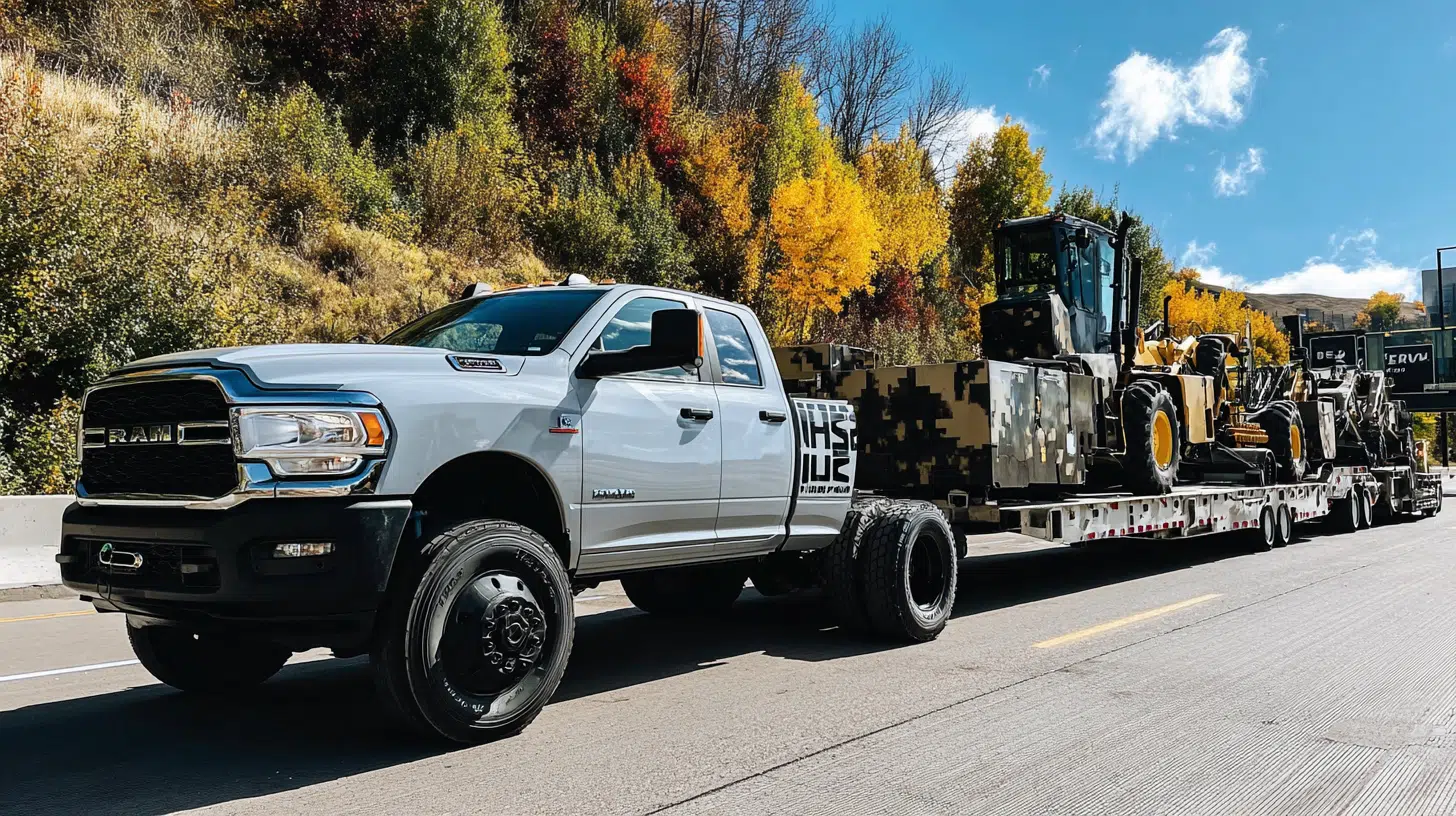
Heavy equipment is not regular freight. One wrong trailer, a missing permit, or a bad route plan can delay an entire shipment before it leaves the yard.
Heavy equipment transport involves specialized trailers, legal permits, route planning, and securement requirements that standard freight shipping does not.
From trailer selection to oversize permits, every detail affects cost, timing, and compliance. A small mistake can lead to damaged equipment, rejected inspections, or expensive delays.
That is why heavy equipment hauling requires specialized carriers, proper coordination, and the right transport setup from the start, and why getting any one of those wrong costs more to fix than it would have cost to get right.
What Does Heavy Equipment Transport Actually Involve?
Heavy equipment transport is the process of moving large machinery that exceeds normal freight limits. It differs from standard freight because it requires specialized trailers, permits, route planning, and safety procedures.
Machines like excavators, cranes, bulldozers, mining trucks, forklifts, and agricultural equipment are often too large or too heavy for standard trucking setups.
A load can qualify as heavy equipment transport on dimensions alone, even if it falls under weight limits.
As a result, heavy equipment hauling is considered a specialized logistics service. It operates under different regulations, carrier certifications, and equipment requirements than conventional freight.
Heavy Equipment Transport vs. Standard Freight
Heavy equipment transport follows a far more complex process than standard freight shipping. The differences mainly stem from equipment size and weight, trailer requirements, and legal transport regulations.
| Feature | Heavy Equipment Transport | Standard Freight Shipping |
|---|---|---|
| Cargo Type | Large machinery like excavators, cranes, and bulldozers | Pallets, boxes, and smaller goods |
| Size & Weight Limits | Often exceeds legal road size or weight limits | Fits normal highway limits |
| Trailer Types | Uses lowboy, RGN, or step-deck trailers | Uses standard flatbed or dry van trailers |
| Permit Requirements | Oversized or overweight permits are often required | Usually, no special permits are needed |
| Route Planning | Requires approved routes and clearance checks | Uses standard transport routes |
| Loading & Securement | Needs specialized loading and securement methods | Uses basic loading procedures |
| Carrier Type | Requires specialized heavy-haul carriers | Handled by most freight companies |
These differences explain why heavy equipment hauling requires specialized trailers, permits, and experienced carriers. Treating heavy machinery like standard freight can lead to delays, safety risks, and compliance problems.
Oversized vs. Overweight Equipment in Heavy Equipment Transport
Transport difficulty depends on whether the equipment exceeds legal size limits, weight limits, or both. This classification affects trailer selection, permits, route planning, and overall transport requirements.
| Type | What It Means | Common Transport Impact | Example |
|---|---|---|---|
| Oversize Equipment | Exceeds legal width, height, or length limits | May require permits, route changes, or escort vehicles | Tall agricultural machinery |
| Overweight Equipment | Exceeds legal axle or total vehicle weight limits | May require lowboy trailers or extra axles | Large excavator |
| Oversized and Overweight | Exceeds both dimension and weight limits | Requires the highest level of planning, permits, and coordination | Mining or large crane equipment |
| Legal-Size Equipment | Fits within legal road limits | Can often move on standard flatbed trailers | Forklift or compact tractor |
Understanding the difference between oversize and overweight equipment helps shippers choose the correct trailer and transport setup. Loads that exceed both size and weight limits usually require the most permits and planning.
Trailer Types and Why the Equipment Determines the Trailer
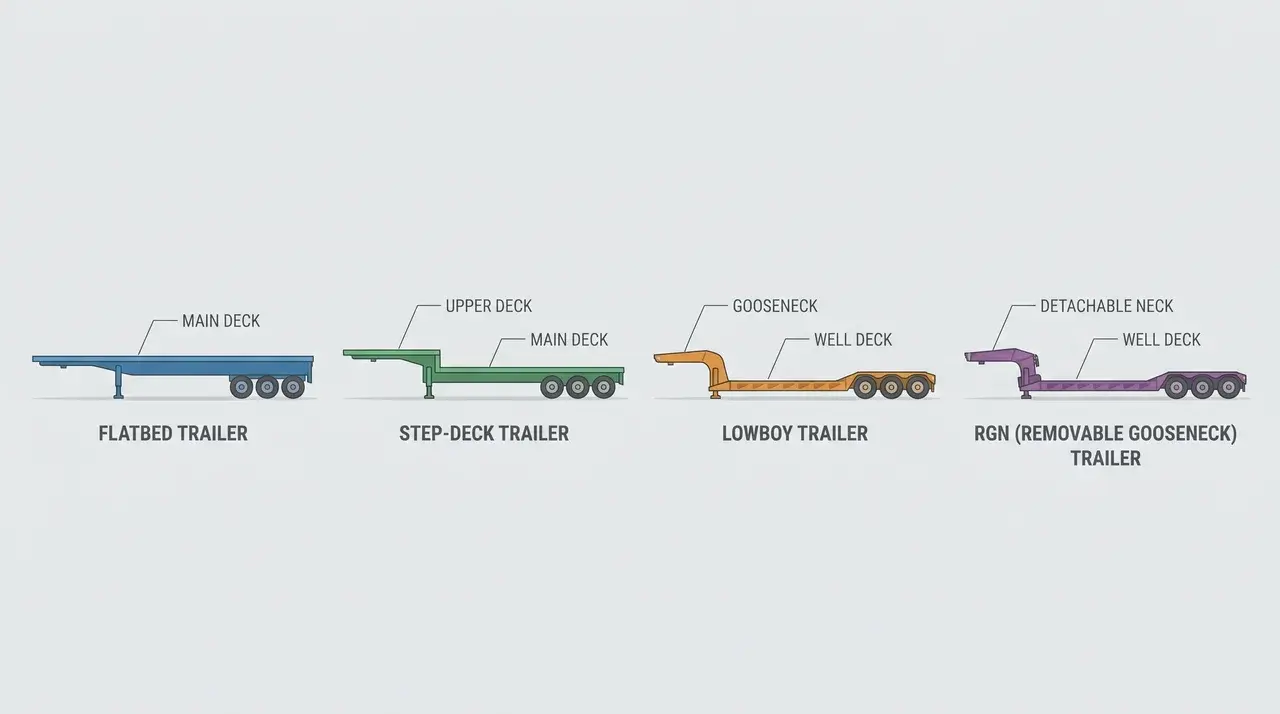
Trailer selection is driven by the load’s dimensions, weight distribution, and ground clearance requirements. The equipment’s specs determine the trailer, not shipper preference.
How Equipment Is Secured to the Trailer
Trailer selection determines the platform. Federal regulations determine how the equipment must be attached to it.
Under FMCSA 49 CFR 393.130, heavy machinery transported on public roads must meet specific securement requirements regardless of trailer type:
- A minimum of four tiedowns must be applied, positioned as close as practical to the front and rear of the machine or to manufacturer-designated mounting points
- All accessory equipment like hydraulic shovels, booms, and blades must be completely lowered and secured to the vehicle before transport
- Articulated equipment must be restrained to prevent articulation while in transit
These are federal minimums. Some carriers apply additional blocking, chaining, or friction matting depending on the equipment type.
Tracked machinery, for example, typically requires friction mats to prevent lateral sliding that chains alone do not prevent.
When evaluating a carrier, asking how they plan to secure your specific machine, what tie-down points they will use, whether blocking is part of their protocol, and how they handle tracked versus wheeled equipment is a reasonable question and a reliable indicator of their experience level.
1. Flatbed and Step-Deck Trailers
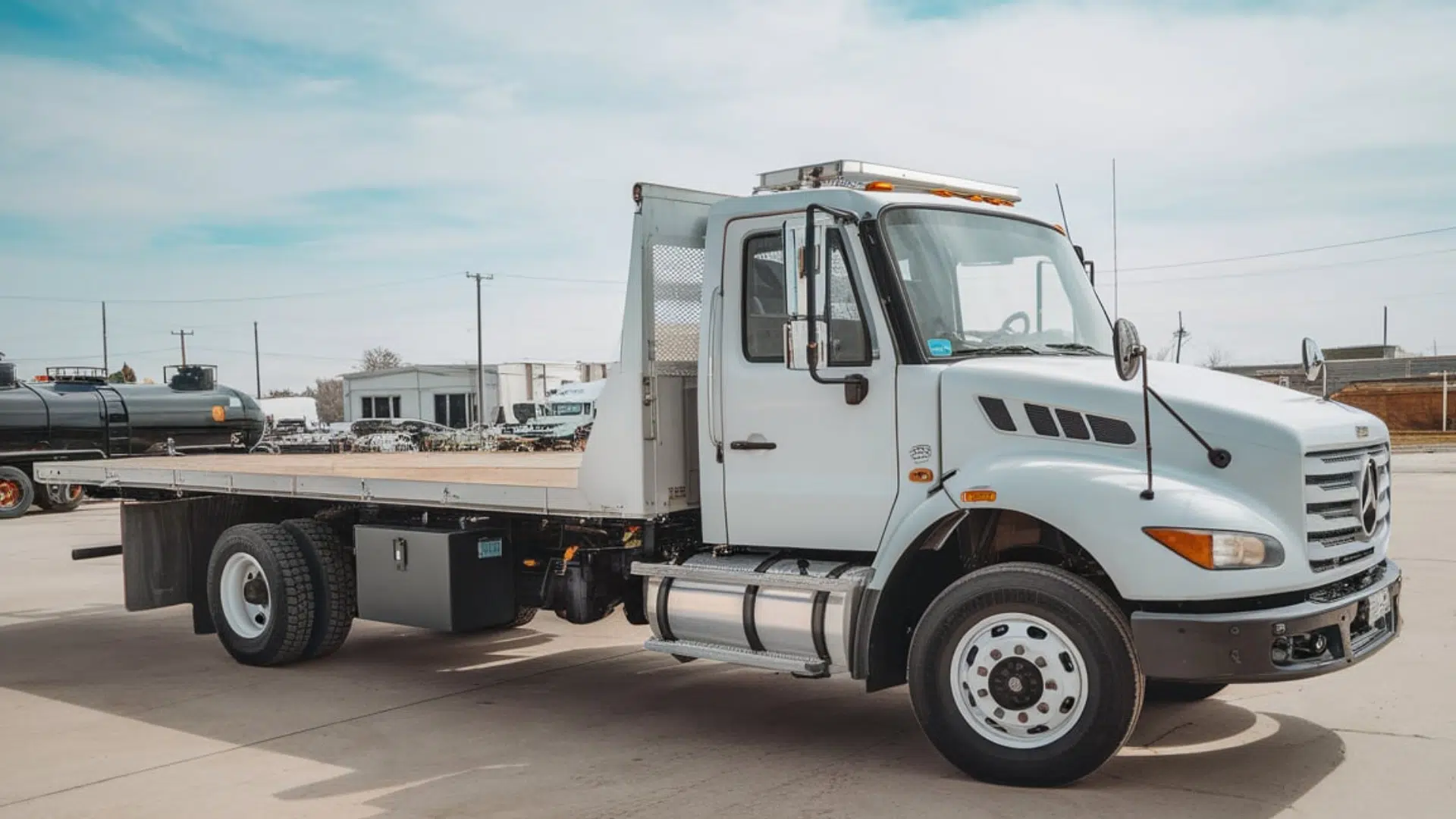
Flatbed trailersare used for smaller equipment that stays within legal height and weight limits.
Step-deck trailers are used for taller machinery because the lower deck height keeps the load within legal road limits.
These trailers are commonly used for forklifts, compact tractors, and other standard equipment.
2. Lowboy Trailers
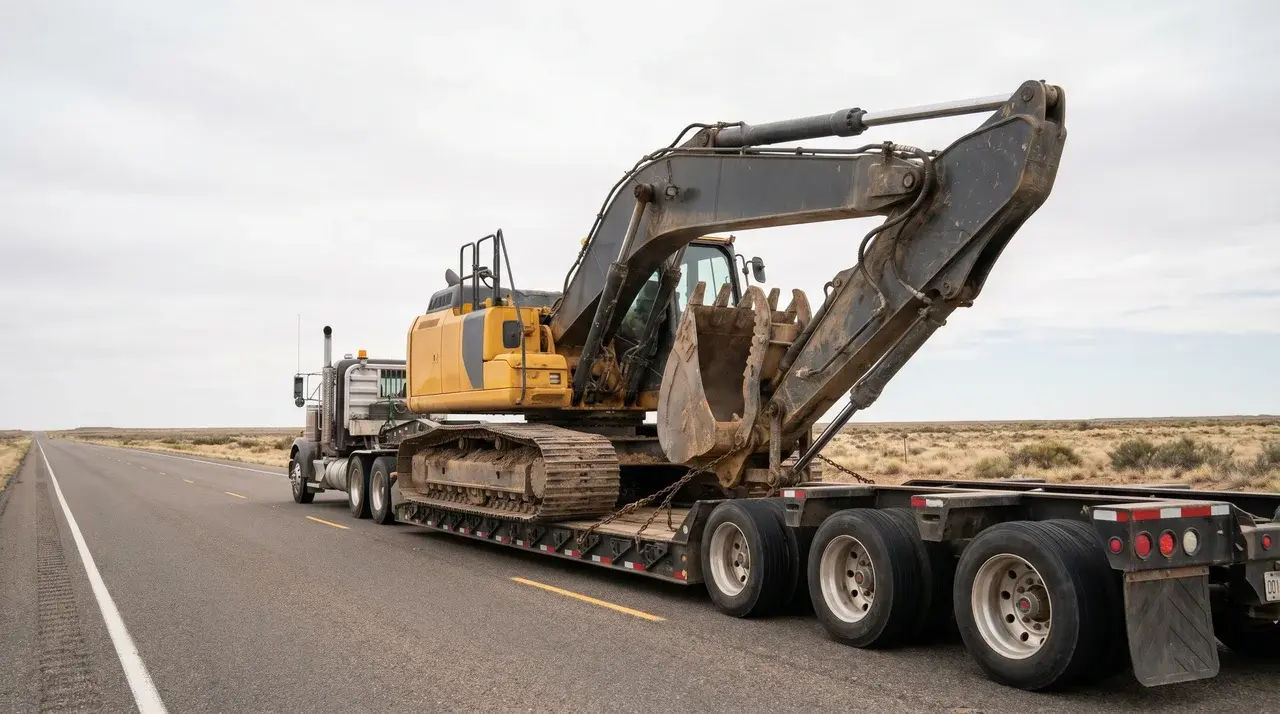
Lowboy trailers are designed for tall or heavy machinery. Their low deck height enables the transport of large equipment without exceeding legal height limits.
Lowboys are commonly used for excavators, bulldozers, and large construction equipment. Heavier loads may require more axles to properly distribute weight and comply with FMCSA axle weight regulations.
3. RGN (Removable Gooseneck) Trailers
RGN trailers have a detachable front section that allows equipment to drive directly onto the trailer. This matters for self-propelled or tracked machinery that cannot be craned onto a standard setup.
They are commonly used for cranes and large construction equipment. RGNs also support heavier loads and flexible axle configurations.
4. Multi-Axle and Specialized Trailer Configurations
Extremely large machinery may require multi-axle or specialized trailer systems. These setups help spread weight safely and meet legal transport requirements.
Some oversized loads may also require pilot cars, route surveys, and special permits. Using the wrong trailer can lead to permit issues, unsafe transport conditions, or equipment damage.
What Determines the Cost of Heavy Equipment Transport?
Heavy equipment transport costs typically range from $2 to $3.50 per mile as a base rate. That figure is a starting point; the final price depends on several variables that add to it, regardless of distance.
Permits, escort vehicles, fuel surcharges, and route complexity all add to the base rate. Two loads moving the same distance can vary significantly in final cost based solely on dimensions and permit requirements.
Here is what drives the total price:
- Distance and Route: Longer hauls cost more, but route complexity matters as much as mileage. Oversized loads may travel longer approved paths to avoid low bridges or restricted corridors.
- Equipment Size and Weight: Machines that exceed legal limits require specialized trailers, additional axle configurations, and permits, all of which add to the base rate.
- Trailer Type: Flatbed, step-deck, lowboy, and RGN trailers carry different cost structures. Lowboys and RGNs run higher than flatbeds.
- Permits and Escort Vehicles: These are line items separate from the haul rate. A three-state move with a pilot car requirement can add several hundred to over a thousand dollars in permit and escort costs alone.
- Loading and Unloading: Equipment that cannot be driven onto the trailer requires a crane or ramp setup. If that equipment isn’t on-site, it gets added to the invoice.
- Timing: Last-minute bookings cost more. Seasonal weight restrictions, which are common in northern states during spring thaw, can also limit carrier availability and add to scheduling complexity.
To get an accurate quote, provide the carrier with the equipment’s exact height, width, length, weight, and both pickup and delivery locations. Incomplete specs produce estimates, not real quotes.
To illustrate how costs stack: a legal-size forklift moving 500 miles on a flatbed might cost $1,000–$1,500 with no permits required. An excavator moving the same distance on a lowboy, triggering overweight permits in three states and requiring a pilot car, can run $4,000–$7,000 or more on the same mileage. The machine’s dimensions and permit profile matter more than distance in determining the final number.
Permits, Regulations, and What “Oversized” Actually Means
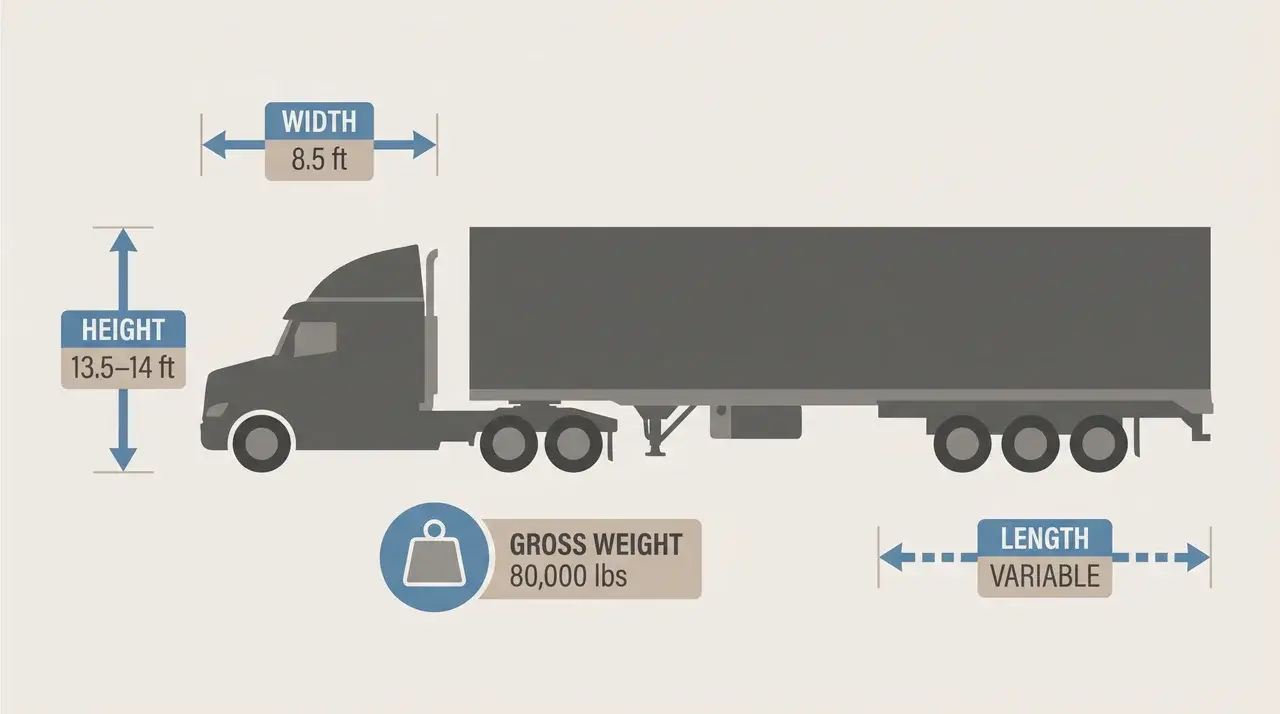
Trailer selection gets the equipment on the road. Permits determine whether it can legally stay there.
In most cases, the carrier obtains the required permits, but the shipper is responsible for providing accurate load specs, and that responsibility carries real consequences.
Permits issued on incorrect dimensions can be invalidated at weigh stations. Re-permitting costs and delays fall on the shipper when the specs they provided were wrong.
Legal Limits that Trigger Permits
Permits are required when equipment exceeds any one of four legal thresholds: width, height, length, or gross weight. Crossing a single threshold triggers a permit requirement, even if the other three are within limits.
The standard federal thresholds are:
- Width: 8.5 feet
- Height: 13.5 to 14 feet (varies by state)
- Gross Weight: 80,000 lbs
- Length: Varies by state
FMCSA regulations set federal standards, but each state controls permit approval and the movement of oversize loads within its borders.
Federal size and weight thresholds that trigger permit requirements are defined in the Code of Federal Regulations, Title 23, Part 658 (Truck Size and Weight, Route Designations—Length, Width and Weight Limitations).
How Permits are Filed?
Heavy equipment permits are typically filed by the carrier. Single-state moves require one permit. Multi-state transport requires a separate permit for each state along the route.
Each state may impose different conditions, travel windows, escort requirements, speed limits, and approved corridors. When state conditions conflict, carriers must follow the most restrictive requirement.
This is what causes multi-state transit times to expand well beyond what distance alone would suggest.
Pilot Car and Escort Requirements
Some oversized loads are legally required to have pilot cars or escort vehicles. Requirements depend on equipment size, route conditions, and state regulations.
Pilot cars warn oncoming traffic, guide the driver, and assist with clearance checks. Escort costs are separate from the base haul rate and vary by state and load size.
Route Surveys and Restricted Corridors
Route surveys confirm clearances, bridge weight ratings, and approved corridors before transport begins. Some routes restrict heavy-haul movement to daylight-only or seasonal windows.
These restrictions are the primary reason delivery timelines vary beyond distance. Restricted corridors and bridge reviews add more time than mileage alone.
A shorter 800-mile move can take longer than a 1,200-mile move if the route runs through restricted corridors or requires multiple bridge reviews.
How to Choose a Heavy Equipment Transport Company?
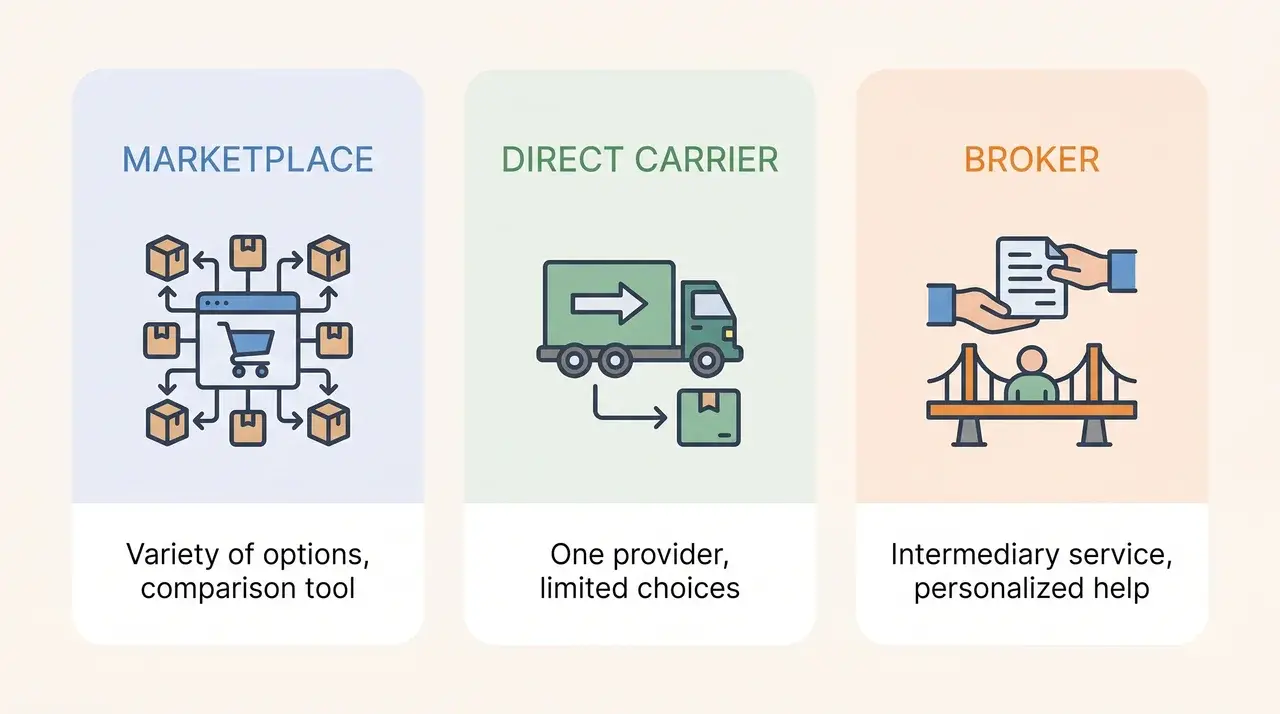
Not all heavy equipment transport companies carry the same equipment, permit experience, or trailer availability, and those gaps show up at the worst possible moment. A qualified carrier should have the proper equipment, transport authority, and experience for your load type.
The most important operational differentiator is permit handling. Carriers that manage permits in-house move faster and carry fewer coordination risks than those that outsource to third-party permit services.
Credentials and Insurance to Verify
Checking carrier credentials and insurance confirms the company can legally and safely handle heavy equipment transport. A qualified carrier should have:
- Active FMCSA authority
- Cargo and liability insurance that matches the equipment’s replacement value, not just a standard liability ceiling
- Experience with oversize or overweight loads
- Proper trailer equipment for the shipment
For high-value equipment above $100,000, verify that the cargo policy limit covers full replacement cost. Standard carrier liability often falls short of that threshold.
Questions to Ask Before Requesting a Quote
Before requesting a quote, provide accurate equipment details including height, width, length, weight, and pickup and delivery locations. Correct information helps carriers choose the right trailer and estimate permits accurately.
You should also ask:
- Who handles permits and escort vehicles, in-house or outsourced?
- Is the quote itemized?
- Are loading or accessorial fees included?
An itemized quote should separate the base haul rate, permits, pilot cars, and extra service charges.
Marketplace vs. Direct Carrier vs. Broker
| Option | How It Works | Best For | Key Consideration |
|---|---|---|---|
| Marketplace | Platforms connect shippers with multiple carriers | Comparing quotes quickly | Service quality and career experience can vary |
| Direct Carrier | The company owns and operates its own trucks | Standard or dedicated heavy-haul transport | More direct control over equipment and scheduling |
| Broker | Coordinates transport through a carrier network | Complex, multi-state, or oversized moves | Helpful for permit handling and shipment coordination |
When evaluating heavy equipment transport companies, comparing trailer availability, permit handling, and carrier experience matters more than finding the lowest rate.
How to Prepare Heavy Equipment for Transport
Preparation happens before the carrier arrives. Equipment that is not properly prepared can delay loading, void insurance coverage, or create securement problems on the trailer.
Clean and inspect the equipment.
Pressure wash the machine and photograph every surface before handoff. This establishes a pre-transport condition record. If damage appears after delivery, you need documented proof of the equipment’s state before it left your yard.
Lower and secure all attachments.
Hydraulic shovels, blades, booms, and buckets must be fully lowered and locked before loading. Anything that extends beyond the machine’s transport profile must be removed or retracted.
Some state regulations require blade detachment when the width would otherwise trigger a wider permit; ask your carrier before assuming the attachment can travel with the machine.
Confirm your dimensions reflect the machine as it will sit on the trailer.
Operating dimensions and transport dimensions are not always the same. The specs you provide for permitting must reflect the loaded configuration, not the machine’s published operating specs.
Gather documentation.
Have ownership records, equipment specs, and any maintenance records ready before the carrier arrives. Some carriers and some states require documentation at weigh stations or inspection points.
Coordinate with the carrier before doing anything.
Pre-transport preparation should match the carrier’s loading plan. Securing something they need to move, or removing something they planned to use as a tie-down point, adds time and cost at the yard.
Wrapping Up
Heavy equipment transport involves far more than moving machinery. The right trailer, permits, and experienced carriers all keep your shipment safe and on schedule.
Carriers that specialize in heavy-haul logistics handle permits in-house, carry trailer configurations for a range of load types, and understand route restrictions before the truck is dispatched.
That preparation prevents the most common sources of delay: wrong trailer assignments, permit errors at weigh stations, and route rejections mid-transit.
If you are planning to move heavy machinery, request an itemized quote and verify the carrier’s experience with permit handling before confirming your booking.
Frequently Asked Questions
How long does heavy equipment transport usually take?
Transport time depends on distance, permits, and route restrictions. A single-state move of a legal-size load can be completed in two to three days. Multi-state oversized shipments typically take five to ten days once permit processing time (often 2–5 business days per state), daylight-only travel restrictions, and weekend movement bans in some states are factored in. Bridge reviews or restricted corridors can push that further.
Who is responsible for obtaining transport permits?
Carriers typically handle permit acquisition, but shippers must provide accurate load dimensions. Permits issued on incorrect specs can be invalidated at weigh stations, and re-permitting costs fall on the shipper.
Is heavy equipment covered by standard cargo insurance?
Standard carrier liability often covers only a fraction of high-value equipment. Always verify the carrier’s cargo policy limit matches your equipment’s full replacement value before confirming the shipment.
What information does a carrier need to give an accurate quote?
Carriers need exact dimensions, operating weight, pickup and delivery locations, and whether the equipment is operational. Incomplete specs produce estimates; accurate dimensions are critical for permit estimation and trailer selection.