Warehouses have always protected valuable goods, but the financial stakes are getting higher. In 2025, CargoNet recorded 3,594 supply chain crime events across the U.S. and Canada, while confirmed cargo thefts increased 18%. Estimated losses reached nearly $725 million, up 60% from 2024, and the average theft value climbed to approximately $274,000.
At the same time, warehouses are busy workplaces. U.S. warehousing and storage businesses employed approximately 1.84 million people in August 2026, including hundreds of thousands of material movers, stock clerks, forklift operators, and other employees who may need different levels of access.
That combination of valuable inventory and constant movement makes controlling entry increasingly important. Physical keys and shared credentials provide limited visibility when employees change shifts, temporary workers arrive, contractors need short-term access, or a credential disappears.
Smart access control gives logistics operators a more manageable alternative. It can restrict sensitive areas, change permissions quickly, and create records of access activity. In this article, we will look at how these systems are improving security at warehouse entrances, loading docks, inventory areas, and other critical parts of logistics facilities.
1. Controlling Who Can Enter the Warehouse
The first security challenge is also the most basic: determining who should be able to enter.
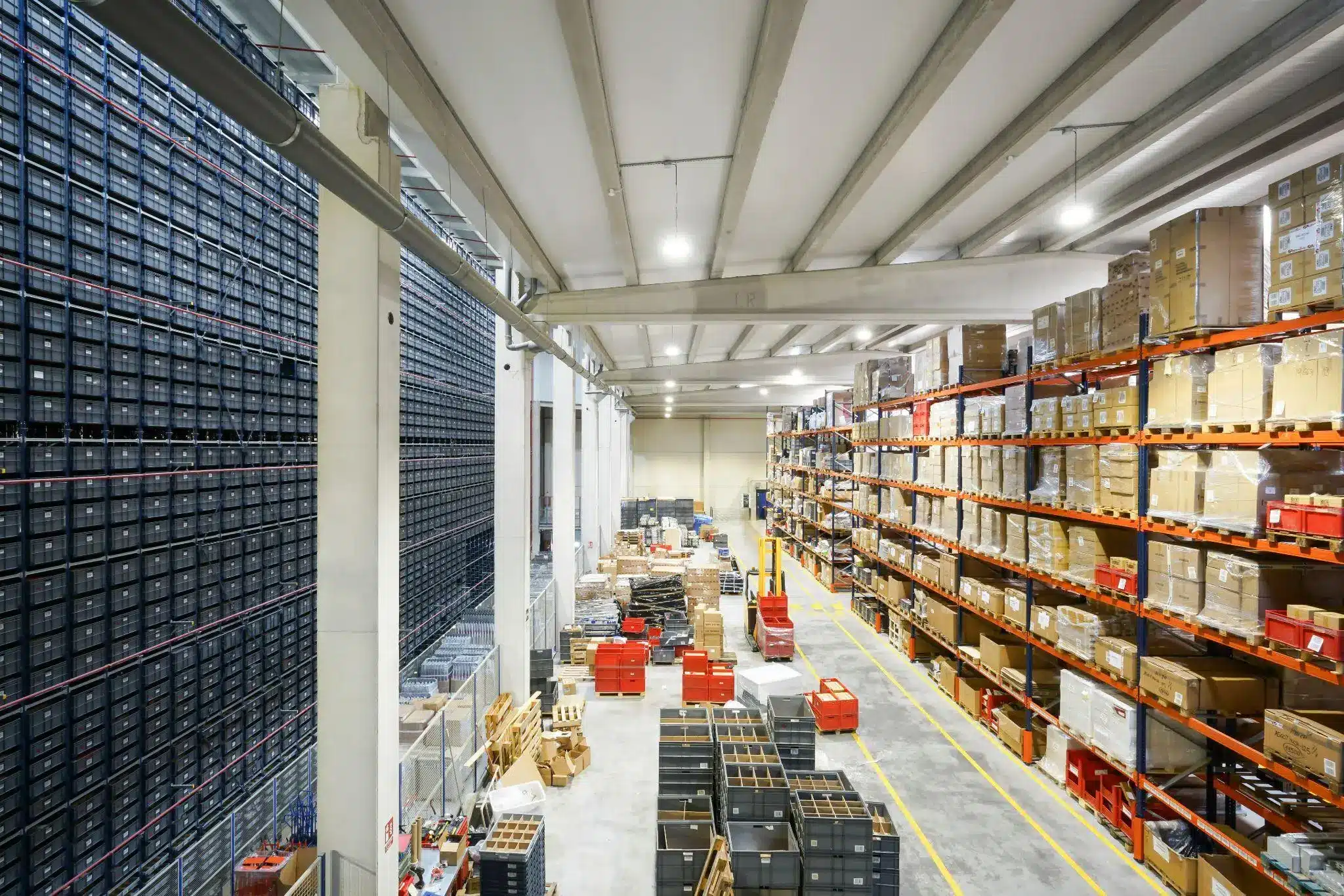
A large distribution center can have warehouse associates, supervisors, truck drivers, maintenance crews, cleaners, contractors, and visitors moving through the property. Giving everyone the same level of access creates unnecessary risk.
Smart access control allows permissions to be assigned according to a person’s role. A warehouse associate might be authorized to use the employee entrance and general storage floor, while only supervisors can access a high-value inventory cage or operations office.
This creates several practical advantages:
- Role-based access: Employees can enter only the areas required for their jobs.
- Time-based access: Credentials can work only during approved shifts.
- Restricted zones: High-value stock, IT rooms, offices, and other sensitive spaces can receive tighter controls.
- Central management: Security teams can change permissions without replacing physical locks.
This matters in facilities with large workforces. Bureau of Labor Statistics data shows that the U.S. warehousing and storage sector had about 457,740 stock clerks and order fillers and 433,060 freight, stock, and material movers in 2025.
At that scale, warehouse security has to account for people as carefully as it accounts for inventory.
2. Reducing the Risk Created by Lost Keys and Credentials
Physical keys create a surprisingly difficult security problem. If an employee loses a key, a manager may not know where it is, who has it, or whether it was copied. In higher-risk situations, restoring confidence in that door may require changing the lock and distributing new keys.
Electronic credentials are easier to manage because permissions can be changed without changing the physical lock.
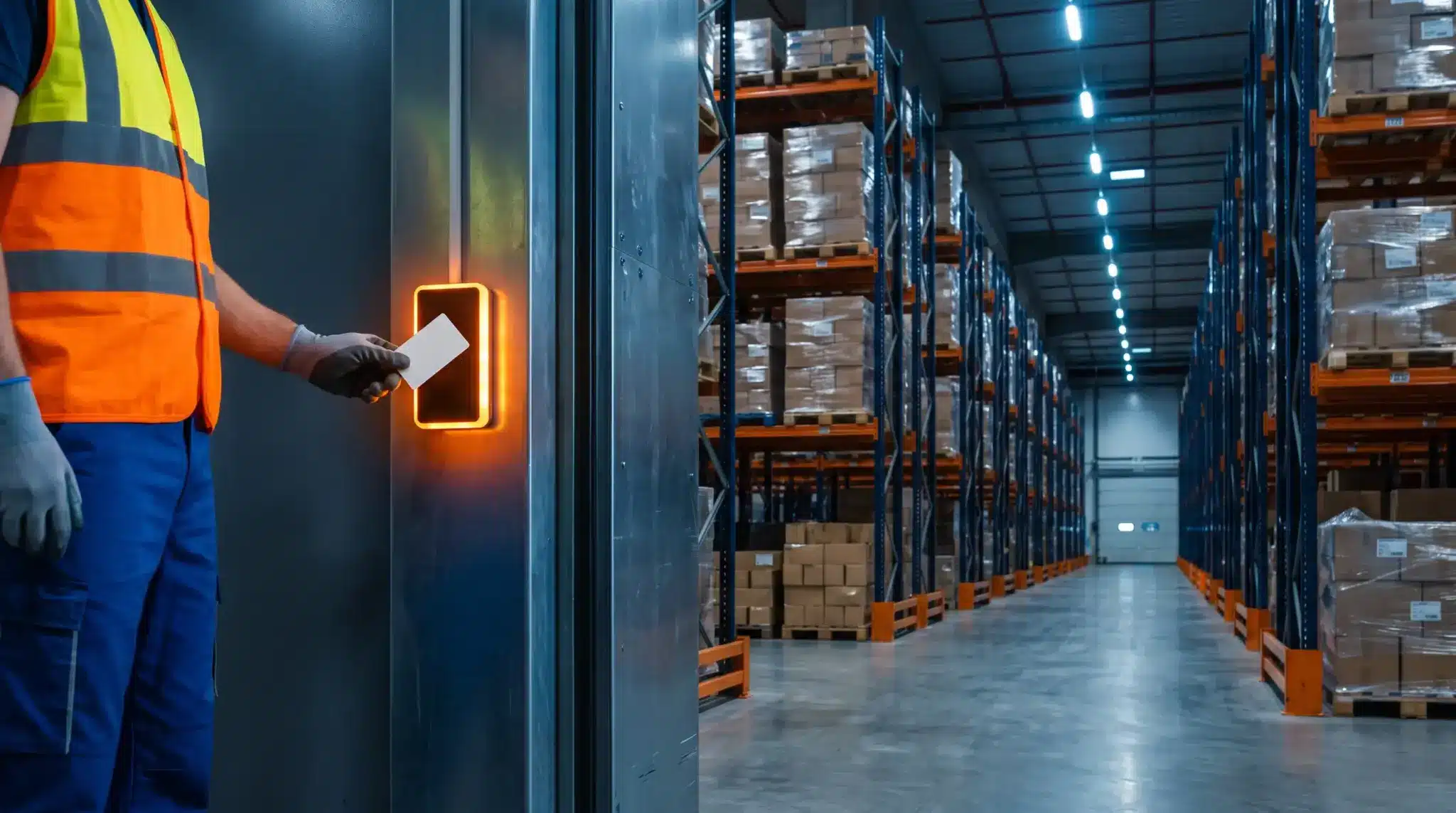
Modern card access security systems can also provide far more flexibility than traditional keys. Coram, for example, describes a cloud-based system in which users can authenticate with a key card, mobile app, or Bluetooth. Administrators can manage users and permissions remotely, while successful and unsuccessful access attempts are recorded and visible through its web dashboard or mobile app. Coram also says its local control board can continue using stored permissions if internet connectivity drops, with battery backup helping maintain operation during power outages.
The important operational benefit is control. If a warehouse employee leaves the company or loses a credential, access can be revoked without collecting every copy of a physical key.
Permissions can also be configured to expire, which is particularly useful for temporary workers, visitors, and contractors who should not retain access indefinitely.
3. Securing Loading Docks Without Slowing Operations
Loading docks are difficult to secure because they are designed for movement.
Trucks arrive and depart, drivers wait for assignments, pallets move between trailers and storage areas, and employees may repeatedly pass between indoor and outdoor spaces. Completely restricting movement would interfere with productivity, but leaving dock areas loosely controlled can create security gaps.
The risk is not theoretical. CargoNet’s analysis of thefts around the July 4 holiday over a five-year period found 184 reported cargo theft incidents, with warehouses and distribution centers ranking as the most frequently targeted location type. The average loss was approximately $109,817.
Smart access control can help operators separate normal dock activity from unrestricted building access.
For example, a truck driver might be allowed into a designated check-in area but not the main warehouse. A third-party maintenance worker could receive temporary access to a specific door during a scheduled service window. Warehouse employees could use their credentials to enter operational areas according to their assigned shifts.
The goal is not to put barriers in front of every worker. It is to make sure access follows operational needs rather than convenience.
4. Protecting High-Value Inventory More Carefully
Not every pallet in a warehouse carries the same risk.
Electronics, metals, pharmaceuticals, specialty equipment, and other high-value products may justify stronger controls than ordinary inventory. CargoNet reported that metals theft increased 77% in 2025, while food and beverage theft increased 47%. It also identified enterprise computing hardware and cryptocurrency mining equipment among the goods targeted by organized groups.
Smart access control allows warehouse operators to create security layers inside the facility.
An employee might legitimately have access to the warehouse floor but not to a cage containing high-value electronics. Likewise, maintenance staff may need access to mechanical areas without needing entry to inventory storage.
This principle, often called least-privilege access, limits permissions to what a person actually needs.
It can also improve investigations. If inventory disappears from a restricted room, managers can review which authorized credentials were used around the relevant period instead of beginning with every person who entered the facility that day.
That does not prove responsibility by itself, but it gives investigators a much clearer starting point.
5. Managing Temporary Workers and Contractors More Safely
Warehouse staffing can change quickly, particularly during seasonal peaks, major promotions, and holiday shipping periods.
Temporary employees may join for weeks or months. Contractors may visit for equipment repair, electrical work, cleaning, IT support, or construction. Drivers and vendors may require even shorter access windows.
Giving these groups permanent credentials creates an obvious problem. Their business need may expire while their ability to enter remains active.
Smart access control makes temporary authorization easier to manage. Facilities can issue credentials that work only:
- On specific dates
- During particular hours
- At designated doors
- For selected warehouse zones
Once the approved period ends, the permission can expire automatically.
This becomes particularly useful during high-risk periods. CargoNet found that reported supply chain crime events during its year-end holiday windows increased from 49 in 2020 to 89 in 2024, an increase of about 82%. Reduced staffing and increased freight dwell time were among the conditions associated with elevated holiday risk.
When facilities become busier, access rules should become more precise, not less.
6. Creating Better Access Records for Investigations
A physical key can unlock a door, but it cannot tell a manager who used it.
Electronic access control creates a record of credential activity. Depending on the system, administrators may be able to see who attempted entry, which door was involved, when the attempt occurred, and whether access was granted or denied.
These records become useful when something unusual happens.
Suppose a warehouse discovers missing inventory on Monday morning. Managers may need to understand who entered the relevant area during the weekend. Access logs can narrow that investigation by providing a timeline of credential activity.
Records can also reveal patterns before they become major incidents. Examples might include:
- Repeated denied entry attempts at a restricted door
- Access outside an employee’s normal shift
- Unexpected use of a credential at another facility
- Continued access attempts after a worker’s assignment ends
An access record should not automatically be treated as evidence of wrongdoing. There can be legitimate explanations for unusual activity. Its value comes from giving security teams verifiable information to review alongside other evidence.
7. Making Multi-Site Warehouse Security Easier to Manage
Logistics networks rarely stop at one building. A growing business may operate distribution centers, cross-dock facilities, regional warehouses, offices, and smaller storage locations.
Traditional access management can become complicated as the network expands. Each location may develop its own keys, employee lists, procedures, and security practices.
Cloud-managed access control can bring more of that administration into one system.
A central security team can potentially manage permissions across facilities, revoke credentials when an employee leaves, and maintain more consistent access policies. Local managers can still handle day-to-day requirements while the organization retains broader oversight.
This also helps when employees move between sites. Instead of issuing unrelated physical keys at every warehouse, permissions can be based on where and when the employee actually needs access.
For logistics companies focused on speed, the advantage is not simply stronger security. It is simpler administration. Security processes become easier to scale alongside the warehouse network rather than becoming more fragmented every time a new facility opens.
Key Takeaways
- Cargo security remains a significant financial issue, with estimated U.S. and Canadian cargo theft losses reaching nearly $725 million in 2025.
- Smart access control limits unnecessary entry by assigning permissions according to roles, locations, and schedules.
- Lost credentials can be revoked quickly, reducing the problems associated with missing or copied physical keys.
- Loading docks and high-value inventory areas can receive different access rules based on their operational risks.
- Temporary employees and contractors can receive time-limited permissions instead of permanent access.
- Electronic access records improve visibility by showing credential activity around important doors and restricted spaces.
- Centralized management can simplify security across multiple warehouses as logistics networks grow.
FAQs
What Is Smart Access Control in a Warehouse?
Smart access control uses electronic credentials, readers, controllers, and management software to determine who can enter particular doors or areas. Permissions can typically be changed without replacing physical locks.
Why Are Card Access Systems Useful for Warehouses?
Warehouses have changing shifts, restricted inventory areas, contractors, temporary workers, and multiple entrances. Card-based access allows managers to give different users different permissions while maintaining access records.
What Happens When an Employee Loses an Access Card?
With a properly configured electronic system, administrators can disable the missing credential and issue a replacement. This avoids the uncertainty associated with a lost physical key.
Can Contractors Receive Temporary Warehouse Access?
Yes. Many modern systems allow administrators to limit credentials by date, time, door, or area, making temporary permissions practical for contractors and other short-term users.
Should Access Control Replace Warehouse Cameras and Security Staff?
No. Access control addresses who is authorized to enter, while cameras, alarms, lighting, physical barriers, inventory procedures, and security personnel address other risks. Warehouse security is strongest when these measures work together.
Conclusion
Warehouses are becoming larger, faster, and more connected, but those advantages also make access management more complicated. Thousands or even millions of dollars in inventory may move through a facility while employees, drivers, contractors, and temporary workers use the same property.
Smart access control gives logistics operators a practical way to bring more structure to that movement. It can restrict sensitive areas, revoke lost credentials, manage temporary access, maintain activity records, and simplify security across multiple facilities.
With cargo theft losses reaching hundreds of millions of dollars, controlling who can enter a warehouse and where they can go is no longer a minor administrative task.
The question for logistics operators is increasingly simple: if valuable inventory is carefully tracked throughout the supply chain, shouldn’t access to the buildings holding it be tracked just as carefully?