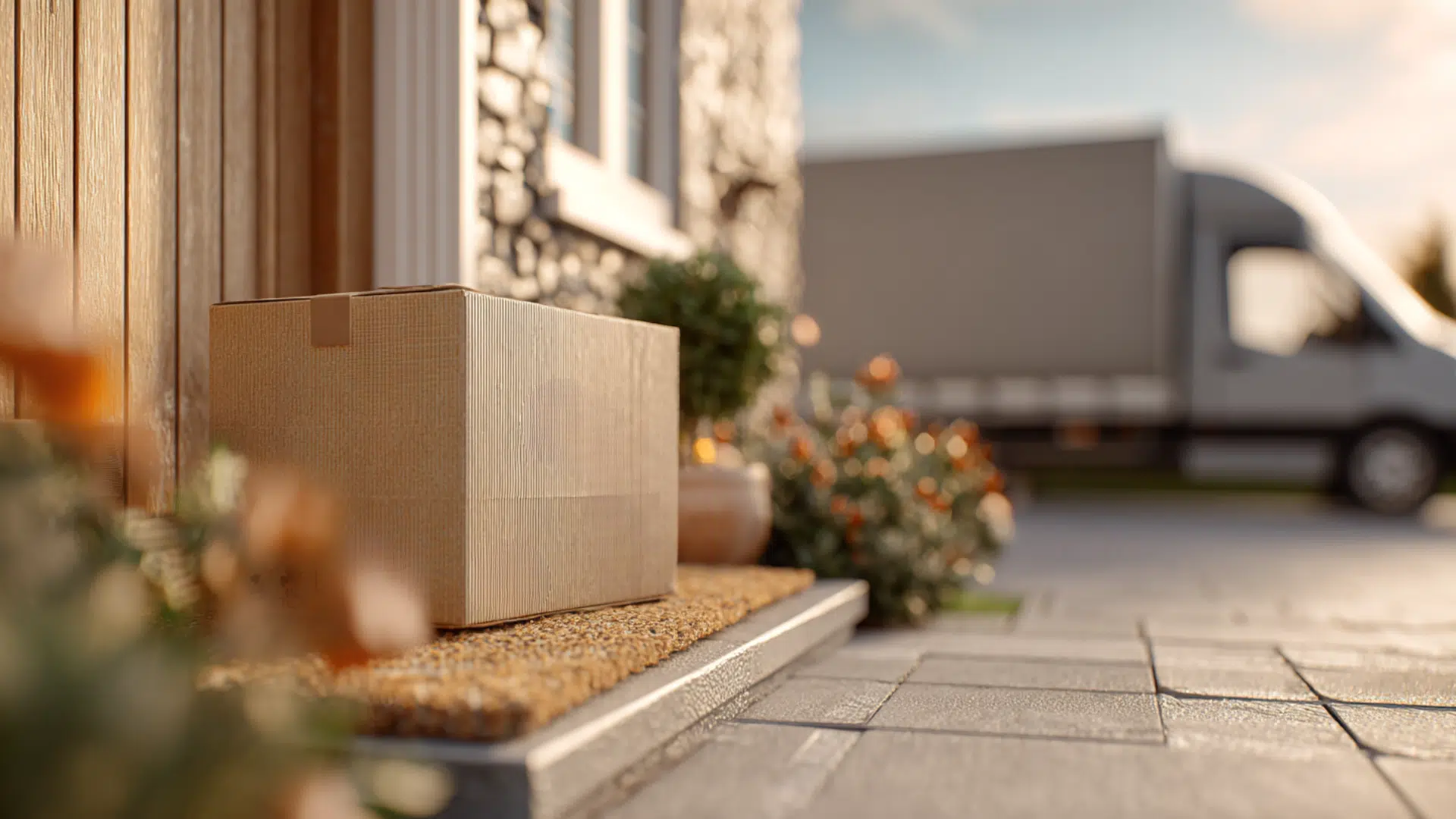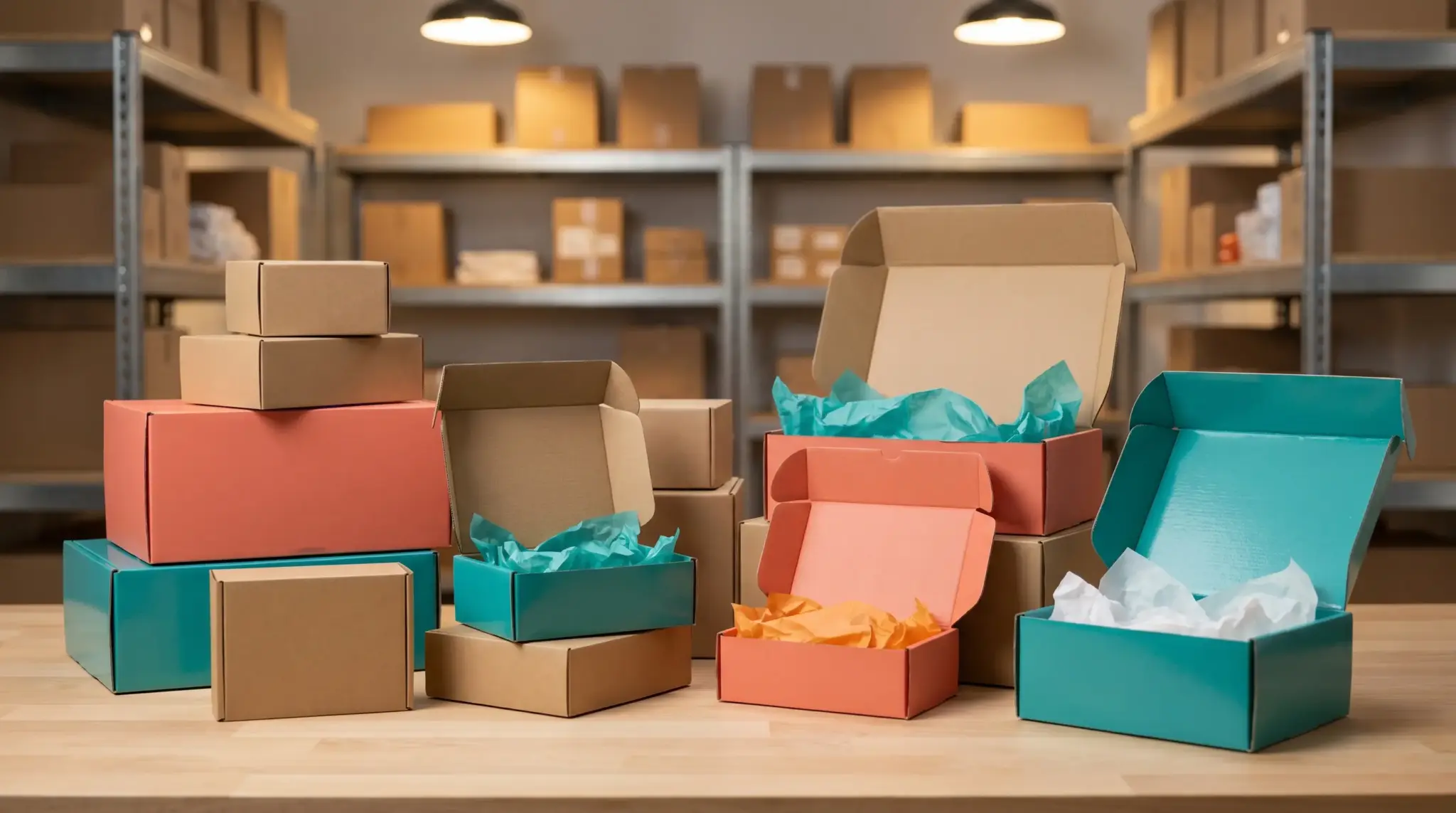
Your product may be brilliant, but the first thing customers touch is the package. For Amazon FBA, that carton must protect the item, project your brand, and meet every line of Amazon’s prep checklist.
Urgency is rising. Since March 2023, many fulfillment fees use dimensional weight, so every extra cubic inch eats margin. At the same time, Amazon shipped twelve percent of 2023 orders in manufacturers’ own cartons, putting your packaging on full display.
We analyzed invoices, lead-time logs, and seller forums to score twelve partners that make right-sized, brand-ready boxes simple.
How We Ranked the Twelve
We didn’t toss names in a hat; we built a scorecard that mirrors the real headaches you and I face when sending inventory to FBA.
First, we pulled sample quotes from each contender (same box size, same 500-unit run) so cost comparisons stayed apples to apples. Any provider that hid plate or freight fees in the fine print never made it past this step. Transparency matters because surprise invoices land straight on your profit line.
Next, we weighed six factors and assigned each a share of the final score. Cost per unit led at 25 percent. Minimum-order flexibility followed at 20 percent. Branding muscle—inside printing or specialty finishes—took another 20 percent. Amazon-specific compliance expertise earned 15 percent, while shipping support and sustainability split the remaining 20 percent.
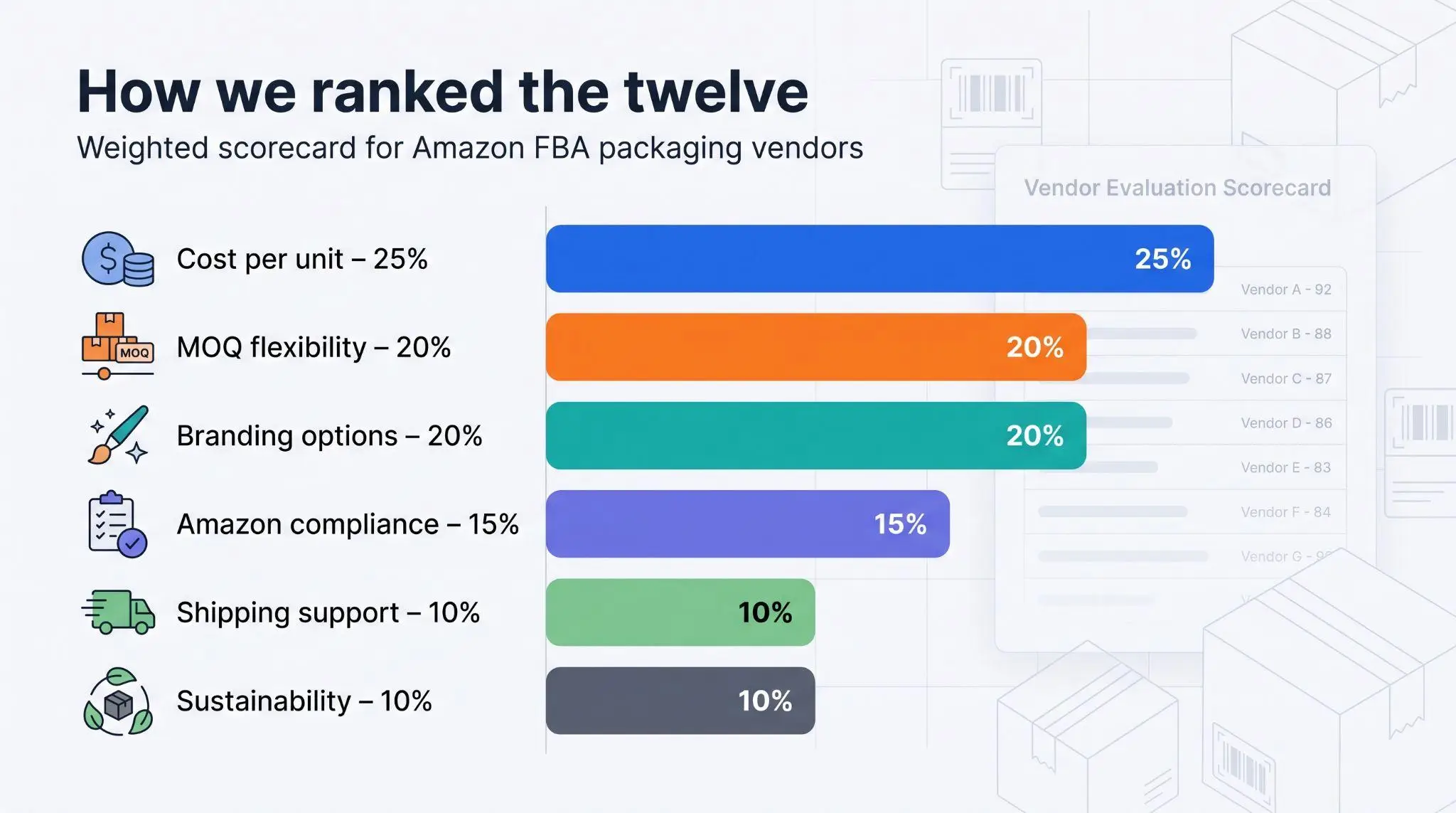
Those weights aren’t random. Sellers tell us the fastest way to bleed cash is paying for more boxes than they need or discovering late that barcodes were printed too small. Our rubric rewards partners who solve those issues upfront.
Finally, we checked every data point against seller-forum threads and public FAQs. When numbers clashed, we went back for live quotes until they matched. The result is a ranking you can use with confidence: providers scored, sorted, and ready for your short list.
1. Zenpack: End-to-End Packaging Without Surprise Fees
Zenpack works less like a print shop and more like a packaging department you can hire on demand.
During the kickoff call, the team maps every milestone: strategy, 3-D renders, prototypes, production, and freight. They share the exact cost of each line item. Their public FAQ even posts ballpark figures: design projects start around $8,000, prototypes about $500, and there is no minimum order; it also explains that once orders climb into the thousands, Zenpack can route the same dieline through its wholesale packaging lanes to reduce per-box cost without touching the artwork. No hidden plate charges, no “rush” fees slipped in later.
That clarity lets you focus on creative choices. Zenpack’s designers tweak board weight, test inserts, and suggest premium finishes that survive Amazon’s conveyor miles. Need the FNSKU barcode printed on the lid so you skip sticker labor? They treat it as a routine checkbox, not a special upcharge.
The typical timeline is four to six weeks door to door. While that is slower than a digital quick-turn shop, you trade a few extra days for a single partner who guides the concept from sketch to pallet and even books freight to FBA. If your product is also heading to retail, they align the structural specs so one box works on both the Amazon shelf and a physical shelf.
Choose Zenpack when you want a premium unboxing experience and rock-solid cost certainty. It is an investment, but one you can quote to the cent before you approve the project.
2. Refine Packaging: Small-Business Friendly With Free U.S. Shipping
When you are validating a product, cash flow matters. Refine Packaging keeps costs light.
You begin with a short online form, not a sales call. Enter box size, quantity, and finish; a real person emails an itemized quote. The price already covers plate work, proofing, and ground shipping within the United States. Because no setup fees appear later, you can save a few hundred dollars on a 250-unit run.
The minimum order is about one hundred units, a gentle step up from sample territory that lets you brand your first batch without filling the garage. Most orders leave the plant in 8 to 10 business days, so you can tweak artwork between launches and still meet inventory cutoffs.
Need design help? The support team adjusts dielines, fixes bleed errors, and can trim dimensions to stay under Amazon’s oversize tier. You pay the same quote either way. The result is packaging that looks polished, arrives quickly, and protects early budgets.
3. Packlane: Instant 3-D Mock-Ups and Live Pricing at Your Fingertips
Packlane turns box buying into a coffee-break task.
Open the web editor, enter dimensions, and a full-color 3-D model spins on screen. Every tweak—a deeper lid, inside print, kraft versus white board—updates the unit price in real time. No emails, no waiting. You know the exact cost of twenty-five boxes versus two hundred before you click checkout.
That transparency encourages experimentation. Trim the height by half an inch and watch the quote dip enough to push your SKU below Amazon’s higher fee tier. Toggle rush production and see the surcharge appear instantly, keeping launch dates and budgets aligned.
The minimum order is twenty-five units, and standard runs ship in about a week. Need them Monday? A rush option cuts production to two or three business days. Digital printing removes plate fees, making Packlane a sweet spot for fast, small-batch iterations such as seasonal designs, influencer kits, or that last-minute color correction before Prime Day.
The trade-off is scope. Packlane focuses on corrugated mailers, folding cartons, and shipping boxes. No rigid gift boxes or custom foam inserts. For straightforward e-commerce packaging that looks sharp and arrives fast, Packlane lets you design, price, and order before your latte cools.
4. Arka: Ultra-Low Minimums With an Eco Heart
Arka shows you can go green without draining the budget.
Order ten boxes, upload artwork, and you are ready. The online price already covers tooling and recycled board, so costs lock in before the credit card comes out. Even a fifty-box test run stays affordable, perfect for Kickstarter perks or seasonal colorways.
Speed matches flexibility. Digital presses finish short runs in about a week, and every box ships from U.S. plants, trimming transit time and carbon miles. Each carton is 100 percent recycled, printed with soy ink, and certified frustration-free, which keeps Amazon happy and your sustainability story honest.
Add the Shopify app for automatic reorders and Arka becomes a simple option for micro brands that want planet-friendly packaging on day one.
5. PakFactory: High-Touch Engineering for Complex Builds
Some products need more than a pretty mailer. Think magnetic-closure gift boxes, die-cut foam, or child-resistant cartons. That is PakFactory’s specialty.
The process begins with a discovery call, not a configurator. An account specialist asks about shelf impact, fragility tests, and retail regulations, then sketches options in real time. Within a few days you receive an itemized quote that lists tooling, finishes, freight, and per-unit cost at the MOQ of 500. No surprises hide in the fine print.
Higher minimums provide heavyweight perks. In-house engineers stress-test board strength, run drop simulations, and refine inserts until delicate electronics or glass jars travel through Amazon’s conveyor system without damage. Lead times average three weeks, slightly longer than digital printers, and each checkpoint appears on the project calendar so launch teams can plan backward with confidence.
If you are moving from a basic mailer to packaging that doubles as a branded showcase, PakFactory offers agency-level guidance without an agency retainer. It is the partner that handles the structural details so your product arrives flawless and looks polished on arrival.
6. The Custom Boxes: Real-Time Quotes for Every Niche
If you want packaging variety without jumping between vendors, The Custom Boxes acts as a digital buffet.
Pick a style such as a corrugated mailer, folding carton, rigid magnetic box, or branded tape, then slide the dimension bars. The price field updates instantly as you adjust length, ink sides, or gloss varnish. This live calculator removes back-and-forth emails and lets you lock costs while ideas are fresh.
Minimum orders hover near 100 units, a comfortable midpoint for brands that have outgrown 50-box pilots but are not yet filling pallets. Production usually wraps in 10 to 14 business days, and standard mainland U.S. shipping is free. Need extras? A live-chat designer can nudge bleed lines, add a barcode zone, or trim a millimeter to stay under Amazon’s oversize tier, all before art goes to press.
The platform’s widest appeal is breadth. You can source product cartons, outer shippers, warning labels, and void-fill inserts in one checkout. That consolidation pays off at FBA: every piece arrives sized to fit, printed to match, and billed on one invoice your accountant will appreciate.
7. Sticker Mule: Fast Branding Touches When You Need Them Yesterday
Sometimes the product box is set, yet the shipment still looks plain. Sticker Mule solves that problem in a week.
Upload your logo for poly mailers, tape, or roll labels, and a proof lands in your inbox within four hours. Approve it before lunch and the order often ships the next day, arriving in five business days or less. Minimums start at fifty mailers or a single roll of tape, so you can test branding on a micro batch without filling storage space.
Quality comes first. Poly bags are tough, self-sealing, and already carry the required suffocation warning. Water-activated tape bonds firmly to corrugate and prints in full color, turning plain shippers into moving billboards. All prices include U.S. shipping, so the figure on the product page is the final cost.
Sticker Mule will not create a custom box, but it will add instant personality to your existing packaging. Use it to brand FBA cartons, seal returns with printed tape, or elevate direct-to-consumer orders between larger print runs.
8. Packola: Creative Freedom With Prices That Stay Put
Packola feels like Packlane’s artistic sibling.
Its sandbox editor lets you spin a 3-D box, splash interior graphics, add foil, or step up to a heavier flute, all while a visible price tag stays steady. The experimentation phase stays safe for budgets: test a matte-plus-foil combo or print inside jokes under flaps without emailing for fresh quotes.
Minimums match Packlane at 25 units, but Packola leans into premium touches. Spot UV, embossing, and two-sided prints appear in the interface and on the invoice with equal clarity. Standard production finishes in about 10 business days; an expedited option cuts that roughly in half, and you see the surcharge before you commit.
For brands that have outgrown plain mailers but are not ready for agency fees, Packola offers a middle lane: richer finishes, manageable minimums, and costs you can predict to the cent.
9. Packwire: Low-Stress Ordering for Tiny to Tidy Batches
Packwire’s promise is peace of mind. The interface shows four core box styles and a short list of materials, so choice overload never creeps in. Enter dimensions, pick kraft or white, and a clean quote appears with no surprise upgrades.
Minimums drop to about 10 units, making it one of the few places you can order packaging for a micro test without paying prototype rates. Standard production runs 10 to 20 business days depending on quantity, and support staff step in early to flag artwork hiccups. That human proofing saves first-time designers from costly misprints.
Because options are curated, Packwire will not craft elaborate rigid sets or foil-stamped showpieces. What you get is a sturdy, well-printed mailer or folding carton that arrives on time and matches the mock-up. For sellers who value simplicity and a helpful email thread over advanced finishes, Packwire keeps the process calmly predictable during launch week.
10. Fantastapack: Factory-Direct Pricing for Sample-Size Runs
Fantastapack is the e-commerce arm of a major corrugated manufacturer, so you buy straight from the press, not a middleman. That difference shows as soon as you enter quantity.
Need just one fully printed mailer for a photo shoot? The site quotes it without hesitation. Scale to 200, and per-box cost often undercuts bigger platforms by a dollar or more because no reseller margin slips in.
Templates cover dozens of shapes, from wine carriers and candle jars to pizza boxes, and you can download a dieline to design in Illustrator or build it in their 3-D tool. Standard production is 10 business days, consistently met thanks to the parent company’s industrial capacity. A paid rush cuts that timeline roughly in half when calendars tighten.
The trade-off: customer service expects print-ready files and will not fine-tune artwork. If you or your designer can deliver clean PDFs, Fantastapack provides sturdy boxes at sample-friendly volumes and wallet-friendly prices.
11. EcoEnclose: Sustainability First, Numbers Second
EcoEnclose wears its mission on every flap. Each corrugated box is made from 100 percent recycled content, much of it post-consumer, and printed with soy inks. For brands selling organic lotions or zero-waste kits, that origin story mirrors your product story without an extra marketing insert.
Minimums start at 100 printed units. Prices sit a bit higher than commodity vendors—around two dollars per 8-by-6-by-4-inch mailer in a 100-count run—but the material pedigree is clear, and the quote appears instantly online. Custom sizes let you trim spare air, keeping dimensional-weight fees in check and aligning with Amazon’s push to ship goods in their own packaging.
Lead times range from two to four weeks because EcoEnclose prints domestically and often calibrates presses for soy ink density. The payoff is traceability: you can track where every sheet came from and how each component can be recycled curbside.
Design choices lean minimalist. One- or two-color prints preserve recyclability, so consider printing a QR code that teaches customers how to reuse or recycle the box. EcoEnclose closes the loop while you open the door to eco-minded shoppers.
12. Direct-From-China Suppliers: Lowest Cost When Volume Rules
Once your FBA line moves a few thousand units each quarter, small savings per box add up. That is when factory sourcing from China deserves a look.
On Alibaba you will find hundreds of plants quoting custom mailers for 30 to 50 cents apiece at minimums around 1,000 units. Push the order to 5,000 and prices can drop near a dime, even after sea freight. These savings beat most domestic printers, but they come with trade-offs.
First, lead time stretches. Plan three to four weeks for production plus another four to six at sea. A tight launch calendar may force air freight, erasing much of the cost gain. Second, quality varies. Always order a physical sample; most factories refund the sample fee once you place the bulk run. Check board thickness, print accuracy, and fit before wiring the 30-percent deposit.
Communication matters as well. Provide a vector dieline with Pantone codes, barcode placement, and the required “Made in China” text in English and Chinese. Clear files reduce late-night clarifications. Many product manufacturers will coordinate with your chosen box factory so goods leave China pre-packed and FNSKU-ready, trimming a handling leg.
Factory sourcing increases cash tied up early and adds logistical complexity. Evaluate it only when forecasted volume justifies pallet-level economics and your team can manage longer timelines and language gaps.
Compare Your Options at a Glance
We just covered a lot of ground, so let’s zoom out and stack the contenders side by side. The mini-matrix below highlights the numbers sellers ask first: MOQ, a mid-range unit cost, and how long you will wait before boxes hit your dock. Use it as a quick gut-check, then circle back to the deeper profiles when two or three names survive the initial cut.
Provider | Minimum order | Example cost (250-count mailer) | Typical lead time | Stand-out strength |
Zenpack | None (cost-efficient ≥10k) | Project-based | 4–6 weeks | Full-service design + logistics |
Refine Packaging | ~100 units | $3.34 | 2 weeks | Free U.S. shipping, no setup fees |
Packlane | 25 units | $1.50 | 1 week | Live 3-D pricing tool |
Arka | 10 units | $2.30 | 1 week | 100 percent recycled, FFP certified |
PakFactory | 500 units | $1.20+ | 3 weeks | Engineering for complex builds |
The Custom Boxes | 100 units | $1.30 | 2 weeks | One-stop catalog breadth |
Sticker Mule | 50 mailers | $1.58 | <1 week | Tape, labels, mailers fast |
Packola | 25 units | $1.50 | 2 weeks | Premium finishes with flat pricing |
Packwire | 10 units | $5.00 (tiny run) | 2–3 weeks | Guided proofs, low-stress UI |
Fantastapack | 1 unit | $2.50 | 2 weeks | Factory-direct on micro runs |
EcoEnclose | 100 units | $2.00 | 3 weeks | Highest recycled content |
China direct | 500–1,000 units | $0.30 | 8 weeks* | Ultra-low cost at scale |
*Lead time includes ocean freight.
Remember, numbers shift with every inch and ink pass. Treat this as a compass, not a contract, and always request a current quote before locking a production date.
Trends That Will Shape Your Next Packaging Decision
Amazon keeps moving the goalposts, and smart sellers move with them.
First, size now hits the wallet harder than weight. Since March 1, 2023 fees on many European FBA shipments use dimensional weight, charging you for every cubic centimetre of air you ship. Right-sizing boxes is no longer just eco-friendly; it is a live margin play. Several providers above, including EcoEnclose and The Custom Boxes, let you dial in custom dimensions to stay under fee thresholds.
Second, transparency sells peace of mind. After years of founder stories about surprise plate fees, outlets such as Yonkers Times now highlight companies that post every cost up front, with Zenpack singled out as the example. Expect more vendors to follow; hidden surcharges feel outdated when instant quotes are table stakes.
Third, Amazon’s own packaging shrank. About twelve percent of 2023 orders shipped without an extra Amazon box through the Ships in Product Packaging program. Your retail carton may arrive on a customer’s doorstep unshielded, so it must look good, survive transit, and peel clean of labels. Providers that certify against Amazon’s frustration-free or SIOC tests, such as Arka and PakFactory, give you a head start.
Finally, sustainability has moved from preference to expectation. Consumers reward recycled content, and Amazon’s algorithms increasingly prefer packages that reduce waste. Choosing eco materials today protects tomorrow’s listings.
Conclusion
Keep these currents in mind while you shortlist vendors. The right partner does more than print boxes; they help insulate your brand from the next policy change.
FAQ on Amazon FBA Packaging
Do I need custom packaging to qualify for Brand Registry?
No. Amazon only requires your brand name or logo to appear on the product or the packaging. A simple printed box or even a branded label meets that rule. Polished packaging can still speed approval and helps your listing look established from day one.
Will Amazon re-box my item if I ship it in my own carton?
Often, it will not. In 2023 about twelve percent of global orders left fulfillment centers in the manufacturer’s packaging alone. If your box is sturdy, fully sealed, and barcode-ready, Amazon applies a shipping label and sends it to the customer. Your retail carton must therefore survive the trip and look good on arrival.
How do I avoid extra FBA fees tied to package size?
Since March 1, 2023 many fees use dimensional weight, charging for every cubic centimetre of air you ship. Right-sizing—either by trimming existing dimensions or switching to a padded mailer—protects margin. Several providers in this guide let you adjust sizes by millimetre to stay under fee thresholds.
Is pre-printing the FNSKU worth it?
Yes. When the barcode is part of the artwork, inbound receiving moves faster and you skip Amazon’s per-unit labeling charge. Providers such as Zenpack include barcode placement in the first proof.
What packaging mistakes trigger inbound defect fees?
Missing suffocation warnings on poly bags, weak cartons that cave during palletization, and barcodes covered by tape are common culprits. Amazon charges for every unit it must re-prep. Working with vendors who know FBA specs—and double-checking Seller Central requirements—keeps those surprise costs at zero.
When should I switch to an overseas box supplier?
Only when you forecast pallet-level volumes and can wait about eight weeks door to door. Factory-direct orders can cut unit cost by up to seventy percent, but longer timelines, higher MOQs, and freight coordination add complexity. Start domestic, prove demand, and then weigh whether the savings offset the added logistics.
These answers clear common packaging puzzles. Use them as reference points while you choose the vendor and box size that match your growth plan.