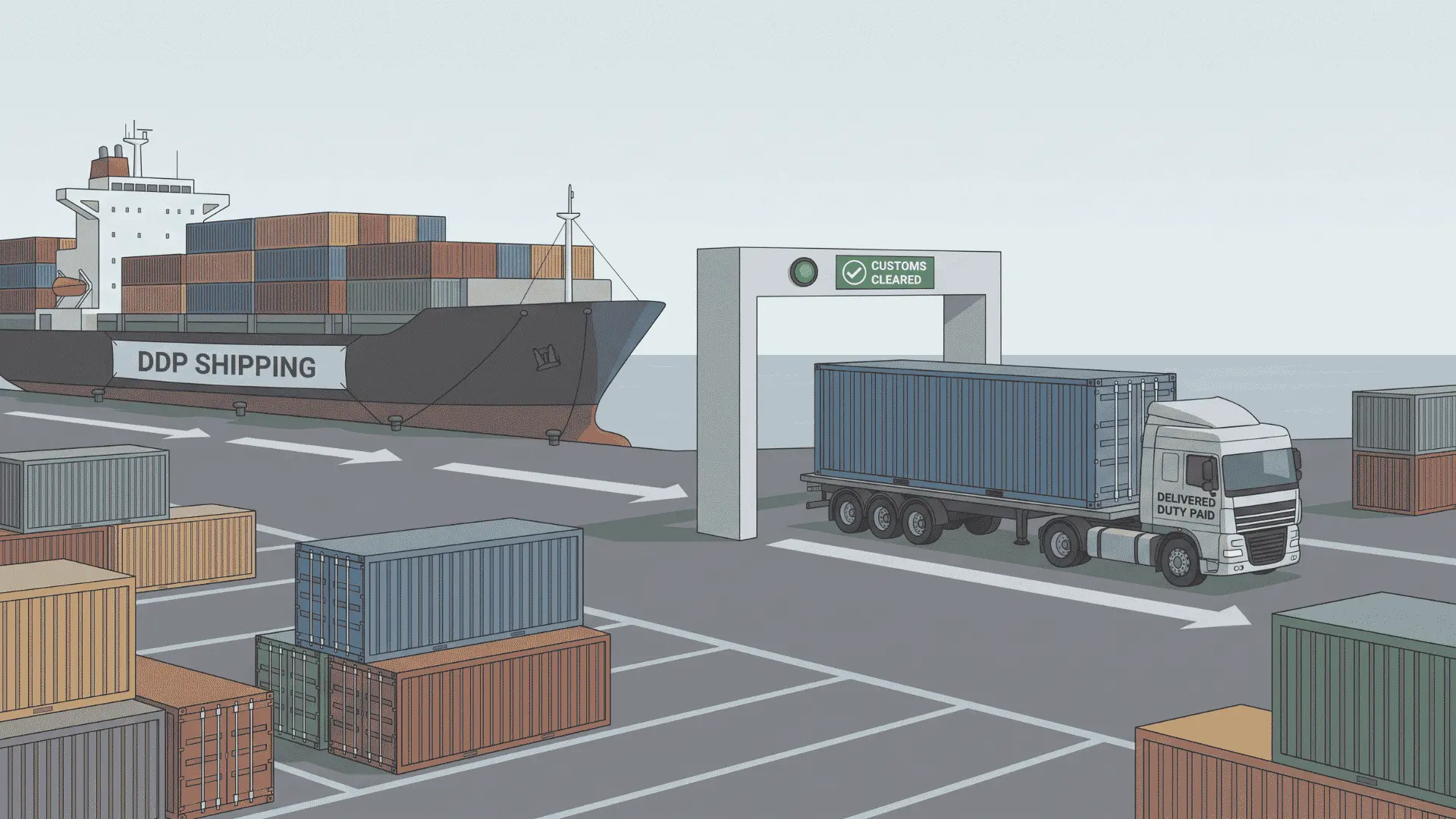
DDP shipping sounds like the simplest deal in global logistics: pay once, ship everything, and the buyer does nothing at the destination.
In real operations, that assumption is exactly where things start to slip. DDP shipping shifts responsibility in a way that only becomes visible when a shipment hits customs.
I’ve seen cases where a “clean” quote turned into a stalled container because the local entity requirement wasn’t understood until the goods were already in transit.
What looks like convenience on paper often turns into exposure that only shows up at the worst time. Here’s what actually happens when that responsibility moves end to end.
DDP Shipping: What It Actually Means When Responsibility Shifts
DDP shipping sounds like the simplest deal in global logistics. Pay once, ship everything, and the buyer does nothing at the destination.
In real operations, that assumption is exactly where things start to slip. DDP shifts responsibility in a way that only becomes visible when a shipment hits customs.
What looks like convenience on paper often turns into exposure that shows up at the worst time. Here is what actually happens when that responsibility moves end to end.
What is a DDP Shipment?
DDP, or Delivered Duty Paid, is an Incoterms 2020 rule that places the full cost and responsibility of delivery on the seller, from the point of origin to the named destination.
That covers transport, export clearance, import clearance, duties, and taxes. Everything stays on the seller’s side until the goods are placed at the buyer’s disposal at the agreed location.
Paying for something and being legally responsible for it are not the same thing. Under DDP, the seller carries both.
Who Holds the Risk
If goods are lost or damaged in transit, that is the seller’s problem. Risk does not transfer to the buyer until the goods arrive and are placed at their disposal at the named destination. Every mile before that point sits entirely with the seller.
The Importer of Record Requirement
To clear goods through customs in the destination country, someone has to act as the importer of record. Under DDP, that is the seller.
Importer of record status is not a checkbox. It is a legal designation with real liability attached. The IOR is accountable to the destination country’s customs authority. In some markets, a foreign company cannot hold that status without a locally registered entity.
A DDP shipment is not just prepaid shipping. It is a legal commitment to own the entire delivery, including customs accountability, in a country that may not be your own.
What DDP Shipping Covers And Where the Seller’s Obligation Ends
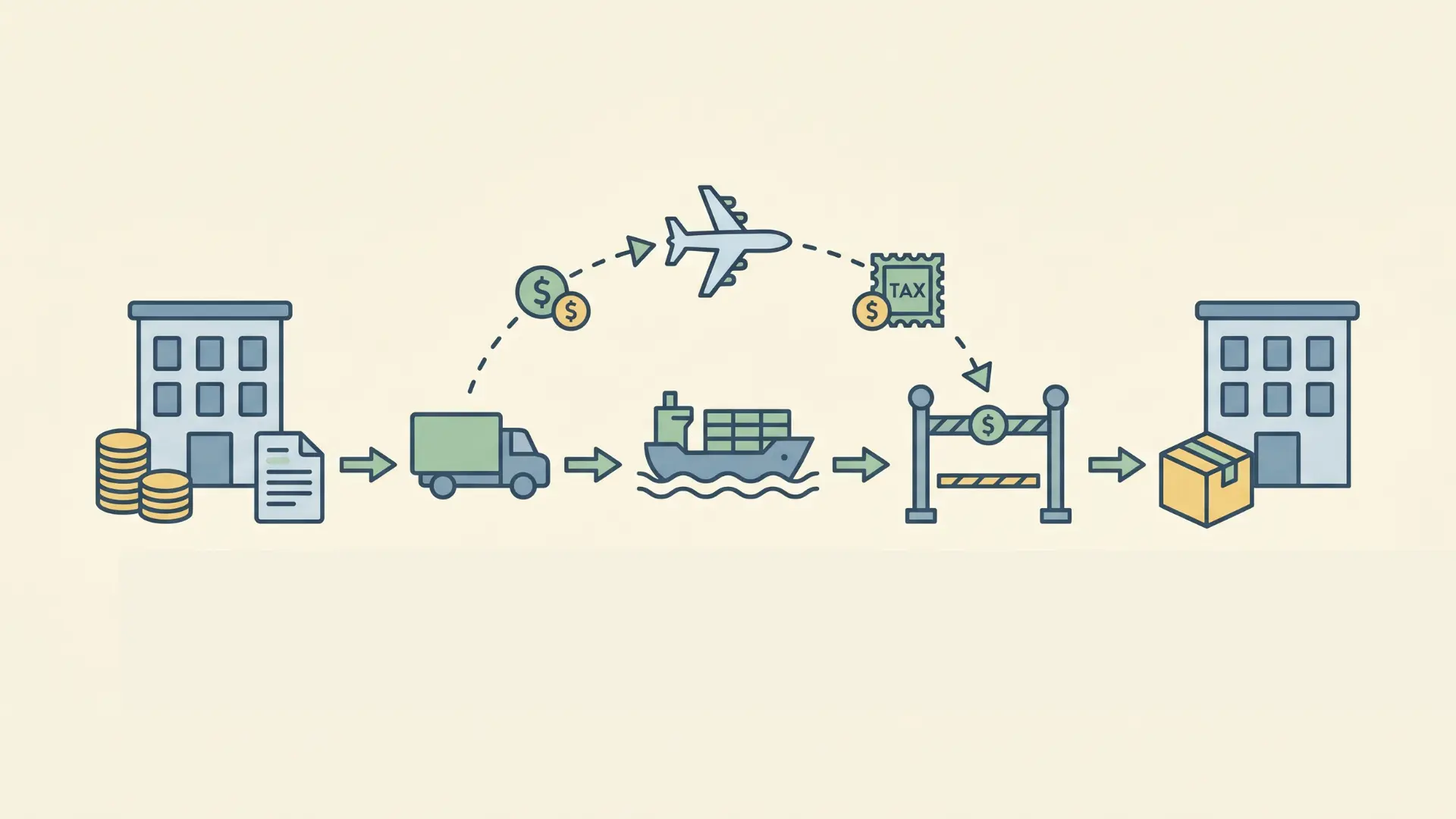
The seller’s responsibility under DDP is broad. But it has a precise boundary, and knowing where it ends matters as much as knowing what it includes.
Here’s everything the seller owns from the moment goods leave origin:
- Origin handling and export packaging
- Domestic transport to the export port
- Export customs clearance and documentation
- International freight
- Import customs clearance and duties
- Local taxes at destination (VAT, GST)
- Last-mile delivery to the named destination
That’s the full chain. Every cost, every clearance, every handoff is the seller’s responsibility until goods reach the agreed location.
What the Seller Pays
Every item on that list comes with a cost. Some of it is predictable. Some of it isn’t.
International freight and basic handling at origin usually stay fairly steady. But import duties and local taxes are a different story. They shift based on product category, destination country, and sometimes even changes in trade rules that catch people off guard.
This is where a lot of sellers slip up. A landed cost that looks solid today can quietly break next quarter if duty rates move. And under DDP, that risk doesn’t sit with the buyer. It sits with the seller fully.
Where the Obligation Ends
The seller’s job ends when the goods reach the place named in the contract. Sounds easy, but it can get messy.
If the contract says a port or a freight terminal, the seller is only responsible up to that point. They don’t have to take it further to the buyer’s warehouse. If it says a full street address, then delivery has to reach that exact spot.
This is where things usually go wrong. If the place is written in a vague way, there’s room for confusion. And when that happens, people start arguing about who pays for what.
If the buyer picks an unloading spot that the seller can’t actually reach, the extra cost and risk might move to the buyer. But that only works if the contract clearly says so.
How DDP Shipping Works Step by Step
DDP is not a single transaction. It is a chain of handoffs, each with a different owner, a different set of documents, and its own point where things can go wrong.
Step 1: Pre-Shipment Preparation
Before anything moves, the seller needs the correct export documentation in place. That includes a commercial invoice, packing list, and export license where applicable.
Goods must be classified correctly under the destination country’s tariff schedule. That classification determines how much duty gets charged. An incorrect classification either increases costs unnecessarily or holds the shipment at customs until it is resolved.
The seller also books the carrier and arranges inland transport to the export port. Carrier selection affects transit time, insurance coverage, and who handles customs filing on the origin side.
Step 2: Customs Clearance and the Importer of Record
When goods arrive at the destination country’s border, someone must present the import declaration, pay the duties, and take legal responsibility for the shipment entering that market. That person is the importer of record. Under DDP, that is the seller.
If the seller does not have importer of record status in the destination country and cannot obtain it without a locally registered entity, the shipment stalls at the border. Goods sit in a bonded warehouse while storage fees accumulate.
A freight forwarder can manage the logistics around this. They cannot make you a legal importer in a foreign country. That requires either establishing a local presence or appointing a qualified third-party IOR service. Both take time and cost money, and neither should be arranged after the shipment is already in transit.
Step 3: Final Delivery and Risk Transfer
Once customs clears, the seller handles last-mile delivery to the named destination. At this stage, local transport conditions and delivery access matter more than paperwork.
Risk transfers to the buyer at one precise moment: when the goods are placed at their disposal at the agreed location. Until that point, everything remains the seller’s responsibility. Damage, delay, or failed delivery in the final stretch still sits with the seller.
Insurance should be arranged before the shipment leaves origin, not after a problem surfaces in the last mile.
When DDP Shipping Makes Sense and When It Doesn’t
DDP works well in the right conditions. In the wrong ones, it converts a logistics decision into a liability. The difference comes down to two things: whether you have importer of record capability in the destination market, and whether you have real visibility into what duties will cost.
Countries Where DDP Is Restricted
Not every market allows a foreign company to act as importer of record. Brazil and Iceland are the most cited examples, but they are not alone.
Several countries require the importer of record to be a locally registered legal entity. A foreign seller, regardless of experience or volume, cannot clear goods through customs there without one.
This is a hard legal restriction, not a procedural hurdle. If you do not have a local entity and cannot appoint a qualified third-party IOR service in that market, DDP is not a viable option. Offering it anyway creates a shipment that will stall at the border.
Before quoting DDP into an unfamiliar market, confirm IOR eligibility first. That single check prevents most DDP failures.
Why Fixed DDP Pricing Fails in Volatile Corridors
Under DDP, the seller absorbs every duty cost. That is manageable when rates are stable. Right now, they are not.
Trade policy shifts through 2025 and into 2026 have made duty rates genuinely unpredictable across several major corridors, particularly shipments moving into the United States. Sellers who locked in DDP pricing based on earlier tariff schedules have absorbed costs that were never part of the original margin calculation.
This does not make DDP the wrong structure. It makes fixed DDP pricing the wrong approach during volatile periods.
If you are shipping into markets with active tariff changes, build a review clause into your contracts or reassess landed cost pricing on a regular cycle. Quoting a landed cost today and honoring it unchanged six months from now is a real and quietly accumulating risk.
Monitor this. It is the kind of exposure that erodes margin before it becomes visible on a balance sheet.
DDP vs. DAP: The Practical Difference
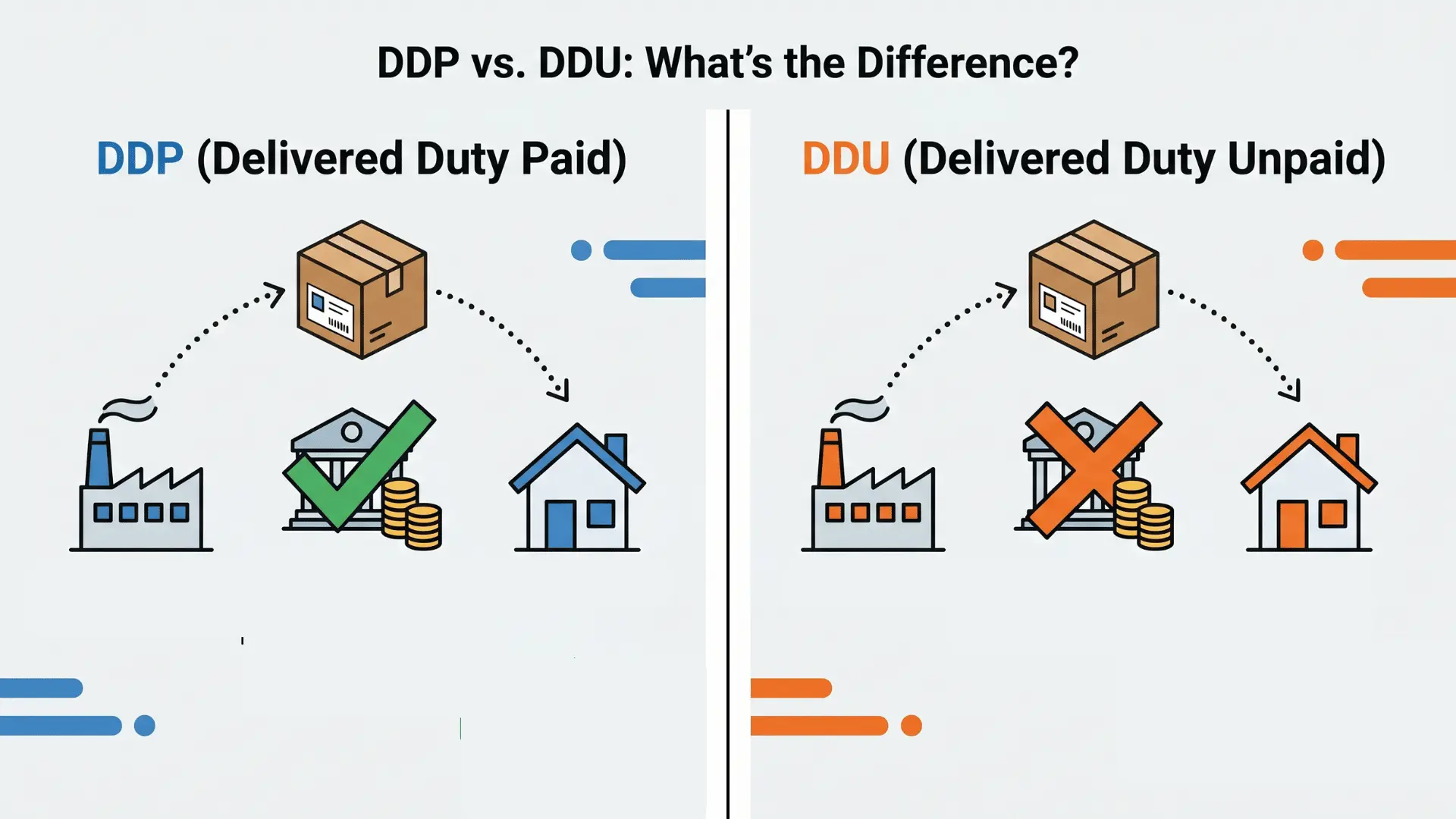
DDP and DAP look nearly identical on the surface. The seller arranges transport, manages the freight, and delivers to a named destination. The practical difference comes down to one obligation, and it is a significant one.
Under DAP, the buyer handles import clearance, pays duties and taxes, and carries the import risk. Under DDP, all of that stays with the seller. The buyer receives the goods with nothing left to manage.
| DAP | DDP | |
|---|---|---|
| Import clearance | Buyer | Seller |
| Duties and taxes | Buyer | Seller |
| Import risk | Buyer | Seller |
| Typical use case | B2B trade | B2C e-commerce |
| Key impact | Cost uncertainty stays with the buyer | Seller delivers an all-in price |
Which One to Use
The right structure depends on who has better visibility into destination-country duty rates and who is better positioned to manage the clearance process.
If you have confirmed IOR capability in the destination market, stable duty rate visibility, and a buyer who expects a frictionless delivery experience, DDP is the stronger commercial choice. It removes friction, builds trust, and positions your landed cost as a competitive advantage.
If your buyer operates in a market where you lack IOR capability, or where duty rates are actively shifting, DAP is the cleaner structure. It puts customs responsibility where the knowledge actually sits, with the party that operates in that market every day.
Choosing between them is not a question of which term is more sophisticated. It is a question of where the capability and the risk tolerance actually live.
Conclusion
DDP shipping is one of the most complete commitments a seller can make in global logistics. When the preparation is right, it removes every friction point for the buyer and builds genuine trust into the delivery experience.
The sellers who get the most out of DDP have three things in common. They have confirmed IOR capability in every market they ship to. They have real visibility into duty rates before they quote a landed cost. And they have built enough flexibility into their pricing to absorb the unexpected without eroding margin.
Getting DDP right is not about scale. It is about preparation. Know your markets, confirm your obligations, and price with enough room to honor what you quoted.
Frequently Asked Questions
What is a DDP shipment?
A DDP shipment is one where the seller takes full responsibility for all costs and logistics, including export and import customs clearance, duties, and taxes, until goods are placed at the buyer’s disposal at the agreed destination. The buyer receives the goods with no additional charges or customs obligations to handle.
What is DDP shipping to the USA?
DDP shipping to the USA means the foreign seller manages US customs entry, pays all import duties and applicable taxes, and delivers goods to the named US destination. The seller must either hold US importer of record status directly or appoint a licensed customs broker to act in that role on their behalf.
What is better, DDP or DAP?
Neither is universally better. DDP gives buyers a predictable, all-in experience but requires the seller to absorb duty risk and manage foreign customs clearance. DAP gives buyers control over their own customs process and suits B2B trade well. The right choice depends on who has better visibility into destination-country duty rates.
Is DDP shipping worth it?
For sellers targeting markets with stable duty rates and buyers who expect a frictionless delivery experience, DDP is worth the added complexity. It becomes a liability when tariff rates are volatile or when the seller lacks qualified IOR capability in the destination market. In those situations, DAP is usually the safer structure.