
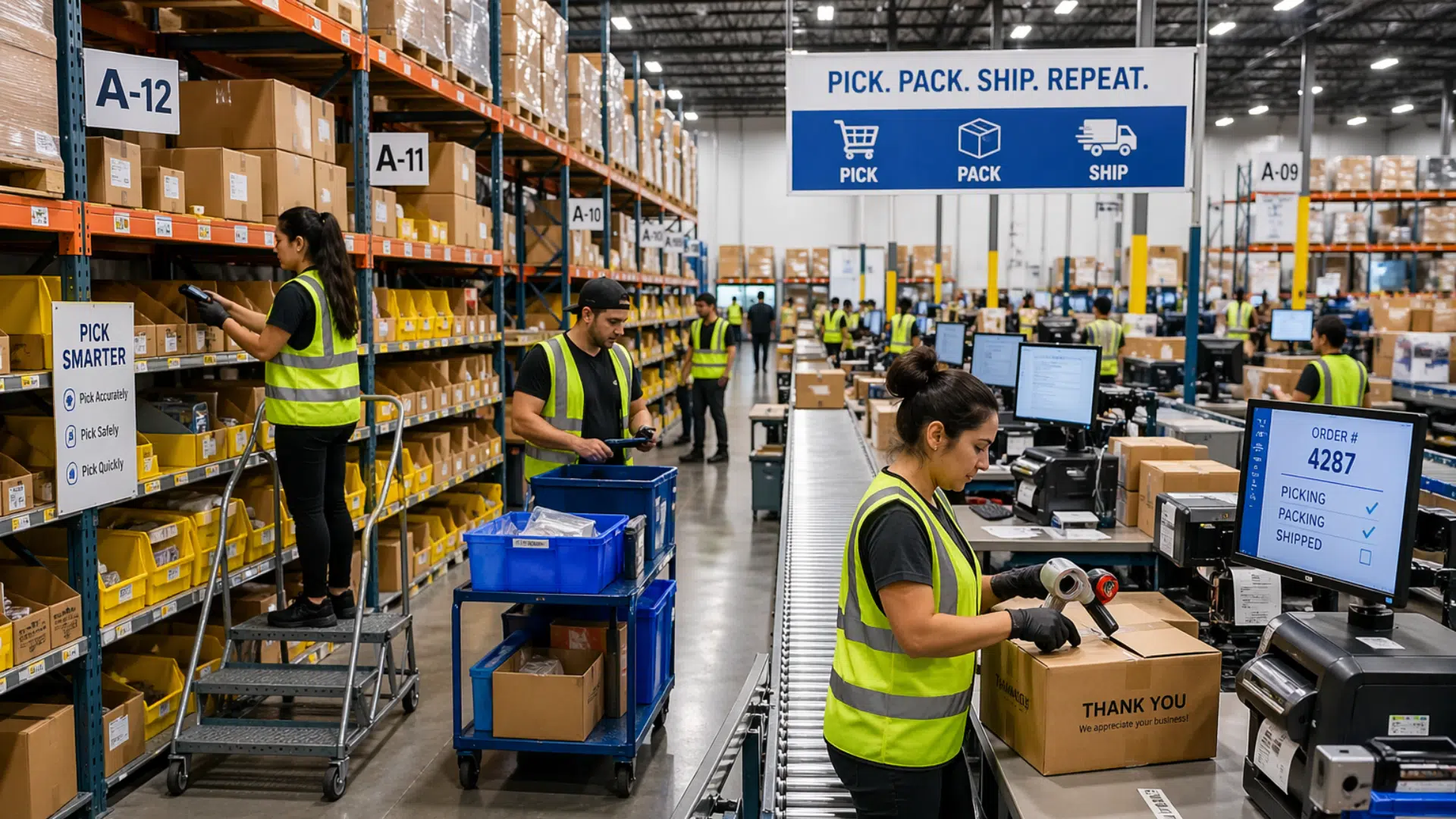
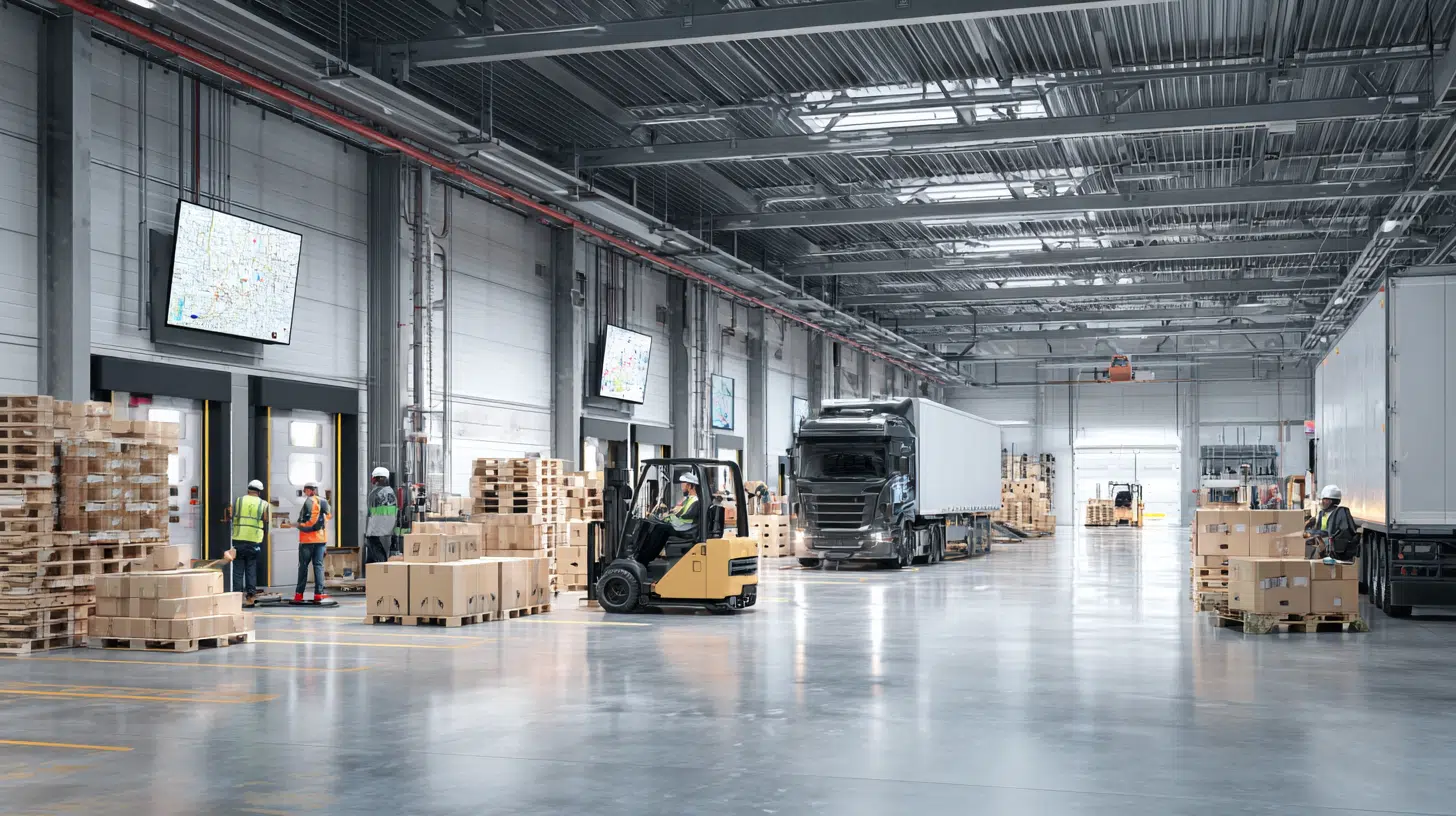
A pick-and-pack warehouse plays a big role in ensuring orders reach customers on time.
When someone places an order online, the process doesn’t end there. Items need to be picked from storage, packed properly, and shipped out without delay.
In this guide, you’ll learn how a pick and pack warehouse works, the different picking methods, and simple ways to improve speed and accuracy. It’s all about making order fulfillment smooth and reliable.
What is a Pick and Pack Warehouse?
A pick-and-pack warehouse is a facility where customer orders are processed from start to finish. Workers pick items from storage based on an order, then pack them securely for shipping.
This setup is common in e-commerce and retail because it helps move orders quickly. The goal is to keep the process fast, accurate, and organized so customers receive the right items on time.
How It Differs from Storage
| Feature | Pick and Pack Warehouse | Storage Warehouse |
|---|---|---|
| Purpose | Order fulfillment and shipping | Long-term storage of goods |
| Activity Level | High, constant movement | Low, minimal handling |
| Process | Picking, packing, shipping | Storing and holding inventory |
| Speed Focus | Fast turnaround | Not time-sensitive |
| Technology | Advanced systems (WMS, scanning) | Basic inventory tracking |
A pick-and-pack warehouse focuses on action, while a storage warehouse mainly holds products.
How the Pick and Pack Process Works
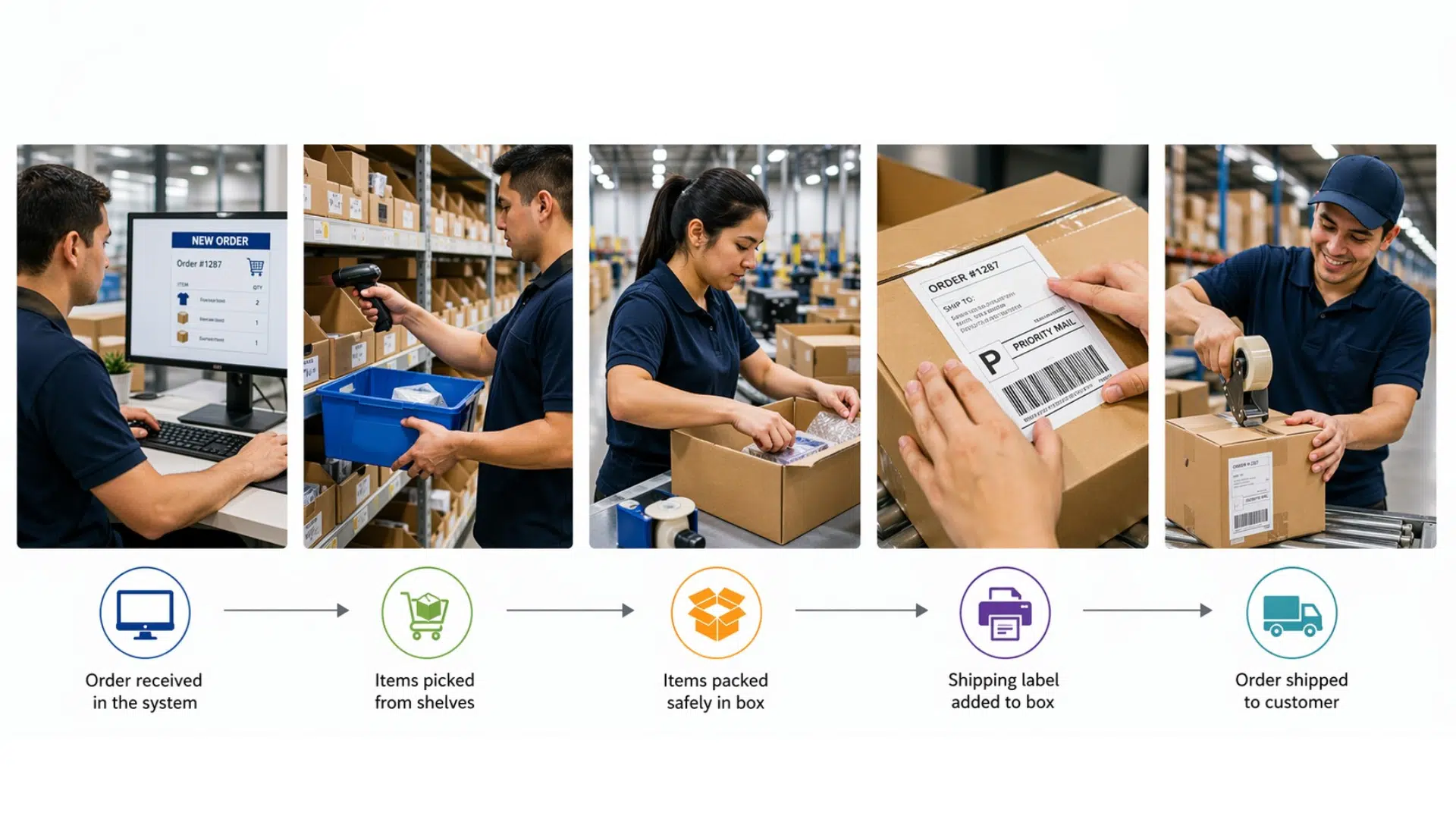
The pick-and-pack process begins as soon as an order is placed and continues until it is shipped. Each step is designed to keep orders moving quickly while reducing errors.
Step 1: Order Comes Into the System
Once a customer places an order, it is entered into the warehouse management system (WMS). This system generates a pick list showing which items need to be collected. It also tells workers where each item is located.
In many warehouses, this step is automated, saving time and reducing confusion. A clear and accurate order setup is important because it guides the entire process.
Step 2: Items are Picked from the inventory
Warehouse staff use the pick list to collect items from shelves, bins, or racks. They follow a set route to save time and avoid extra walking. In some warehouses, scanners or mobile devices are used to confirm each item.
This step requires attention to detail, as picking the wrong item can lead to returns. A well-organized layout helps workers pick faster and more accurately.
Step 3: Items Move to Packing Stations
After picking, the items are sent to a packing area. Here, workers check the order to make sure everything is correct. They also inspect items for damage before packing.
Packing stations are usually set up with all the needed materials like boxes, tape, and fillers. This step helps catch mistakes early and keeps the final order in good condition.
Step 4: Packing, Labeling, and Shipping
At this stage, items are packed into the right box or package. Workers add protective materials to prevent damage during shipping. A shipping label is printed and attached to the package. The order is then sorted based on the shipping carrier.
Once everything is ready, it is sent out for delivery. This final step ensures the order reaches the customer safely and on time.
Main Pick and Pack Methods Used in Warehouses
Different warehouses use different picking methods based on order volume, layout, and product type. Choosing the right method can improve speed, reduce errors, and make daily operations smoother.
| Method | How It Works | Best For | Main Benefit | Main Drawback |
|---|---|---|---|---|
| Discrete Picking | One order is picked at a time by one worker | Small businesses, low order volume | Simple and easy to manage | Slower for large volumes |
| Batch Picking | Multiple orders are picked in one trip | Orders with similar items | Saves travel time | Sorting orders later takes effort |
| Zone Picking | Workers pick items only in the assigned zones | Large warehouses | Faster picking with less walking | Needs coordination between zones |
| Wave Picking | Orders are picked in scheduled time slots | High-volume operations | Matches shipping schedules | Can be complex to plan |
| Cluster Picking | Multiple orders picked at once using bins | E-commerce with many small orders | High efficiency and speed | Requires good organization |
To choose the right method, consider order volume, the number of SKUs, and warehouse size. Smaller setups often do well with discrete picking, while larger operations benefit from batch, zone, or wave picking.
Best Practices for a Smooth Pick and Pack Process
A smooth pick-and-pack process helps reduce delays and errors and keeps customers happy. Small improvements in daily operations can make a big difference over time.
- Organize Inventory Smartly: Place fast-moving items closer to packing stations so workers spend less time walking. Use clear labels and logical bin locations to make items easy to find.
- Optimize Pick Paths: Plan routes that reduce unnecessary movement inside the warehouse. Group items so workers can efficiently pick multiple orders.
- Use Barcode Scanning: Scanning items during picking and packing helps confirm accuracy. It reduces human error and keeps records up to date in real time.
- Standardize Packing Materials: Use the appropriate box sizes and packing supplies for each product. This keeps items safe and helps control shipping costs.
- Train Staff Regularly: Clear instructions and regular training help workers follow the same process every time. This improves speed and reduces mistakes.
- Set Up Quality Checks: Double-check items before shipping to catch errors early. A quick review step can prevent returns and unhappy customers.
- Track Key Performance Metrics: Monitor picking speed, order accuracy, and error rates. These numbers help spot problems and improve performance over time.
Technology Used in a Pick and Pack Fulfillment Center
Technology helps warehouses operate more quickly and make fewer mistakes. The right tools can improve tracking, speed up picking, and keep orders accurate from start to finish.
1. Warehouse Management System (WMS)
A WMS is the main system that runs the warehouse. It tracks inventory, shows where items are stored, and creates pick lists for workers. It also helps plan routes and manage orders in real time. With a WMS, everything stays organized, and workers don’t waste time searching for products.
2. Barcode and RF Scanning
Barcode scanners are used to confirm items during picking and packing. Workers scan each product to make sure it matches the order. This reduces mistakes and keeps inventory data updated. RF scanners also allow real-time updates, so stock levels stay accurate across the system.
3. Pick-to-Light and Voice Picking
Pick-to-light systems use lights to guide workers to the right items. Voice picking uses headsets that give spoken instructions. Both methods reduce confusion and help workers move faster. They are often used in busy warehouses where speed matters.
4. Automation and Robotics
Some warehouses use machines and robots to move items or assist with picking. Automated systems can store and retrieve products quickly. Robots can help reduce manual work and handle repetitive tasks. This helps improve efficiency, especially in large operations.
KPIs to Track in a Pick and Pack Warehouse
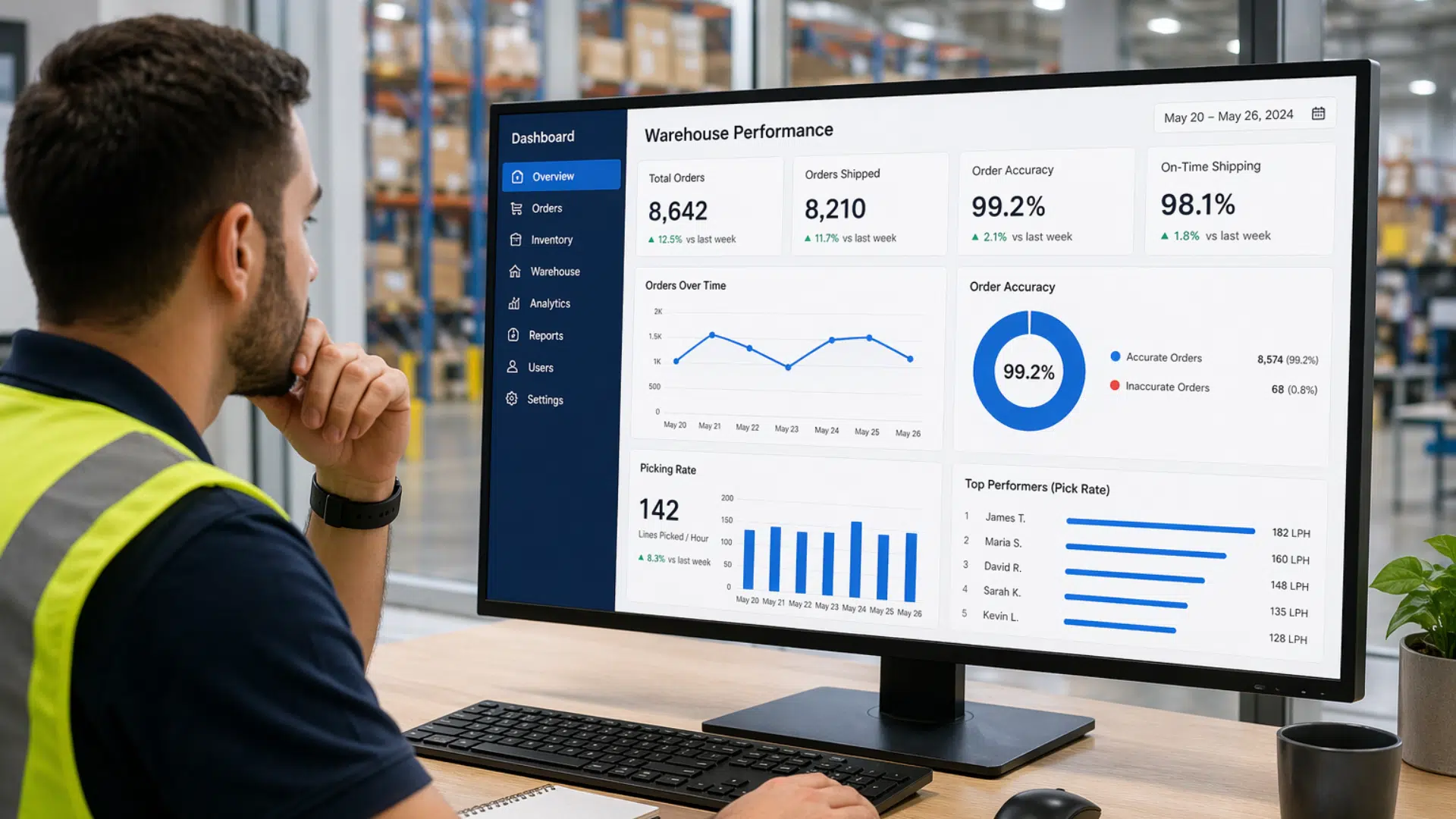
Tracking the right numbers helps you understand how well your warehouse is performing. These KPIs show where you can improve speed, accuracy, and overall efficiency.
- Order Accuracy Rate: Measures how many orders are shipped without errors.
- Picking Rate: Shows how many items are picked in a set time.
- Orders Picked per Hour: Tracks worker productivity.
- Fulfillment Cycle Time: Time taken from order placement to shipping.
- Perfect Order Rate: Orders delivered without any issues.
- Return Rate Due to Errors: Helps identify picking or packing mistakes.
When to Outsource Pick and Pack Operations
Outsourcing pick-and-pack operations can help when handling orders becomes too difficult in-house.
It makes sense when order volume is growing quickly, shipping delays are increasing, or errors are becoming common.
A pick-and-pack fulfillment center can offer faster processing, greater accuracy, and access to advanced systems. It also reduces the need to manage warehouse staff and space.
Businesses often outsource when they want to scale without making a heavy investment in storage, labor, or technology. This allows more focus on sales, marketing, and customer experience while experts handle fulfillment.
Conclusion
A pick-and-pack warehouse is the backbone of fast, accurate order fulfillment. From choosing the right picking method to using smart tools and tracking key metrics, every step plays a role in how smoothly operations run.
Small changes like better organization or using scanning tools can lead to big improvements over time. As order volume grows, many businesses also look at outsourcing to keep things efficient and stress-free.
The goal is simple – get the right product to the right customer, quickly and without errors.
If you’re looking to improve your warehouse process, start by reviewing your current setup and making one small change today.
Frequently Asked Questions
How Long Does the Pick-and-Pack Process Take?
It depends on order size and warehouse setup. Simple orders can be processed in minutes, while larger ones may take longer.
How Do Warehouses Handle Fragile Items During Packing?
They use bubble wrap, foam, or other protective materials. The goal is to prevent damage during shipping.
What is a Pick List in a Warehouse?
A pick list is a document or digital guide that shows which items to collect. It helps workers quickly pick the right products.
What Happens If an Item is Out of Stock During Picking?
The system flags the issue, and the order may be delayed or updated. Some warehouses offer replacements or partial shipments.












One Response
Hola Yo soy Óscar de Argentina quiero trabajar desde casa