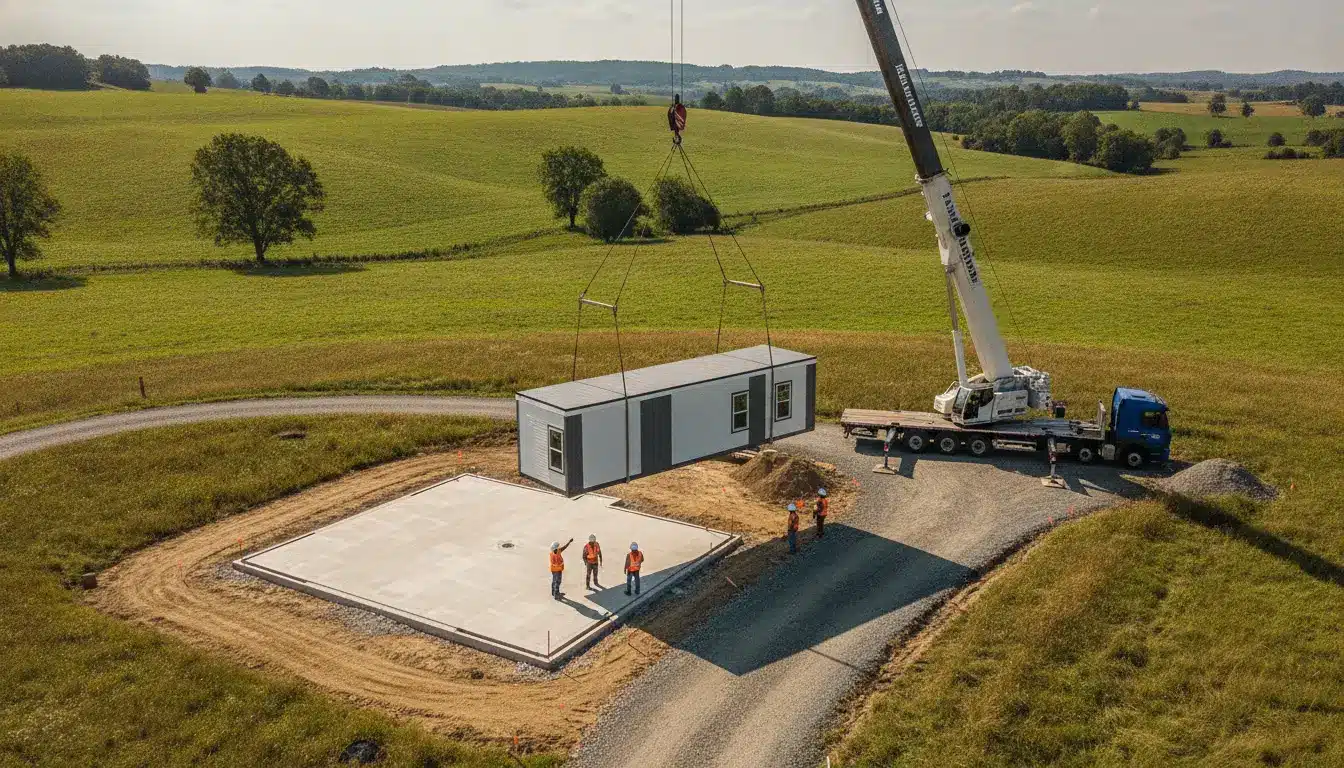
Most software sold under the words “real estate CRM” assumes a resale house: a listing, three showings, an offer, a closing about six weeks later. Your deals don’t work like that. A modular sale can sit at “waiting on the county” for eleven weeks and then jump three stages in one afternoon once the permit lands. A buyer picks a floor plan in March and still doesn’t control the land in June. Census Bureau shipment data counts about 102,700 new manufactured homes shipped in 2025, and every one of them needed a factory slot, a hauler, a set crew, and an inspector before anybody moved in. That’s a lot of moving parts for a pipeline that only knows the words lead, showing, and closed.
Why the Standard Realtor CRM Breaks on a Prefab Deal
A CRM (customer relationship management system, the database where your leads, deals, and follow-ups live) organizes everything around a pipeline of stages. Stock real estate versions borrow their stages from brokerage work, where a deal advances because a person walked through a house and liked it.
Your deals advance because something outside the building cleared: a loan condition, a septic permit, a factory build slot, a road-use approval for an oversized load. Nobody on your team caused it. You just have to know it happened, and know it the same week it happened rather than a month later when the buyer calls annoyed.
Stock real estate CRM assumes | A prefab sale actually does |
The deal moves after a showing | The deal moves when a permit, a loan, or a build slot clears |
One property at one address | A home, a lot, a foundation, and utility hookups |
A 30 to 60 day cycle | Milestones spread over months, with long dead stretches |
Financing means a mortgage | Chattel loan, land-home package, or draw-based construction loan |
Closing means done | Closing is followed by transport, set, hookups, final inspection |
Three contacts: buyer, agent, lender | Buyer, lender, factory rep, hauler, crane crew, excavator, inspector |
Read the right column and you can see the real problem. It isn’t that the software is missing a feature. It’s that the unit of work is wrong. A resale CRM tracks a conversation with a buyer. You need to track a project that happens to have a buyer attached to it.
Build Your Stages Around Milestones, Not Showings
Rewrite the pipeline so every stage names a milestone somebody can verify with a document or a date. A workable sequence for modular and manufactured sales looks close to this:
- Inquiry qualified (budget, timeline, county)
- Model and options selected
- Land identified
- Site control confirmed (deed, purchase agreement, or signed lot lease)
- Financing approved
- Permits submitted
- Permits issued
- Site prep scheduled
- Factory build slot confirmed
- Transport scheduled
- Set and install complete
- Final inspection and occupancy
Twelve stages sounds heavy until you notice how much reporting it buys you. When a deal has been parked at “permits submitted” for nine weeks, that’s visible instead of anecdotal, and you can go count how many other deals in that county are stuck at the same wall.
Two fields do most of the work at every stage: who you’re waiting on, and the date you last heard from them. Everything else is detail. If you want a sense of how this gets translated into software, a guide to custom real estate CRM development walks through how pipelines, document tracking, and reporting are typically scoped for property businesses, which is a useful reference point whether you end up configuring an off-the-shelf tool or having something built.
One Sale, Several Threads Running at Once
Here’s the part a linear pipeline hides. Your buyer isn’t making one decision. They’re making five or six, often with different vendors, and those threads run in parallel rather than in sequence. The land can be sorted while financing is still open. The factory slot can be confirmed while the pad isn’t poured.
So a single stage marker can’t tell you where a deal really stands. Track the threads separately on the deal record:
Thread | Who you’re waiting on | The field that answers “where is it?” |
The home | Factory scheduler | Options lock date, build slot date |
The land | Buyer, seller, title company | Site control confirmed, yes or no |
Permits | County or municipal office | Submitted date, permit number, expiry |
Site work | Excavator, foundation crew, utilities | Pad ready date, hookup dates |
Money | Lender, underwriter | Loan type, approval date, draw schedule |
Delivery and set | Hauler, crane or set crew | Route approval, escort needs, set date |
Most small dealers already keep this somewhere. It’s on a whiteboard, or in one spreadsheet per deal, or in the head of the one person who’s been there nine years. Put it on the deal record instead and the Monday morning question changes from “what’s happening with the Delgado sale?” to “show me every deal where the pad is ready and the build slot isn’t confirmed.”
Long cycles also break the follow-up automation that comes with most CRMs out of the box. Those reminder rules are built around days since last contact, which is the wrong clock for a deal waiting on a county office. Seven quiet days during permit review is normal. Seven quiet days after the factory confirmed a ship date is a problem.
Tie the reminders to the thread instead. A permit sitting at “submitted” gets a check-in task every two weeks aimed at the county, not at the buyer. A confirmed build slot triggers tasks for the hauler and set crew at fixed intervals before the ship date. The buyer gets a scheduled progress update whether or not anything moved, because silence over a six-month cycle is what makes people start shopping again. Write those rules once and the follow-up survives vacations, a busy quarter, and the salesperson who quits in month four with three deals half-tracked.
Financing Is Where These Deals Die
Financing is the single biggest difference between your pipeline and a realtor’s, and it deserves its own fields. A manufactured home financed as personal property, called a chattel loan, is a different product from a mortgage on real property: different lender, different rate, different timeline, different paperwork. Modular homes usually finance more like site-built construction, with draws released as work is inspected.
The approval odds are genuinely worse than the site-built world, which is why “pre-approved” deserves less trust in your pipeline than it gets. Analyzing 2019 mortgage disclosure data, the Consumer Financial Protection Bureau found that about 21 percent of chattel loan applications ended in an origination, compared with about a third of manufactured-home mortgages and nearly three quarters of site-built mortgages.
What that means for your Monday: put loan type on the deal record as a required field, log every outstanding lender condition as its own task with a due date, and set an automatic re-verification task before you authorize a build slot or a site-prep deposit. A buyer whose approval was issued in February and whose credit picture changed in June is a real risk, and the cost of finding out late is a home you can’t easily resell and a pad nobody’s paying for.
Vendor Contacts Belong on the Deal, Not in Your Phone
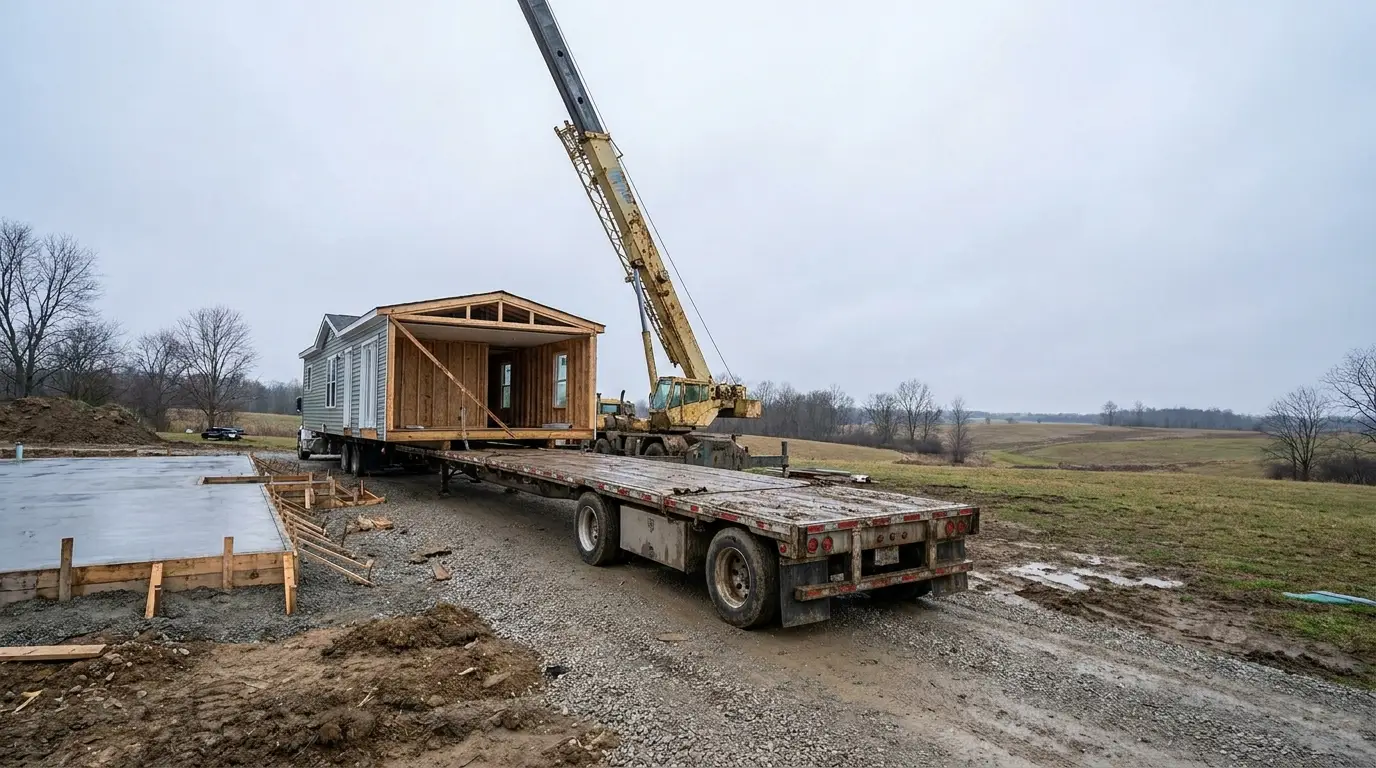
The hauler, the crane operator, the well driller, the county inspector, the factory scheduler. These people are part of the sales record, because until they’re done, the sale isn’t done. Keeping them as personal phone contacts means the deal only runs at the speed of whoever owns that phone.
Attach vendors to the deal with a named role, so any of the following becomes a two-second lookup instead of a phone hunt:
- Who hauled the last three homes into that county, and what they charged
- Which set crew is booked for the week the home leaves the factory
- Which inspector signed off the last similar install
- Which excavator you’re waiting on right now, and when you last called them
One more practical benefit: when the same excavator shows up as the blocker on four deals, you’ll actually see the pattern instead of remembering it vaguely at the end of the quarter.
Track Documents Per Deal, Because the Paperwork Differs
Modular and manufactured homes don’t carry the same paper. Manufactured homes are built to the federal HUD Code and carry a HUD label and data plate. Modular homes are built to state and local building codes, so they’re inspected and certified the way local code requires, which changes county to county.
Your document checklist should live on the deal and reflect that. At minimum, track engineered foundation plans, the site plan, the permit and its expiration date, the label or state insignia number, the transport route approval, the utility hookup sign-offs, and the final inspection certificate. Give each one a status and a date rather than dumping files in a shared folder named after the buyer.
Permit expiry is worth a real reminder. A permit that lapses because the factory ran three weeks behind is an avoidable expense, and it’s the kind of thing a pipeline built around showings will never warn you about.
Quotes and Configurations Need Version Numbers
Prefab buyers change their minds, and every change moves the price. A CRM that stores one quote per deal loses the history, and then you’re arguing from memory about which countertop was in the number the buyer signed.
Version the quote. Each version gets a date, the configuration it reflects, the price, and a one-line note on what changed. When a buyer says “I thought that was included,” you open version three and read it back to them.
Price bands make the case for that discipline. Census Bureau survey figures for March 2026 put the average sales price of a new single-section manufactured home at $90,700, against $164,200 for a double-section. Sections, options, and site costs swing the total enough that an unversioned quote is a dispute waiting to happen.
Reporting: Sold and Delivered Are Two Different Numbers
Most dealers report one number, and it’s usually “sold.” That number can’t tell you whether your year is going well, because a home sold in October and set in February belongs to two different months’ worth of cash and crew capacity.
Report at least four:
- Sold: contract signed and deposit taken
- In production: build slot confirmed, not yet shipped
- Delivered and set: on the pad, hooked up, inspected
- Cancelled, by stage: where deals fall apart, and why
That last one is the report worth building first. If most of your cancellations happen between financing approval and permit issuance, you have a specific fixable problem in a specific place, and you can go fix it. Average days per stage is the other report that pays for itself, since it turns your delivery estimates into something based on your own history instead of optimism.
What to Do With This
Prefab sales aren’t a harder version of resale sales. They’re project management with a contract at the front, and your pipeline should look like it.
Three things worth doing this month:
- Rewrite your stages so each one names a verifiable milestone with a document or date behind it, not a conversation.
- Add loan type, site control, and permit expiry as required fields, and set a re-verification task before any build slot gets authorized.
- Split your reporting so sold, in production, and delivered are separate numbers, and start logging cancellations by the stage they died in.