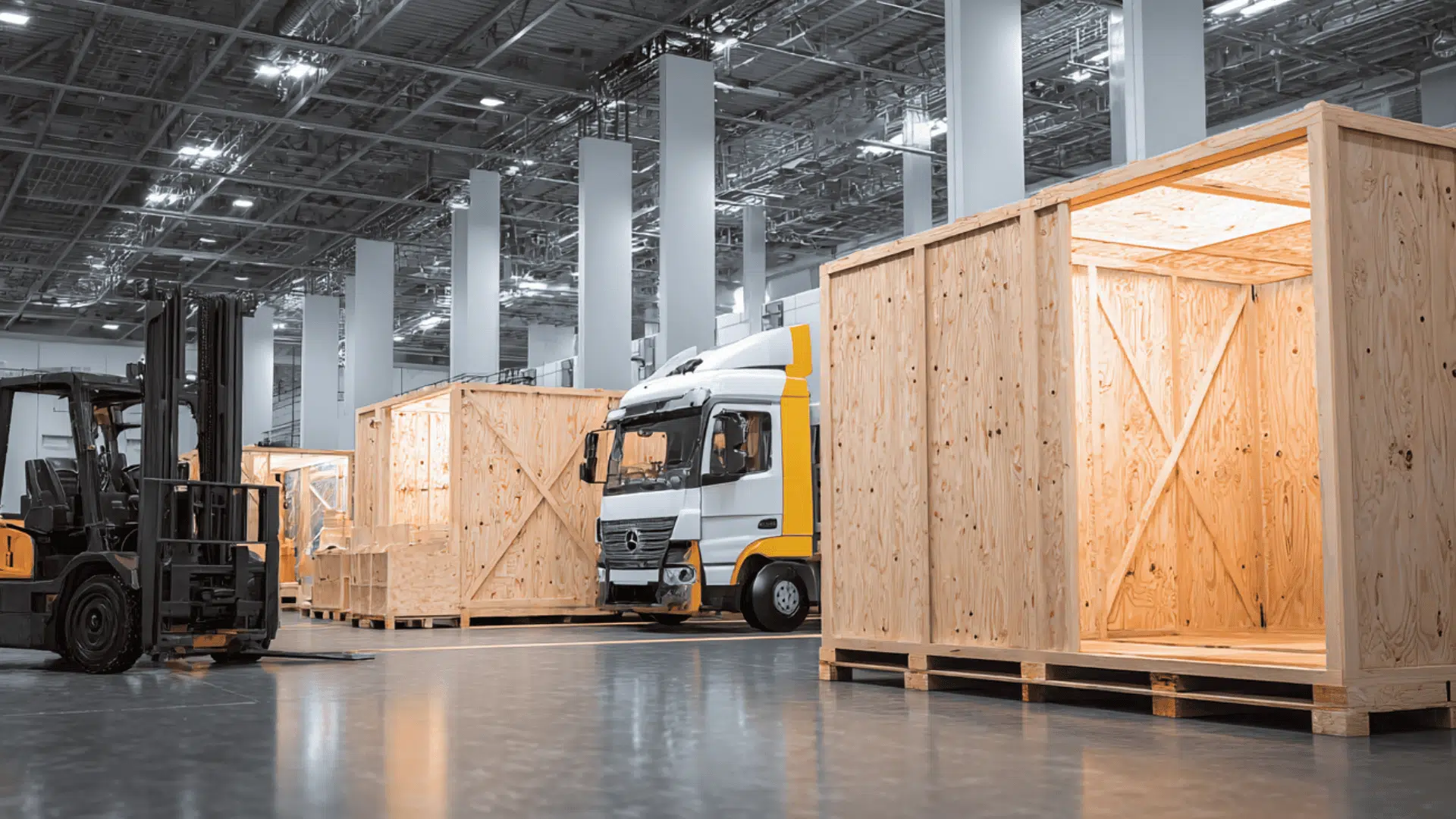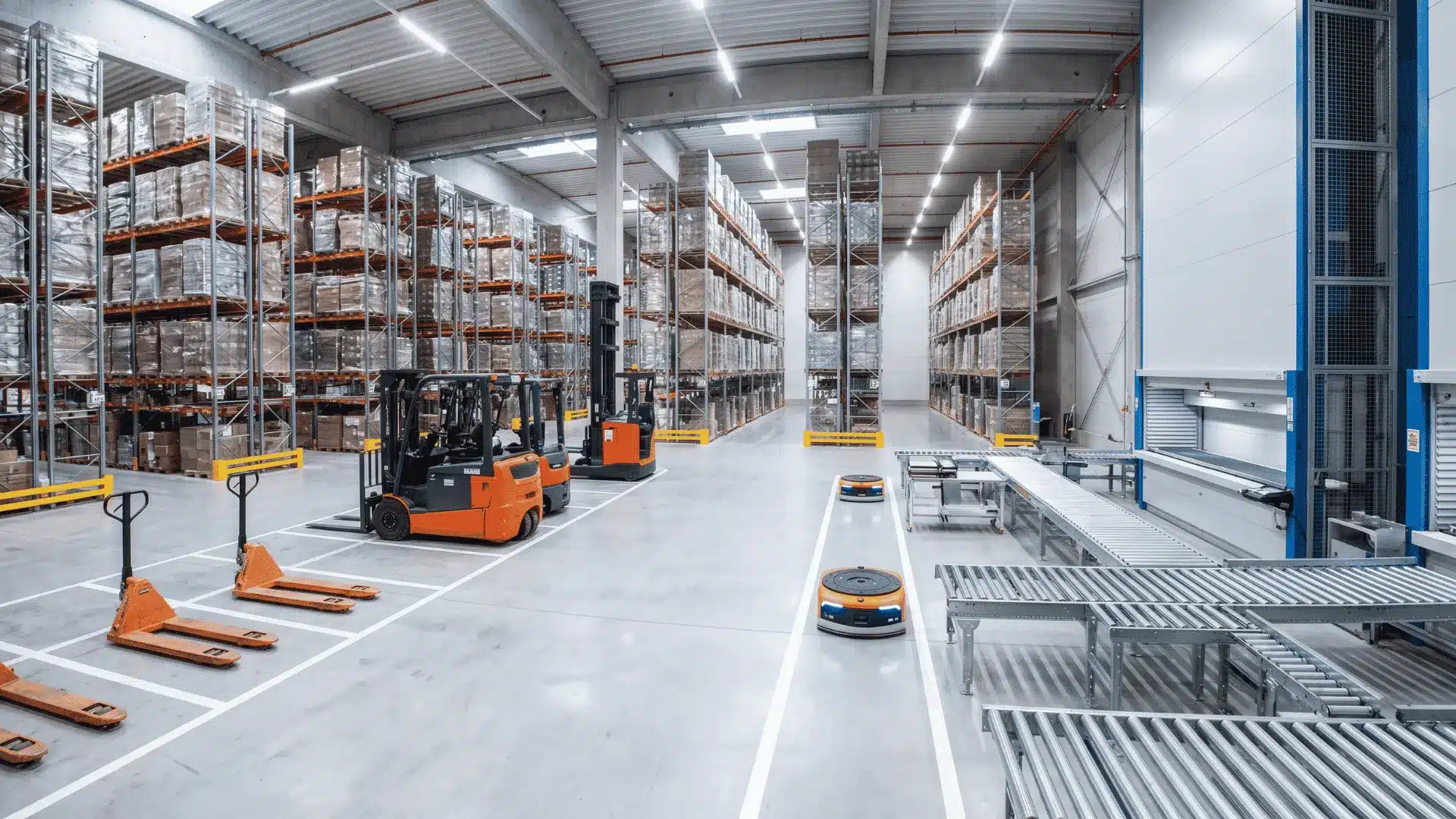
A warehouse can lose time, space, and money even with expensive equipment already on the floor. The real issue is often fit, not capability.
Material handling equipment in warehouse settings covers far more than forklifts. It spans transport, storage, positioning, and bulk-handling systems working together.
Each category solves a different operational problem, from moving pallets across receiving docks to safely lifting fragile items at picking stations.
The sections ahead break down what each equipment type does, where it fits, and how warehouse layout shapes the right choice.
What is Material Handling Equipment in a Warehouse?
Warehouse material handling equipment (MHE) is the complete system of tools, vehicles, and structures used to efficiently move, store, and position goods throughout warehouse operations.
It supports every stage from receiving and putaway to picking, packing, and shipping, keeping inventory flowing safely and consistently across the facility every day efficiently.
Whether manual, powered, or fully automated, these functions define material handling equipment by improving productivity, reducing labor, minimizing damage, and helping warehouses operate more reliably.
Role of MHE in Warehouse Operations
MHE is not limited to forklifts. It includes everything from hand trucks and pallet jacks to conveyor systems and automated guided vehicles.
In warehouses, MHE supports inventory movement across receiving, storage, picking, packing, staging, and shipping areas.
Many people assume MHE only refers to lifting equipment, but warehouses rely on multiple handling systems working together to improve storage efficiency, workflow, and safe material movement.
The term is mainly used in warehouse and distribution environments, although similar equipment is also used in manufacturing and logistics operations.
Some systems may appear alongside MHE without being part of it. For example, warehouse management systems (WMS) help control warehouse operations but are not considered MHE because they do not physically handle materials.
Types of Warehouse Material Handling Equipment and Their Uses
Warehouse material handling equipment falls into four functional categories: transport, storage and retrieval, positioning and ergonomic, and bulk material handling equipment. Each serves a purpose.
Each category supports a different warehouse function, from inventory movement to storage organization.
Transport Equipment
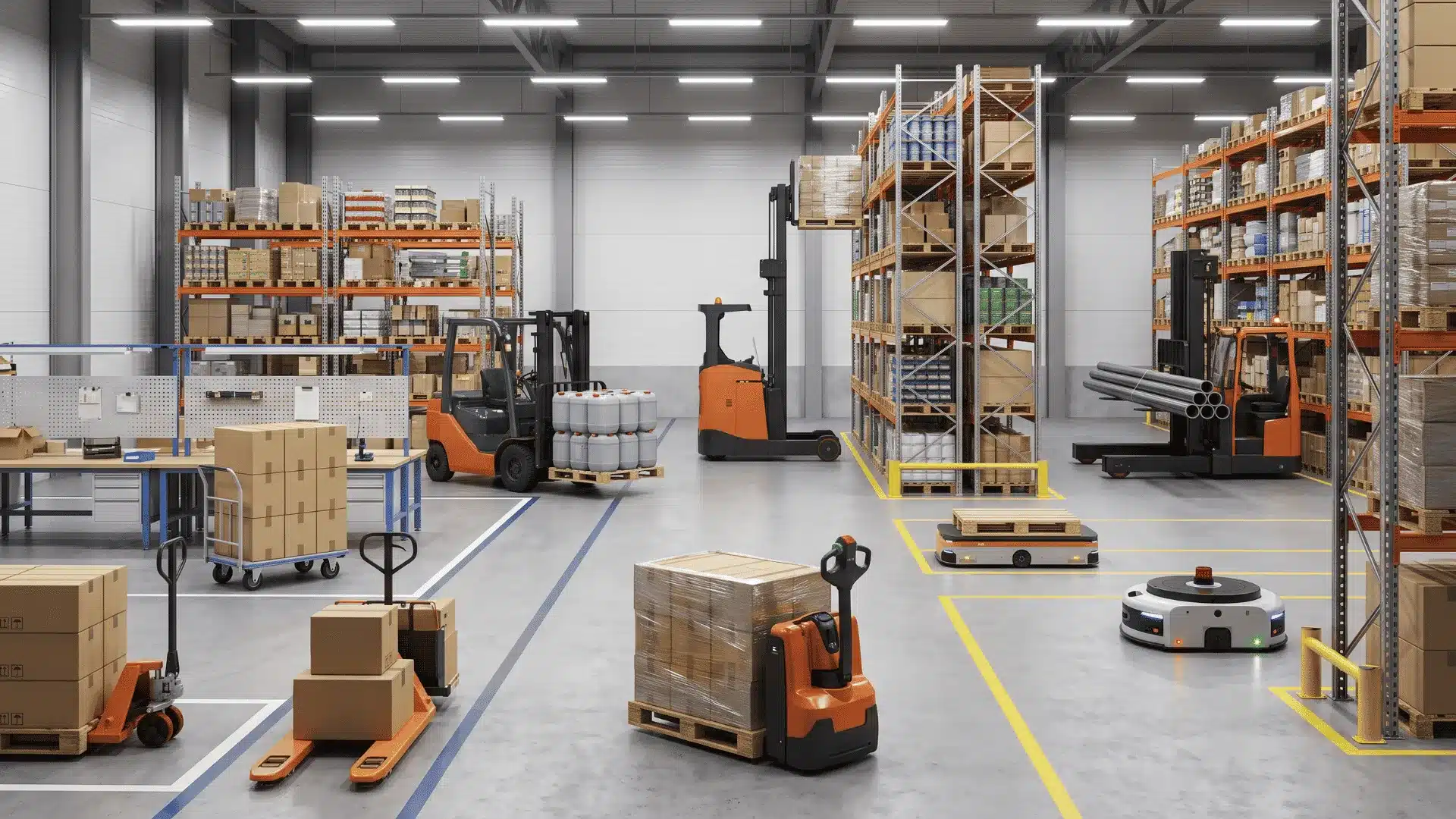
Transport equipment moves inventory between warehouse zones and supports receiving, shipping, and internal material movement.
- Counterbalance Forklifts: Counterbalance forklifts are used for general pallet movement in wide aisle warehouses. They are commonly used for loading, unloading, and transporting inventory across large warehouse areas.
- Reach Trucks: Reach trucks are designed for narrow aisles and tall racking systems. They improve storage density by allowing pallets to be placed deep into high racks.
- Side Loaders: Side loaders carry long materials from the sides rather than the front. They are commonly used for handling pipes, lumber, and steel bars in narrow storage lanes.
- Pallet Jacks: Pallet jacks move palletized inventory over short distances. Manual pallet jacks work well in smaller warehouses, while electric pallet jacks support high-throughput operations.
- Hand Trucks: Hand trucks are manual tools used to move smaller or lighter items in packing areas and low-volume warehouse operations.
- Automated Guided Vehicles (AGVs): AGVs follow fixed routes using magnetic tape, wires, or reflectors. They are mainly used for repetitive transport tasks in stable warehouse layouts.
- Autonomous Mobile Robots (AMRs): AMRs use sensors and mapping systems to move freely through the warehouse. They are suitable for dynamic environments with changing workflows.
These types of transport equipment keep inventory moving efficiently, reduce manual handling, and support safer, faster warehouse operations every day.
Bulk Material Handling Equipment
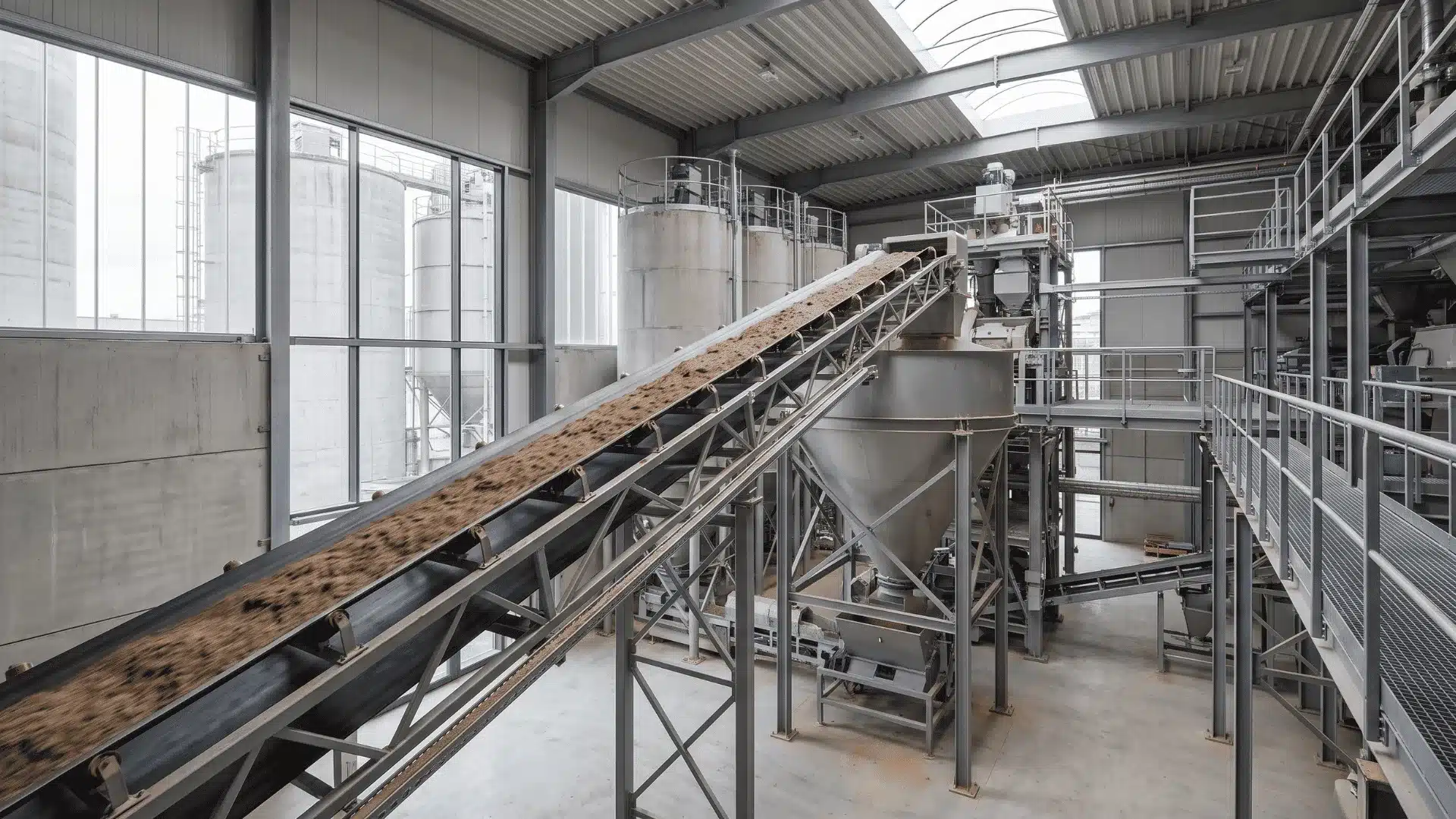
Bulk material handling equipment moves, stores, and dispenses loose, granular, or liquid materials. This category applies only to warehouses that receive or distribute goods like grain, sand, chemicals, or liquids, not to facilities handling boxed or palletized inventory.
- Conveyors (Bulk Configuration): Bulk conveyors use belt or screw systems to move loose materials along fixed routes, supporting continuous handling without containers or individual packaging.
- Hoppers: Hoppers are funnel-shaped containers with bottom-discharge openings that release bulk materials in controlled amounts, making feeding, dispensing, and processing more efficient and consistent.
- Silos: Silos store large volumes of loose materials vertically, helping warehouses handle agricultural products, powders, grains, and other bulk materials while saving floor space.
Warehouses that handle only packaged or palletized goods do not need bulk handling equipment. Including it in a facility audit without confirming the material type leads to unnecessary procurement costs.
These systems help improve movement speed, reduce manual handling, and support smoother inventory flow.
Positioning Equipment
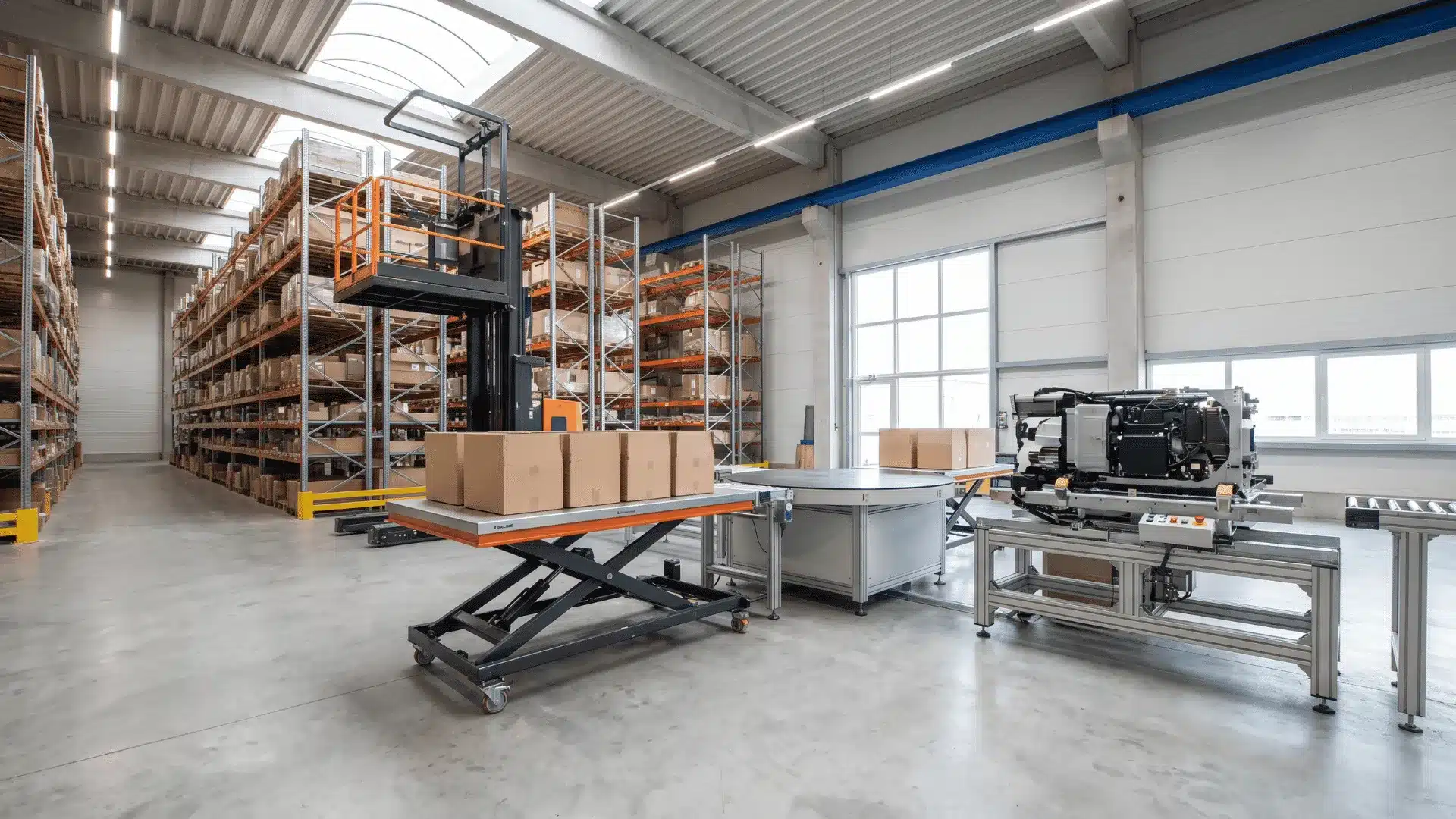
Positioning equipment places materials in the correct position for picking, packing, or handling tasks.
- Order Pickers: Order pickers lift workers to rack height for direct item picking. They are commonly used in e-commerce and high-SKU warehouses.
- Lift Tables: Lift tables raise or lower products to a comfortable working height. They help reduce strain during packing and assembly operations.
- Turntables: rotate products during handling and packing to improve access and reduce manual movement.
- Positioners: Positioners hold or adjust materials into the correct handling position during warehouse operations.
Note: Positioning equipment brings loads within a comfortable working range, reducing bending, reaching, and lifting strain while improving safety, ergonomics, and overall warehouse productivity.
Unit Load Equipment
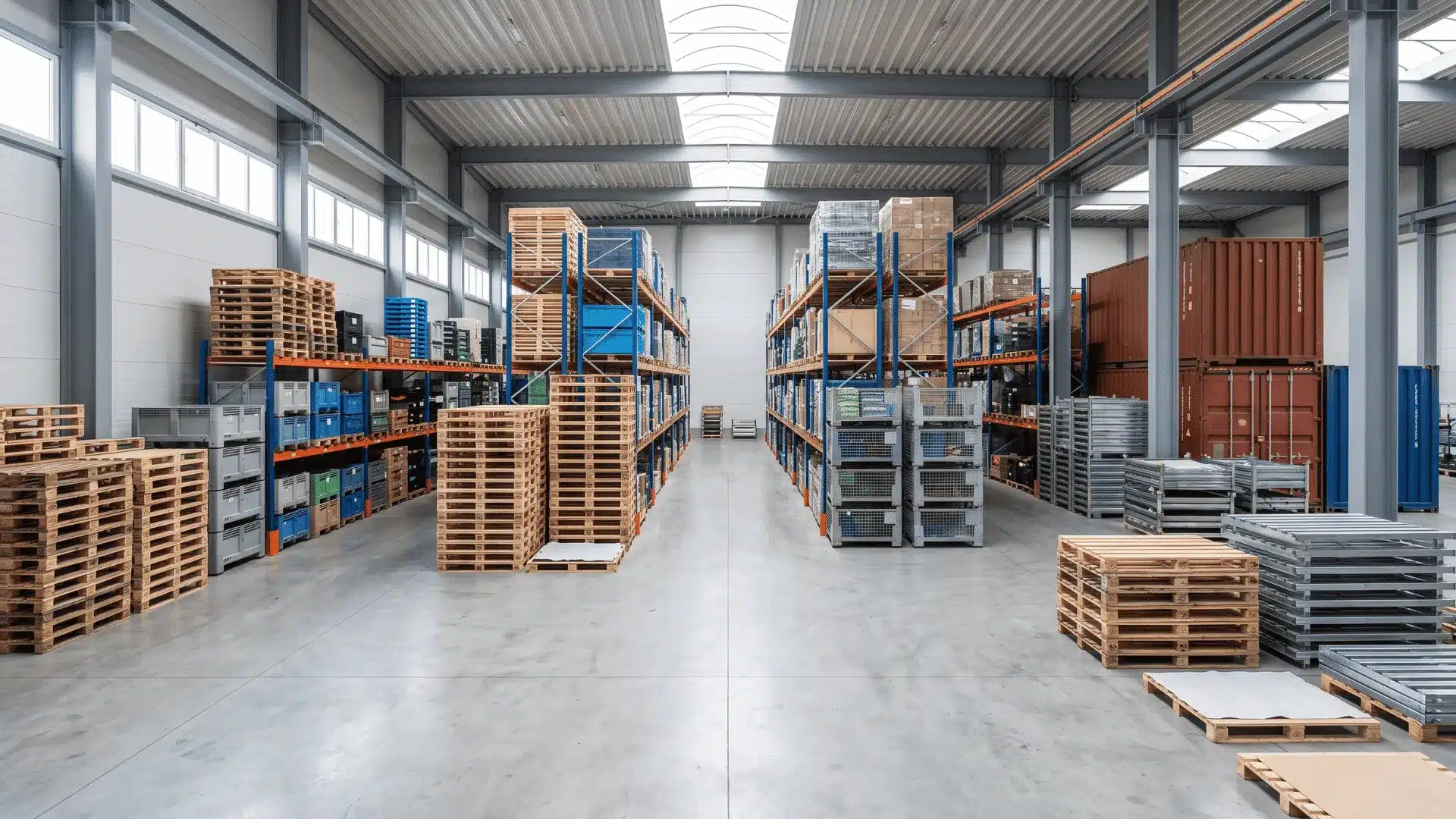
Unit load equipment groups products into manageable loads for storage and transport.
- Pallets: Pallets support stacked inventory during storage and forklift movement.
- Skids: Skids are similar to pallets but use a simpler base structure for moving and storing materials.
- Containers: Containers hold inventory securely during storage and transport.
- Totes: Totes are reusable bins used to organize and move smaller warehouse items.
- Slip Sheets: Slip sheets are thin load-support sheets used instead of pallets to save storage space.
These systems help improve storage organization, handling efficiency, and warehouse space utilization.
Storage Equipment
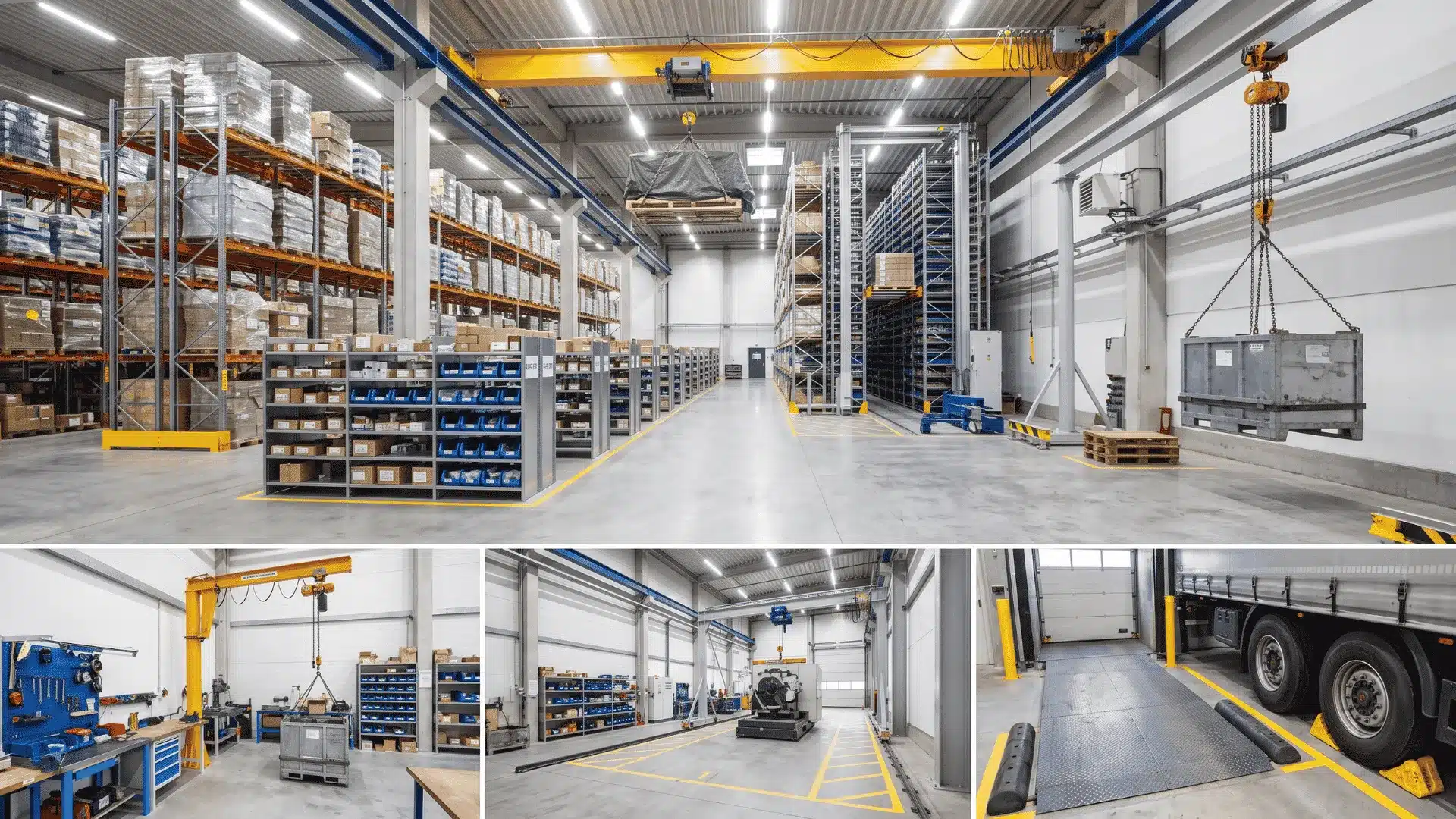
Storage equipment provides the structure for organizing and storing inventory in the warehouse.
- Racking Systems: Racking systems store palletized inventory vertically to improve warehouse space usage.
- Shelving Systems: Shelving systems organize smaller products and support manual picking operations.
- Storage Bins: Storage bins hold loose or small inventory items in organized storage locations.
- Automated Storage and Retrieval Systems (AS/RS): AS/RS systems automatically store and retrieve inventory from rack systems in high-density warehouses.
- Overhead Lifting Equipment: Hoists lift heavy materials vertically using chains, while bridge cranes move heavy loads across warehouse areas safely via overhead beam systems.
- Jib Cranes: Jib cranes use a rotating arm to move materials within a limited workspace.
- Gantry Cranes: Gantry cranes move heavy equipment using rails or wheeled supports in flexible lifting zones.
- Dock Equipment: Dock boards bridge gaps between trailers and warehouse floors, while dock bumpers absorb impact, protecting loading docks, equipment, and vehicles during loading operations.
- Wheel Chocks: Wheel chocks keep trailers stable during loading and unloading operations.
These systems improve storage efficiency, support safer handling operations, and help maintain organized warehouse workflows.
How Warehouse Constraints Determine Equipment Selection
No single piece of equipment works in every warehouse. The four variables below determine which equipment categories a facility actually needs and which it can rule out before procurement begins.
Aisle Width
Aisle width is the first physical constraint when selecting warehouse transport equipment. It determines which machines can operate safely and efficiently within the available storage space.
Counterbalance forklifts typically need about 12-foot aisles, while reach trucks work in 8- to 10-foot aisles. VNA equipment operates in narrow 5- to 6-foot aisles.
Choosing equipment that exceeds the available aisle width creates a physical incompatibility, not a preference issue. Always confirm aisle dimensions before selecting transport equipment.
Ceiling Height
Ceiling height determines how much vertical storage a warehouse can safely use. It directly affects racking height, storage capacity, and future automation opportunities.
Warehouses with 18-foot clearance have limited racking options, while 36- to 40-foot ceilings support high-bay racking, mezzanines, and AS/RS installations efficiently.
Storage equipment must match the building’s available ceiling clearance. Without enough height, many high-density storage systems become impractical or structurally impossible to install.
Load Type
Load characteristics such as weight, size, fragility, temperature sensitivity, and whether goods are loose or palletized determine which warehouse equipment can handle them safely.
A reach truck rated for heavy pallet loads is unsuitable for fragile single-item picking, while a standard pallet jack cannot safely move loose bulk materials.
Many warehouses choose equipment based on existing inventory instead of actual load requirements, leading to lower efficiency, unnecessary risks, and avoidable handling limitations over time.
Throughput Volume
Throughput volume measures the number of picks, pallet transfers, or inventory moves completed each shift. It helps determine the appropriate level of investment in warehouse equipment.
Manual equipment is suited to lower volumes, while semi-automated and automated systems become practical as transaction counts increase, helping to improve efficiency and reduce long-term operating costs.
A warehouse handling 200 pallet moves has different needs than one handling 2,000. Automation should match workload, not simply represent a technology upgrade.
Why the Right Warehouse MHE Matters and What Happens When it’s Wrong?
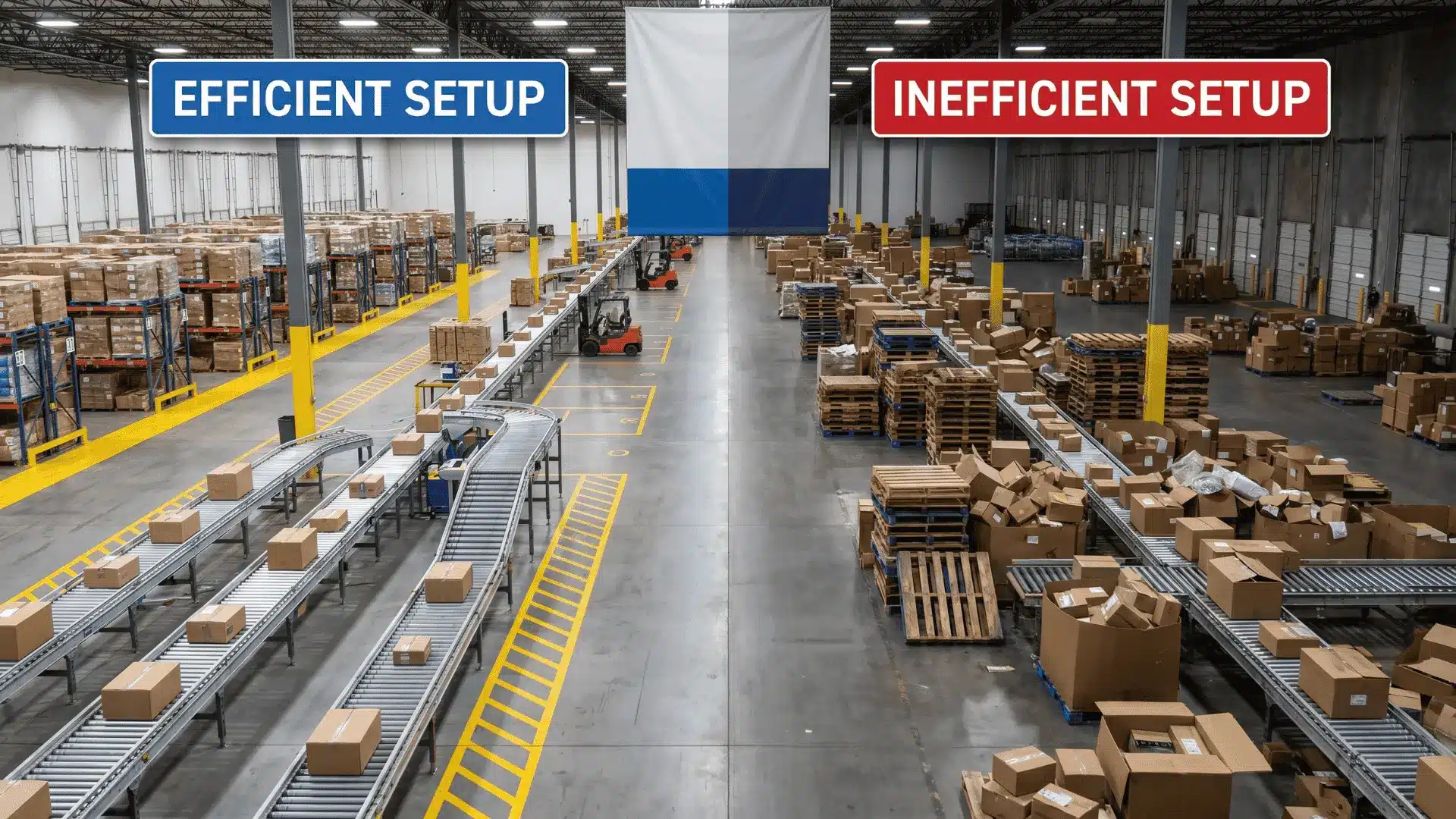
The right warehouse MHE improves safety, increases operational efficiency, and supports smoother inventory flow. These benefits depend on choosing equipment that matches the warehouse layout, workflow, and operational volume.
- Throughput Volume: Throughput volume measures the number of picks, pallet transfers, and inventory moves completed each shift, helping warehouses determine whether manual, semi-automated, or automated equipment is appropriate.
- Equipment Selection: Manual equipment is suited to lower workloads, while semi-automated and automated systems become practical as transaction volumes increase, improving efficiency and reducing operating costs.
- Automation Fit: A warehouse handling 200 pallet moves differs greatly from one handling 2,000, making automation a workload-based decision rather than a technology upgrade.
Why Does Equipment Matching Matter?
More automation does not always improve warehouse performance. The best results come from using equipment that fits the operational needs of each workflow stage.
The right warehouse MHE improves safety, material flow, and operational efficiency when it matches the warehouse layout and workflow requirements.
Proper equipment selection helps reduce bottlenecks, support smoother handling operations, and improve overall warehouse performance.
Wrapping Up
Choosing the right material handling equipment in warehouse operations comes down to matching tools to actual workflow needs, not adding more automation by default.
The equipment that performs best is rarely the most advanced option; it’s the one suited to aisle width, load type, and volume.
Safety, throughput, and storage efficiency all improve when equipment selection starts with operational constraints rather than equipment trends or assumptions.
Review your current setup against these categories, identify where fit is weakest, and start adjusting equipment before your next inventory cycle begins.
Frequently Asked Questions
What are the 4 types of material handling equipment?
The four functional categories are transport equipment (forklifts, pallet jacks, AGVs, AMRs), storage and retrieval equipment (pallet racking, AS/RS, mezzanines), positioning and ergonomic equipment (lift tables, order pickers, turntables), and bulk material handling equipment (bulk conveyors, hoppers, silos). Each category addresses a distinct operational function within the warehouse.
What is the difference between an AGV and an AMR?
An AGV follows fixed, pre-mapped paths using physical guides such as magnetic tape or embedded wires and cannot deviate from them. An AMR uses onboard sensors and dynamic mapping to navigate freely and reroute around obstacles in real time. AGVs require more infrastructure to deploy; AMRs offer greater flexibility but at a higher upfront cost.
When does a warehouse need an AS/RS rather than standard pallet racking?
AS/RS becomes operationally justified when SKU count, picking speed requirements, and storage density exceed what human pickers can reliably manage, typically in high-volume fulfillment environments where accuracy and throughput at height are critical. Standard selective racking remains more cost-effective for lower-volume operations with high SKU variability.
What factors should guide material handling equipment selection in a warehouse?
Aisle width, ceiling height, load type, and throughput volume are the four variables that should drive equipment selection. Aisle width determines which transport equipment can physically operate. Ceiling height limits vertical storage options. Load characteristics govern safe handling equipment. Throughput volume determines whether automation is cost-justified.