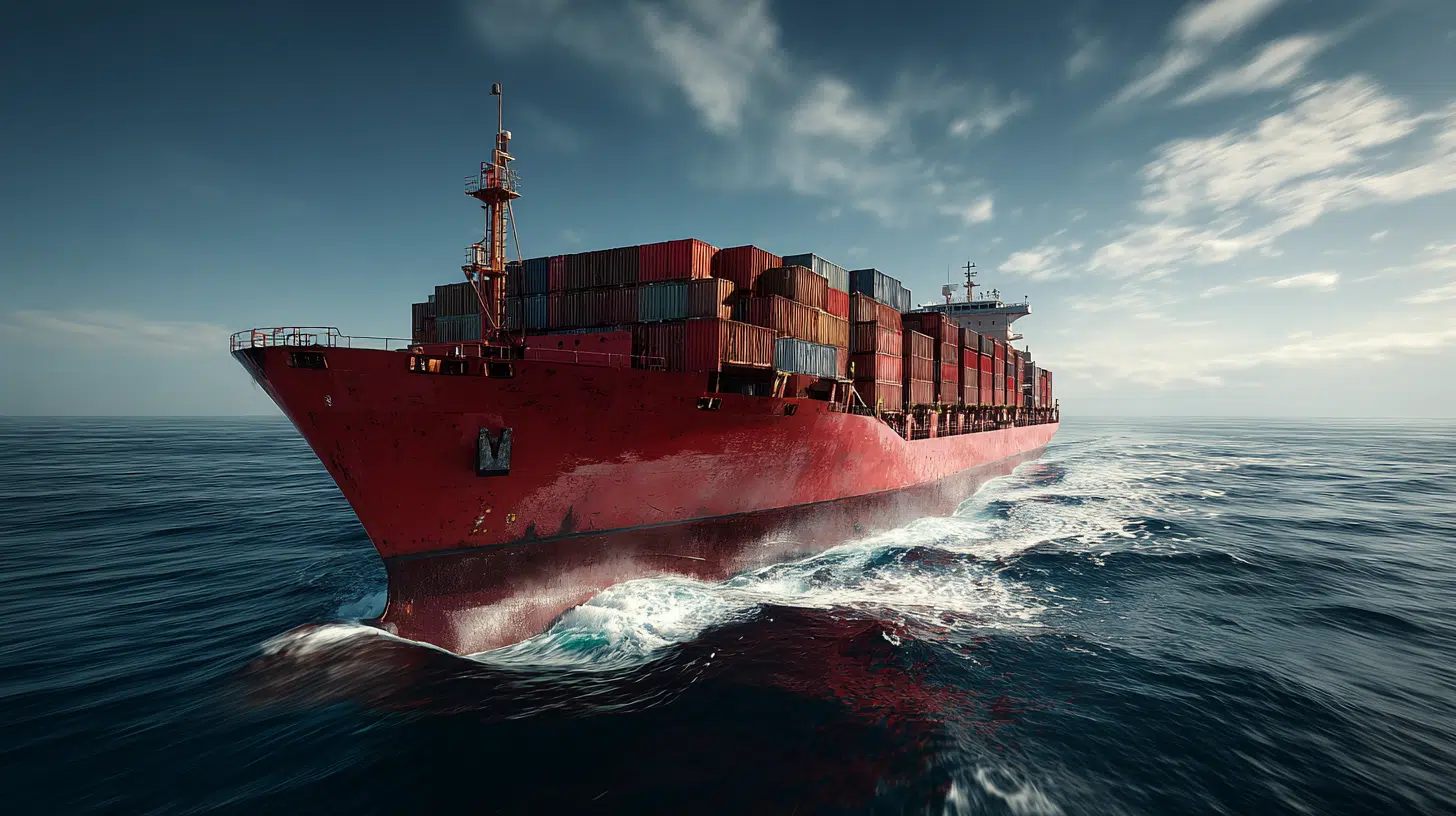
Port Botany handles 99.6% of New South Wales’s containerized freight volume, according to NSW Ports, making it the state’s only meaningful gateway for container trade. When a vessel’s arrival runs late out of Shanghai or Singapore, the ripple through Sydney’s distribution networks is not theoretical. It shows up in warehouse schedules, retailer shelves, and customer commitments within days. For businesses that have spent the past few years absorbing that kind of disruption as a recurring fact of life, the question is no longer whether supply chain risk is real. It’s what to do about it systematically.
That’s where outside expertise tends to earn its keep. Not because consultants understand your business better than you do, but because they’ve seen the same pattern of problems across enough different operations to spot what’s invisible from inside.
Why Sydney’s Trade Exposure Creates Specific Pressure
Australia’s geographic position means supply chains run long. Lead times from Asian manufacturing hubs to Sydney’s distribution networks routinely stretch to six, eight, or ten weeks when you include port processing, inland freight, and final delivery. That length magnifies the cost of any disruption. A two-day delay at an origin port doesn’t cost two days. It costs two days plus whatever buffer stock ran out while you were waiting.
Sydney-based importers also have limited flexibility when things go wrong. There’s one major container port. Airfreight is expensive and impractical at volume. When Port Botany backlogs, the options shrink fast. Businesses that haven’t thought about this in advance tend to find out what their contingency plan is at the worst possible moment.
Customer expectations have moved in the opposite direction. Same-day and next-day delivery has reset what “acceptable” looks like in retail and e-commerce. The operational gap between what customers expect and what long, single-lane supply chains can reliably deliver is wider than it’s ever been. That’s a commercial pressure that compounds the logistics one.
Where the Efficiency Actually Leaks
Port Congestion and Inbound Visibility
Congestion at Port Botany is a known variable, not an exceptional event. The businesses that handle it best aren’t the ones with the best luck. They’re the ones with real-time visibility into their inbound shipments and a process for reacting when something slips.
Without tracking down to the vessel and container level, most teams don’t know a shipment is delayed until it doesn’t arrive on schedule. By that point, the options for mitigation are already narrowing. Earlier visibility doesn’t eliminate the delay, but it creates room to adjust production schedules, customer commitments, or inventory draws before the impact becomes a crisis.
Businesses that rely on a single carrier or a single port routing are also significantly more exposed. When that lane has a problem, there’s no immediate alternative. Diversifying inbound routes costs more in normal conditions. It’s worth it when the alternative is a week of production downtime.
Inventory Planning That Doesn’t Match Demand Reality
Inventory problems in Sydney often look like logistics problems until someone digs into the forecasting. A business that’s consistently running out of stock or holding too much of it isn’t necessarily dealing with a shipping problem. It’s often dealing with a demand forecasting problem that shows up as a logistics problem.
Overstocking ties up working capital and warehouse space that’s expensive in Sydney’s industrial property market. Understocking creates expedited freight costs and missed revenue. Both are symptoms of the same underlying issue: the planning process isn’t modeling demand accurately enough to set the right reorder points and buffer stock levels.
Seasonal volatility makes this harder. Sydney retailers and distributors managing peak periods around Christmas or the financial year-end without accurate demand models tend to overcorrect after each disruption. The pattern repeats. A structural fix to the forecasting model breaks the cycle in a way that adjusting safety stock levels each quarter doesn’t.
What Supply Chain Consultants Actually Do for Sydney Businesses
The starting point for most engagements providing supply chain consulting services Sydney businesses rely on is a diagnostic. That means mapping current logistics flows, supplier relationships, and inventory practices against performance data, then identifying where the highest-risk gaps sit.
This matters because the problems that feel most urgent aren’t always the ones that cost the most. A team that’s constantly firefighting port delays may be losing more money to poor inventory positioning, or to a supplier concentration risk that hasn’t caused a problem yet but will. The diagnostic surfaces both kinds of issues and provides a basis for prioritizing what to fix first.
From there, consultants sequence improvements based on impact and implementation feasibility. Attempting to redesign a supply chain network and overhaul forecasting processes simultaneously rarely goes well. A phased approach keeps internal teams from being overwhelmed and creates early wins that build organizational confidence in the program.
Network Redesign for Current Trade Conditions
Many Sydney businesses are running supply chain networks that were configured five or more years ago, when freight costs were lower, lead times were shorter, and the trade environment was more stable. Port capacity, carrier route structures, and customer locations have all changed since then. Networks designed for a pre-2020 world may not be optimal for the one companies are actually operating in now.
A network redesign typically examines warehouse footprint, transport routes, carrier mix, and supplier geography against current trade flows and customer locations. The objective isn’t just cost reduction. It’s matching network structure to how goods actually move today.
Resilience has to be part of that calculus. A network that’s been optimized purely for cost in normal conditions becomes brittle when conditions change. Building in flexibility, even at a modest additional cost, tends to outperform the lean alternative when disruptions hit. The past few years have made that trade-off clearer for most businesses than it had been previously.
Supplier Diversification and Risk Concentration
Single-source supplier relationships are a common risk factor for Sydney importers, particularly those sourcing from specific regions of China or Southeast Asia. When that single source has a problem, whether a factory shutdown, a shipping lane disruption, or a quality issue, there’s no immediate alternative. The lead time to onboard a new supplier from scratch is measured in months, not days.
Diversifying across suppliers or sourcing regions reduces that exposure, but it creates its own complexity. Coordinating multiple suppliers across different quality standards, payment terms, and lead times requires more sophisticated procurement management than a single-supplier relationship. Consultants who’ve done this for other businesses can help compress the learning curve and avoid the missteps that typically slow down supplier diversification programs.
Scenario planning is the other side of this work. Businesses that have modeled what they’d do if their primary supplier went offline for eight weeks, or if Port Botany faced a serious congestion event, can execute a response plan instead of improvising one. That preparation gap is often the difference between a manageable disruption and an operational emergency.
What to Look for in a Consulting Partner
Local knowledge matters more in supply chain consulting than in most professional services engagements. Australian customs regulation, the specific operating characteristics of Port Botany, state-level transport regulations, and domestic 3PL market dynamics are all variables that a consultant without Australian experience will need time to absorb. That learning curve comes at your expense.
Ask prospective partners for examples of work with businesses of similar scale and import complexity in the Australian market. References from the logistics and retail sectors are particularly relevant for businesses moving consumer goods through Sydney. General supply chain credentials matter, but context-specific experience is what translates into practical recommendations that actually work in this market.
Look also for a partner who can support implementation, not just strategy. A set of recommendations delivered in a slide deck and left for the internal team to execute has a poor track record. The firms that deliver durable results tend to work closely with internal teams through the change rather than handing off at the point of the report.
Building Resilience Into Everyday Operations
The goal of supply chain consulting isn’t to create a plan that sits in a folder. It’s to change how decisions get made on an ongoing basis. That means building better visibility tools into standard operating procedures, integrating supplier risk review into procurement cycles, and making demand forecasting a cross-functional process rather than something procurement does in isolation.
Businesses that get the most out of outside expertise are the ones that treat it as a capability-building exercise, not a one-time fix. The consultants who are worth working with know that and structure their engagements accordingly. The ones who are worth avoiding are the ones who don’t mention implementation until the strategy phase is nearly complete.
Conclusion
Sydney’s position as a major trade gateway creates real logistics pressure that isn’t going away. Port constraints, long inbound lead times, rising freight costs, and demanding customers are structural features of the market, not temporary conditions. The businesses managing this environment best aren’t necessarily the largest ones. They’re the ones with the clearest picture of where their supply chains are exposed and a structured approach to reducing that exposure over time.
Outside expertise can accelerate that process, but only when it’s grounded in local market knowledge, focused on root causes rather than symptoms, and followed through into implementation. The diagnostic is where it starts. Getting the right partner to do it is where the results are won or lost.