Why Local Tournaments Fail to Reach the Global Level
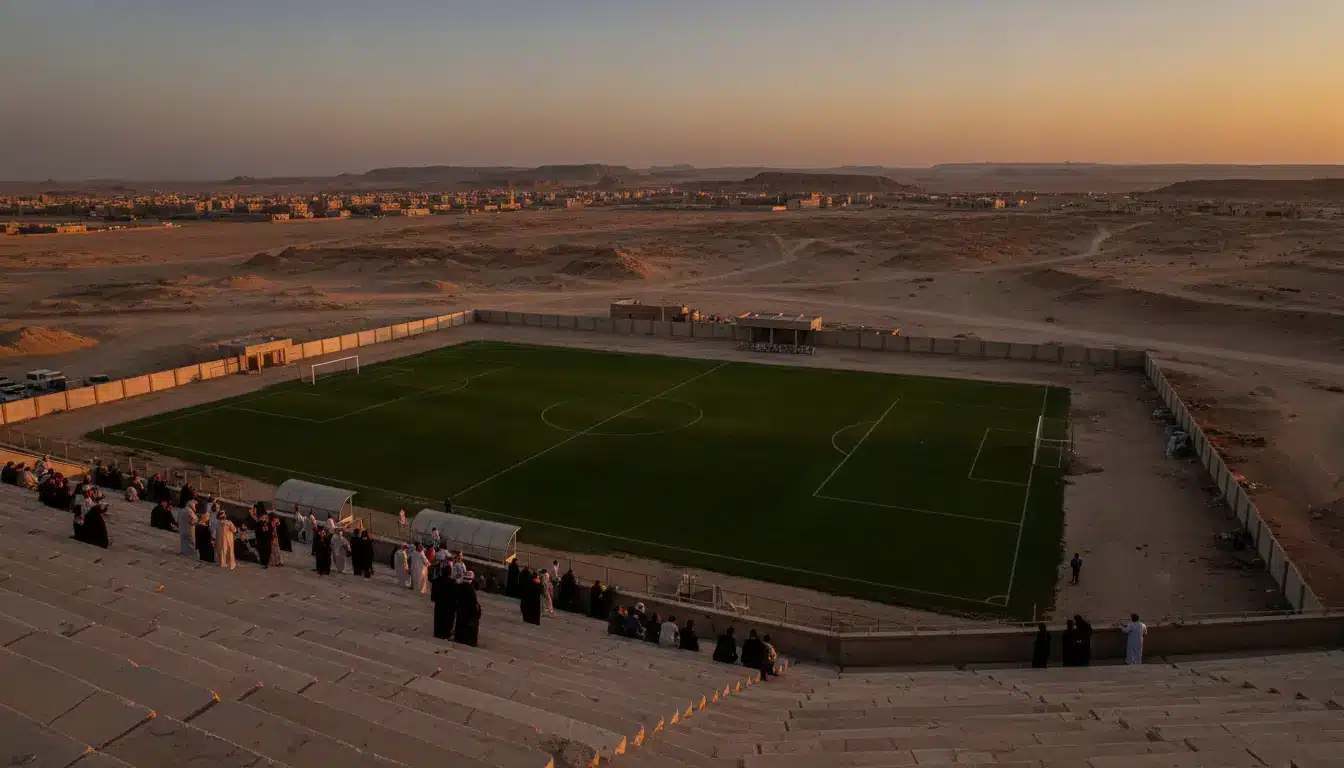
Local competitions help sustain national calendars and offer young athletes pathways to senior sport. However, only a few manage to move beyond their local markets. In Jordan and across the Middle East, the gap is not explained by one factor but by a mix of practical limits in organization, money, and distribution.
Structural Barriers to Global Expansion
The majority of the national leagues were created as a result of a national federation. The main priority of each federation was to develop the sport within its own borders, not to market its products globally. Each country has limited resources, decisions take longer, and there is less collaboration internationally. In Jordan, the governing body of the league is the Jordan Football Association. The association’s priorities are developing players and good governance, not to create an entertainment spectacle for a global audience.
A country’s facilities will also limit how many matches can be played outside of their home stadium. Poor lighting, small venues, lackluster camera angles, and disorganized match day logistics will negatively affect the television product, so much so that the television viewer may never get to see the remainder of the game. When the television network does not provide adequate coverage of your event, using a mobile application such as Melbet (Arabic: تنزيل برنامج مراهنات) , you can continue to follow your favorite teams by accessing live odds, scores, and statistics for all games in real time. Additionally, the app provides easy-to-use navigation between different sports, local payment options, and customer service assistance available when most needed.
Finally, timing becomes yet another obstacle. Local football schedules frequently conflict with big European matches and continental tournaments. Inevitably, if fans have to decide, they will watch whatever competition offers bigger prizes and better-known brands.
Media Visibility and Distribution Challenges
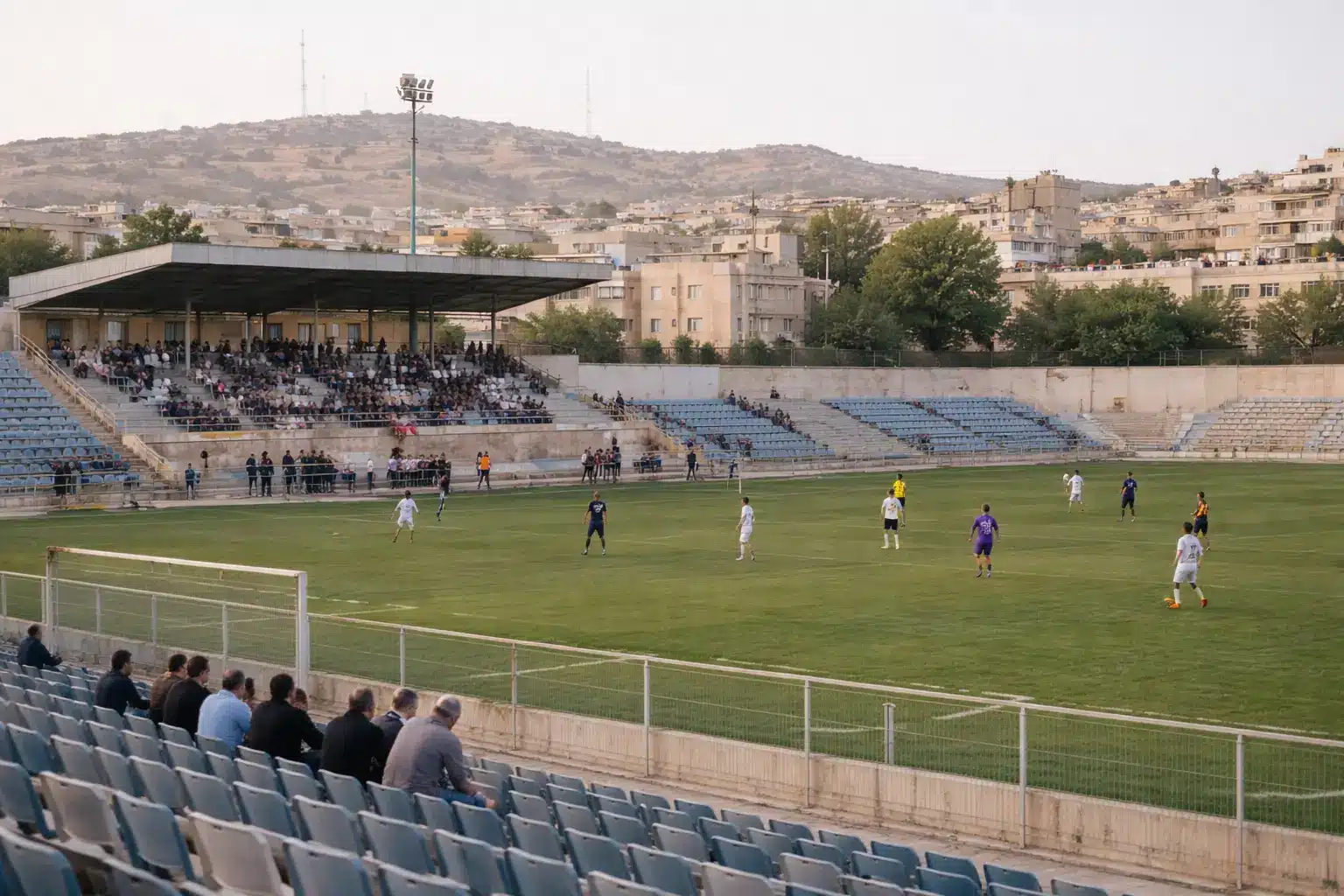
Global reach starts with distribution. Top competitions secure media deals years in advance and keep production standards stable from one season to the next. Local leagues do not usually have that kind of control, so one match may be covered well while the next barely travels beyond its home audience. The contrast was easy to see during the AFC Asian Cup 2024 in Qatar, when Jordan’s run to the final reached viewers across the region through coordinated broadcasting in a way that domestic competitions still cannot reproduce.
Online channels changed part of the problem, but they did not fix it. Lineups, short clips, and quick match notes now move fast, often outside official outlets. In that stream, (Arabic: ميل بيت ) works as one place where previews, short updates, and direct links sit together, which saves time for users following several matches at once and makes it easier to keep up with tournament activity without jumping between separate feeds.
Even with these tools, output remains fragmented. Some matches have highlights within minutes, others appear hours later or not at all. The result is a stop‑start viewing habit that is hard to scale internationally.
Key limits on reach include:
- uneven production quality across venues
- restricted international rights deals
- gaps in highlight publishing
- little or no multilingual output
Together, these reduce the chances of sustained interest outside the home market.
Financial Constraints and Sponsorship Gaps
Growth needs money that can be planned years ahead. Global tournaments spread risk across media rights, sponsors, merchandise, and ticketing. Local competitions rely more heavily on public funding and a small group of domestic sponsors.
Sponsorships may last for short amounts of time, making it hard to dedicate resources to product or marketing upgrades, in contrast to the Ministry of Youth, which aids in sustaining venues and activities targeting youth, a commercial support confined to a minimal level.
A simple comparison shows the difference:
Category | Global Tournaments | Local Tournaments |
Broadcast revenue | Multi-market contracts | Mainly domestic deals |
Sponsorship | Global brands | Local companies |
Facilities | Ongoing upgrades | Periodic improvements |
Promotion | International campaigns | Local outreach |
Competing for viewership against already established leagues is practically impossible without additional funding.
Talent Retention and Competitive Balance
A league’s perception is influenced by what happens to the players after performing well for a few seasons. In Jordan, if a footballer is talented, he will most likely leave to join a Saudi, Qatari, or lower division European club for a better contract and increased visibility.
This creates a noticeable gap inside the league. The less well-resourced clubs that develop talent and then lose them due to lack of continuity, and the small well-resourced clubs that can keep a more stable core, then create imbalances in the competition and result in a league where the outcomes are predictable.
For viewers outside the region, that matters. Leagues that hold attention tend to offer both recognizable players and uncertain results from week to week. When a once-familiar name goes missing, and predictions for match results become more straightforward, the quick loss of interest is not surprising. This has consequences for the way in which competitions are covered. Broadcasters and analysts prioritize leagues where player quality and competitive balance are more sustainable in the long run.
Governance and Strategic Planning
Soccer’s growth hinges on achieving uniformity. There are many areas of the game where goals, particularly in the scheduling, media, and commercial aspects, are misaligned between federations, leagues, and clubs. In reality, plans are often made season by season, which constrains long-term developments.
Core elements of effective governance include:
- stable competition formats and calendars
- clear financial reporting
- unified media and marketing plans
- working relationships with continental bodies
Changes in policy at the Asian Football Confederation Managing level to improve standards and visibility have resulted in activity, but the level of implementation is different for each Association.
The Role of Digital Platforms in Bridging Gaps
For this region, phones have become the primary way of consuming sports. Rather than watching full matches, users prioritize live scores and short clips, even just push updates, especially during the week. While this trend simplifies the process of tracking a match, it fundamentally alters the expectations. Rather than lengthy broadcasts, quicker and clearer broadcasts are favoured.
That said, digital presence on its own does not create a global audience. Feeds need regular output, consistent formatting, and clear timing. When posting becomes irregular, followers tend to shift toward competitors that offer a more predictable and continuous flow of updates.

Regional Context: Middle East and Jordan
The region’s extensive, coordinated investment proves what is possible on a large scale. Qatar’s 2022 FIFA World Cup was a top-level demonstration of infrastructure all the way to global media. The discrepancy between that model and most domestic leagues is vast.
In Jordan, local competitions draw committed home support but limited attention abroad. The most apparent gap came after the national team reached another milestone by the finals of the AFC Asian Cup 2024, which, for a short while, boosted the international exposure of Jordanian football. However, this interest did not materialize in the national domestic league, where the club competitions continue to run in isolation from each other in terms of time, spectators, and narratives.
While proposed integrated concepts such as joint marketing initiatives, shared timelines, and consolidated media rights are travelling to reach expansion opportunities, they are difficult to implement. Recent changes at a cross-border continental level, including the AFC restructuring 2024–2025 competitions to revise the tiers in club tournaments, signal an effort to competitively and visibility enhance the top end of the structure. However, small domestic leagues will likely continue to be overlooked.
Marketing Limitations and Brand Development
Success is not measured solely by results. Successful competitions have a defined identity: ongoing visual design, consistent plots, and players that bring narratives week on week. Many local tournaments struggle to maintain that continuity.
Another issue is positioning. Events such as the UEFA Champions League or the English Premier League are global-scale competitions with unique formats and prominent athletes. For local leagues, they don’t have a unique aspect that would captivate viewers without an existing connection or interest, and therefore have a limited appeal beyond their local markets.
Common marketing gaps include:
- low investment in international promotion
- inconsistent visual identity
- limited storytelling around players and rivalries
- weak links to overseas fan communities
In a crowded global market, these gaps make it harder for local tournaments to distinguish themselves from larger, more established competitions.
Pathways Toward International Relevance
Change tends to come from combined steps rather than single fixes. Better production, clearer calendars, and stronger contracts help, but only when they move together.
Partnerships with larger media platforms can extend distribution, while improved formats can add uncertainty and interest. Starting in 2025, there will be expanded participant and wider media coverage for the FIFA Club World Cup. This means more global attention and an example of how to increase attention for an event in sports tourism. Most destination-based/local tournaments cannot achieve this yet. Keeping some of the same star players creates more continuity season over season.
Recent AFC initiatives are attempting to improve both the competitive standards and the visibility; however, results vary by country. Where funding, governance and media plans are integrated, progress can be seen. Where they are not, tournaments continue to operate mainly within their domestic sphere despite wider digital access.