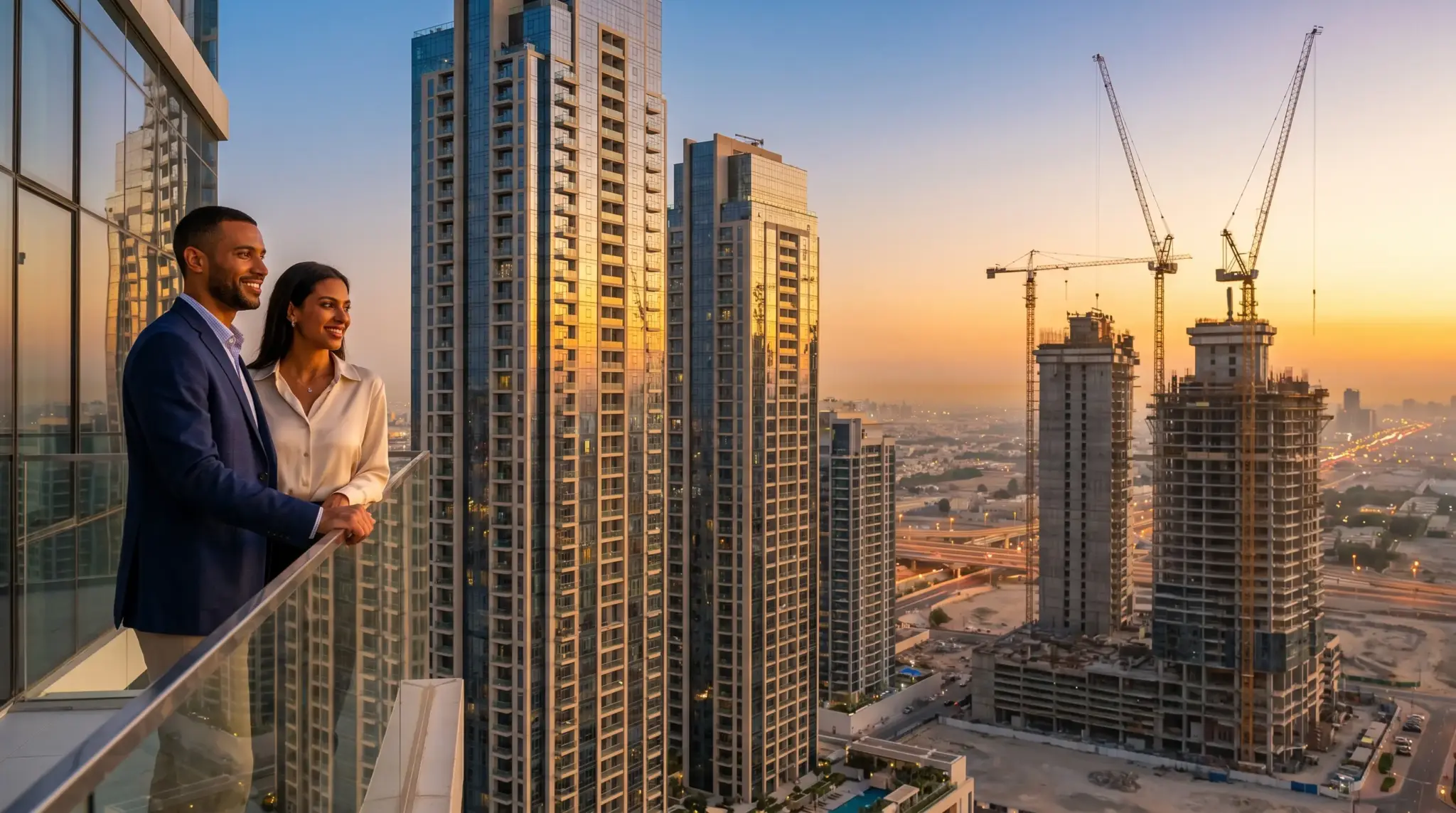
Dubai has long been a magnet for expatriates. With its tax-free income, world-class infrastructure, and cosmopolitan lifestyle, the city attracts professionals, entrepreneurs, and families from every corner of the globe. But increasingly, the expat journey in Dubai is evolving, what begins as a relocation decision is quietly becoming a long-term investment strategy. At the center of this shift is one of the emirate’s most compelling real estate opportunities: off-plan apartments.
Understanding the Off-Plan Market in Dubai
Off-plan properties are units purchased directly from developers before or during construction. Buyers commit to a property based on architectural plans, floor layouts, and developer reputation, often securing the unit at a price below its projected market value upon completion.
Dubai’s off-plan market has matured significantly over the past decade. Regulatory bodies like the Real Estate Regulatory Authority (RERA) and the Dubai Land Department (DLD) have introduced robust buyer protections, including escrow account requirements that ensure developers cannot access buyer funds until construction milestones are met. This framework has transformed off-plan purchasing from a speculative gamble into a structured, legally protected investment pathway.
For expats navigating this market, platforms like Bayut make the process more accessible. Browsing off plan apartments for sale in Dubai allows buyers to filter by location, developer, handover date, and payment plan giving newcomers and seasoned investors alike a transparent view of what is available across the emirate’s diverse neighborhoods.
Why Expats Are Drawn to Off-Plan Properties
Lower Entry Price Points
One of the most significant advantages of off-plan properties is pricing. Developers typically launch new projects at introductory rates to generate early-stage demand. For expats who may have recently relocated and are managing the costs of settling into a new country, this lower entry point is a practical advantage.
Compared to ready properties in the same community, off-plan units can be priced 10–25% lower, depending on the developer and the stage of launch. This pricing differential alone makes off-plan purchasing an attractive route for capital-conscious buyers.
Flexible and Developer-Backed Payment Plans
Unlike most global real estate markets where buyers need substantial upfront capital or immediate mortgage approvals, Dubai’s off-plan sector is built around flexible payment structures. Developers routinely offer installment-based plans that spread payments over the construction period and in many cases, beyond handover.
Common structures include 50/50 plans (half during construction, half upon completion), 60/40 or 70/30 splits, and post-handover payment plans that allow buyers to continue paying over one to five years after receiving the keys. For expats still building financial roots in a new country, these arrangements significantly reduce the immediate capital burden.
Capital Appreciation Potential
Dubai’s real estate market has demonstrated strong resilience and consistent growth across key districts. Areas such as Dubai Creek Harbour, Dubai Hills Estate, Business Bay, and Jumeirah Village Circle have seen notable appreciation between project launch and handover sometimes within 18 to 36 months.
For expats who purchase during the early launch phase, the potential to realize capital gains upon completion, or to resell the unit before handover, creates an additional financial incentive beyond simply securing a place to live.
Modern Amenities and High Construction Standards
Off-plan projects in Dubai are typically positioned at the premium or mid-premium tier, featuring contemporary architecture, smart home technology, resort-style amenities, and sustainable design elements. Expats accustomed to high living standards often find that off-plan developments offer a level of finish, community planning, and lifestyle infrastructure that is difficult to match in older, secondary-market properties.
Residency Visa Eligibility
Property ownership in Dubai opens a pathway to long-term residency. The UAE’s property investor visa program allows buyers who invest AED 400,000 or more in real estate to apply for a two-year renewable residency visa. For investments of AED 2 million or above, buyers may be eligible for the Golden Visa, granting a ten-year residency to the investor and their immediate family.
Dubai’s Regulatory Landscape: A Safety Net for Expat Buyers
One of the most common concerns among first-time expat investors is the legal framework around foreign ownership. Dubai addresses this through designated freehold zones, areas where non-UAE nationals are permitted to own property outright. These include Dubai Marina, Downtown Dubai, Palm Jumeirah, Jumeirah Lake Towers, Business Bay, and numerous other established and emerging communities.
The Shift from Renter to Owner: A Mindset Change
For many expats, the first years in Dubai are spent renting, often paying annual rents in advance due to the local market norm of upfront cheques. It does not take long to realize that the amounts being paid in rent can, in many cases, be redirected toward a mortgage or installment-based off-plan payment plan.
This realization is often the catalyst for the transition from renter to property owner. The psychological and financial shift is meaningful: instead of funding a landlord’s asset, expats begin building equity in a market with demonstrated growth potential, while simultaneously securing more stable long-term housing.
The Broader Investment Logic
Dubai’s fundamentals support the investment thesis behind off-plan purchasing. Population growth continues at pace, driven by sustained inflows of skilled professionals from South Asia, Europe, the Arab world, and increasingly, East Asia. The UAE’s strategic positioning as a global business hub, bolstered by free zones, low corporate tax environments, and world-class logistics infrastructure, ensures continued demand for quality residential real estate.
Frequently Asked Questions
Can Expats Get a Mortgage in Dubai to Purchase an Off-Plan Apartment?
Yes. Most banks require ~50% construction completion before releasing funds. Expats are capped at 75% financing (LTV) on properties under AED 5 million. Secure pre-approval early.
What Happens if a Developer Goes Bankrupt or Fails to Complete an Off-Plan Project?
Dubai’s escrow law protects buyers by holding funds in a DLD-regulated account. If a project fails, RERA can appoint a new developer or issue refunds. Always verify your project is RERA-registered.
Is It Possible to Resell an Off-Plan Apartment Before It Is Completed?
Yes, via an assignment of contract. The buyer transfers the purchase agreement to a new buyer, usually at a profit. Expect developer assignment fees and a DLD transfer fee. Check your SPA for resale restrictions first.
Are There Any Restrictions on Renting Out an Off-Plan Apartment Once It Is Completed?
No nationality-based restrictions in freehold zones. Register tenancy contracts via Ejari (RERA requirement). Some communities restrict short-term rentals (e.g., Airbnb), so check community rules.
How Are Service Charges Calculated, and What Do They Cover?
Annual per-square-foot fees covering shared amenities (lobbies, pools, gyms, etc.), regulated by RERA. Rates vary by building — ask the developer for the estimated rate before buying.
Does Purchasing an Off-Plan Apartment in Dubai Have Any Tax Implications for Expats?
Dubai has no income, capital gains, or property tax. The only fee is a 4% DLD transfer fee at purchase. However, check your home country’s tax laws — the US, UK, and Australia require reporting foreign property income and gains.