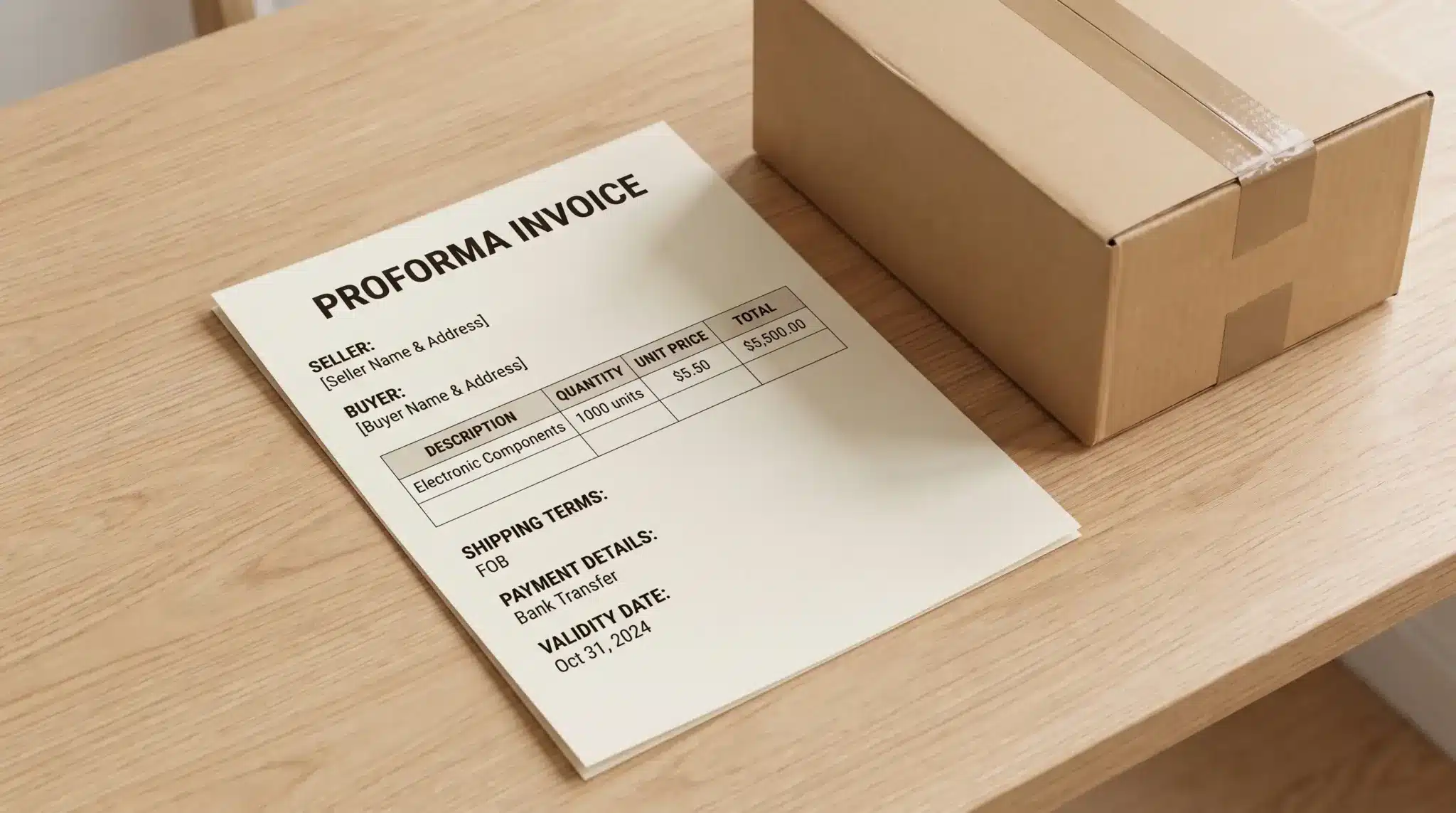
Invoices are a familiar part of business, but not every invoice means the same thing. A pro forma invoice can look much like a regular invoice, yet it serves a different purpose before a sale is finalized.
I find this distinction especially useful for anyone dealing with orders, payments, shipping, or international trade.
Understanding what a pro forma invoice means can help buyers and sellers know what the document does, what information it contains, and when to use it. It can also prevent confusion about whether payment is actually due.
From its purpose to its role in business transactions, a few simple points can make the difference much clearer.
Pro Forma Invoice Meaning: What is a Pro Forma Invoice?
A pro forma invoice is a preliminary document that shows the expected details and costs of a sale before the transaction is finalized.
It usually lists the products or services, prices, quantities, delivery details, and proposed terms. Unlike a standard invoice, it is not normally a formal request for payment.
Businesses use it to help buyers review the order, confirm details, and make changes before the final invoice is issued.
It can also support international shipping and customs processes. A pro forma invoice generally does not create a standard accounts receivable or accounts payable entry because the sale has not been finalized.
Why Do Businesses Use a Pro Forma Invoice?
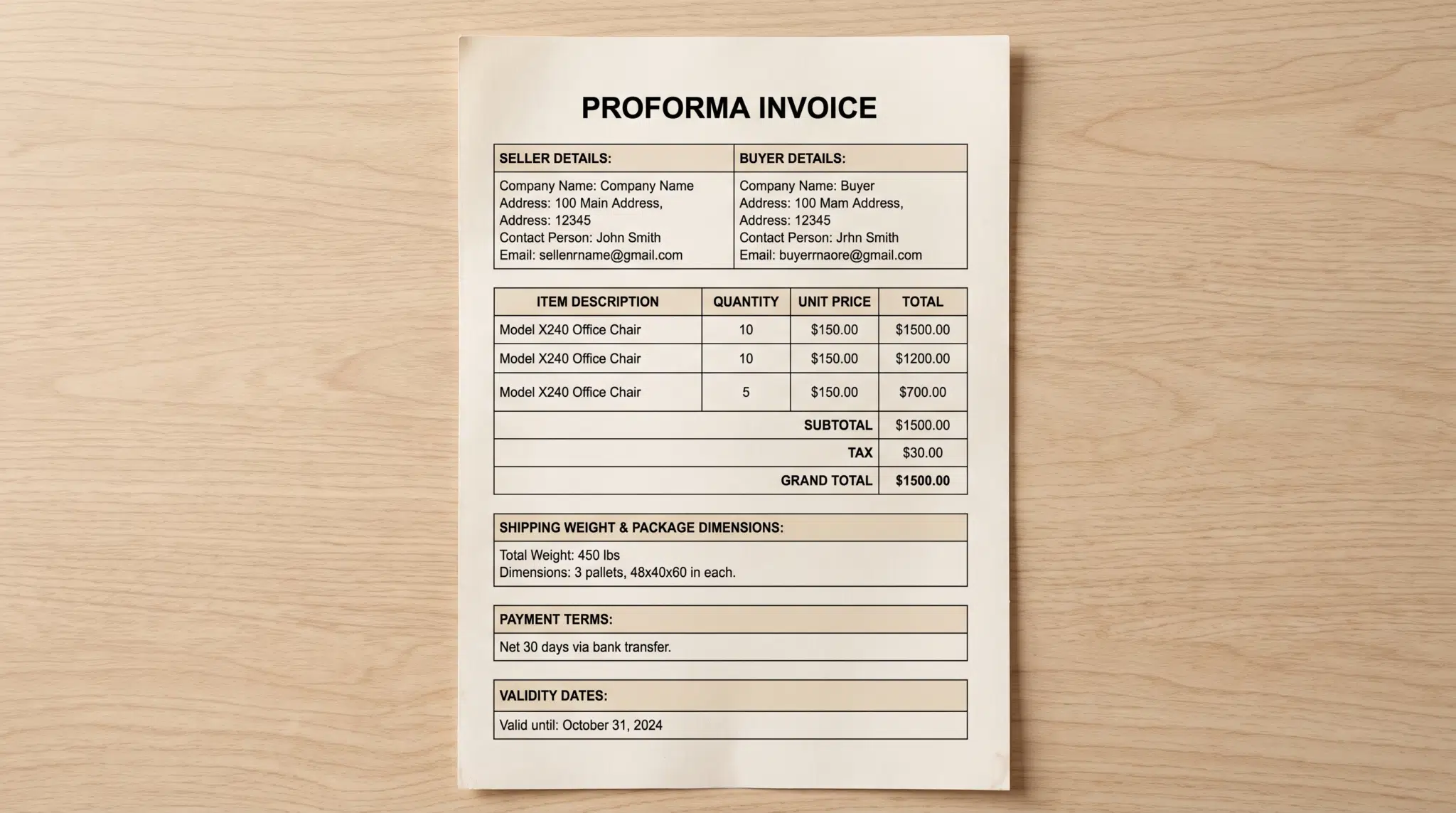
Businesses use a pro forma invoice to make the expected terms of a transaction clear before the final sale. Buyers can use it for internal purchase approval, while sellers can use it to confirm prices, quantities, delivery details, and other terms.
It can also help with international shipments by giving customs officials information about the goods and their value.
Since the document is preliminary, both sides can discuss and change prices, quantities, or delivery terms before finalizing the sale.
It also gives buyers an idea of expected costs. In some cases, a seller may arrange advance payment using the stated terms, but the proforma itself is not normally a standard payment demand.
What Information Does a Pro Forma Invoice Include?
A proforma invoice usually includes many of the same details as a standard invoice, but it should be clearly marked as “Pro Forma Invoice,” so it is not mistaken for a final billing document. The exact format can vary by business and transaction.
| INFORMATION | WHAT IT SHOWS |
|---|---|
| Seller Details | Business name, address, and contact information |
| Buyer Details | Customer or company name and address |
| Product or Service Details | Description, quantity, and specifications |
| Pricing | Unit prices and estimated total |
| Shipping Details | Delivery method, destination, and shipping costs |
| Payment Terms | Proposed payment method and terms, if applicable |
| Delivery Details | Expected delivery date or timeline |
| Validity Date | How long the quoted terms remain valid |
| International Trade Details | Country of origin, product classification, and Incoterms, when applicable |
These details help both sides check the transaction before the final invoice is prepared. For international shipments, product classification and country-of-origin information may also help with customs requirements.
How to Create a Pro Forma Invoice?
A pro forma invoice does not need to follow one universal format. However, including clear and complete information makes it easier for the buyer to review the proposed transaction.
- Add Seller Details: Include your business name, address, and contact information.
- Add Buyer Details: Enter the customer’s or company’s correct name and address.
- Describe the Order: List the products or services, quantities, prices, and important specifications.
- Add Terms: Include shipping details, payment terms, expected delivery date, and a validity date when relevant.
- Label and Review It: Clearly mark the document as a Pro Forma Invoice, then check all details before sending it.
The final document should give the buyer a clear picture of the proposed transaction. If the terms change, update the proforma invoice before the final invoice is issued.
Pro Forma Invoice vs Invoice
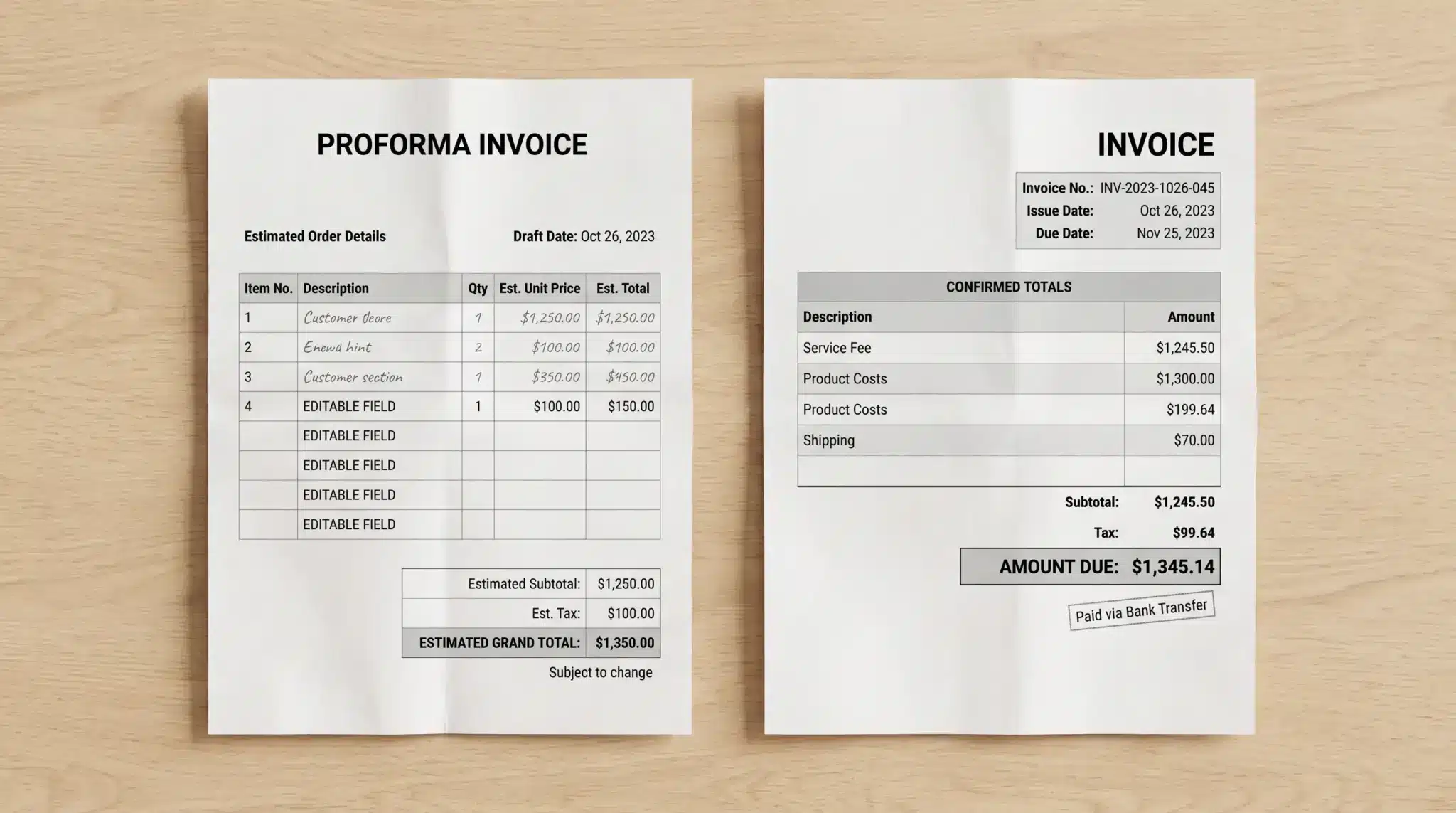
A proforma invoice and a standard invoice can look similar, but they follow different rules for when ownership changes hands and how each is recorded.
A proforma invoice gives the buyer preliminary details before the sale is finalized, while a standard invoice is used to request payment for a completed or otherwise billable transaction.
| FEATURE | PRO FORMA INVOICE | INVOICE |
|---|---|---|
| Purpose | Preliminary details and expected costs | Formal billing and payment request |
| Timing | Before the final transaction is completed | When payment becomes due under the agreed terms |
| Payment Request | Generally not a standard payment demand | Normally requests payment |
| Accounting | Generally not recorded as a standard receivable or payable | Recorded according to applicable accounting rules |
| Changes | Can generally be revised before finalization | Corrections may require an adjustment or replacement |
| Status | Preliminary | Final billing document |
The main difference is the stage of the transaction. A proforma invoice can still change, while a standard invoice records the amount owed under the finalized billing terms and is used for payment tracking.
Should You Pay a Pro Forma Invoice?
A proforma invoice is generally not a standard payment demand, so you should not assume that payment is required just because you received one.
However, some sellers may arrange advance or partial payment as part of the agreed transaction terms. Before paying, check the seller’s payment instructions and confirm that the business and bank or payment details are correct.
This is especially important for large or international payments, particularly when working with overseas suppliers and cross-border freight arrangements.
Also, keep in mind that a proforma invoice does not replace the appropriate final invoice or tax document when one is required.
Once the sale is finalized, the seller may need to issue the proper invoice for accounting, tax, or payment records.
Common Pro Forma Invoice Mistakes to Avoid
A proforma invoice is useful only when both sides understand what it represents. A few simple checks can help prevent confusion and payment problems.
- Treating It as Final: Remember that a proforma invoice is preliminary and may still change.
- Assuming the Amount is Fixed: Prices, quantities, taxes, shipping costs, or other terms may change before final billing.
- Using Incorrect Details: Check buyer, seller, product, and shipping information carefully.
- Paying Without Checking: Confirm the agreed payment terms and payment details before sending money.
A careful review also makes it easier to prepare the final invoice correctly once the transaction is finalized.
Final Thoughts
A pro forma invoice helps buyers and sellers agree on important transaction details before the final billing document is issued.
It can show expected prices, quantities, delivery terms, payment conditions, and other information needed to move a sale forward.
Understanding what a pro forma invoice means also makes it easier to see how it differs from a regular invoice and why it usually doesn’t create a standard payment obligation.
I think that distinction can save businesses from simple billing mistakes and confusion. Have you used a pro forma invoice for a business transaction? Share your experience or questions in the comments below.
Frequently Asked Questions
Is a Proforma Invoice Legally Binding?
No, a proforma invoice is generally not legally binding because it is issued before the sale is finalized. Either side can adjust the price, quantity, delivery terms, or payment details before issuing the final invoice.
What is the Difference Between a Proforma Invoice and a Quotation?
A quotation provides estimated pricing and terms during the early stage of a sale. A proforma invoice follows a formal invoice-style format and includes detailed buyer, seller, shipping, and payment information.
Can a Proforma Invoice Be Changed After It Is Sent?
Yes, a proforma invoice can be updated any time before the sale is final. Sellers commonly revise it when shipping costs, quantities, or delivery dates shift before the deal closes.
Does a Small Business Need a Proforma Invoice for Every Sale?
No, most small sales do not need one. Proforma invoices matter most for international shipments, large orders, or any sale where the buyer wants firm numbers before committing.