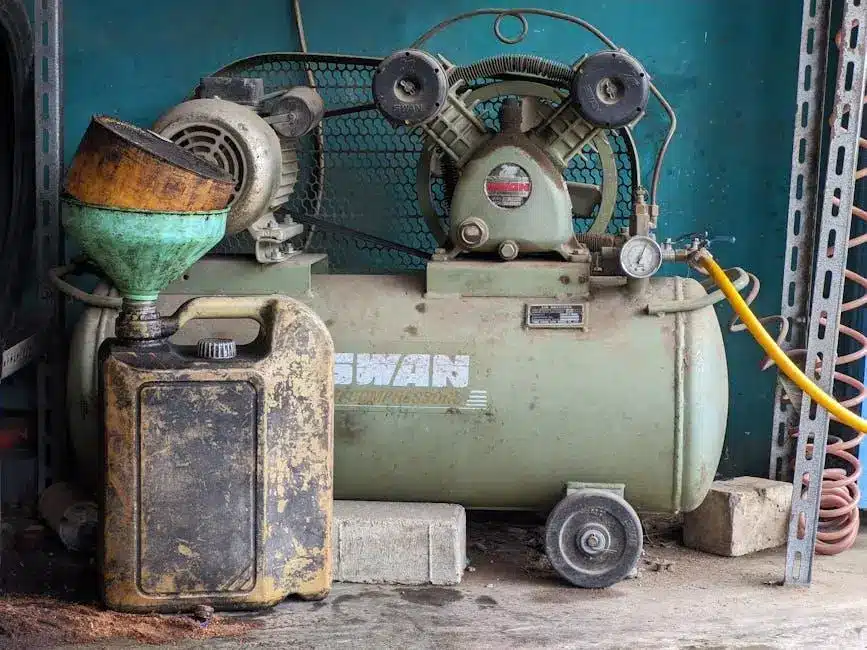
Every fleet maintenance facility runs on compressed air. Tire inflation, pneumatic tool operation, paint spraying, parts cleaning, and brake system servicing all depend on a reliable supply of pressurized air delivered at the right volume and pressure.
Companies like Penry Air supply the compressors, dryers, and components that keep these systems running. For fleet operations managing dozens or hundreds of vehicles, compressed air is not a convenience. It is the backbone of the maintenance workflow.
Why Is Compressed Air So Critical for Fleet Operations?
Pneumatic tools dominate fleet maintenance because they deliver more power per unit of weight than their electric counterparts. Impact wrenches, die grinders, air ratchets, and spray guns all run on compressed air, and a busy fleet shop uses them continuously across multiple service bays.
The demands are heavy. A single tire shop servicing commercial vehicles may use 50 to 100 CFM (cubic feet per minute) of air continuously during peak hours. Multiply that across a full maintenance facility with paint booths, body work, and engine service, and the total demand grows quickly.
According to the U.S. Department of Energy, compressed air systems consume approximately 10 percent of all industrial electricity in the United States. In fleet maintenance specifically, the compressed air system is often the single largest electricity consumer in the facility. Getting the system right directly affects both productivity and operating costs.
What Components Does a Fleet Maintenance Air System Need?
A complete compressed air system includes more than just the compressor. Here is what a well-designed fleet facility requires.
- Air compressor (rotary screw for continuous-duty applications). Reciprocating compressors suit smaller shops, but high-volume fleet operations need the sustained output of a rotary screw unit.
- Receiver tank sized to buffer demand peaks. The tank stores compressed air during lower-demand periods and releases it during peak tool usage without forcing the compressor to cycle rapidly.
- Air dryer (refrigerated or desiccant) to remove moisture before it reaches tools and paint equipment. Wet air damages pneumatic tools internally and ruins paint finishes.
- Filtration system to remove oil aerosols and particulates. Clean, dry air extends tool life and produces better results in painting and cleaning applications.
- Distribution piping designed for minimal pressure drop. Aluminum or stainless steel piping with properly sized headers and drops keeps full pressure available at every service bay.
- Point-of-use regulators and filters at each bay. These let technicians adjust pressure to match the specific tool they are using without affecting the system-wide supply.
Cutting corners on any single component degrades the performance of the entire system. The most common mistake is undersizing the receiver tank, which forces the compressor to short-cycle and wastes energy.
How Do You Size a Compressor for a Fleet Facility?
Proper sizing starts with measuring actual air demand. Add up the CFM requirements of every tool that may run simultaneously during peak activity. This is your peak demand number.
Your compressor should deliver 20 to 25 percent more than peak demand to account for leaks, future expansion, and the efficiency losses that accumulate in any distribution system. A facility that peaks at 80 CFM should install a compressor rated for 100 CFM or higher.
Horsepower is not the best sizing metric by itself. Two 25 HP compressors from different manufacturers may produce very different CFM outputs. Always size by CFM at the operating pressure you need (typically 90 to 125 PSI for fleet applications) rather than by horsepower alone.
According to the Compressed Air and Gas Institute, proper system design and sizing can reduce compressed air energy costs by 20 to 50 percent compared to poorly planned installations. The upfront engineering time pays for itself many times over in monthly utility savings.
What Maintenance Keeps a Fleet Air System Running?
Compressed air systems need regular attention to maintain efficiency and prevent failures.
- Daily: Drain moisture from the receiver tank and any low-point drip legs in the distribution piping. Moisture is the number one cause of premature tool failure and paint defects.
- Weekly: Check compressor oil level and inspect for visible air leaks at fittings and connections. Even small leaks waste significant energy and reduce available pressure.
- Monthly: Replace or clean intake air filters. A clogged filter makes the compressor work harder and consume more electricity for the same output.
- Quarterly: Test the pressure relief valve on the receiver tank. Inspect drive belts (on belt-driven units) for wear and tension.
- Annually: Change compressor oil and oil filter. Have a technician perform a full system inspection including motor condition, electrical connections, and separator element replacement.
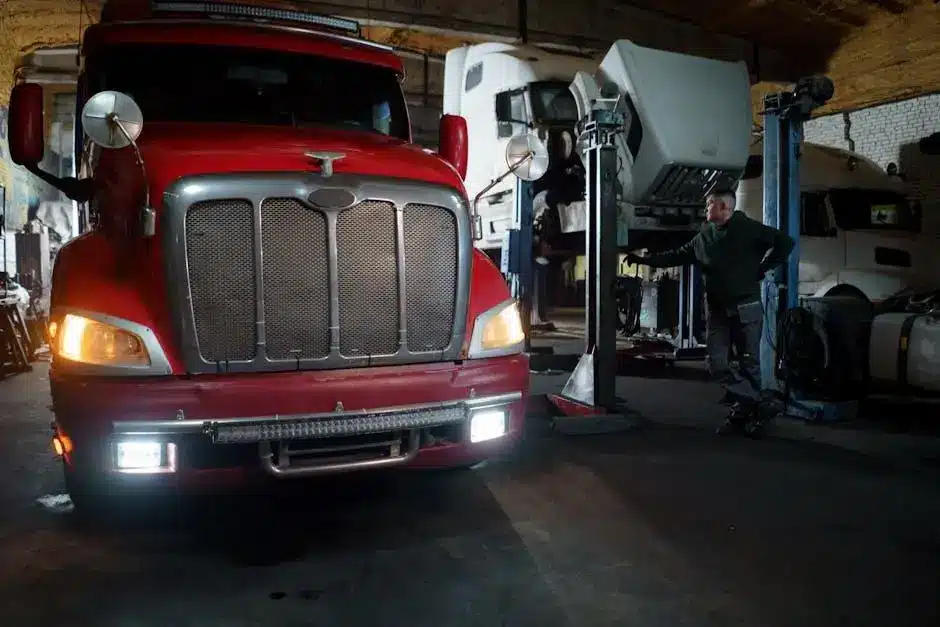
A well-maintained system runs at full efficiency for 15 to 20 years. Neglected systems lose 20 to 30 percent of their capacity to leaks and component degradation within five years.
What Energy Savings Opportunities Exist?
Fleet facilities with older or poorly maintained air systems often waste 25 to 35 percent of their compressed air through leaks alone. An ultrasonic leak detection survey identifies and prioritizes leak repairs that pay for themselves within weeks.
Variable speed drive (VSD) compressors adjust motor speed to match actual demand rather than running at full power constantly. For facilities with fluctuating demand (busy mornings, slower afternoons), a VSD compressor can cut energy costs by 30 to 50 percent compared to a fixed-speed unit.
Heat recovery is another opportunity. Compressors generate significant waste heat. Ducting that heat into the facility during winter months or using it to preheat wash water offsets heating costs that would otherwise add to utility bills.
Fleet Air System Essentials
- Compressed air powers the majority of pneumatic tools in fleet maintenance facilities.
- Size compressors by CFM at operating pressure, not by horsepower alone.
- Install a properly sized receiver tank, dryer, and filtration system alongside the compressor.
- Drain moisture daily and inspect for leaks weekly to maintain system efficiency.
- Ultrasonic leak surveys and VSD compressors offer the largest energy savings opportunities.
- A well-maintained system runs efficiently for 15 to 20 years.
Keeping the Fleet Moving
Compressed air is invisible infrastructure. When the system works properly, nobody notices it. When it fails, every service bay in the facility slows down. Investing in the right equipment, proper sizing, and regular maintenance keeps the air flowing and the vehicles moving.
FAQ
How much does an industrial air compressor cost for a fleet shop?
Rotary screw compressors suitable for fleet maintenance range from $5,000 to $30,000 depending on CFM output and features. Variable speed drive models cost more upfront but reduce energy costs significantly over their lifespan.
What size air compressor do I need for a 10-bay fleet facility?
A 10-bay facility with simultaneous tool use typically needs 150 to 250 CFM of compressed air. A 50 to 75 HP rotary screw compressor with a properly sized receiver tank covers this demand range.
How often should I replace my air compressor?
A well-maintained rotary screw compressor lasts 15 to 20 years. Replace it when repair costs become frequent or when energy consumption increases notably despite maintenance.
Do I need a separate air dryer for my compressor?
Yes, for fleet applications. Moisture in compressed air damages pneumatic tools, causes corrosion in airlines, and ruins paint finishes. A refrigerated dryer removes moisture effectively for most fleet maintenance needs.