The loud bang that comes from a snapping garage door spring catches most homeowners completely off guard. One moment, the door works fine, the next it’s dead in the tracks. No warning. No build-up. Just a sound like a gunshot from the garage and a door that won’t budge.
The truth is, the warning signs were probably there. A little extra noise, a slight wobble, the door feeling heavier than usual. Springs, cables, and rollers all wear down, and knowing where yours stand can be the difference between a planned garage door spring repair and an emergency one.
Garage Door Springs: The Workhorse of the System
Springs do the heavy lifting, literally. They counterbalance the weight of the door so your opener doesn’t have to strain to move it.
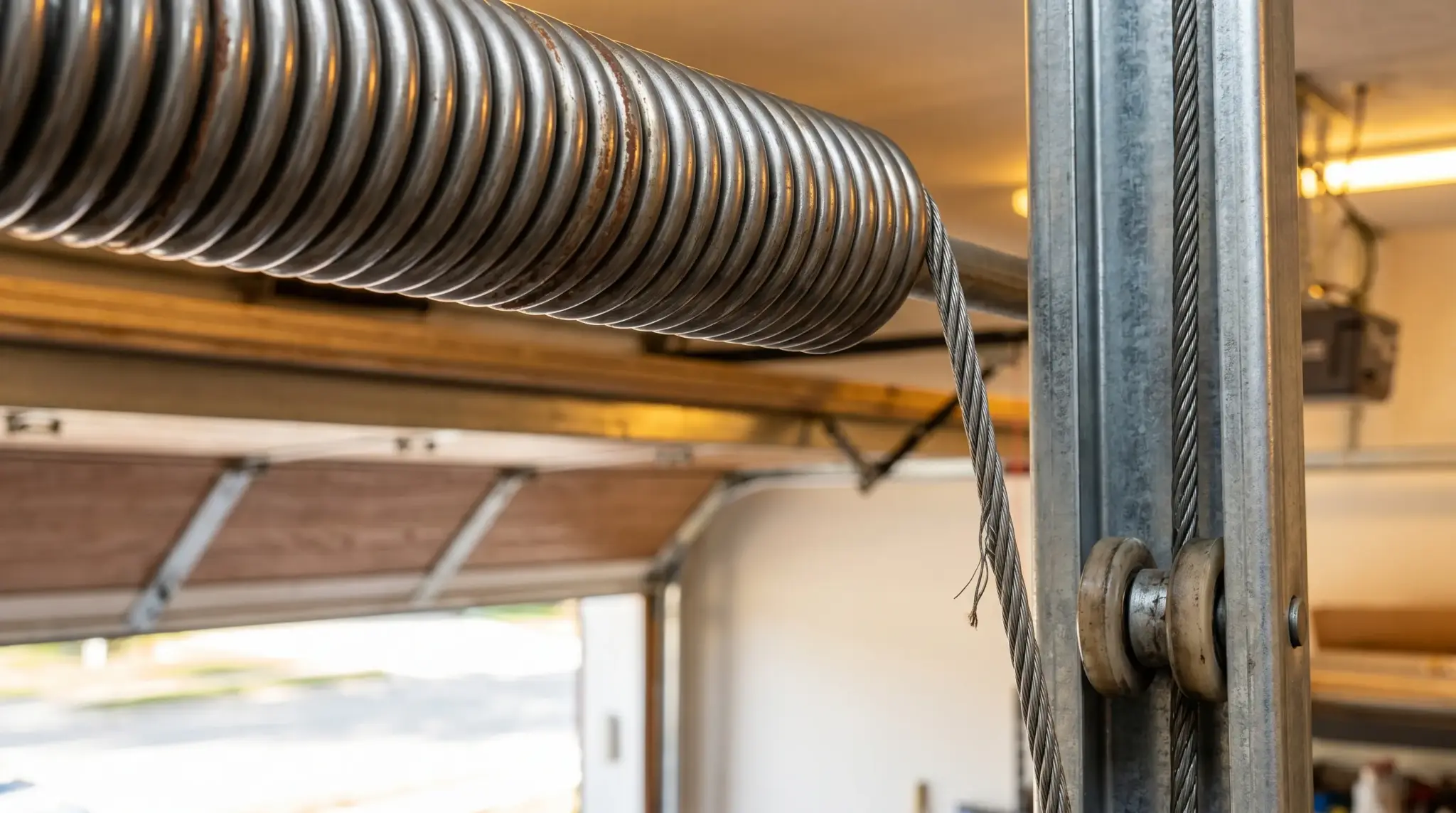
There are two types: torsion springs (mounted horizontally above the door) and extension springs (mounted on the sides). Torsion springs are more common in modern homes and tend to last longer.
How Long Do They Last?
Most standard garage door springs are rated for about 10,000 cycles. One cycle equals one open and one close. If you use your garage door four times a day, you’re looking at roughly 7 years before the spring reaches the end of its rated life.
High-cycle springs are also available, rated for 20,000 to 50,000+ cycles. These cost more upfront but are worth considering if your garage is your main entry point.
The U.S. Consumer Product Safety Commission (CPSC) identifies garage doors as one of the largest moving objects in the home and has documented serious injuries and fatalities tied to garage door incidents over decades of reporting. Their publications specifically call out hardware condition and regular maintenance as central to safe operation.
What Does Garage Door Spring Repair Cost?
Spring replacement typically runs between $150 and $350, depending on the spring type, your location, and labor rates. Torsion springs generally cost more to replace than extension springs, but they last longer and are safer when they fail.
Signs Your Garage Door Spring Is Failing
- The door feels unusually heavy when you try to lift it manually
- The door opens a few inches, then stops
- You hear a loud bang from the garage (a snapping spring is often the culprit)
- The door hangs unevenly on one side
One safety note: Never try to replace garage door springs yourself. They’re under extreme tension and can cause serious injury if mishandled. This is a job for a trained professional, full stop.
Garage Door Cables: Quiet, But Not Invincible
Cables work alongside the springs to guide and support the door as it moves up and down. They’re made of steel wire twisted together, which gives them strength, but they still wear out over time.
How Long Do They Last?
With normal use and decent maintenance, cables typically last 8 to 15 years. Rust, fraying, or cable misalignment can cut that lifespan short, especially in humid or coastal climates.
What Does Garage Door Cable Repair Cost?
Cable replacement usually runs $100 to $200 for most residential doors. If a spring failure caused the cable to snap or slip, you may be looking at both repairs at once, which is worth addressing together rather than in two separate visits.
Signs Your Cables Need Attention
- Visible fraying or wear on the cable strands
- The door jerks or moves unevenly during operation
- The cable has slipped off the drum or pulley
- Rust or corrosion is visible along the cable length
Cables rarely fail on their own. They often go when a spring breaks, because the sudden load shift puts them under stress they weren’t designed to handle alone. If a spring has snapped, inspect the cables too before calling it done.
Garage Door Rollers: Small Wheels, Big Job
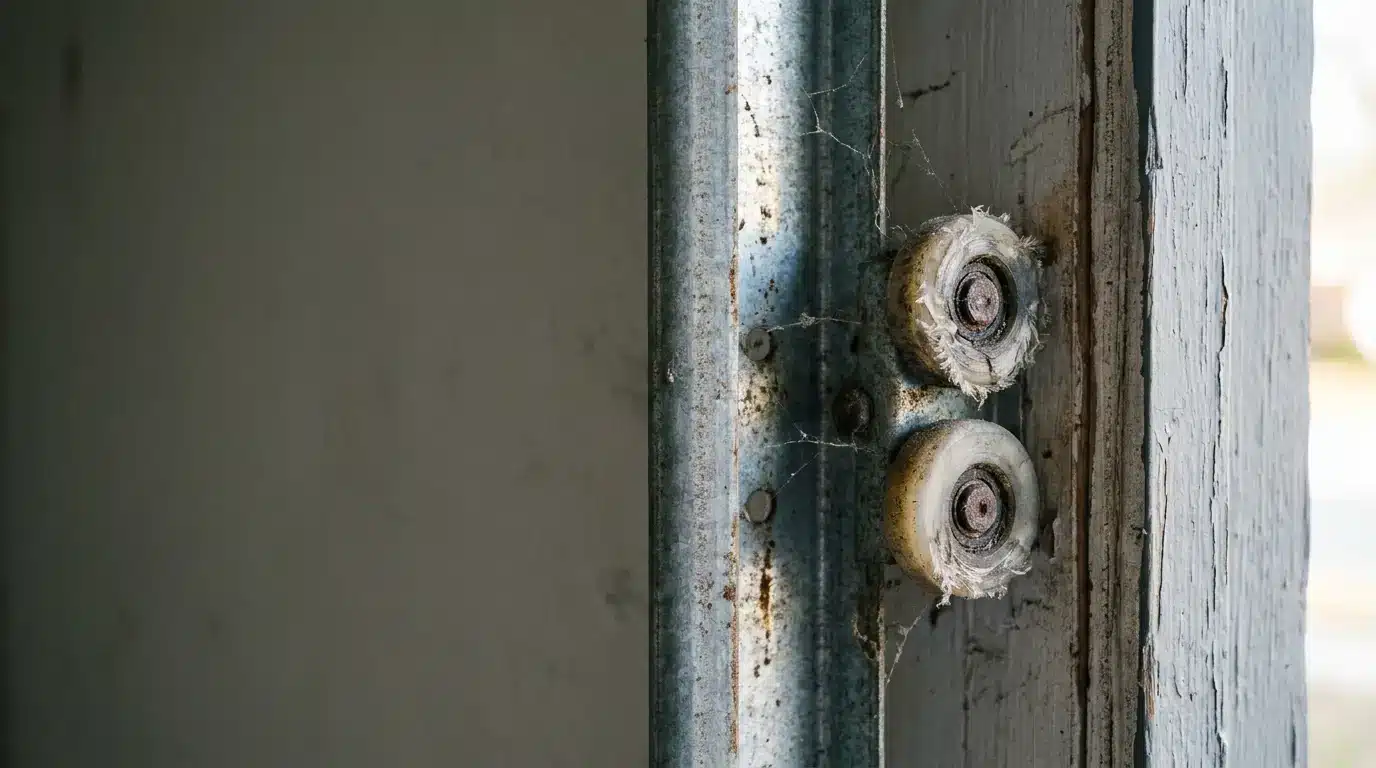
Rollers are the small wheels that sit inside the vertical tracks on each side of your door. Every time the door moves, they spin. Over thousands of cycles later, they can develop flat spots, chip, or simply seize up.
How Long Do They Last?
It depends on the material:
- Steel rollers (without ball bearings): around 10,000 to 15,000 cycles, roughly 5 to 7 years with regular use
- Nylon rollers (with ball bearings): can reach 20,000+ cycles, or 10 to 12 years with regular use
Nylon rollers also run significantly quieter. If your garage is attached to your home and you’re tired of the grinding noise, upgrading the roller type alone can make a noticeable difference.
What Does Garage Door Roller Replacement Cost?
Roller replacement is one of the more affordable garage door repairs, generally running $50 to $150 for a full set, depending on roller type and labor. It’s a small fix that can dramatically smooth out a rough or noisy door.
Signs Your Rollers Are Wearing Out
- Grinding or squealing sounds every time the door moves
- The door wobbles or shakes along the track
- Chips or flat spots are visible on the roller surface
- The door seems to skip or jump during operation
What Affects How Long These Parts Last?
A few things can speed up or slow down the wear on your garage door components.
Climate plays a real role. In extreme heat, metal expands and springs fatigue faster. Cold weather thickens lubricants and puts more strain on the opener and springs alike. If you live somewhere with harsh seasonal swings, factor that into your maintenance schedule.
Usage frequency is another one. A family of five using the garage door six times a day will go through springs twice as fast as a single person using it twice a day. High-cycle springs are a smart investment for busy households.
Installation quality matters too. Improperly installed springs or cables wear unevenly and fail sooner. If you’ve recently bought a home with an older garage door, it’s worth having a pro assess the setup before something breaks.
How Often Should You Have Your Garage Door Inspected?
The International Door Association and most garage door manufacturers recommend a professional inspection once a year. A trained technician can catch wear before it becomes a breakdown.
Between inspections, some basic upkeep goes a long way:
- Lubricate the rollers, hinges, and springs with a silicone-based spray (not WD-40)
- Visually check the cables for fraying every few months
- Listen for any new sounds when the door moves
According to Utah State University, a professional home inspector’s analysis found that for every $1 spent on routine maintenance, homeowners can avoid up to $100 in future repair costs. With garage doors, that math is easy to see: catching a frayed cable early costs far less than dealing with a door that’s fully off its track.
Repair or Replace? How to Tell the Difference
If your door is under 15 years old and the damage is limited to one component, a garage door repair is almost always the right call. Springs, cables, and rollers are all replaceable without touching the door panels or the opener.
But if your door is older and you’re replacing parts every year or two, the math starts to shift. At some point, the cost of repeated repairs adds up to what a new door installation would have run. A good technician will give you an honest answer on which direction makes more sense.
When to Call a Professional
Some maintenance can be handled yourself, such as lubrication and visual checks. But anything involving springs or cables should go to a licensed technician.
Springs store a significant amount of energy. A broken spring doesn’t just mean a door that won’t open; it can mean a dangerous, forceful snap that causes injury or property damage. Don’t treat it like a weekend project.
If you’re in the Phoenix, Arizona area and dealing with a broken spring, worn cables, or noisy rollers, GOGO Garage Door Service is worth a call. They’re a local, veteran-owned and operated company serving the greater Phoenix metro, and they bring the same discipline and attention to detail to every job that you’d expect from someone who’s served.
Don’t Wait for the Bang
Garage door springs typically last 7 to 10 years, cables 8 to 15, and rollers anywhere from 5 to 12 years, depending on the material. None of these parts lasts forever, and few of them give much warning before they go.
Pay attention to how your door sounds and moves. Schedule annual inspections. And when something feels off, call a professional before a small issue turns into an expensive one.
A well-maintained garage door is one of those things you never think about. That’s exactly the point.