Power outages hit without warning, and the fallout can go from inconvenient to dangerous in a flash. Finding the best generator for home backup power keeps your household running no matter how long the grid stays down.
More than wattage goes into the decision; fuel type, budget, and home size all shape the right pick. Outage frequency and how hands-on you want to be with maintenance matter just as much.
Options range from compact portable units to whole-home standby systems that automatically kick in when the power drops. Each is built for a different homeowner, and the right fit isn’t always obvious.
Here, you’ll find brand comparisons, sizing, key features, installation, and maintenance details. Walk away knowing exactly what to look for and how to choose with confidence.
What is a Home Backup Generator?
A home backup generator is a power system that automatically or manually supplies electricity to a home during a grid outage, keeping essential appliances and systems running until utility power returns.
Power outages don’t give warnings. They strike during storms, heatwaves, or grid failures, and the disruption can range from mildly inconvenient to genuinely dangerous, especially for households relying on refrigerated medication or medical equipment.
Backup generators come in four main types, each suited to a different level of need and budget.
- Portable generators – Affordable and flexible, ideal for powering a few essential appliances during short-term outages.
- Standby generators – Permanently installed units that detect a power loss and start automatically, often within seconds.
- Whole-home generators – High-capacity standby systems sized to run an entire house without interruption, including HVAC and major appliances.
- Inverter generators – Quieter and more fuel-efficient, producing cleaner power suited to sensitive electronics like laptops and medical devices.
No matter the type, the function stays the same: keep a home operational when the grid can’t.
Understanding these options is the first step toward choosing the right system for your household. The rest of this guide breaks down sizing, fuel types, features, and installation, so you can make that decision with confidence.
Leading Brands for Home Backup Generators
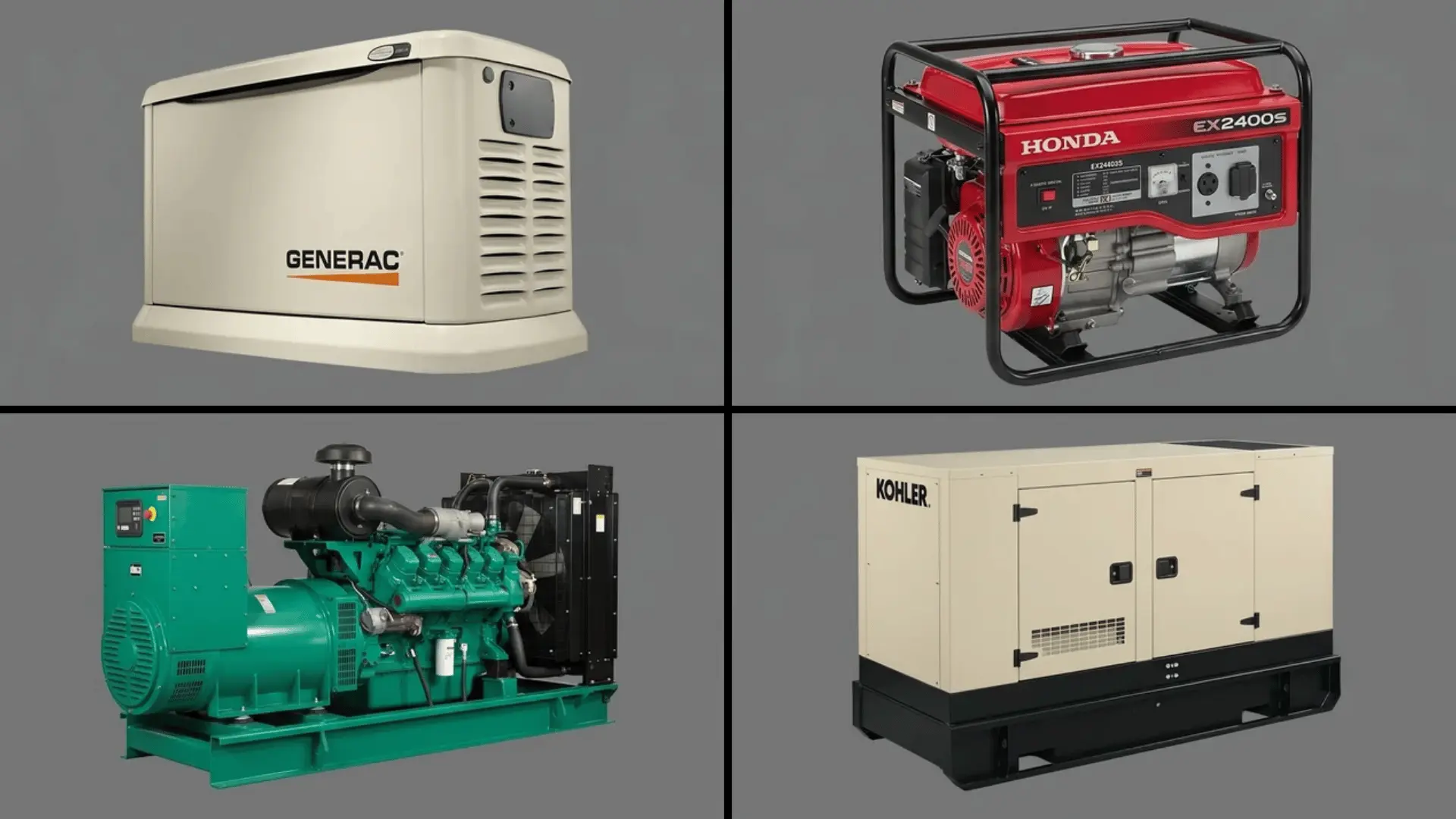
Not every generator brand is built the same. Each one has a sweet spot, and knowing that helps you avoid paying for more than you need or settling for less than you should.
| Feature | Generac | Honda | Kohler | Cummins |
|---|---|---|---|---|
| Best For | Whole-home standby | Essential appliances | Large homes, long-term use | Low-maintenance residential |
| Generator Type | Standby | Portable | Standby | Standby |
| Power Output | 18kW – 26kW | 1kW – 10kW | 8kW – 150kW | 6kW – 20kW |
| Fuel Type | Natural gas / Propane | Gasoline | Natural gas / Propane | Natural gas / Propane / Diesel |
| Auto Transfer Switch | Yes | No | Yes | Yes |
| Noise Level | Moderate | Low | Moderate | Moderate |
| Ease of Use | High | Very High | High | High |
| Maintenance Needs | Moderate | Low | Low | Very Low |
| Ideal Home Size | Medium – Large | Small – Medium | Large | Medium – Large |
| Price Range | $500-$10,000+ | $500 – $2,500 | $4,000 – $8,500+ | $4,500 – $20,000+ |
Use this table as a starting point, not the final word. The best brand for your home comes down to your power needs, budget, and how hands-on you want to be with maintenance.
Key Features to Evaluate in a Home Backup Generator
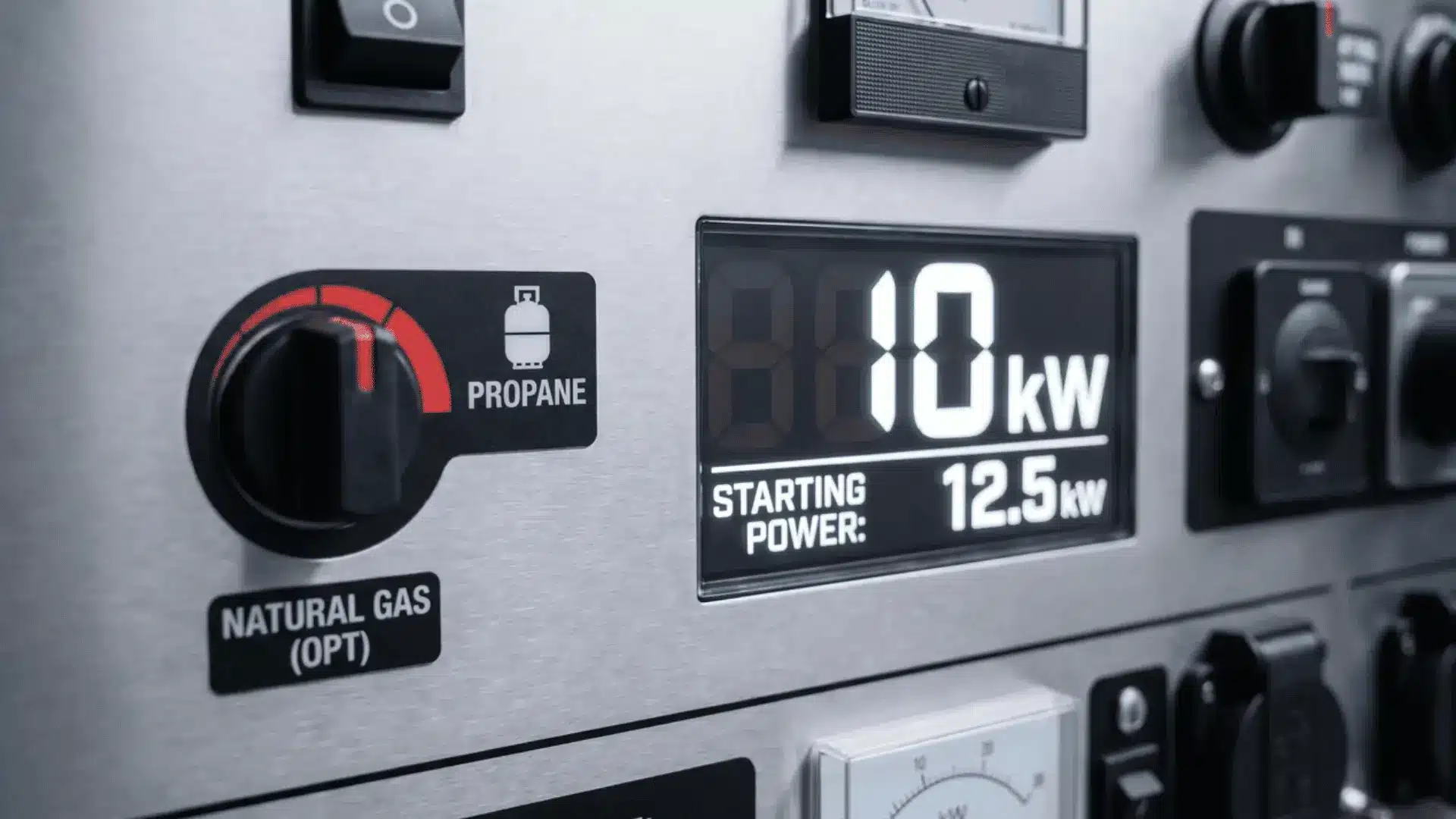
A generator that looks good on paper can still fall short if you’re not checking the right specs. Knowing what features matter actually saves you from a costly mistake down the line.
Fuel Type
Not all generators run on the same fuel, and flexibility here can make a real difference during emergencies.
- Single-fuel (gas) – Most affordable upfront, but limited if gas is unavailable
- Dual-fuel (gas + propane) – Good middle ground for most homeowners
- Tri-fuel (gas + propane + natural gas) – Maximum flexibility, ideal for extended outages
Power Output
This is the spec most people underestimate before buying. Add up the wattage of every appliance you need running at once: HVAC, refrigerator, lighting, and anything else critical.
- Always account for startup wattage, which runs higher than operating wattage
- Overloading a low-output generator causes it to shut down mid-outage
- Keep a 10%–20% buffer above your calculated total load
Inverter Technology
Inverter generators produce cleaner, more stable power than conventional models, which matters if you’re running laptops, medical devices, or smart home systems.
- Significantly quieter operation compared to standard generators
- More fuel-efficient, stretching your tank further during long outages
- Better suited for sensitive electronics that need consistent power quality
Noise Level
In a residential neighborhood, a loud generator creates problems beyond just the inconvenience. Look for models rated below 65 decibels for comfortable, neighbor-friendly operation.
- Standby generators are generally quieter due to enclosed housing
- Inverter portables tend to be the quietest option in the portable category
- Check the decibel rating at 25% and full load, not just the advertised number
Skipping any of these features, especially power output, is where most buyers go wrong. A generator that can’t handle your essential load during an outage isn’t a backup plan; it’s a disappointment.
Standby vs. Portable: Choosing the Best Generator for Home Backup Power
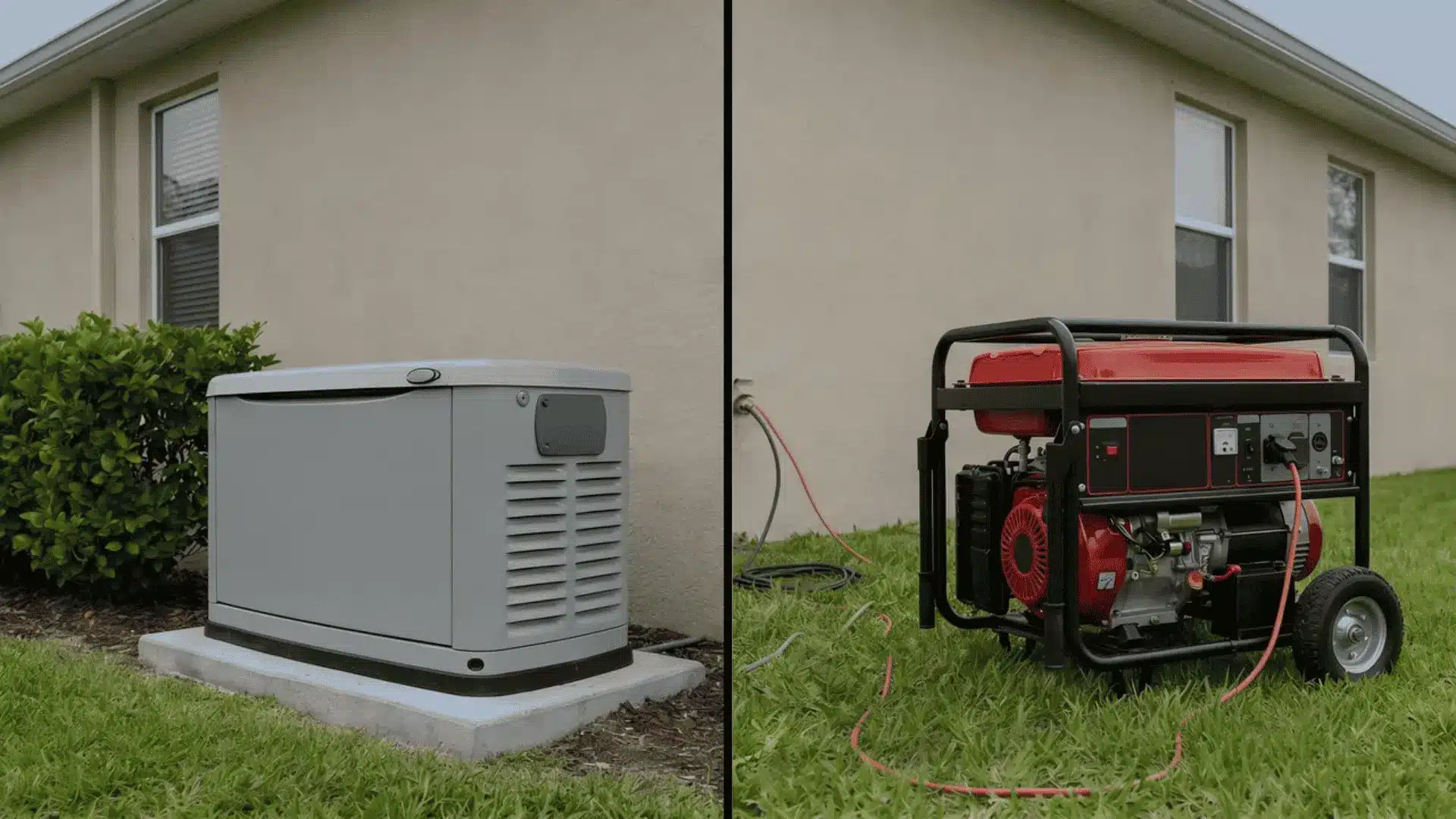
Choosing the wrong generator type can leave you either overspending on capacity you don’t need or underpowered when it matters most. The decision comes down to how your home is set up and how often the lights go out.
Standby Generators
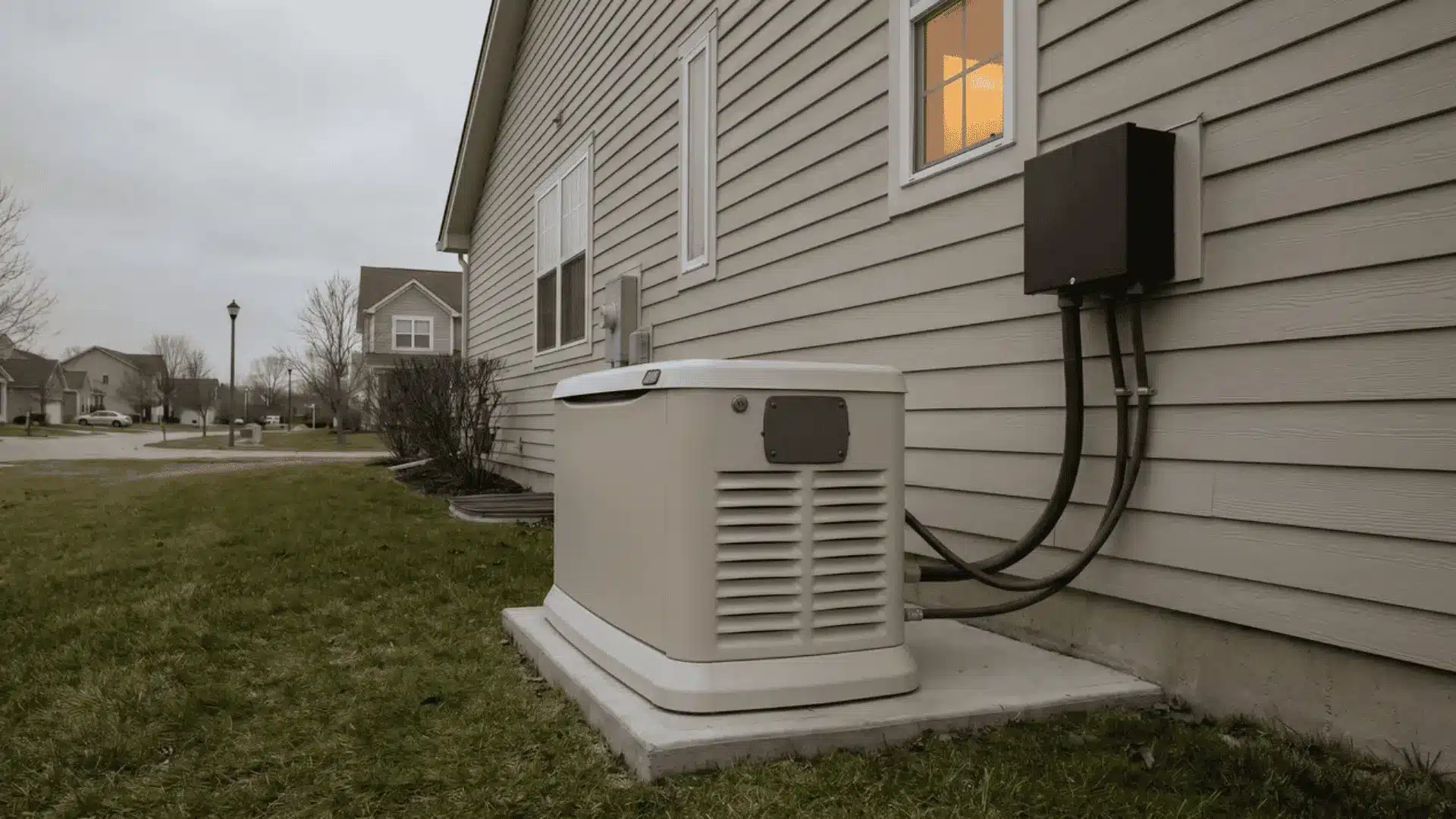
Standby generators are permanently installed and kick in automatically the moment power is lost. You don’t have to do a thing, they detect the outage and switch over within seconds.
This makes them well suited to homes facing frequent or extended outages. They’re ideal for powering whole-home systems like HVAC, sump pumps, or medical equipment without manual setup.
Portable Generators
Portable generators are flexible, movable units that run on gasoline and require manual startup. They’re a practical choice when outages are rare, short-lived, or your power needs are modest.
They also suit smaller homes and tighter budgets where whole-home coverage isn’t necessary. The tradeoff is that someone has to be present to set them up and keep them running.
Matching the Generator to Your Situation
Both types have clear limits worth considering before you buy. A standby generator is overkill for a one-bedroom home that loses power twice a year.
A portable unit running on a single tank won’t keep a larger home’s AC, refrigerator, and security system going for long. Match the generator to your actual needs, not convenience, for real value.
Detailed Comparison of Best Models for Home Backup Power
Specs only tell half the story until you see them side by side. Here’s how four of the most popular home backup generator models compare across the factors that actually influence day-to-day performance and long-term satisfaction.
| Feature | Generac Guardian 26kW | Champion 11,000W Tri-Fuel | Honda EU7000is | Kohler 20kW |
|---|---|---|---|---|
| Generator Type | Standby | Portable | Portable | Standby |
| Power Output | 26kW | 11,000W | 7,000W | 20kW |
| Fuel Type | Natural gas / Propane | Gas / Propane / Natural gas | Gasoline | Natural gas / Propane |
| Auto Transfer Switch | Yes | No | No | Yes |
| Noise Level | ~67 dB | ~74 dB | ~52 dB | ~63 dB |
| Best For | Whole-home coverage | Fuel flexibility on a budget | Quiet, essential appliance use | Medium-large homes, long-term |
| Runtime | Continuous (on gas line) | ~10 hrs at 50% load | ~6 hrs at 50% load | Continuous (on gas line) |
| Inverter Technology | No | No | Yes | No |
| Maintenance Needs | Moderate | Moderate | Low | Low |
| Price Range | $6,900–$7,900+ | $1,800–$2,000 | $4,899–$4,999 | ~$5,700–$6,650 |
Each of these models earns its place on this list for a different reason. The Generac Guardian and Kohler 20kW are built for homeowners who want whole-home, hands-off coverage and don’t mind the higher upfront investment that comes with standby installation.
The Champion offers genuine fuel flexibility at a fraction of the cost, making it a strong pick for budget-conscious households willing to handle manual startup.
The Honda EU7000is stands apart on noise and power quality, making it the natural choice for anyone running sensitive electronics or living in close quarters with neighbors.
Match the specs to your home’s actual needs, that’s what turns a good purchase into the right one.
Sizing Your Generator: Matching Power Needs with Generator Capacity
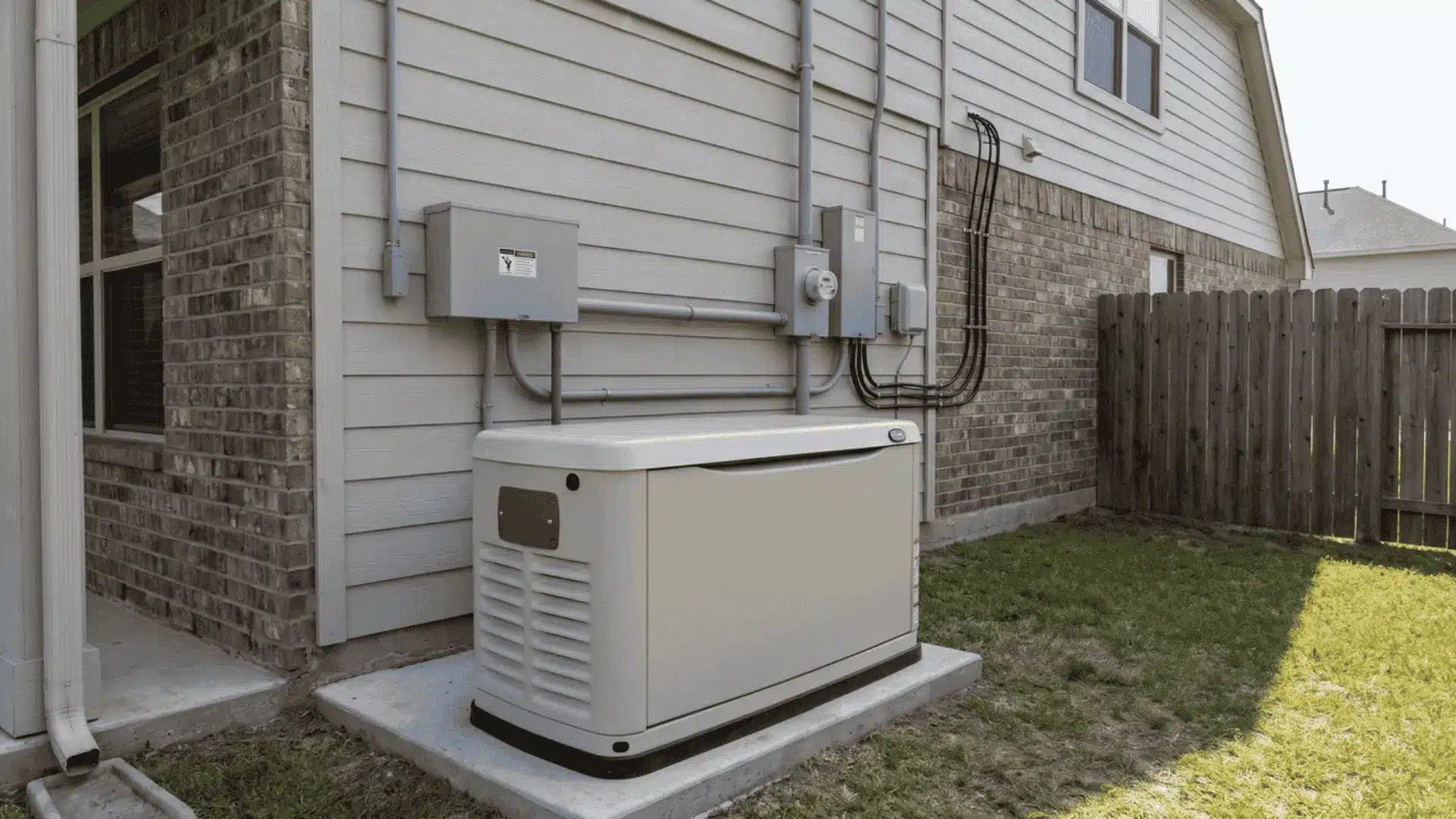
Getting the size wrong is one of the most common and expensive mistakes homeowners make with generators. Too small and it overloads, too large and you’re burning fuel and money you didn’t need to spend.
Start With Your Essential Appliances
Before you look at any generator spec, make a list of everything you need to keep running during an outage. Focus on the non-negotiables: refrigerator, HVAC, lighting, water heater, and any medical equipment.
Each appliance draws power in two ways. Running watts is the power needed to keep it operating, while startup watts is the surge needed to switch it on, which is always higher than the running figure.
Add up the running watts for everything on your list, then factor in the highest single startup wattage among them. That combined number is your minimum generator capacity.
Match Capacity to Your Home Size
Home size gives you a solid starting point when calculating the generator size you need:
- Under 1,500 sq. ft. – A 7kW–10kW generator typically covers the essentials
- 1,500 – 2,500 sq. ft. – A 16kW–22kW unit handles most whole-home needs
- 2,500+ sq. ft. – Look at 22kW–26kW or higher for full coverage
These are starting points, not hard rules. A large home with minimal appliances may need less than a smaller home running energy-heavy equipment.
Leave Room for a Buffer
Never size your generator right at your calculated load limit. Running a generator at or near full capacity shortens its lifespan and increases the risk of shutdown during peak demand.
A 10%–20% buffer above your total wattage need gives your generator breathing room, and gives you peace of mind when it matters most.
Installation and Maintenance for Your Home Backup Generator
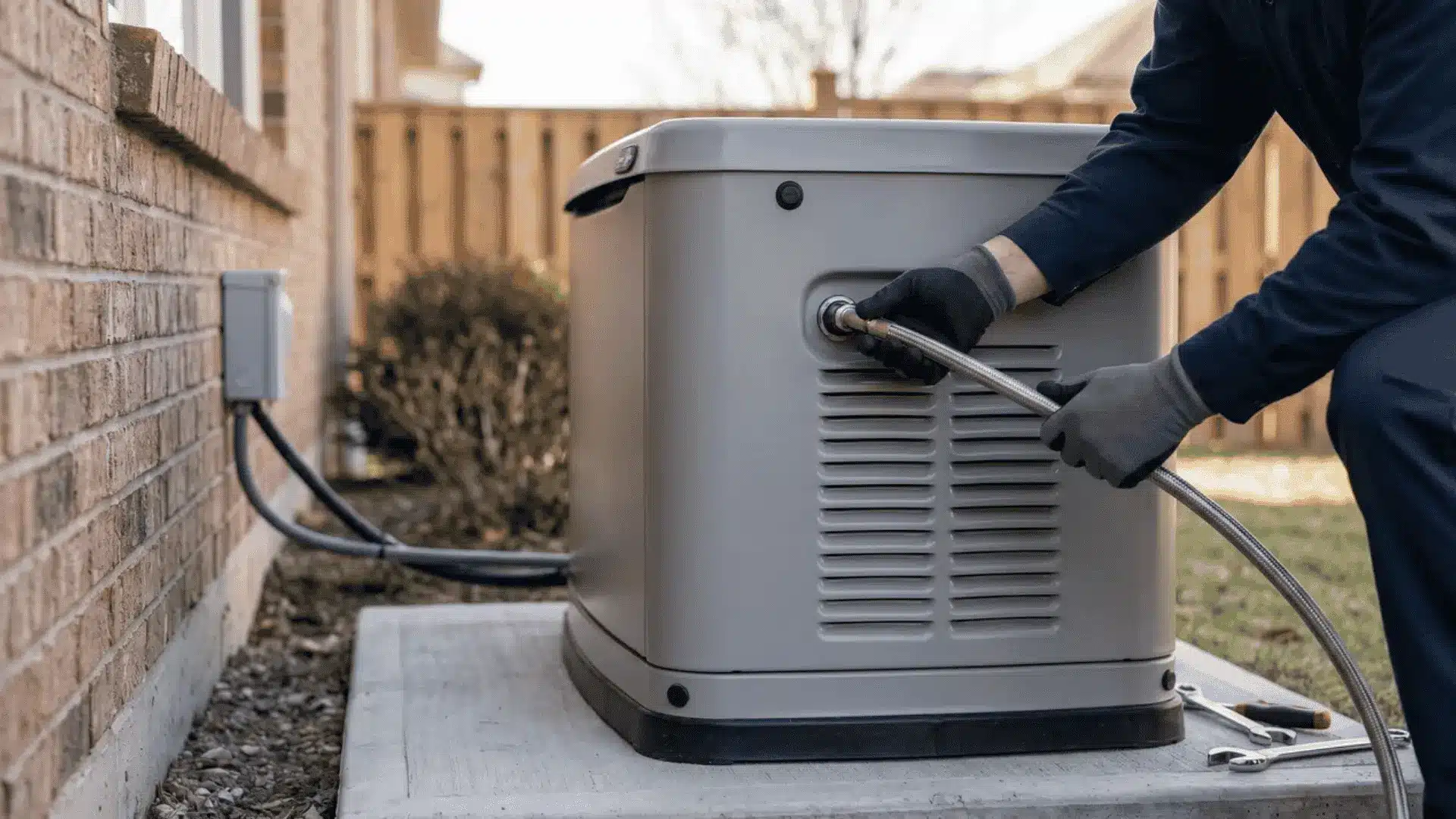
Installation Guide for Your Home Backup Generator
Standby generators aren’t a DIY project. They connect directly to your home’s electrical system and gas or propane lines, work that requires a licensed electrician and, in most cases, a local permit.
- Site assessment – An electrician evaluates your property to determine the best location, factoring in clearance from windows, doors, and structures.
- Permit and code check – Local permits and utility approvals are secured before any installation work begins.
- Concrete pad or mounting base – A stable foundation is poured or installed to anchor the unit.
- Fuel line connection – The unit is connected to a secure, leak-free natural gas or propane supply.
- Electrical and transfer switch wiring – An automatic transfer switch is installed to disconnect your home from the grid before the generator takes over.
- Testing and commissioning – The system is started, tested under load, and verified to switch over automatically during a simulated outage.
Portable generators are simpler, but still require careful setup. Never run them indoors or in an enclosed space, and always use a proper extension cord rated for the load.
Maintaining Your Home Backup Generator
Most generator failures during outages aren’t random; they’re the result of skipped maintenance. A consistent routine keeps your unit ready to run when it matters.
Key maintenance tasks include:
- Oil changes – Every 100–200 hours of use, or at least once a year
- Air filter checks – Clean or replace based on the manufacturer’s schedule
- Fuel management – Use fresh fuel and add a stabilizer if the generator sits unused for extended periods
- Battery inspection – Standby units rely on a battery to auto-start; test it regularly
- Monthly test runs – Run your generator under load for 20–30 minutes to keep components in working condition
Skipping these steps doesn’t just shorten the generator’s lifespan; it also increases the risk of failure at exactly the wrong moment. A little upkeep goes a long way toward making sure your backup power is actually there when you need it.
Conclusion
Picking the best generator for home backup power means matching the unit to your actual situation. Size, type, fuel, and budget work together; get one wrong, and the rest don’t matter.
Brands like Generac, Honda, and Kohler each serve a different kind of homeowner for a reason. The best model on the shelf isn’t always the right one for your home.
Installation and maintenance determine whether your generator actually works when the lights go out. Consistent upkeep is what turns a purchase into power you can actually count on.
Don’t wait for the next outage; you have everything you need to choose with confidence now. Start with your appliance list, set a budget, and move toward reliable home backup power today.
Frequently Asked Questions
How long does a standby generator typically last?
With proper maintenance, a standby generator can last 20–30 years. Regular oil changes, filter replacements, and annual servicing are key to reaching that lifespan.
What is a transfer switch, and why does it matter?
A transfer switch isolates your home from the utility grid when the generator runs, preventing dangerous back-feed electricity that could injure utility workers nearby.
Are home backup generators covered by homeowners’ insurance?
Some homeowners’ insurance policies cover generator damage under personal property protection. Check your policy to confirm whether the unit and installation are included.
Can a standby generator power an EV charger?
Most standby generators support Level 1 EV charging. Level 2 chargers draw significantly more power, so check your generator’s capacity before using one.