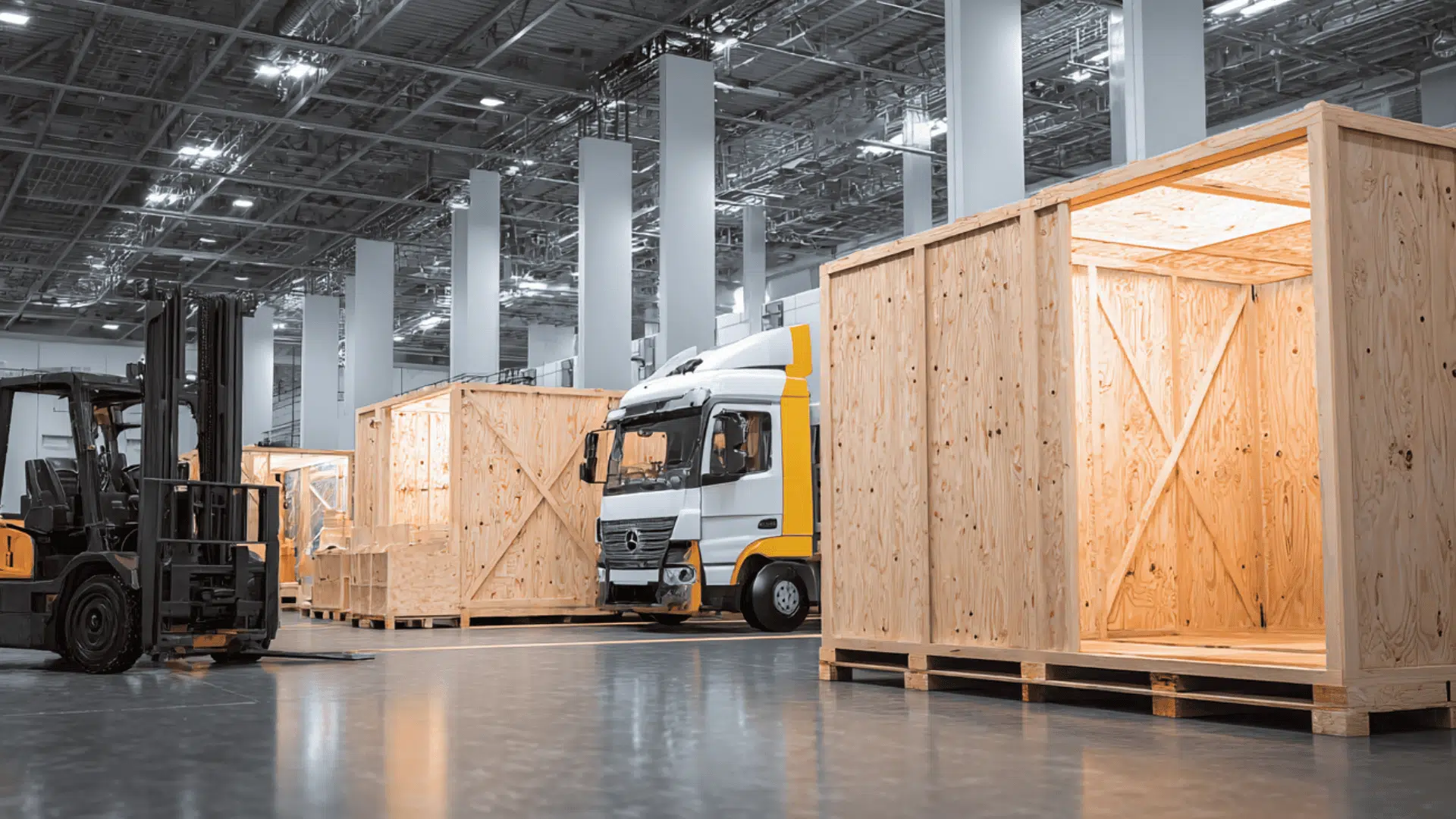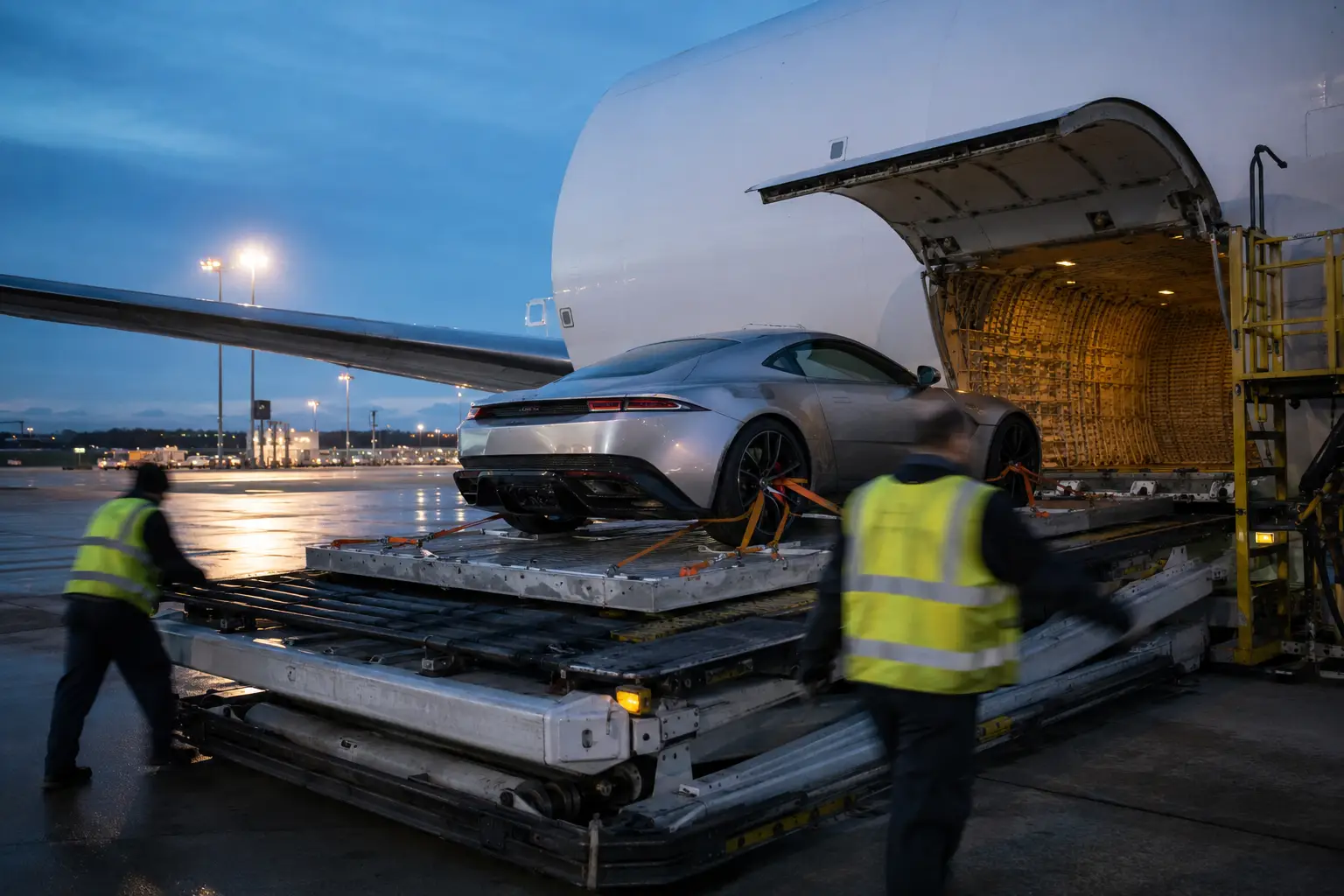
The first time someone asks me what it costs to fly a car, they almost always open with the same question: how much does it weigh?
It’s a reasonable guess. It’s also the wrong number.
Air cargo doesn’t price a car the way a weighbridge would. It prices the space the car occupies on an aircraft, and for a vehicle that space almost always costs more than the mass does. Once that clicks, the rest of air freight stops feeling arbitrary — the quote, the aircraft, the paperwork, and the insurance gap that most owners never hear about until they need it.
Here’s how it actually works.
Every Shipment Has Two Weights, and You Pay the Bigger One
The first is actual weight. What the thing weighs. Straightforward.
The second is volumetric weight — sometimes called dimensional weight — and it exists because aircraft run out of room long before they run out of lifting power. A pallet of cushions and a pallet of gearbox castings occupy the same floor space. If airlines charged both purely by mass, the cushions would fly for almost nothing and every freighter would leave full of air.
So the industry converts volume into a weight figure. The standard divisor for air cargo is 6,000 cubic centimetres per kilogram:
Length (cm) × Width (cm) × Height (cm) ÷ 6,000 = volumetric weight in kg
Whichever figure is larger — actual or volumetric — becomes your chargeable weight. That is the number your quote is built on.
Cars Lose That Comparison. Every Single Time.
Run it on a few vehicles and the pattern shows up immediately.
| Vehicle | Volumetric | Actual | Charged on |
|---|---|---|---|
| Porsche 911 Carrera | ~1,810 kg | ~1,505 kg | volume |
| Ferrari 812 Superfast | ~1,935 kg | ~1,630 kg | volume |
| Range Rover | ~3,230 kg | ~2,500 kg | volume |
| Mercedes G-Class | ~3,060 kg | ~2,500 kg | volume |
Figures are indicative and based on published exterior dimensions and kerb weights.
Not one of them is charged on mass. And it isn’t close — the Range Rover is billed as though it weighs roughly 700 kg more than it does.
This explains something that catches a lot of owners out: a taller car can cost more to fly than a heavier one. A low sports car that weighs a tonne less than a large SUV can still land in a similar bracket, because footprint and height drive the sum, not weight. If you’re choosing between two vehicles and assuming the lighter one is cheaper to fly, measure before you assume.
One caveat that changes the arithmetic in practice: your car doesn’t fly loose. It’s secured to a pallet, and it’s the pallet’s dimensions that get measured — not the tape-measure figures off the car itself. A low car on a tall pallet can be charged for empty space above the roofline. It also means the loading method feeds straight into your price, which is why two operators can quote the same vehicle quite differently. They’ve planned different pallet builds.
What You’re Actually Paying For
By the time a number reaches you, several things have been priced in beyond chargeable weight:
- Route and flight availability. Not every airport pair has regular main-deck freighter service.
- Security screening and ground handling, by crews who have moved vehicles before.
- Preparation — fuel reduction, battery isolation, securing, sometimes protective structure.
- Customs clearance at both ends. Two sets of rules, two sets of timelines.
- Insurance, which is where this gets interesting.
If you want to see how those components get itemised from the operator’s side of the desk, this breakdown of how air freight car shipping is quoted runs through the same variables — vehicle specifications, route and flight availability, operational and security requirements, clearance complexity. Opera Shipping publish theirs for UAE corridors, but the mechanics travel: the inputs are identical whether the car is leaving Dubai, Frankfurt or Los Angeles.
The practical lesson is about how you ask. Lead with dimensions and running condition, not just make and model. “2021 Range Rover” tells an operator far less than “5.05 m × 2.05 m × 1.87 m, runs and drives, quarter tank.” The second version gets you a real number in one exchange instead of four.
The Aircraft Is a Constraint, Not a Footnote
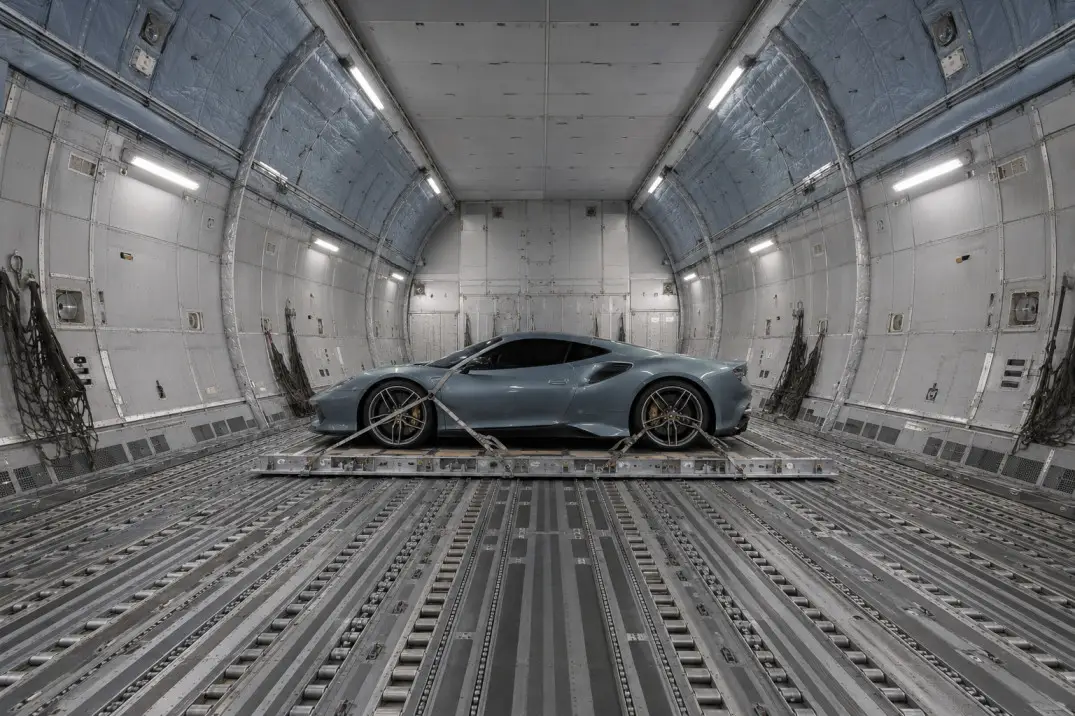
A car cannot travel in the belly hold of an ordinary passenger flight. The door apertures and internal height simply won’t take it.
Flying a car means main-deck capacity — a dedicated freighter, or the freighter variant of a wide-body. That is a much smaller pool of aircraft than “flights between those two cities,” and it’s why an air freight quote sometimes arrives with a departure window rather than a departure date. You’re not waiting for a plane. You’re waiting for the right plane, with main-deck space, going where you’re going.
It’s also why “air freight is faster” deserves a qualifier. The flight is fast. The wait for capacity might not be.
The Gap Nobody Mentions Until It Matters
This is the part I’d want to know if it were my car.
A vehicle with a combustion engine isn’t ordinary cargo. It’s classified under UN 3166 — vehicle, flammable liquid powered — because it carries fuel and a battery. In practice that means fuel run down to a low level (a quarter tank or less is typical), the battery isolated and terminals protected, and no loose personal effects in the cabin. That isn’t an operator being difficult. Those are the conditions under which the aircraft will accept the vehicle at all.
Then there’s the insurance.
Under the Montreal Convention, a carrier’s liability for cargo is capped. As of 28 December 2024 that cap rose to 26 Special Drawing Rights per kilogram, up from 22, under the convention’s five-yearly inflation review (ICAO; see also the FIATA air freight alert). An SDR is an IMF unit of account — worth roughly US$1.33 when ICAO announced the revision, though it floats, so check the live rate.
Twenty-six SDR per kilogram sounds generous. Then you apply it.
And here’s the sting: the cap is calculated on the actual weight of the shipment, not the chargeable weight. You pay on volume. You are compensated on mass. Those two numbers are never the same, and the difference never falls in your favour.
| Vehicle | Actual weight | Default liability ceiling |
|---|---|---|
| Porsche 911 Carrera | ~1,505 kg | ~US$52,000 |
| Ferrari 812 Superfast | ~1,630 kg | ~US$56,000 |
| Range Rover | ~2,500 kg | ~US$86,000 |
Converted at roughly US$1.33 per SDR. Indicative only — the rate moves.
Read the Ferrari row again. A car worth several hundred thousand dollars carries a default carrier liability, in a total-loss scenario, of somewhere around fifty-six thousand.
For an ordinary vehicle the cap may well cover you. For anything collectible, modified, or simply expensive, it isn’t in the same postcode as the value — which is why anyone moving luxury and exotic vehicles should be arranging separate all-risk cargo cover against the declared value rather than leaning on carrier liability. The gap isn’t a loophole or a trick. It’s how the convention has always worked. It just isn’t something most owners encounter until the worst day of the shipment.
Two questions to ask before you book: what value is declared on the air waybill, and does the cargo policy run door to door or only airport to airport?
When Air Is Genuinely the Right Call
Air freight isn’t a premium version of sea freight. It’s a different tool for a different problem.
It Earns Its Money When:
- You have a fixed date — a race, a show, a job start, a lease expiring.
- The vehicle’s value makes a shorter exposure window worth paying for.
- The sea route to your destination is congested, indirect, or seasonal.
- You need the car usable on arrival, not eventually delivered.
It Doesn’t When:
- Your timeline has genuine slack in it. Sea freight’s economics are hard to argue with when you can wait.
- The vehicle is tall or wide enough that volumetric weight turns punishing.
- The route has no reliable main-deck service — you’d be paying air prices for a schedule that isn’t much better.
The honest version: if you can wait, wait. If you can’t, air freight solves a problem that no amount of money solves at sea. What it will not do is make the paperwork disappear. Clearance takes as long as clearance takes, whether the car arrived in nine hours or nine weeks, which is why total door-to-door time is so often governed by what happens on the ground rather than in the air.
Have This Ready Before You Ask for a Quote
- Exact dimensions (L × W × H) and kerb weight
- Running condition — drives, rolls, or neither
- Origin and destination airports, not just cities
- Proof of ownership in your name, or lender authorisation if the car is financed
- A realistic declared value
- Your actual deadline, and whether it’s hard or soft
That list turns a four-email back-and-forth into a single reply with a usable number in it.
The Short Version
Flying a car is a strange corner of freight. It’s priced on air rather than metal, constrained by which aircraft can physically swallow it, governed by dangerous goods rules most owners never otherwise meet, and underwritten by a liability regime that quietly stops well short of what an expensive car is worth.
None of that makes air freight a bad option. It makes it a specific one. Get the dimensions right, understand where the carrier’s liability actually stops, and be honest with yourself about whether your deadline is real — and flying a car stops being an expensive gamble and becomes a fairly ordinary decision.