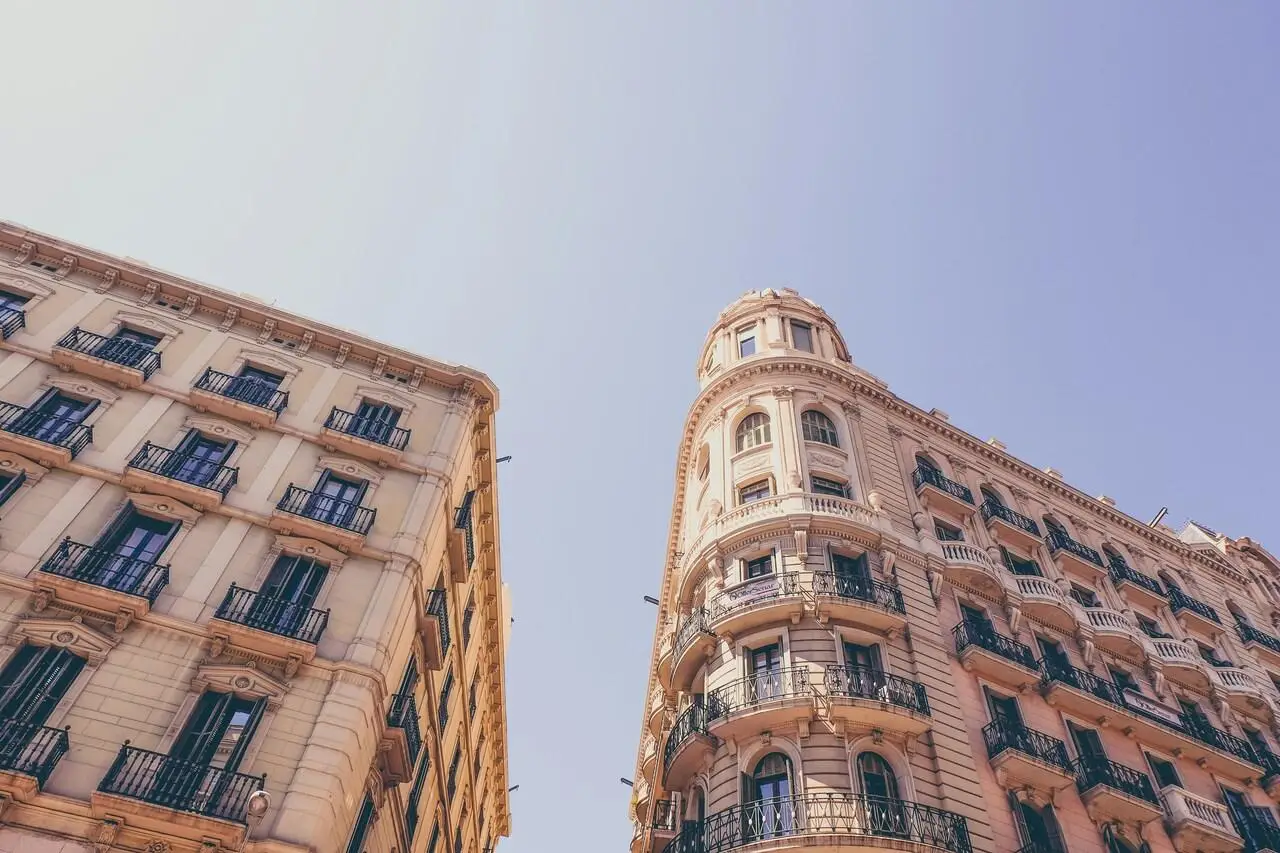
Barcelona doesn’t really have one luxury market, and that’s partly because everyone’s view of luxury is different. Unlike some cities which serve just one type, Barcelona serves them all, from modern penthouses to gothic and medieval town houses.
Here are five high-end neighbourhoods, each with its own character and price bracket.
Barcelona’s Most Exclusive Neighbourhoods
Eixample
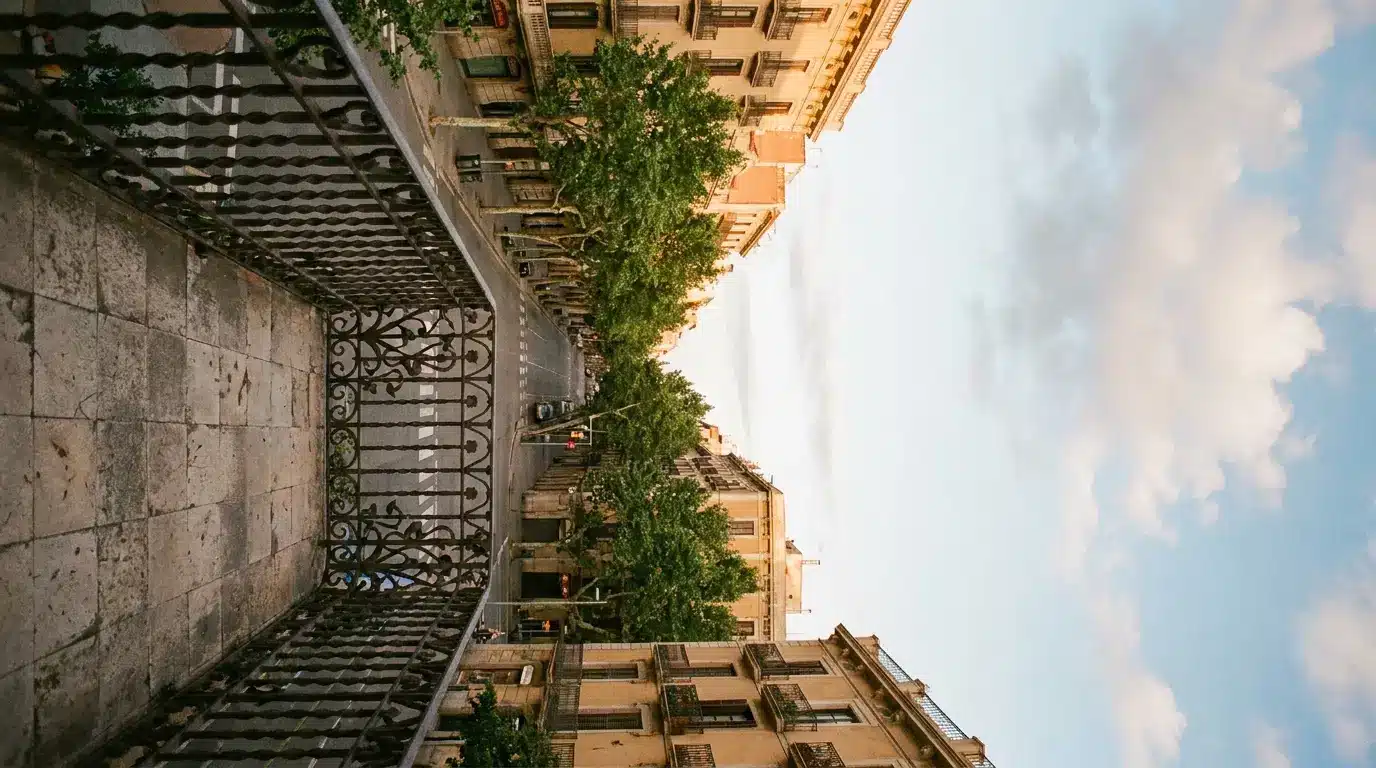
Unlike many European cities, Barcelona has a grid system. But unlike many grid cities, it was made around people, not cars.
This is no truer than in Eixample, where Ildefons Cerdà drew the grid in 1859, way before cars were even in production. The block sides measure 113+ metres and streets a full 20 metres wide. Some, like Passeig de Gràcia, even reach 60.
The chamfered corners were first built for steam trams, but are now an example of Eixample’s modernist apartments with an unusual sense of lightness yet grandness. Ceiling heights of 3.5 to 4.5 metres are not uncommon here.
Zona Alta
Eixample is first on the mind of high-end districts, but it is very central. Uphill and further from the crowds, Zona Alta reaches out to Sarrià-Sant Gervasi, Gràcia, Les Corts and Pedralbes.
These are quieter streets with bigger gardens, a cheaper price per square meter and mountain views – it’s where young couples move out to from Eixample when they start to have children.
Several of these were once separate villages and annexed as Barcelona expanded. The self-contained history of each still shows up from time to time.
Gòtic
The Gothic Quarter is exactly as you’d imagine: medieval stone circles a Roman core. Buying here means buying into that density and embracing the narrow lanes, listed façades and apartments that come with more restrictions than square metres.
Renovation here may be more hassle than its worth, so it’s not for everyone. But, not being for everyone is exactly the point of living in Gòtic, as it’s like living in the past.
El Born
This used to be the city’s produce market, but El Born has been gentrified into boutiques, galleries and some of the most preserved Gothic architecture outside the old quarter.
But, compared to Gòtic, it trades out some of that gravity for more light, nice restaurants and a younger, design-conscious crowd who wanted the history without quite so many tourists.
Diagonal Mar
As mentioned, Barcelona has all the luxury markets, old and new. Diagonal Mar didn’t really exist before the 90s, but a two-decade regeneration (kick started by the 1992 Olympics) turned this once-industrial coastline into glass towers and a five-kilometre seafront promenade.
This is new money – where one might consider if they had previously been looking at Dubai as an option. It’s got the mod cons, sea views, a local park and some modern restaurants and cafes.
Why Work with a Local Boutique Agency
These five neighbourhoods touch on how layered the decision-making process is when buying in Barcelona as an outsider, let alone the bureaucratic buying process. BCN Advisors is an example of a boutique Real Estate Agency Barcelona that helps aid with these two things: paperwork and local knowledge. They can get the bottom of what you want and have over 280 active listings across all these neighbourhoods.
Which Neighbourhood Suits You?
It’s difficult to pin down the best, as it depends on your personality, temperament, values and family situation. Eixample’s grandeur is compelling, while Zona Alta is calm. Gòtic has the history, while Diagonal Mar is unapologetically new. The question is to understand what it is you want and what, if any, compromises you’re willing to make. Then, it’s a matter of consulting local experts and taking a trip to visit them all in person.