Every product you use went through some kind of journey before it reached you, and that journey rarely happens by chance.
Behind the scenes, businesses rely on a system that keeps goods moving smoothly from one point to the next. I’ve looked into how this process actually works, and it’s more layered than most people expect.
In this blog, I’ll walk you through the logistics definition business owners rely on every day, along with the different pieces that make it work.
We’ll look at how this system fits into the bigger picture, the categories it falls into, why it matters, and what it looks like in real situations. By the end, you’ll have a clear, practical view of the whole topic.
What Is Logistics in Business?
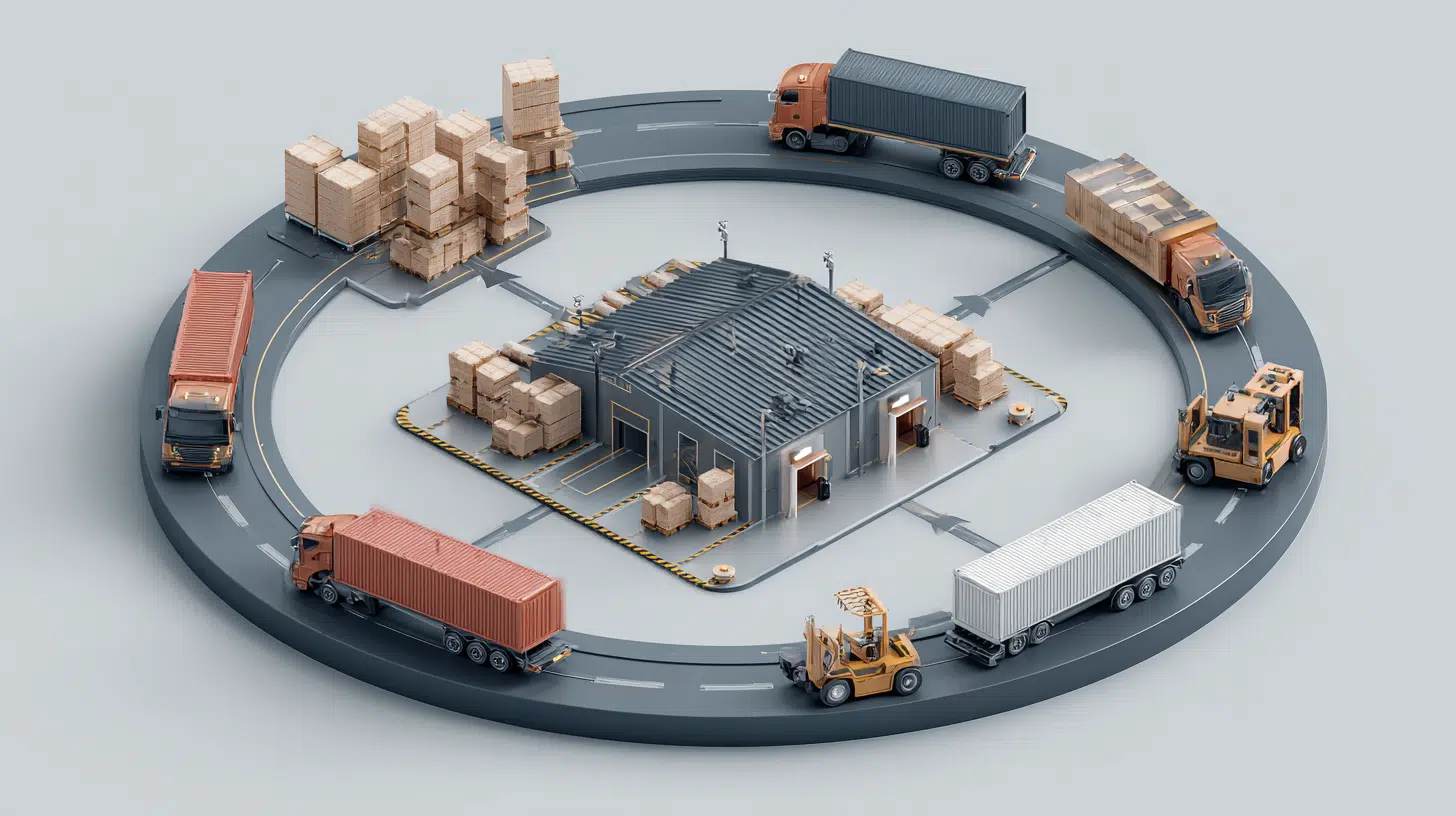
Logistics in business is the planning and coordination of how goods move from one point to another. It covers how a company sources materials, stores products, and gets them to customers.
At its core, business logistics is about timing and accuracy. A company needs the right product, in the right place, at the right time. If any part of that chain breaks down, customers wait longer, costs rise, and trust falls.
I’ve noticed that people often think logistics only means shipping. It’s actually much bigger than that. It includes warehousing, inventory tracking, order processing, and even how a company handles returns.
Benefits and Role of Logistics In Business
- Reduces wasted storage space through better inventory planning
- Cuts down on higher fuel and labor costs
- Lowers the chances of late shipments and fulfillment errors
- Gets orders delivered on time and in good condition, building customer trust
- Encourages repeat business and customer loyalty
- Supports higher order volume, giving the business room to grow
Logistics vs. Supply Chain Management
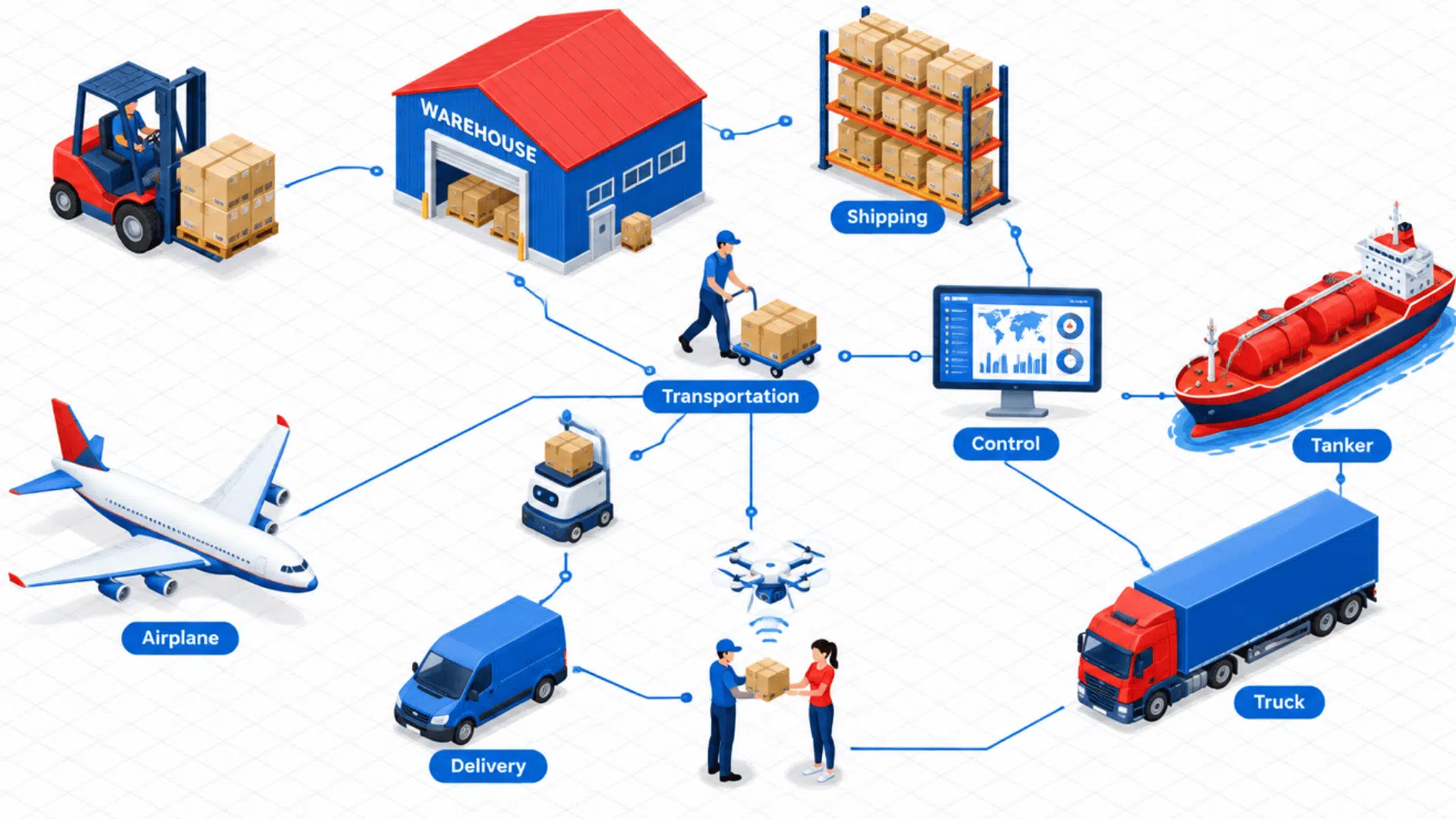
You’ve probably heard “logistics” and “supply chain” used as if they mean the same thing. They don’t, and the difference matters if you’re running or writing about a business.
Factor | Logistics | Supply Chain Management |
|---|---|---|
Main Focus | Moving and storing goods | Managing the full product flow |
Scope | One part of the supply chain | Covers the entire supply chain |
Includes | Transportation, warehousing, inventory, delivery | Sourcing, production, logistics, suppliers, and distribution |
Main Goal | Move goods efficiently | Coordinate all stages efficiently |
Business Role | Handles product movement and storage | Connects suppliers, operations, and customers |
Note: Logistics and supply chain management are closely connected, but they cover different parts of how products move through a business.
How Logistics Fits Inside the Supply Chain
Think of the supply chain as the whole map of a product’s life. It starts with raw materials and ends when a customer holds the finished item. Logistics is one piece of that map.
Supply chain management includes sourcing, manufacturing, and coordinating with outside partners. Logistics, on the other hand, focuses specifically on storage and movement.
Every business that uses logistics is part of a supply chain, but logistics itself is the engine that keeps goods moving inside that bigger system.
The Main Types of Logistics
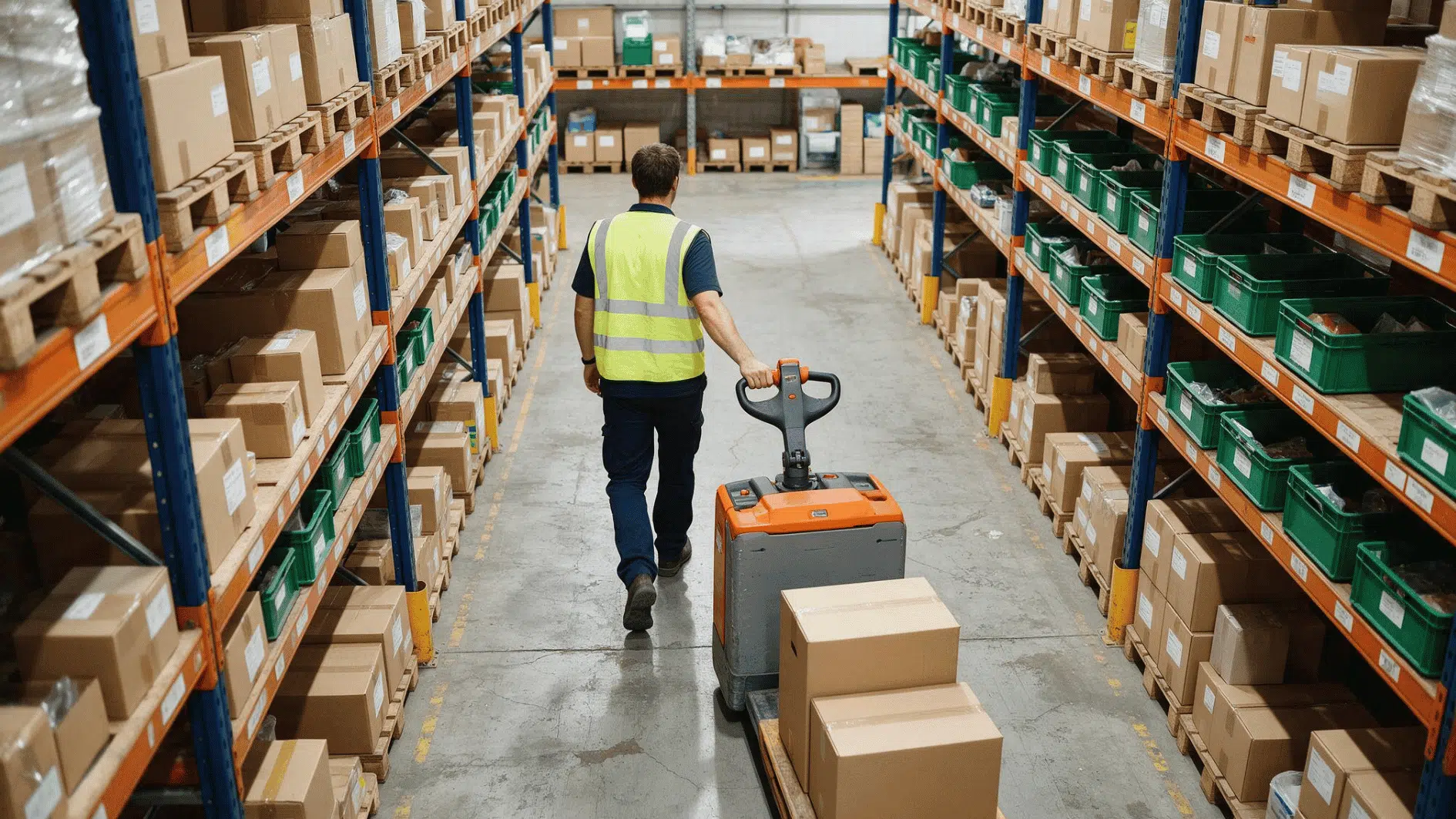
Logistics in business isn’t one single task. It’s made up of a few distinct categories, and each one plays a different role in getting a product to its final stop.
1. Inbound Logistics
Inbound logistics covers how materials and supplies enter a business before anything gets made or sold. If you run a bakery, this includes flour, sugar, and packaging arriving at your kitchen door.
It also involves choosing suppliers, setting delivery schedules, and checking that shipments match what was ordered. Strong inbound logistics keeps production running without unexpected gaps or shortages.
2. Outbound Logistics
Outbound logistics is the flip side of the process. It covers how finished goods leave a business and reach customers on time.
This includes packing orders correctly, selecting a shipping carrier, calculating delivery routes, and tracking packages until they arrive. A smooth outbound process directly shapes how customers feel about their purchase and if they order again.
3. Reverse Logistics
Reverse logistics handles the trip backward, when a product needs to come back instead of going forward. This includes customer returns, damaged items, and materials sent for recycling.
It often involves inspecting returned goods, restocking usable items, and responsibly disposing of the rest. Many businesses overlook this step, yet it plays a major role in cost control.
Logistics in Action: Real Business Examples
Reading definitions only gets you so far. Seeing logistics in business play out in real situations makes it much easier to understand.
A Small Online Store Example
Picture a small business that sells handmade candles online. A customer places an order. The store owner picks the candle from a small storage shelf, packs it, and hands it to a shipping carrier.
That’s outbound logistics working in its simplest form. As the store grows, the owner may need more storage space or a system to track stock levels, showing how logistics scales with a business.
A Large Retailer Example
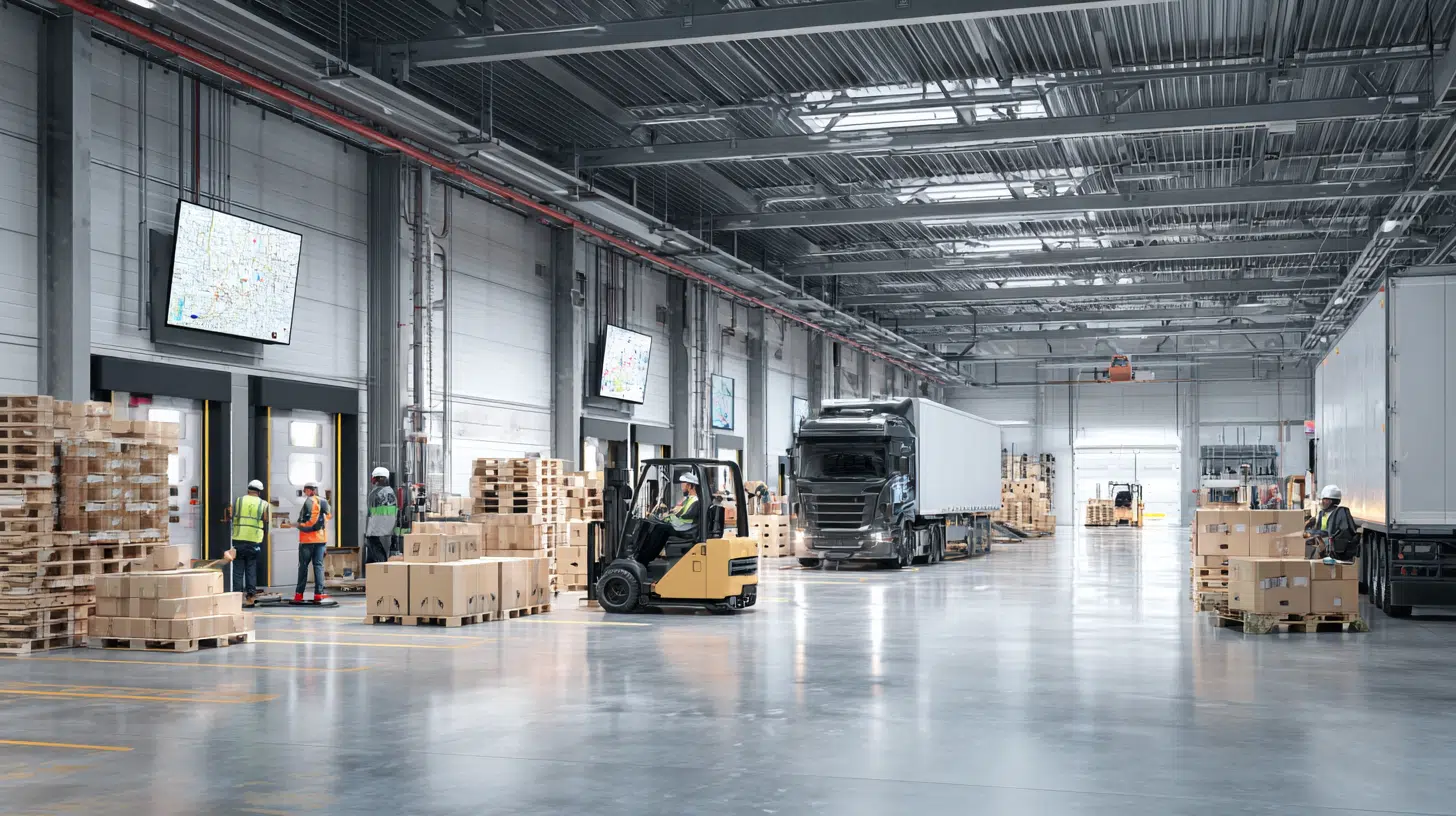
Now picture a national retail chain. Thousands of products move through multiple warehouses every day.
Trucks bring in supplies from manufacturers, warehouse teams sort and store inventory, and delivery networks send finished orders to stores or directly to customers’ homes.
This is business logistics operating at a much larger, more coordinated level, often supported by software that tracks every shipment in real time.
How Technology Is Changing Logistics
Technology has changed how logistics in business works day to day. Tracking software now lets companies see exactly where a shipment is at any moment, instead of waiting on updates from a carrier.
Automation handles repetitive tasks like sorting inventory or generating shipping labels, freeing up staff for more important work.
Real-time visibility tools also help businesses catch delays early and adjust before a problem reaches the customer.
As more companies adopt these tools, business logistics keeps becoming faster, more accurate, and easier to manage, even as order volume grows.
Common Logistics Mistakes Businesses Make
Even well-run businesses slip up when it comes to logistics. A handful of mistakes show up again and again, often catching companies off guard once order volume starts to climb.
I’ve seen these same few mistakes trip up businesses of very different sizes.
- Underestimating storage needs as order volume grows
- Relying on a single supplier or shipping carrier with no backup plan
- Ignoring reverse logistics until returns pile up and cost more than expected
- Skipping regular inventory checks, leading to stock mismatches
- Choosing the cheapest shipping option without checking reliability
- Not tracking shipments closely enough to catch delays early
Conclusion
Logistics touches far more of daily business life than most people realize, shaping everything from how products are stored to how they finally reach a customer.
Throughout this blog, I’ve tried to break down the logistics definition business owners and teams work with, along with the pieces that make the process function as a whole.
Ifyou’re new to the topic or brushing up on the basics, understanding how this system fits together can change how you view the products around you.
It’s a topic worth revisiting as businesses continue to grow and change. I hope this gave you a clearer, well-rounded look at how it all comes together in practice.
Frequently Asked Questions
What Are the Three C’s of Logistics?
The three C’s of logistics are Coordination, Collaboration, and Communication, which together help keep supply chain operations running smoothly and efficiently.
What Industries Rely Most On Logistics?
Retail, manufacturing, e-commerce, and healthcare rely most heavily on logistics to manage inventory, meet demand, and deliver products or services on time.
What Is the Highest-Paid Job In Logistics?
The Chief Supply Chain Officer (CSCO) is the highest-paid logistics role, and senior executives in this position often earn salaries exceeding $150,000 annually.
What Type of Jobs Fall Under Logistics?
Logistics jobs cover a wide range of roles that manage the storage, transport, and delivery of goods from their origin to the final destination.