More than $551 billion from the Infrastructure Investment and Jobs Act (IIJA) is set aside for transportation, yet about 41 percent of those grants was still unobligated in April 2025. That lag—driven by inflation, scope churn, and paperwork—puts public owners at risk of losing money and credibility. To stay on track, agencies need project controls software built for infrastructure owners that locks budgets, schedules, risks, and funding sources into one auditable forecast. We compared the five leading platforms so you can choose the right fit before grant deadlines slip.
Quick Answer: Match the Platform to Your Biggest Pain Point
Pressed for time? See how five transportation project controls software platforms map to the challenge you care about most.
Platform | Best for | Headline strength | Caveat to probe | How pricing is usually structured |
InEight | Owners who want one connected data model | Estimate → schedule → cost stays linked from day one | Full rollout can feel heavy without strong change-management support | Subscription by module count and construction dollar volume |
Kahua | Agencies that live or die by configurable workflows | Pre-built STIP, funding, and materials forms | Advanced CPM still handled in external schedulers | SaaS fee that scales with portfolio size; contractor users ride free |
Oracle Primavera Cloud / P6 | Programs ruled by contractual CPM and quantitative risk | Industry-standard scheduling plus Monte Carlo analysis | Complete owner solution often requires multiple Oracle SKUs | Named users + project-value tiers across P6, Cloud, Aconex, Unifier |
Hexagon EcoSys | Portfolios hungry for capital-planning rigor | Enterprise-grade cost and performance governance | Field and document control sit in other systems | Enterprise cloud quote based on user count and project spend |
Procore | Jobs where field adoption drives everything | Mobile-first drawings, RFIs, and daily logs contractors actually use | Advanced cost-schedule forecasting is light | Annual license tied to construction volume, unlimited users |
How We Compared Transportation Project Controls Software
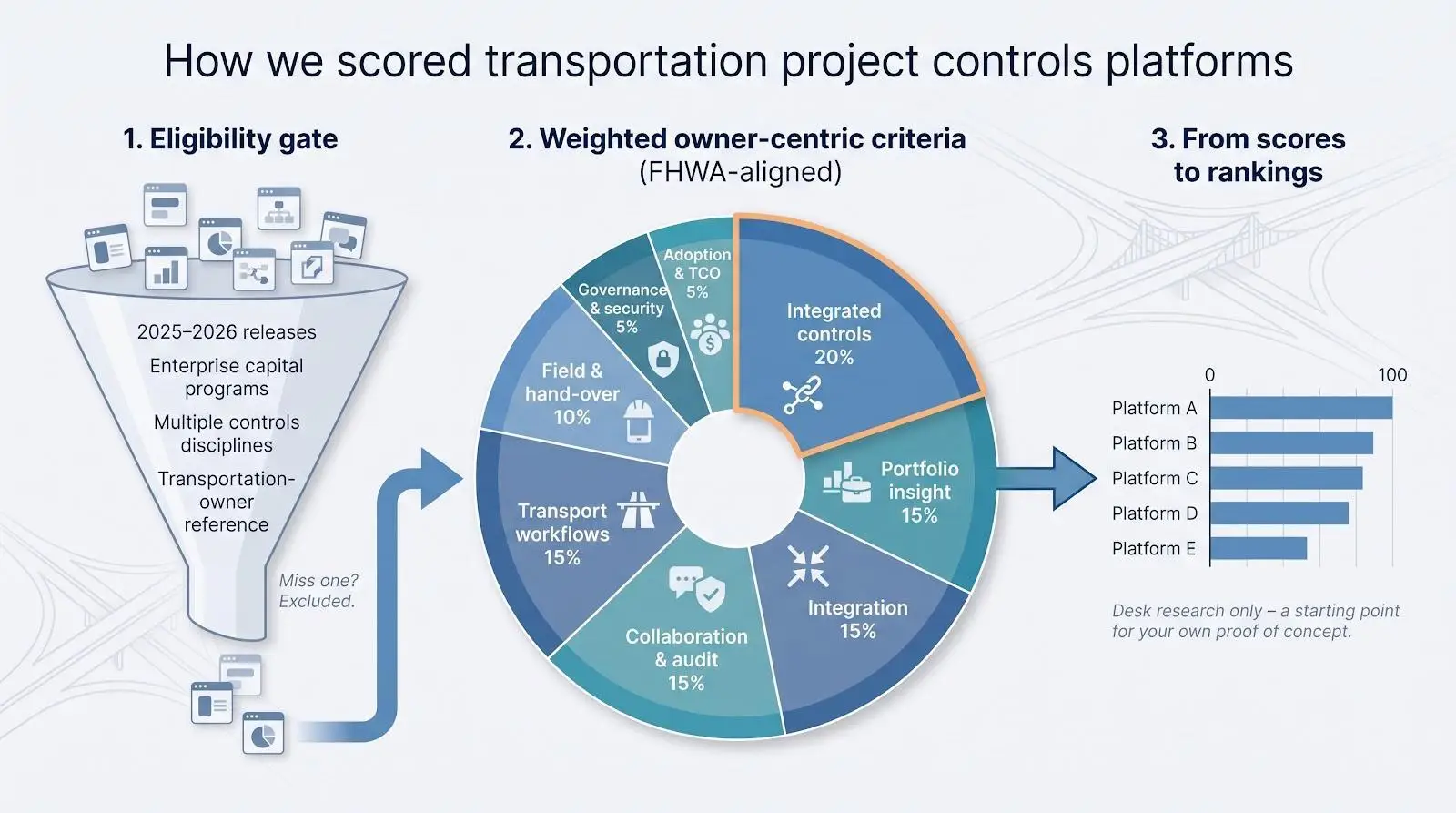
We scored each platform the way a state DOT evaluation panel would: evidence first, marketing last. Every point comes from public documentation, named transportation deployments, release notes, or practitioner feedback, never from glossy demo reels.
1. Eligibility Gate
A product had to:
- Ship new features in 2025 or 2026
- Support enterprise-scale capital programs (not just task lists)
- Cover more than one project controls discipline
- Provide at least one transportation-owner reference
Missing any item kept the product out of the grid.
2. Weighted Owner-Centric Criteria
The eight factors below match FHWA’s 2026 Integrated Digital Project Delivery goals for interoperability and clean hand-offs.
- Integrated cost–schedule–risk controls: 20 percent
- Portfolio and capital-planning insight: 15 percent
- Data integration and consolidation: 15 percent
- Collaboration, documents, and audit trail: 15 percent
- Transportation-owner workflow fit: 15 percent
- Field execution and hand-over: 10 percent
- Governance and security: 5 percent
- Adoption and five-year total cost: 5 percent
Each factor is scored on a 1-to-5 scale. Native capability earns top marks; a first-party add-on scores lower; third-party plug-ins cap at “adequate.” Future features receive zero credit until they are generally available.
3. From Raw Scores to Rankings
We converted the weighted results to a 100-point scale and published them as desk research, not lab tests. Treat the grid as a springboard for your own proof of concept. Because every point is traceable, any vendor can see exactly where it gained or lost ground.
Transportation Project Controls Software at a Glance
The grid below compares five transportation project controls platforms across the eight owner-centric criteria outlined above.
Rank | Platform | Controls (20 %) | Portfolio (15 %) | Integration (15 %) | Collaboration & audit (15 %) | Transport fit (15 %) | Field & hand-over (10 %) | Governance (5 %) | Adoption / TCO (5 %) | Weighted total |
1 | InEight | 5.0 | 4.5 | 4.5 | 5.0 | 4.5 | 4.5 | 4.5 | 3.5 | 92.5 |
2 | Kahua | 3.5 | 4.5 | 4.0 | 5.0 | 5.0 | 4.5 | 4.5 | 3.5 | 86.5 |
3 | Oracle Primavera Cloud / P6 | 4.5 | 4.5 | 4.0 | 3.5 | 5.0 | 3.5 | 5.0 | 2.5 | 83.5 |
4 | Hexagon EcoSys | 4.0 | 5.0 | 4.5 | 3.0 | 4.0 | 2.5 | 4.5 | 3.0 | 78.0 |
5 | Procore | 3.0 | 3.5 | 4.0 | 4.5 | 3.5 | 5.0 | 4.0 | 4.0 | 76.5 |
What the Numbers Mean
InEight leads because its single data model links estimate, schedule, cost, risk, change, and documents, so it earns perfect fives for “Controls” and “Collaboration.”
Kahua places second thanks to configurable public-agency workflows; its near-perfect “Transport fit” reflects built-in STIP, funding, and materials modules.
Oracle Primavera Cloud / P6 scores highest on “Governance” for scheduling and risk rigor, but relying on Aconex or Unifier for documents lowers its collaboration grade.
EcoSys tops the “Portfolio” column; if reconciling P6, SAP, and multiple funding sources is the first headache, its 5.0 is compelling, though field capture needs a companion tool.
Procore ranks fifth only because this comparison centers on owner-level controls. It shines in “Field & hand-over,” yet lighter CPM and forecasting keep its total below eighty.
InEight: Best Overall Integrated Platform for Transportation Owners
To see how that unified architecture handles the unpredictable conditions and strict oversight that define highways, bridges, airports, and rail corridors, explore InEight’s dedicated transportation project management solution, which blends integrated controls with resource-optimizing forecasts to keep projects on time and compliant.
Why InEight Tops the Grid
InEight treats cost, schedule, risk, change, documents, and field progress as one data set, not six stitched-together apps. That single schema cuts the Excel time most owners spend reconciling P6 updates, invoices, and RFIs and delivers a live forecast that matches the board deck, contractor meeting, and pay-item ledger (gold for agencies juggling multiple funding sources and audits).
How the Suite Fits Together
The platform is modular, yet every module writes to the same database. Build a risk-adjusted baseline in Estimate, push it into Schedule for CPM scheduling and AI lookahead, and watch Control provide real-time cost forecasting and calculate earned value as quantities flow in from Plan (work packaging) and Progress (field tracking).
Issue a change? Contract manages change orders and vendor workflows to update the budget. Document handles cloud document control and versioning, tying every drawing or BIM element back to its pay item, while reporting tools roll the story into dashboards (no fragile middleware required).
Proof on Transportation Megaprojects
- A European capital project owner – multi-year airport relocation: Phase 1 closed under budget with audit-ready trails.
- A major regional transport authority – standardized project controls across road and rail programs; “aligned processes around project controls and report in a consistent way.”
- An ENR Top 400 contractor – 350,000+ documents handled without slowdown on a massive highway project, supporting rapid handover.
- A North American capital project owner – contractor scenarios flow from Estimate to board-level change approval.
Work across four continents and multiple modes shows that InEight scales for highway, rail, port, and airport programs.
Pricing, Deployment, and Questions to Ask
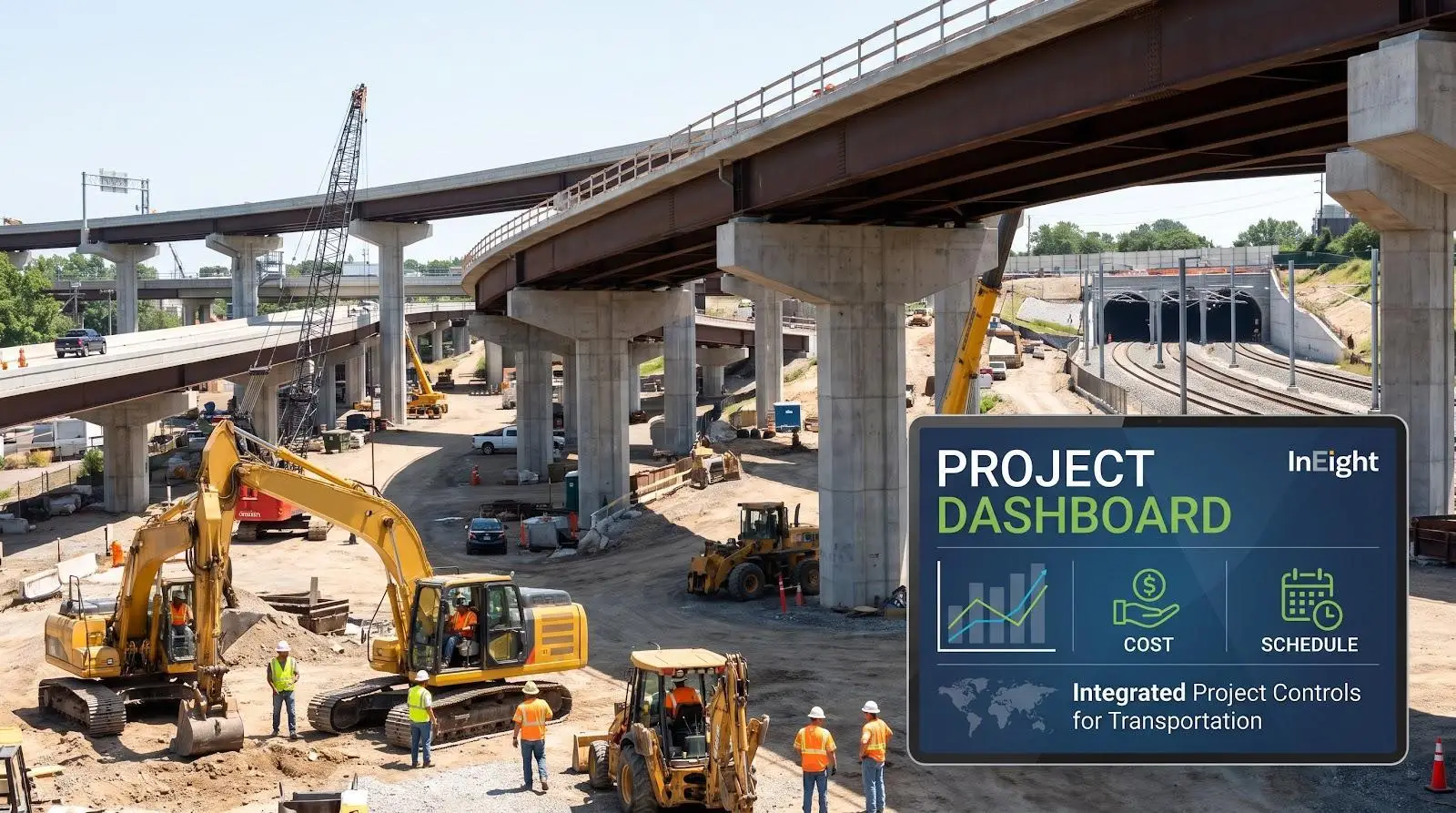
InEight transportation project controls suite overview
InEight licenses by module, not by seat. Most owners start with 4-6 core apps, then expand.
Pricing variables
- Modules licensed
- Annual construction volume or asset value
- Internal versus external user mix
- Contract length and support tier
Because contractor seats are included, implementation (data migration, ERP or API work, and training) drives most of the cost.
Ask vendors
- Which modules replace your current stack today?
- What will it cost and how long will it take to migrate historic schedules, budgets, and documents?
- Does the subscription include post-closeout archives that meet statutory retention?
Capturing these answers early shapes five-year total cost far more than any per-module list price.
Kahua: Best Transportation-Focused Owner PMIS
Why Agencies Choose Kahua
Kahua ranks second because it speaks fluent public-sector. Out of the box, you can track federal, state, and local funding sources, guide a project through a State Transportation Improvement Program (STIP) workflow, and attach materials-testing records to pay items—features many transportation project controls platforms never mention.
That owner DNA delivers real savings. One state transportation agency replaced eight legacy tools with Kahua and reports more than $5 million in annual cost avoidance from faster approvals and cleaner data.
If your biggest headache is aligning procurement rules, grant reporting, and board dashboards instead of running Monte Carlo risk, Kahua’s configurable workflows give you a running start. You set form names, approval paths, and security roles without custom code, so the software matches your statutes rather than the other way around.
Configurable Workflows, Minus the Coding Hangover
Kahua’s form engine lets you drag and drop fields, set approval routes, and publish changes in minutes. When FHWA adds a new reporting clause mid-year, you tweak the form and keep charging eligible costs while everyone else waits on IT.
The same engine powers its transportation package. A STIP amendment follows a pre-built path: the district enters scope, finance tags funding codes, legal confirms Buy America, and the record locks for audit. Materials tests ride with pay items, so failing cylinders block payment until a retest passes. Funding draws roll up automatically, giving CFOs a live view of obligated versus available dollars.
Because everything lives in one PMIS, your board dashboard no longer depends on a brittle SharePoint list or a midnight Excel macro.
Pricing, Implementation, and Questions to Ask
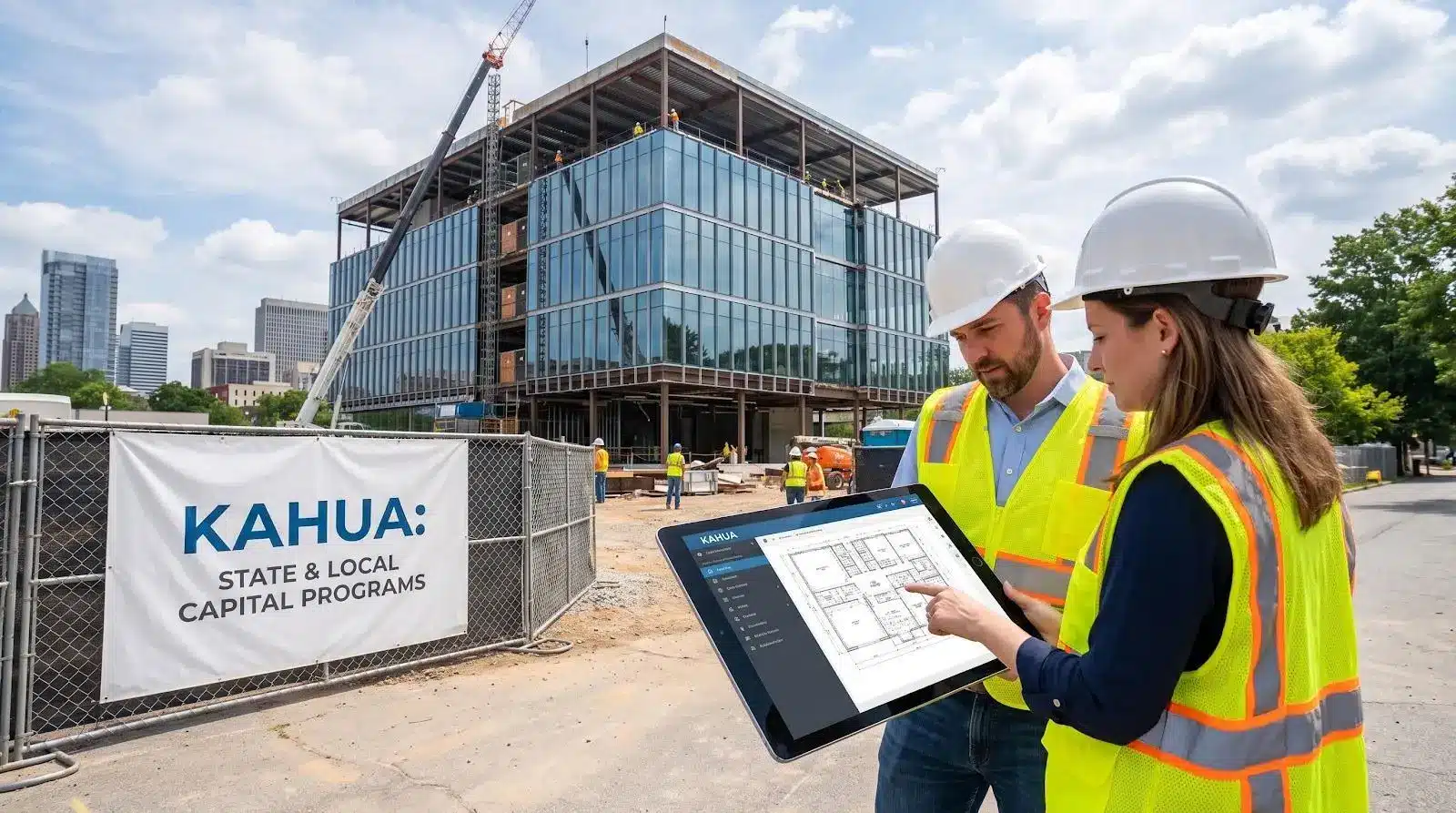
Kahua owner-focused PMIS for public transportation agencies
Kahua sells an enterprise subscription that flexes with portfolio dollar volume and the mix of owner-focused apps you activate; external contractor users are free, so license debates don’t stall change orders.
Implementation is lighter than a full integrated-controls rollout because you don’t migrate legacy CPM data. Most agencies map funding codes and approval chains, import active contracts and documents, and go live in four months for a large capital owner; rollout is even faster if phase one covers only new projects.
Ask the vendor
- How quickly can we spin up a production-clone pilot without extra fees?
- Which advanced CPM or risk scenarios still require Primavera or another scheduler?
- Does the subscription include unlimited workflow tweaks, or will each change need partner services?
Capturing these answers early shows whether Kahua stays nimble long after the first configuration sprint.
Oracle Primavera Cloud / P6: Best for Schedule-Governed Megaprograms
Why Primavera Still Sets the CPM Standard
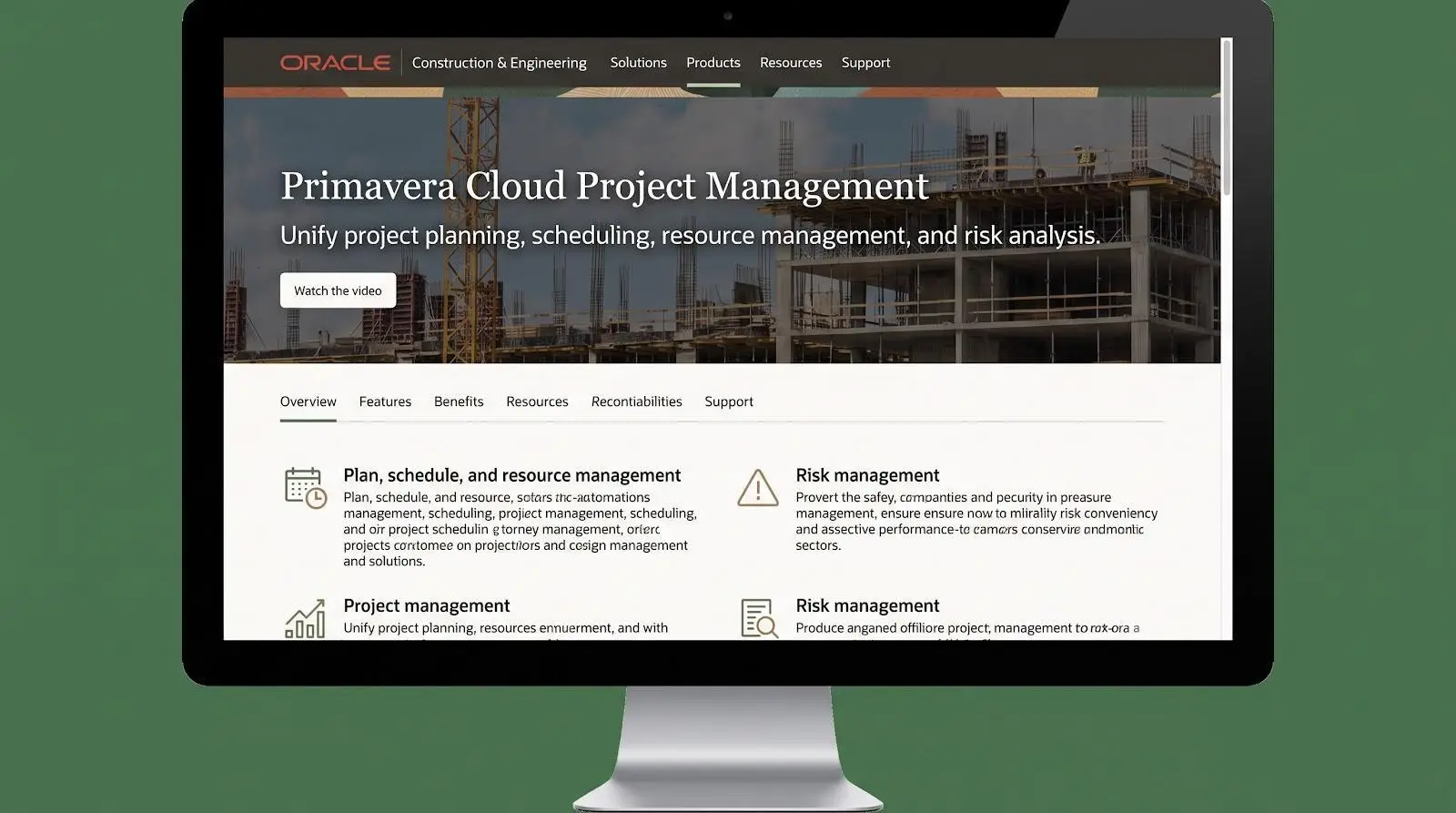
Oracle Primavera Cloud and P6 CPM scheduling environment
Any rail extension, tunnel bore, or bridge rehab with a “baseline schedule shall be developed in Primavera P6” clause exists for a reason. The critical-path engine, resource loading, and Monte Carlo risk analysis remain the yardstick contractors and claims consultants use to measure time. Oracle’s newer Primavera Cloud adds portfolio planning, cost-risk, and collaborative task management, giving owners whose primary control lever is float burn, not field photos, a tightly governed stack.
When schedule-driven contracts require monthly P6 updates and time-impact analyses, staying in the Primavera family spares you file conversions and logic breaks. That rigor drives Primavera’s top “Governance” score in our transportation project controls matrix: its permission model, baselining rules, and risk workflows match the forensic detail megaproject auditors expect. Precision matters; a one-year delay on a £26 billion rail program such as London’s Crossrail was estimated to add £1.2 billion, or £3.3 million per day to project costs.
Where the Stack Gets Complicated: Aconex, Unifier, and More
Primavera Cloud is not a single solution. Owners often add Aconex for documents and contractual correspondence, Unifier for cost control and business-process automation, and sometimes Oracle Analytics for portfolio dashboards. Each product carries its own license, user provisioning, and implementation stream.
That modular depth delivers advanced features but also creates multiple environments to secure, update, and integrate. Data moves through Oracle’s integration framework, yet you still need specialist administrators, especially when contractors connect from their own P6 databases.
Questions to Pin Down in the RFP
- Which capabilities are native to Primavera Cloud versus offered only in Aconex or Unifier?
- How many named users, projects, or construction-value tiers will cover the full program?
- What is the total bill for sandbox, test, and production instances once cybersecurity mandates apply?
Primavera is often the safest path for CPM compliance, yet the real price appears only after every companion SKU lands in the purchase order.
Hexagon EcoSys: Best for Portfolio Cost and Performance Governance
Why Portfolio-Minded Owners Look to EcoSys
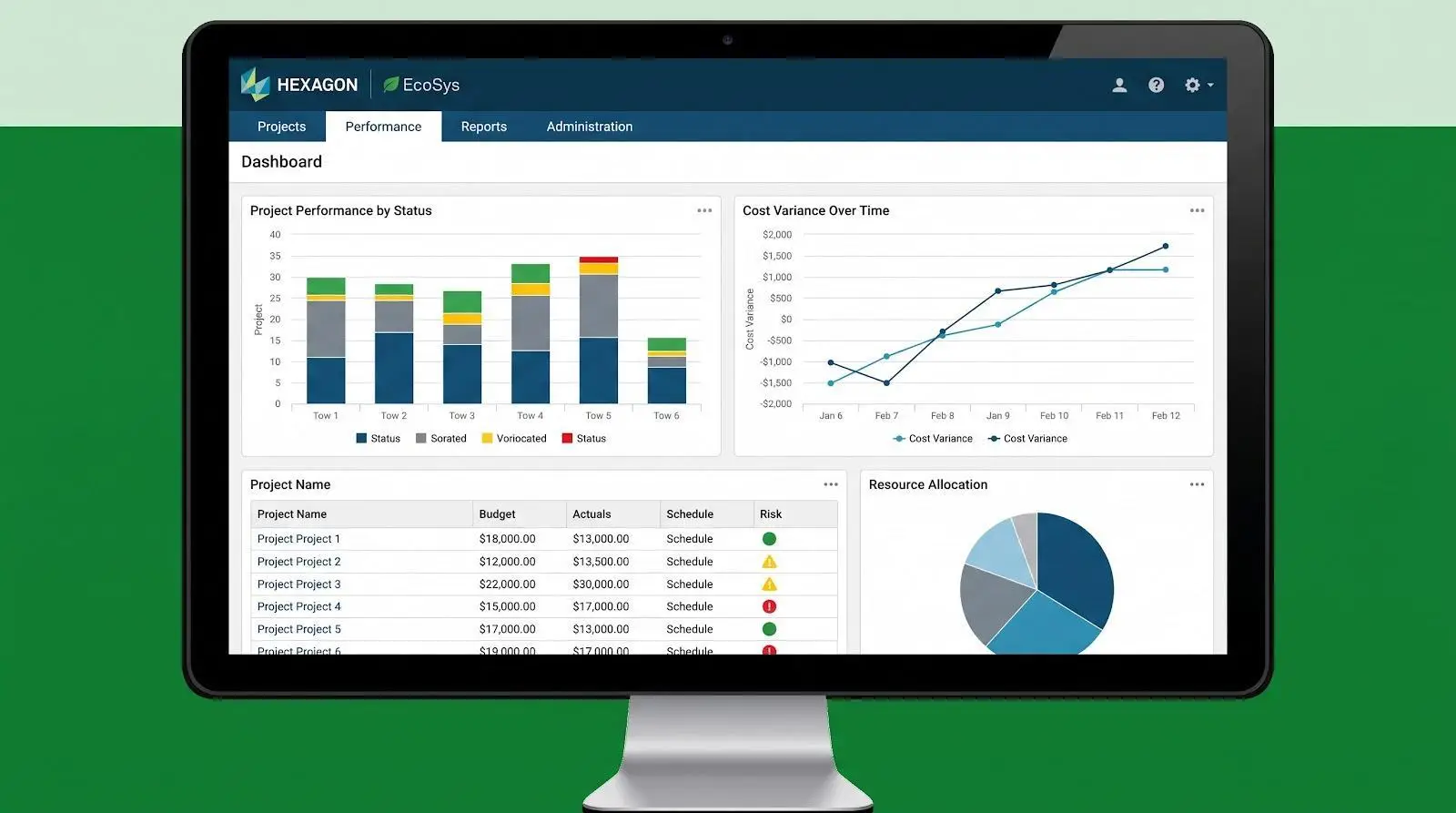
Hexagon EcoSys portfolio and cost governance dashboards
When the board asks, “Show us the five-year funding gap,” schedule details fade and enterprise cost control takes center stage. EcoSys consolidates budget, actuals, commitments, change, and forecast data for every project in one configurable cost workbook, then rolls the numbers up by program, region, and business unit.
That depth explains EcoSys’s 5.0 score for portfolio visibility in our transportation project controls matrix. Owners can model alternate funding scenarios, rank new projects, and see cash-flow impact long before a shovel hits dirt, a relief for agencies juggling IIJA grants, state bonds, and local matches.
Strengths, Gaps, and the Integration Reality
EcoSys talks to nearly every tool—P6, SAP, Oracle ERP, and custom data warehouses—so you keep source systems while surfacing a single set of numbers. That reach drives its 4.5 “Integration” mark.
The trade-off is field data. EcoSys captures progress quantities, but inspections, RFIs, and daily logs usually stay in Procore, Kahua, or SharePoint. If site-level visibility is your blind spot, pair EcoSys with a field platform or risk flying partly blind between updates.
Pricing is quote-based and scales with user count and project volume. Implementation is a data-model exercise: map cost codes, load historical actuals, and configure dashboards. Timelines range from six months for a focused portfolio layer to eighteen months when replacing legacy cost tools across several agencies.
Questions to Raise in the Demo
- Which field workflows are native today, and which rely on partner integrations?
- How does the license treat read-only executives compared with power cost controllers?
- When will the predictive cost-forecasting features announced in release 9.4 become generally available?
Locking these answers early helps EcoSys deliver its portfolio promise without leaving day-to-day controls stranded.
Procore: Best for Field Adoption and Collaboration
Why Procore Wins the Jobsite
Walk through almost any airport concourse or bridge deck and you will see hard hats snapping photos in Procore. Field teams prefer it because drawings, RFIs, submittals, daily logs, and inspections sit behind large, finger-friendly buttons instead of buried server folders. That friction-free capture drives Procore’s top score for “Field & hand-over” in our transportation project controls matrix.
For owners, the payback is speed and clarity. A regional airport authority ties unit-price contracts, funding sources, and DBE reporting together in one mobile workflow. Inspectors record quantities, attach test reports, and flag deficiencies before leaving the work zone, so pay estimates and compliance reports generate overnight.
If missing photos, late RFIs, and conflicting spreadsheets are your main headache, Procore closes the gap faster than any heavyweight suite. It acts as the jobsite’s data nerve center and can feed richer cost-schedule platforms later or stand alone on smaller rehabilitation jobs where CPM risk is low.
Limits, Pricing, and Its Role in a Broader Stack
Procore shines in the field but is lighter in advanced CPM, quantitative risk, and portfolio forecasting. You can import a P6 schedule or link to Primavera Cloud, yet the logic remains read-only, which works for dashboards but not for teams running Monte Carlo or time-impact analyses.
Licensing follows Procore’s annual subscription with unlimited users. Costs scale with construction volume and the bundle you select: Project Management, Financials, Quality & Safety, and Analytics sit on separate shelves. Because implementation focuses on configuration and training, many agencies roll out drawings, RFIs, and daily logs on pilot projects in weeks, not months.
Questions to Confirm Before You Sign
- How will schedule updates flow back to P6 or Primavera Cloud without manual Excel hand-offs?
- Does the unlimited-user promise include external design consultants and lab testers?
- After Procore’s DataGrid and AI acquisitions, what is the timeline for owner-level forecasting?
If those answers meet your needs, Procore delivers the field clarity that makes every other transportation project controls platform smarter.
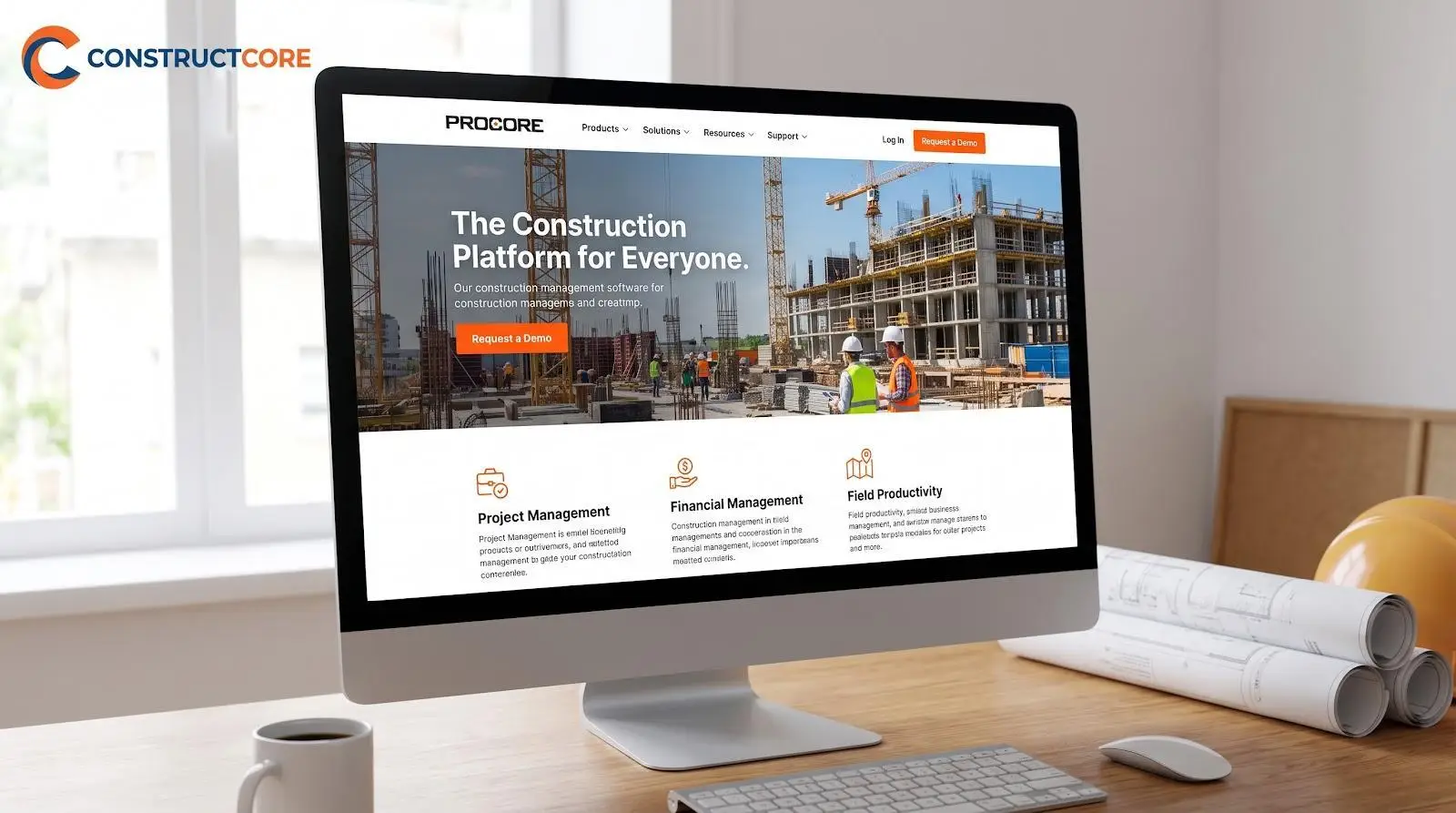
Procore field collaboration for transportation jobsite teams
Other Platforms Worth a Spot on Your Longlist
Even the top five transportation project controls platforms may not cover every gap. These specialist tools can round out an owner short list.
- Autodesk Construction Cloud. Pairs design coordination with model-based quantity take-off and 4D sequencing; ideal when engineers already work in Revit and Civil 3D.
- Bentley SYNCHRO. Provides time-location and BIM-driven construction planning, letting highway and rail corridor managers visualize crew flows and work windows that a standard Gantt chart misses.
- Oracle Aconex. Offers multi-organization document control and contractual correspondence and is often paired with Primavera when claims defensibility matters more than interface polish.
- Contruent (formerly ARES PRISM). Focuses on earned-value cost control; energy and rail megaprojects rely on it for rigorous CPI/SPI reporting without replacing existing schedulers.
- PMWeb, Aurigo, e-Builder. Target public-sector PMIS needs similar to Kahua and are worth testing if you prefer configurable forms with on-prem hosting or a different pricing model.
Eight Tests to Run Before You Sign Any Contract
Technology demos entertain, but they rarely mimic real life on a congested freeway or an active runway. Run these eight proof points to spot the difference between slick slide decks and transportation project controls platforms that still hold up during a year-three audit.
- Trace portfolio to pay-item lineage. Open a portfolio dashboard, drill into a program, then down to a single change on a unit-price line. If the numbers reconcile without Excel, the tool passes.
- Validate contractor data ownership. Import a real contractor P6 file, lock baseline dates, and check logic. Garbage-in tolerance reveals more about governance than any marketing sheet.
- Link cost, schedule, and risk. Push a design revision through change approval, forecast update, and quantitative risk hit. Count the clicks and modules; fewer hand-offs mean fewer month-end surprises.
- Prove transportation-specific workflows. Run a mock STIP amendment, attach funding codes, and generate a DBE report. If it feels bolted on, budget extra configuration dollars.
- Show linear and systems integration. For corridor work, request a time-location view and rail work-window logic. A flat Gantt suggests the vendor has never managed a nighttime possession.
- Execute an open-data exit. Export the full project—documents, models, cost, schedule, audit logs—and open it without the vendor’s cloud. Future you will thank present you.
- Map governance and security. Align permission tiers with agency roles. Confirm FOIA, public-records retention, and internal audit all see the same immutable history.
- Calculate five-year total cost of ownership. Add subscriptions, implementation, integrations, training, admin head-count, and closeout archive fees. A bargain in year one means little if year three doubles after the pilot discount expires.
Owner-Focused FAQs
What is the best project controls software for a state DOT?
Start where your biggest risk sits. If you need one connected lifecycle platform and have schedulers ready to migrate, choose InEight. If your team already works in Primavera but needs configurable grant and funding workflows, add Kahua. Agencies committed to P6 submittals and quantitative risk often stay in the Oracle Primavera family.
Is Primavera P6 enough by itself?
P6 is a scheduling powerhouse, yet it lacks owner-level cost, document, change, and field controls. Most transportation programs pair it with Unifier, Aconex, EcoSys, or a PMIS such as Kahua to close those gaps.
Can Procore replace P6?
No. Contract clauses that demand resource-loaded CPM schedules, time-impact analyses, or Monte Carlo risk still require P6. Procore displays dates but does not calculate critical path. Treat it as a field-data hub, not a CPM engine.
What does “AASHTO-compliant software” really mean?
There is no universal checkbox. Each agency defines its own pay-item, materials, and reporting standards. Ask vendors to run your workflows instead of accepting generic claims.
Do corridor projects need linear scheduling?
Highway, rail, and pipeline jobs almost always benefit from time-location views that reveal crew flow and geographic clashes. Request a live demo using your alignment to confirm the tool handles rolling closures and work windows.
Is one platform better than a best-of-breed stack?
An integrated suite reduces data handoffs and blame. A specialist stack dives deeper in each domain but raises integration and governance work. Score the trade-offs against internal skill sets and funding rules.
How much does enterprise transportation project controls software cost?
Vendors price by portfolio size, modules, and user base, so public numbers mislead. Build a five-year total-cost model that includes subscription, implementation, integration, training, admin labor, and close-out archive fees.
How long does implementation take?
Timeline depends on data migration and workflow maturity more than software. A focused pilot on new projects can go live in three to six months. A full legacy migration across cost, schedule, and documents often runs 12–18 months; phase the rollout so value lands early while back-catalog data loads in the background.
Conclusion: Choose the Platform That Fixes Your Biggest Blind Spot
Project controls software won’t pour concrete or negotiate steel, but it will surface risk early, defend budgets during audits, and steer scarce crews to the right mile marker at the right time.
- InEight delivers end-to-end control for owners who want a single connected system.
- Kahua bends to public-agency rules without custom code.
- Oracle Primavera keeps schedule governance solid for CPM-driven megaprojects.
- EcoSys shows the C-suite exactly where long-range funding will run short.
- Procore captures the field truth that powers every other dashboard.
Short-list two platforms, run the eight tests above, and make each vendor prove every claim with your data. The winner reveals itself the first time a change order flows from tablet to board book without a midnight spreadsheet.
Ready for the next step? Download the transportation-owner RFP scorecard and put a demo script in front of suppliers.
Safe roads and transparent audits start with better data. Let’s build them together.