A dispatcher job can look simple until you see how many moving parts sit behind each load. You are not just matching freight with a truck. You are handling drivers, schedules, brokers, paperwork, and last-minute changes at the same time.
If you are considering this career, it helps to know what the work really involves before you apply. I think the clearest way to judge the role is by looking at the daily duties, skills, pay, and job options together.
By the end, you will know what a truck dispatcher does, what employers expect, how remote work fits in, and what steps can help you get started.
What Is a Truck Dispatcher?
A dispatcher helps a motor carrier coordinate loads, drivers, schedules, and daily freight operations.
The role often includes finding suitable loads, confirming pickup and delivery details, communicating with drivers and brokers, tracking trips, and responding to delays or other problems.
Dispatchers generally work on behalf of carriers rather than acting as independent intermediaries between shippers and carriers. Depending on the job, they may support one owner-operator, several trucks within a small fleet, or a much larger transportation operation.
The workload changes with fleet size and freight type. A dispatcher supporting one or two trucks may communicate closely with each driver, while someone managing a larger fleet must balance more appointments, routes, documents, and daily changes at the same time.
Truck Dispatcher Jobs and Pay Expectations
Dispatcher positions appear under several titles, including dispatcher, freight dispatcher, fleet dispatcher, transportation dispatcher, and logistics coordinator.
Openings can be found through:
- Indeed
- ZipRecruiter
- Trucking and logistics company career pages
- Regional carrier websites
Pay depends on location, experience, employer, shift, workload, and the type of freight being handled.
As a general benchmark:
- Entry-level positions: Around $35,000 to $45,000 annually
- Experienced positions: Around $50,000 to $65,000 or more
- Remote positions: Often around $38,000 to $50,000 annually
Treat these figures as estimates rather than fixed rates. Current job listings provide a better picture of what employers are paying in a specific location.
Independent dispatchers are different because they may charge carriers a percentage of freight revenue or a fixed fee instead of receiving a regular salary.
Truck Dispatcher Duties and Required Skills
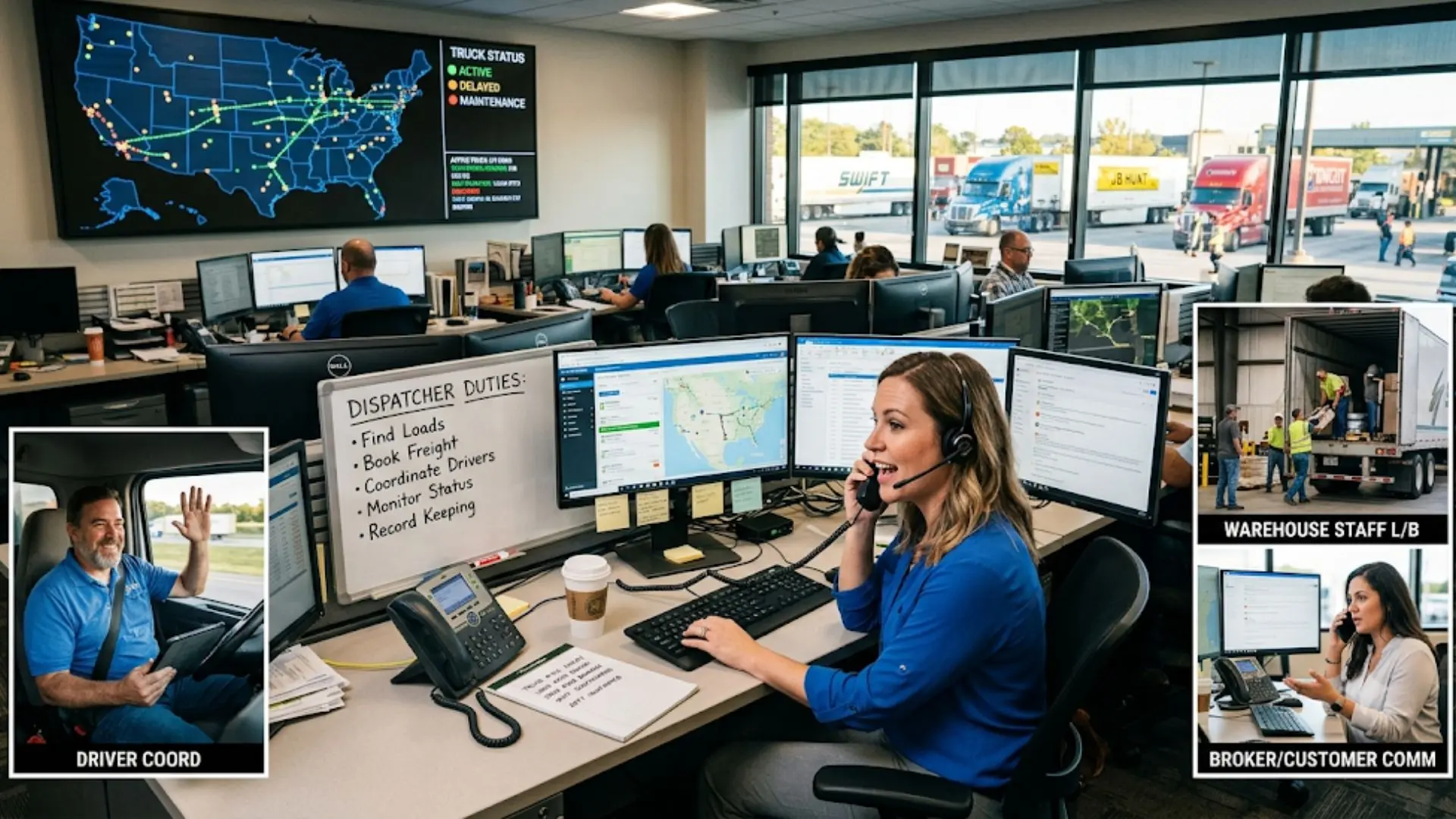
The main responsibility of a dispatcher is keeping freight operations organized while trucks are on the road.
Typical duties include:
- Finding suitable loads
- Booking freight
- Negotiating rates when the position requires it
- Confirming pickup and delivery appointments
- Coordinating drivers
- Monitoring truck and load status
- Planning routes around schedules
- Communicating delays
- Maintaining trip and load records
- Handling documents such as rate confirmations
- Responding to breakdowns and schedule changes
Technical knowledge matters, but strong communication and organization are often just as important.
A dispatcher may speak with drivers, brokers, customers, and warehouse staff throughout the same day. Information must be accurate because a small mistake in an appointment time, address, load number, or delivery instruction can create larger problems later.
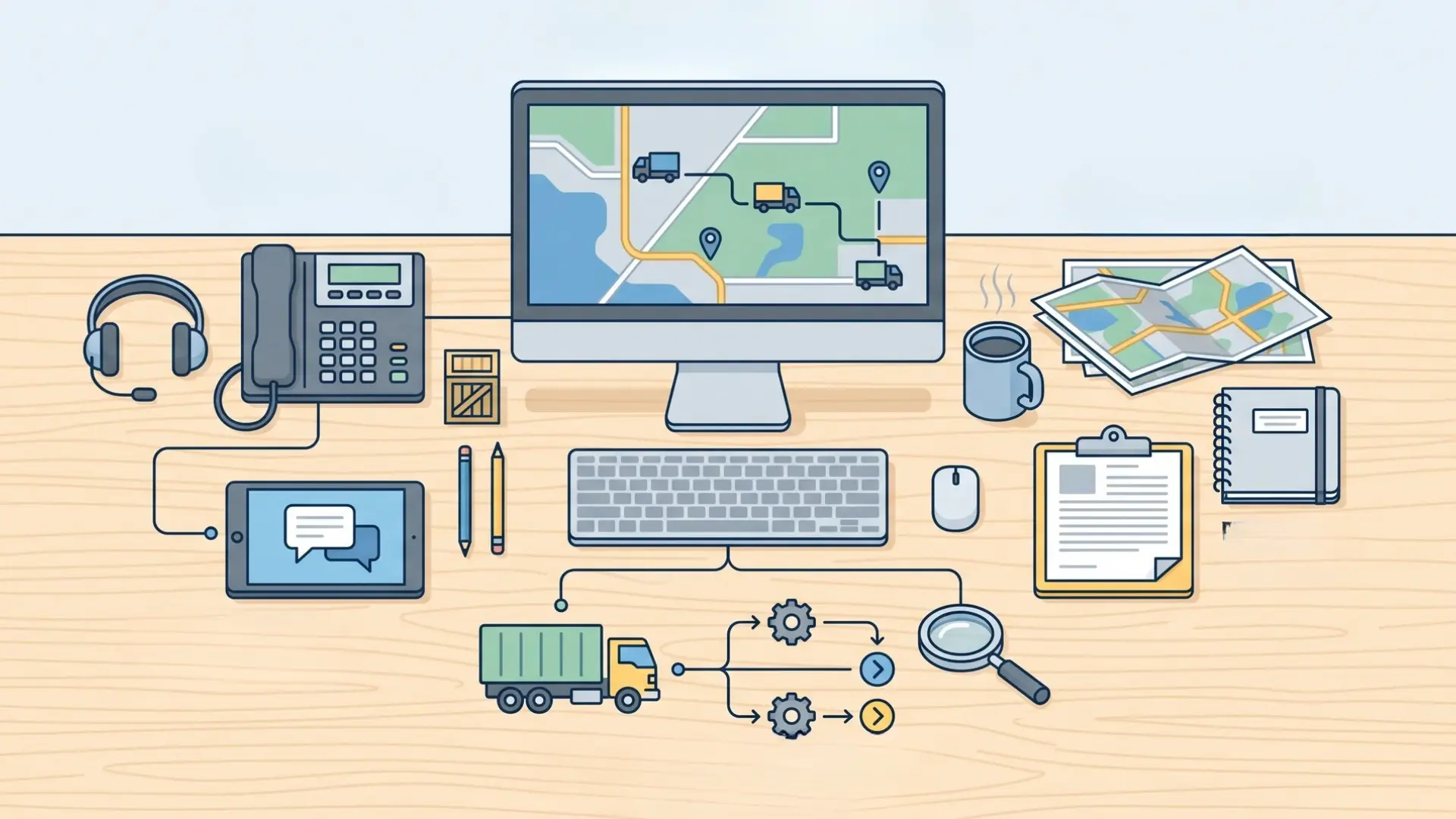
Comfort with browsing digital freight boards, GPS tools, dispatch software, email, spreadsheets, and tracking platforms also makes daily work easier.
How to Start a Career in Truck Dispatching
You usually do not need a college degree to enter truck dispatching. A high school diploma or GED is enough for many entry-level positions.
A practical route into the field looks like this:
- Learn basic trucking terminology: Understand terms such as deadhead, detention, rate confirmation, bill of lading, dry van, temperature-controlled reefer loads, and flatbed.
- Understand freight operations: Learn how carriers, brokers, shippers, drivers, appointments, and loads connect.
- Practice common dispatcher tasks: Become familiar with load searching, route planning, appointment scheduling, and trip monitoring.
- Learn the basic tools: Get comfortable with load boards, maps, spreadsheets, tracking platforms, and dispatch software.
- Improve communication skills: Practice speaking clearly with drivers and handling negotiation or schedule changes professionally.
- Apply for entry-level roles: Search for dispatcher assistant, transportation coordinator, logistics coordinator, or junior dispatcher positions.
- Build experience before specializing: Once you understand day-to-day operations, you can move toward larger fleets, specialized freight, remote work, or independent dispatching.
Customer service, warehouse, shipping, administrative, and logistics experience can also provide useful transferable skills.
Can You Start Dispatching Trucks From Home?
Yes. Dispatching trucks from home is possible because most daily tasks can be handled through a computer, phone, internet connection, and transportation software.
Remote dispatchers still perform the same core work. They communicate with drivers and brokers, monitor schedules, find loads, review documents, track deliveries, and respond when problems occur.
There are two common remote arrangements:
- Remote employee: Works for a trucking company or carrier using the employer’s systems and processes.
- Independent dispatcher: Runs a separate dispatch service and manages carrier clients, tools, billing, and other business responsibilities.
Remote work can sound easier, but it still follows trucking schedules. Drivers may need assistance early in the morning, later in the day, or across multiple time zones.
For beginners, an office, hybrid, or entry-level role can sometimes be easier to secure because employers may prefer experienced dispatchers for fully remote positions.
Tools Truck Dispatchers Commonly Use
Dispatchers rely on several types of software rather than a single platform.
Load boards help locate available freight and compare potential loads.
Transportation management systems, or TMS platforms, organize loads, trucks, drivers, appointments, and documents.
Mapping and GPS tools help evaluate routes, mileage, and estimated travel times.
Fleet tracking and ELD systems can provide information about driver activity and truck locations.
Email, phone systems, spreadsheets, document storage, and messaging platforms are also part of normal daily work.
Beginners do not need to master every system before applying. Employers often train new staff on their preferred software, but basic computer skills make that training easier.
Is Truck Dispatching a Good Career Fit?
Truck dispatching tends to suit people who can stay organized when several things are happening at once.
A driver may be running late while another truck needs a new load and a broker is waiting for an update. The dispatcher has to decide which problem needs attention first without losing track of the others.
People who generally perform well in this role are comfortable with:
- Frequent phone calls and messages
- Fast decisions
- Changing schedules
- Recordkeeping
- Negotiation
- Problem-solving
- Working under time pressure
The career may be less suitable for someone who prefers highly predictable tasks or limited communication.
For people who enjoy transportation, logistics, coordination, and solving day-to-day problems, dispatching can also lead to opportunities in fleet management, broader transportation and logistics roles, or other freight-related work.
Truck Dispatcher vs. Freight Broker
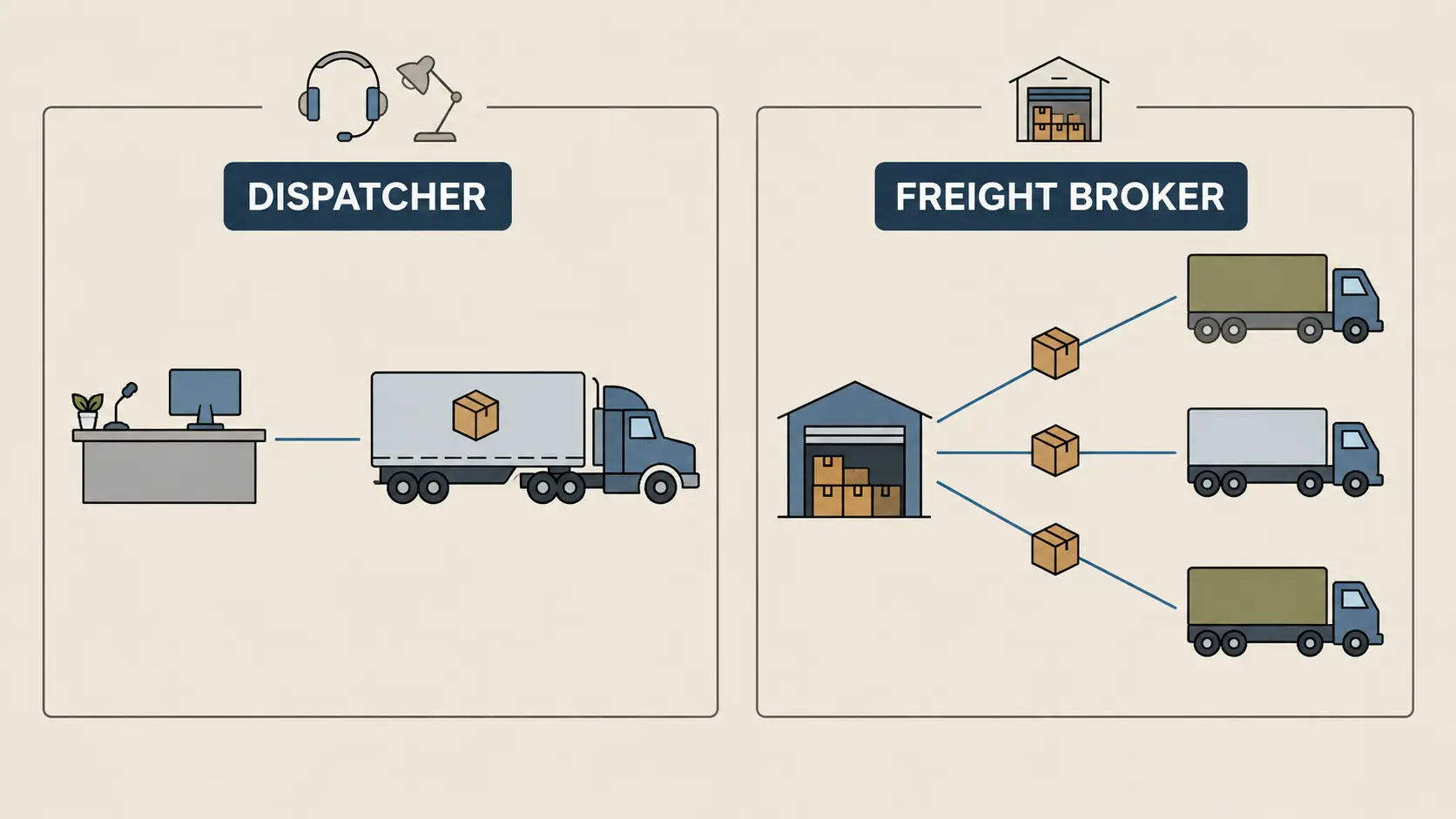
Dispatchers and freight brokers work on many of the same loads, but their business roles differ.
| Aspect | Truck Dispatcher | Freight Broker |
|---|---|---|
| Primary role | Supports carrier operations | Arranges transportation between shippers and carriers |
| Works for | A carrier or carrier clients | Shippers and carriers as an intermediary |
| Typical duties | Loads, schedules, drivers, rates, trip issues | Finding carriers, arranging freight, negotiating transportation |
| Broker authority | Generally not required when acting within a carrier agency relationship | Required to operate as a freight broker |
| Key distinction | Helps manage carrier operations | Arranges transportation between separate parties |
The important point is that classification depends on what someone actually does, not simply whether they call themselves a dispatcher.
An employee working directly for a carrier normally performs straightforward dispatch functions. Independent dispatch businesses need to be more careful because certain activities can cross into freight brokerage and create additional federal requirements.
How to Apply for Truck Dispatcher Jobs
A strong application should show that you can manage information and communicate under pressure.
On your resume, highlight experience involving:
- Scheduling
- Transportation
- Customer service
- Logistics
- Route coordination
- Order tracking
- Driver communication
- Administrative work
- Data entry
- Problem resolution
If you already have trucking experience, mention load booking, dispatch systems, freight documents, rate negotiation, or fleet coordination.
Beginners should focus on transferable skills rather than trying to make unrelated experience sound like dispatch work.
Interviews may also include practical situations. An employer could ask what you would do if a driver was late, a delivery appointment changed, or a truck broke down.
A strong answer shows that you can gather accurate information, communicate with the affected parties, prioritize the problem, and document any changes.
Summing Up
Truck dispatching works best for people who can stay organized, communicate clearly, and make decisions when plans change. You now know how the role connects drivers, loads, schedules, brokers, and paperwork, along with the skills and tools employers commonly expect.
A truck dispatcher can work for a carrier, pursue remote opportunities, or build experience before moving into independent dispatching. Pay and responsibilities vary, so checking current job listings helps you compare realistic options before applying.
If this career matches how you like to work, start by learning basic freight terms, improving your communication skills, and applying for entry-level roles. Then check out my related transportation guides for more practical career information.
Frequently Asked Questions
Is it hard to be a truck dispatcher?
The job can be demanding because several problems may need attention at the same time. The learning curve gets easier as you learn freight terminology, common routes, dispatch systems, and how to communicate efficiently with drivers and brokers.
What qualifications do you need to be a truck dispatcher?
Many employers require only a high school diploma or GED. Logistics education can help, but communication, organization, computer skills, transportation knowledge, and the ability to solve problems quickly are usually more important.
How much do truck dispatchers get paid?
Pay varies by location, experience, shift, and employer. Entry-level jobs may fall around the mid-$30,000 to mid-$40,000 range, while experienced dispatchers can earn more. Independent dispatchers may instead charge carriers a percentage or fixed service fee.
Do truck dispatchers need a broker license?
An employee or legitimate carrier agent performing normal dispatch functions generally does not need freight broker authority. Independent dispatch services must be careful because arranging transportation outside an agency relationship can fall under broker regulations.
Do truck dispatchers need a CDL?
No. Dispatchers coordinate transportation rather than drive commercial trucks, so a CDL is generally unnecessary. Knowledge of driver regulations and trucking operations is still useful.
Can you become a truck dispatcher with no experience?
Yes. Entry-level dispatcher, dispatch assistant, operations, and logistics coordinator positions can provide a starting point. Learning basic trucking terminology and dispatch tools before applying can make a beginner more competitive.