A supply chain deal can look impressive on paper and still create problems after closing. The purchase price rarely tells you what the buyer is really trying to gain.
I find that the most useful way to understand supply chain acquisitions is to focus on the capability being added, such as regional reach, technology, supplier access, or operating scale. You also need to look at who is buying and how that shapes integration risk.
Here, you’ll see what drives these deals, how strategic and financial buyers differ, where due diligence matters most, and why systems, labor, and culture often decide whether the acquisition actually works.
What People Get Wrong About Supply Chain Acquisitions
A supply chain acquisition is when one company buys another company, division, or asset to gain a specific operational capability, such as a warehouse network, logistics platform, technology system, or supplier base.
Here, acquisition refers to mergers and acquisitions rather than routine procurement or purchasing, where a business acquires goods and services from suppliers as part of normal operations.
That distinction matters because supply chain acquisitions are rarely about size alone. A larger company may buy a smaller business to gain a capability that would take too long or cost too much to build internally.
The target might be a warehouse or distribution network, technology stack, supplier base, or regional logistics operation. Tuck-in deals can therefore look small on paper while delivering a specific operational advantage.
The buyer’s objective ultimately shapes the deal. A strategic operator may be filling a geographic or technology gap, while a financial roll-up buyer may be pursuing scale across a fragmented market.
What’s Actually Driving Supply Chain Acquisitions Right Now
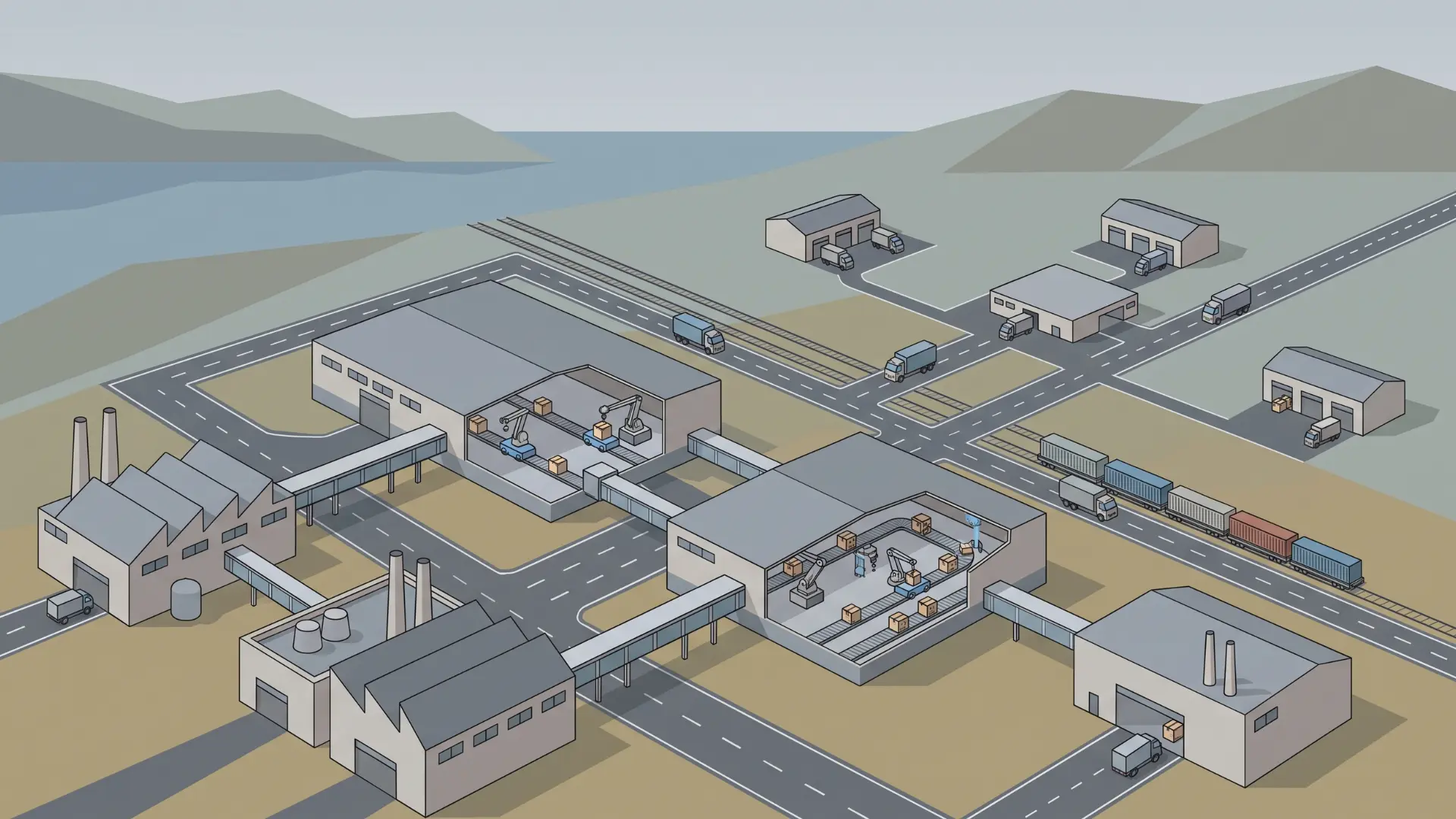
Three pressures appear repeatedly in current supply chain deals: geographic exposure, footprint expansion, and technology integration. Each addresses a cost or risk the buyer cannot easily fix internally.
Reshoring and Nearshoring
Companies are moving manufacturing and logistics closer to their main markets as tariff exposure, long lead times, and dependence on individual countries become harder to ignore.
Buyers are often less focused on replacing an entire global network and more focused on reducing their weakest points, particularly where geographic concentration creates operational or cost risks.
Nippon Express’s roughly CAD $1.8 billion acquisition of Metro Supply Chain Group fits this broader pattern by adding regional capacity and strengthening its North American logistics footprint.
These deals tend to fit strategic operators more naturally than financial roll-ups because the buyer is adding a specific geographic capability to an existing network rather than simply accumulating companies.
Footprint Expansion
Buyers also acquire regional distribution networks to shorten delivery distances and increase local capacity. The value often comes from what the buyer gains immediately: existing facilities, established routes, and local operating knowledge.
Every extra mile between a warehouse and the customer can add cost, time, and another point where delays can develop.
For a last-mile-heavy operator, buying an established regional network can be much faster than building facilities, carrier relationships, and local expertise from scratch.
The challenge is ensuring the acquired network fits the buyer’s existing operations. A strong regional footprint only creates value when systems, processes, and teams can work together after the deal closes.
Technology Integration
Some acquisitions focus less on physical assets and more on missing systems. Technology gaps can often influence buyer decisions, particularly when existing operations lack connected infrastructure.
A company may have warehouses and carriers but lack systems behind warehouse management software. Buyers may target software, tracking tools, and automation platforms to address these gaps.
The issue usually comes down to fragmented data. In many deals, poor system connections create delays and make daily decisions harder.
Buying technology can close these gaps faster than building platforms internally. However, the best results come when systems fit existing workflows.
Strategic Buyers vs. Financial Roll-Up Buyers
Supply chain buyers generally fall into two camps: strategic operators and financial roll-up buyers. Both use acquisitions to grow, but the logic behind the deal is different.
| Buyer Type | What They Buy For | Typical Approach | What Happens After the Deal |
|---|---|---|---|
| Strategic operator | A specific capability or gap in the existing business | May acquire one warehouse network, supplier base, or logistics operation that extends current reach | Usually integrates the target around one core operation |
| Financial roll-up buyer | Scale across a fragmented market | May acquire several smaller businesses built around how freight brokerages typically operate | Typically standardizes multiple businesses under common systems and processes |
| Deal logic | Capability fit | Focuses on how well the target supports the existing business | Integration is usually narrower and more focused |
| Platform logic | Combined value | Bets that several smaller companies will be worth more together than separately | Integration is broader because several operations must be brought into one system |
This is why a mega-merger and a tuck-in acquisition are not simply different-sized versions of the same deal. The buyer’s strategy determines what gets bought, how much integration follows, and where the pressure points are likely to appear.
For strategic buyers, the gains often come from procurement leverage, shared routes, regional coverage, or a specific operating capability. Roll-up buyers are usually betting on standardization across several acquired businesses.
Tuck-in deals are where this difference becomes easiest to see. From the outside, they can look minor, but the operational reason behind the purchase often explains why the buyer moved quickly.
If the model works, it can scale. If it fails, the cost of fixing mistakes is much lower than it would be in a multi-billion-dollar transaction.
The trouble spots differ too. Roll-up buyers face more system mismatches because several businesses may need to move onto the same platform. A strategic buyer absorbing a unionized regional operator may face more labor and culture friction instead.
How Buyers Assess Risk Before Closing
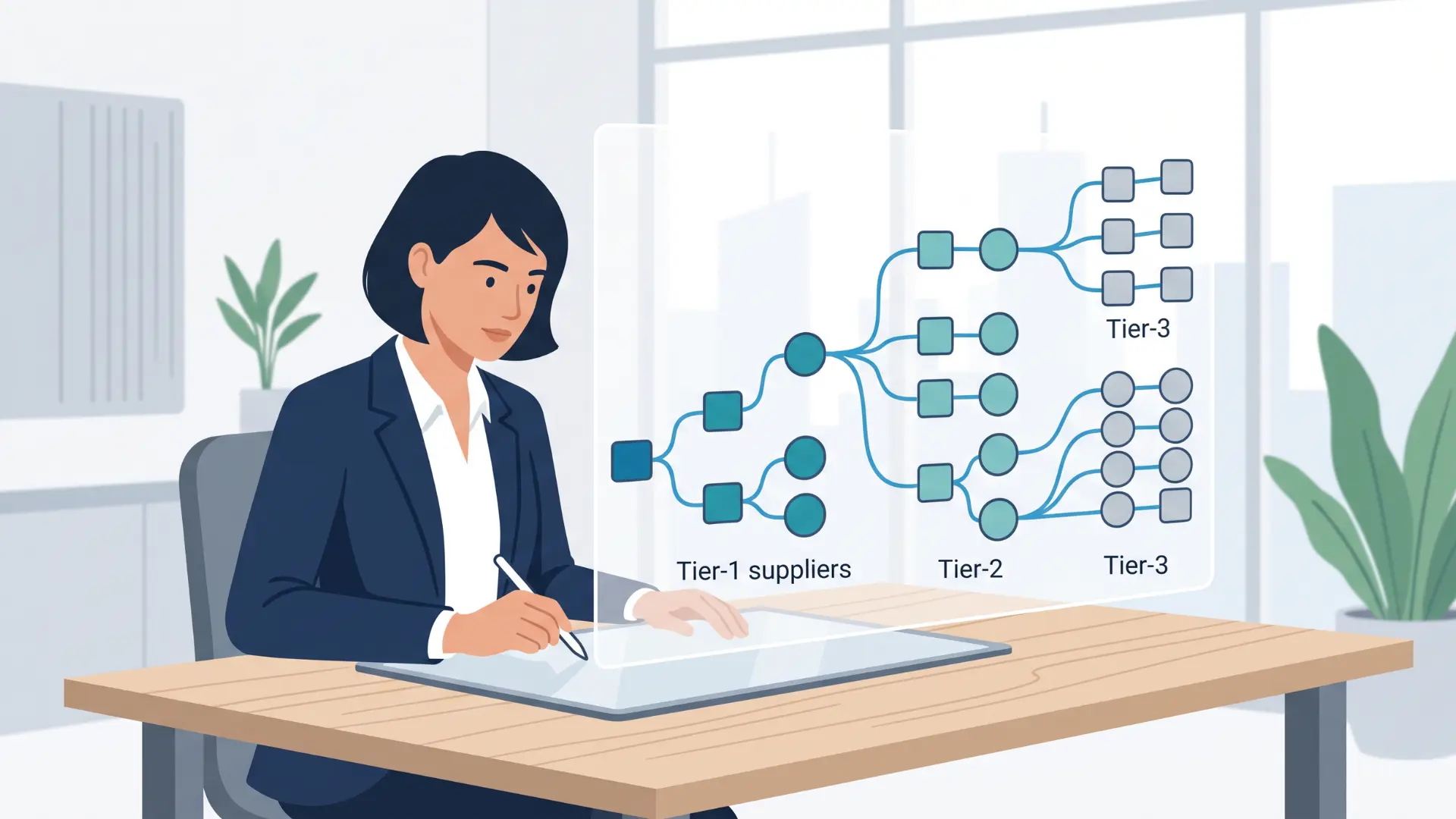
Due diligence should show where supply chain risk actually sits before a transaction closes. Vendor-tier mapping is one of the clearest ways to expose dependencies that might otherwise stay hidden.
| Due Diligence Area | What It Shows | Why It Matters |
|---|---|---|
| Tier-1 suppliers | Direct suppliers the target works with openly | These relationships are usually easier to identify and review |
| Tier-2 and Tier-3 suppliers | Suppliers further upstream in the chain | Hidden dependencies and concentration risks often sit here |
| Supplier concentration | Whether the target depends heavily on one supplier | A single-source supplier for a critical part can create serious operational risk |
| Rushed vendor mapping | A review focused mainly on visible Tier-1 relationships | Deeper dependencies may remain unnoticed until after closing |
| Post-close risk | Reliance on a factory, supplier, or region the buyer did not fully assess | The buyer may inherit disruptions that are harder and more expensive to fix later |
| Deal timeline | How much time is available for deeper supplier checks | Faster closes can lead to shallower vendor mapping and missed risks |
In practice, I’ve found the important question is not just whether due diligence happened. It is how far upstream the buyer actually looked.
A company that stops at Tier-1 suppliers may understand its direct relationships while completely missing the factory, region, or single-source component that the entire operation ultimately depends on.
Those problems become much harder to solve after closing because the buyer has already inherited them.
Where Integration Breaks Down After the Deal
One thing becomes clear after following these deals: closing the transaction does not mean the acquisition is operationally complete.
- System mismatches: Warehouse management, transportation, and reporting platforms may not work together immediately. Teams can end up relying on manual workarounds while data and processes are migrated.
- Operational delays: Technology integration often takes longer than expected. Until systems are connected properly, dispatch, inventory tracking, warehousing, and reporting can remain fragmented across the combined business.
- Role overlap: Both companies may bring similar warehouse, dispatch, management, or back-office positions. Once operations combine, those duplicated responsibilities can lead to restructuring or workforce reductions.
- Unionized workforces: Existing labor agreements and established working practices may not fit neatly into the buyer’s operating model. Poorly handled changes can create resistance and slow the integration process.
- Localized teams: Regional businesses often develop their own processes and management habits over time. Standardizing everything too quickly can disrupt workflows that were already working well locally.
- Culture mismatch: This is often harder to fix than a technical problem. Systems can be replaced, but rebuilding trust between teams usually takes much longer.
If the buyer focuses only on cost savings and ignores how the acquired team actually works, trust can deteriorate quickly.
Integration is not finished when the systems connect. The real test is whether technology, processes, and people work together without creating new delays, friction, or trust issues.
What Changes When You Understand the Buyer-Type Framework
Knowing who’s buying helps explain what the buyer is trying to achieve and where the integration burden is likely to fall.
- Strategic buyer gains: Procurement and route economies can drive the payoff. Combined purchasing power lowers costs, while shared routes can reduce operational waste.
- Roll-up buyer gains: Value comes from standardizing operations across acquired companies using common systems and operating processes.
- Why tuck-in deals come first: Buyers can use smaller acquisitions to establish and test an integration approach before pursuing larger transactions.
- Lower integration risk: A smaller transaction limits the financial and operational cost of mistakes compared with a much larger merger.
- Likely trouble spots: Roll-up buyers face greater system-integration challenges when several acquired businesses operate on different platforms.
A strategic buyer merging a unionized workforce is more likely to encounter labor friction, while a roll-up buyer combining several independent operators may face greater technology and process challenges.
Final Choice
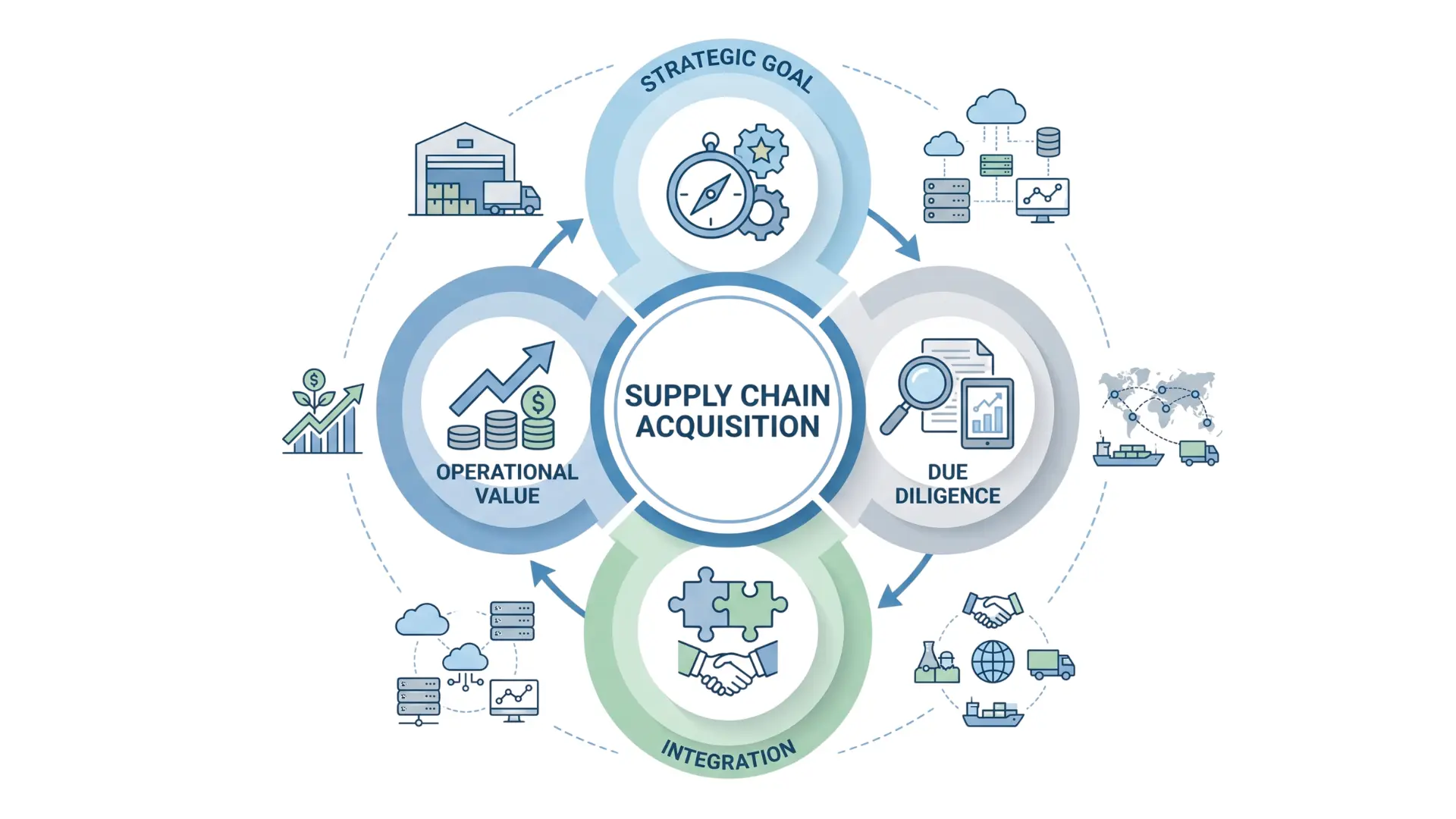
Supply chain deals make more sense when you focus on the buyer’s objective instead of the headline price. I would look at the capability being acquired, the buyer type, the risks uncovered during due diligence, and how well operations work together.
That framework helps you read supply chain acquisitions more clearly because it connects strategy with problems that appear after closing. Geographic expansion, technology, supplier access, and scale can create value, but weak integration can erase it quickly.
If you are evaluating a deal, start with one question: what is the buyer really trying to gain? Then compare that goal with the integration burden. Share your thoughts or check related supply chain topics next.
Frequently Asked Questions
What is acquisition in supply chain?
In the M&A sense, it’s when one company buys another for a specific capability. That could be a warehouse network, a logistics platform, or a supplier base. It’s typically a capability purchase, not a size play.
What are the 4 types of acquisitions?
Supply chain deals generally split into asset purchases, stock purchases, mergers, and tuck-in acquisitions. In practice, buyer type matters more. Strategic operators buy for capability fit. Financial roll-up buyers consolidate fragmented markets like freight brokerage or regional 3PLs.
Do people get laid off during acquisitions?
Workforce reductions are common where roles overlap. Duplicate warehouse, dispatch, and back-office staff are the most exposed. Risk rises further when unionized or localized workforces merge, since culture clashes drive reductions as much as overlap does.
What companies have been bought out recently?
As of 2026, notable deals include CMA CGM’s agreement to acquire FedEx Supply Chain for roughly $1.4 billion. Nippon Express also acquired Metro Supply Chain Group for about CAD $1.8 billion. Figures and deal status should be verified before publishing, since terms and closings can shift.