A single cold night can cause costly camper damage if water is still trapped in the plumbing, especially for a unit left in unheated outdoor storage over winter. That is why proper winter prep matters before temperatures drop below freezing.
If you are learning how to winterize a camper, the job can feel confusing at first because several tanks, lines, drains, and fixtures need attention. I like to handle each part in a clear order so nothing important gets missed.
You can drain the system, protect the water lines with RV antifreeze, check every fixture, and prepare the camper for storage. I also explain where compressed air fits in and what to inspect before calling the job complete.
What Supplies and Prep Are Needed to Winterize a Camper?
Before winterizing a camper, know which parts of the plumbing system can still hold water.
Freshwater lines, faucets, the toilet, shower, water pump, water heater, drains, P-traps, and outside fixtures all need attention, whether you’re working with a factory rig or a self-built truck camper. Some campers may also have a bypass valve, water filter, ice maker, or washer connection.
Start by draining the freshwater, gray, and black tanks. Then open the low-point drains and plumbing fixtures so trapped water can escape. Removing as much water as possible helps prevent antifreeze from becoming diluted later.
Gather your supplies before opening any valves:
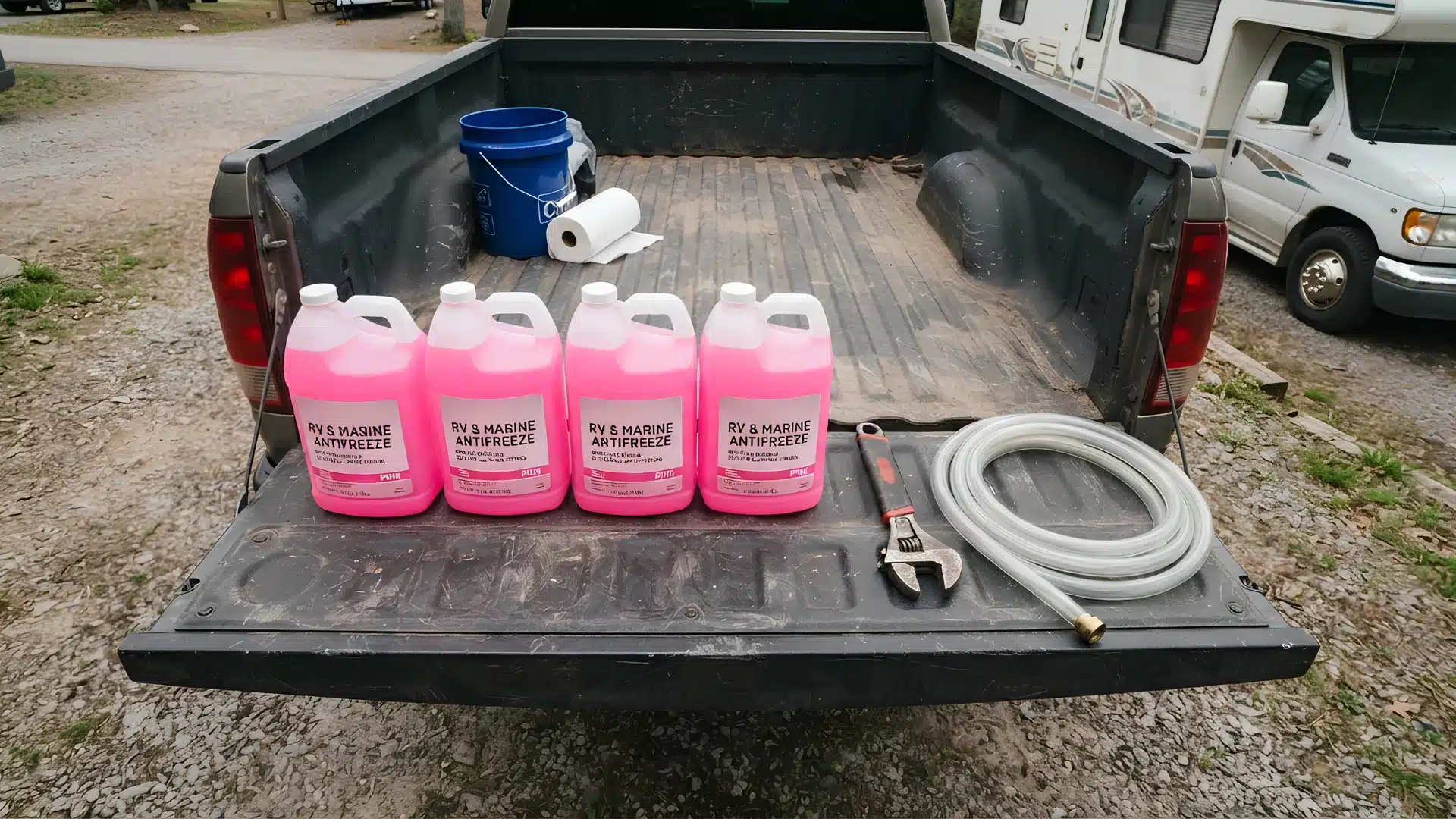
- Non-toxic RV or marine antifreeze
- Basic drain tools or a wrench
- Water heater bypass kit, if required
- Siphon hose or hand pump
- Also locate the water pump, tank drains, low-point drains, and water heater bypass before starting.
Step 1: Drain the Black, Gray, and Freshwater Tanks
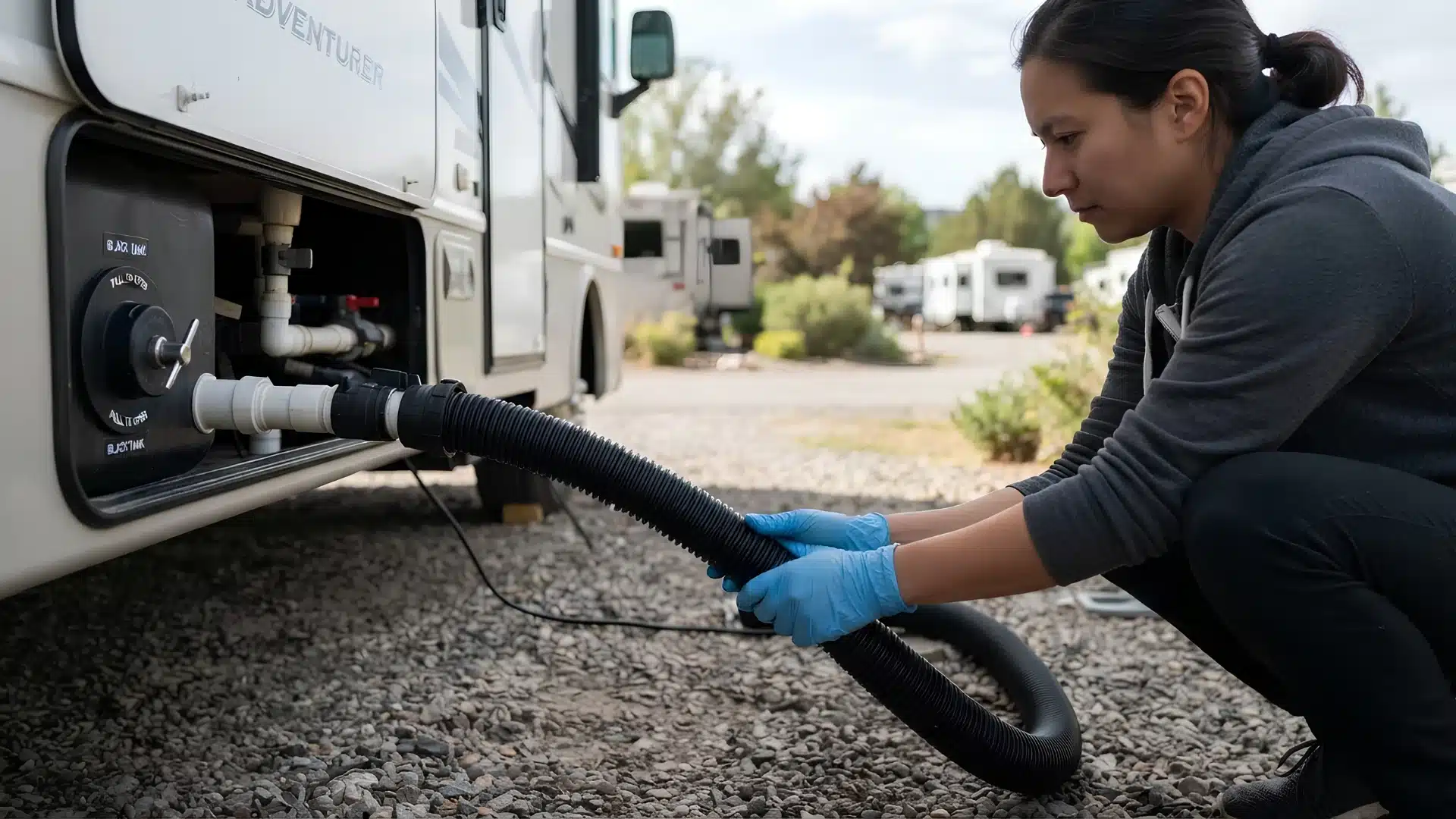
Start with the black tank, then drain the gray tank so its water helps rinse residue through the sewer hose. This keeps the process cleaner and more manageable.
Finish with the freshwater tank using its dedicated drain valve. Working in this order removes most stored water quickly while keeping waste handling more sanitary.
Step 2: Drain the Water Heater Safely
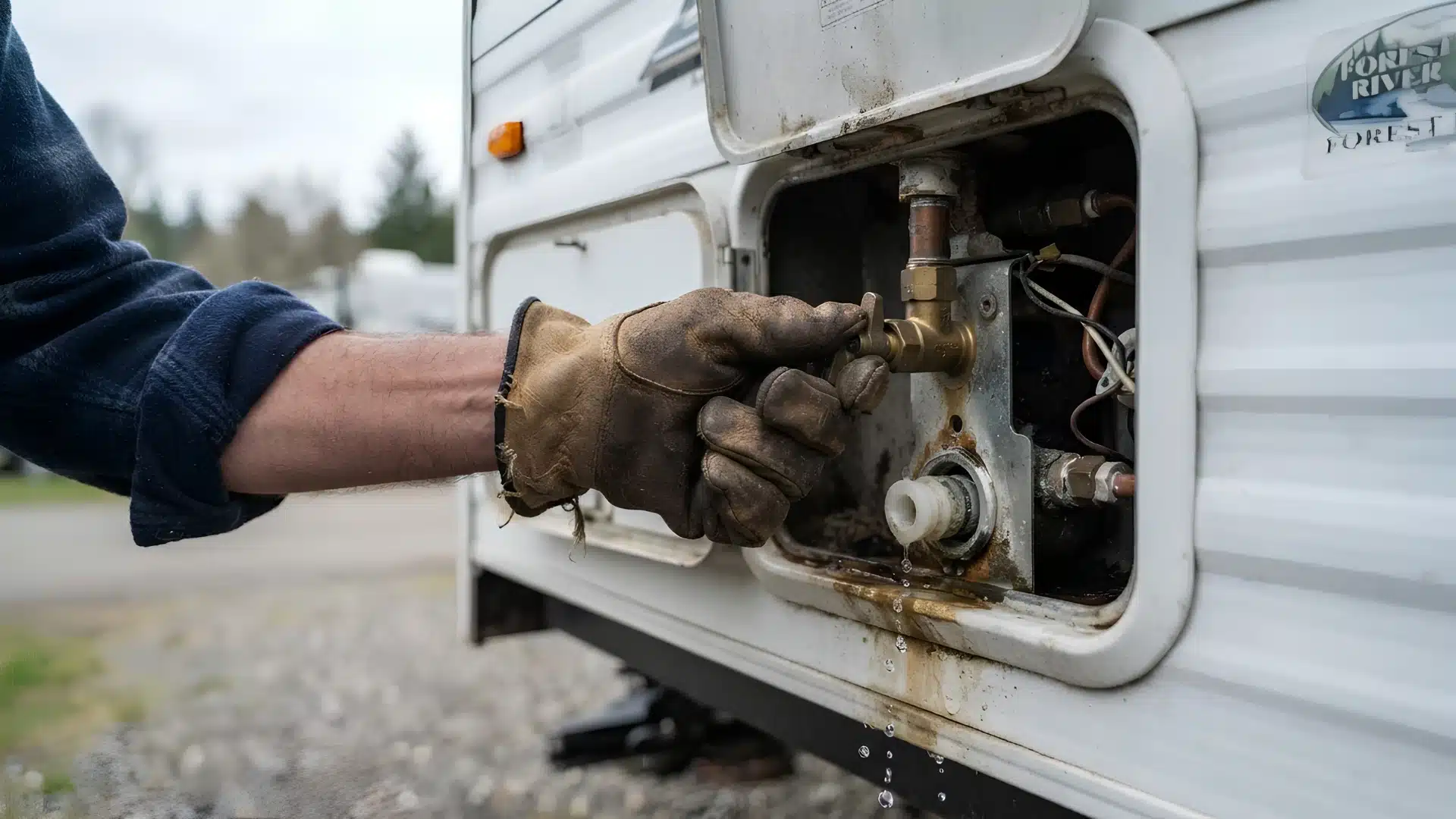
Switch off the water heater and give it plenty of time to cool before draining it. Opening a hot, pressurized tank can cause serious burns.
Release the pressure first, then remove the drain plug and let the tank empty completely. If the plug is hard to find, check your camper owner’s manual.
Step 3: Open Low-Point Drains and Plumbing Fixtures
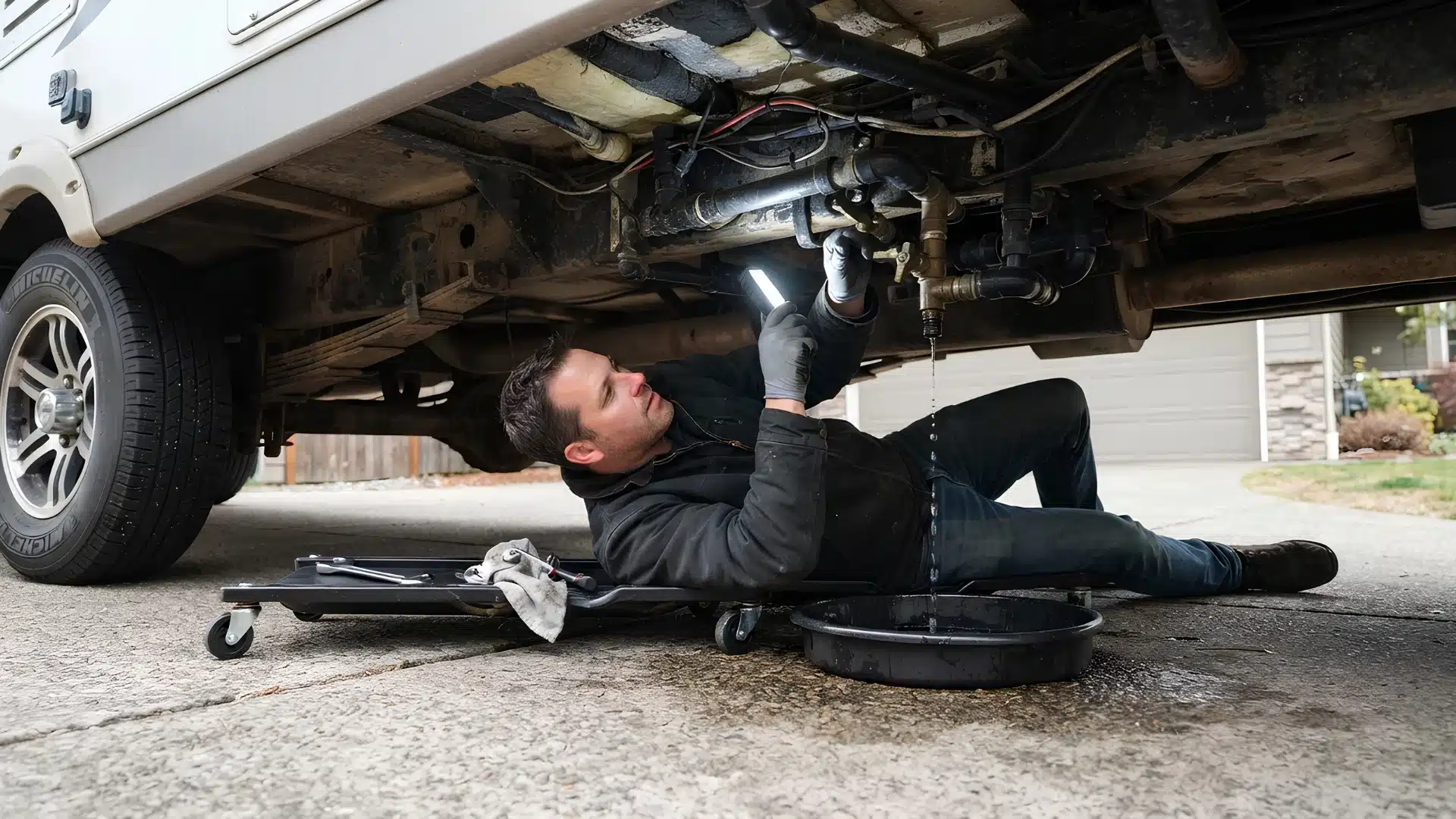
Locate the hot and cold low-point drains, which are often positioned near the camper underbelly. Open both so gravity can pull remaining water from the plumbing.
Open every faucet, shower control, and toilet valve. This helps clear water sitting in sections that the tank drains cannot reach on their own.
How Do You Winterize a Travel Trailer?
Learning how to winterize a travel trailer comes down to the same basic winterization process used for most towable campers. The goal is to remove as much water as possible from the plumbing system, then protect the remaining lines with RV antifreeze before freezing temperatures arrive.
Start by draining the fresh, gray, and black tanks, then empty the water heater and open the low-point drains. Once the system is cleared, bypass the water heater and run RV antifreeze through the plumbing until it reaches every faucet, toilet, shower, and other water fixture.
The exact setup can vary between travel trailers, fifth wheels, and pop-ups, and it can also depend on whether the unit sits in indoor vehicle storage or stays parked outside through winter.
Drain locations, bypass valves, and fixture counts depend on the floor plan and manufacturer, so check your owner’s manual before starting to confirm where each component is located.
How Do You Protect the Camper’s Water Lines With RV Antifreeze?
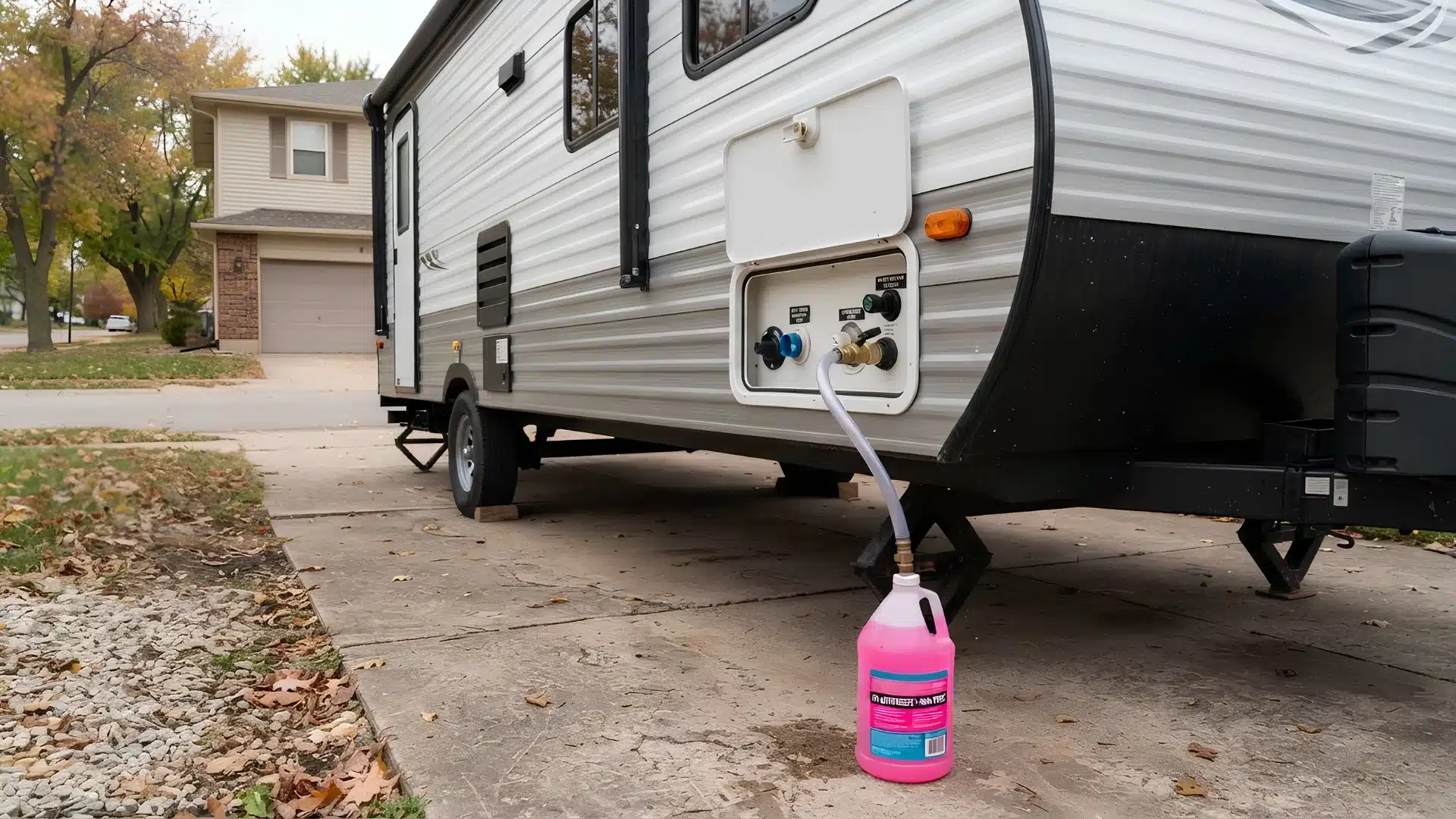
Once the water is drained, bypass the water heater and start pulling RV antifreeze through the plumbing. This is where it pays to slow down, because any line you miss can still hold water and freeze. Always use non-toxic RV or marine antifreeze, never automotive antifreeze.
| Step | What to Do |
|---|---|
| Bypass the water heater | Set the bypass valve so antifreeze skips the tank and moves through the plumbing lines. |
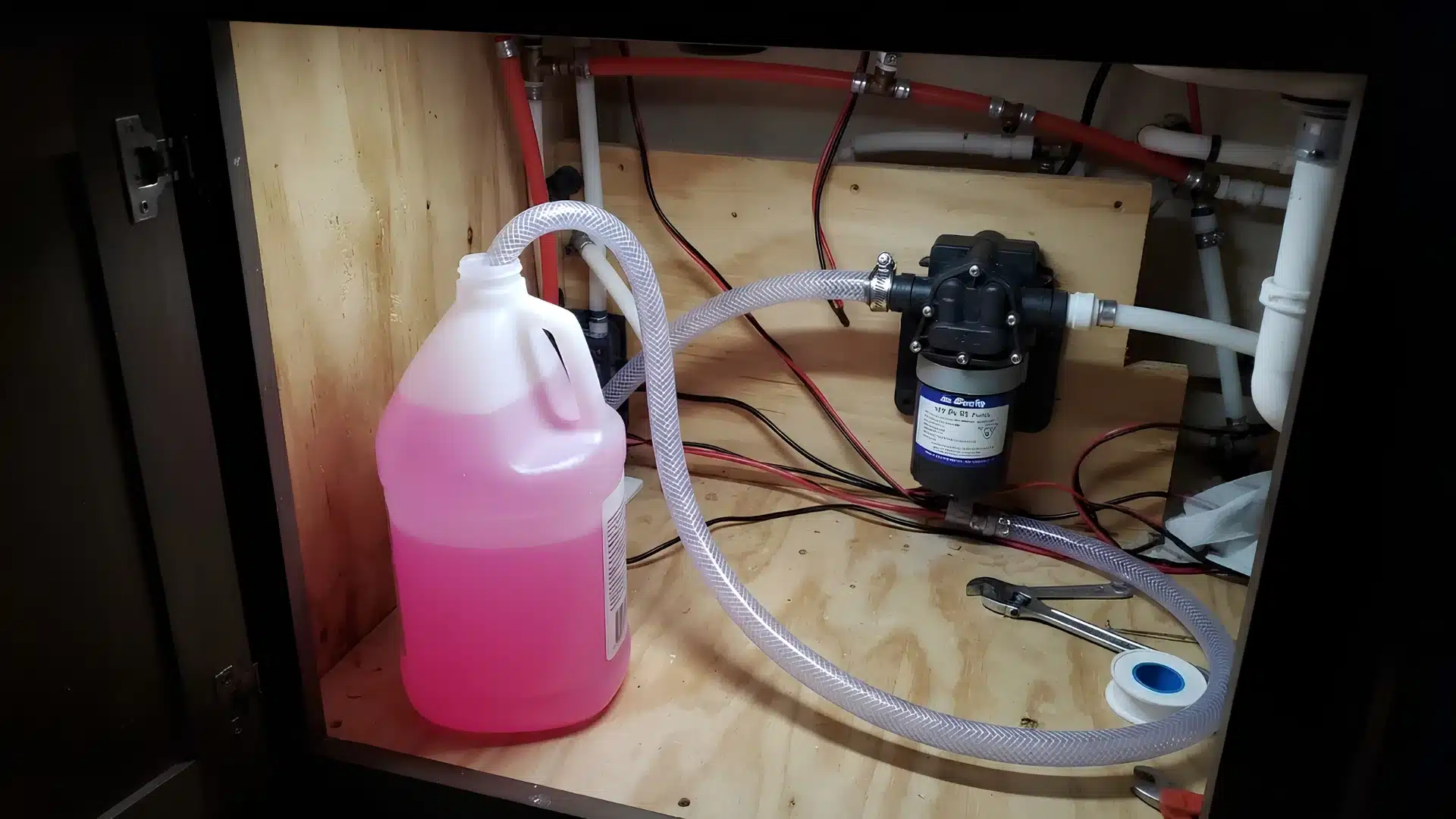
| Connect antifreeze | Attach a siphon hose to the pump or use the built-in winterization inlet. Keep the hose submerged. |
| Run every fixture | Open hot and cold taps separately until solid pink antifreeze appears at sinks, showers, and outdoor fixtures. |
| Protect toilet and drains. | Flush until pink appears, then pour antifreeze into every sink and shower drain. |
Take your time and check every branch before calling the job finished.
Can You Winterize a Camper With Compressed Air Instead?
Yes, you can winterize some campers by using regulated compressed air to push leftover water out of the plumbing. You will need the right blow-out fitting and a safe pressure level. Some owners prefer this method because it keeps antifreeze out of the freshwater supply lines and makes spring cleanup a little easier.
That said, compressed air does not cover the entire winterizing process. Please still drain the tanks, deal with the water heater, protect the toilet, and pour RV antifreeze into the P-traps. Those areas can still hold enough water to freeze and cause damage.
Before you choose this method, check your camper’s owner’s manual for pressure limits and specific instructions. Every plumbing system is a little different, and too much pressure can damage fittings, seals, or connections. If your manufacturer allows it, the blow-out method can be a clean and practical option.
How Do You Check That a Camper Is Fully Winterized?
Before you close everything up, walk back through the whole system and confirm nothing was missed. One untreated branch is usually the reason a fitting cracks over winter, not a failure of the method itself.
Plumbing Winterization Checklist
Run through this list before you call the job done:
- Freshwater and holding tanks are fully drained
- Water heater is drained, cooled, and correctly bypassed
- Every hot and cold fixture runs solid pink antifreeze
- Toilet and all P-traps show antifreeze present
- Exterior shower, spray ports, and any water-connected appliances are checked
- Water filters are removed or bypassed per manufacturer instructions
Checking each item takes ten extra minutes, and it’s the difference between a smooth spring startup and a surprise repair bill.
Prepare the Camper for Winter Storage
With the plumbing handled, finish the rest of your storage prep. Remove all food to avoid attracting pests over the winter. Manage your battery according to your manufacturer’s recommendations, whether that means removing it, trickle charging it, or disconnecting it. Leave interior cabinets and closets cracked open so moisture doesn’t build up while it sits.
Wrapping Up
Winterizing a camper comes down to removing trapped water and protecting every part of the plumbing before freezing weather arrives.
You need to drain the tanks, empty and bypass the water heater, open the low-point drains, and protect the lines, fixtures, toilet, and P-traps. I also recommend checking exterior water connections, filters, and storage prep before you finish.
Knowing how to winterize a camper helps reduce the risk of cracked fittings, damaged lines, and costly spring repairs.
Take a few extra minutes for one final plumbing check rather than rushing the last steps. Then store your camper with confidence, and share any winterizing tips or lessons that have helped you.
Frequently Asked Questions
How Many Gallons of Antifreeze Does It Take to Winterize a Camper?
Most campers need a few gallons of non-toxic RV or marine antifreeze, but the exact amount depends on your plumbing length, fixture count, and whether the water heater is properly bypassed. Keep extra on hand so the pump never runs dry mid-fixture.
What Do You Put in a Camper to Winterize It?
Use non-toxic RV or marine antifreeze in the plumbing system, along with a siphon hose, blow-out adapter, or basic drain tools depending on your method. Never substitute automotive engine antifreeze in your camper’s freshwater lines.
When Should You Winterize a Camper?
Winterize before your camper faces freezing temperatures while water is still in the system. Don’t wait for a hard freeze warning. Trapped water expands as it freezes, and that’s what cracks fittings, valves, and pumps.
Do You Really Need to Winterize a Camper?
Suppose your camper holds water and will see freezing temperatures; yes. Parking it for the season doesn’t remove water trapped in lines, valves, pumps, and traps. Campers stored somewhere reliably heated may have different needs, so check your manufacturer’s guidance either way.