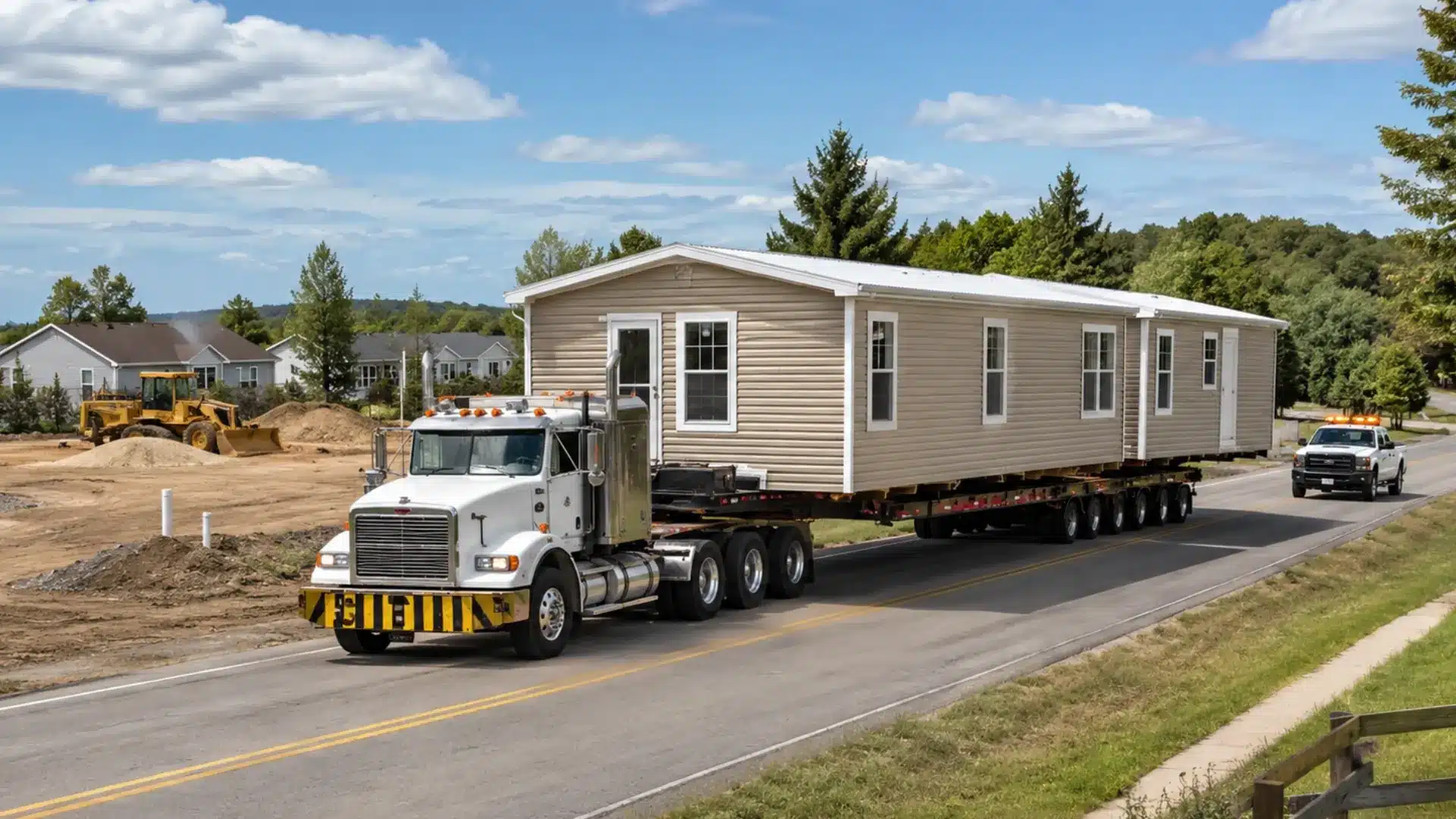
Moving a mobile home can seem straightforward until the smaller costs start adding up around the main transport fee. I’ve seen people focus on the tow price first, then get caught off guard by everything that comes with it.
If you are wondering how much does it cost to move a mobile home, the answer depends on far more than mileage alone. A few details can shift the final bill by thousands.
Here, I’ll break down realistic price ranges, explain where the money usually goes, and show which costs deserve the closest attention. You’ll also see how to compare quotes properly and spot charges that are easy to miss.
What Does It Cost to Move a Mobile Home?
Moving a mobile home costs anywhere from a few thousand dollars to over $20,000. Most homeowners pay around $9,000 on average.
That number changes quickly based on distance, home size, and the type of service you choose. A short local move for a small single-wide costs far less.
A cross-country haul for a double-wide or triple-wide home costs much more. The first number you see rarely covers everything.
Permits, teardown, setup, and utility work often get added on top of the base moving fee, since manufactured home installation costs can rival the transport bill itself. Treat the total as a full relocation expense, not just a tow charge.
That way, you can plan for every step, from pickup to final setup at the new site.
Mobile Home Moving Costs by Size, Distance, and Service
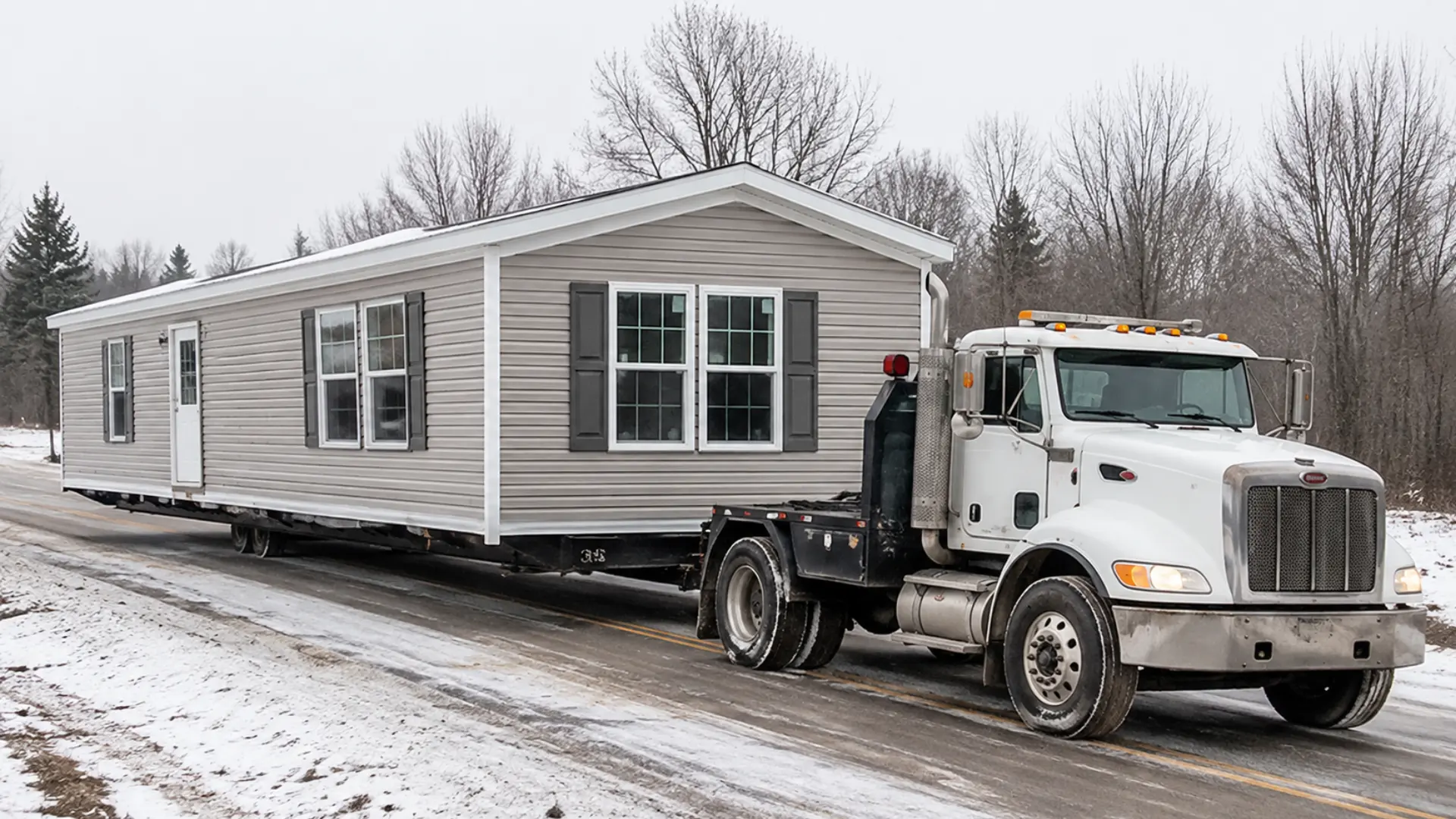
From my experience, moving costs vary widely based on home width, travel mileage, service level, permits, and the extent of preparation the mover handles for you.
By Home Size
Your home’s width determines how many transport sections, trailers, crew members, and setup steps are needed during the entire move process.
- Single-wide: Usually $1,000 to $8,000, with lower costs for short transport-only moves.
- Double-wide: Typically $2,000 to $15,000, depending on distance and service level, because both sections require separate hauling and handling
- Triple-wide: Transport-only moves may start around $3,000 to $5,000, while full-service moves for larger triple-wide floor plans can reach roughly $12,000 to $25,000 or more.
- Larger homes: Expect higher permit, escort, equipment, and setup costs as the number of transported sections increases.
By Distance and Service Type
Distance affects fuel, driver time, permits, escorts, and mileage charges, while service level determines how much labor is included in your overall quote.
- Under 50 miles, transport only: A single-wide may cost roughly $1,000 to $5,000.
- Under 50 miles, full service: Teardown, transport, and setup can push costs to $4,000 to $13,000.
- Over 50 miles: Longer moves commonly range from $5,000 to $30,000 or more.
- Interstate moves: Additional permits, route planning, escorts, and state requirements can significantly increase the final bill.
Use these figures as a budgeting range, not a final quote. Even homes that fall into the same category can end up with noticeably different totals
Transport-Only vs. Full-Service Moving Costs
| Service Detail | Transport-Only | Full-Service |
|---|---|---|
| Home transport | Included | Included |
| Teardown at old site | Not included | Included |
| Setup at new site | Not included | Included |
| Utility hookups | Usually not included | Commonly included |
| Site preparation | Usually arranged separately | May be included or coordinated |
| Number of contractors | You may need multiple crews | Usually handled by one company |
| Best for | Homes already prepared for transport and placement | Owners wanting a more complete moving service |
| Main drawback | Separate services can increase total costs | Higher upfront moving quote |
| DIY towing | Depends on state law and permit requirements | Not applicable |
The cheaper option on paper is not always the cheaper move overall. What matters is how much work remains after the home reaches its new location.
What Factors Can Increase the Cost of Moving a Mobile Home?
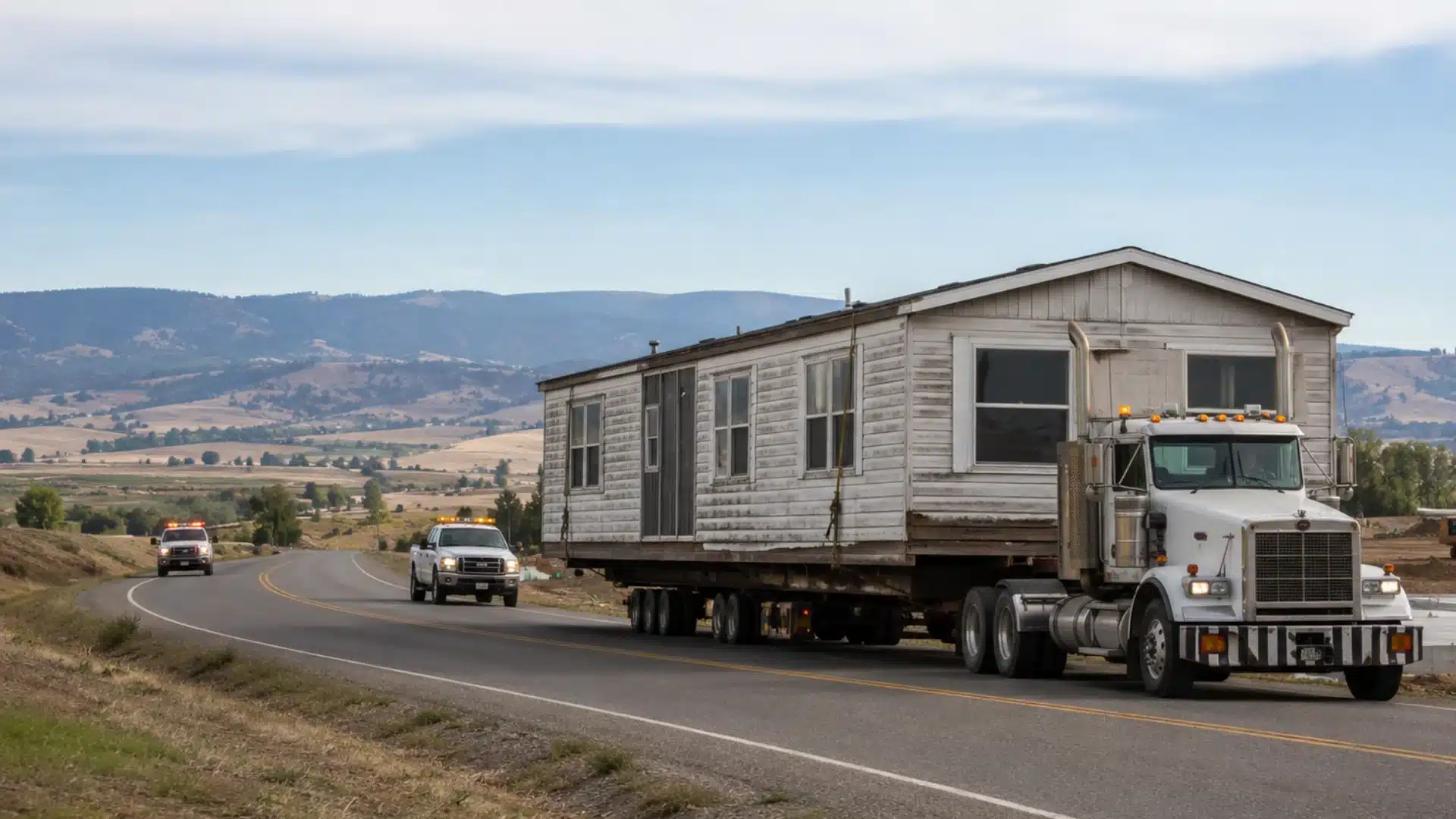
Your initial moving estimate can change quickly once you add permits, the home’s condition, distance, site preparation, escorts, and other costs specific to the move.
1. Home Age and HUD Eligibility
Homes built before June 15, 1976 predate the federal HUD Manufactured Home Construction and Safety Standards, but that does not create a nationwide ban on moving them.
State laws, local ordinances, park policies, the home’s condition, and mover requirements determine whether an older home can be relocated. Check the manufacturing date and local rules before booking the move
2. Home Condition And Transport Readiness
The condition of the home can affect both the preparation work and the final moving cost. Axles, tires, structural issues, access problems, and other repairs may need attention before hauling can begin.
I’ve found that this is easy to overlook when getting an initial quote. A home may look ready to move, but problems with the running gear or access can add work once the mover checks it in person.
Inspections, route obstacles, and preparation needs can also add to the cost, so these should be checked before the move is scheduled.
3. Permits, Mileage, and Escort Vehicle Fees
Mileage charges are only part of transportation costs. State oversize or manufactured-home permits typically run $10 to $100 for a basic single-trip permit, though several states charge $200 to $500 or more depending on the home’s width and weight.
An 80-mile double-wide move can become considerably more expensive once you factor in mileage, wide-load escorts, state permits, and additional jurisdictional fees.
4. Foundation and Site Prep at the New Location
Raw or unfinished land may require grading, concrete work, utility connections, septic installation, or clearing before you can place your mobile home.
Depending on site conditions, preparation can add $2,500 to $12,000, making it one of the most important expenses to budget for in advance.
These additional costs explain why two similar mobile home moves can receive very different quotes, even when their home sizes and distances appear nearly identical.
Can You Move a Mobile Home Yourself, or Do You Need a Licensed Mover?
Most states require a licensed, insured mobile home transporter to handle the move, not a general towing company.
A few states, like Texas, let the titled owner pull their own permit and tow the home themselves, but only with strict liability insurance and the right towing vehicle.
That option is rare, since one mistake can cause serious road damage with no coverage behind it.
Before hiring anyone, confirm the mover carries an active USDOT number and proper insurance.
Skipping this step is risky. An unlicensed hauler can void your home’s insurance and leave you responsible for any damage that happens during transport, so always ask for proof before booking.
How Do You Get an Accurate Quote and Lower the Cost?

Once you have a rough budget, the next job is making sure the quotes you receive can actually be compared fairly
- Get Multiple Quotes: Request estimates from at least two or three licensed movers so you can compare pricing, services, permits, and route-specific charges.
- Ask for Itemized Pricing: Make sure each quote separates transport, teardown, setup, permits, escorts, mileage, and other fees rather than showing a single total.
- Bundle Moving Services: Hiring a single company for teardown, transport, and setup can reduce coordination costs and simplify responsibility throughout the move.
- Check Escort Requirements: Confirm whether your home’s width legally requires an escort vehicle before paying for a service you may not need.
- Compare Possible Routes: A slightly longer route within one state may cost less than crossing multiple jurisdictions, each with separate permit requirements and fees.
- Focus Beyond Tow Rates: Bigger savings often come from reducing permits, escorts, and separate contractors rather than negotiating only the basic transportation rate.
Comparing detailed quotes and controlling optional expenses can help you lower the total cost without cutting essential services, legal requirements, or necessary site preparation.
Conclusion
By now, you should have a clearer idea of what can shape the total cost of moving a mobile home. You also know why size, distance, preparation, and added services can change the final price so much.
From what I’ve seen, the biggest mistake is budgeting around one advertised figure instead of the full move.
That is why the answer to how much does it cost to move a mobile home is always specific to your situation. Before deciding, get itemized quotes from two or three licensed movers.
Compare what each price includes, then choose the option that fits your actual move and budget.
Frequently Asked Questions
What’s the cheapest way to move a mobile home?
The cheapest approach is usually a short, transport-only tow for a single-wide home under 50 miles. Pair it with quotes from at least two licensed haulers. Skipping optional escort vehicles when your home’s width allows it, and avoiding multi-state routes, also keeps permit costs down.
What is the oldest a mobile home can be and still be moved?
Homes built before June 15, 1976 generally don’t meet HUD safety standards. That means many movers, states, and parks will restrict or refuse the move entirely. Always confirm your home’s build date and local rules before booking a hauler.
Is it cheaper to move a mobile home or sell it?
For short local moves, moving is often cheaper than buying a comparable used home elsewhere. For long-distance moves or for older homes subject to HUD restrictions, selling in place usually costs less. Buying locally at the destination often beats a full-service long haul.