Cheap Furniture From China: Low Quality or the Best Value You’re Missing?
Since entering the UK luxury home industry in 1976, Timothy Oulton has expanded to over 50 brand showrooms worldwide. After attending the Canton Fair in 2004, he chose to establish a factory in Foshan without hesitation.
Rather than outsourcing or OEM production, he—like Homebridge Furniture—built everything from the ground up, with his own craftsmen team and a complete production system.
Today, Timothy Oulton showrooms can be found in high-end home markets such as New York, Los Angeles, and Hong Kong, and the brand is also featured in Harrods, one of the world’s most iconic luxury retail destinations.
His attention to detail is exacting: handcrafted production, carefully selected materials, and the revival of vintage techniques—even down to the aging of individual rivets.
And these demanding standards are ultimately realized through production in China.

Timothy Oulton’s design hub in Foshan
The shift of furniture production to China has become a common trend among global brands.
After visiting China, IShowSpeed, who has over 52 million followers, remarked: “China is so advanced!”
Not only him—more than 5 million viewers helped push #RealChina to trending on TikTok through livestreams.
In this “Real China,” what’s advanced goes beyond what he saw—it also includes China’s furniture industry.
Major hotel groups like Hilton and Marriott also source large volumes of furniture from China.
The former has over 250 million members and has been ranked the top hotel franchise by Entrepreneur for 17 consecutive years; the latter operates more than 8,000 hotels across 139 countries, making it the largest hotel group in the world.
From New York Marriott Marquis in Times Square to KROMO Bangkok, much of the furniture used in these hotels comes from China’s supply chain.

Furniture used in Marriott hotels
Many European furniture brands don’t emphasize it, but part of their production still takes place in China—including high-end brands like Minotti, B&B Italia, and Fendi Casa.
In fact, the furniture you buy in local stores may also come from factories in China.
The same applies to mass-market retailers. Around 20% of IKEA products come from China, making it one of its largest sourcing regions. MUJI works with a large number of factories in China, and Nitori also relies heavily on China’s supply chain.
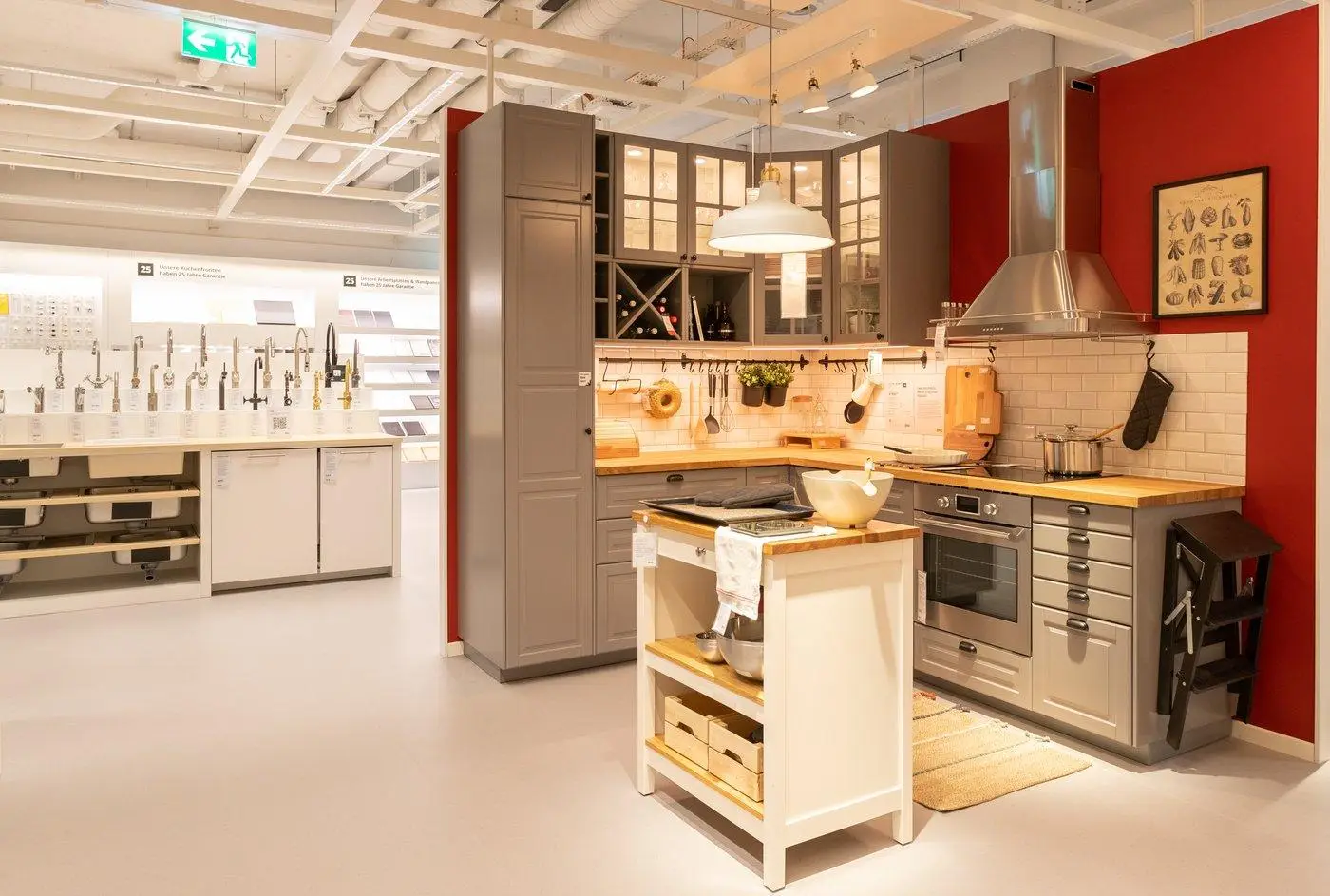
Furniture displayed in IKEA stores
Interestingly, while Jeffrey Epstein spared no expense when bribing politicians, he still chose Foshan when sourcing furniture.
According to documents released by the U.S. Department of Justice in 2026, he purchased sofa sets, dining tables, lounge chairs, and building materials from suppliers in Foshan. Within his document records, the keyword “Foshan” appeared 126 times, while “Guangzhou” appeared 71 times.
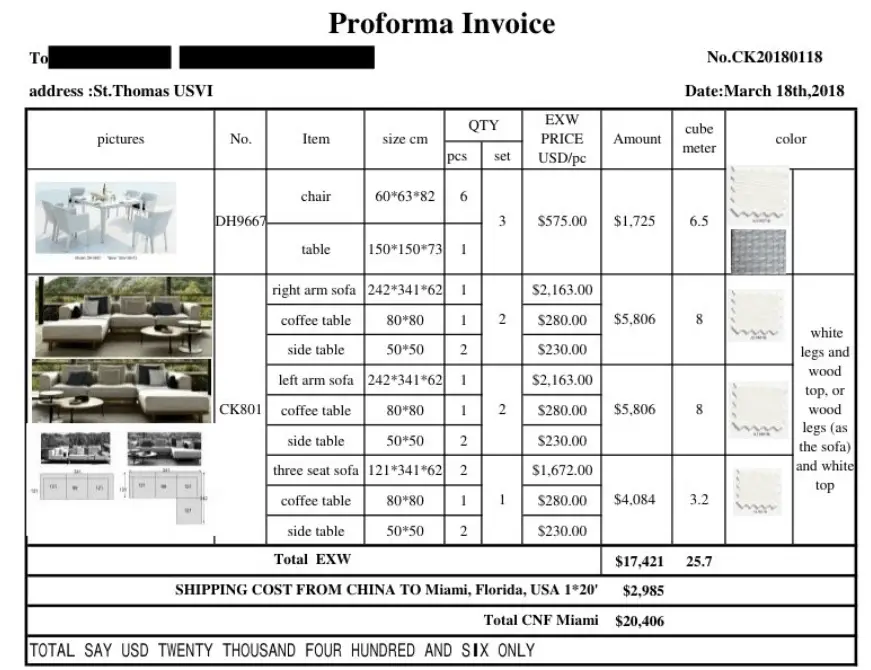
Jeffrey Epstein’s furniture procurement list from Foshan
IShowSpeed repeatedly remarked, “This is way different than I thought.”
Unlike the image of China often portrayed in media as poor, outdated, or low-end, today’s manufacturing landscape has evolved significantly.
As discussions around Chinese participants reappear at the Salone del Mobile, and some international brands set higher barriers for Chinese designers, this cannot be seen simply as concern over imitation. It also reflects a growing awareness of China’s manufacturing capabilities.
“Morning in Milan, afternoon in Foshan” is not just a saying.
Within a very short timeframe, Foshan can translate design trends into finished products—an execution speed that is reshaping the pace of the industry.
The idea that “Chinese furniture is high-end” still surprises many people.
For a long time, the assumption “Made in China = low quality” has been widely accepted.
This perception didn’t come out of nowhere. In the early days, Chinese furniture entered the market mainly through price advantage. At a time when European brands dominated the high-end segment, this was almost the only entry point.
But decades later, that phase of competing on low cost has largely become history.
Today, Tammy Carmona has been sourcing high-end furniture from Guangdong, China for over 15 years. She contributed to the iconic wedding scene in The Twilight Saga and has served as a design consultant for luxury homes owned by celebrities such as Paris Hilton. She openly noted, “Manufacturing in Guangdong is capable of delivering a level of luxury comparable to international standards.”

Tammy Carmona sourcing massage chairs in Guangzhou for U.S. hotels
In reality, many people question “Made in China” while paying several times more for similar products—simply because they come with different brands and retail channels.
At the same price point, it makes more sense to invest in materials, design, and craftsmanship rather than brand markups.
In Foshan, just the town of Danzao is home to around 6,700 hardware manufacturers. Louvre International Furniture Exhibition Center has been rated as a national 4A tourist attraction, and the total showroom space in the area exceeds 3 million square meters—roughly the size of 420 football fields.
The saying “If you can’t find it in Foshan, you’ll hardly find it elsewhere” is not an exaggeration.
China is the world’s largest furniture exporter, accounting for around 40% of global exports—more than the combined total of the next five countries.

Louvre Furniture Showroom in Foshan, China
Source high-quality furniture directly from China
Instead of paying several times more for furniture in local stores—often made in Chinese factories—it makes more sense to source directly from the origin.
This not only offers better value, but also provides a wider range of choices and more flexibility for customization.
However, cross-border sourcing is not simple. Many buyers run into issues: some sellers claim to be factories but are actually middlemen; others promise high quality but cut corners during production; some showcase polished images, while the actual products fall short.
Logistics is another practical challenge. Furniture is not like standard goods—it involves packaging, shipping, customs clearance, and delivery, and problems can occur at any stage. Items may be damaged in transit, too large to fit into elevators, or left without proper after-sales support.
Without a team to manage these details, the risk of running into problems is very high.
That’s why many buyers no longer choose to deal with factories on their own.
Instead, they prefer to rely on professional teams to select suppliers, manage production details, and ensure smooth delivery to their homes.
The key to sourcing furniture from China is not whether you can find suppliers, but whether the complex and often opaque process in between can be managed effectively.
Homebridge was built around this need. We don’t just assist with orders—we support every step, including communication, design, product selection, production, logistics, and after-sales, making the process more transparent and easier to follow.
“Handling sourcing, shipping, and customs on your own is extremely complex,” said Joe, founder of Homebridge. “Most consumers can’t clearly identify materials like top-grain leather or see the internal structure of a sofa, making it difficult to judge quality. On top of that, managing logistics, preparing customs documents, and dealing with maintenance or repairs requires significant time and effort.”
As a result, integrated services are becoming more popular. With Homebridge, for example, the process becomes much more straightforward, allowing buyers to focus on choosing what they like without worrying about the rest. For many first-time buyers sourcing from China, the appeal goes beyond price—it’s about certainty, efficiency, and peace of mind.

Homebridge team photo with visiting clients