If you’ve looked into freight transportation, you’ve probably seen the term dry van shipping everywhere. It shows up in trucking discussions, logistics guides, and freight quotes.
But the phrase can feel unclear at first. Some people think “dry” means moisture control, while others assume it’s just another name for a box truck.
Many people know it’s common without fully understanding why. The reality is simpler and more practical.
Dry vans are standard enclosed trailers used to move most palletized freight. They protect goods from weather, theft, and road debris during transport.
In this guide, you’ll learn how dry van shipping works and what freight it carries. You’ll also see why it became the most widely used trailer in trucking.
What is Dry Van Shipping?
Dry van shipping refers to transporting goods in a fully enclosed semi-trailer. The trailer protects cargo from weather, dirt, and external damage as it moves between warehouses, distribution centers, or stores.
The word “dry” simply means the trailer does not control temperature. It isn’t refrigerated, and it doesn’t freeze cargo. Instead, it’s built for freight that can travel safely at normal outdoor temperatures.
In practice, dry vans are the default option for trucking freight across the country. If a product doesn’t require refrigeration and isn’t oversized, there’s a strong chance it moves in a dry van.
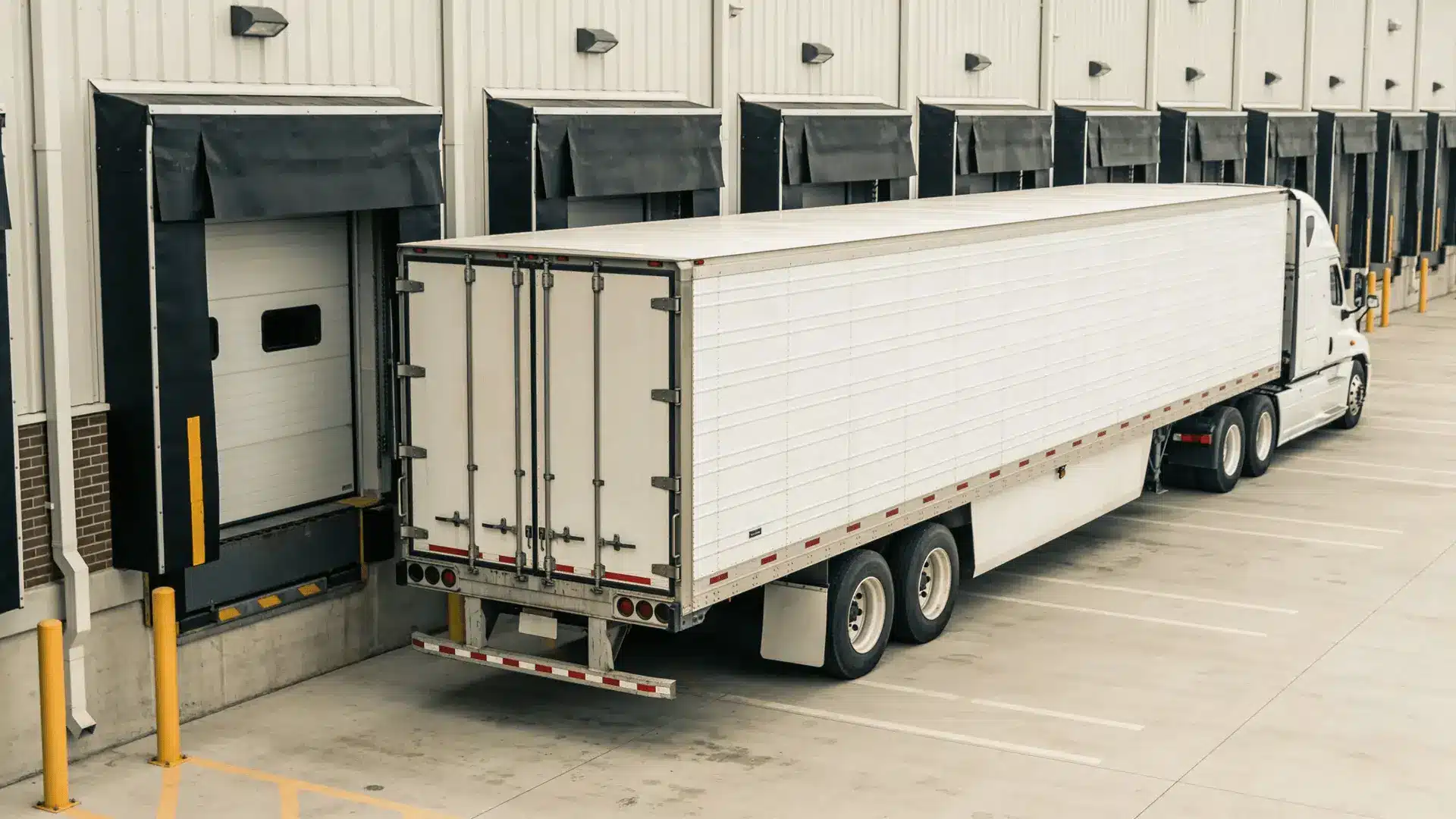
A standard dry van trailer attaches to a tractor unit, creating what people commonly call a semi-truck. The tractor provides the engine and steering, while the trailer provides the enclosed cargo space.
Most long-distance freight in industries like retail, manufacturing, and e-commerce travels this way because the setup is simple, standardized, and widely available.
Dry Van Shipping Quick Facts
Before looking deeper into how these trailers work, it helps to see the basic specifications. These measurements explain why dry vans fit so well into modern freight systems.
Typical Trailer Length and Dimensions
Most dry van trailers on highways today are either:
- 48 feet long
- 53 feet long
The 53-foot trailer is the most common for long-haul freight in North America. The typical exterior width is about 8.5 feet, with slightly less usable width inside because of wall thickness.
Interior height usually falls around 8 to 9 feet, depending on the trailer design. These dimensions became standard because they fit highway regulations while still maximizing cargo space.
Maximum Weight Capacity
Dry vans can usually carry up to about 45,000 pounds of freight.
That number represents an upper limit rather than a guaranteed load size. Weight must be distributed carefully across the trailer’s axles.
If the load is uneven, the truck may exceed legal axle limits even when the total weight remains below the maximum.
Because of that, experienced loaders pay attention not only to total weight but also to how freight sits inside the trailer.
Pallet Capacity and Interior Space
A typical 53-foot dry van can hold about 26 standard pallets.
This works because most pallets in North America follow standardized sizes. When arranged efficiently, the trailer interior fits them like a puzzle.
Capacity still varies depending on:
- pallet size
- product shape
- stacking height
- packaging stability
For example, lightweight retail goods might stack two pallets high, increasing capacity. Heavy industrial parts often require single-layer loading.
Temperature Control Limitations
Dry vans do not regulate temperature.
That means they cannot safely transport goods that must stay cold or frozen during transit. Products like fresh meat, dairy, or frozen food require refrigerated trailers instead.
Dry vans also lack humidity control. They keep the weather out, but they do not regulate internal moisture levels.
What a Dry Van Trailer Looks Like and How It Works
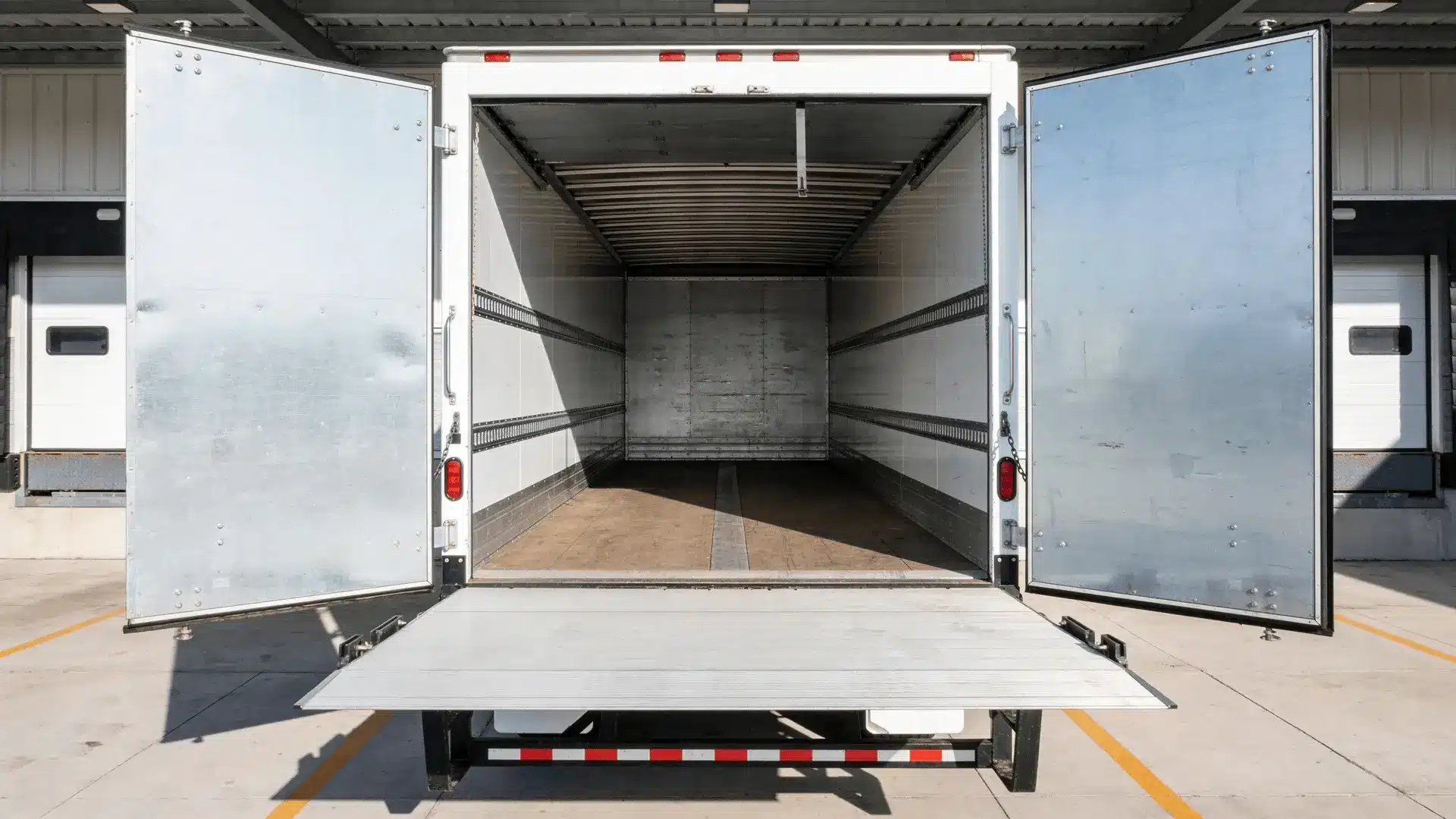
Dry vans look simple from the outside, but their design supports efficient freight handling across the entire logistics system.
Enclosed Trailer Construction
A dry van trailer is essentially a long rectangular box mounted on wheels.
Its structure usually includes:
- aluminum or composite side panels
- reinforced flooring
- a rigid roof
- steel framing for durability
The walls and roof keep out rain, dust, and debris. Inside, the trailer floor is strong enough to support forklifts and heavy pallets.
Because the cargo space is sealed from the outside, goods remain protected throughout the trip.
Rear Door Access and Loading Design
Most dry vans load from the rear using large swing-open doors.
These doors allow forklifts to move pallets directly into the trailer from a warehouse loading dock. Once the trailer is full, the doors close and seal the cargo space.
Some trailers also support side loading, but rear loading is the most common setup because it works best with warehouse dock systems.
How Dry Vans Connect to Semi-Trucks
Dry van trailers connect to a tractor using a coupling device called a fifth wheel.
This connection allows the trailer to pivot while the truck turns. It also distributes weight between the tractor and trailer axles.
Because trailers detach easily, trucking companies can swap trailers quickly. One driver may drop off a loaded trailer and pick up another without waiting for unloading.
This flexibility helps freight move faster across long distances.
How Dock Loading Systems Work
Dry vans are designed to align closely with warehouse loading docks.
When the truck backs into a dock door, the trailer floor sits level with the warehouse floor. Forklifts can then drive straight into the trailer to load or unload pallets.
This compatibility with dock infrastructure is one of the main reasons dry vans became the dominant freight trailer.
It allows faster loading, more efficient labor use, and consistent handling across thousands of warehouses.
What Types of Freight are Shipped Using Dry Vans
Dry vans carry a wide range of products. The common factor is not the product category but the freight characteristics.
Consumer and Retail Products
Many retail items move in dry vans, including:
- clothing
- packaged household goods
- electronics
- furniture
These products usually ship on pallets and do not require refrigeration. The enclosed trailer keeps them protected during long trips between distribution centers and stores.
Industrial and Manufacturing Freight
Manufacturing supply chains also rely heavily on dry vans.
Common examples include:
- machinery components
- automotive parts
- packaged industrial materials
- factory equipment
These items often travel between suppliers and assembly plants. Because they are palletized and boxed, they fit well inside standard trailer dimensions.
Construction Materials and Equipment
Some building materials are also transported in dry vans.
Examples include:
- packaged hardware
- tools and equipment
- smaller construction supplies
- boxed fixtures
Larger items, such as steel beams or oversized machinery, usually require flatbed trailers instead.
Why These Goods Fit Dry Van Transport
The freight itself determines whether dry vans are suitable.
Goods typically work well in dry vans when they are:
- palletized or boxed
- stable during transit
- not sensitive to temperature
- within standard size limits
Palletized freight is especially important. Pallets allow forklifts to move cargo quickly and stack it efficiently inside the trailer.
Because dry vans are enclosed and standardized, they work best for freight that fits these predictable handling systems.
Why Dry Vans Became the Most Common Freight Trailer
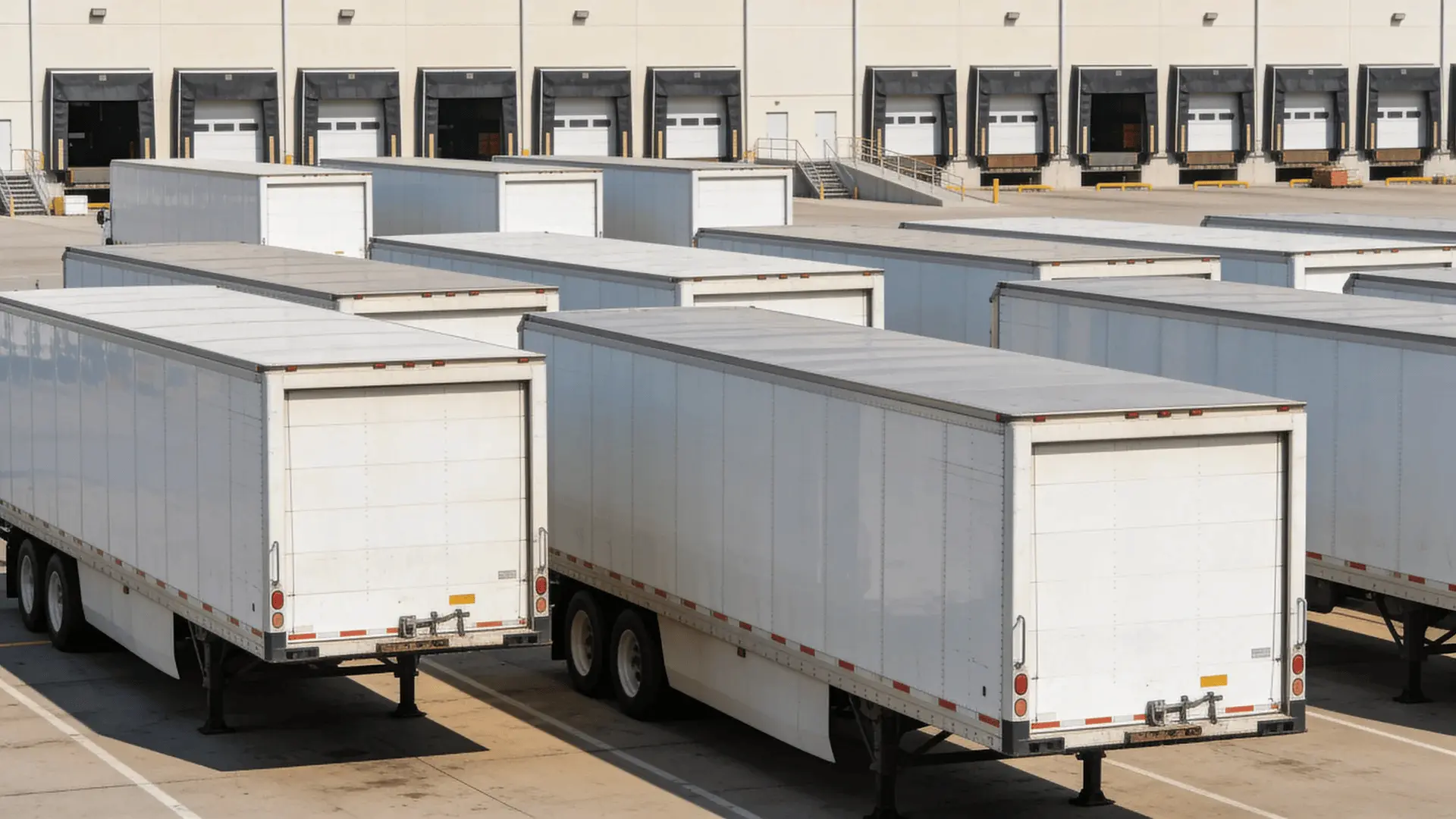
Dry vans didn’t become the standard by accident. Their design fits neatly into the way modern freight infrastructure operates.
Compatibility with Palletized Freight Systems
Most warehouses organize freight using pallets.
Pallets make it easy to lift goods with forklifts, stack loads safely, and move products quickly through distribution centers.
Dry vans are sized to hold these pallets efficiently. That compatibility makes them ideal for large-scale freight operations.
Standardized Dock Infrastructure
Across North America, warehouses are built with dock heights designed for semi-trailers.
Dry vans align with these docks almost perfectly. Forklifts can move pallets directly between warehouse floors and trailers.
Because so many facilities use this setup, dry vans integrate smoothly into existing logistics networks.
Operational Efficiency for Carriers
Dry vans are also straightforward for trucking companies to operate.
They require fewer specialized systems than other trailer types. Refrigerated trailers, for example, need cooling units, fuel systems, and temperature monitoring.
Dry vans avoid those extra systems, which reduces maintenance complexity and operating costs.
Availability Across Trucking Fleets
Because dry vans serve so many industries, they account for a large share of the trucking fleet.
That widespread availability makes it easier for shippers to find capacity when they need it.
The more common a trailer type becomes, the easier it is to build infrastructure around it. Over time, dry vans became the backbone of road freight.
Advantages of Dry Van Shipping
- Protection From Weather and Road Debris: The enclosed trailer shields cargo from rain, wind, dust, and road debris, helping maintain product quality during long-distance transport.
- Cargo Security During Transport: Sealed and locked trailers reduce exposure to theft or tampering, making dry vans suitable for high-value retail goods and packaged consumer products.
- High Carrier Availability: Dry vans are widely used across the trucking industry, making carriers easier to secure and routes well-established nationwide.
- Flexibility for Many Industries: Retail, manufacturing, e-commerce, and distribution networks rely on dry vans because they can accommodate a broad range of general freight.
Limitations of Dry Van Shipping
- No Refrigeration or Temperature Control: Dry vans cannot maintain cold or frozen conditions, requiring refrigerated trailers for perishable or temperature-sensitive goods.
- Restrictions for Oversized Freight: Cargo that exceeds standard height, width, or weight limits will not fit inside a dry van and may require flatbed transport instead.
- Loading Dock Requirements: Most dry van shipments depend on warehouse dock access, which can create loading and unloading challenges at facilities without proper infrastructure.
- Cargo Protection Constraints: While dry vans protect against weather exposure, they do not regulate humidity or reduce vibration, which may affect certain sensitive goods
Dry Van vs. Other Freight Trailer Types
Dry vans are often compared with other trailer types, but each serves a different purpose. The key differences come down to temperature control, cargo size, and transport distance.
| Feature | Dry Van | Refrigerated (Reefer) Trailer | Flatbed Trailer | Box Truck |
|---|---|---|---|---|
| Temperature Control | No temperature control | Built-in cooling system for cold or frozen goods | No temperature control | No temperature control |
| Trailer Structure | Fully enclosed trailer | Enclosed trailer with refrigeration unit | Open trailer with no walls or roof | Enclosed cargo box attached to cab |
| Best For | General freight that does not require climate control | Perishable goods like food and pharmaceuticals | Oversized, heavy, or irregular cargo | Small to medium loads for local delivery |
| Weather Protection | Yes | Yes | No | Yes |
| Cargo Size Capacity | Standard palletized freight | Standard palletized freight with temperature needs | Large, tall, or heavy equipment | Limited by smaller vehicle size |
| Typical Distance | Regional and long-haul | Regional and long-haul | Regional and long-haul | Short-distance or urban routes |
Understanding these differences helps determine which trailer fits a specific shipment. Dry vans work best for standard, non-temperature-sensitive freight, while reefers, flatbeds, and box trucks are designed to handle more specialized transport needs.
Wrapping Up
Dry van shipping remains the backbone of road freight because it aligns with modern logistics systems. Standard trailer sizes, palletized freight, and dock infrastructure all work together around this enclosed design.
These elements help companies move large volumes of goods efficiently across long distances. The system stays consistent and easy to scale.
Understanding how dry van shipping works explains why it is so prevalent in freight transportation. It protects cargo, handles palletized loads, and fits well with warehouse operations.
If you’re learning how freight moves across the country, dry vans are a solid starting point. They give a clear view of how the broader trucking system works.
Frequently Asked Questions
What is a dry van in shipping?
A dry van is a fully enclosed trailer attached to a semi-truck used to transport non-perishable freight. It protects cargo from weather but does not provide temperature control.
What are the disadvantages of dry van shipping?
Dry vans cannot transport temperature-sensitive goods, oversized cargo, or freight requiring special environmental controls. They also usually rely on loading dock access.
What commodities are typically shipped in dry vans?
Common dry van cargo includes retail goods, electronics, clothing, machinery parts, packaged food products, and other palletized freight that does not require refrigeration.
What is the difference between a dry van and a reefer trailer?
A dry van is a standard enclosed trailer without temperature control, while a reefer trailer includes refrigeration equipment to keep freight cold or frozen during transit.