IoT architecture defines how connected devices, networks, and systems interact to deliver data-driven outcomes.
When you understand its structure, you can design better solutions and make smarter technology decisions. This clarity helps you work efficiently with IoT systems.
In this guide, I will break down the layers and components of IoT architecture in a simple, structured way. You will also see how each part contributes to the overall system.
What is IoT Architecture?
Before you work with IoT(Internet of Things) systems, you need a clear understanding of what IoT architecture actually means.
IoT architecture refers to the structured framework that connects physical devices, communication networks, data processing systems, and user-facing applications. It ensures that data flows smoothly from devices to systems and back to users.
At its core, IoT architecture allows devices to collect data, transmit it across networks, process it into meaningful insights, and present it through applications.
Each layer within this architecture plays a specific role in maintaining this flow.
Why IoT Architecture is So Widely Used

Understanding its importance helps you see how it impacts real-world applications and system performance.
- It improves system efficiency by organizing how components interact
- It supports scalability as the number of connected devices grows
- It enables faster and better decision-making through data insights
- It strengthens system monitoring and control
- It helps you manage communication between devices effectively
When you properly structure your IoT system, you reduce complexity and improve overall performance.
Key Layers of IoT Architecture Explained
To understand how an IoT system works, you need to look at its core layers. Each layer performs a specific function and contributes to the overall data flow – from collection to user interaction.
1. Perception Layer (Device Layer)
This is where your IoT system begins – with physical devices collecting real-world data.
The perception layer includes sensors and actuators that interact directly with the environment. These devices gather raw data such as temperature, motion, pressure, or light.
Key components include:
- Sensors (temperature, motion, humidity)
- Actuators (switches, motors)
- Embedded systems
This layer acts as the entry point of your IoT system, converting physical signals into digital data.
2. Network Layer (Connectivity Layer)
Once data is collected, it needs to be transmitted efficiently and securely. This is where the network layer comes in. Key functions include:
- Handles communication between devices and servers
- Uses technologies like Wi-Fi, Bluetooth, and Zigbee
- Ensures smooth and continuous data transfer
This layer serves as the bridge between physical devices and processing systems. Without it, data would remain isolated within devices.
3. Processing Layer (Middleware Layer)
After data is transmitted, it needs to be processed into meaningful information. This is the role of the processing layer.
This layer includes cloud platforms and edge computing systems that store, analyze, and manage data. It transforms raw data into insights that applications can use.
It also handles tasks such as data filtering, aggregation, and analytics, ensuring that only useful information moves forward.
4. Application Layer
This is the layer where you directly interact with the IoT system. It converts processed data into useful insights and actions.
The application layer provides user interfaces such as mobile apps, dashboards, and monitoring systems. It allows you to control devices and view real-time data.
Common examples include:
- Smart home applications
- Industrial monitoring systems
- Healthcare tracking platforms
This layer makes IoT systems practical and user-friendly.
Possible Challenges in IoT Architecture
While IoT offers many benefits, you may face several challenges when designing and managing systems.
| Challenge | Impact | Solution Approach |
|---|---|---|
| Scalability | System overload | Use cloud infrastructure |
| Security risks | Data breaches | Apply encryption methods |
| Interoperability | Device incompatibility | Use standard protocols |
| Data overload | Slow performance | Implement edge computing |
These challenges require careful planning and the right combination of technologies to manage effectively.
Components Within IoT Architecture

To understand how IoT systems function, you need to look at the core components that work together across all layers. Each component plays a specific role in collecting, transmitting, processing, and presenting data.
1. Devices (Sensors and Actuators)
Devices are the foundation of any IoT system. They include sensors that collect data and actuators that perform actions based on that data.
These components interact directly with the physical environment and generate the raw data needed for further processing.
2. Connectivity (Networks and Protocols)
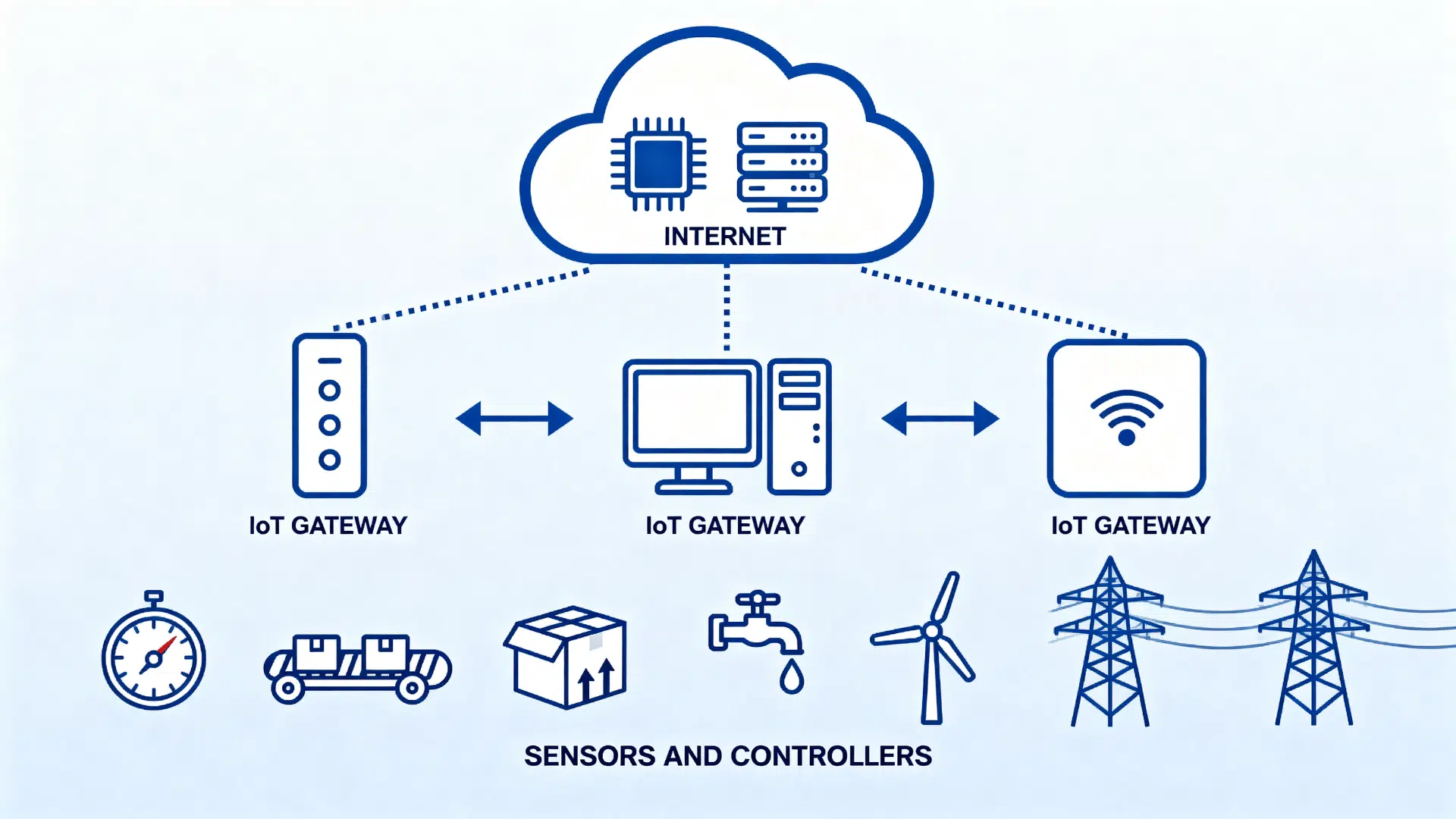
Connectivity enables communication between devices, gateways, and cloud systems. It ensures that data moves smoothly across the system.
This includes technologies such as Wi-Fi, Bluetooth, and cellular networks, as well as protocols that define how data is transmitted.
3. IoT Gateway
The gateway acts as an intermediary between devices and processing systems. It collects data from multiple devices and prepares it for transmission.
It may also perform basic filtering and security checks before forwarding the data.
4. Data Processing (Edge and Cloud Systems) & Storage
This component is responsible for analyzing and processing the collected data. Processing can take place near the device (edge) or in centralized systems (cloud), turning raw data into useful insights.
IoT systems generate large volumes of data that need to be stored efficiently. Storage systems ensure that data is available for both real-time access and future use through databases or cloud platforms.
6. User Interface & Security (Applications and Dashboards)
The user interface allows you to interact with the IoT system. It presents data through apps or dashboards, helping you monitor systems, control devices, and make informed decisions.
Security protects your IoT system from unauthorized access and data risks. It includes encryption, authentication, access control, and continuous monitoring across all components.
Applications of IoT Architecture
IoT architecture is used across various industries to improve efficiency, automation, and decision-making. Here are some key applications you should know:
- Smart Agriculture: Helps you automate irrigation, monitor soil conditions, and track crop health using real-time sensor data. This improves productivity and resource usage.
- Asset Tracking: Allows you to monitor the movement of vehicles, shipments, and equipment through GPS and tracking devices. It helps you maintain visibility and control.
- Smart Grids: Support efficient energy distribution by analyzing consumption patterns and reducing power losses. This helps you manage energy systems more effectively.
- Home Automation: Enables you to control lighting, appliances, security systems, and temperature settings based on your preferences and usage patterns.
- Industrial Automation: Helps you monitor machinery, predict failures, schedule maintenance, and improve production accuracy in industrial environments.
Conclusion
You now understand how IoT architecture is structured and how each layer works together to support connected systems. This clarity helps you see the complete data flow from devices to applications.
When you apply this knowledge, you can design systems that are more organized, scalable, and efficient. It also helps you make better decisions while working with IoT technologies.
With a strong grasp of these layers and components, you can build practical, impactful solutions. This approach allows you to create systems that deliver consistent value in real-world use.