Some homes take much longer to clean than their size would suggest.
The reason is not always heavier dirt.
A counter has to be cleared before it can be wiped. A vacuum stops every few feet for charging cables and small objects. Bathroom products have to be lifted one by one, and the space beneath a dining table cannot be reached until bags, shoes, and other belongings are moved.
Each interruption looks minor. Added together, they can make ordinary cleaning feel like a much larger job.
This is cleaning friction: anything that repeatedly slows access to the surface that actually needs attention. Reducing that friction can make routine cleaning simpler without requiring a perfectly organized home.
Notice What Happens Before the Cleaning Starts
Choose one frequently cleaned surface and watch what has to happen before you can reach it.
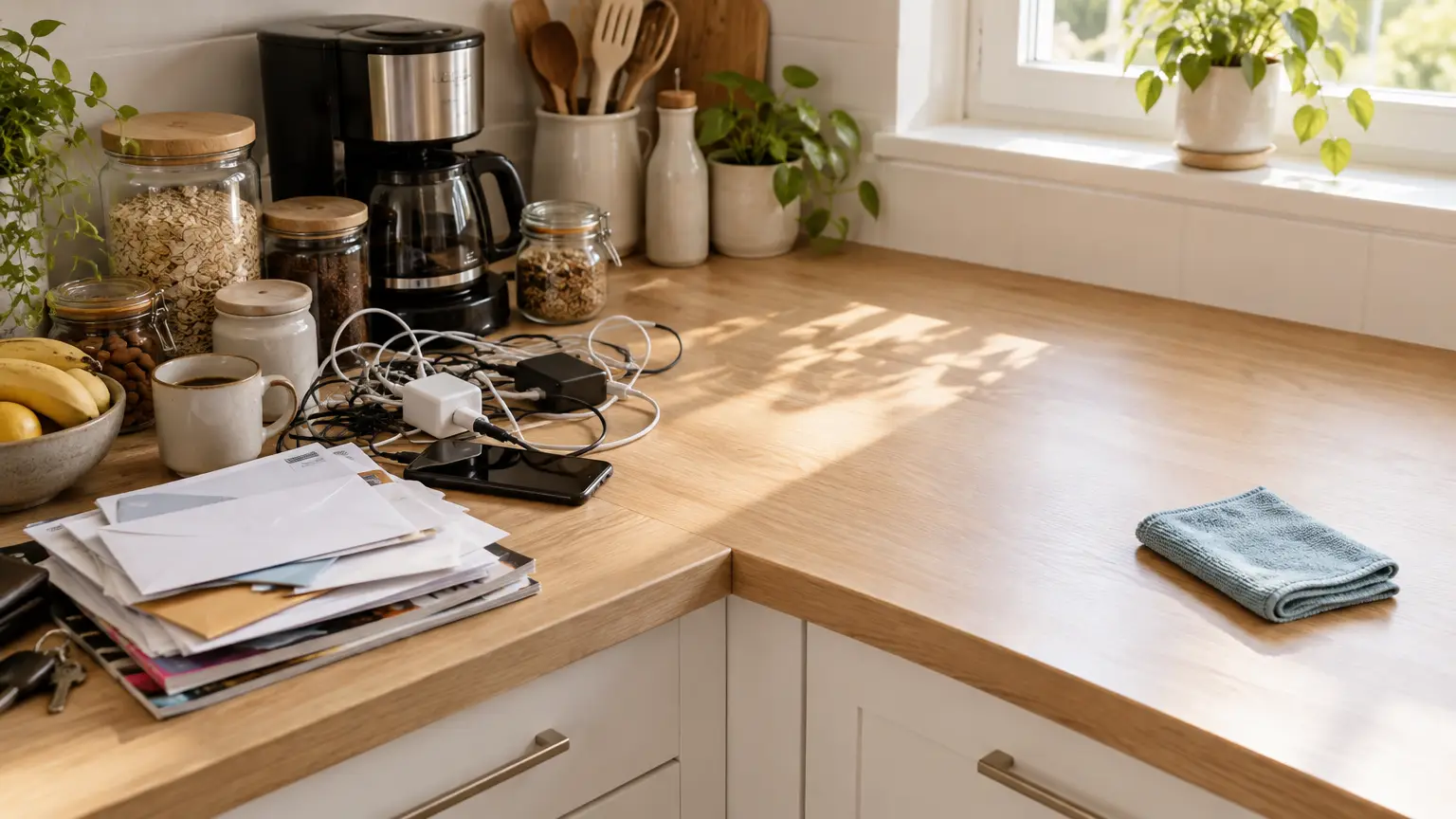
A kitchen counter may require moving mail, appliances, bottles, and charging cords.
A bedroom floor might contain a laundry basket, shoes, loose clothing, and a small wastebasket.
None of those things is necessarily dirty. They simply stand between the cleaning tool and the surface.
That distinction matters.
If most of the time is spent gaining access, the problem is not the cleaning method. It is the setup around the cleaning.
Look for Repeated Stops
One interruption is rarely the issue, repeated interruptions are.
Think about vacuuming a living room. Moving one lightweight basket takes seconds. Stopping for a cord, moving three toys, lifting a pet bowl, shifting a pile of magazines, and then stopping again for another cable changes the rhythm completely.
The same thing happens on countertops.
A cloth can move quickly across an open surface but slowly around twenty separate objects.
Notice where cleaning repeatedly stops. Those points show where friction is highest.
Give Frequently Cleaned Surfaces Some Open Space
A surface that needs regular cleaning should not require a full rearrangement every time.
That does not mean counters and tables have to remain empty, it means leaving enough open area for routine care.
A kitchen counter may still hold a coffee maker and utensil container while leaving the main preparation area easy to reach.
A bathroom vanity can contain daily products without spreading them across the entire surface.
The aim is access, not minimalism.
Group Small Objects That Always Move Together
Several loose objects create more friction than one movable group.
Bathroom products used every morning can sit together on a suitable tray or in a container. Frequently used desk supplies can stay in one holder instead of spreading across the work surface.
Then cleaning underneath requires moving one item rather than six.
This does not work for everything, and containers themselves still need occasional cleaning.
The useful test is whether grouping reduces repeated handling without creating another crowded storage problem.
Keep Cords Out of Floor-Cleaning Paths
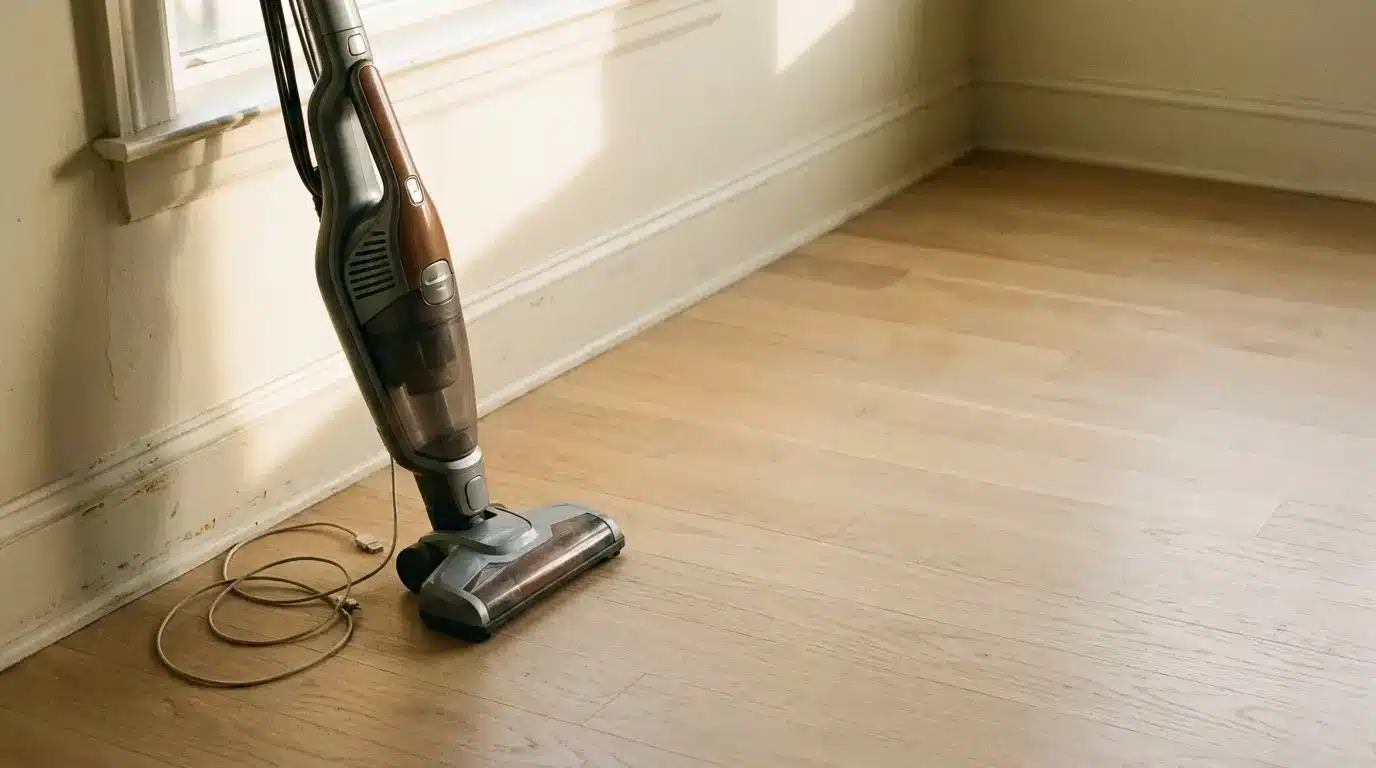
Loose cords can turn a straightforward floor task into constant stopping.
Phone chargers, lamp wires, extension leads, and device cables may cross the places where a vacuum or other floor tool needs to travel.
Arrange them safely where practical so they do not lie loose across active floor areas.
Do not pull connected electronics or create tension on cables simply for cleaning access.
The point is to remove avoidable obstructions, not create an electrical or equipment problem.
A clear floor path lets the cleaning tool move continuously instead of working around a series of small barriers.
Use an Access-Friction Test
There is an easy way to tell whether a room is ready for cleaning without asking whether it looks perfectly tidy.
Imagine the first few minutes of work. If a team providing cleaning services chicago could reach the intended counters, sinks, furniture surfaces, and main floor areas without first sorting papers, untangling cables, or deciding where personal belongings belong, the room has workable access.
If those decisions have to happen before the first surface can be cleaned, much of the task is still preparation rather than cleaning.
The test is not whether everything has been put away. It is whether the surfaces that need attention can actually be reached.
Separate Personal Decisions From Physical Obstacles
Some clutter is easy to move.
A mug goes back to the kitchen.
Shoes return to their normal place.
Dirty clothing goes with the laundry.
Other objects require decisions.
A pile of documents may contain papers that need filing, keeping, or discarding. A box of miscellaneous belongings may have no established storage location.
Do not let those decisions block the entire cleaning process.
Group uncertain personal items in a defined place, clear the surface they occupied, and return to the sorting question later.
Watch the Floor Around Furniture
Furniture can create another kind of friction.
Dining chairs interrupt broad floor passes. Lightweight side tables may block corners. Storage baskets hide small floor sections.
Decide in advance which pieces are easy to move and which should stay in place.
Move lightweight objects once, clean the exposed area, and return them after the floor is finished.
Avoid repeatedly shifting the same chair or basket as the cleaning tool approaches from different directions.
One planned movement is easier than several improvised ones.
Keep Cleaning Supplies Easy to Retrieve
Friction also occurs when the necessary tools are scattered.
If a cloth is in one room, floor tools are somewhere else, and the suitable cleaning product has to be searched for each time, starting a simple task becomes unnecessarily slow.
Store commonly used supplies in a practical, safe location.
Keep products according to their label instructions and away from children or pets where required.
The goal is not to build an elaborate cleaning station.
It is to avoid spending more time finding the tool than using it.
Do Not Pre-Clean the Whole House
Reducing friction should not become another version of cleaning.
There is no reason to wipe the counter before it gets cleaned properly or vacuum a floor just to prepare it for another floor cleaning.
Focus only on access.
Move what blocks the surface.
Return obvious belongings.
Contain loose personal items that need later decisions.
Leave the dirt, dust, marks, and residue for the actual cleaning process.
That boundary prevents preparation from duplicating the work.
Fix the Obstacles That Return Every Week
Repeated friction usually points to a setup problem.
If shoes always spread across the same floor path, the current shoe-storage arrangement may not match how the entry is actually used.
If the bathroom counter is covered again two days after it is cleared, frequently used products may need a simpler landing place.
If charging cords constantly cross a vacuum path, their normal position may need adjustment.
You do not have to reorganize the entire room.
Correct the obstacle that repeatedly slows the same task.
Measure Improvement by Fewer Interruptions
A smoother cleaning routine does not necessarily mean the house contains fewer possessions.
It means the cleaning process encounters fewer unnecessary stops.
The counter can be reached.
The vacuum has a clear path.
The sink does not require ten objects to move first.
Lightweight furniture is handled deliberately rather than repeatedly.
Personal decisions remain separate from surface cleaning.
Those small changes make a noticeable difference because routine cleaning depends heavily on continuity.
Make the Surface Easier to Reach Next Time
Cleaning friction is easy to miss because each interruption seems too small to matter.
A cord takes seconds to move. So does a bottle, shoe, basket, or stack of papers.
The cost appears when the same interruptions occur across several rooms every time the home is cleaned.
Look at what happens before the cloth reaches the counter or the floor tool begins moving. Reduce the obstacles that return repeatedly, group small objects where it makes sense, and keep personal sorting decisions outside the cleaning session.
The goal is not an empty or perfectly organized home.
It is a home where the surfaces that need routine care can be reached without turning every cleaning session into an obstacle course.