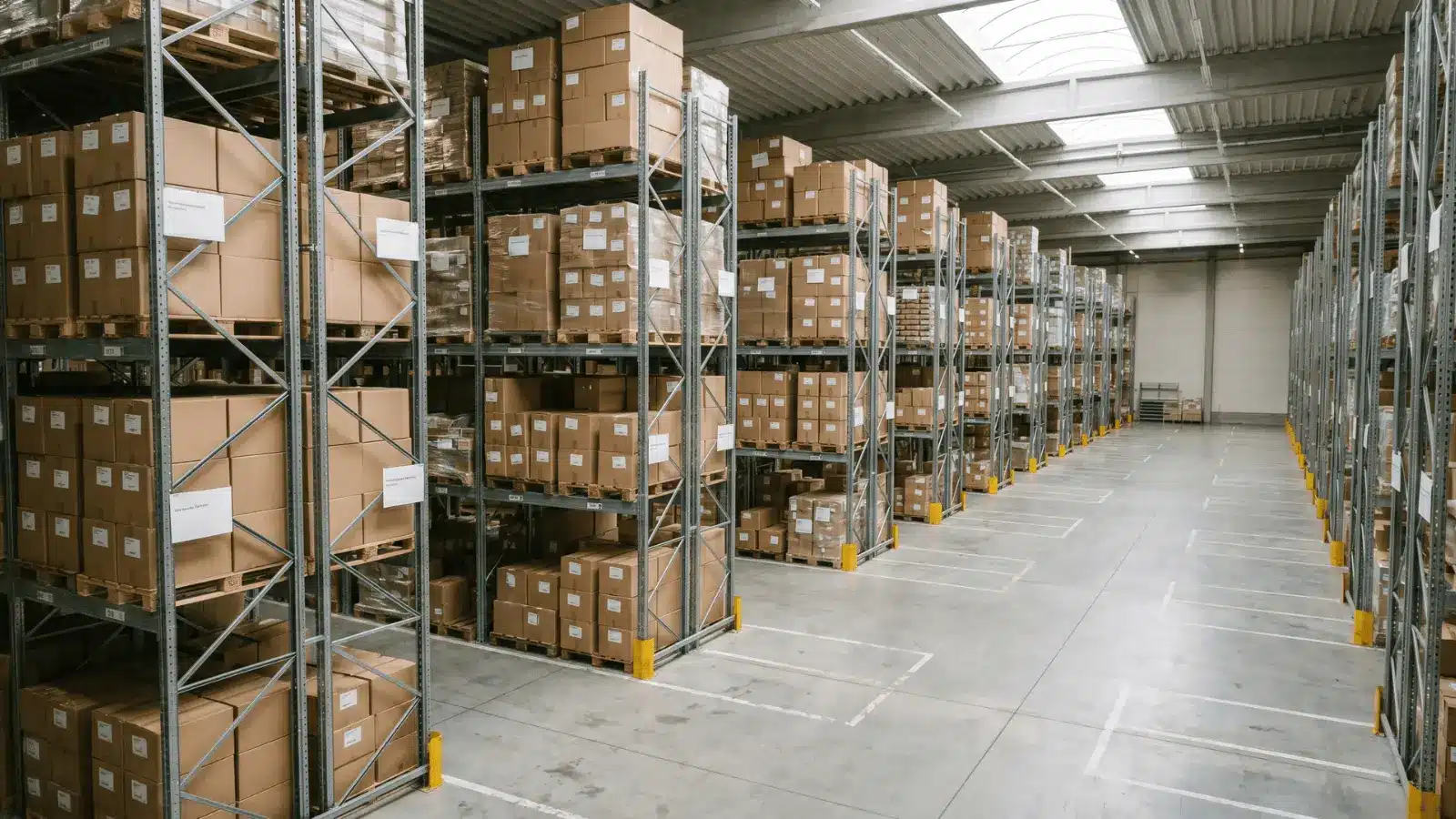
In my experience working with supply chain content, one thing stands out: businesses often confuse planning with execution, and that’s where problems begin.
Warehouse and inventory management may seem closely linked, but they operate in very different ways, and misunderstanding that gap can quietly hurt performance.
I’ve seen cases where stock looked perfect on paper but failed during order fulfillment, simply because systems weren’t aligned.
Today, I’ll break down how both functions actually work, where they differ, and why their coordination matters more than most expect.
What is Inventory Management?
Inventory management controls the flow of stock in your business. It tells you how much you have, how much you need, and when to reorder.
At its core, it’s a planning function, not a physical one. The goal is simple: balance supply with demand before a gap opens up.
To do that, businesses track stock levels in real time, forecast future demand, and set reorder points so stock gets replenished before it runs out.
Done right, this prevents both shortages and overstocking; two of the most expensive inventory problems a business can face.
The core activities are demand forecasting, stock level monitoring, and replenishment planning. When any of these breaks down, the consequences show up fast.
Inaccurate forecasts mean holding too much or too little. Delayed updates create a gap between what’s recorded and what’s actually on the shelf. When your system shows 200 units available but the shelf has 80, you’re either overselling or turning away demand you could have met.
One important clarification: inventory management has nothing to do with physically moving or storing goods. It’s purely a stock control and planning function.
What is Warehouse Management?
Warehouse management covers everything that happens inside a storage facility, including how goods are received, stored, moved, and shipped out.
It’s a hands-on operations function, physical and process-driven. The goal is to move and store goods as efficiently as possible.
That efficiency comes from smart layout design, structured storage systems, and defined picking processes. When these are dialed in, orders go out faster and handling errors drop.
The physical flow follows a clear sequence: receiving incoming shipments, putting items into assigned storage locations, picking the right items for each order, packing them correctly, and shipping them to customers. Each step feeds the next.
A poor layout adds unnecessary distance to every movement. Inefficient picking causes delays and wrong items reaching customers, both costly to fix after the fact.
What warehouse management doesn’t do is decide how much stock to keep. That’s inventory’s job. Once goods are inside the facility, warehouse management takes over, controlling how they’re handled until they leave.
Key Differences Between Inventory and Warehouse Management
These two functions are often treated as one. They’re not, and the distinction matters more than most businesses realize.
| Basis | Inventory Management | Warehouse Management |
|---|---|---|
| Focus | What you have | Where it is and how it moves |
| Function | Planning and control | Physical operations |
| Mechanism | Tracks data and demand | Executes movement and storage |
| Outcome | Ensures stock availability | Ensures speed and accuracy of delivery |
This should make it clear: one system thinks, the other acts. When businesses treat both as the same, they stop managing either one properly.
Stock records say 500 units are available, but the warehouse can’t locate them and the order sits.
Goods arrive at the dock but nobody logs them, so inventory counts fall out of sync and the system triggers a reorder that wasn’t needed.
These aren’t edge cases. They’re what happens when the data side and the physical side stop talking to each other, and they’re almost always avoidable with the right coordination in place.
How Inventory and Warehouse Management Work Together
Neither system works well in isolation. Inventory provides the data. The warehouse acts on it. Together, they create end-to-end control of goods from the moment stock arrives to the moment an order ships.
1. The Workflow
The inventory system signals that a shipment is incoming. The warehouse receives and stores the goods, and inventory levels update to reflect what’s now on hand.
When a customer places an order, inventory confirms availability, and the warehouse picks, packs, and ships it out.
2. The Dependency
This runs both ways.
Inventory accuracy depends on the warehouse logging every movement correctly; a putaway that isn’t recorded is a discrepancy waiting to surface.
Warehouse efficiency depends on inventory data to know what’s arriving, how much of it there is, and where it should go.
3. When the Sync Breaks Down
Delayed updates create gaps between system records and physical stock.
Poor communication between teams means goods arrive unlogged or orders get picked against inventory that no longer exists.
What starts as a small mismatch turns into fulfillment errors, customer complaints, and reactive fixes that cost more than prevention ever would have.
Core Processes in Warehouse and Inventory Management
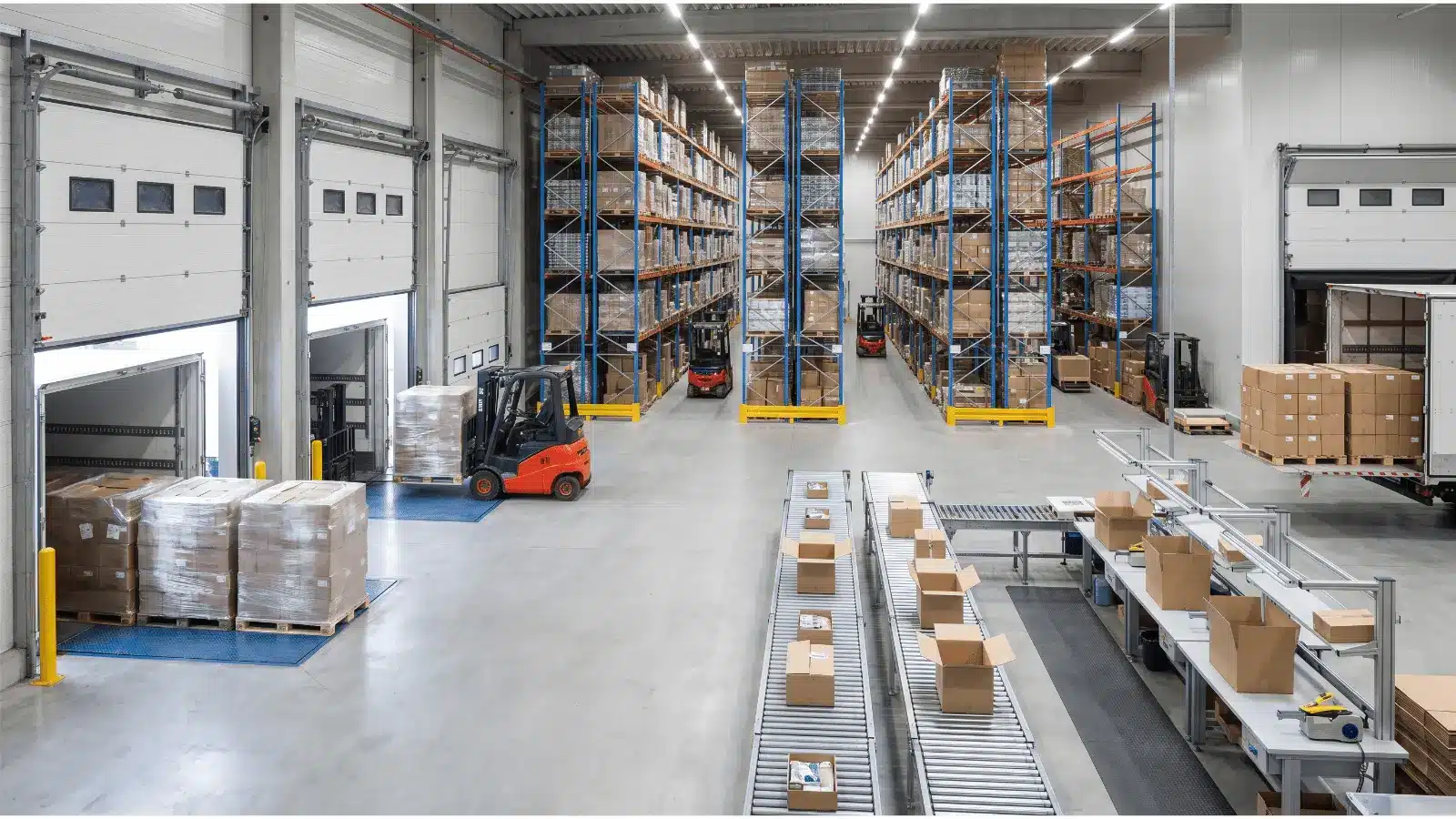
Both systems share an operational flow that spans planning, physical execution, and the connection between the two.
Inventory-Level Processes
Inventory-level work is driven by data and planning. Demand forecasting uses historical sales trends to predict future stock needs.
Stock monitoring tracks real-time inventory levels so nothing falls below safe thresholds. Replenishment planning determines when and how much to reorder, before shortages occur, not after.
Warehouse-Level Processes
Warehouse-level work is physical and sequential. It starts with receiving, checking, and logging incoming shipments.
From there, goods go through storage allocation, where each item is assigned a location based on size, access frequency, or category. Picking retrieves the right items for each order.
Packing prepares them for dispatch. Shipping hands completed orders off to carriers.
Integration Layer
This is where both systems connect. Barcode scans and RFID tags update records with every physical movement.
Real-time tracking systems sync stock changes across inventory and warehouse platforms automatically. Every putaway, pick, or shipment triggers a data update.
Barcode scanning is the most common method. RFID goes further; it can update records without a manual scan, logging multiple items at once as they move through a dock door.
The result is a continuous loop: physical movement creates data, and that data drives the next physical action. When this layer works correctly, both systems stay in sync and inventory records reflect reality in real time.
Why Both Systems are Critical to Supply Chain Performance
Efficient order fulfillment requires both systems working in sync. Optimizing just one is not enough, and this is where many businesses go wrong. Customers expect fast, accurate orders, and meeting that expectation requires coordinated stock control and physical execution working together.
When that coordination exists, the performance impact shows up across three areas:
- Inventory turnover improves when stock is managed and moved efficiently, reducing the cash tied up in slow-moving goods.
- Order accuracy increases when pickers work from live inventory data — they pull the right item, in the right quantity, from the right location, instead of relying on memory or outdated records.
- Space utilization gets better when accurate demand data guides storage decisions, keeping high-velocity items accessible and dead stock out of prime locations.
The failure cases are equally clear. Weak inventory management leads to stockouts or excess stock. Weak warehouse operations produce delayed shipments and wrong items reaching customers.
And fixing one side doesn’t fix the whole system. Better inventory data won’t matter if the warehouse can’t execute on it. A faster warehouse won’t help if the stock records feeding it are wrong.
Both sides need to work because when one fails, it drags the other down with it.
Common Misconceptions About Warehouse and Inventory Management
Many businesses mix up these concepts, so here’s a simple breakdown to clear things up:
| Misconception | Reality |
|---|---|
| They’re the same thing | Warehouse management handles physical movement. Inventory management handles data, planning, and stock levels. |
| Accurate inventory means smooth operations | Correct data helps, but operations fail if items are misplaced, delayed, or picked incorrectly in the warehouse. |
| A well-run warehouse solves stock problems | Fast operations can’t fix poor forecasting or wrong reorder decisions. Inventory planning controls that. |
| Technology alone fixes everything | Tools improve results only when processes are already clear and consistent. Bad processes stay bad, just faster. |
Understanding this difference helps you fix the right problem instead of treating everything as one system.
Warehouse Management System vs. Inventory Management System: Which Do You Need?
Most businesses eventually reach a point where spreadsheets stop cutting it. That’s when software comes in, and choosing the right type matters.
A Warehouse Management System (WMS) handles the physical side. It tracks bin locations, guides picking routes, manages receiving, and logs every movement inside the facility. It’s built for warehouses.
An Inventory Management System (IMS) handles the planning side. It monitors stock levels across locations, manages reorder points, and tracks SKUs across your entire business, not just one facility.
An ERP (Enterprise Resource Planning) system sits above both. It connects inventory and warehouse data to finance, procurement, and sales in one platform. Larger businesses often integrate a WMS and ERP together for full visibility.
Which do you need?
- Small businesses with one location usually start with an IMS, it handles stock control without the overhead of a full WMS.
- Growing businesses with high order volumes benefit from a WMS to reduce picking errors and speed up fulfillment.
- Multi-location or high-complexity operations typically need both, integrated so that data flows in real time between systems.
The right choice depends on where your biggest pain point is: stock accuracy or fulfillment speed. Most scaling businesses end up needing both.
Wrapping Up
From what I’ve seen, businesses don’t struggle because they lack tools; they struggle because they misread how systems connect.
Warehouse and inventory management only deliver real results when planning and execution stay aligned at every step. Strong data without physical accuracy creates gaps, and fast operations without reliable data lead to costly mistakes.
The real advantage comes from treating both as dependent systems, not separate functions. When that shift happens, performance improves across the board, from stock control to order fulfillment.
If you’re looking to fix recurring issues, start by evaluating how well these two systems actually work together and take action where the disconnect shows.
Frequently Asked Questions
What is the difference between a WMS and an ERP system?
A WMS handles daily warehouse operations. An ERP manages broader business functions like finance and procurement. Many businesses integrate both for full operational visibility.
What is safety stock, and why does it matter?
Safety stock is extra inventory kept as a buffer against unexpected demand or supply delays. It prevents stockouts without regular overstocking.
How often should a business conduct a full inventory count?
Most businesses run a full stock count at least twice a year, with cycle counts done regularly to maintain ongoing accuracy.
Can small businesses benefit from warehouse and inventory management systems?
Yes. Even basic systems reduce manual errors, save time, and help small businesses maintain stock control as they grow.