You built your tiny home for freedom — lower costs, off-grid living, and energy independence. But then came the flickering lights. The mysterious buzzing from your speakers. The inverter shutting off without warning at the worst possible moment.
These aren’t random gremlins. They’re symptoms of common problems in small-footprint solar systems — and they have different root causes. A Single Phase Isolation Transformer won’t fix all of them. But for electrical noise, grounding issues, and power-source switching instability, it’s one of the most targeted upgrades you can make.
Why Tiny Houses Are Especially Vulnerable to Electrical Problems
Standard homes have wide service panels, long wiring runs, and a steady grid connection to absorb fluctuations. Tiny homes have none of that.
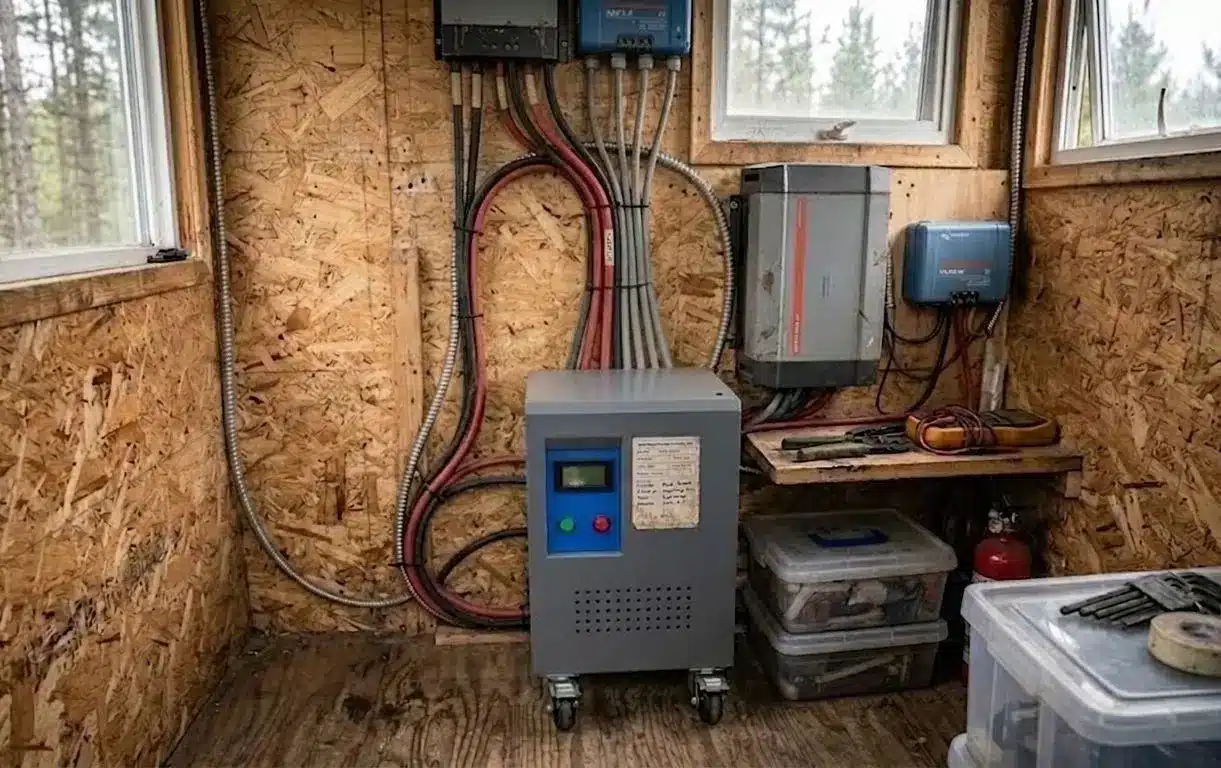
Everything is packed tightly together — batteries, inverter, charge controller, and appliances all within a few feet of each other. That tight layout creates a specific problem: high-power cables and signal cables are forced to run in parallel, close together, without adequate separation. This is where electromagnetic interference (EMI) becomes a real issue. It’s not that short cables inherently cause more noise — it’s that densely bundled wiring leaves sensitive electronics with nowhere to hide.
Add in variable solar production — clouds, shade, seasonal changes — and a small battery bank with limited surge capacity, and you have a system that reacts strongly to every load change.
The Three Most Common Symptoms
Before installing any fix, it helps to understand what you’re actually dealing with.PowerHome’s team has worked with hundreds of tiny house owners and found that these three symptoms appear most frequently:
Buzzing or Humming From Electronics
This is where isolation transformers are most effective. Electrical noise on the circuit gets picked up by sensitive devices — audio equipment, TVs, Wi-Fi routers, and laptop chargers act like antennas. The problem is often worsened by modified sine wave inverters, which produce significant harmonic distortion. If multiple devices buzz simultaneously, the noise is coming from the circuit itself. An isolation transformer filters this directly and effectively.
Flickering Lights When Appliances Start Up
This is primarily a voltage sag problem, not a noise problem. High-draw appliances like fridges, pumps, and microwaves pull a large inrush current at startup. If your battery bank or inverter can’t absorb that spike, voltage drops briefly and the lights react. An isolation transformer has limited effect here — its own impedance can even add a small additional voltage drop under heavy load. The real fixes are a larger battery bank, heavier cable gauge, or a low-frequency pure sine wave inverter. That said, if your flickering is caused by harmonic noise or grounding loops rather than true voltage sag, an isolation transformer can help indirectly.
Inverter Shutdowns
Most inverters have built-in protection that triggers a shutdown during overload or severe voltage irregularities. If yours cuts out unexpectedly, the root cause is usually a capacity issue — not something an isolation transformer solves. Check your total load, battery health, and whether your inverter is undersized for your usage pattern, especially in winter when solar production drops.
What Is a Single Phase Isolation Transformer?
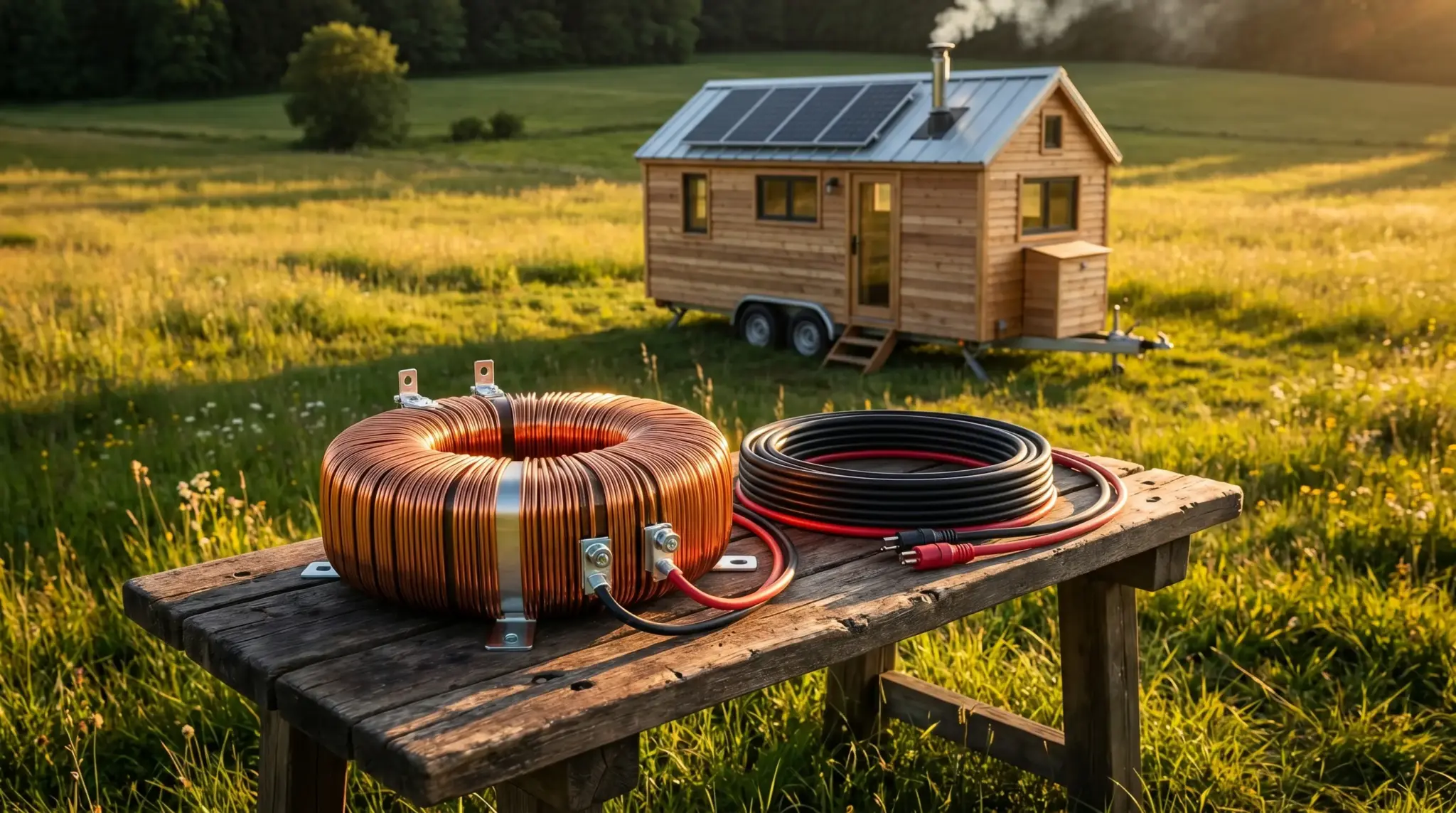
An isolation transformer sits between your solar inverter and your home’s wiring. It passes electricity through — but not directly. Instead, it uses magnetic induction to transfer power between two separate coils: a primary side (input) and a secondary side (output).
Because there’s no physical wire connecting the two sides, electrical noise, fault currents, and voltage spikes can’t simply travel from one circuit into the other. The two sides are electrically isolated.
In a standard 1:1 isolation transformer, the output voltage matches the input. Some users choose a slightly stepped-up version (e.g., 120V in, 125V out) to compensate for voltage drop across long cable runs — a useful option for mobile tiny homes with extended wiring.
This is the same technology used in hospitals, marine electrical systems, and industrial machinery — environments where clean power and electrical safety are non-negotiable.
What It Actually Fixes
Be clear on this before purchasing. An isolation transformer is a noise and safety upgrade — not a capacity upgrade. It excels at three specific problems:
- Electrical noise and interference. The transformer acts as a natural filter for high-frequency harmonic noise. This is especially effective if your inverter outputs modified sine wave power, which carries more harmonic distortion than pure sine wave units.
- Grounding and shock hazard issues. By breaking the direct electrical connection, it adds a meaningful layer of fault protection. If something goes wrong upstream, the transformer limits how far a fault current can travel.
- Voltage spikes when switching power sources. If you use a generator as backup and notice surges when connecting or disconnecting it, electrical isolation between your solar system and generator can smooth that transition considerably.
What it won’t fix: Voltage sag from large load spikes is a capacity problem. An isolation transformer won’t solve it — and its own impedance may add a small additional voltage drop under heavy load. If your battery bank is undersized or your inverter is running near its limits, address those first.
How to Size One for Your System
Single phase isolation transformers are rated in KVA (kilovolt-amperes). Undersizing is the most common mistake — an undersized unit overheats and trips under load. Always size to at least 150%–200% of your continuous load to safely handle inrush current from motors and compressors.
| Your Inverter / Typical Load | Recommended Transformer Size | Notes |
| 1,500W | 2.5 – 3.0 KVA | Good for light loads |
| 2,000W – 3,000W | 4.0 – 5.0 KVA | Most common tiny house range |
| 4,000W – 5,000W | 6.0 – 7.5 KVA | Heavy use |
Important Note: Larger transformers have higher no-load (idle) power consumption (30–80W+). In winter with low solar production, choose the smallest size that safely handles your peak load — oversizing wastes battery power around the clock.
If your system runs motors or compressors frequently, size toward the higher end of each range.
Key Considerations Before You Buy
A few practical factors that often get overlooked:
- Indoor vs. outdoor rating. Not all units are weatherproof. Know your installation location before purchasing.
- Heat and ventilation. Isolation transformers generate significant heat during operation. Don’t install in a sealed compartment without airflow.
- No-load consumption. Pay attention to the transformer’s idle power draw. For off-grid systems — especially in winter — this continuous drain matters more than most people expect.
- Efficiency loss under load. Expect 2–5% additional energy loss during operation. Worth accounting for in tight off-grid energy budgets.
- Professional installation. Electricity at this voltage is dangerous if wired incorrectly. If you’re not confident in your DIY skills, hire a licensed electrician.
Quick Diagnostic Checklist
An isolation transformer is likely a good fit if you’re experiencing these specific issues:
- Buzzing or humming from audio equipment, chargers, or routers
- Multiple devices picking up noise simultaneously
- Voltage spikes when connecting or disconnecting a generator
- Unexplained appliance failures or shortened device lifespans
- Operating a mobile tiny home across different power hookups
- Persistent, micro-flickering in LED lights caused by harmonic distortion rather than heavy appliance startups
If your main issue is heavy dimming under load or frequent inverter shutdowns, address your battery bank capacity, cable gauge, and inverter sizing first. An isolation transformer works best as part of a well-built system — not as a patch for underlying capacity problems.
Conclusion
A Single Phase Isolation Transformer won’t magically fix all problems — but it can significantly clean up your power and reduce noise. For tiny homes dealing with electrical interference, grounding issues, and power-source switching instability, it’s one of the most targeted and effective upgrades available.
Size it correctly, install it in a ventilated space, and pair it with solid fundamentals — proper cable gauges, a healthy battery bank, a quality inverter, and surge protection. Do that, and you’ll have a system that runs quietly and reliably for years.