You’ve probably organized your pantry before. Twice, maybe three times. And somehow, two weeks later, it looks exactly the way it did before you started.
I get it. If you have a small pantry like mine, it exposes every bad habit. There’s no extra space to hide clutter, so the fix isn’t buying more bins or storage products. It’s creating a better system from the start.
Here, I’ll walk you through small pantry organization ideas that hold up long after the first weekend, starting with the one step most people skip completely.
What to Measure Before Buying Pantry Organizers
Before buying bins, risers, or drawers, measure your pantry so you know what space you’re actually working with. If the existing shelves themselves are the real problem, building custom pantry shelving first can solve more than any organizer will.
Check the width of each shelf, the height between shelves, and the depth from the back wall to the front edge. Measure each shelf separately since pantry dimensions can change from one level to another.
Look for things that can get in the way, like doors, hinges, or pipes. Leave about 1 to 2 inches of extra space when choosing organizers so they fit comfortably and are easier to pull out or adjust.
Small Pantry Organization Ideas to Cut Clutter and Add Storage
A small pantry can become difficult to manage when every shelf is filled without a clear system. These ideas focus on using your available space better, keeping items easy to find, and creating a setup that stays practical over time.
1. Use Pull-Out Organizers for Deep Pantry Spaces
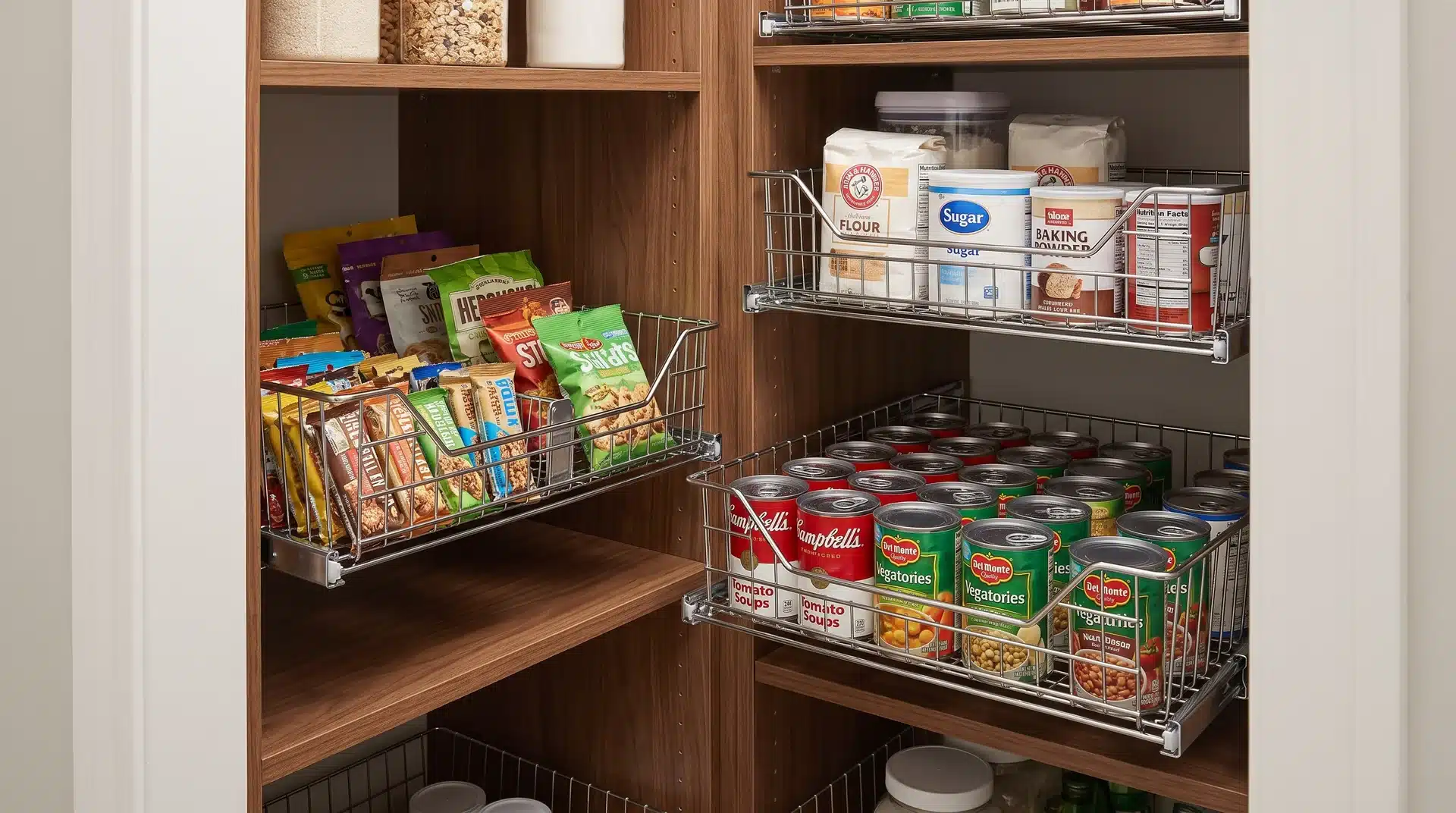
Deep pantry shelves can waste space because items at the back are easy to forget. You often end up moving everything in front just to reach one jar or can hiding behind it.
Pull-out shelves and sliding organizers bring those items forward, making it easier to see what you have and grab what you need. They work especially well for cans, bottles, and food containers that you use often.
Before buying one, check your shelf depth and available space. The organizer should fit properly and give you enough room to move items in and out without blocking other shelves.
2. Use Clear Storage Bins to Group Pantry Items
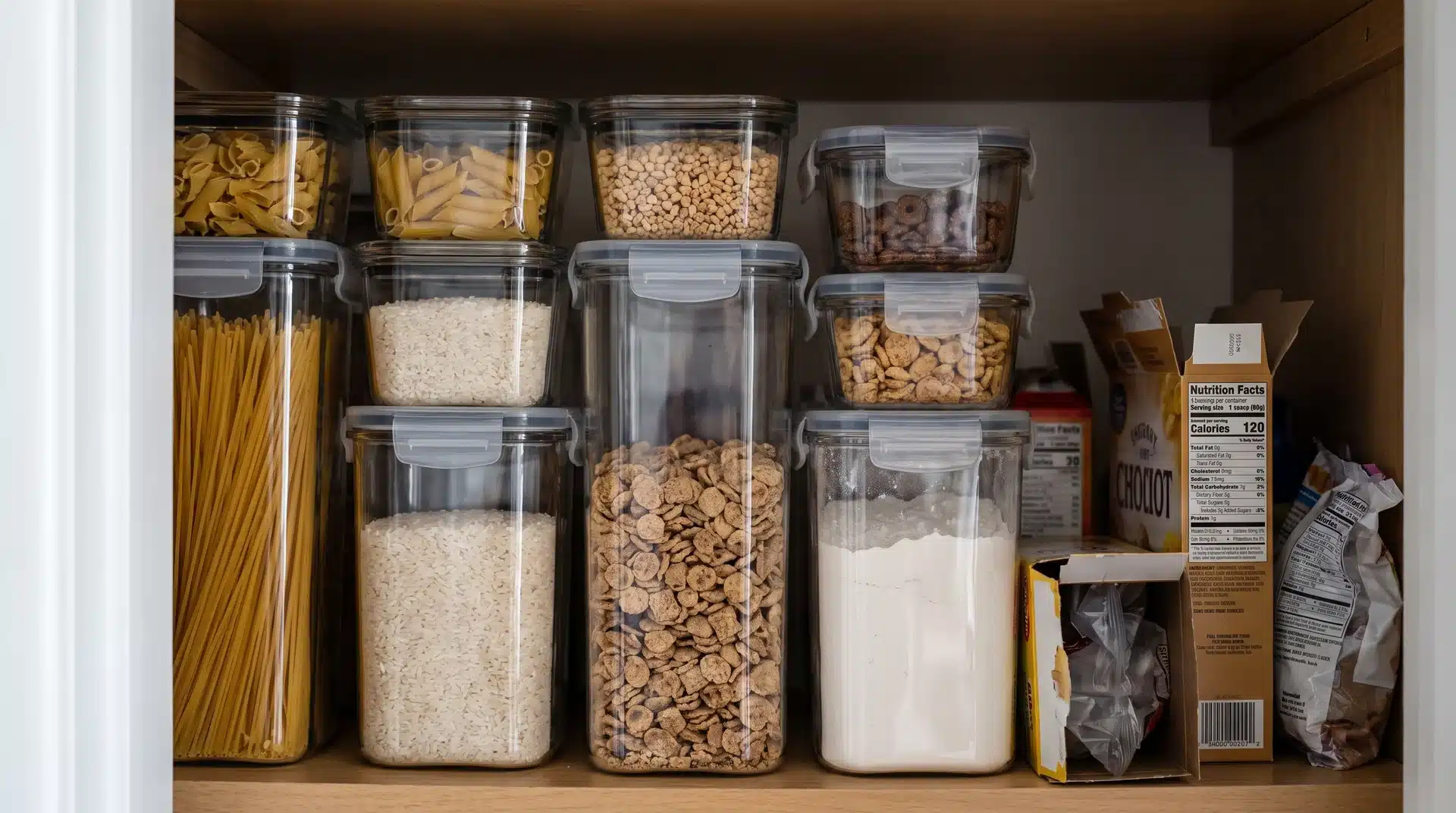
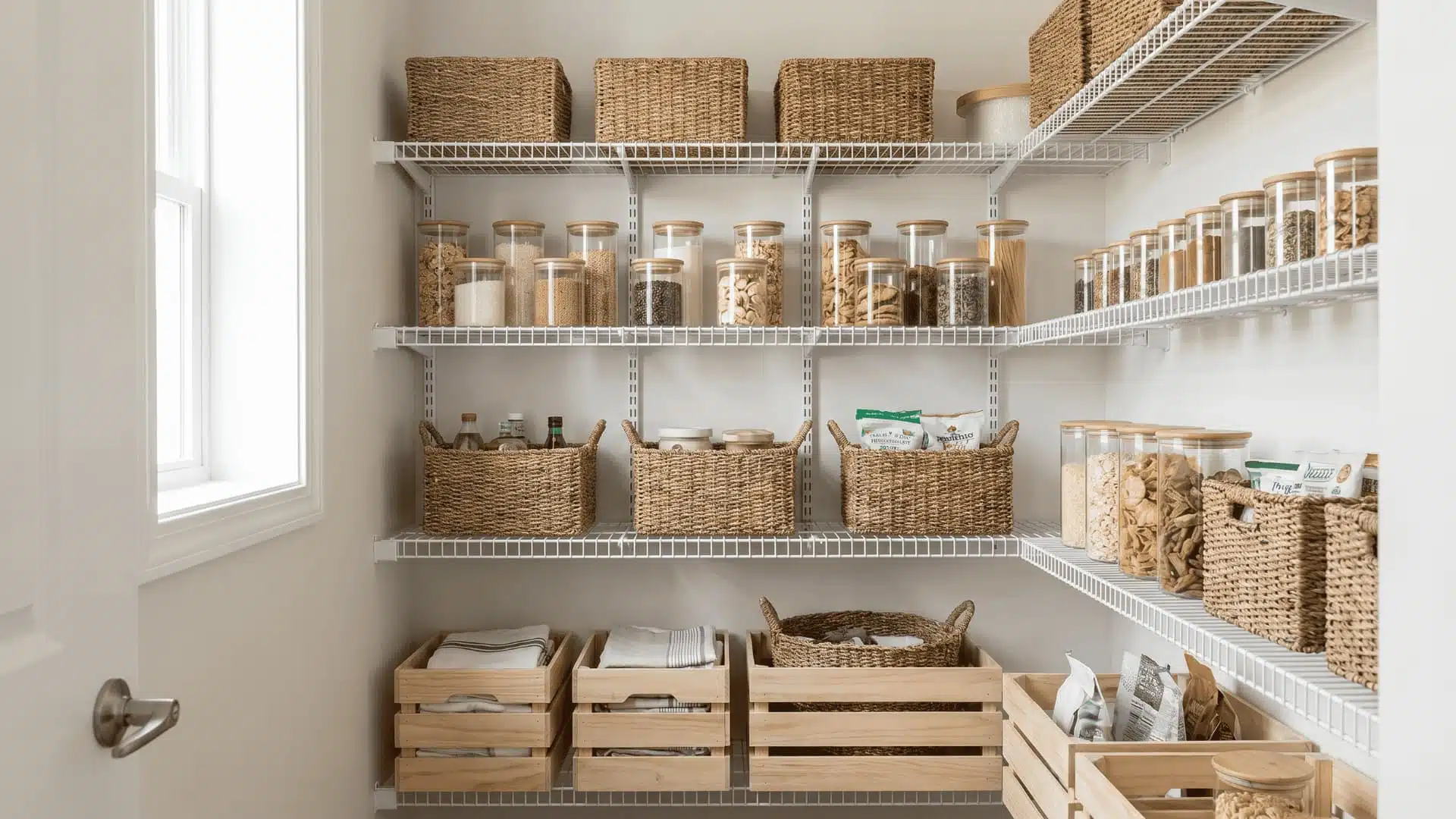
Clear storage containers keep pantry items organized and easier to see. They work well for snacks, baking supplies, pasta, rice, cereal, flour, and other dry foods that often come in bulky or opened packets.
Containers help keep food fresher and prevent opened bags from spilling or getting pushed to the back of the shelf. Clear sides make it easy to see what needs restocking.
Choose containers based on the foods you use most and the space available on your shelves. The right size makes everyday tasks easier, from grabbing ingredients to measuring what you need while cooking.
3. Add Shelf Risers to Use Vertical Space
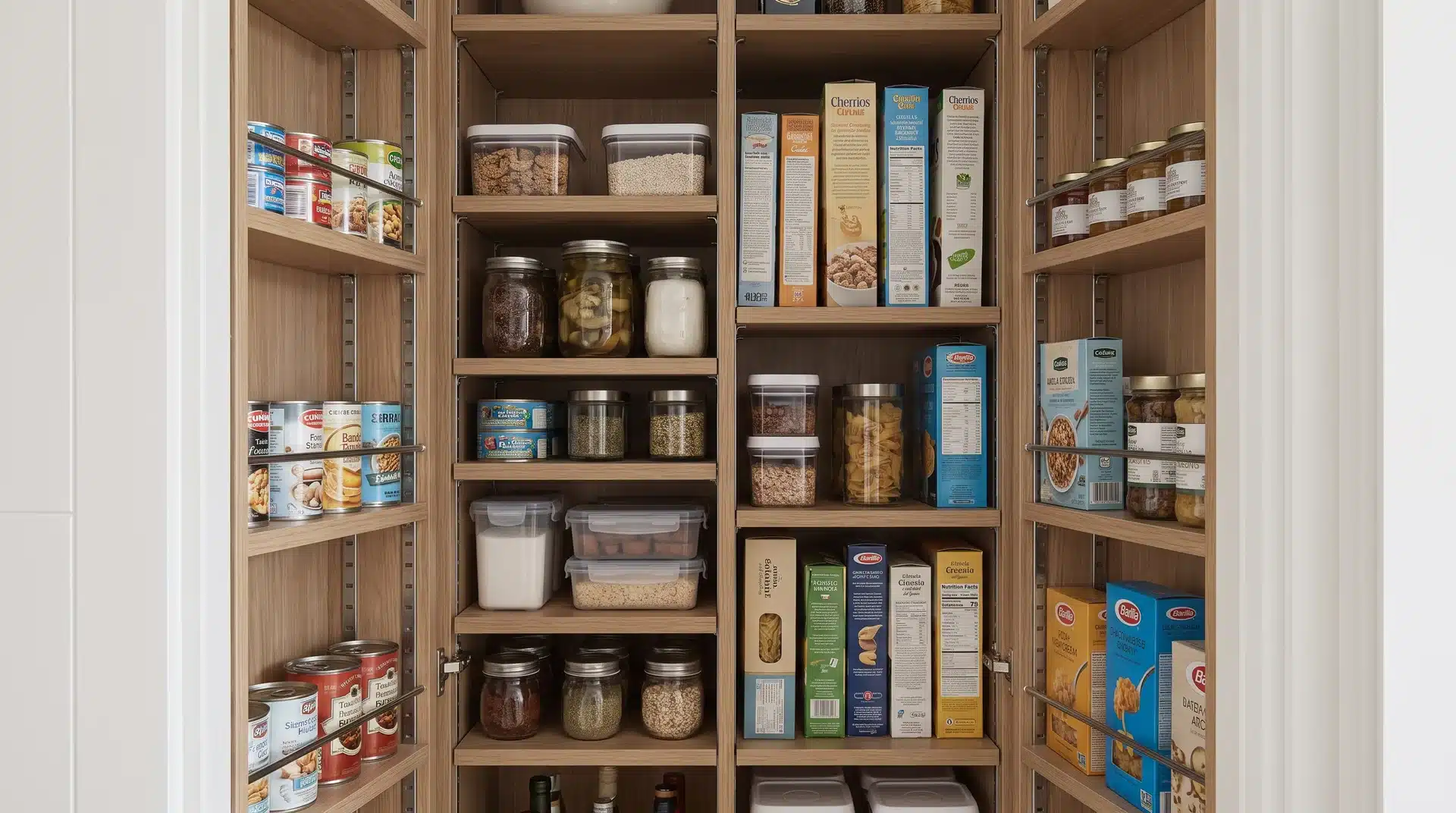
Many small pantries waste space because shelves are taller than the items sitting on them. Shelf risers add another level, helping you fit more without stacking everything on top of each other.
They work well for cans, jars, and small containers. Use them only where you have empty space above your items, because adding too many can make shelves harder to use.
4. Install a Pantry Door Organizer
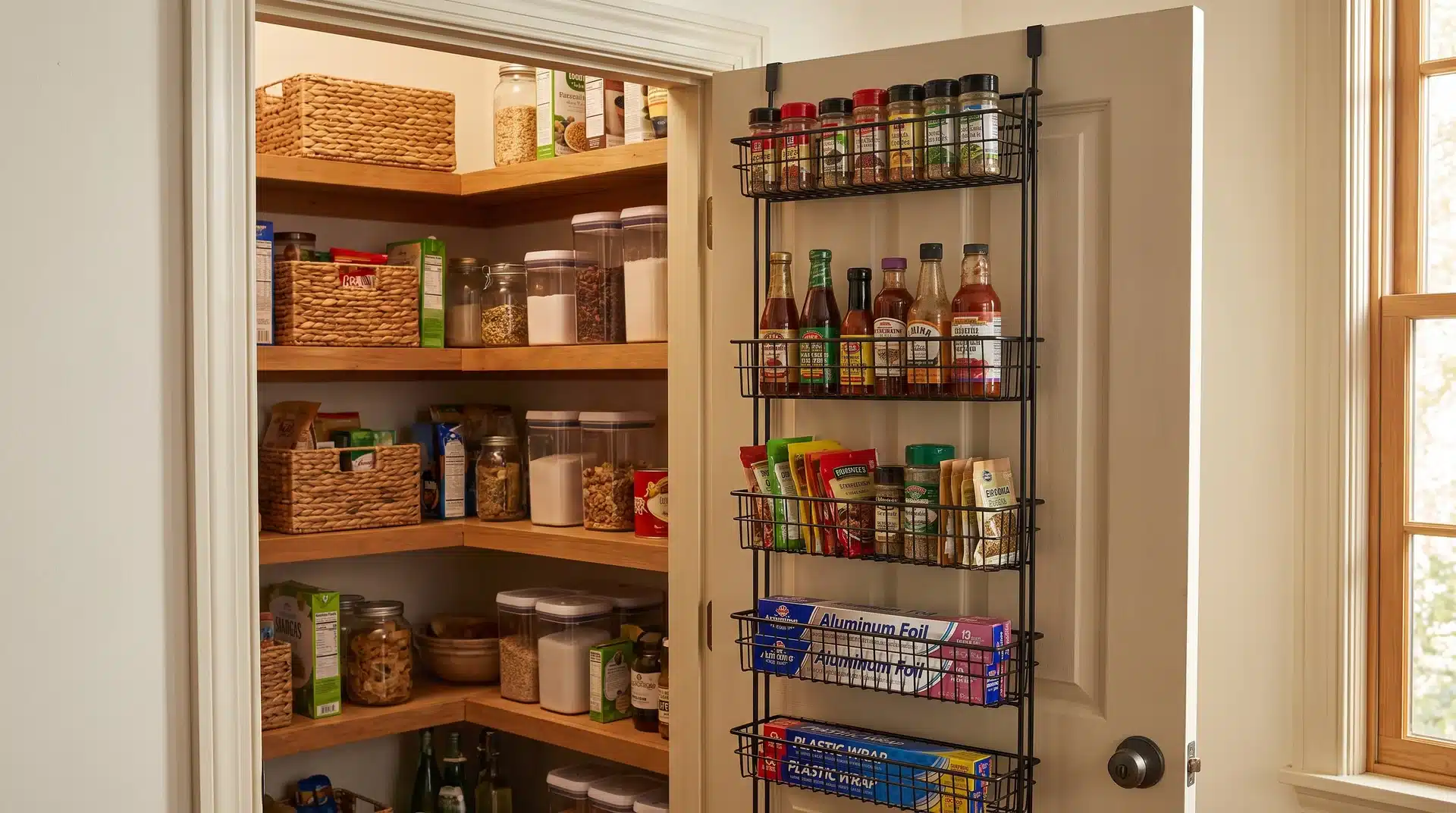
The inside of your pantry door is often unused space. A door organizer gives you extra room for small items that usually make shelves messy.
Use it for things like spices, sauces, wraps, and seasoning packets. Keeping these items on the door frees up shelf space for larger food containers.
5. Use Lazy Susans for Corners and Deep Shelves
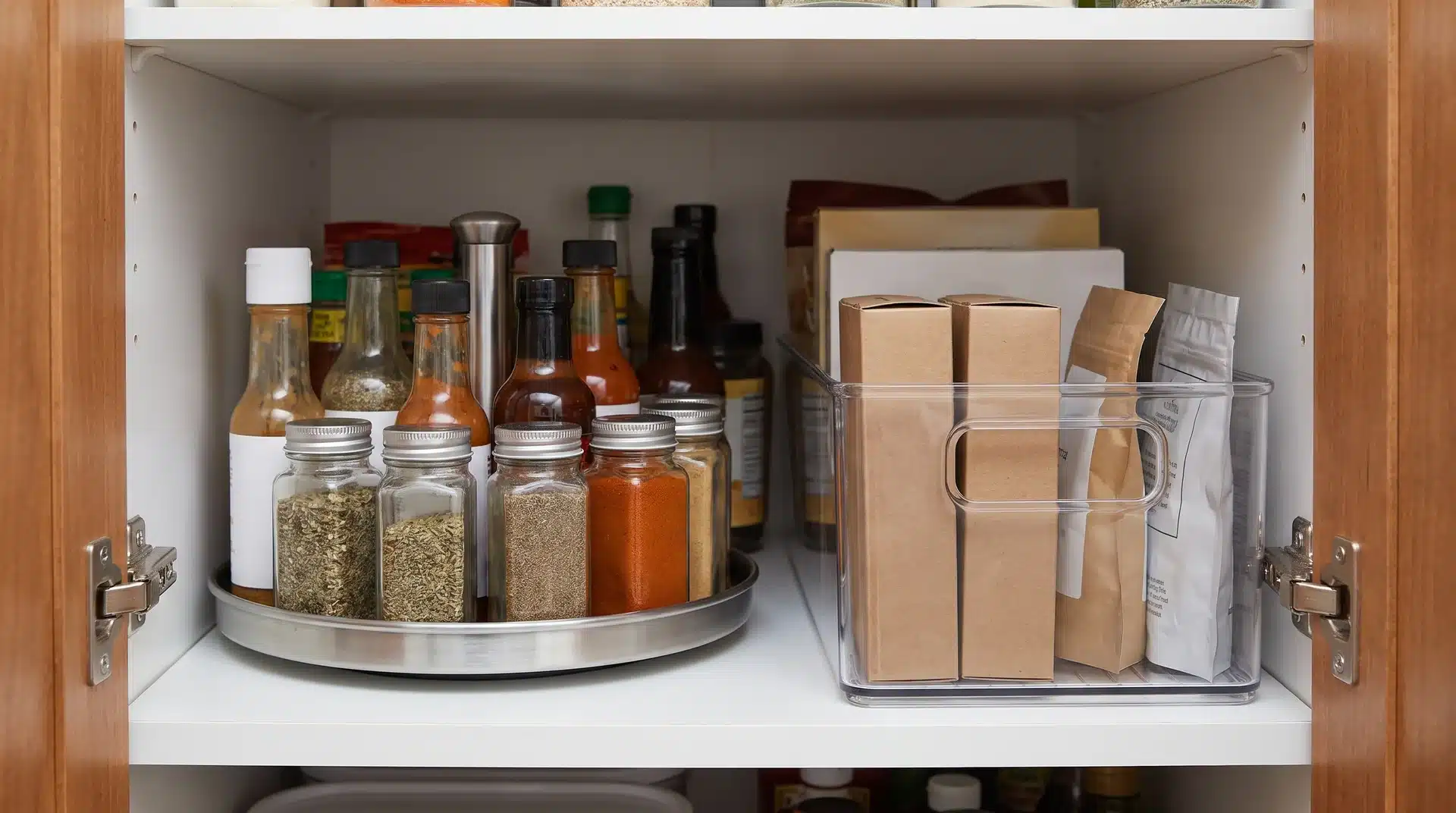
Corners and deep shelves can be annoying because items can disappear behind one another. A Lazy Susan lets you spin the shelf and bring items from the back to the front.
They work best for bottles, jars, and sauces that you use often. Avoid filling them with heavy items, as they can become harder to turn. the best part is you can use them as Kitchen organizers too.
6. Add Tiered Organizers for Cans and Jars
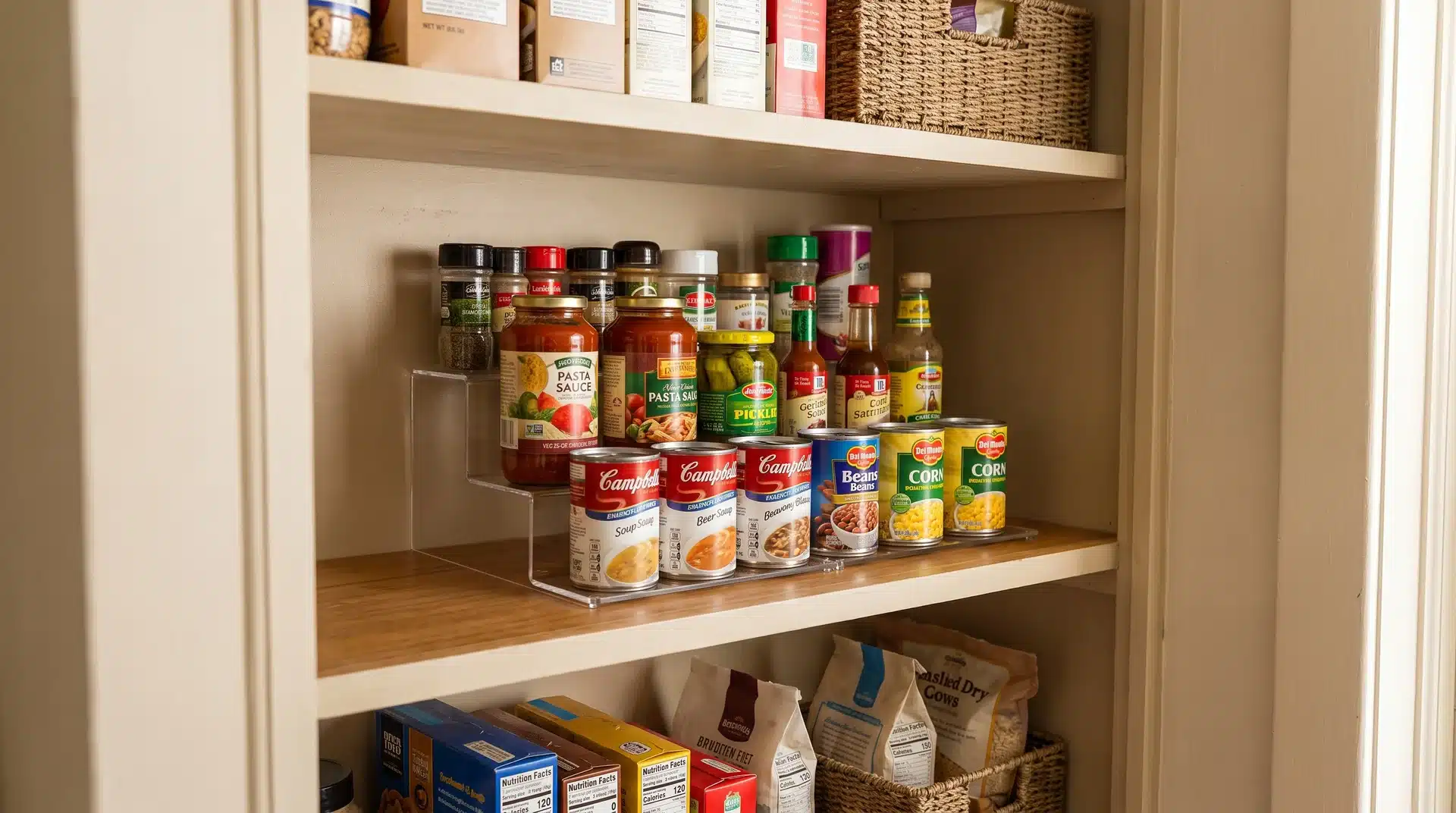
Tiered organizers help you see items that would normally get hidden behind taller products. Instead of moving cans around, you can see each row at a glance.
They are useful for canned foods, jars, and small containers. Keep similar items together so you can find what you need without searching through the whole shelf.
7. Create Pantry Zones Based on How You Use Food
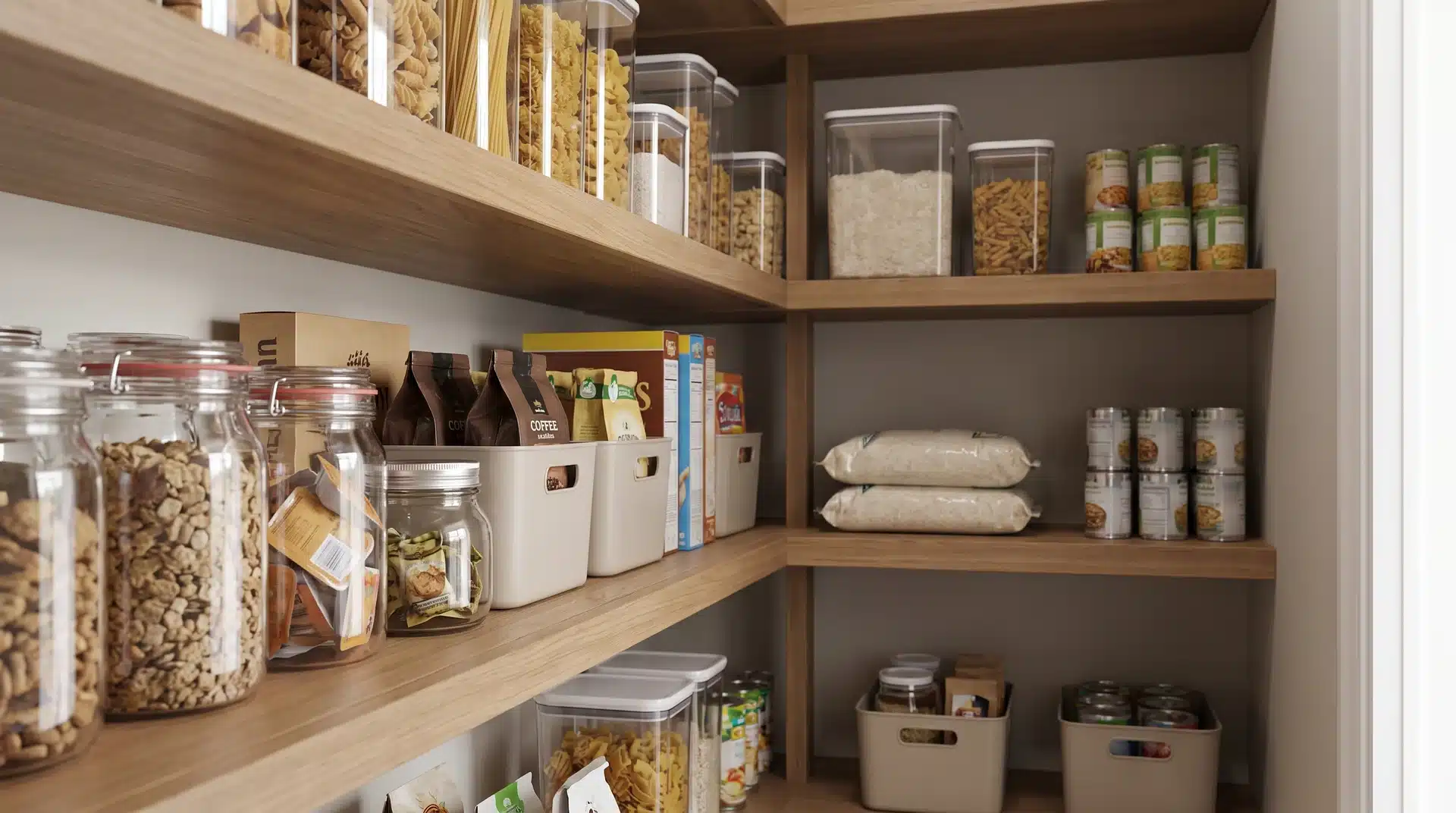
A small pantry works better when similar items stay together. Instead of putting things wherever they fit, create simple sections based on how you use them.
Keep snacks in one area, baking supplies together, and everyday cooking items within easy reach. This makes putting groceries away much easier.
8. Use Rolling Carts for Extra Bulk Storage
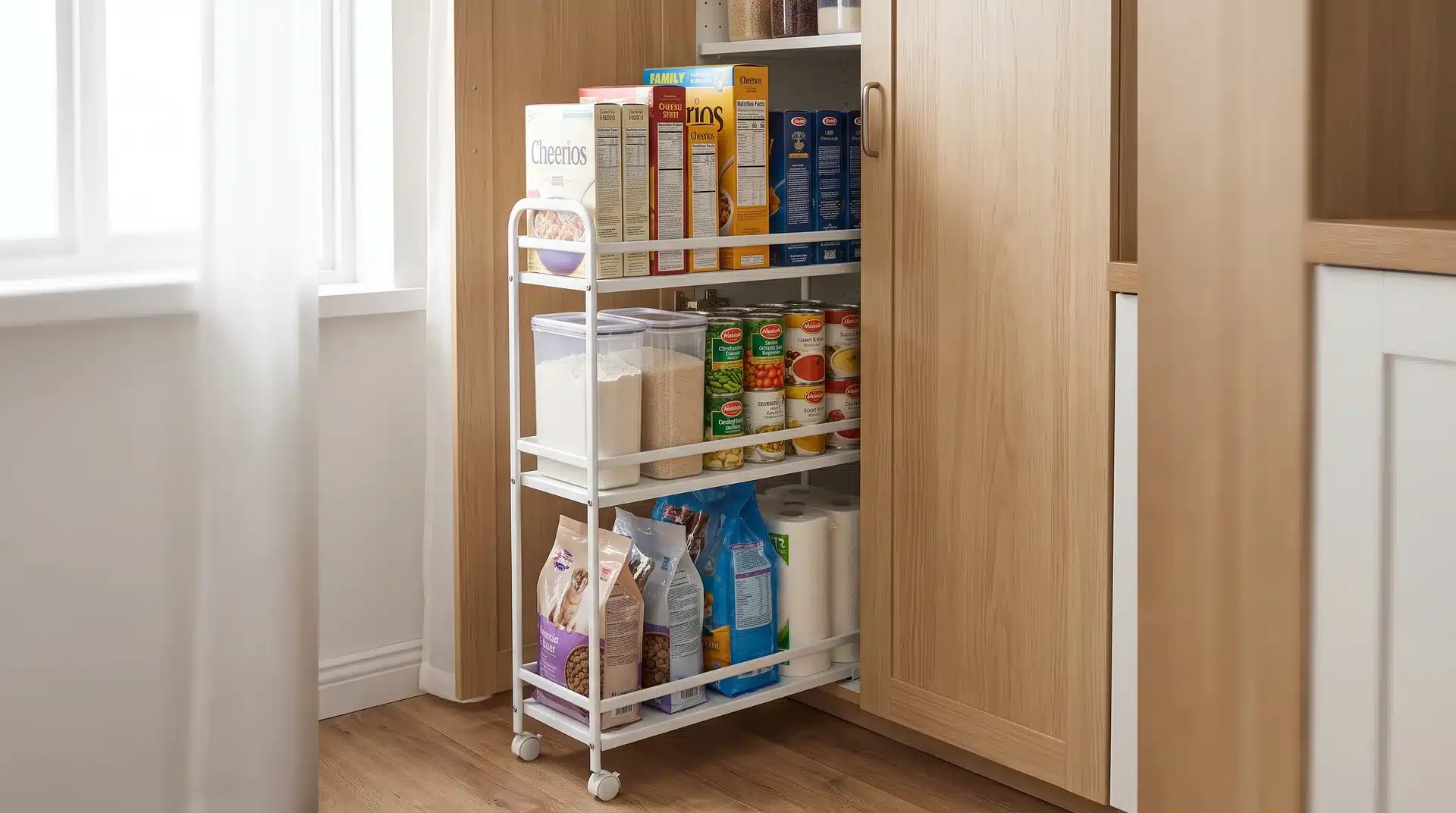
Small pantries often do not have enough room for bulk items like large food packs, extra cans, or backup supplies. A narrow rolling cart gives these items a separate storage spot without overcrowding your main pantry shelves.
Place the cart in an empty corner, beside cabinets, or near the pantry where it is easy to access. Use the shelves for items that take up too much space inside the pantry but still need to stay organized.
Choose a cart that fits the available space and can hold the weight of the items you store. This keeps your pantry less crowded while giving bulk supplies a practical place to stay.
9. Store Awkward Items Vertically
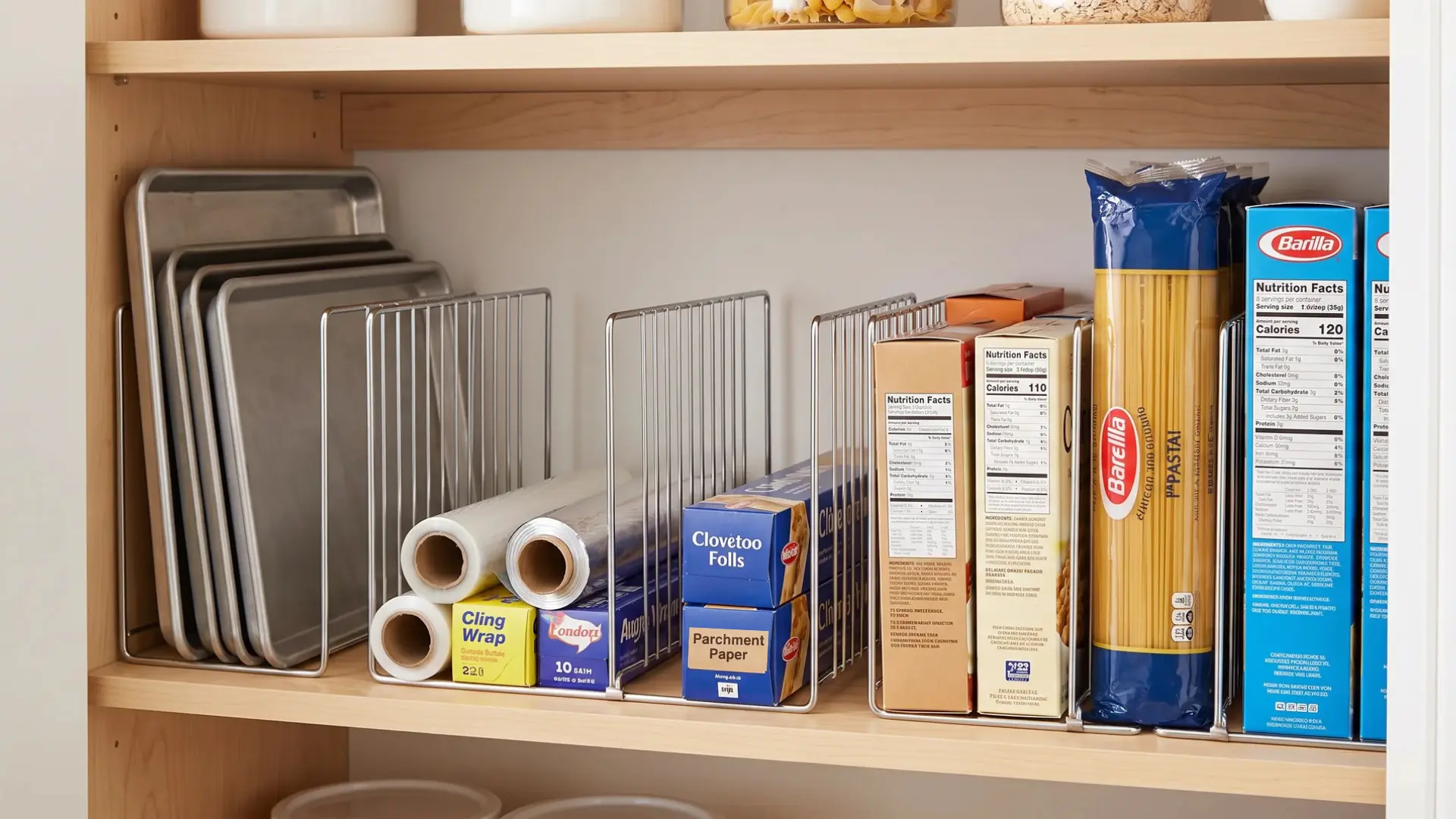
Some pantry items do not fit well in bins or containers, especially wraps, foil, baking sheets, cutting boards, and narrow boxes. Store these items upright so they do not turn into unstable piles.
Use shelf dividers or a narrow vertical rack to keep each item in place. This works especially well in slim gaps where stacked storage would be hard to reach.
I have found vertical storage much easier to live with than piles you have to lift every time. You can grab one item without shifting everything around it.
10. Add a Packet Organizer for Small Sachets
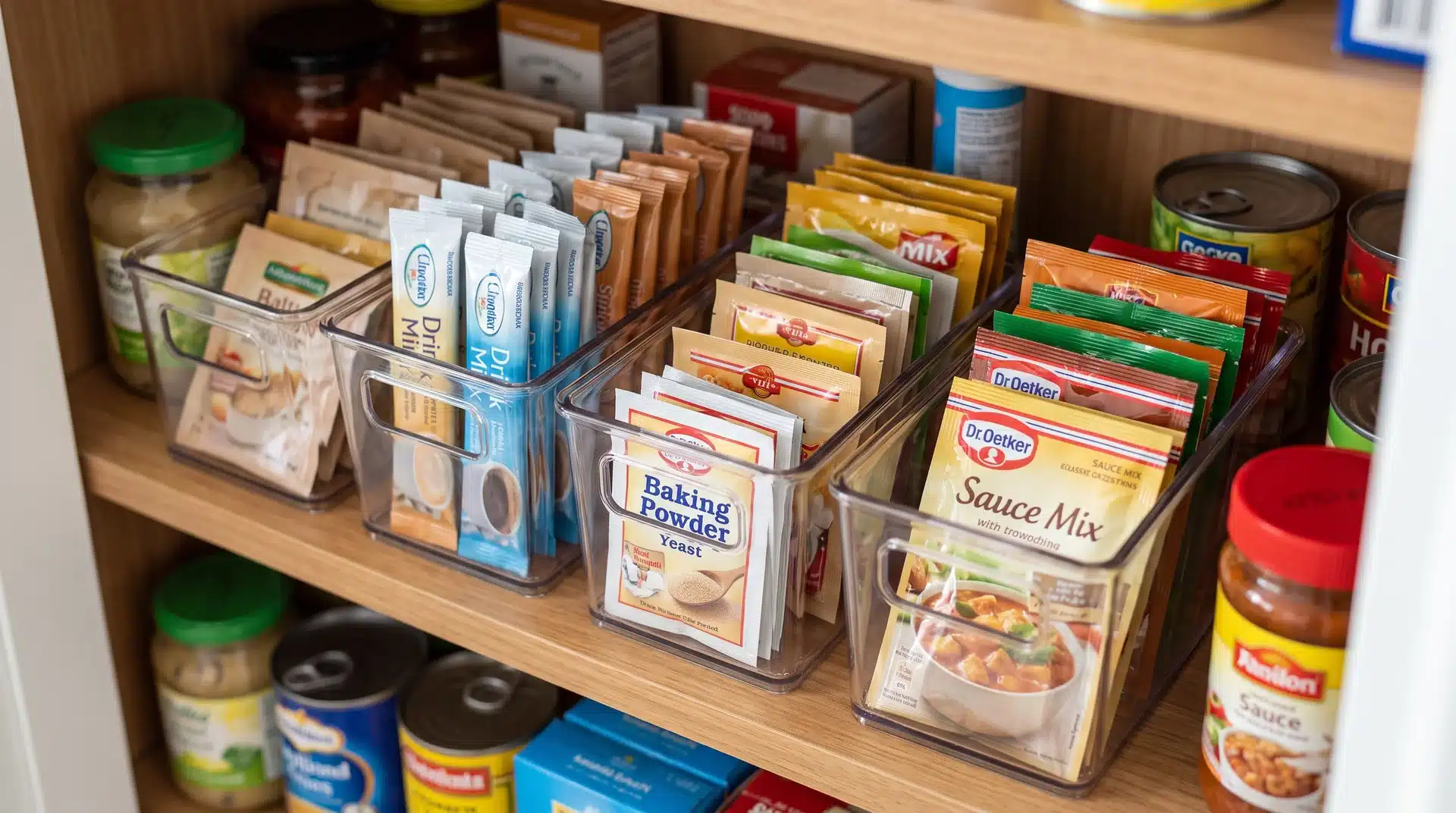
Small packets are easy to lose because they rarely stack well. A packet organizer keeps seasoning mixes, drink sachets, gravy packets, and snack pouches in one place.
It also makes it easier to check what you already have before buying more. This helps stop drawers and shelves from filling with random packets.
11. Add Under-Shelf Baskets for Extra Storage
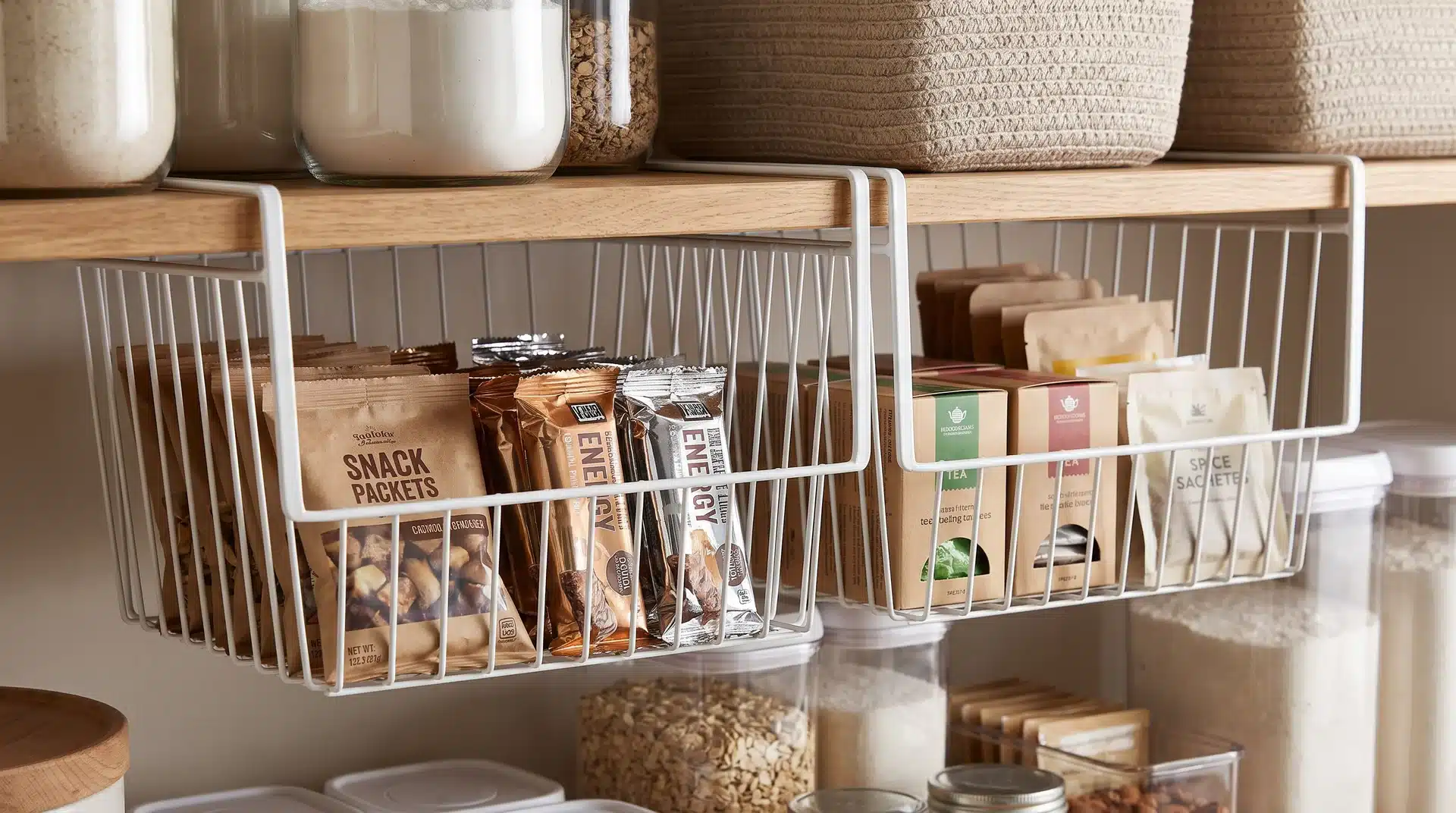
Under-shelf baskets use the empty space below existing shelves, giving you extra room without adding more shelves or cabinets.
They work well for small items like packets, snacks, tea bags, and lightweight kitchen supplies that often get lost in larger spaces.
This helps keep small items grouped together while leaving your main shelf space free for larger containers and everyday pantry items.
12. Label Pantry Containers and Bins
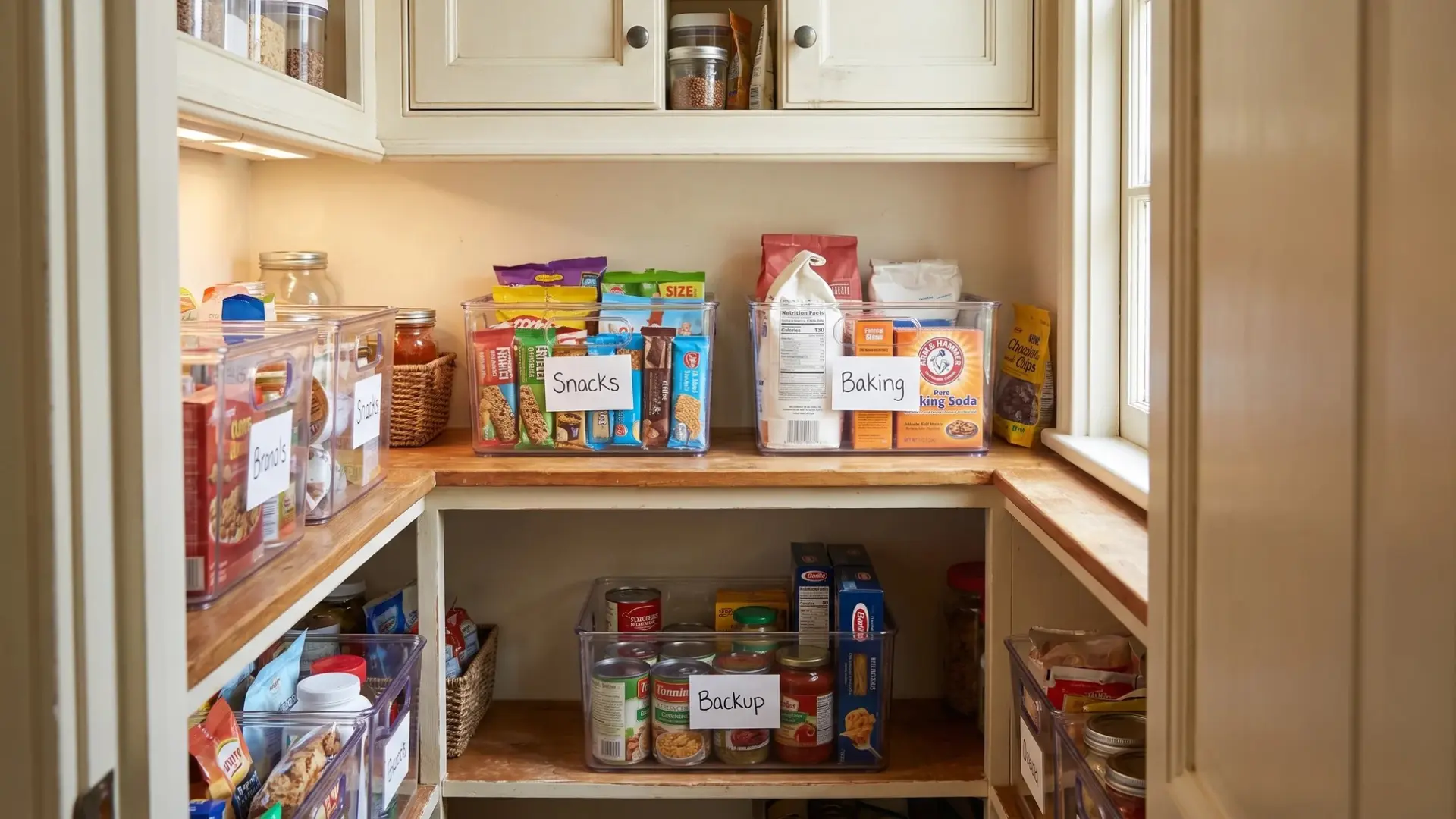
Labels make it easier to keep your pantry organized because everyone knows where each item belongs. They are especially helpful when you use bins for snacks, baking supplies, or backup food- a small addition that fits well alongside other small home upgrade projects.
Keep labels simple and based on how you use your pantry. Broad labels like “snacks” or “baking” usually work better than creating too many small categories.
13. Create a Breakfast or Meal-Prep Zone
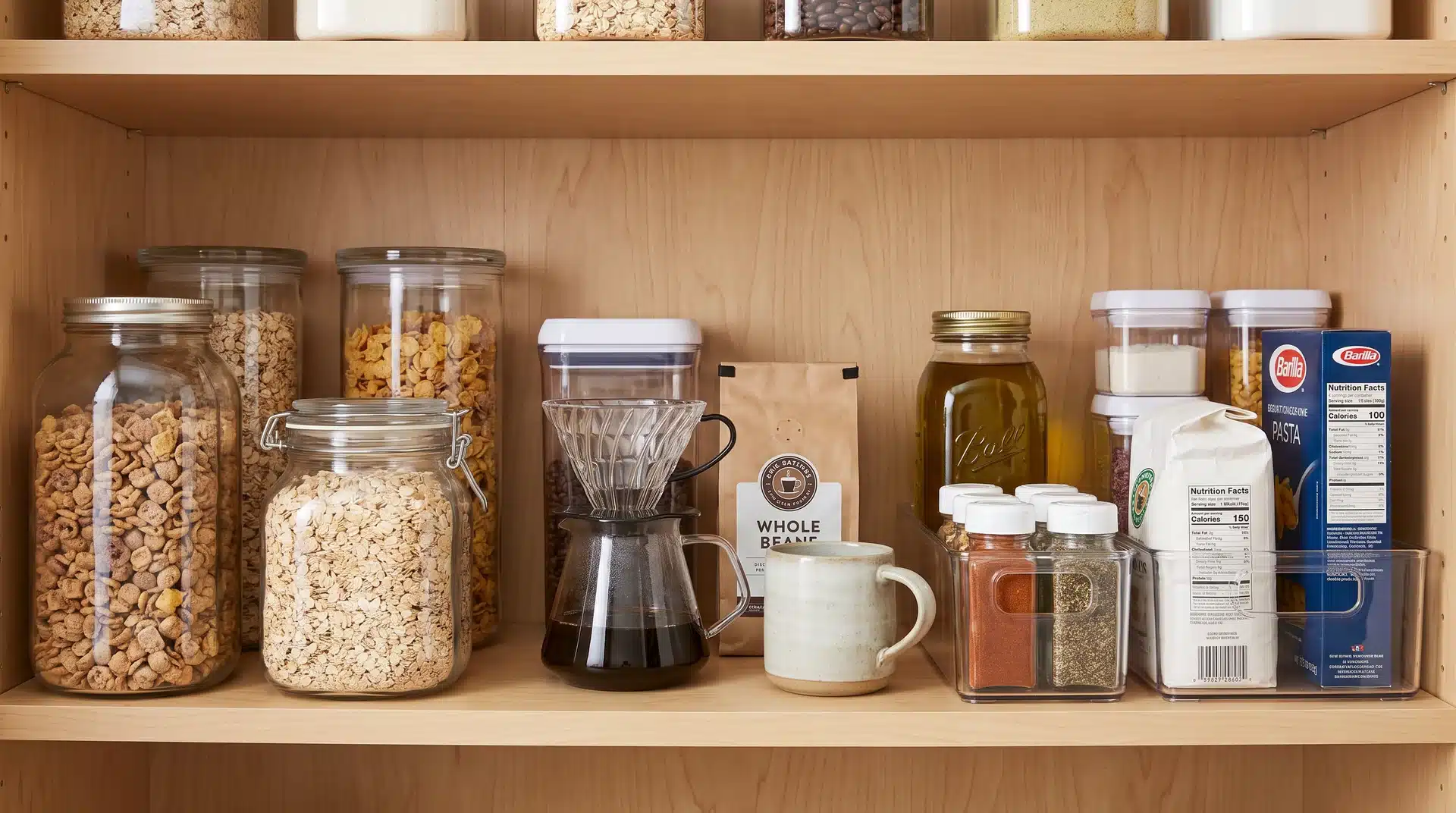
Instead of keeping breakfast foods or meal-prep ingredients across different shelves, create one area for the things you reach for most.
Keep items like cereal, oats, coffee supplies, or cooking basics in the same zone if you use them often. This saves time because you are not searching through the pantry every morning or before cooking.
The best setup depends on your routine. If breakfast is the busiest part of your day, give those items an easy-to-reach spot. If you cook more often, create a zone for everyday ingredients instead.
14. Set Up a Grab-and-Go Snack Drawer
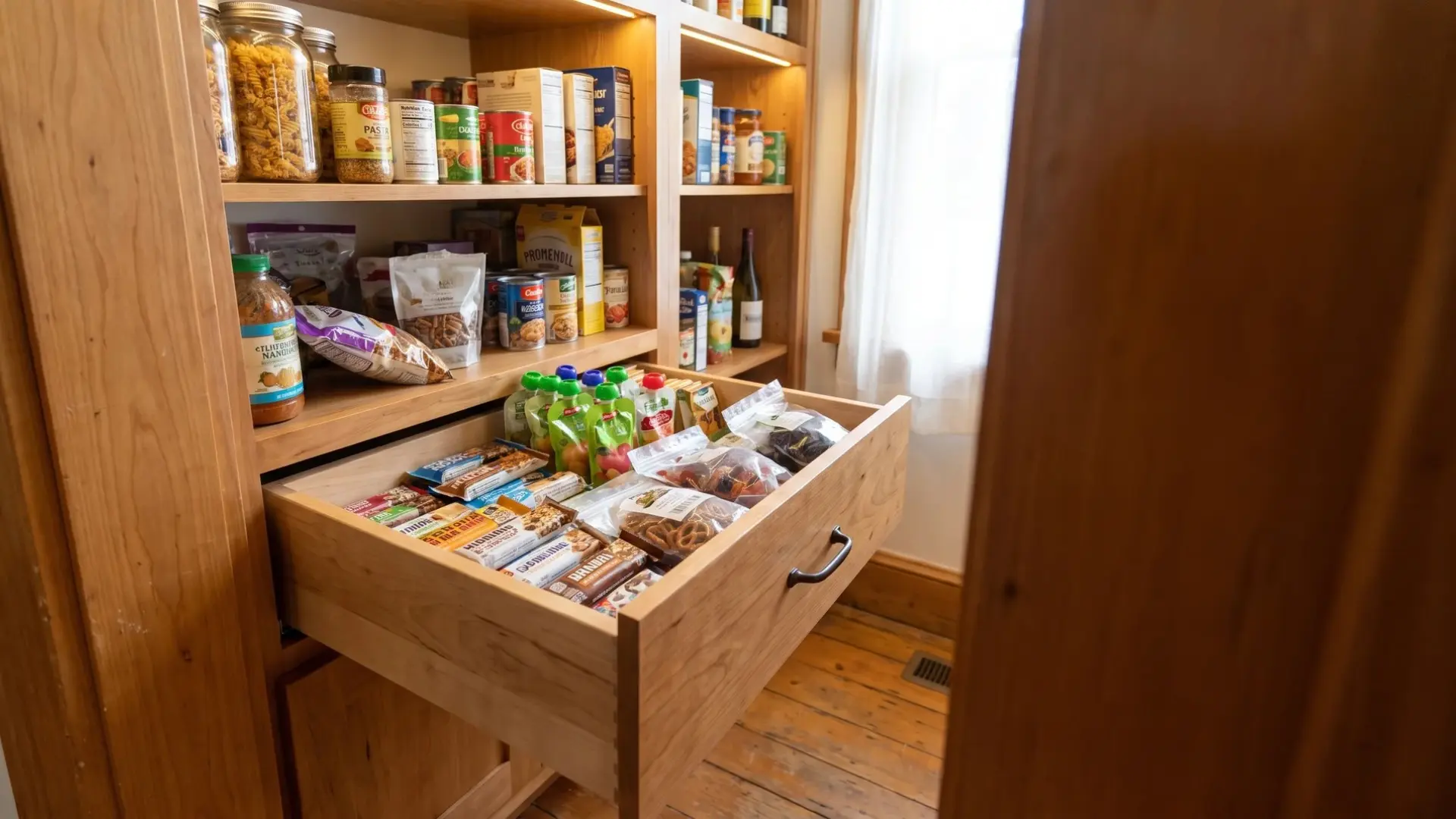
A single, always-messy shelf often signals that everyone reaches for snacks in a hurry. Dedicate one drawer or low basket entirely to grab-and-go items like granola bars, fruit pouches, and pre-portioned snacks.
Placing this at a height kids can reach on their own cuts down on mid-shelf digging and keeps snacks from spilling into other categories.
15. Hang a Rod or Rail for Lightweight Tools
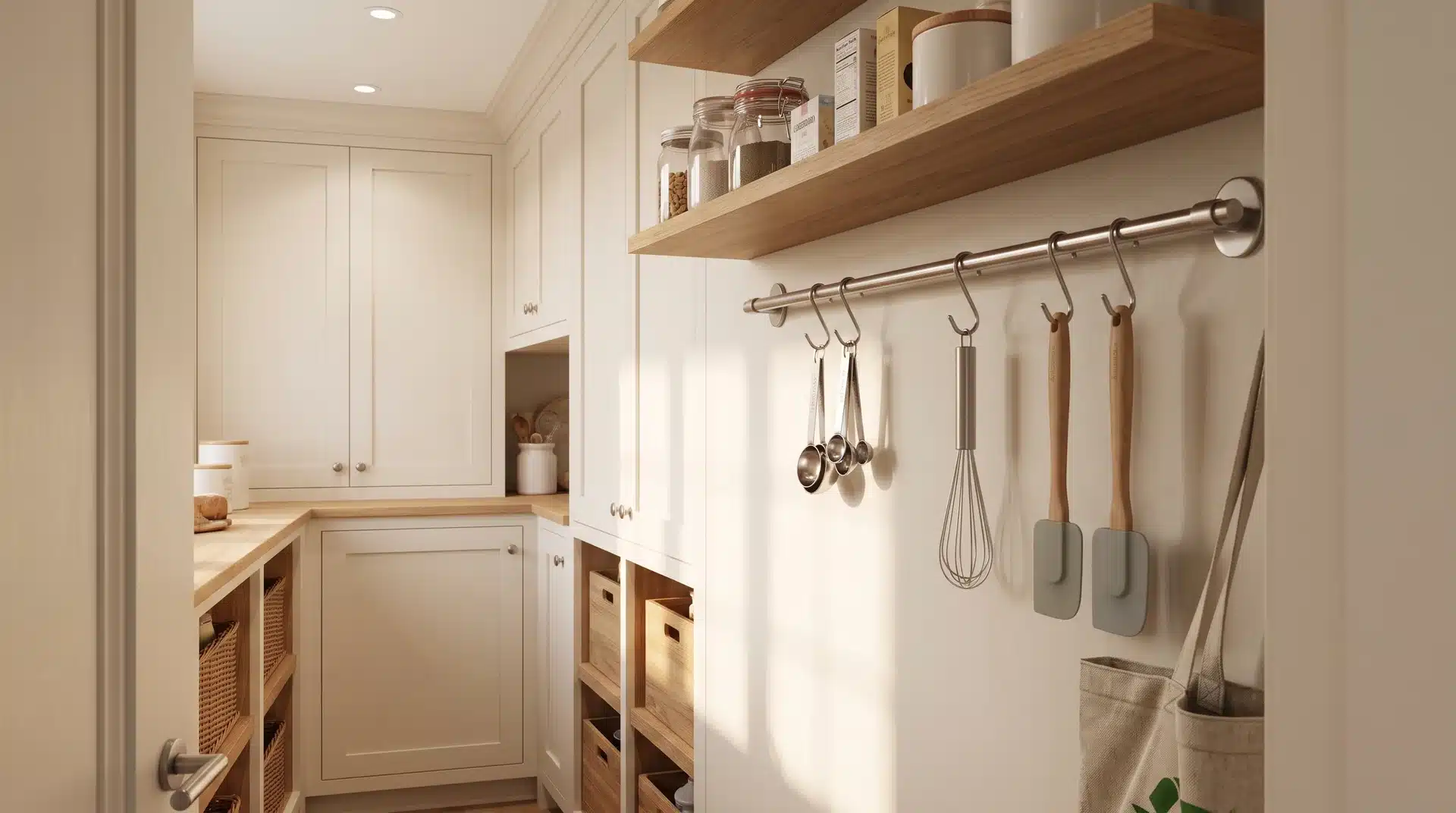
A slim tension rod or wall-mounted rail under a shelf can free up drawer space for measuring spoons, twist ties, and other small tools you use often.
I’ve found this works best for lightweight items you’re always reaching for. Add a few S-hooks so everything hangs in place instead of rolling around on the shelf.
16. Add Hooks for Aprons, Mitts, and Reusable Bags
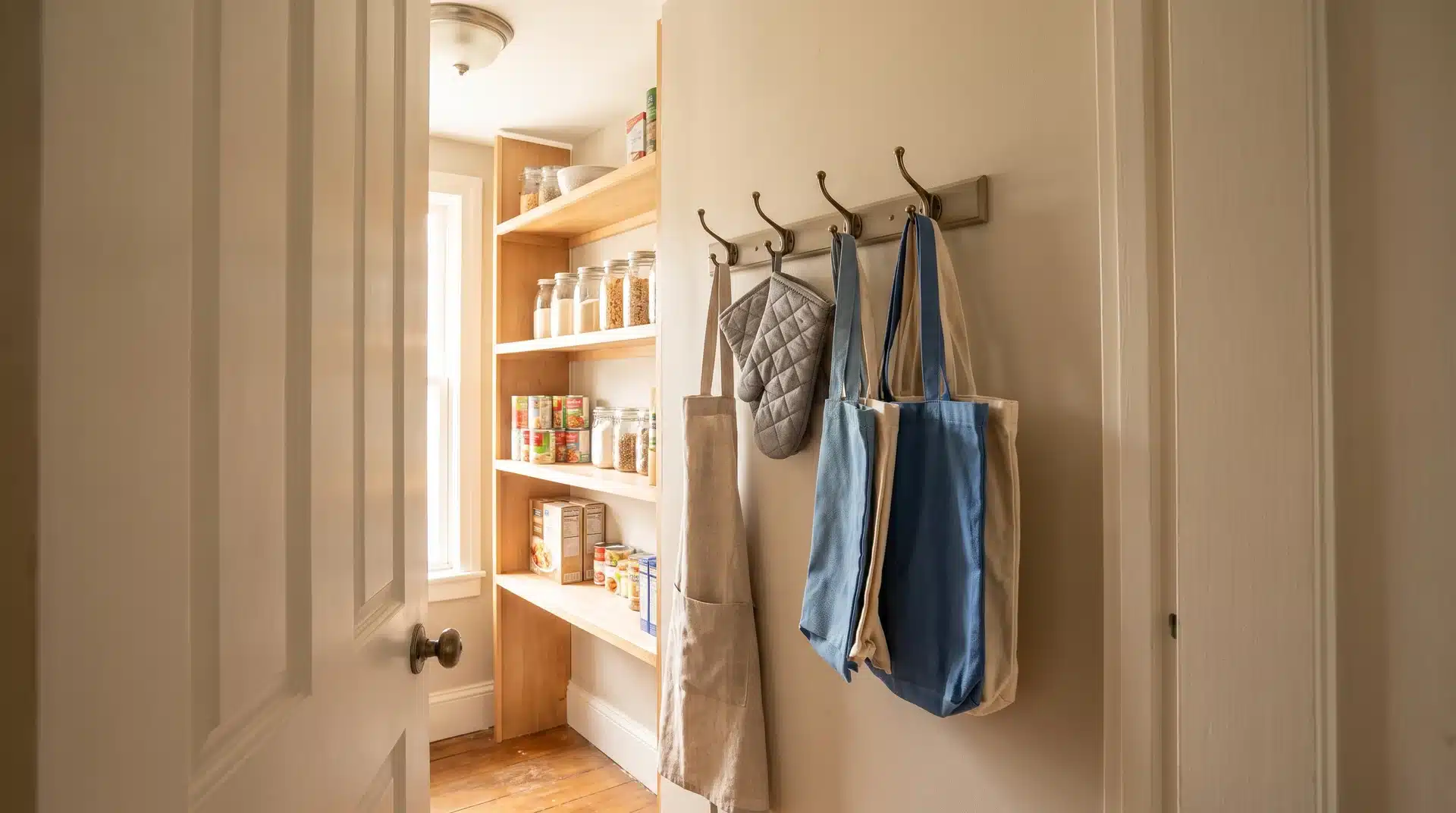
The side wall of a pantry is easy to overlook, but it can be useful storage space. A few small hooks can hold aprons, oven mitts, and folded reusable bags without taking up any shelf room.
This setup works especially well in a closet-style pantry, where the door swings past the shelves and that narrow wall space would otherwise go unused.
17. Use Magnetic Spice Tins on a Side Wall
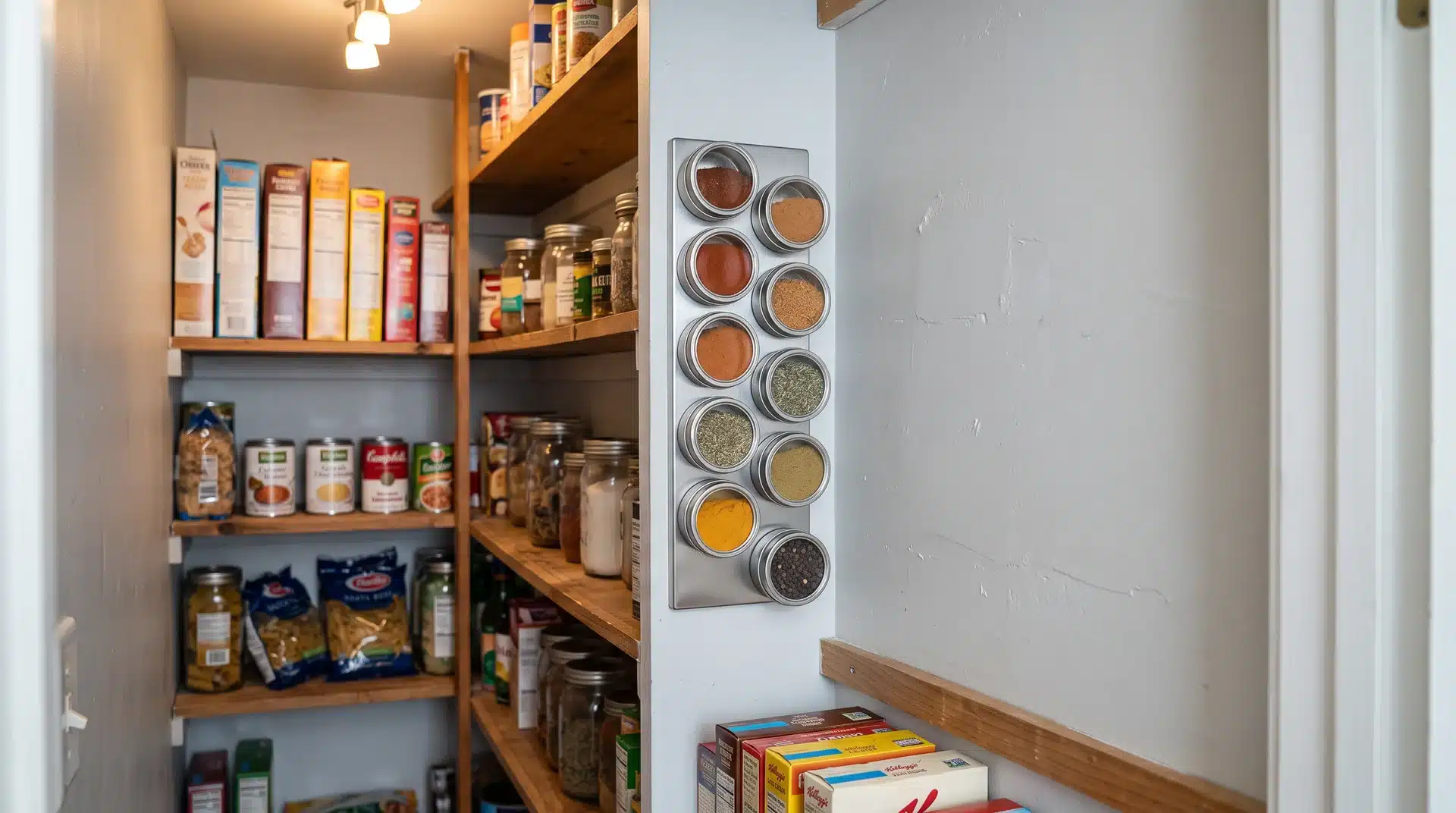
Magnetic spice tins are a simple way to free up shelf space. If your pantry has a metal surface, you can stick the tins directly to it. If not, add a narrow magnetic strip to the wall first.
This works best on an empty side wall or in unused space above the shelves, especially when your pantry is short on room.
18. Use a Hanging Wire Basket for Produce
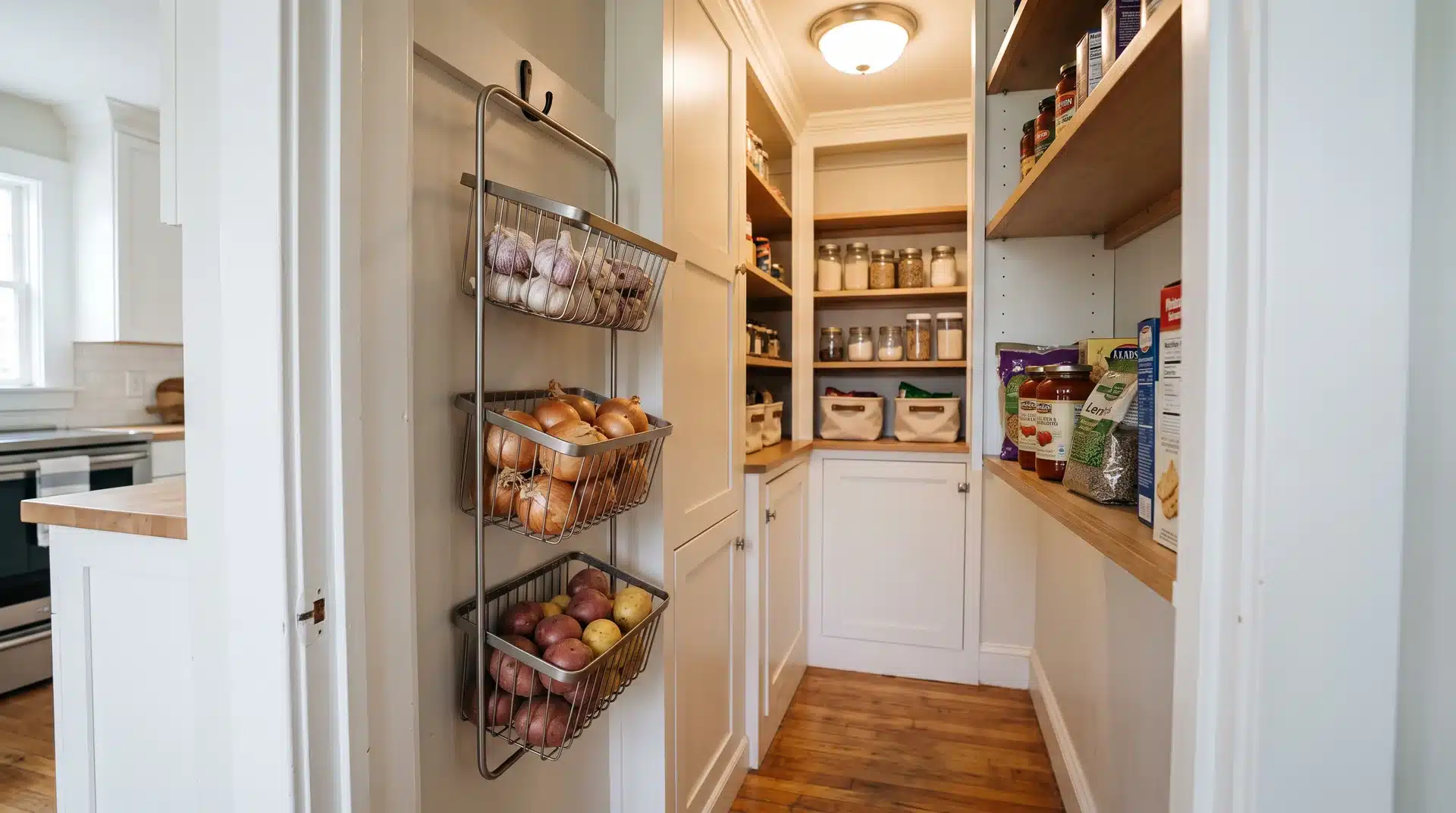
Onions, potatoes, and garlic don’t need refrigeration, but they take up a surprising amount of shelf space and can spoil faster in a sealed bin.
A tiered hanging wire basket lifts them off the shelf entirely and keeps air moving around them. This frees up an entire shelf for packaged goods and keeps produce from rolling around loose or bruising under heavier items.
19. Repurpose a Wine Rack for Rolling Canned Goods
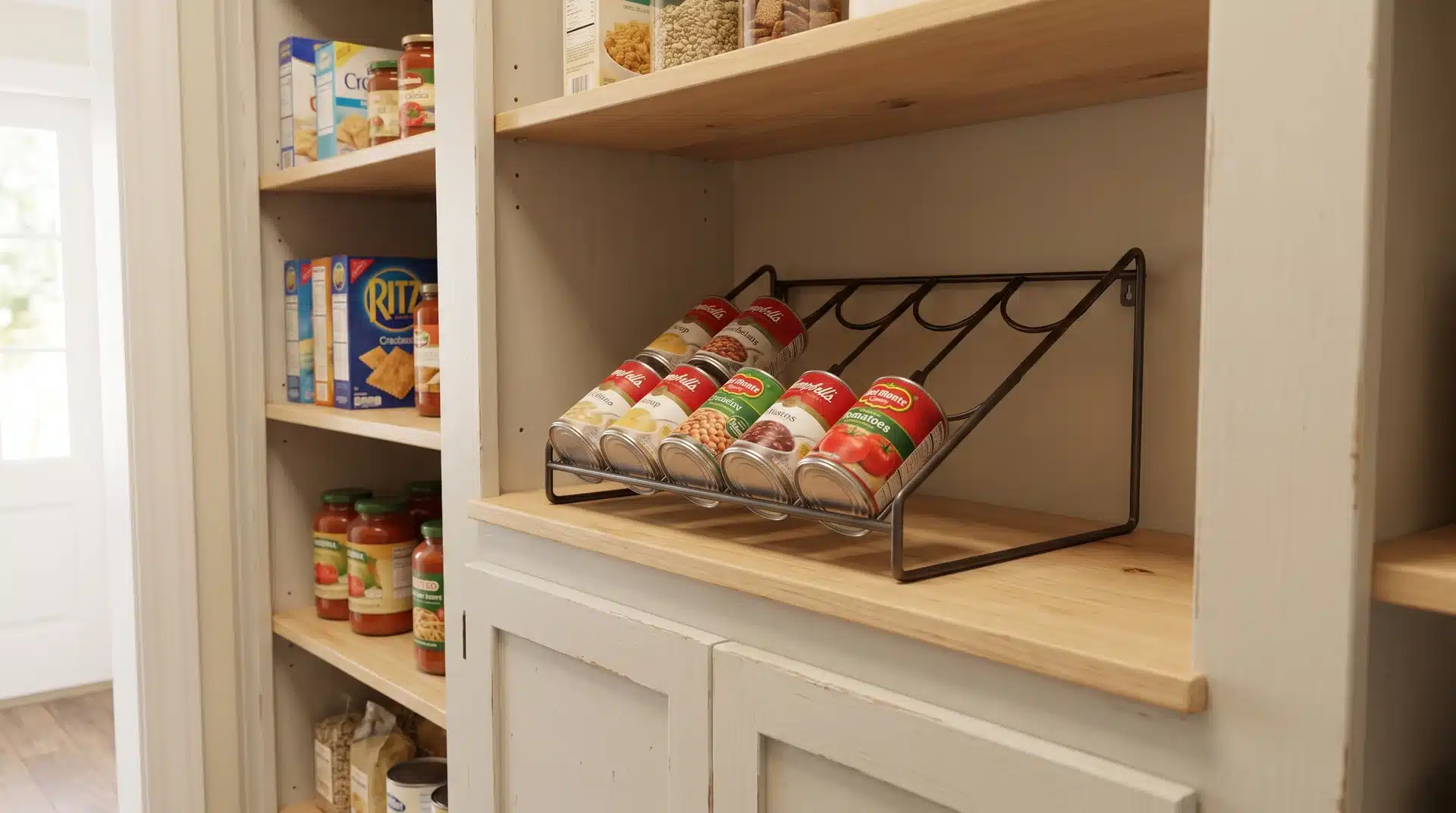
An angled wine rack or can dispenser lets cans roll forward as you take one from the front, so nothing gets buried at the back.
What usually makes shallow shelves annoying is having to move three or four cans just to reach the one at the back. A dispenser avoids that by keeping everything moving forward and easy to see.
20. Install a Pull-Down or Fold-Out Shelf
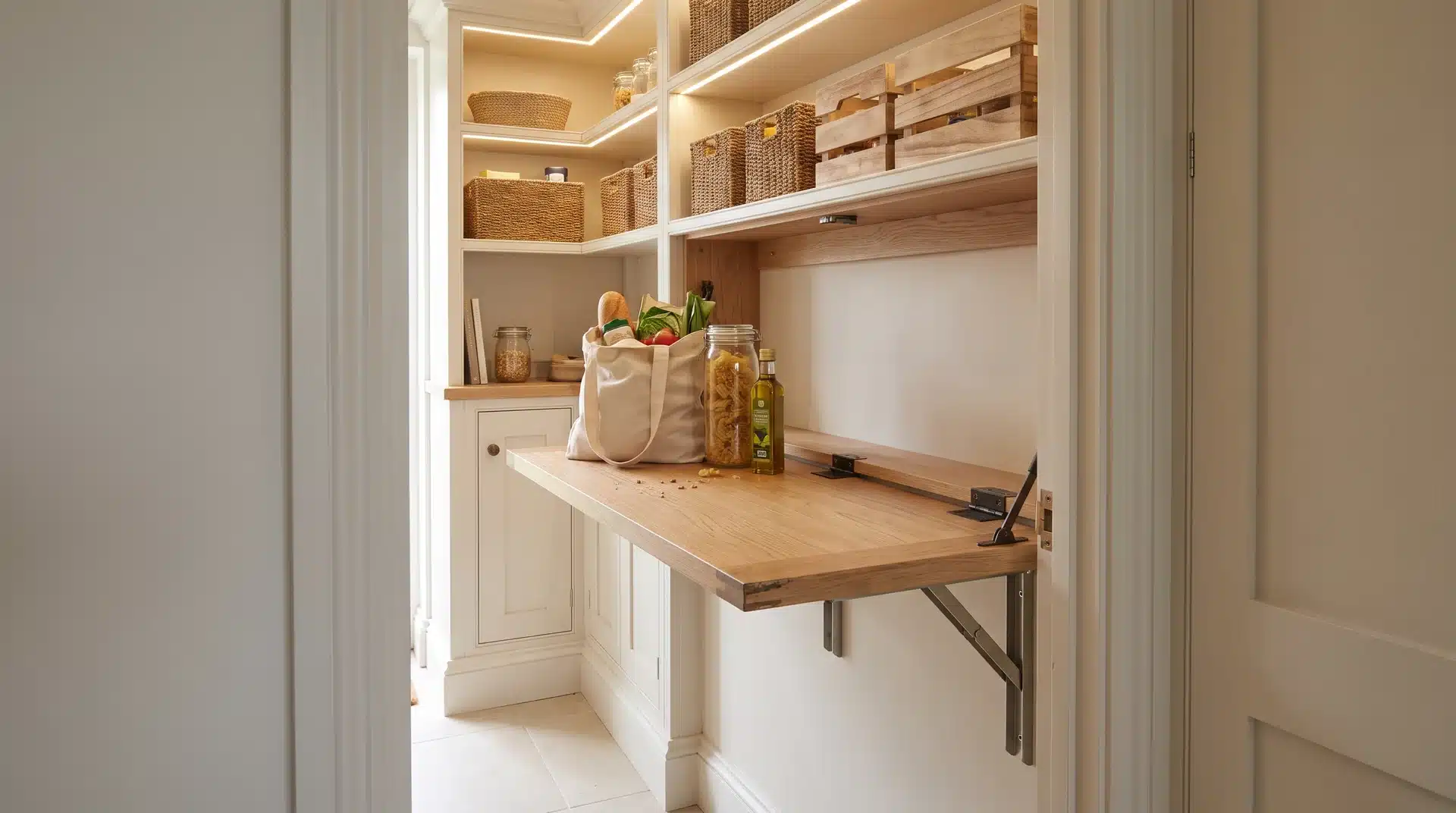
A pull-down or fold-out shelf gives you a temporary work surface without taking up space all the time. You can use it to set down grocery bags, sort items, or hold a recipe while you cook.
Its handy in a small closet-style pantry with no counter nearby. When you’re done, fold it back up and keep the walkway clear.
21. Add Floating Shelves Above the Doorway
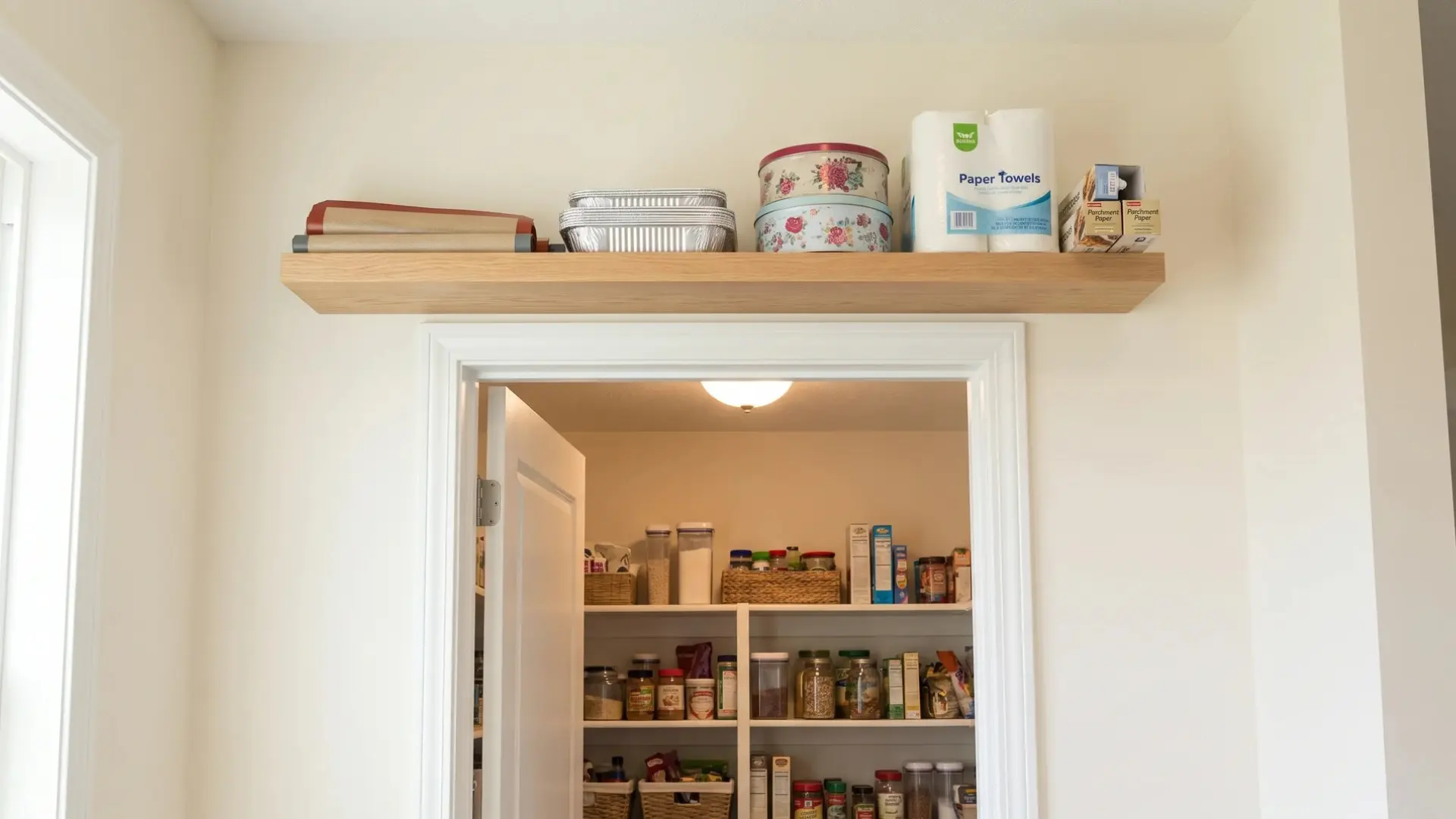
The wall space above a pantry door is almost always empty. A floating shelf there is a good spot for items you reach for only occasionally, like seasonal bakeware or backup paper goods, so they’re out of the way of everyday items.
Keep heavier items off these shelves, especially when they sit above head height. Store lighter things here so they’re safer and easier to reach.
22. Keep a Chalkboard or Whiteboard Inventory List
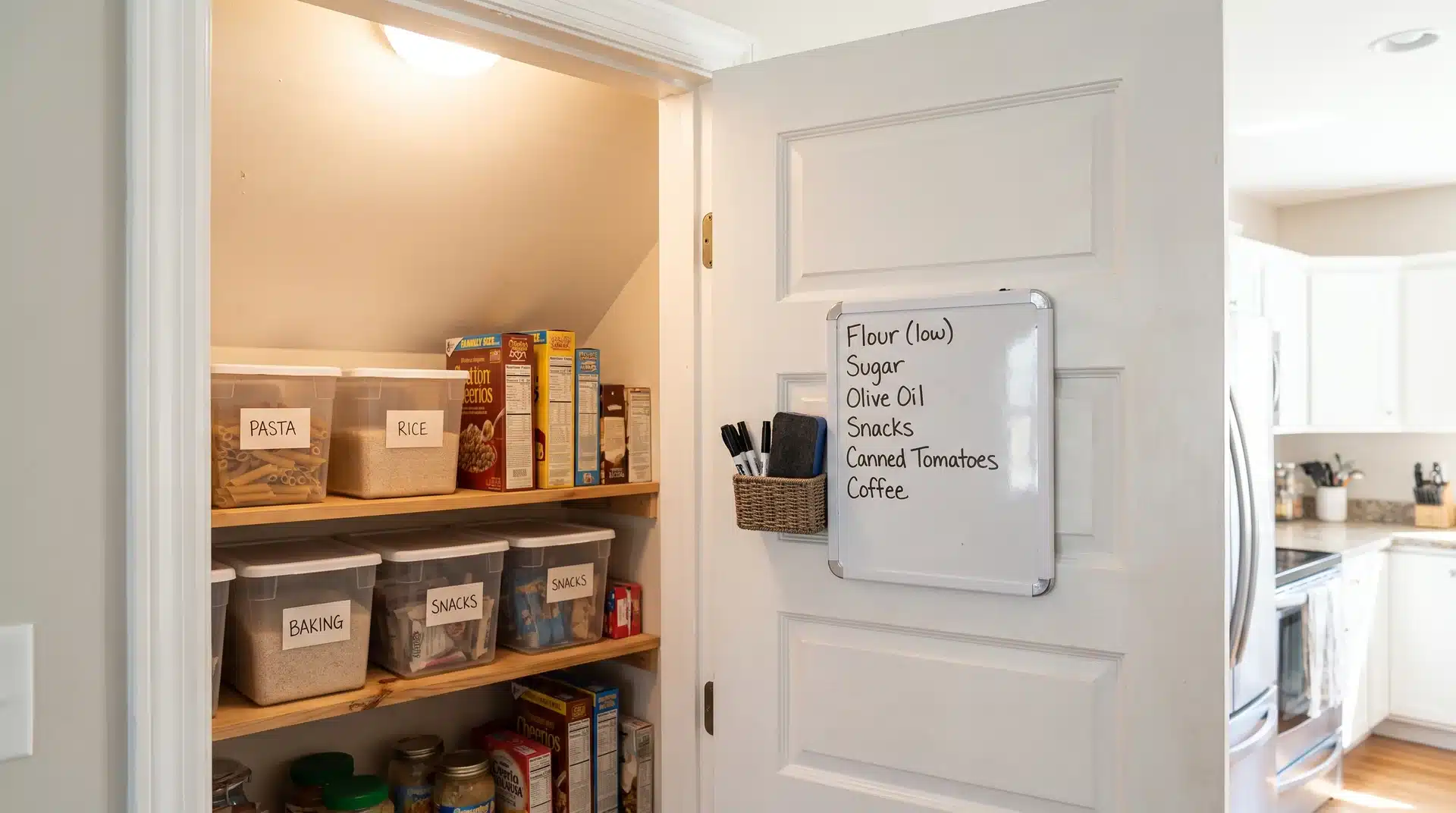
A small chalkboard or whiteboard inside the pantry door gives you an easy place to note what’s running low before you forget.
This is quite handy with labeled bins. As soon as one category starts getting low, you can write it down and avoid trying to remember everything at the store.
23. Use a Pegboard on the Back Wall
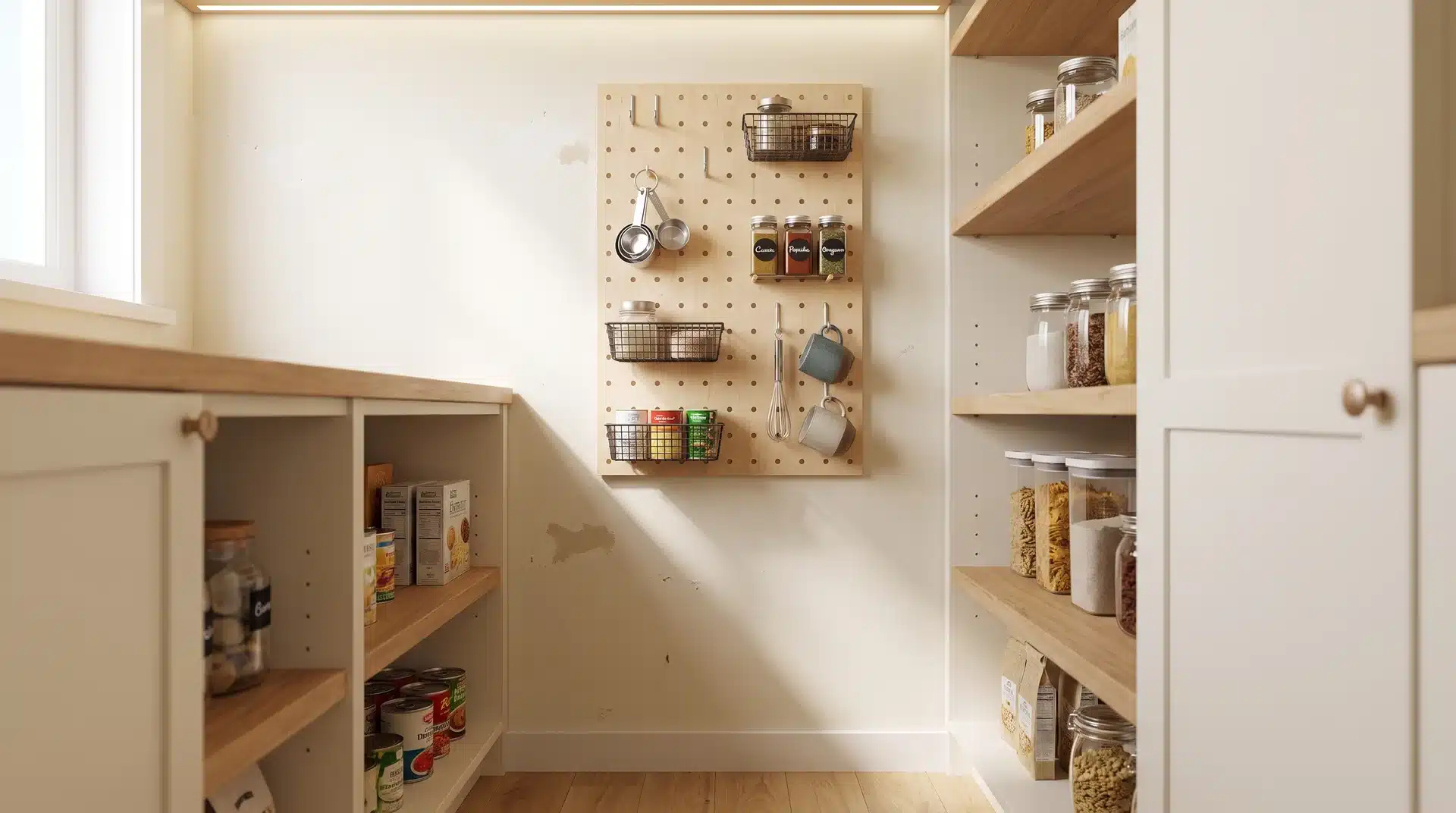
If your pantry has an empty back wall, a pegboard can turn it into useful storage. Add hooks or small baskets for measuring cups, spice jars, and other lightweight items you want within easy reach.
This setup works well because it’s easy to change later. You can move the hooks and baskets around as your storage needs change, without adding more bins or permanent shelves.
24. Use Modular Wire Shelving for Awkward Spaces
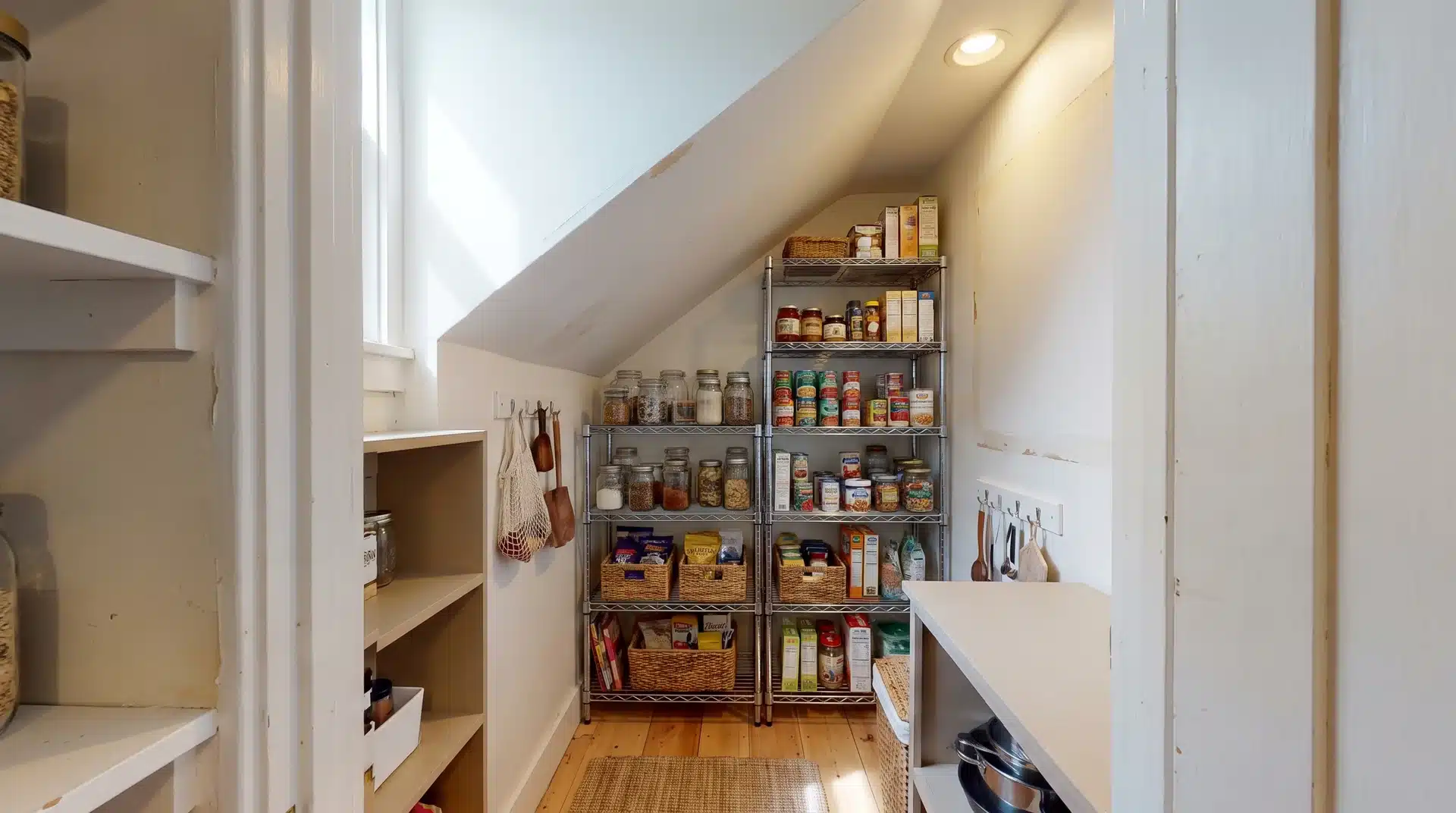
Odd corners, narrow gaps, and spaces under a sloped ceiling often go unused because regular shelves simply don’t fit.
A modular wire shelving unit is easier to work with because you can adjust the shelf height and layout to match the space. That makes it a practical way to use an awkward nook without committing to permanent built-in shelves.
25. Add a Dedicated Bread Bin or Basket
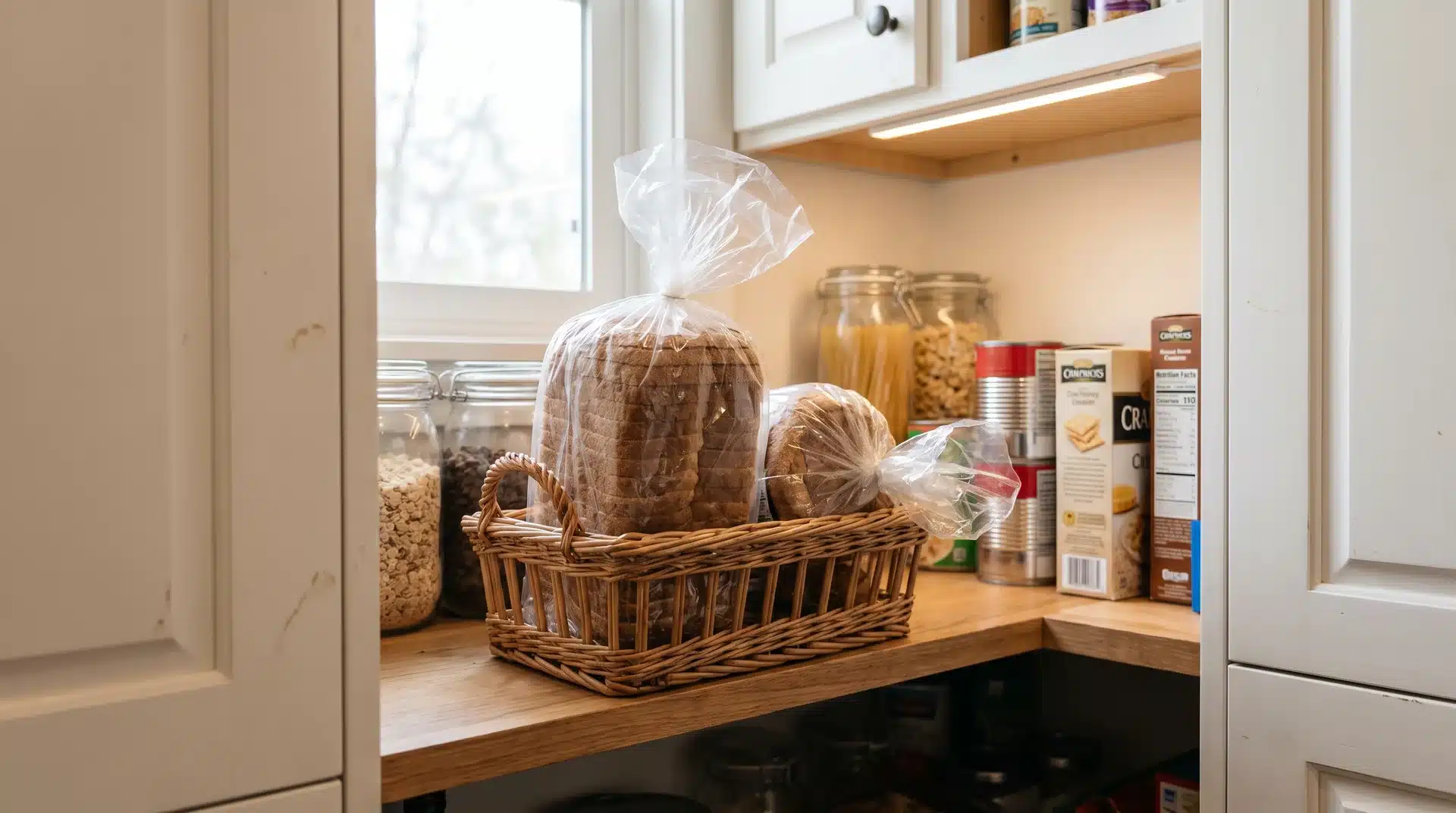
Loose bread bags tend to get squashed under cans or lost behind boxes, and stacking anything on top of a loaf flattens it fast.
A single dedicated bin or basket sized for bread keeps it in one identifiable spot, upright and untouched by whatever else lands on the shelf. Keep it at eye level or just below so it doesn’t end up buried under heavier items.
When Pantry Containers Actually Make Sense?
Containers work best when they improve freshness, stacking, or visibility. Before transferring food, consider what type of item you store, how often you use it, and whether the original packaging already works well.
| Food Type | Use Containers? | Why |
|---|---|---|
| Flour, sugar, rice, oats, and pasta | Yes | Airtight containers help keep dry staples fresh, easier to stack, and simpler to see when supplies run low. |
| Cereal | Sometimes | Containers can reduce clutter and improve visibility, especially for frequently used cereals. |
| Packaged snacks | Usually no | Clear bins are often better because they keep original packages grouped without extra refilling work. |
| Individual packaged foods | Usually no | Keeping items in their original packaging preserves labels, instructions, and important information. |
| Foods with expiration dates or allergen details | Use caution | Keep expiration dates, cooking instructions, and allergen information available when removing original packaging. |
Before buying containers, measure your shelves and choose sizes that fit your available space. If the original package already seals well and stores neatly, keeping it as is may be the easier option.
If the original package already stores neatly and seals properly, leaving the food in it may be the simpler option.
How to Organize Pantry: Common Mistakes to Avoid
- Filling every available space: Completely packed shelves leave nowhere for new groceries. Keep some open room so products can move without disrupting an entire category.
- Using storage that hides food: Deep opaque bins can make smaller products easy to forget. Use clear storage or labels when you can’t see the contents.
- Choosing appearance over function: Matching jars can look neat, but they are not automatically the best use of limited shelf space.
- Making food difficult to put away: If replacing an item requires moving several containers, the system is unlikely to stay organized.
Even a well-organized pantry becomes frustrating if the storage system makes everyday tasks harder.
Maintaining a Small Pantry Organization System
A good pantry setup stays useful when you make small adjustments over time. Some of them are listed below for your reference:
- Review your pantry regularly: Check your shelves every few weeks to remove empty packages, expired items, and products you no longer plan to use.
- Adjust as your needs change: Update shelf placement or storage methods when your shopping habits, cooking routine, or household needs change.
- Restock with a plan: Add new groceries behind older items when possible so you use what you already have before opening replacements.
- Clean storage areas periodically: Wipe shelves, containers, and organizer surfaces to remove crumbs, spills, and dust that can build up over time.
- Keep the system simple: If a storage method takes too much effort to maintain, replace it with a setup that better matches your daily routine.
Regular maintenance prevents clutter from building up and helps you notice problems before they affect your storage system.
Conclusion
These small pantry organization ideas all come back to one thing: order matters more than products. Sort before you buy, zone by how often you reach for something, and fix the deep-shelf spots that swallow items whole.
That’s the actual reason why past attempts didn’t stick. It was never about needing more bins. So don’t try to fix the whole pantry tonight. Pick one shelf, empty it, and sort everything into categories before you touch a single container.
Begin with one small change and build from there. If you have a pantry organization trick that works for you, share it in the comments. I’d love to know what helps you keep your space organized.
Frequently Asked Questions
What is the best way to organize a small pantry?
Start by sorting everything into categories and removing expired or duplicate items, then split what’s left into an everyday zone for daily items and a backup zone for extra stock. Only after that should you measure shelves and choose containers, since buying storage first is the most common reason small pantry systems don’t last.
What are some common pantry organization mistakes?
The biggest mistake is buying bins or shelving before deciding on categories, which leads to mismatched storage. Overfilling the everyday zone beyond daily use and letting backup stock go unrotated are the next most common issues; both quietly erode the separation that keeps a small pantry functional.
How do you organize a small but deep pantry?
Deep shelves hide items at the back, which is the main complaint in small pantries. Turntables keep round items accessible from any angle, while pull-out bins or baskets let you slide the back of a shelf forward rather than reach blindly. Reserve the very back for backup stock you grab less often.