Do you ever wonder: can you mail food? Mailing food sounds complicated at first, but it really isn’t. Either it’s a box of cookies or frozen steaks, people figure out how to ship food every single day across the US.
The tricky part for you is knowing the rules before hitting send. If you pack it wrong or skip a label, things can go south fast. Nobody wants melted ice cream or a rejected package, right?
All you need is learning how to ship food or how to ship frozen food without it thawing, or just understanding what’s allowed, and the answers are all right below. Let’s get into it.
Can You Mail Food: Here’s What to Know
Yes, you can mail food in the US. USPS, UPS, and FedEx all allow food shipments, and people send them every day. However, each carrier has its own rules.
These rules cover how the food is packed, labeled, and shipped. If these guidelines are not followed, the package may be delayed, rejected, or arrive in poor condition.
Some foods are easier to ship than others. Once you know how to ship food properly, the process becomes much easier.
Food Items You Can Actually Ship in the US

Before shipping food, it’s important to know what is allowed and what isn’t. Some foods are easy to mail, while others have limitations. If you’re wondering, can you mail food? It’s important to know that it depends on the type.
1. Non-Perishable Foods
Non-perishable foods are the easiest option when you’re learning how to ship food. They stay safe at room temperature and have a long shelf life. These are the most commonly accepted items across all carriers.
Here are common non-perishable foods you can ship:
| Food Type | Examples |
|---|---|
| Baked Goods | Cookies, brownies, bread |
| Snacks | Chips, nuts, crackers |
| Candy & Chocolate | Hard candy, gummies, chocolate |
| Dried Fruits & Jerky | Raisins, mango strips, beef jerky |
| Spices & Seasonings | Hot sauce (sealed), spice blends |
| Canned & Jarred Goods | Jam, pickles, pasta sauce |
2. Perishable Foods
Perishable foods can be mailed, but they don’t last long outside proper conditions. They are more sensitive and may spoil during transit if delayed.
Here are common perishable foods that can be shipped:
| Food Type | Examples |
|---|---|
| Fresh Produce | Fruits, vegetables, herbs |
| Meat & Seafood | Steaks, shrimp, salmon |
| Dairy Products | Cheese, butter, yogurt |
| Homemade Meals | Soups, casseroles, sauces |
| Eggs | Fresh eggs |
3. Frozen Foods
Frozen foods are widely shipped, but they are subject to stricter rules. They must remain frozen throughout the journey to stay safe. When considering how to ship frozen food, it’s important to know which types are commonly allowed.
Here are typical frozen foods that can be shipped:
| Food Type | Examples |
|---|---|
| Frozen Meat & Seafood | Steaks, chicken, lobster tails |
| Frozen Meals | Lasagna, soups, prepared entrees |
| Ice Cream & Desserts | Ice cream pints, frozen cakes |
| Frozen Fruit & Veg | Berries, corn, peas |
How to Ship Food Safely So It Arrives Fresh Every Time

You just need to do it in the right order. A little prep goes a long way toward making sure everything arrives fresh.
Step 1: Pick the Right Box
Start with a strong, double-walled cardboard box that can handle pressure during transit. Thin boxes can easily get crushed, which puts your food at risk.
Choose a size that fits your items snugly so they don’t shift around too much.
Step 2: Wrap and Seal Everything
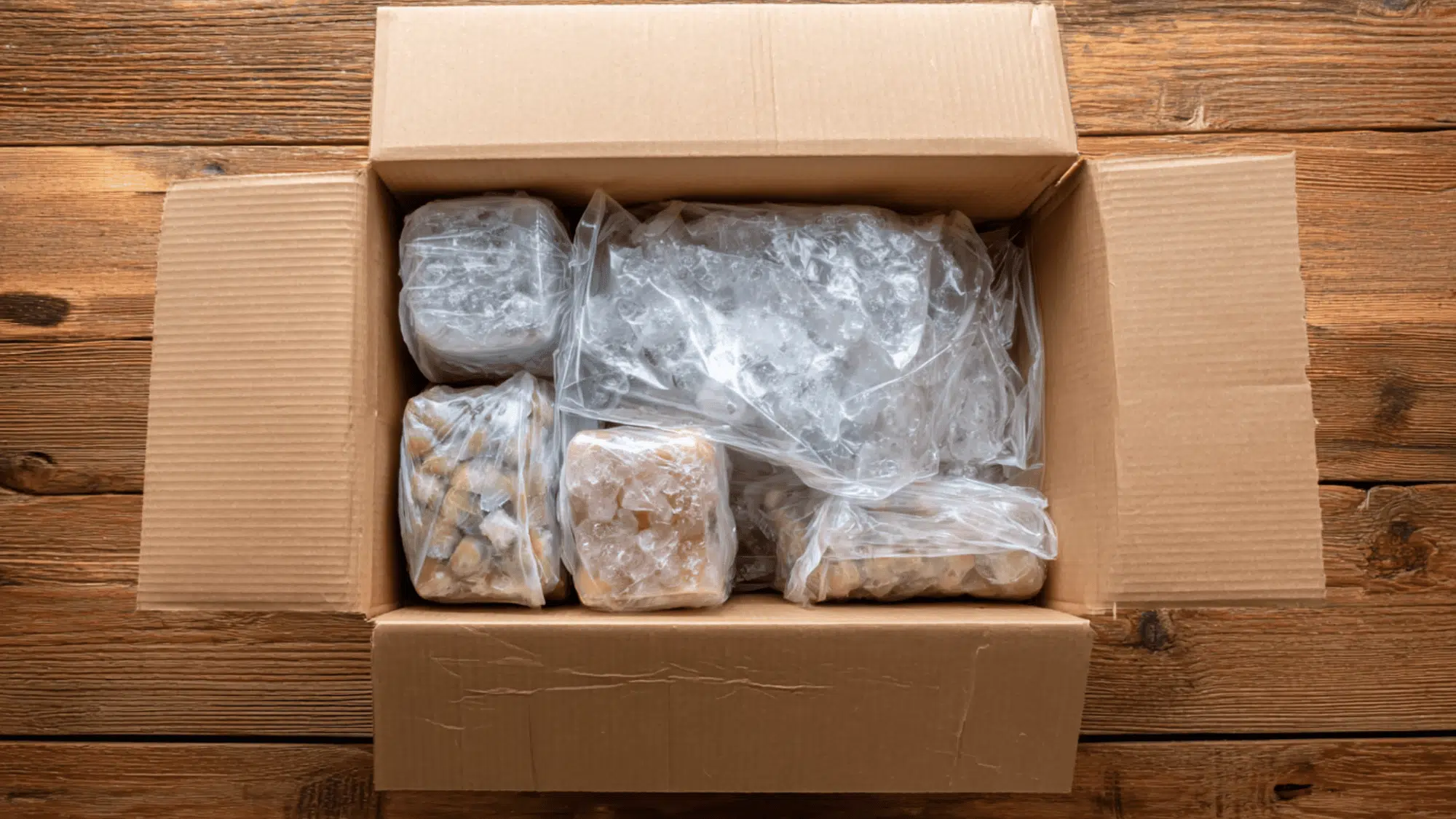
Each item should be packed in an airtight bag or container to keep it fresh and protected. If you’re packing anything liquid, double-bag it to avoid leaks. Even a small spill can damage the entire package.
Step 3: Add Ice Packs (for perishables)
Gel ice packs are a reliable option for keeping food cold during shipping. Place them on top of and around your food instead of just at the bottom.
This helps maintain an even temperature throughout the box. Balanced cooling reduces the chances of partial spoilage.
Step 4: Insulate the Box
Use a styrofoam liner or an insulated insert inside the box to trap cold air. This layer acts as a barrier against outside heat and keeps the temperature steady.
Ice packs alone won’t be enough without proper insulation. Good insulation extends the cooling time during transit.
Step 5: Fill Empty Space
Empty gaps inside the box can cause items to move and get damaged. Fill those spaces with bubble wrap, packing paper, or peanuts.
This keeps everything secure and reduces the risk of breakage. It also helps maintain a stable internal environment.
Step 6: Seal and Label the Box
Seal the box tightly by taping all seams, including the top, bottom, and sides. If your package contains perishable food, clearly label it as “perishable” and “keep refrigerated.” This helps handlers take extra care.
Step 7: Choose the Right Shipping Speed
Shipping speed plays a big role in keeping food safe. Non-perishable items can go through standard ground shipping. Perishable items should always be sent via overnight or 2-day delivery to reduce spoilage.
Faster delivery means less exposure to temperature changes.
How to Ship Frozen Food without It Thawing Out?

Shipping frozen food the right way keeps it safe, fresh, and ready to use. A few smart packing steps can help prevent thawing during transit.
- Use dry ice or gel ice packs: Dry ice is best for keeping food fully frozen, while gel packs work for shorter trips
- Choose an insulated container: A styrofoam box or insulated liner helps trap cold air and slow down temperature changes
- Pack items tightly together: Keeping items close reduces air gaps and helps maintain a consistent cold temperature
- Limit air space inside the box: Fill empty gaps with paper or padding so cold air stays trapped
- Seal everything properly: Use airtight packaging to avoid leaks and protect food quality
- Ship with fast delivery: Overnight or 2-day shipping reduces the risk of thawing
- Avoid shipping before weekends: Send early in the week to prevent delays in storage facilities
Foods that Can Get Your Package Rejected
Some foods are not allowed in shipping due to safety, spoilage, or legal restrictions. Knowing these ahead of time can save time, money, and avoid rejected packages.
| Food Type | Why It Gets Rejected |
|---|---|
| Alcoholic items | Restricted by shipping laws and require special permits |
| Fresh meat (unpacked) | Can spoil quickly and cause contamination if not packed properly |
| Seafood without insulation | High risk of leakage and strong odor during transit |
| Homemade liquid foods | Can leak and are often not accepted without proper sealing |
| Soft cheeses (without cooling) | Easily spoil if not kept at the right temperature |
| Cut fruits and vegetables | Perish quickly and may rot during shipping |
| Strong-smelling foods | Odor can affect other packages in transit |
| Frozen items without cold packs | Risk of thawing and becoming unsafe to consume |
| Open or unsealed food items | Fail hygiene and safety standards |
| Hazardous or restricted food items | Includes items banned by certain courier or destination rules |
Conclusion
And that’s the whole secret to shipping food. It’s not as complicated as it sounds.
Can you mail food? Now you know the answer, and it actually becomes pretty simple once you understand the process.
Things can go wrong quickly if the packaging isn’t done right. Poor packing can lead to leaks, melting, or spoiled food by the time it arrives. But once you understand how to ship food properly, it’s easy to avoid those problems.
Frozen food just needs a bit of extra care. Using dry ice, keeping items fully frozen, and adding proper labels makes a big difference.
Get these basics right, and shipping frozen food becomes much easier.