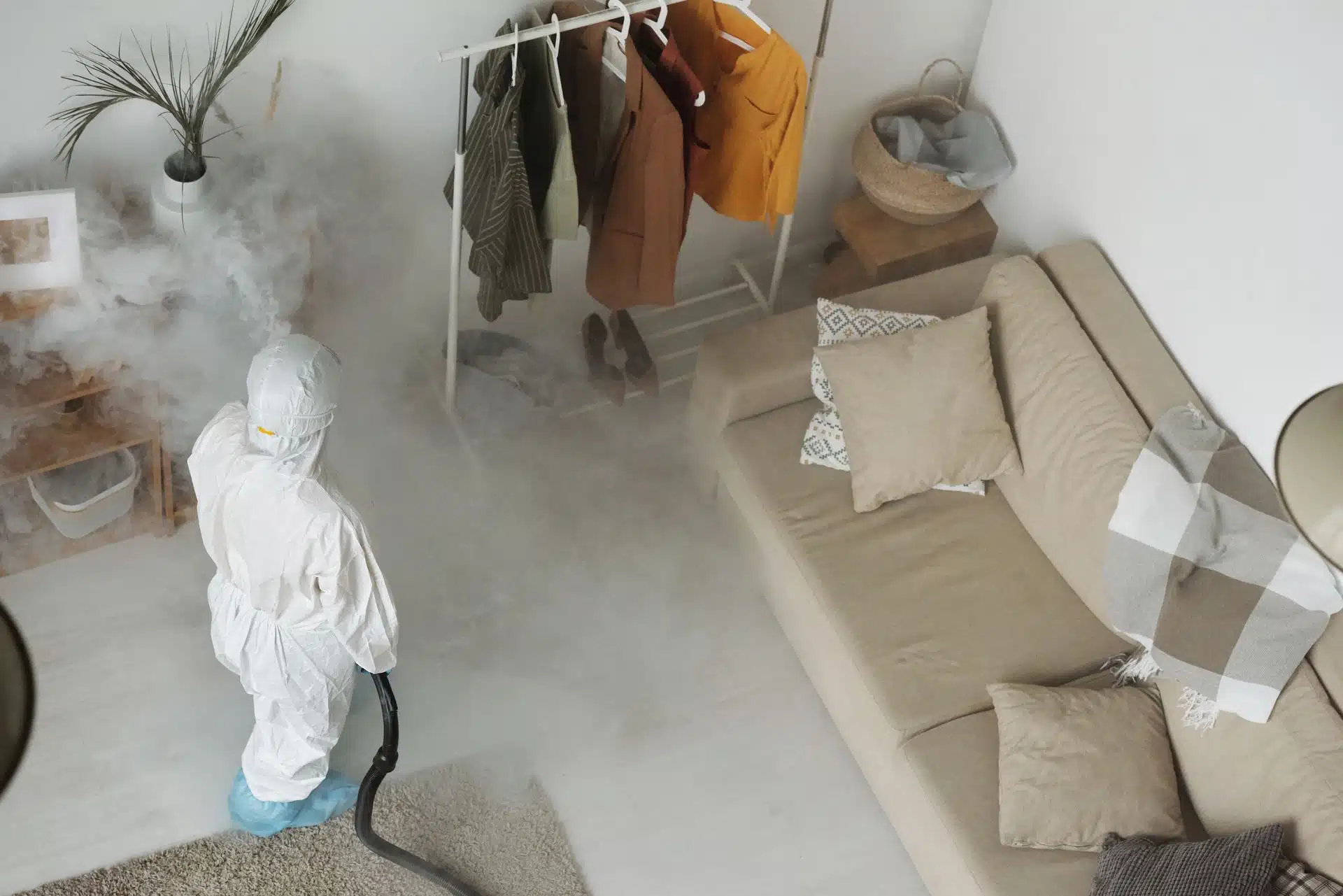
Why Mould Shows up In Compact Living Spaces
Mould is less a “dirty home” problem and more a moisture and airflow problem. In small flats, tiny homes, container homes, and modular builds, a little humidity goes a long way because there’s less air volume to buffer everyday moisture. A single shower, a pot of pasta, or drying laundry indoors can push humidity high enough that water condenses on the coldest surfaces, usually window frames, external corners, and behind furniture that sits flush to the wall.
If you have ever opened a wardrobe and caught that faint, sweet musty smell, that is often the first sign. It can be subtle at first: a peppery scent in a bedroom, a dark “shadow” at the silicone edge of the shower, or speckling on the back of a sofa where it meets an outside wall. The goal is to treat what you can see, then fix the conditions that let it come back.
Spot the Source Before You Scrub
Quick cleaning helps, but mould keeps returning when the underlying moisture stays. Before you start, take two minutes to look for clues. Is the patch near a window or an outside corner, where condensation tends to settle? Is it below a bathroom, around a radiator pipe, or under a window that’s been left slightly open in heavy rain? In portable and prefab homes, you might also see moisture issues where ventilation is undersized for everyday habits like cooking without lids or drying clothes indoors.
Condensation, Leaks, or Rising Damp: A Fast Check
Condensation usually shows up as fine spotting on cold surfaces and around window frames, especially in winter. Leaks often create a tide mark, bubbling paint, or a patch that grows quickly after heavy rain or a plumbing event. Rising damp is more typical on ground-floor masonry and tends to create staining low down on walls, sometimes with a salty, dusty residue. If you are renting, it is worth documenting what you see with dated photos, because structural moisture issues often need landlord or building management support.
A Safe, Effective Mould Removal Routine
Start with the basics: protect yourself and avoid spreading spores. Open a window if you can, keep the door closed to the rest of the home, and wear gloves. If the area is larger than a few square metres, or if anyone in the home has asthma or sensitivity, consider a mask rated for fine particles and take frequent breaks. Avoid dry-brushing, which can flick spores into the air and settle them elsewhere.
Step-By-Step for Bathrooms, Kitchens, and Window Frames
For non-porous surfaces like tiles, sealed grout, glass, and many painted trims, apply an appropriate mould remover as directed, let it dwell for the recommended time, then wipe with clean water and a sponge or cloth you can wash hot. For silicone sealant, mould often roots in tiny surface imperfections, so you may need repeated treatment or eventual replacement of the bead if staining is deep. If you want a clear, detailed walkthrough that covers common household surfaces and what to do if the mould keeps coming back, this guide on how to get rid of mould lays out a practical approach.
For porous materials like untreated wood, wallpaper, ceiling tiles, and some fabrics, be cautious. If mould has penetrated, cleaning the surface may not remove what is embedded. A musty smell that returns quickly, soft or crumbling plaster, or discoloured wallpaper that feels damp to the touch can be a sign that repair, drying, or replacement is the smarter path than repeated scrubbing.
What Not to Do (even if It’s a Popular Tip)
A lot of mould advice gets passed around like a family recipe, but some “quick fixes” can cause avoidable problems. Mixing cleaning chemicals is a hard no, especially anything involving bleach and acids, which can release dangerous fumes. Also avoid aggressive abrasion on painted or sealed surfaces, because it can damage the finish and create more places for moisture to cling.
Why “just Bleach It” Is Not Always the Answer
Bleach can lighten staining on some surfaces, which makes it feel successful, but it may not reliably solve the moisture conditions that created the mould, and it can be harsh on certain materials. On porous surfaces, it may not reach the roots of the growth. If you do use a product that contains bleach, follow ventilation and dwell-time guidance carefully, and never combine it with other cleaners.
Keep Mould from Returning in Tiny Homes and Rentals
Prevention is where small-space living really pays off, because small changes show results quickly. Aim for consistent ventilation during “wet” activities: showering, cooking, and drying laundry. Run extract fans for longer than you think you need, and if you do not have one, crack a window and keep the bathroom door shut to stop moisture migrating into bedrooms and wardrobes.
Simple Habits that Quietly Lower Humidity
Use pan lids, especially when simmering. Hang towels with space between them, not piled over a radiator where they steam the room. Leave a small gap behind bulky furniture on external walls so air can circulate. In container and modular homes, pay extra attention to corners and window reveals, because those areas can become cold spots where moisture condenses first.
When a Dehumidifier Makes Sense
If your windows “cry” most mornings or you regularly dry clothes indoors, a dehumidifier can be a practical tool. Look for one sized to the room volume and typical moisture load, and empty it often in the early weeks, which is when it proves its worth. Pair it with good airflow, because dehumidifiers help with moisture, but ventilation helps with stale air and lingering odours that can make a home feel damp even when it is technically dry.
When to Escalate: Health, Hidden Spread, and Structural Issues
Sometimes mould is a symptom of something bigger. If the patch returns within days, keeps expanding, or appears in multiple rooms, you may be dealing with an ongoing leak, missing insulation, or a ventilation shortfall. If you can smell mould but cannot find it, check behind wardrobes, inside cupboards on external walls, around window surrounds, and at the back of built-in storage in bathrooms and kitchens.
Seek professional help sooner if anyone in the home experiences worsening respiratory symptoms, if there is visible mould over a large area, or if building materials are soft, swollen, or visibly deteriorating. The goal is not just to remove what you can see, but to restore the space to something that feels clean, dry, and easy to breathe in, whether it is a studio flat, a tiny house, or a compact modular home.