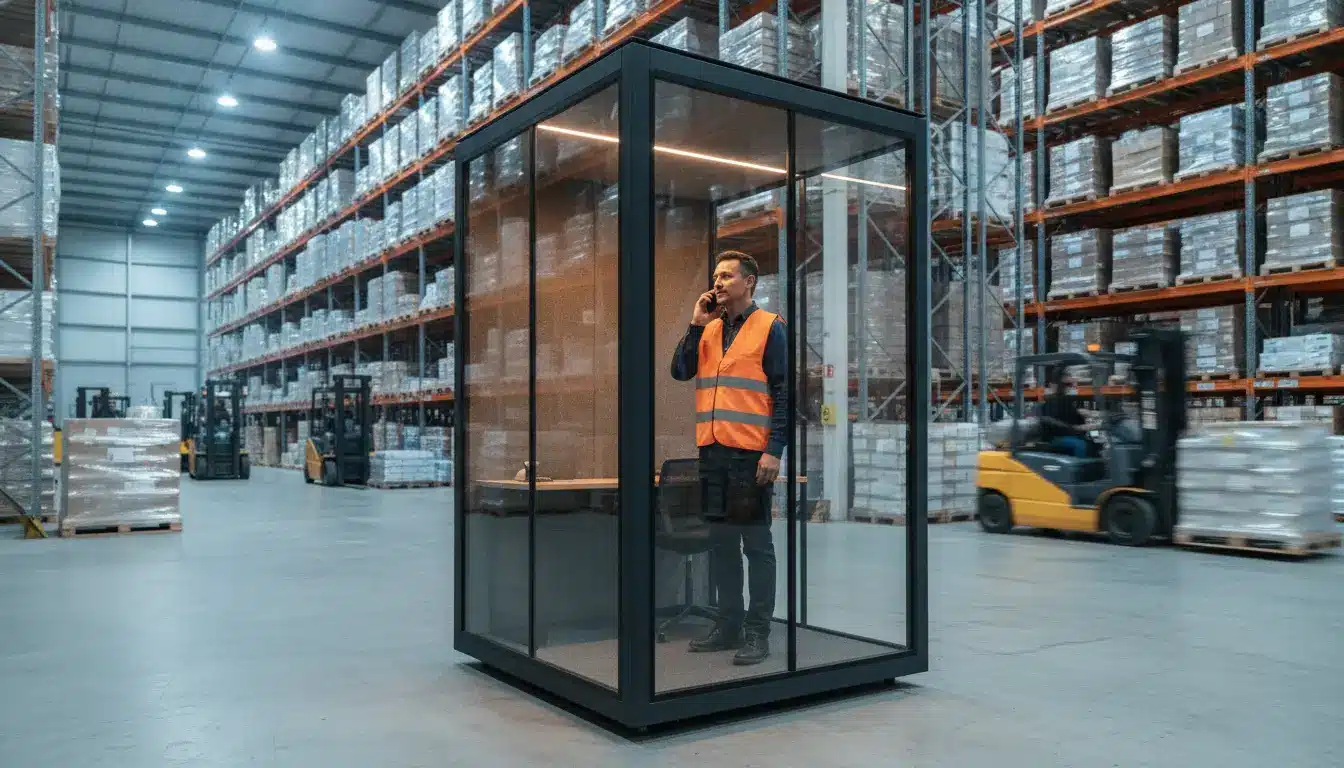
Operating a logistics hub requires continuous coordination, but the sheer noise of a busy warehouse floor makes professional communication incredibly difficult. Supply chain managers, dispatchers, and procurement officers routinely juggle urgent carrier updates and high-stakes vendor negotiations while surrounded by the constant roar of forklifts, backup alarms, and industrial packing machinery.
Shouting over ambient warehouse noise leads to miscommunicated shipment details, compromised client data, and rapid operator fatigue. Logistics companies struggle to balance open, accessible floor layouts with the critical need for acoustic privacy.
In this article, we will break down how modular acoustic solutions solve the industrial noise crisis, protecting your team’s focus and securing your supply chain.
Why Private Call Space Is Hard to Find in Logistics Settings?
Traditional industrial facilities prioritize storage capacity and seamless material handling over quiet administrative zones. Most logistics offices sit directly adjacent to the main floor, separated by nothing more than thin drywall partitions or single-pane windows that do nothing to stop low-frequency industrial rumble.
Furthermore, standard supply chain office layouts use open-plan desks so dispatchers can see the loading bays at all times. Because these teams must remain physically close to freight operations, they cannot simply walk to a distant corporate boardroom when an urgent client call arrives. This tight spatial connection between administration and physical operations makes quiet, isolated square footage a rare luxury in modern fulfillment centers.
The Problem With Taking Important Calls in the Middle of a Busy Floor
Attempting to negotiate carrier rates or resolve a customs delay in a loud open bullpen creates an immediate operational issue. When background noise bleeds into a phone line, shipping manifest numbers and delivery addresses easily get misheard, leading to costly rerouting errors and delayed deliveries.
Additionally, staff members must constantly repeat themselves, which slows down response times during time-sensitive supply chain bottlenecks. Forcing your team to handle intense client disputes while constantly battling auditory distractions raises stress levels, drains mental energy, and heavily impacts their decision-making accuracy during long shifts.
Why Office Pods Make Sense for Fast-Moving Operations Teams
Constructing permanent, soundproof rooms within an active distribution center requires substantial capital and halts your facility’s daily operations for weeks. You have to secure commercial building permits, schedule construction crews, and tolerate dust and debris right next to your inventory zones. Modular office pods solve this logistical headache by offering instant, self-contained acoustic isolation.
These industrial-grade booths assemble in a matter of hours and plug directly into standard electrical outlets without altering your main building structure. Because they utilize heavy-duty sound-dampening panels and multi-layer tempered glass, they provide 30.2 decibels of noise cancellation to block out the heaviest warehouse noise.
Which Logistics Roles Benefit Most From Private Pod Space
Not every warehouse employee spends their day on the phone, but key operational roles rely entirely on constant communication to keep freight moving.
Freight Dispatchers: These coordinators manage real-time driver tracking, route adjustments, and emergency breakdown responses, requiring total silence to accurately log driver updates and transit metrics.
Procurement and Vendor Managers: Sourcing specialists negotiate complex, high-value freight contracts and supplier pricing, demanding an acoustically secure space to protect corporate financial details.
Safety and Compliance Officers: Industrial inspectors conduct sensitive regulatory audits, incident investigations, and safety briefings that require strict privacy away from the open floor.
The Best Pod Uses for Dispatch, Vendor Calls, and Internal Updates
Logistics centers require different pod configurations to handle distinct communication workflows throughout the day. Single-occupancy acoustic pods are ideal for rapid dispatcher check-ins, allowing operators to jump in, confirm a delivery window, and return to the floor within minutes.
For mid-day carrier negotiations or internal shift handovers between supervisors, a larger two-person module with a built-in workspace and dual monitors provides an ideal setting. Deploying these specialized units ensures your teams stop using large, permanent conference rooms for routine individual phone tasks.
What to Look for in a Pod for Noisy Operations Environments
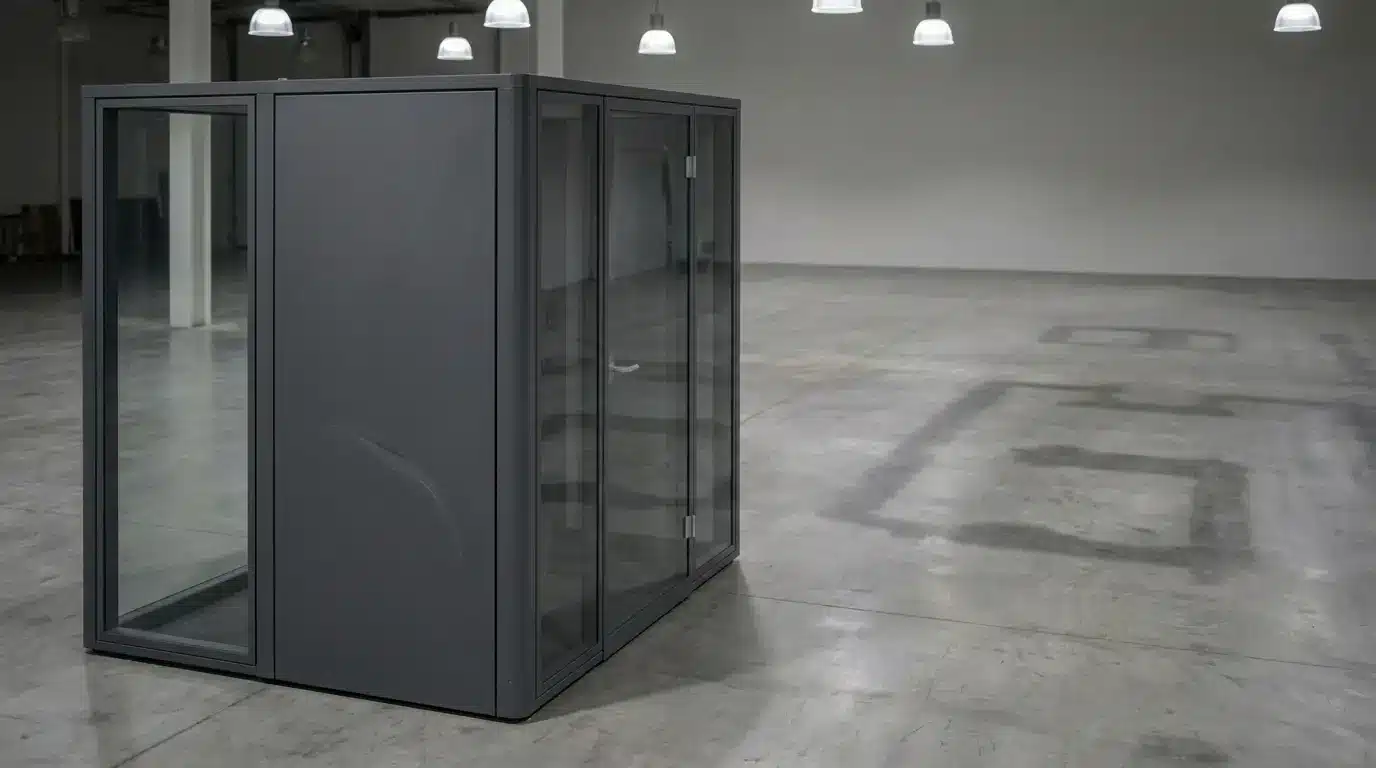
Standard commercial office booths cannot withstand the intense environment of a heavy industrial facility. When sourcing acoustic enclosures for a logistics hub, you must prioritize rugged build quality and advanced acoustic engineering.
High Sound Transmission Class (STC) Rating: Ensure the unit features multi-layered acoustic walls specifically designed to attenuate the low-frequency rumbles of heavy machinery and industrial fans.
Heavy-Duty Ventilation Systems: Active operations floors build up heat quickly, meaning your units must feature automated, high-volume fans that completely refresh the interior air every sixty seconds.
Industrial-Grade Exterior Finishes: Select booths built with scratch-resistant, powder-coated steel exteriors and impact-resistant tempered glass to handle the daily wear and tear of a busy warehouse setting.
Integrated Connectivity Ports: The interior must feature robust Ethernet drops, USB power points, and dual-monitor mounts so operators can access real-time warehouse management systems (WMS) during their calls.
Where Pods Fit Best in Logistics Spaces
Strategic placement across your facility determines whether your operators use the new modular spaces. Positioning them too far from the action guarantees they will sit empty, while placing them directly in hazardous traffic lanes creates safety bottlenecks.
Near Dispatch Teams
Placing single-user pods directly on the perimeter of your main dispatch desks allows coordinators to instantly step away from the bullpen when a driver call turns complex. This proximity ensures they resolve route issues quickly without losing sight of the main operations floor.
Close to Warehouse Offices
Positioning acoustic pods inside or immediately adjacent to your central floor-level supervisor offices provides warehouse managers with an instant space for confidential performance discussions or urgent vendor calls without having to walk back to the corporate administrative wing.
Between Admin and Ops Zones
Dropping mid-sized pods right at the transition point between your quiet administrative desks and the physical packing floor builds an excellent acoustic buffer. This setup allows passing shift supervisors and data analysts to sync seamlessly without dragging warehouse noise into the corporate offices.
In Underused Corners
Every distribution center features dead space near structural pillars, beneath mezzanine staircases, or alongside wide pedestrian walkways. Placing self-contained modules into these awkward layout zones reclaims the square footage, turning useless areas into high-value communication hubs.
How Pods Help Teams Stay Focused Without Leaving the Floor
Forcing a logistics supervisor to walk across a massive 100,000-square-foot fulfillment center just to find a quiet room for a brief carrier call wastes a significant amount of operational time. It also pulls valuable leadership away from the floor where problems require immediate oversight.
Modular pods keep your key personnel where they belong: on the operational floor. Operators can step into a silent, air-conditioned pod, securely finalize a shipping manifest change, and step right back out to direct their teams, keeping your entire supply chain running with zero drop in momentum.
Common Mistakes When Adding Private Space to Operational Sites
Many industrial companies attempt to solve noise issues using cheap, temporary fixes that fail to deliver true operational benefits. Recognizing these errors helps you avoid wasted infrastructure capital.
Installing Thin Acrylic Partitions
Setting up basic plastic desk dividers does nothing to block industrial noise. Sound waves easily bend around open panels, leaving your dispatchers exposed to the same auditory distractions and doing nothing to protect client data privacy.
Neglecting Internal Power Access
Buying basic acoustic shells that lack integrated power wiring forces your staff to run dangerous extension cords across your walking paths, creating severe workplace tripping hazards that violate basic warehouse safety protocols.
Overlooking Air Filtration and Cooling
Squeezing operators into tightly sealed, unventilated boxes turns the space into an uncomfortably hot environment within minutes. If a booth lacks continuous, automated airflow, your team will simply refuse to use it during long summer shifts.
Can Office Pods Work in Warehouses and Industrial Offices?
Office pods handle the harsh conditions of industrial offices perfectly, provided you select units engineered for high-impact environments. Unlike permanent drywall construction, which cracks under the continuous vibrations from heavy freight trucks and machinery, modular booths feature flexible, precision-engineered joints that accommodate structural shifts.
Their self-contained design means they sit cleanly on top of your existing concrete floors, allowing you to bypass complex architectural adjustments and easily maintain a clean, dust-free interior environment right in the middle of a busy industrial plant.
Are Pods Worth It for Teams That Handle Calls All Day?
Investing in modular acoustic infrastructure delivers an exceptional return on investment for communication-heavy logistics operations. When your staff spends eight hours a day managing carrier relations and coordinating freight movements, reducing their ambient noise exposure by even 30 decibels yields immediate dividends.
It eliminates the exhausting need to shout over background noise, directly lowering employee stress and preventing throat strain. By providing a silent, focused environment, you dramatically reduce data-entry errors, speed up booking times, and keep your critical supply chain talent sharp and energized throughout the week.
The Bottom Line
Deploying modular acoustic units transforms a chaotic, noisy warehouse floor into a highly controlled operational hub. This investment acts as a direct shield for your supply chain, preventing communication errors that lead to misrouted freight and delayed shipments.
Organizations that replace outdated construction methods with agile, industrial-grade pods secure your data privacy and give your logistics facility a distinct operational advantage in a high-stakes, fast-moving market.