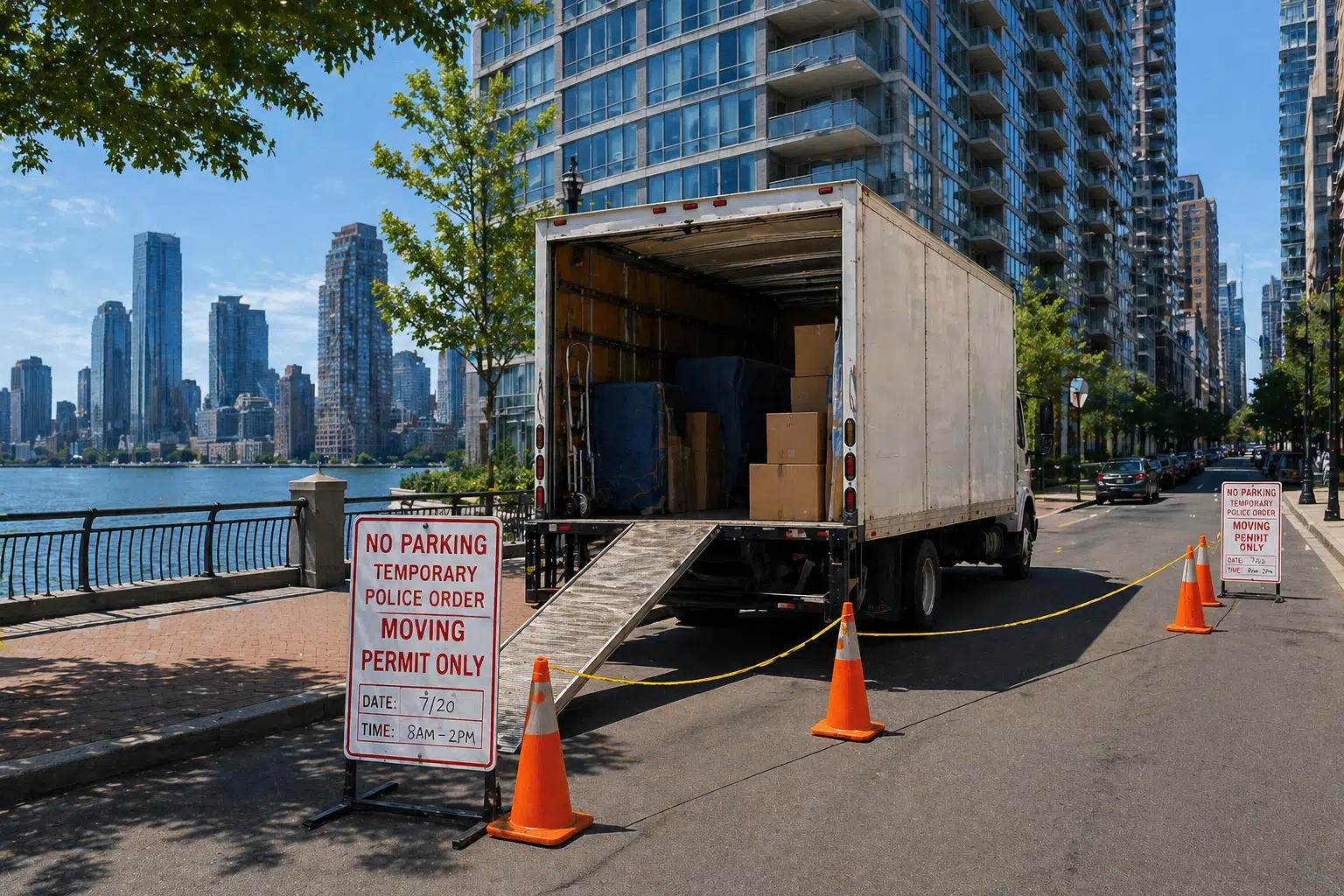
Moving within the New Jersey Gold Coast, specifically places like Jersey City, Hoboken, and Weehawken, requires careful coordination. These high-rise, luxury neighborhoods often have building security, doormen, and procedures that guide the move-in process in ways that differ from standard suburban moves. Those systems keep the building running smoothly, but they also shape how your move-in day will go.
When you are looking for movers NJ residents actually trust for a Gold Coast transition, it helps to remember that building logistics are just as vital as the drive itself. Relocating to a luxury apartment in this area often requires a level of precision that goes beyond just packing boxes.
Why Gold Coast Relocations Require More Coordination
The Gold Coast is one of the most active residential stretches in New Jersey. The towers in Jersey City, Hoboken, and Weehawken are busy residential environments with shared amenities, underground parking, and steady delivery traffic. Because many residents rely on the same elevators and entrances, building management often uses structured procedures to coordinate each move.
This structure is not there to make your life difficult. In fact, it keeps things organized. If you prioritize clear communication, have your paperwork squared away, and secure your access windows early, the day usually proceeds without major disruptions.
In these buildings, arriving without confirmed access details is usually not practical. Your moving day will likely follow a timeline previously agreed upon by you, the property manager, and your moving crew.
Building Logistics and Access Requirements in Gold Coast NJ
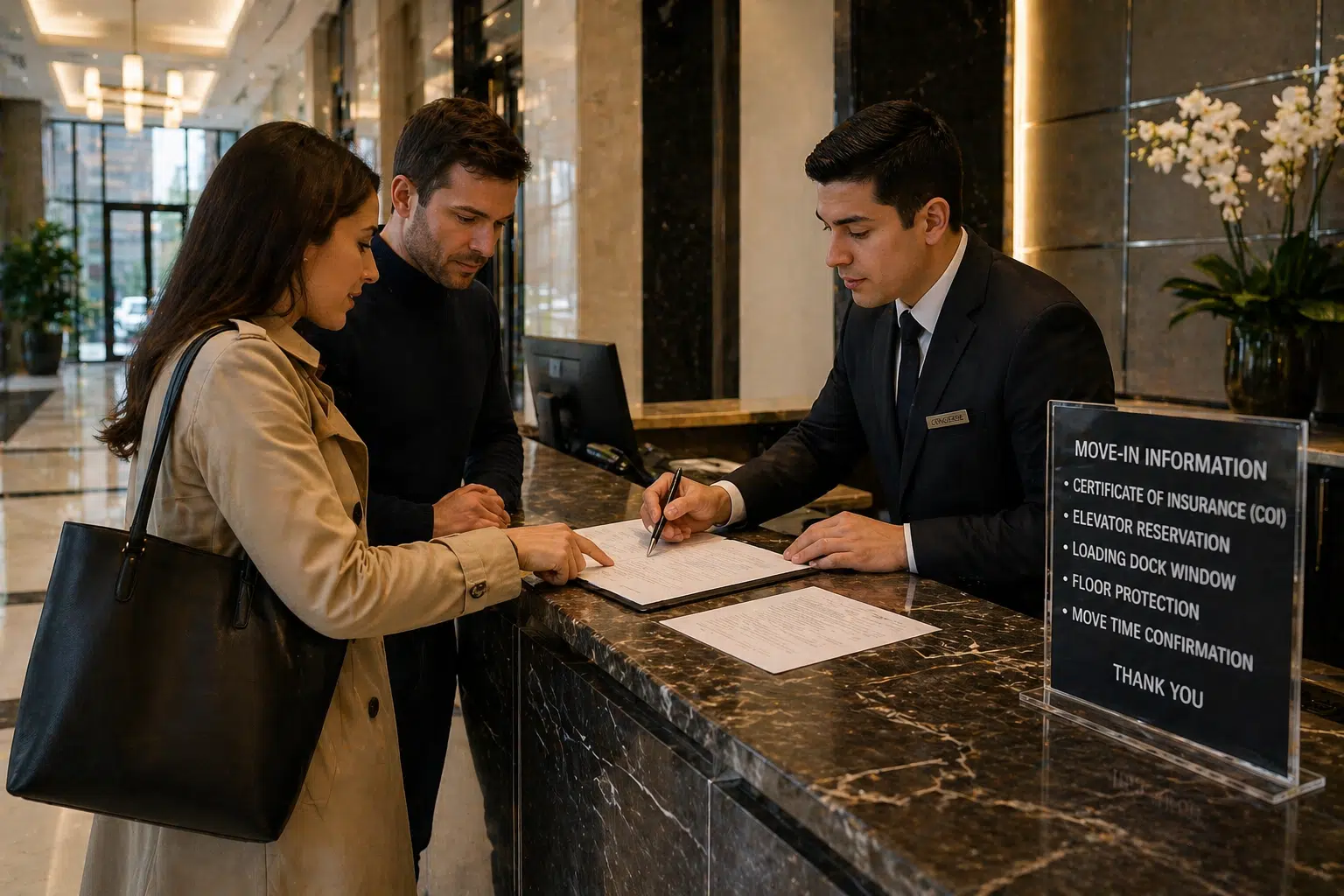
Gold Coast buildings often have detailed move-in procedures that affect access, timing, and equipment.
Certificate of Insurance Requirements in Luxury Buildings
Many luxury buildings along New Jersey’s Gold Coast typically require a Certificate of Insurance, or COI, before approving move-in access. This document is the building’s proof that the movers are insured and meet the liability standards required to work on site.
Every building has its own requirements regarding COIs. Some property managers may want specific insurance limits, while others may need the condo association or the management firm listed as “additional insured” in a specific format. Often, this paperwork has to be submitted to the management office several days before you arrive.
Planning ahead is important because documentation issues can delay access. Ask your management office for the exact requirements early and pass them to your moving company. If the COI is missing or filled out incorrectly, your movers may be left waiting while your scheduled window continues to run.
Elevator and Loading Dock Scheduling Windows
Many high-rise buildings require residents to reserve a freight elevator. This system keeps the lobby clear of boxes and helps ensure you are not competing with deliveries, maintenance work, or other building activity for access.
Some buildings offer a morning or afternoon block, while others are specific down to the hour. The same rules may apply to loading docks. Since these spots are shared by everyone from the mail carrier to the grocery delivery person, open access is usually not something residents can assume.
Move timing often depends on these scheduled windows. Even if the crew is ready to go, they need elevator access and a legal place to park before work can begin. Confirm your time slot in writing and make sure you understand the building’s policy on what happens if things run over the allotted time.
Building Access and Equipment Requirements
Gold Coast buildings frequently have specific rules about the gear used during a move. You might be required to lay down floor protection or use certain equipment based on building access, elevator size, or truck clearance.
Common logistical hurdles include:
- Floor protection, specifically Masonite or similar heavy-duty materials.
- Freight elevator dimensions and weight capacities.
- Specific clearances for narrow hallways and doorways.
- Loading dock availability and its exact location.
- Truck height limits for low-clearance garages or service entries.
- Street access constraints in high-density waterfront spots.
These details dictate the tools of the trade. A sofa that fits in a standard house may be difficult to move through a smaller freight elevator. Similarly, a large truck built for long-haul highway travel may not be suitable for a narrow loading ramp in a Jersey City tower.
This is why Hudson River waterfront movers often need to understand both transportation logistics and building-specific access rules.
White Glove Moving & Storage is an example of a company that specializes in residential and commercial relocations across New Jersey, New York, and nationwide routes, including high-rise buildings in areas such as the Gold Coast. The company provides full-service moving support, including packing, unpacking, storage, and specialty item handling for items such as antiques and fine art, while working within structured building requirements and coordinated scheduling systems commonly found in modern residential properties.
Coordinating a Gold Coast High-Rise Move
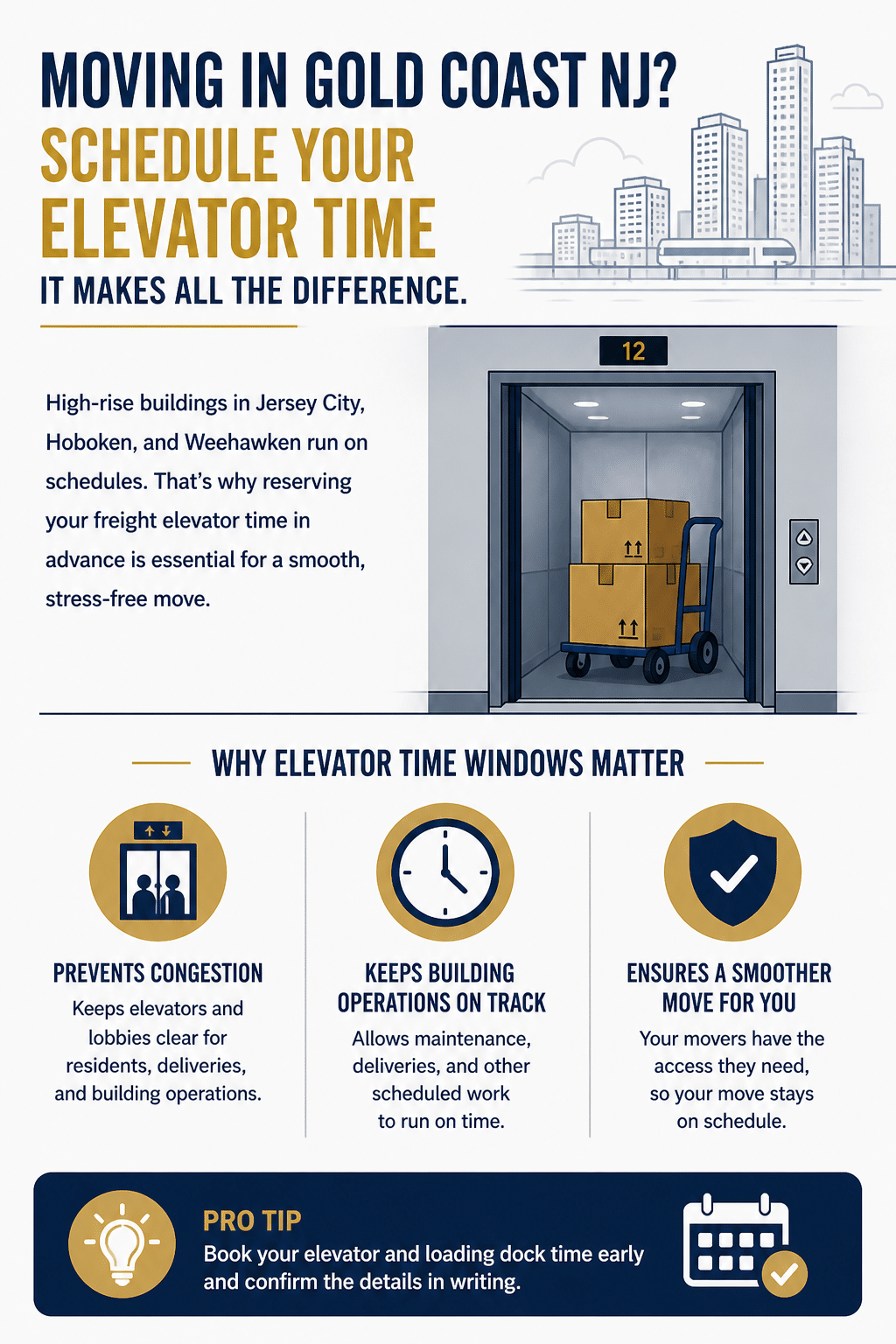
A high-rise move works best when the resident, building staff, and moving company are working from the same plan.
Working With Building Management
Your best point of contact during this process is usually the property manager or the concierge. These are the people who approve your elevator time, review your COI, and explain the rules for their specific building.
On moving day, the front desk team often helps direct the process. They may guide the movers to the right entrance, confirm service elevator access, or unlock service corridors. When you have kept them in the loop ahead of time, the whole day feels more organized and more professional.
Digital Building Communication Systems
Modern towers often use platforms like BuildingLink or ActiveBuilding to keep residents informed. These apps are where you may find the official details about moving hours, required forms, documentation deadlines, and parking rules.
While these digital tools are convenient for keeping everything in one place, they only work if you check them. Missing a notification about a COI deadline or a change in loading dock access can create problems for your schedule.
Temporary Parking and Street Access Requirements
A loading dock may be available in some buildings, but access still needs to be confirmed. These New Jersey waterfront communities, including Jersey City, Hoboken, and Weehawken, are known for limited parking and strict curbside enforcement. Depending on where your building is located, you may need to secure temporary no-parking permits from the city.
This is a major factor for buildings on narrow side streets. A moving truck needs a legal, dedicated space to operate. If the building does not have a private dock, you will want to have those city permits sorted out well before the truck arrives.
Street access can also change due to local construction, delivery surges, or building activity. The distance from the truck to the elevator is a key part of the logistics. Better truck placement usually leads to a faster and more efficient day.
Understanding Structured Urban Relocation
A move on New Jersey’s Gold Coast is defined by the rules of the building. In Jersey City, Hoboken, and Weehawken, you are moving into a managed environment, which means the standard rules of moving do not always apply.
The most successful relocations are the ones where communication starts early. Confirm your building’s specific needs, lock in those elevator times, and make sure your movers have the right paperwork.
Moving here is not about flexible timing. It is about being precise. When you follow the building’s procedures, your NJ move becomes a structured, efficient process rather than a guessing game.
Gold Coast NJ Moving FAQs
What is a COI for a Gold Coast NJ move?
It is a Certificate of Insurance. Many managed buildings require this document to prove your moving company is insured before they allow access to the property.
Do all Jersey City, Hoboken, and Weehawken buildings require elevator reservations?
While rules vary, many high-rise or luxury managed properties require residents to book a freight elevator window in advance.
Why are moving time windows important in luxury apartment buildings?
They prevent congestion in loading docks, elevators, and service areas. By following a schedule, the building helps ensure that moves do not interfere with daily life for other residents.
What building details should residents confirm before moving day?
Residents should confirm COI requirements, elevator and loading dock reservations, floor protection rules, and a clear plan for parking the moving truck.
Are temporary parking permits needed for Gold Coast moves?
They may be needed depending on the building, street, and loading setup. If the building does not have a private loading dock, you may need city-issued permits to park a large truck on the street.
How do digital building systems affect moving?
Platforms such as BuildingLink or ActiveBuilding are often the primary way management communicates move rules and collects paperwork. It is important to monitor these systems for updates.
What makes Hudson River waterfront moves different from suburban moves?
Suburban moves are usually centered around the house and the truck. Gold Coast NJ moves are shaped by building approvals, strict schedules, and dense urban infrastructure.