Books seem simple enough, right? They’re solid. They stack. They sit quietly on shelves for years… Then moving day comes, and suddenly they’re one of the hardest things to deal with.
Boxes rip. Spines bend. Covers warp. People hurt their backs. Most problems happen because books are dense, unforgiving, and easy to underestimate.
Today, I’ll show you how to pack books for moving in a way that avoids damage, strain, and last-minute stress. Let’s get you to make calm choices instead of rushed ones.
What You Need Before Packing Books
Packing books goes wrong long before the first book enters a box. Most damage happens because of poor prep. Once a box fails, no careful stacking can save what is inside. Getting the basics right makes every later step easier.
Best Boxes for Packing Books
Small boxes matter more for books than almost anything else. Books are heavy for their size. A box that feels empty can become unmovable in minutes.
A small moving box is the safest option. These are usually around 1.5 cubic feet. When filled with books, they stay within a manageable weight range. Most people should aim to keep book boxes under 40 pounds. Less is better if stairs or long carries are involved.
Large boxes fail for simple reasons. The cardboard bends under weight. The bottom bows. Tape stretches. Even if the box survives, lifting it can cause injury. Large boxes invite overpacking, which is the real danger.
Printer paper boxes are a solid alternative. They are built to hold dense weight. They usually have tight lids and strong sides. The downside is size. They fill quickly, which is also what makes them safe.
Standard moving boxes are fine if they are small and in good condition. Avoid reused boxes with soft corners or creases. Books exploit weak spots.
Packing Materials that Actually Help
Books do not need fancy materials, but they do need the right ones.
- Packing paper works well. It fills gaps without adding moisture or pressure. It also lets books breathe.
- Bubble wrap helps for special cases. Use it for rare books, fragile dust jackets, or books with loose bindings. Do not wrap every book in plastic unless necessary.
- Household items can work in a pinch. Clean towels, soft shirts, or pillowcases can fill space and cushion edges. Use them sparingly so boxes do not become uneven.
Avoid plastic bags for long periods. They trap moisture. Over time, that leads to warped pages and mold. Newspaper is also risky for valuable books. Ink can transfer, especially in humid conditions.
Best Way to Pack Books for Moving: Step-by-Step
Packing books is not about speed. It is about control. Each step limits movement, pressure, and weight. Skipping steps usually saves minutes and costs books.
Step 1: Prepare the Box
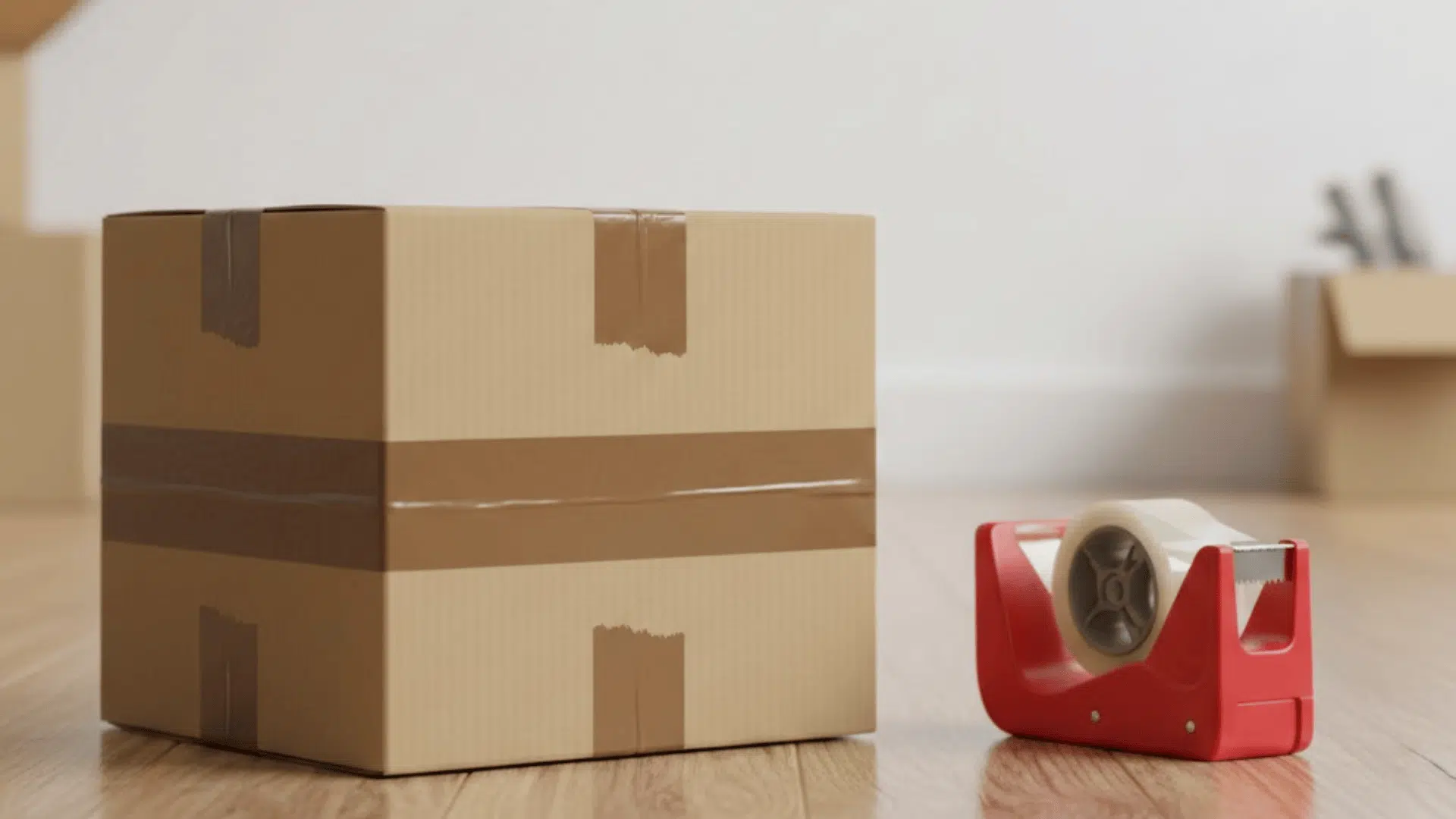
Every book box should be reinforced before anything goes inside. Tape the bottom seam. Then tape across it in both directions. This creates a grid that spreads weight.
Use strong packing tape. Cheap tape peels under load. The goal is to make the bottom act like a single surface, not folded flaps.
This step prevents sudden failure. Most broken boxes fail at the bottom, not the sides. Once the bottom gives, books drop, spines hit corners, and damage is instant.
Step 2: Choose the Right Packing Position
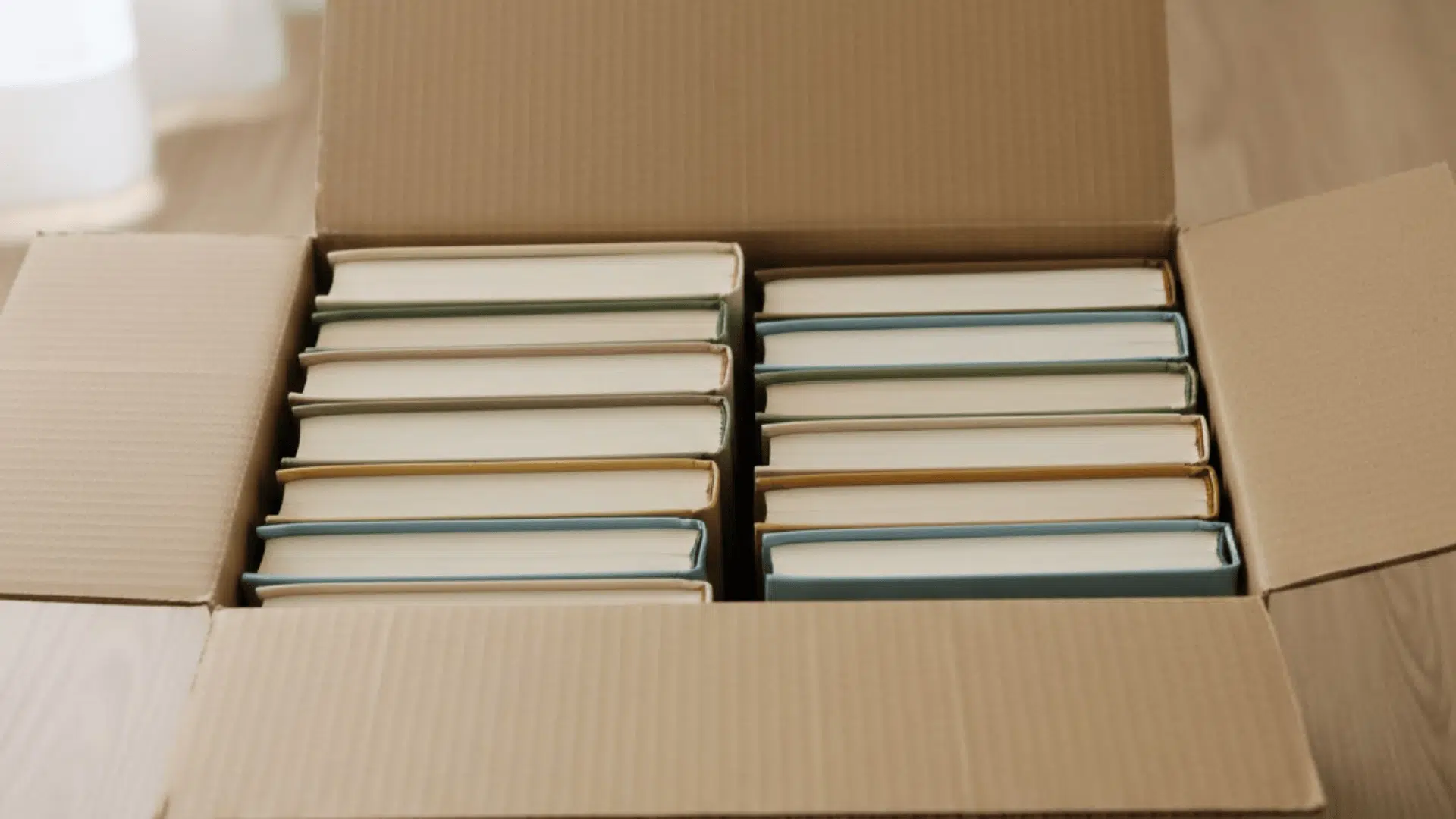
There is a lot of confusion here because different advice applies to different situations.
Pack books flat when they are large, heavy, or have stiff covers. Flat stacking spreads weight evenly and prevents spine strain.
Pack books upright when they are similar in size and not overly heavy. Place them the way they sit on a shelf, with spines against the side of the box. This keeps pages aligned.
Spine-down packing makes sense for paperbacks or books with weak bindings. Gravity pulls pages toward the spine instead of away from it.
Never pack books at an angle. Angled packing bends covers and warps pages. It also creates empty space that lets books slide and slam during movement.
Step 3: Fill Gaps and Control Movement
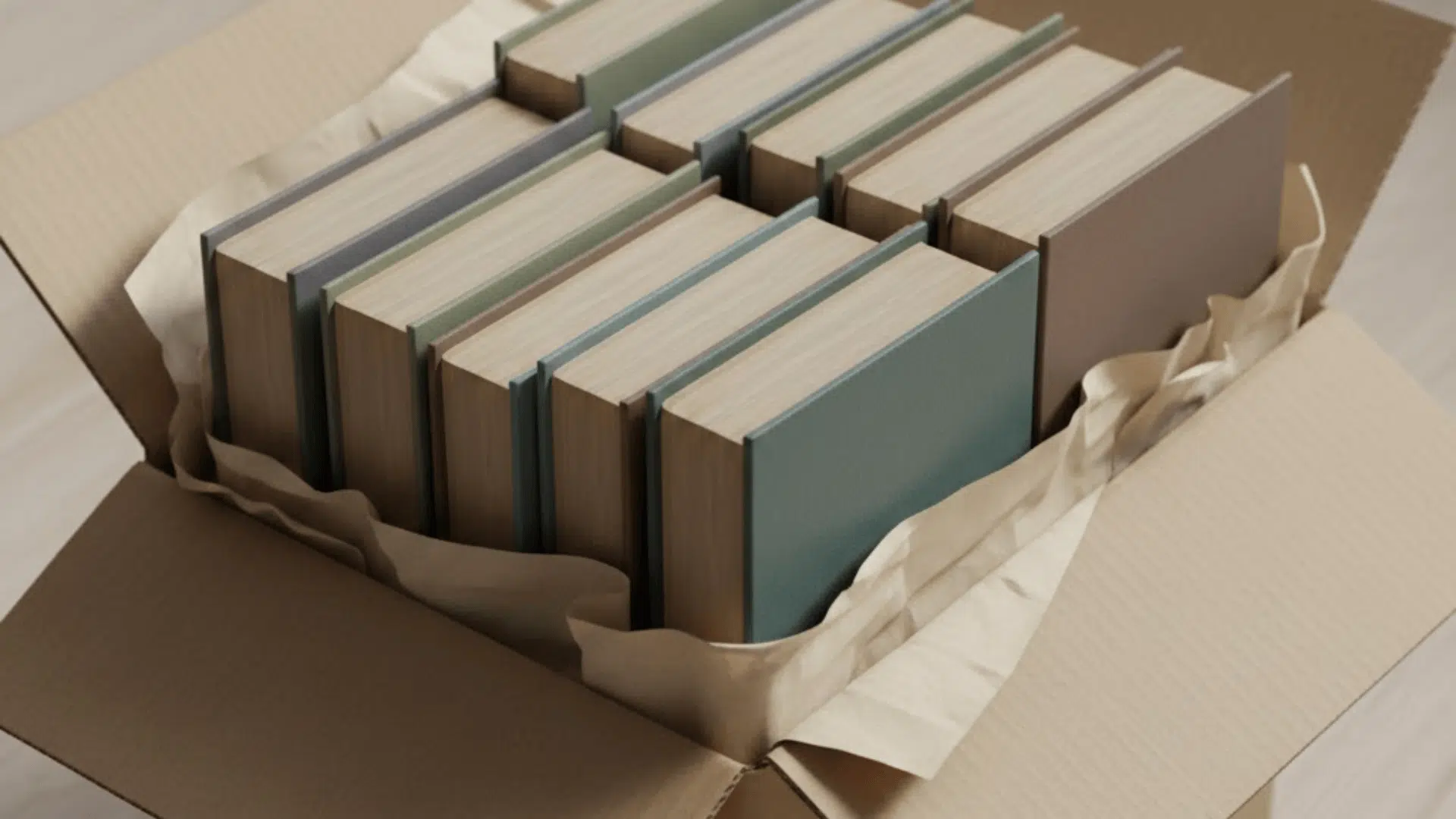
Books should fit snugly, not tightly. Too loose means shifting. Too tight means pressure.
Fill gaps along the sides and top, not between books. Use packing paper or soft fabric. The goal is to stop movement without forcing books apart.
Test the box before sealing. Gently tilt it. If you feel or hear movement, add filler. When sealed, lift slightly. If the box bows, remove a book.
How to Pack Different Types of Books
Not all books behave the same. Size, binding, and paper quality change how they handle pressure and movement.
| Book type | Main risk | Best packing position | Box choice | Key precautions |
|---|---|---|---|---|
| Hardcover books | Excess weight and box stress | Flat or upright in short rows | Small, sturdy boxes | Don’t overfill; weight adds up fast |
| Paperback books | Bending and cover warping | Spine-down or upright with filler | Small to medium boxes | Keep stacks short; don’t place hardcovers on top |
| Large / coffee-table books | Awkward size and heaviness | Flat only | Suitcases or reinforced boxes | Pad sides; never stack heavy items on top |
| Rare or valuable books | Paper damage and moisture | Upright, individually wrapped | Separate, labeled boxes | Use acid-free paper; avoid plastic and damp areas |
Use this table as a quick reminder while you’re packing, not a shortcut to rush the process. Different books need different handling, and slowing down here prevents damage that’s hard to fix later.
How Many Books Fit in a Box
Expect fewer books than you think. A small box usually holds 15 to 25 average books. Heavy hardcovers reduce that number fast.
A good rule is to stop adding books when the box feels heavy but still easy to lift. If you hesitate before lifting, it is too full.
Weight matters more than count. A lighter box survives better and protects books longer.
Common Mistakes that Damage Books During a Move
Most damage comes from a few repeated errors.
- Overfilling boxes until they bow: When boxes are packed too tight, weight pushes outward and weakens the structure, causing corners to crush and spines to bend during lifting and stacking.
- Using garbage bags that tear and trap moisture: Trash bags rip easily and seal in humidity, which leads to warped covers, wrinkled pages, and long-term paper damage.
- Mixing books with fragile items: Combining books with breakables shifts weight unevenly, increasing the chance of crushed items and damaged book edges when boxes are moved.
- Leaving empty space inside boxes: Gaps allow books to slide and slam into each other, slowly damaging corners, covers, and bindings as the box is carried.
- Storing book boxes in damp areas: Basements, garages, and storage units often hold moisture that seeps into paper, causing swelling, mildew, and permanent warping over time
Each mistake adds stress or movement. Books fail slowly, not instantly. Damage often shows up weeks later.
Packing Books for Special Situations

Some moves create risks that normal packing advice doesn’t fully cover. Distance, storage time, and container choice all change how books should be handled.
1. Long-Distance or Overseas Moves
The longer books stay in motion, the more small stresses add up. Vibration, temperature changes, and humidity become bigger factors.
Wrap books more carefully than usual. Use padding to reduce movement and add moisture barriers inside the box, but never directly against the books. Seal boxes tightly and label them clearly so they’re handled with care.
2. Packing Books for Storage
Storage problems come from climate, not travel. Heat and moisture do the most damage over time. Use breathable packing materials and avoid plastic bins unless the space is climate controlled. Keep boxes off the floor and away from walls where dampness collects.
3. Packing Books without Boxes
Suitcases and sturdy totes work when boxes aren’t available. Keep loads light, pad the edges, and avoid stacking. This is a short-term solution, not something meant for long storage.
Quick Packing Checklist
- Use small, strong boxes
- Reinforce bottoms with tape
- Pack flat, upright, or spine down with intention
- Fill gaps without pressure
- Keep boxes light
- Label clearly
Wrapping Up
Packing books well is less about strength and more about restraint. Smaller boxes, lighter loads, airflow, and reduced movement matter more than tape or padding alone.
When you understand how weight, moisture, and time affect paper and bindings, your decisions become calmer and more deliberate.
Packing books for moving isn’t about speed; it’s about preventing slow damage that shows up weeks or months later.
If you take a few extra minutes per box and adjust your approach based on your move, your books arrive in the same condition they left. Before sealing the last box, review your setup and make small adjustments now while they’re easy to fix.