In automotive, excellence is fragile: a late truck can freeze a line, a mishandled tyre batch can dent a season, and poor data can turn a recall into a crisis. The right logistics partner doesn’t just move parts and tyres; they protect throughput, brand reputation, and margins—day after day, peak after peak.
Does Their Network Truly Match Your Footprint and Flow Profile?
Start with fit. Map your inbound-to-manufacturing, aftermarket, and tyre flows against a partner’s actual footprint, plants and tier suppliers, cross-docks, consolidation hubs, final-mile nodes, and customs gateways. You’re looking for practical proximity, not brochure dots on a map.
Test real lanes. For a plant fed by multiple tier-1s, ask how they run milk-runs, JIT/JIS windows, and contingency routes when a supplier misses a slot. For tyres, probe seasonal ramp-up capacity, hub cut-off times, and weekend delivery options to dealers, retail, and fast-fit networks. Multimodal flexibility matters: road-rail for long hauls, short sea to de-risk borders, and air-only as a last resort with clear triggers.
- Do their hubs sit within two hours of your key suppliers?
- Can they flex capacity 30–50% for winter/summer tyre peaks?
- Are customs and brokerage integrated on your critical corridors?
What Proof Underpins Quality, Safety, and Regulatory Compliance?
Automotive logistics rewards discipline. Look for mature quality systems with auditable CAPA (corrective and preventive actions), clear work instructions, and traceability from ASN to POD. Certifications such as ISO 9001, ISO 14001, and ISO 45001 are table stakes; alignment to IATF principles, TAPA security standards, and robust hazardous-goods controls (e.g., ADR for batteries, UN 38.3 compliance, IMDG for ocean) signal operational rigor.
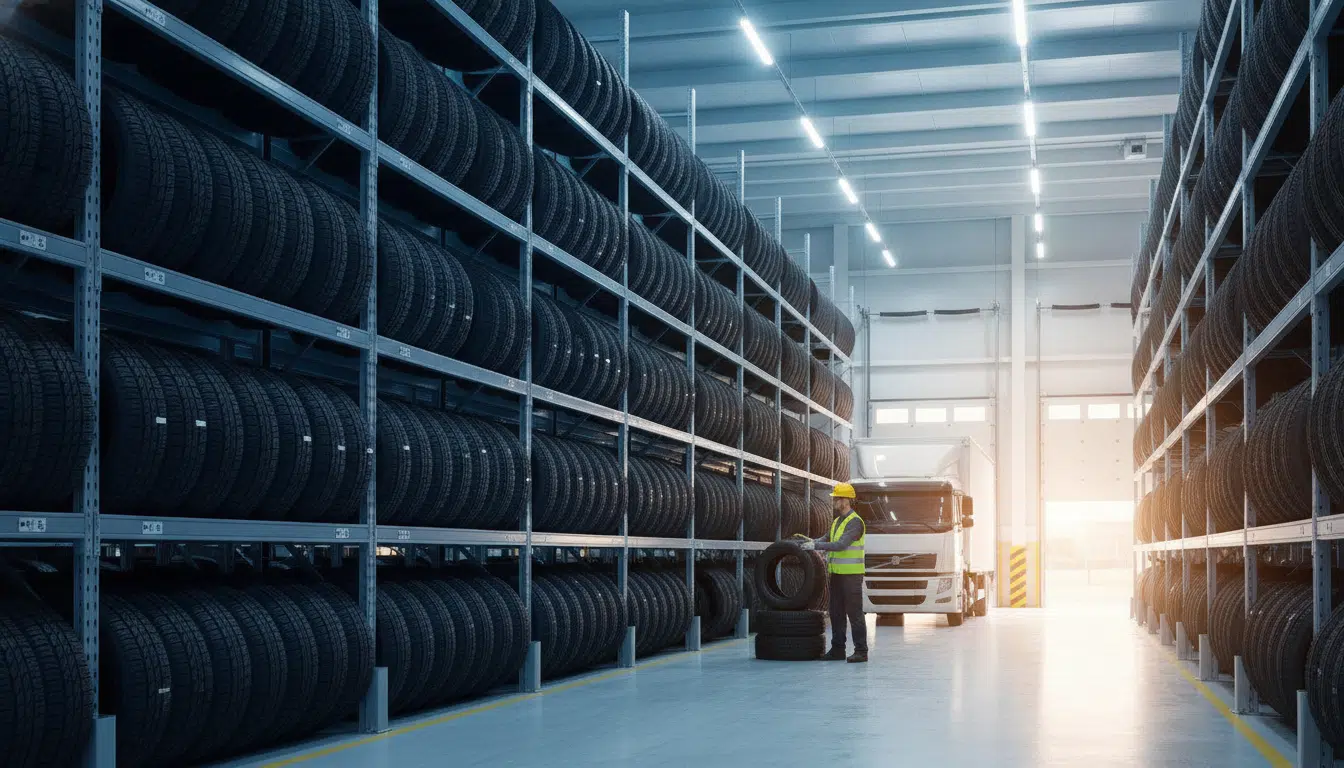
Ask for evidence, not promises: last 12 months’ OTIF, damage rates per 10,000 units, near-miss reporting, and incident root-cause reports. For tyres, check storage parameters (temperature, humidity, FIFO), handling training to avoid bead damage, and cycle-count accuracy across peak.
Can They Design, Operate, and Continuously Improve Your Flows?
A strong logistics partner brings engineering muscle. Expect network modeling, slotting analysis, cube and truck-fill optimization, and scenario planning that connects to your S&OP. You want a team that challenges your baseline and shows you the math.
Define the scoreboard together. Beyond OTIF, include metrics that reflect automotive realities:
- Line-stoppage minutes and first-time-through at the dock
- ASN accuracy and scan event integrity across nodes
- Damage rate, dwell time, truck utilization, and dock-to-stock time
- Inventory days on hand for critical parts; for tyres, order-to-shelf lead time
- CO2e per shipment and per ton-kilometer
Then lock in a cadence: weekly performance reviews for operations, monthly CI updates with kaizen pipelines, quarterly governance on savings, risk, and roadmap.
Do You Get Real-Time Visibility and Clean, Trustworthy Data?
Visibility is now a prerequisite, not a differentiator. What still sets leaders apart is data quality and exception management. Look for EDI/API depth with your ERP/WMS, robust master data governance, milestone-level tracking (dock, gate, hub, route, POD), and mobile tools for drivers and yards.
Drill into the “so what”: How are exceptions surfaced? Who owns them? How quickly are playbooks triggered when a tyre outbound misses a sort or a critical inbound pallet is short? Insist on a single source of truth across plants, suppliers, and aftermarket channels, with role-based access and audit trails.
How Will They Handle Disruption, Seasonality, and Recalls When It Matters?

Stress-test resilience. Ask for documented playbooks for strikes, port congestion, weather, and supplier failures. For tyres, validate peak-season staffing, overtime policies, and temporary capacity that doesn’t compromise quality. For EV components, verify hazmat incident response and safe quarantine procedures.
If your operation blends inbound-to-plant complexity with aftermarket distribution and seasonal tyre surges, shortlist a logistics partner for the automotive and tyre industry that can demonstrate control-tower capabilities, multi-node buffering strategies, and proven recall and reverse logistics flows from dealer to refurbishment to recycling. Ask for case-backed evidence, then run tabletop exercises together before peak hits.
Are ESG and Safety Embedded or Bolted On?
Regulators, customers, and investors will test your claims. Look for a decarbonization plan with tangible levers: mode shift to rail or short sea, network redesign to cut empty miles, alternative fuels (HVO, bio-LNG), electrified urban fleets, reusable racks and tyre packaging reduction, and CO2e reporting that aligns with GHG Protocol.
Safety must be cultural. Examine training hours per FTE, near-miss capture, and behavior-based programs. For tyres, verify ergonomic aids and lift assists; for batteries, specialized handling bays and PPE. A partner who invests here protects both people and uptime.
Do the Commercials Reflect Total Cost and Shared Outcomes?
Price matters; context matters more. Evaluate total cost of service: transport and handling, plus damage and shrink, inventory carry, line-stoppage exposure, penalties, expedite premiums, and decarbonization impacts. Transparent accessorials and clear SLAs are non-negotiable.
Favour contracts that align incentives—gainshare on verified savings, capacity reservation for tyre peaks, and governance that accommodates model launches, sourcing shifts, and regulatory change. Demand scenario-based pricing, so you know ahead of time what happens if volumes swing 20% or a new plant goes live.
How to Run a Confident Selection Process
Keep it disciplined: a short RFI to confirm network fit and compliance; a data-backed RFP with 8–12 representative lanes; on-site audits at the most critical hubs; and pilot lanes with clear success criteria. Score on capability first, commercials second, cultural fit always. And never skip the operator interviews—the people who own your 3 a.m. exceptions tell you more than any slide deck.
The right choice is the partner who makes your supply chain feel uneventful—because they’ve engineered out the drama.
In practice, that means verifiable fit, measurable quality, real visibility, rehearsed resilience, credible ESG, and commercials that reward performance. Nail those, and you protect what matters: on-time launches, steady plants, happy dealers, and loyal drivers.