Material fabrication has shifted from manual labour to sophisticated computer-controlled systems. This transition has made processes faster and vastly improved the level of detail achievable when working with various substrates.
For those in construction, retail, or DIY, transforming a plastic sheet into a complex component is now invaluable. Modern machinery ensures identical cuts, reducing waste and improving the overall quality of the finished product. It’s a fascinating journey from simple mechanical aids to the high-tech environment we see today.
The Early Days of Mechanical Cutting
Before computer numerical control (CNC), cutting plastic sheets was a labour-intensive process. Craftsmen relied on table saws and hand tools to follow patterns, which carried a constant risk of human error. Maintaining consistency across large batches was difficult, and complex curves often required secondary finishing to smooth jagged edges.
These traditional methods were largely limited to two-dimensional shapes. Specific depths or bevelled edges required constant material repositioning, increasing both production time and costs. The industry required a solution that could bridge the gap between manual artistry and industrial efficiency.
The Introduction of Automation
The arrival of early CNC technology marked a turning point for plastic fabrication. By using software to direct the movement of a cutting head, businesses could finally replicate designs with mathematical precision. This era saw the rise of basic sheet cutting where the machine followed a programmed path on a flat plane. It eliminated the “shaky hand” factor and allowed for the production of intricate lettering and signage that was previously impossible to achieve at scale.
As the demand for precision grew, many sectors ranging from education to engineering turned towards specialised automation, such as Simply Plastics CNC routing services, to handle complex geometry. This shift allowed for the efficient processing of diverse materials, including acrylic, polycarbonate, and aluminium composite. The focus moved from just making a cut to optimising the workflow for better material yield and faster turnaround times.
Moving Into 3-Axis Fabrication
Modern fabrication has moved far beyond simple profiles. The standard today is 3-axis routing, which allows the cutting tool to move along three different planes: the X-axis (left to right), the Y-axis (front to back), and the Z-axis (up and down). This third dimension is what changed everything. It means the machine doesn’t just cut through the material, it can also carve into it at varying depths.
This capability enables a wide range of sophisticated features that add value to a project:
- Recessed pockets: Creating areas for components to sit flush within a sheet.
- Bevelled edges: Adding decorative or functional angled borders to a panel.
- Drilled holes: Placing fixing points with perfect accuracy.
- Engraving: Adding text or logos directly into the surface of the material.
- Line bending: Shaping the material into 3D forms rather than just flat parts.
Beyond the Cut: Precision and Finishing
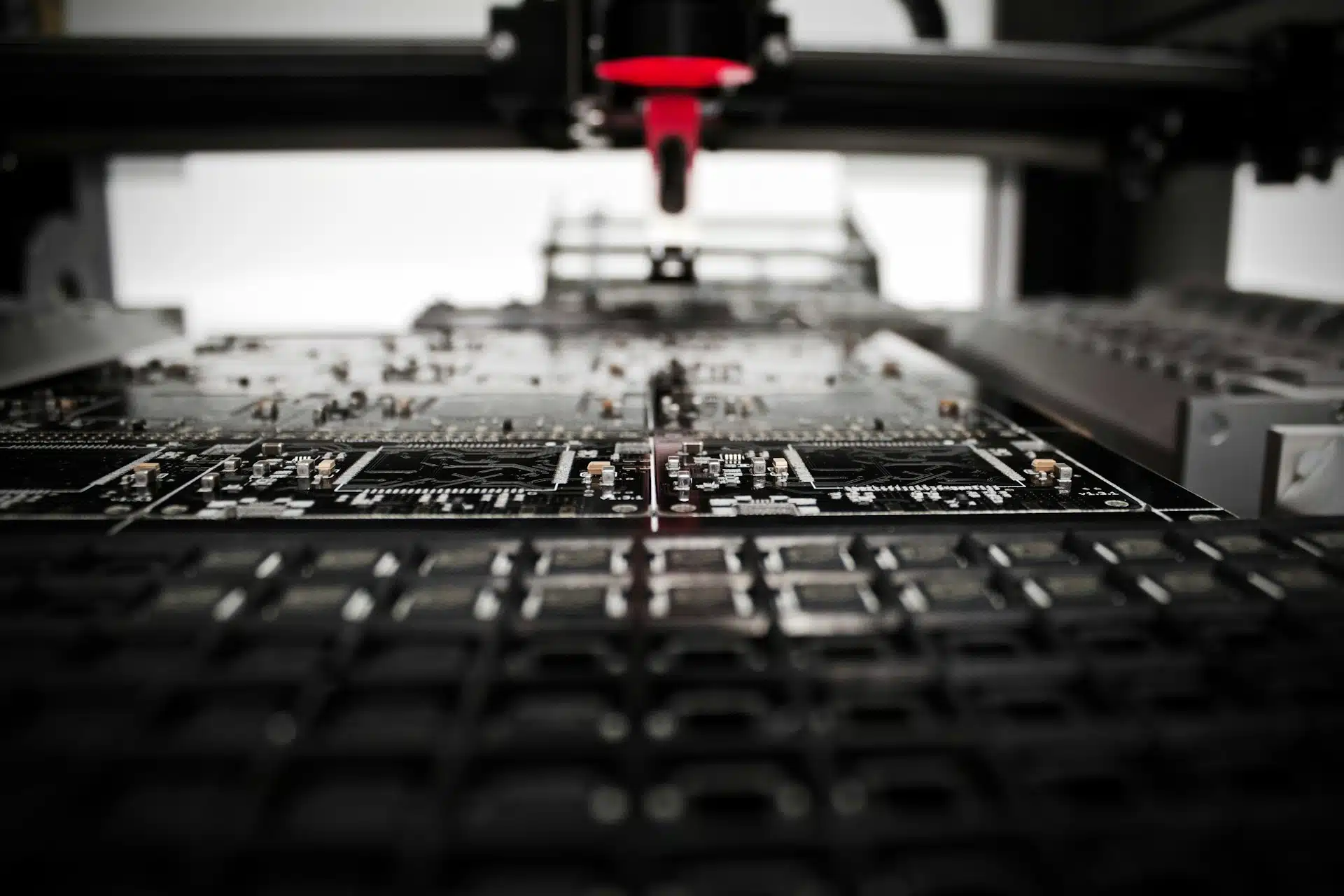
Evolution in this field involves both machine movement and the quality of the finish. High-speed spindles and specialised bits now allow for clean cuts that require very little post-processing. While cut edges used to look dull, modern routing leaves a finish that is almost ready for display.
When working with materials like Perspex or Dibond, advanced routers use cooling systems and vacuum beds to hold sheets firmly without marking the surface. This ensures that even delicate materials remain pristine. Techniques like diamond and flame polishing can then be used to restore total clarity to the edges.
In Summary
The transition from manual tools to 3-axis fabrication marks a significant leap for designers and builders. By moving past the limitations of hand-cutting, complexity is no longer a barrier to production. This technology makes high-quality results accessible for everything from small DIY tasks to major architectural projects.
As equipment gains efficiency, the focus stays on achieving maximum accuracy with minimal waste. Whether producing a simple disc or a complex component, modern routing ensures the final piece meets exact specifications every time.