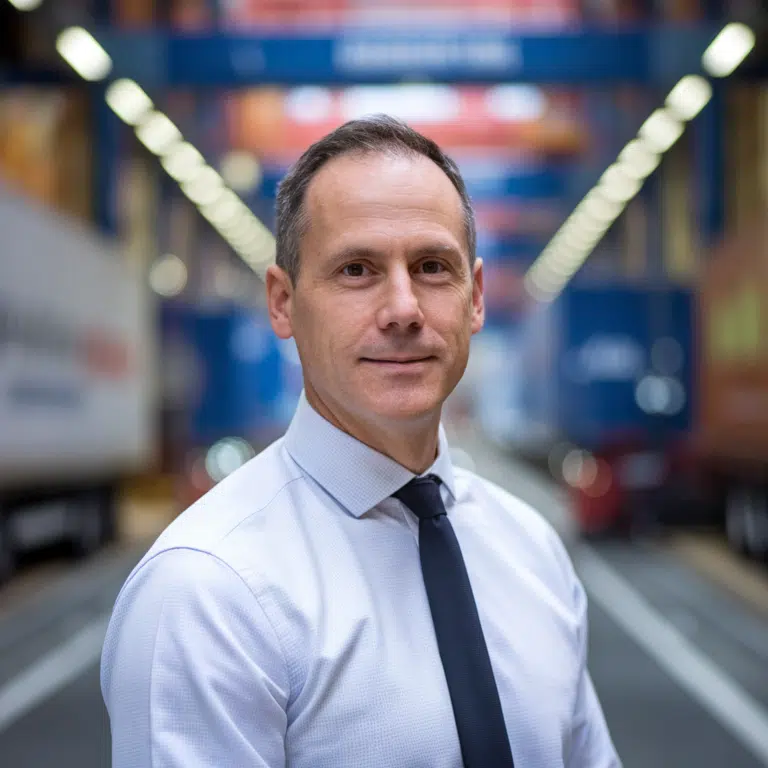
Jose Calderon did not inherit a law practice. The Houston native and first-generation son of Mexican immigrants spent his early legal career working inside other personal injury firms before deciding he wanted to build something different: a practice where the person calling about a wrecked car and a fractured wrist would never feel like a file number. That decision led him to open The Calderon Law Firm in Bellaire, on the edge of Houston’s East End, with a caseload built almost entirely around the crashes that fill Texas roads every day, cars, commercial trucks, and motorcycles.
It is easy for a personal injury firm’s origin story to sound like marketing copy. What separates Calderon’s version is how closely it tracks his own biography. He grew up watching his parents navigate a legal and economic system that was not built with them in mind, and he has said plainly that his clients are not “case numbers or transactions” but people whose stories often mirror the ones he saw growing up. That framing shows up in how the firm operates day to day: a bilingual staff, 24-hour phone availability, and a stated commitment to keeping caseloads small enough that Calderon and his attorneys can stay personally involved rather than handing files off to case managers who never meet the client.
Building the Legal Foundation
Calderon’s academic path started at the University of Texas at Austin, where he earned a history degree with honors and was inducted into Phi Alpha Theta, the national history honor society. He then went to South Texas College of Law Houston on a Dean’s Merit Scholarship that covered all three years of his legal education, while serving as president of the school’s Texas Exes Law Society chapter. He was licensed by the State Bar of Texas in 2018 and has since been admitted into the Texas Bar College, a designation reserved for attorneys who complete substantial continuing legal education beyond the state’s minimum requirements.
Beyond his own caseload, Calderon works as a qualified mediator and has been appointed guardian ad litem in state court proceedings involving minors, roles that require a different kind of legal judgment than straight advocacy. A mediator has to see both sides of a dispute clearly enough to help them find common ground, and that skill has practical value even in cases that are headed toward litigation rather than settlement conferences. It is a detail that speaks to how Calderon is regarded by the courts he practices in front of, not just by the clients who hire him.
The recognition has followed a fairly steady trajectory. Calderon has been named a Texas Super Lawyers Rising Star five times, a distinction limited to a small percentage of attorneys under 40 or in their first ten years of practice. He has also been named to the National Trial Lawyers’ Top 40 Under 40 list four times, reportedly making that list by his second year in practice, and he holds a Best Lawyers “Ones to Watch” recognition for the 2027 edition, an honor given to attorneys identified as rising leaders in their practice area before they typically qualify for the flagship Best Lawyers list.
Where the Firm Spends Most of Its Time

Ask Calderon what his firm actually does day to day and the answer is less varied than his list of recognitions might suggest. The bulk of the practice is car accidents, commercial truck accidents, and motorcycle accidents, three categories of case that look similar to an outsider and are handled very differently by anyone who has litigated all three.
Car accident cases in Texas run through the state’s proportionate responsibility system, commonly called the 51% bar rule. Under this framework, an injured person can still recover damages even if they share some fault for the crash, but only if their own responsibility is found to be 50% or less. Cross that threshold and the recovery disappears entirely, regardless of how serious the injury is. Below that line, any award gets reduced by the injured party’s percentage of fault. In practice, this turns fault percentage into the central battleground of nearly every contested car accident claim, since insurance adjusters have a direct financial incentive to push a claimant’s assigned fault as close to 51% as the facts will allow. Calderon’s firm has represented clients in exactly this kind of dispute, including a case where an initial $26,000 settlement offer was rejected after further investigation, with the case ultimately resolving for $1.9 million once the full extent of a client’s injuries, including a subsequent back surgery, was documented. Attorney Advertising: past results do not guarantee or predict a similar outcome in any future case.
Truck accident litigation is a different animal altogether, and Calderon’s practice treats it that way. Commercial trucking is governed by an extensive body of federal regulation that simply does not apply to an ordinary car-on-car collision. The Federal Motor Carrier Safety Administration requires carriers to track driver hours of service, and since December 2017, electronic logging devices have replaced paper logbooks, creating digital records that are considerably harder to falsify after the fact. Pre-trip inspection requirements create a paper trail showing whether known maintenance problems were addressed or ignored. And a truck’s electronic control module, the same kind of black box found in modern passenger vehicles, records speed, braking, and other data in the moments before a crash, but that data can be overwritten or lost if a legal hold is not sent to the carrier almost immediately. Firms that do not know to request that data quickly can lose it before it is ever produced in discovery. Minimum insurance requirements are also far higher for commercial carriers than for individual drivers, running from $750,000 for standard freight up to several million dollars for hazardous materials haulers, which changes the entire settlement calculus compared to a typical car accident claim.
Motorcycle accident cases carry their own distinct challenge, and it has less to do with the law itself than with the assumptions people bring into it. Calderon’s firm has been direct about this problem: insurance adjusters frequently start from the premise that a motorcyclist was speeding, lane-splitting, or riding recklessly, regardless of what the physical evidence actually shows. That built-in skepticism gets weaponized during the same comparative fault analysis that applies to car accidents, with adjusters looking for any argument, a rider’s helmet choice, a social media post, a witness’s assumption, to push fault above that 50% threshold and eliminate the claim entirely. Countering that narrative typically requires the same tools used in more complex crash litigation: accident reconstruction, physical evidence from the scene, and a refusal to let a client give a recorded statement to an insurer before the facts are established.
A Case That Drew National Attention
Calderon’s caseload has occasionally intersected with events that made national news. In the aftermath of the 2021 Astroworld Festival tragedy in Houston, in which eight people died and hundreds more were injured during a crowd surge, Calderon was among the attorneys who moved quickly to bring litigation on behalf of someone affected that night. The firm was granted access to the festival site during the subsequent investigation, work that fed into the broader civil litigation that would eventually consolidate hundreds of claims from concertgoers, families, and survivors into a single multidistrict proceeding in Harris County. That litigation has largely wound down through settlements in the years since, though Calderon’s role centered on the filing and early investigation rather than a public verdict or disclosed settlement figure.
Rooted in the Community He Serves
Calderon’s public profile in Houston extends well past casework. His firm has served as a title sponsor for D10 Lion Soccer, a youth soccer program, and backed Comida HTX, an event supporting Houston’s Hispanic-owned restaurants and small food businesses. He has been involved with the East End Chamber of Commerce, including its golf tournament fundraiser, and has been recognized as part of the Mayor’s Hispanic Heritage Awards. He also mentors students through the University of Houston’s Mock Trial Association, giving future litigators a look at how a plaintiff’s practice actually runs.
None of this reads as a checklist. Taken together, it looks more like an attorney who has stayed anchored in the same neighborhoods and communities he grew up in, even as his firm’s caseload and reputation have expanded well past Bellaire.