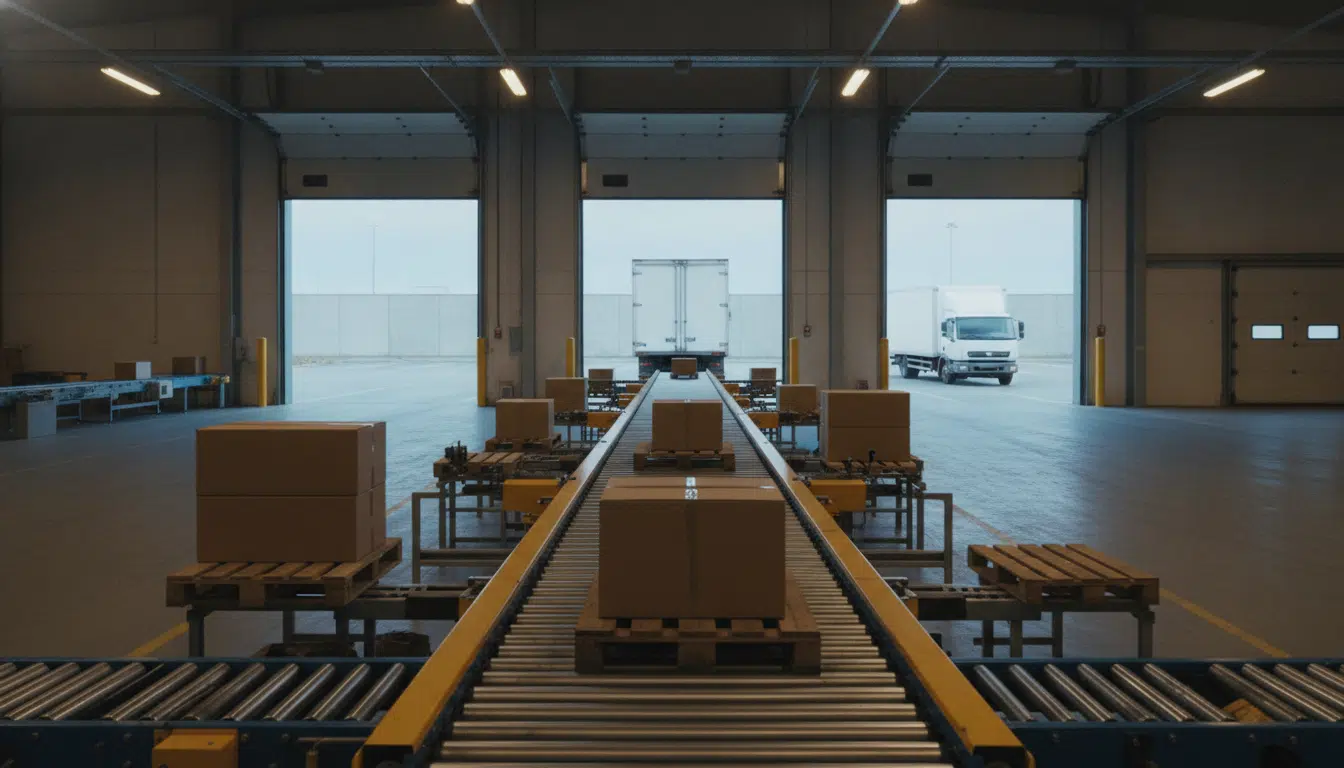
A packaging line stops at 10:07 a.m. Someone clears the fault, checks the machine, and has it running again by 10:12.
Five minutes. On the production report, it barely looks worth discussing.
The truck scheduled for 11:00 sees it differently. One pallet still needs to be finished, quality hasn’t released the batch, the stretch wrapper now has two orders waiting, and the staging crew has started loading another trailer into the same dock. By the time the original order is ready, the driver’s appointment is gone.
That’s the part of factory downtime that tends to get underestimated. A short stop can disappear quickly on the shop floor while the delay it created keeps traveling.
Five Minutes Rarely Stays Five Minutes
Production plans are built around sequence. Line A finishes the run, quality clears it, finished goods move to staging, shipping builds the load, and the truck leaves. When one step slips, the next team doesn’t always get those minutes back.
When production, quality, and maintenance teams work from the same live view, the operating model behind Redzone’s connected frontline platform, a scheduler has a better chance of telling the difference between a minor interruption and a stop that threatens a carrier window. A five-minute mechanical fault at 8:00 a.m. may be harmless if the load leaves at 4:00 p.m. The same fault at 2:45 p.m., with a 3:30 pickup and no finished-goods buffer, is a different problem entirely.
The restart itself can hide more delay. A filler comes back online, but the first few units need inspection. A labeling machine stops downstream because the line backed up. Operators spend several minutes getting materials back into position. Production is technically running again, yet the shipment still isn’t moving toward the dock.
This is one reason equipment uptime alone can give managers a false sense of security. The more useful question is what the interruption did to the committed output. A machine can record five minutes of downtime while the order loses 25 minutes against its planned completion time.
The effect becomes easier to see when the factory tracks more than the duration of a stop. Useful details include which order was running, how close it was to completion, whether downstream equipment was affected, and which outbound loads depended on that production.
NIST has documented a broader connection between maintenance practices and production uncertainty. In its analysis of U.S. manufacturing, establishments relying heavily on reactive maintenance were associated with substantially more downtime and more lost sales from maintenance-related delays. The important word there is delays: the commercial damage doesn’t end when the mechanic closes the work order.
The Dock Runs on Promises Made Upstream
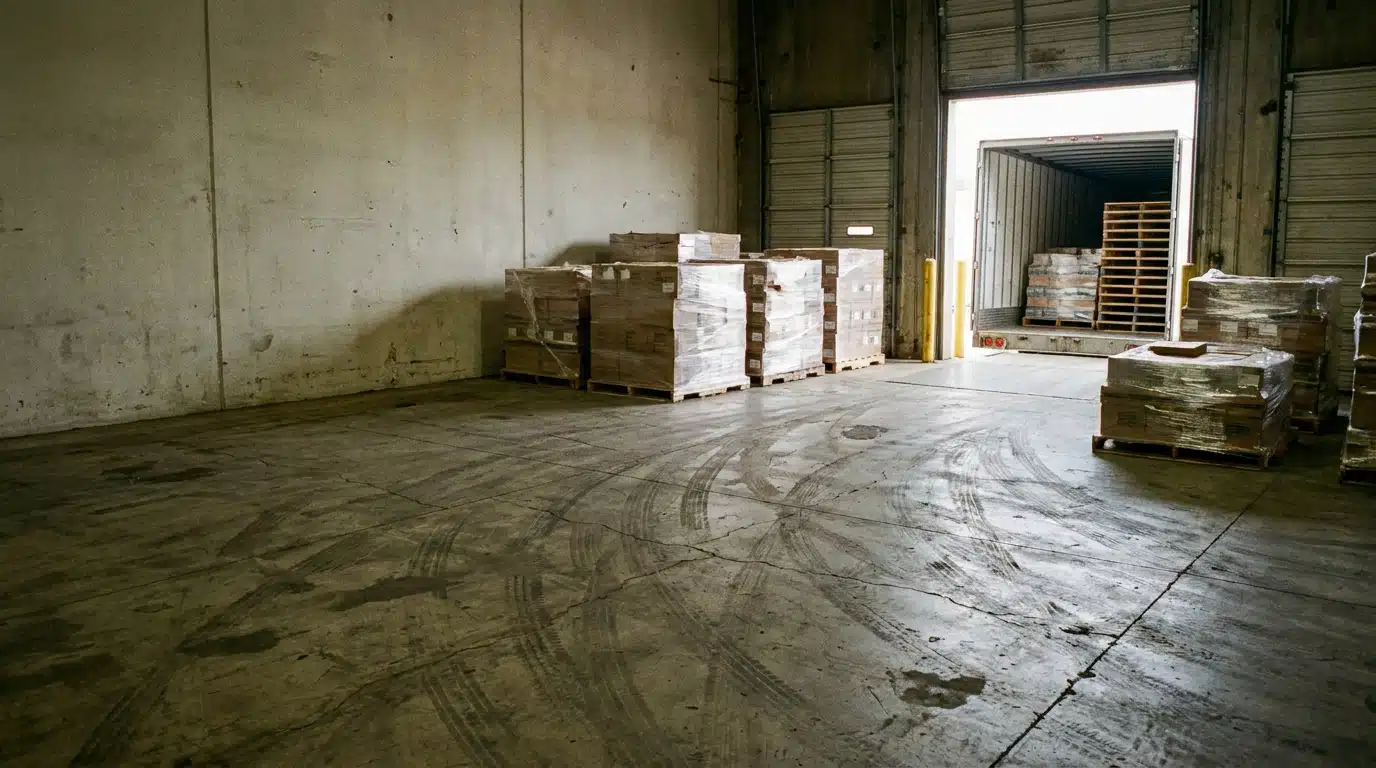
Shipping teams work with information that is already aging.
At 7:30 in the morning, the schedule says Order 4108 will finish at noon. Transportation books a 1:30 pickup. The dock assigns a door. Warehouse labor gets planned around the load. Another truck may be booked immediately behind it.
Then production slips 20 minutes.
Nobody panics because the shipment still appears to have an hour of cushion. But the line isn’t the final step. Finished goods still have to be counted, inspected, wrapped, labeled, transferred, staged, and matched against the paperwork. A 20-minute production delay can consume a 60-minute shipping cushion surprisingly fast.
Jack Cooper’s guide to warehousing and distribution describes the outbound flow through picking, packing, staging, and dispatch. Those steps matter because shipping readiness is different from production completion. A finished product sitting beside the line is not yet a load that a driver can pull away with.
A simple example makes the difference clear. Say a plant normally needs:
- 15 minutes for final quality release
- 10 minutes to move pallets to outbound staging
- 10 minutes for labeling and paperwork
- 20 minutes to load and secure the trailer
That is 55 minutes between “production complete” and “truck ready.”
If the carrier appointment is at 2:00, treating 1:30 as an acceptable production finish time was never realistic. The schedule only looked safe because the work between the line and the dock had been compressed into a blank space.
Factories that handle this well tend to make that hidden time visible. They don’t tell transportation that an order is “almost done.” They give a realistic ready time based on the remaining production quantity and the steps still required after the line finishes.
That distinction also helps transportation teams decide when to act. Moving a pickup by 30 minutes at 10:00 a.m. may be routine. Trying to make the same change when the driver is already at the gate creates a very different conversation.
The Expensive Part Often Happens After the Line Restarts
A late load rarely stays a shipping problem.
The first response may be simple: ask the carrier to wait. Sometimes that works. Sometimes the driver has another appointment, has limited available hours, or simply can’t sit at the plant indefinitely.
Then the recovery options start getting more expensive.
The load might roll to the next pickup. A partial shipment might go now and the balance later. The warehouse may need another shift to prepare it. Transportation may start looking at expedited freight because the original transit plan no longer reaches the customer in time.
None of those decisions appear in the original downtime number.
A useful way to think about the cost of a stop is to follow the consequences until the schedule stabilizes again. That may include overtime, detention, premium freight, rescheduling, extra handling, missed warehouse appointments, or lost production on the customer’s side.
There is also the sequencing problem. Suppose a line produces three customer orders before lunch. A 15-minute stop during the first run doesn’t necessarily make every order 15 minutes late. The team may recover part of the time through a faster changeover or a shorter break.
Or it may get worse.
If the first delay pushes a changeover into a break period, the second order starts 30 minutes late. That order misses its quality slot, so the third run waits for an inspector. One interruption has now touched three orders and two outbound pickups.
This is why the best recovery decision isn’t always “run faster.” Sometimes the smarter move is to change sequence, protect the shipment with the tightest delivery commitment, and allow a more flexible order to move later.
McKinsey’s work on manufacturing analytics makes a similar point from the equipment side: predictive maintenance becomes useful when historical performance data helps teams anticipate failures and intervene before they create downtime. For shipping, the value is the extra warning. Twenty minutes of notice before a likely production miss is much more useful than discovering it when the truck checks in.
Treat Shipping Risk as a Production Signal
Most factories already record downtime. Fewer connect it directly to outbound commitments.
That connection doesn’t need to become a complicated planning project. Start with the loads where timing actually matters.
A production supervisor should be able to look at an active stop and answer three questions quickly: What order is affected? When does that order need to be ready for shipping? How much recovery time is actually left?
Notice that the third question isn’t “How long until the truck arrives?”
If loading requires 30 minutes and quality release usually takes 15, a 3:00 carrier appointment really creates a 2:15 production deadline. That is the time the line team needs to protect.
Transportation can work the same way. Rather than waiting for a binary ready/not-ready status, the shipping team can watch for risk thresholds. An order forecast to finish 90 minutes before pickup may be green. Forty-five minutes may trigger a check. Twenty minutes may justify calling the carrier before the driver commits to the trip.
That makes the handoff much more useful than the familiar factory-floor exchange:
“Are we still good for the 3:00 truck?”
“Should be.”
The phrase “should be” causes a lot of unnecessary scrambling.
Better visibility doesn’t eliminate machine faults, material shortages, quality holds, or slow changeovers. It gives the people responsible for shipping enough time to make a decent decision before those problems become transportation emergencies.
The same thinking applies farther downstream. Modern transportation logistics depends on coordinating transport with inventory, warehousing, planning, and risk management. Factory output belongs in that picture because a transportation plan is only as reliable as the production promise behind it.
Wrap-Up Takeaway
A five-minute factory stop isn’t automatically a serious problem, and treating every interruption as an emergency creates its own noise. The useful distinction is whether the stop threatens an order, a dock window, or a customer commitment. Once teams measure that effect instead of looking only at machine downtime, small interruptions become much easier to prioritize. Production knows which minutes matter, and transportation gets warning while there are still reasonable options available. Pick one time-sensitive outbound load today and work backward from its carrier appointment through loading, staging, quality release, and production. The result will tell you the real production deadline that the schedule needs to protect.