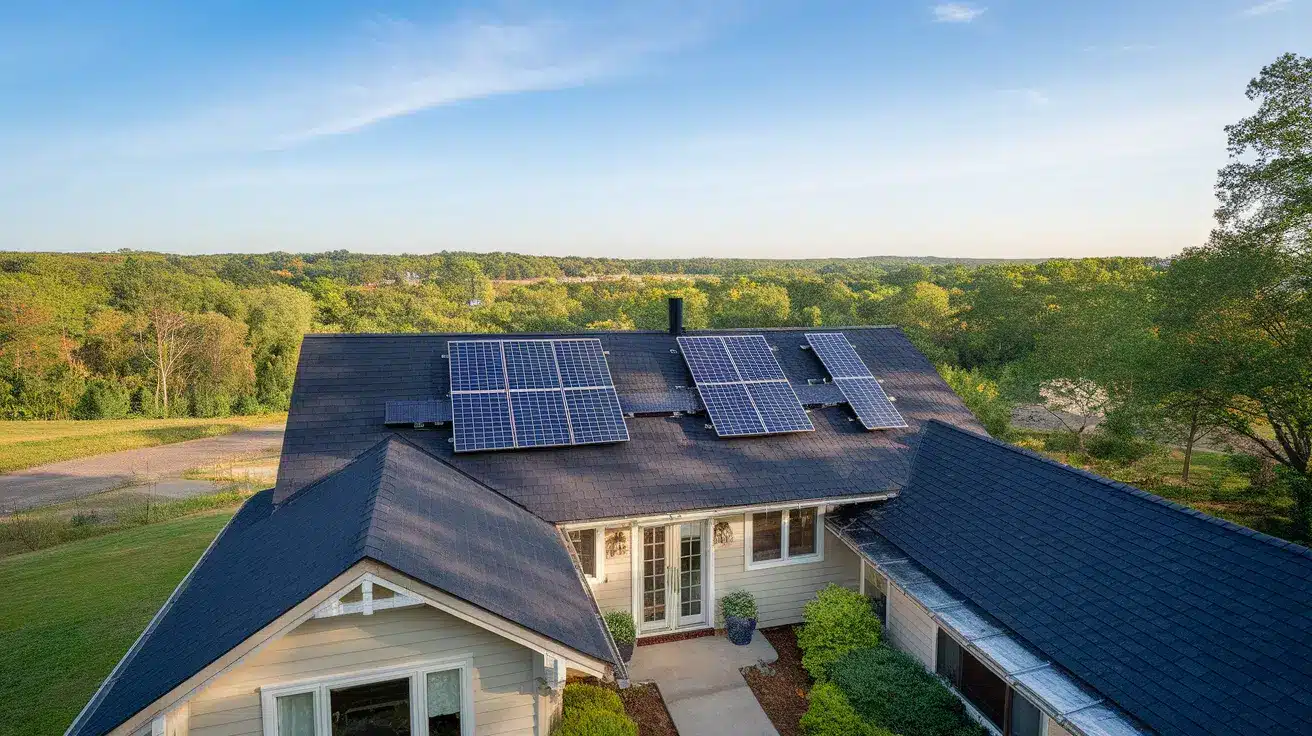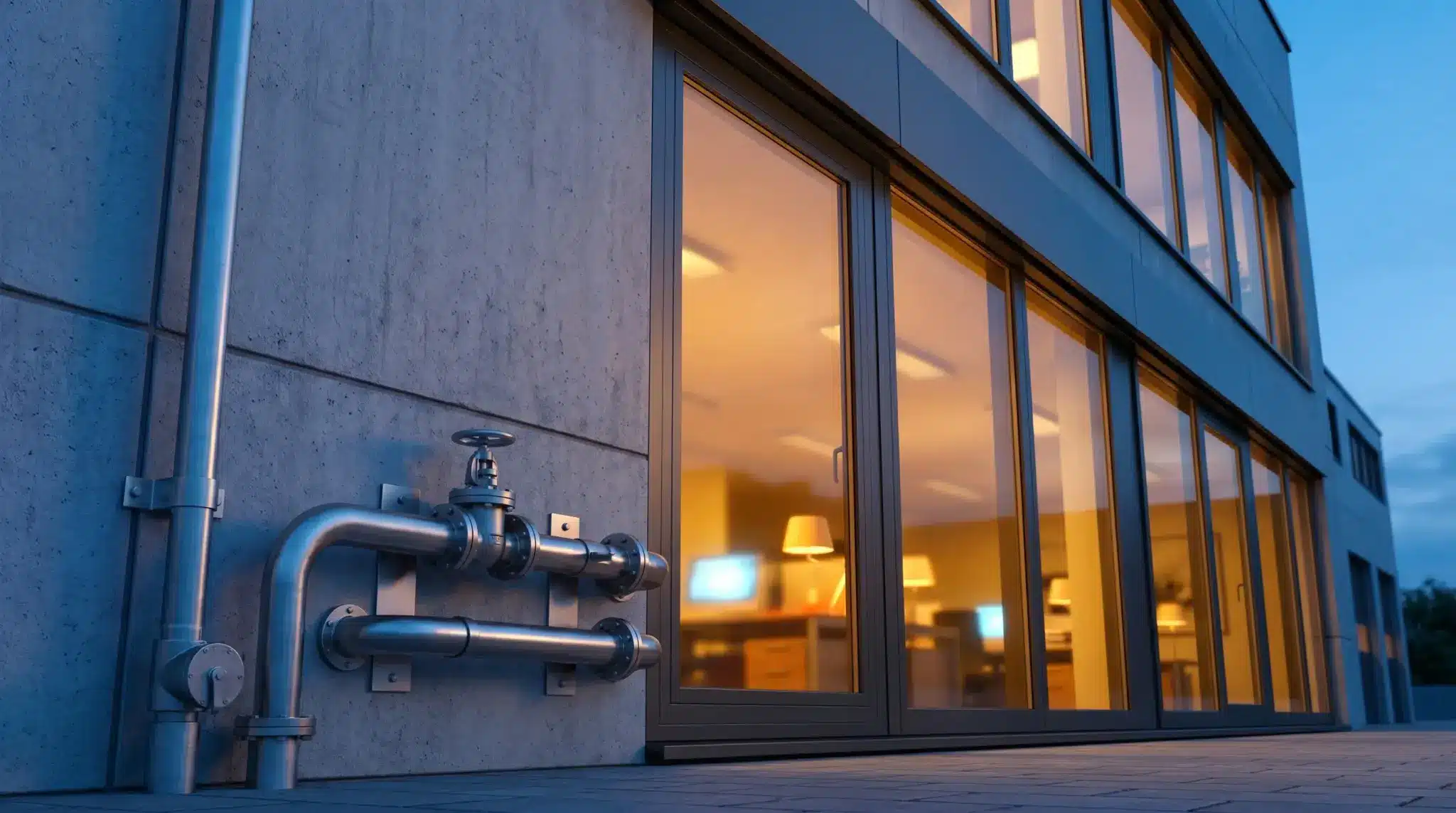
A well-performing building is not simply one that looks good on the outside. It keeps its occupants safe from environmental and industrial hazards, regulates internal temperature efficiently across every season, and minimises the long-term cost of maintaining comfortable, habitable conditions year-round.
Achieving that level of performance requires investment at two distinct but complementary levels: the safety infrastructure that prevents hazardous events from occurring, and the building envelope improvements that reduce energy loss and operating costs over time.
Both represent decisions that pay dividends for years after the initial investment, and neither should be treated as optional in a property managed to a serious standard.
The Safety Layer: Protecting Buildings from Gas Hazards
Understanding the Risk in Gas-Exposed Environments
Gas transmission infrastructure carries pressurised combustible product across long distances and through a wide range of environments, from remote pipeline corridors to urban distribution networks and commercial processing facilities.
The consequences of an undetected gas leak in any of these environments range from significant financial loss to catastrophic safety events, which is why the standard of gas detection deployed throughout a transmission system is a direct determinant of operational risk.
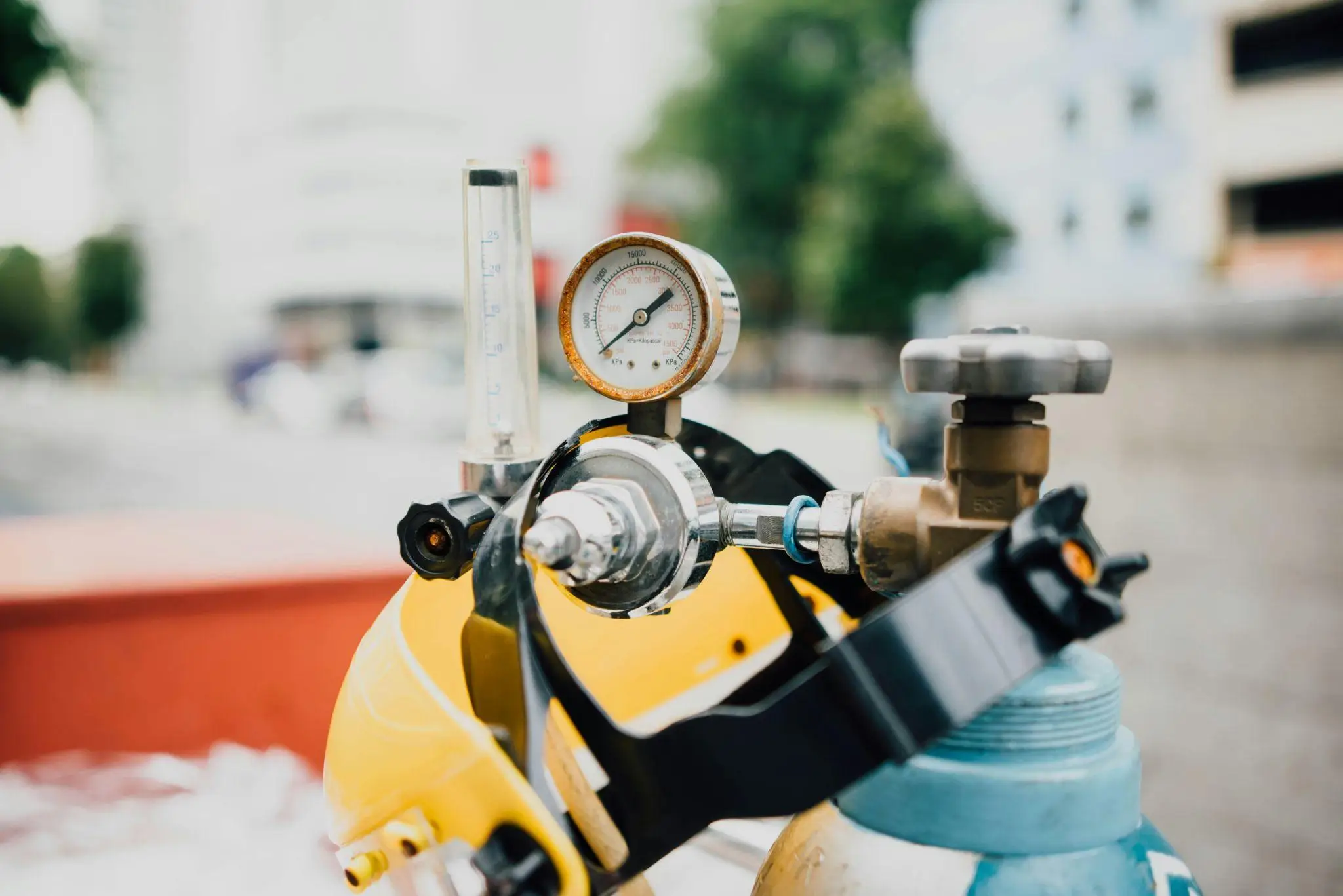
Fixed gas detectors, flame detection systems, personal gas monitors, and ultrasonic leak detectors each address a different aspect of that risk, and no single technology provides complete coverage across every scenario a gas transmission operation encounters.
According to ProDetec’s official website, their range for the gas transmission industry includes fixed gas detectors, multi-spectrum optical flame detection, intelligent visual flame detection, tuneable laser diode technologies, and personal gas monitors, giving operators the ability to build layered detection coverage suited to their specific site conditions.
The Technology Behind Modern Gas Detection
Fixed gas detectors are the backbone of any permanent gas monitoring installation, with options including infrared point detectors, catalytic combustible sensors, and open-path detectors that monitor a beam path across a wide area rather than a single point.
ProDetec’s official gas transmission page notes that their durable gas monitoring solutions meet international certification standards, including SIL (Safety Integrity Level), Marine, and IECEx, ensuring that devices installed in hazardous areas meet the regulatory requirements that govern those environments.
Ultrasonic gas leak detection adds a complementary layer by responding to the acoustic energy produced by pressurised gas escaping at ultrasonic frequencies rather than waiting for gas concentrations to reach detectable levels at a sensor.
As noted on ProDetec’s official website, the detected sound is proportional to the leak rate, meaning the greater the leak, the greater the ultrasound emitted, which provides operators with earlier warning and wider area coverage in open or outdoor pipeline environments.
For operators managing multiple sites or needing flexible deployment in both permanent and temporary installations, wireless gas detection systems offer another dimension of coverage.
To assess the full range of solutions available for gas transmission safety monitoring, decision makers can browse quality gas detectors from ProDetec’s officially listed gas transmission product range, which spans fixed, portable, wireless, and ultrasonic detection technologies.
The Efficiency Layer: Reducing Energy Loss Through the Building Envelope
Why Windows Are the Biggest Thermal Weak Point
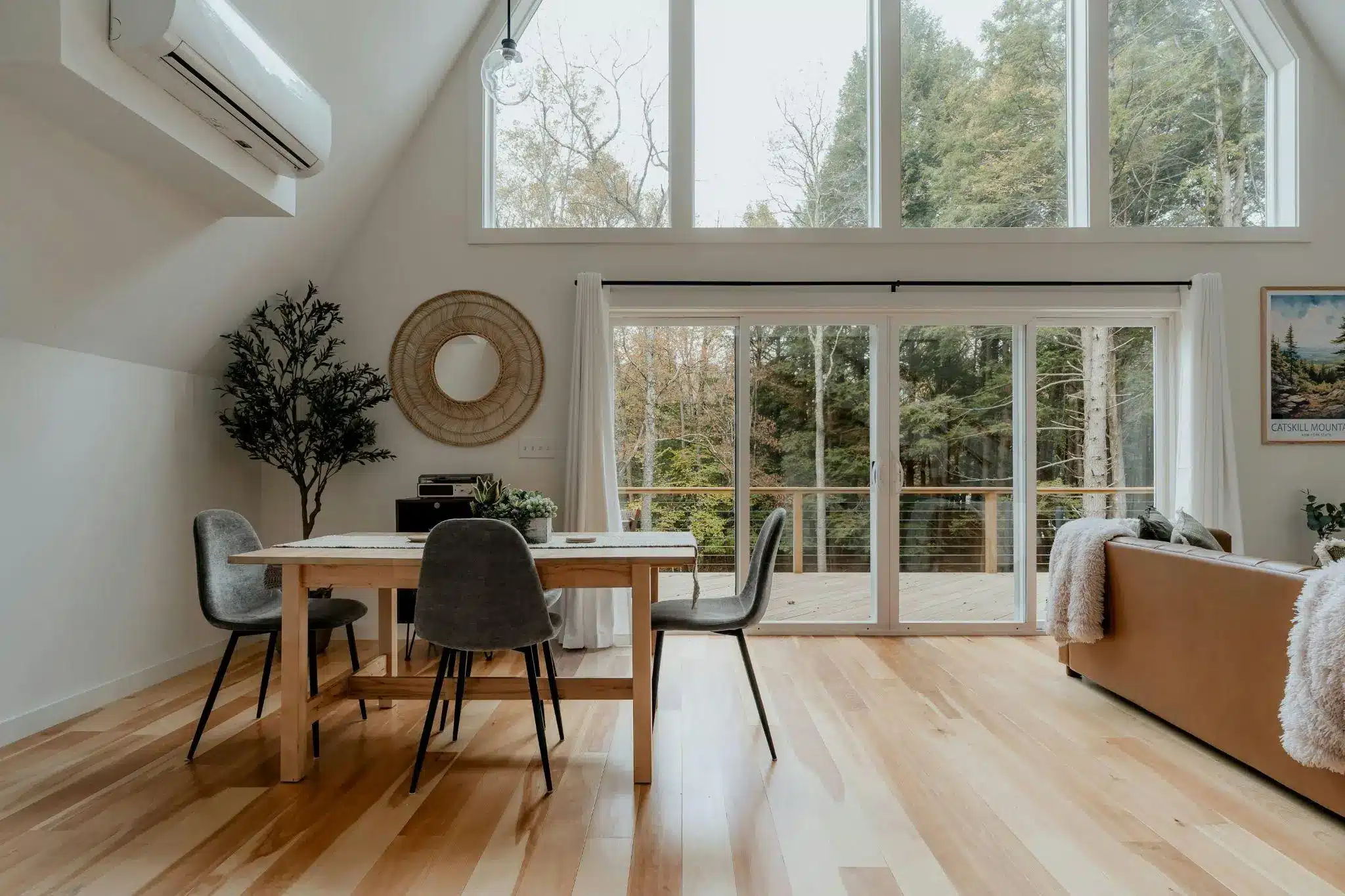
Once a building’s safety infrastructure is in order, the next performance challenge is thermal efficiency, and windows represent the most significant point of heat transfer in most residential and commercial building envelopes.
Standard single-glazed windows allow heat to escape in winter and enter in summer with minimal resistance, forcing heating and cooling systems to work harder and consume more energy than a well-insulated building envelope would require.
The financial consequences of poor thermal performance compound year after year through elevated energy bills, reduced occupant comfort, and, in Sydney’s climate, extended periods where air conditioning or heating must run continuously to maintain liveable conditions.
The structural solution to this problem sits not in upgrading appliances but in improving the building components that allow heat to bypass them in the first place.
In residential construction, windows and doors typically account for the greatest proportion of uncontrolled heat exchange in the building envelope.
Upgrading them is one of the highest-impact interventions available to a property owner because the improvement applies to every hour of every season for the life of the product, rather than addressing only peak-use periods the way appliance upgrades tend to.
How Double Glazing Addresses the Problem
Double-glazed uPVC windows address thermal inefficiency at the source by creating an insulating barrier within the window itself, dramatically reducing the rate of heat transfer between the interior and exterior of a building.
According to Integra Windows’ official website, their double-glazing technology uses argon gas and warm-edge spacers to minimise heat transfer and loss, with the result that homeowners can rely less on air conditioning and heating systems and reduce energy bills by up to 40%.
The performance benefits extend well beyond thermal control. Integra Windows’ official website states that their multi-layered design and superior sealing can dampen external noise by up to 80%, and the unique design also reduces moisture build-up, limiting the risk of condensation and mould when temperatures drop.
For Sydney homeowners and commercial property managers seeking a comprehensive building performance upgrade, the option to install quality double-glazed windows Sydney specialists manufacture locally using German-engineered technology offers a 7-star energy rating compliant solution that also carries BAL 40 bushfire certification for additional safety.
The frame material plays an equally important role in overall system performance.
Integra Windows’ official website explains that their uPVC frames are infused with Titanium Dioxide for UV stabilisation.
This enables the frames to resist weather damage and discolouration, ensuring longevity and keeping the frames looking fresh for many years without the maintenance burden that timber or aluminium alternatives require.
Why Both Investments Make Financial Sense
The Long-Term Economics of Safety and Efficiency
A building that is properly protected from gas hazards and properly insulated against thermal loss is operating at a significantly lower risk and cost profile than one where either dimension has been left unaddressed.
Gas leak incidents that are not caught early escalate rapidly from detectable anomalies into expensive shutdowns, regulatory responses, and, in worst-case scenarios, events with consequences difficult to recover from.
Thermal inefficiency operates on a slower but equally erosive timeline, adding cost to every energy bill and reducing the occupant experience throughout the life of the building.
The 10-year product warranty and 15-year hardware warranty that Integra Windows offers on their double-glazed window systems, as confirmed on their official website, reflects the long-term financial case for treating window performance as a structural investment rather than a cosmetic upgrade.
Both the safety and the efficiency investments share a common characteristic: their return accumulates over time and compounds in value the earlier they are made.
A detection system installed before an incident protects against an identical system installed after it cannot recover, and a window system installed during a renovation saves energy costs from the first month of operation.
Conclusion
A Smarter, Safer Approach to Property Performance
The properties that perform best over a decade or more are those managed with a deliberate approach to both safety and efficiency from the outset.
Gas detection technology that identifies leaks before they escalate and double-glazed windows that hold conditioned air inside a building are investments in entirely different systems.
They serve the same fundamental goal: a building that costs less to operate, poses fewer risks to occupants, and maintains its value through the quality of decisions made at every stage of its lifecycle.
Treating building performance as a single, integrated challenge rather than a series of isolated line items is what separates properties that retain their value and operational standard over time from those that accumulate deferred costs until they become unavoidable.