Shipping moves in big, obvious steps most people recognize, but there’s a smaller piece in the middle that keeps the whole chain from falling apart. That’s where drayage starts to matter.
It’s the part of the process that usually gets overlooked until something slows down, and then suddenly it becomes the only thing anyone talks about.
Once you understand how containers actually move through ports, rail yards, and warehouses, you start to see how much hinges on these short, local runs.
Today, I’ll break down how it works, why it exists, what drives the costs, and the different forms it takes so the full picture finally makes sense.
What Does Drayage Mean in Shipping?
Drayage is basically the short trip your container takes right after it hits a port or a rail yard. It’s not the long haul. It’s the little move that keeps everything flowing.
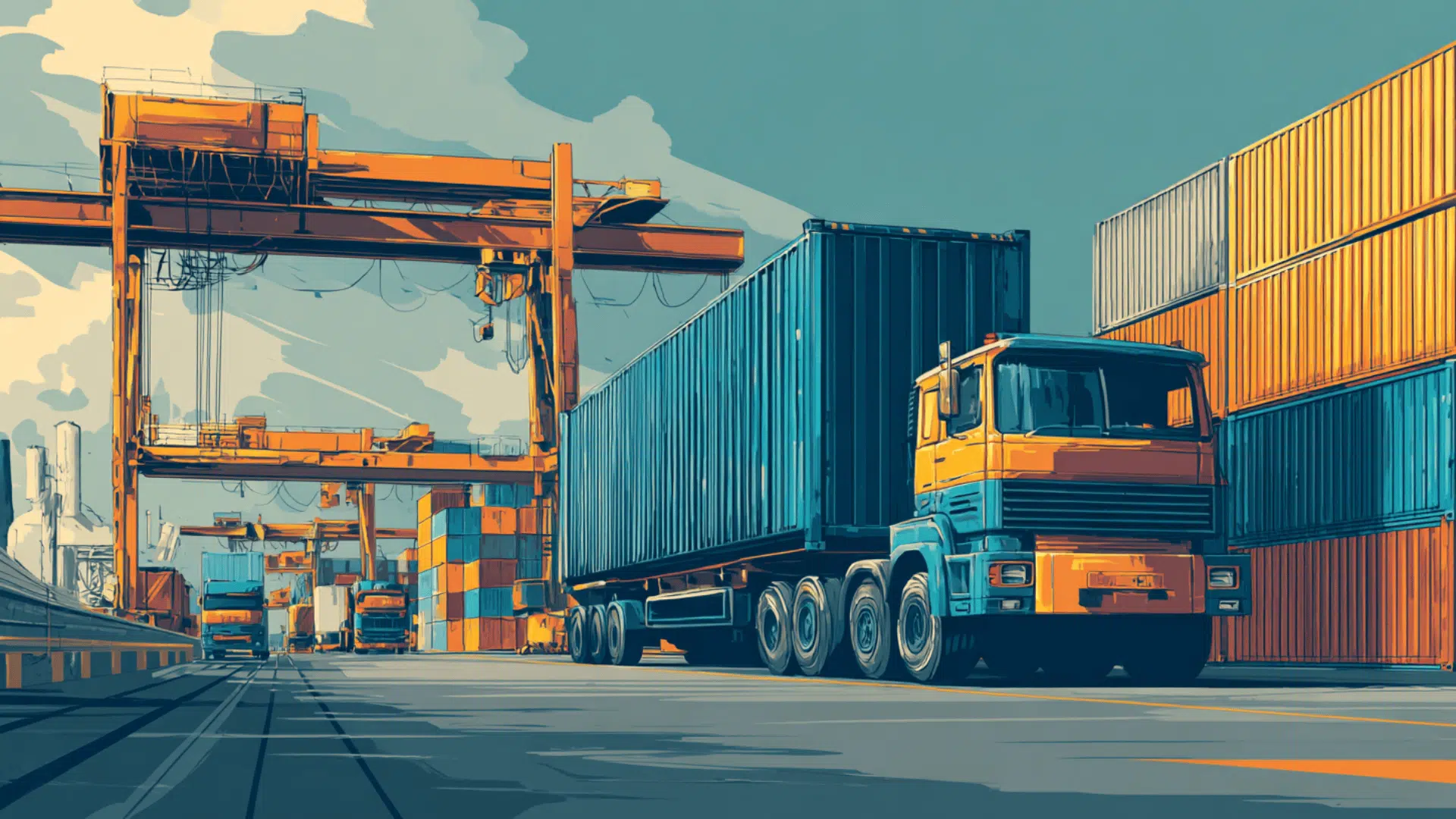
A truck shows up, grabs the container, and takes it somewhere close. Maybe a warehouse. Maybe a distribution center. Sometimes another terminal. It’s all pretty quick.
It only deals with containers. Full-sized boxes. Nothing is left loose, nothing is packaged by hand, just the whole unit going from one spot to the next, so the rest of the shipment can actually happen. Most of the time, this all stays inside the same city, sometimes even the same industrial area.
If you’re trying to picture it, think of the first step after the ship arrives, or the last step before it hits the final carrier. That small link in the middle. That’s drayage.
In short, drayage is a short-distance container move that connects ports, rail yards, and warehouses so the bigger shipping steps can happen.
Where Drayage Fits in the Shipping Process

Containers don’t move around the world on one system. They bounce between a few. Ships handle the ocean. Trains take over the inland. Trucks finish the last part. Each mode does what it’s good at and leaves the rest to someone else.
The problem is the handoff. Big ships can’t deliver straight to rail lines. Trains can’t pull up to a dock. Long-haul trucks aren’t built for tight port traffic or quick turns. There’s this small gap between the major steps, and nothing in the big system covers it.
That gap is drayage.
A container comes off a ship at the port. A drayage truck picks it up. Moves it a short distance. Usually one of three places:
- To a rail yard
- To a warehouse
- To a distribution center
Once it’s there, the next mode takes over. Port → rail → warehouse. Smooth handoff. No congestion. No containers stuck in the wrong place.
Drayage exists because the big transport systems can’t handle those tiny local moves. They’re built for scale, not precision. Drayage fills that space so the global trip doesn’t stall out.
Types of Drayage Services
Drayage looks a little different depending on where the container needs to go next and what the larger shipment is trying to do. The distance stays short, but the purpose shifts, and that’s why these different types exist.
1. Port Drayage
This is the version most people think of first. A container comes off a ship, gets cleared by the terminal, and a drayage truck takes it to a nearby warehouse, yard, or distribution center. It’s used any time something arrives by sea and needs a quick hop inland.
Example: A shipment from China lands at the Port of LA. A drayage truck picks up the container and moves it to a warehouse in Carson for unloading.
2. Rail Drayage
Some containers skip the warehouse and go straight to a freight train. Rail drayage covers that move. The truck takes the container from the port to the rail yard so it can start the long inland trip.
Example: A container lands in Seattle and is trucked a short distance to the BNSF rail yard so it can head toward Chicago.
3. Door-to-Door Drayage
This one takes the container directly to the final delivery point without any extra stops. It’s used when the customer wants the container brought straight to their building.
Example: A furniture importer has space at their facility to unload containers. The drayage truck brings the box straight to their door, unloads, and returns the empty.
4. Inter-Carrier Drayage
This type connects two transportation carriers that aren’t in the same place. Maybe a port and a rail yard. Maybe two different rail operators. It fills the gap between systems that don’t physically touch.
Example: A container arrives at one rail line’s terminal but needs to transfer to another company’s yard across town.
5. Expedited Drayage
Sometimes a shipment is running late or has to hit a tight delivery window. Expedited drayage speeds things up with priority pickup and a quicker turnaround.
Example: A container holding time-sensitive goods gets pulled from the port ahead of others and delivered directly to a warehouse to keep a production schedule from slipping.
Each type solves a slightly different piece of the puzzle, but the idea stays the same: move the container a short distance so the rest of the journey can keep going.
How Drayage Actually Works: Step-by-Step
Drayage looks pretty straightforward from the outside, but each part has its own pace, and things can shift depending on how busy the terminals are. This is how it usually unfolds.
Step 1: The Container Arrives

A ship docks at the port or a train pulls into the rail yard, and the containers get unloaded, sorted, and stacked. They’re supposed to be ready for pickup once the terminal clears them, but this is where delays often start.
Port congestion slows everything down, rail yards back up quickly, and sometimes a container gets flagged by customs and has to sit until it’s cleared. None of this is unusual. It’s just part of the environment.
Step 2: The Drayage Truck Picks It Up

The driver checks in at the terminal and waits to be routed to the right stack. Some days it moves fast. Other days, the check-in line creeps along because of staffing gaps or equipment issues.
Chassis shortages are common too, and without a chassis, the container isn’t moving anywhere. Even once the driver gets assigned, the traffic inside the terminal can feel like a slow crawl. It’s busy, and everyone is trying to get in and out at the same time.
Step 3: The Short Move Happens
Once the truck clears the terminal, the actual drive is usually quick.
Most drayage runs stay inside the same city or industrial zone, so the distance isn’t the problem. Traffic is the only real wildcard here.
Some port roads get clogged with trucks during peak hours, and that adds a little drag to the timeline. But compared to everything that happens inside the terminal, this part tends to be the least stressful.
Step 4: The Container Gets Dropped at the Next Stop

The driver checks in at the warehouse, distribution center, or rail yard. If it’s a simple yard drop, things move fast. If it’s a live unload, the timing stretches a bit because the warehouse team has to clear space, bring in a forklift, or finish another unload first.
A “quick unload” can turn into a wait without much warning. Still, once the container is dropped, it’s ready for the next mode in the chain.
When everything lines up, drayage feels smooth and predictable. When the small delays stack up, it slows the whole rhythm down. Either way, it’s the link that keeps the larger shipping system from getting jammed.
How Drayage Differs From Trucking and Intermodal
| Service | What It Actually Does | Typical Distance | When It’s Used |
|---|---|---|---|
| Drayage | Moves a full container a short distance between ports, rail yards, warehouses, or distribution centers | Usually within the same city | Connecting one transport mode to the next so the shipment can keep moving |
| Trucking | Handles the longer road portion of the trip, usually on highways | Dozens to hundreds of miles | Taking freight to its final destination or moving it across regions |
| Intermodal | Combines multiple transport modes: ship, train, and truck, using the same container the whole way | Any distance | Moving a shipment efficiently across different systems without repacking |
Takeaways:
- Drayage is the short local connector that gets containers out of terminals.
- Trucking is the long-distance part that carries freight across cities or states.
- Intermodal is the overall system that links ships, trains, and trucks into one continuous route.
- People confuse them because they all involve trucks, but the goals and distances are completely different.
What is a Drayage Charge?

A drayage charge is the fee you pay for the short move a container makes between major parts of the shipping system. It covers the truck, the driver, the chassis, the terminal time, and the actual trip to the next stop.
It’s its own line item because it isn’t part of the long-haul shipping cost. It’s a separate service with its own timing, equipment, and labor, and the price reflects that.
Thebase rate is built around the distance, the expected wait time, and the overall demand in that area.
After that, the price shifts based on a few common factors. Ports get congested. Rail yards slow down. Some containers need special chassis because they’re heavier. Fuel costs go up and down.
A warehouse might take longer to unload, turning a quick run into a longer one. All of those pieces end up shaping the final charge.
Drayage looks small compared to the rest of the shipment, but it has enough moving parts that it gets priced on its own. That’s why it sits outside the main freight cost and why the number moves around from one trip to the next.
Drayage Cost Ranges in the U.S.
| Type of Drayage Move | Typical Price Range (USA) | What Affects the Cost |
|---|---|---|
| Standard short-haul drayage | $350 – $600 | Local distance, basic terminal time, fuel surcharge |
| Medium-distance drayage (up to ~50-100 miles) | $600 – $900 | Longer drive time, fuel, congestion, driver availability |
| Longer or complex drayage runs | $1,000+ | Scheduling limits, port traffic, equipment needs |
| Expedited drayage | 20% – 50% higher than base | Priority pickup, time-sensitive delivery, limited capacity |
A lot of what you end up paying comes down to time, distance, and how busy the terminals are when the container moves.
The base rate covers the simple part of the trip, but the extra fees show up when something slows the driver down or requires different equipment.
Once you understand what each charge is tied to, the pricing stops feeling random. You can see exactly where the money goes, and you get better at planning around the parts that usually cause delays.
Wrapping Up
Understanding what drayage is gives you a clearer view of how containers move through the system and why this small step matters more than it looks.
It’s the part that keeps everything from backing up, and once you see how the timing, equipment, and local conditions shape each move, the whole process feels a lot more predictable.
The trick is paying attention to the little details that usually get ignored. That’s where you save the most time and avoid the extra costs that sneak in.
If you’re planning a shipment or trying to tighten up your logistics flow, now’s a good time to take the next step and put this information to work.