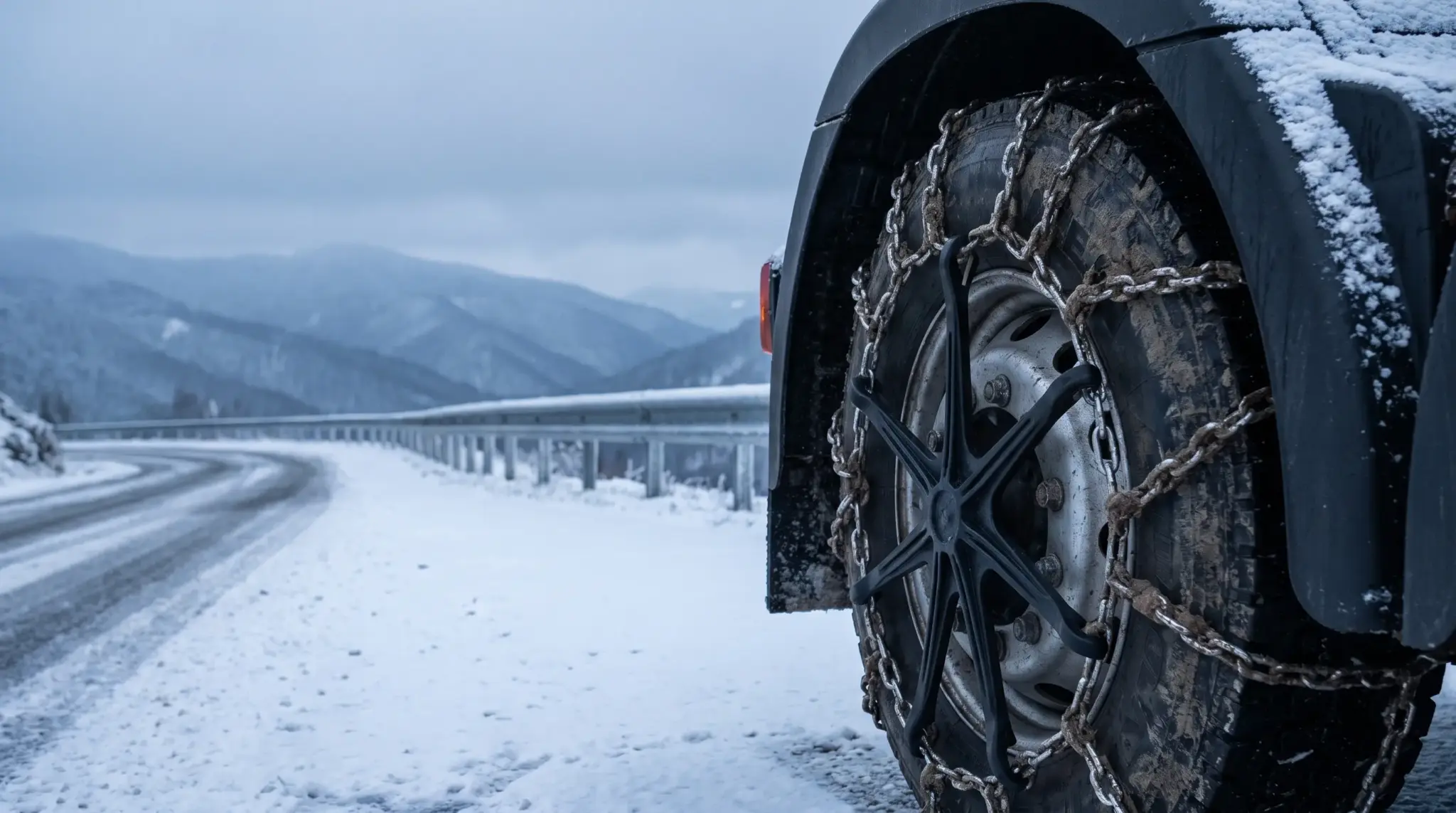
Snow on a mountain grade changes everything for a loaded semi. Chains help, but only if they stay tight. Slack chains slip, climb the sidewall, or come off completely, and that is when a driver ends up blocking traffic.
Anyone who keeps basic semi truck parts ready for winter knows a tensioner is the piece that keeps the whole setup working the way it should.
A chain that loosens under load stops doing its job. The tire starts spinning, or the links slap against the fender. Either way, progress slows and risk goes up.
Semi Truck Parts: The Real Cost of a Loose Chain
Most states that enforce chain laws care about one thing: keeping traffic moving. Colorado is strict about it.
The Colorado State Patrol’s chain law page states that since August 7, 2024, every commercial vehicle over 16,000 lbs must carry chains from September 1 to May 31, and that a driver who is stuck and blocking the roadway faces a $1,000 fine plus a $157 surcharge, versus up to $500 for other violations. A chain that slackens and slips off is exactly how a compliant truck ends up blocking a lane, which is where a tire chain tensioner earns its place in the kit.
That fine is only the start. A truck sitting sideways on a pass can close a lane for an hour or more. Other drivers get delayed, dispatchers start calling, and the original driver has to explain what happened.
What a Tensioner Actually Does
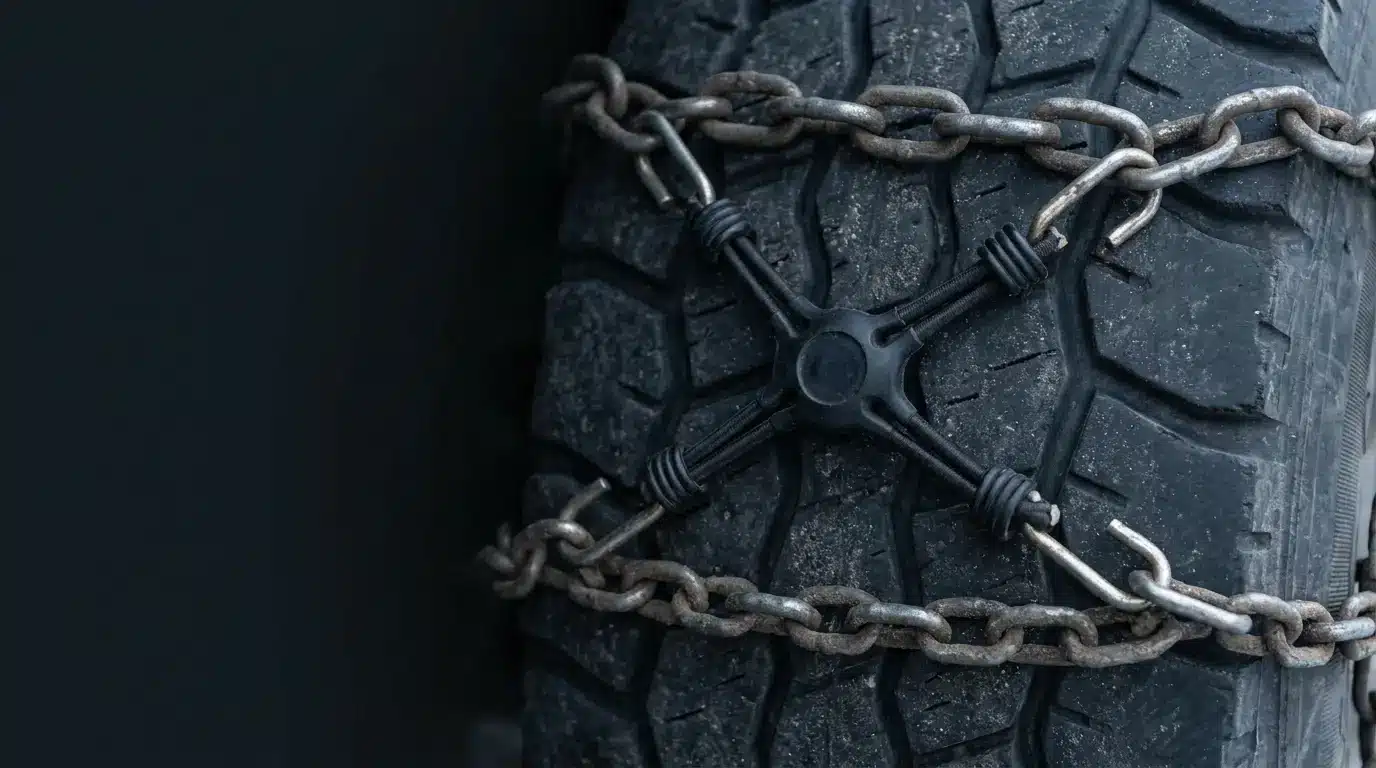
Rubber spider tensioners are the most common fix. This simple semi truck part has six flexible arms that stretch from a center ring and hook onto the side chain. Once they are in place, they pull the links snug against the tread and keep them centered. Spring tensioners do the same job with metal coils that absorb the constant bounce of a heavy load.
Both types install in a couple of minutes at a chain-up station. No tools needed. Once the truck is rolling, the tensioner keeps working even as the tire flexes and the road surface changes. For such a small semi truck part, it makes a big difference: the chain stays where it belongs instead of working its way loose over the next twenty miles.
Why Drivers Keep Semi Truck Parts in the Cab
A tensioner costs little and takes almost no space. What this semi truck part saves is time and trouble. Drivers who run the same winter corridors every year learn that a few dollars spent on tensioners means fewer stops to retighten chains and less chance of a link wrapping into something important under the truck.
They also help the chains last longer. Constant slack and vibration wear the links out faster. A tight chain rides cleaner and takes less abuse, which makes semi truck parts like tensioners worth keeping in every winter kit.
Putting It Together
Carrying the right-size chains is the first requirement. Adding a tensioner for each drive tire is the practical next step. Check the fit after the first few miles so the rubber or spring can settle, then leave it alone. When the restriction ends, pull everything off and store it dry.
Winter traction rules exist because stalled trucks create bigger problems than most people realize. A simple tensioner is one of the easiest ways to stay on the right side of those rules and keep the load moving.