Running a small logistics fleet has never been a simple numbers game. Fuel, maintenance, insurance, equipment, labor, and other operating expenses continue to put pressure on margins, leaving smaller carriers with less room for unnecessary spending.
That makes fleet dash cam solutions worth considering as part of a broader strategy for controlling risk without adding another expensive system to the budget. For a small fleet, the goal is not to buy every available technology feature. It is to invest in tools that provide practical value.
Why Small Fleets Are Feeling the Cost Pressure
The cost of operating a truck reached a record $2.336 per mile in 2025, according to the American Transportation Research Institute (ATRI). Overall operating costs increased 3.4% from the previous year, while repair and maintenance expenses rose 8.6%.
For larger carriers, rising expenses can sometimes be distributed across hundreds or thousands of vehicles. Smaller logistics companies do not have that same scale. A single major repair, accident, insurance claim, or vehicle downtime event can have a noticeable effect on the bottom line.
That is why technology purchases need to be evaluated differently by smaller fleets. Instead of asking whether a particular feature is impressive, fleet owners should ask a simpler question:
Can this technology help us prevent costs that would otherwise be much more expensive?
The Case for Affordable Fleet Video
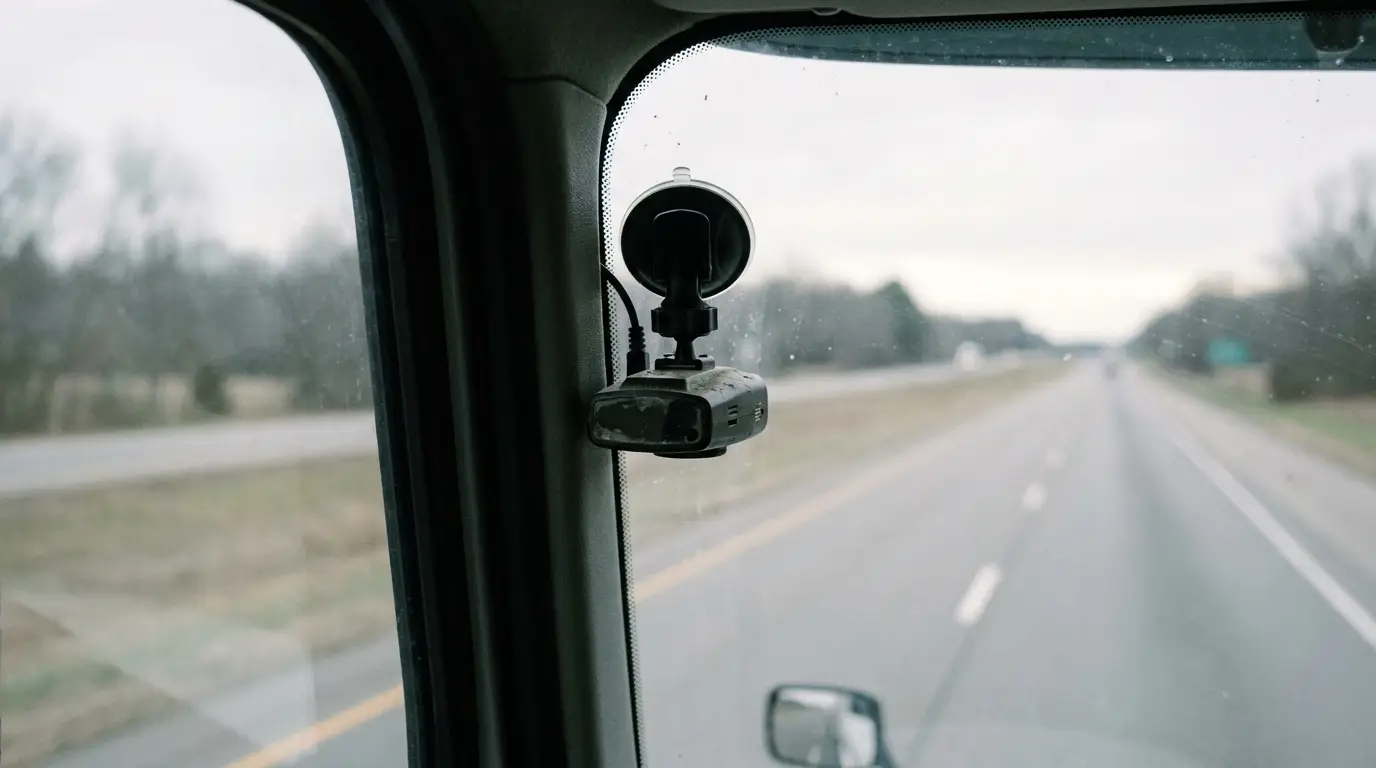
Dash cameras are often associated with large trucking companies and sophisticated fleet management systems. However, the technology is increasingly accessible to smaller operators.
Commercial dash camera prices can vary significantly depending on the hardware, connectivity, storage, analytics, and other features included. Basic cameras may cost relatively little upfront, while connected systems with AI and cloud functionality can carry additional hardware and recurring costs.
For a small fleet, this does not necessarily mean choosing the cheapest camera available.
A better approach is to identify the features that solve actual business problems.
For example, a logistics company may benefit from:
- Automatic recording of driving events
- Road-facing and driver-facing video
- Remote access to footage
- Alerts for risky driving
- Driver behavior insights
- Cloud video storage
- GPS and telematics integration
- Simple installation without extensive downtime
The right combination can provide useful visibility without forcing a small business to purchase a technology platform designed around the needs of a much larger carrier.
Video Can Help Reduce the Cost of Risk
Accidents are one of the clearest examples of why fleet safety technology can have financial value.
When a crash occurs, a fleet may face vehicle repairs, lost productivity, insurance claims, legal expenses, and potential damage to its reputation. Even when the fleet driver was not responsible for an incident, determining exactly what happened can be difficult without evidence.
A camera can provide another source of information.
Video may show traffic conditions, vehicle movements, driver actions, and events immediately before a collision. This can give fleet managers a clearer understanding of an incident and provide documentation when accounts of what happened differ.
For a smaller carrier operating on tighter margins, avoiding or effectively managing even one costly incident can make a meaningful difference.
Small Fleets Don’t Need Every Feature
One of the easiest ways to overspend on technology is to purchase features simply because they are available.
A small logistics company may not need an enormous suite of analytics, integrations, or administrative tools. Before purchasing a camera system, fleet owners should determine what they actually want the technology to accomplish.
Consider these questions:
What Risks Are Most Common?
If speeding, distracted driving, harsh braking, or collisions are recurring concerns, prioritize a system that can identify and document those behaviors.
How Much Footage Needs to Be Stored?
A small local delivery fleet may have different storage requirements than a regional carrier operating hundreds of miles every day.
Does the Fleet Need Remote Access?
If managers need to review footage from another location, cloud-connected cameras may be more practical than systems that require physically retrieving a memory card.
Can the System Grow With the Fleet?
A solution that works for five trucks should ideally remain practical when the company grows to 10, 20, or more vehicles.
AI Can Make a Smaller Team More Efficient
Small fleets often have another limitation beyond their budgets: limited personnel.
A fleet manager may already be responsible for dispatching, maintenance, compliance, customers, drivers, and administrative work. Watching hours of video from multiple vehicles is not a realistic use of that person’s time.
AI-powered cameras can help by identifying potentially important events automatically.
Depending on the system, AI can detect behaviors such as:
- Phone use
- Distracted driving
- Seat belt violations
- Harsh braking
- Aggressive acceleration
- Speeding
- Inattentiveness
- Unsafe cornering
Instead of reviewing everything, managers can focus their attention on events that require investigation or coaching.
Video telematics adoption has also been growing across fleets. Verizon Connect’s 2026 fleet technology report found that 46% of surveyed fleet organizations were using video telematics, while 74% of video users reported improved driver safety through AI-powered behavior detection and real-time coaching.
Use Cameras for Coaching, Not Just Surveillance
A camera becomes more valuable when the information it provides is used constructively.
Suppose a driver repeatedly brakes harshly. A manager could simply document the behavior, but reviewing the associated footage may reveal a more useful explanation. Perhaps the driver is following too closely, dealing with congested routes, or encountering a particular type of traffic situation.
That information creates an opportunity for targeted coaching.
A simple process can work well:
- Identify a repeated driving behavior.
- Review the relevant video.
- Discuss the event with the driver.
- Identify a safer alternative.
- Monitor future performance.
- Recognize improvement.
This approach can turn camera footage into a training resource rather than simply another source of disciplinary data.
Look at Total Cost, Not Just Purchase Price
Affordability should not be measured solely by the price on the initial invoice.
A cheaper camera may become more expensive if it requires frequent manual footage retrieval, has limited storage, lacks useful alerts, or cannot integrate with existing fleet technology.
Conversely, a system with a higher initial price may provide capabilities that save administrative time or help prevent costly incidents.
Research from Verizon Connect’s 2025 fleet technology report found that 47% of surveyed dashcam users reported achieving positive ROI within one year.
That does not mean every fleet will achieve the same result. ROI depends on fleet size, driving activity, claims, safety practices, technology costs, and how consistently managers use the information. But it demonstrates why small fleets should evaluate camera technology based on potential business value rather than hardware price alone.
Start Small and Scale
Smaller logistics companies do not necessarily need to equip every vehicle on day one.
A phased approach can make adoption easier.
A fleet might begin with the vehicles that:
- Travel the most miles
- Operate in congested areas
- Have higher accident exposure
- Carry higher-value cargo
- Have experienced repeated safety events
- Spend the most time on the road
After establishing how the technology fits into daily operations, the company can expand the program to additional vehicles.
This approach also gives managers an opportunity to develop driver communication policies, coaching procedures, and internal processes before rolling the technology out fleetwide.
The Bigger Picture: Protecting Margins
Technology cannot eliminate the rising costs affecting logistics companies. Fuel prices, repairs, insurance, labor, and equipment will continue to influence the cost of doing business.
But technology can help a fleet make better use of the resources it already has.
For small carriers, that means looking for solutions that address multiple problems without creating another complicated expense.
A connected camera can provide visibility into driving behavior, help document incidents, support driver coaching, and give managers access to information they otherwise might not have.
The value is not simply in having a camera mounted inside a truck. It is in having useful information when the fleet needs it.
For smaller logistics fleets, affordability is about more than finding the lowest purchase price. It means finding technology that can justify its place in the operating budget by helping manage risk, improve visibility, and make everyday fleet management more efficient.
As operating costs continue to rise, small carriers have good reason to scrutinize every investment. A practical camera system does not need to include every advanced feature on the market. It needs to provide the visibility and functionality that match the fleet’s actual needs.
By starting with specific safety and operational goals, evaluating total cost of ownership, and scaling technology as the business grows, smaller fleets can adopt video technology without treating it as an unnecessary luxury.