Packing up your entire life into a few hundred square feet sounds simple until you’re standing in a driveway wondering what actually fits.
That’s the real challenge behind full-time RV living: figuring out what to bring, what to skip, and how to keep your systems running once you’re on the road.
I’ve pulled together what actually matters before you make the move, so you don’t learn the hard way three states from home.
You’ll get a clear picture of what to pack, how to budget realistically, where to set up a legal home base, and what gear keeps your water, power, and waste systems working smoothly.
By the end, you’ll know exactly what to prepare before you go.
What Should You Prepare and Pack Before Full-Time RV Living?
Before you move in, make sure your belongings, budget, and gear match how you actually plan to live. I’d think through a typical week, since campground stays, frequent travel, and off-grid living all require different setups.
1. Downsize Around What the RV Can Carry
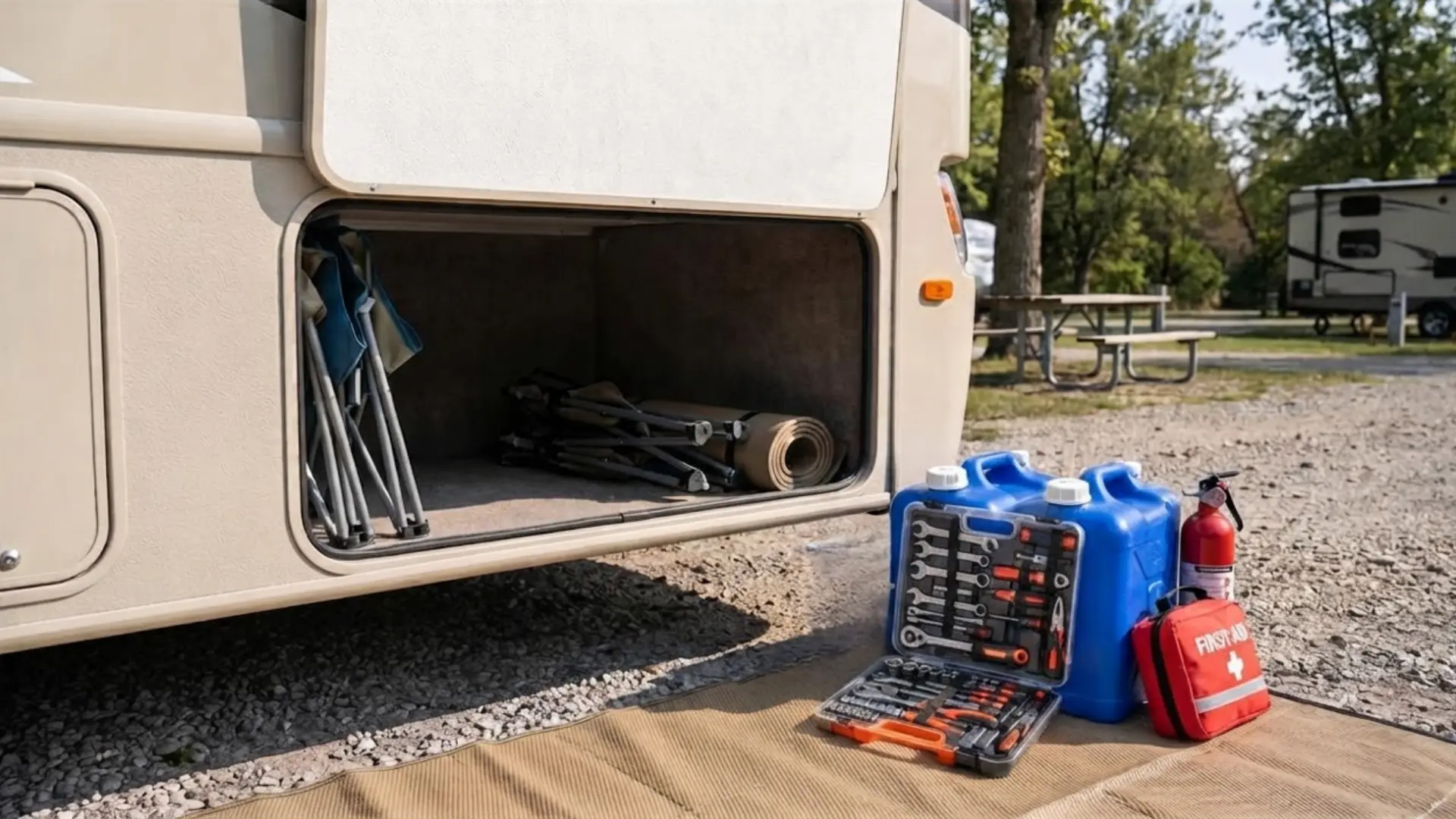
Keep what you use often and question everything else. RV storage fills quickly, and extra weight can limit how much water, food, tools, and safety gear you can carry.
With that in mind, check your RV’s payload limit and decide where each item will go before packing. A dedicated outdoor storage setup can free up interior space for essentials you need close at hand.
Once the basics have a place, keep the rest of your setup flexible. Multipurpose items save space, while leaving some storage open gives you room to adjust as your needs change.
2. Set a Realistic Full-Time RV Budget

Fuel and campground fees are only part of the cost. You should also plan for propane, electricity, mobile data, full-time RV insurance, routine maintenance, and unexpected repairs.
Some costs are predictable, while others can catch you off guard. Seasonal campground rates, changing fuel prices, and unexpected repairs can quickly affect your monthly budget.
Leave some breathing room rather than relying on one fixed online estimate. A flexible budget makes it easier to handle changes without derailing your travel plans.
3. Domicile and Home-Base Planning for Full-Time RVers
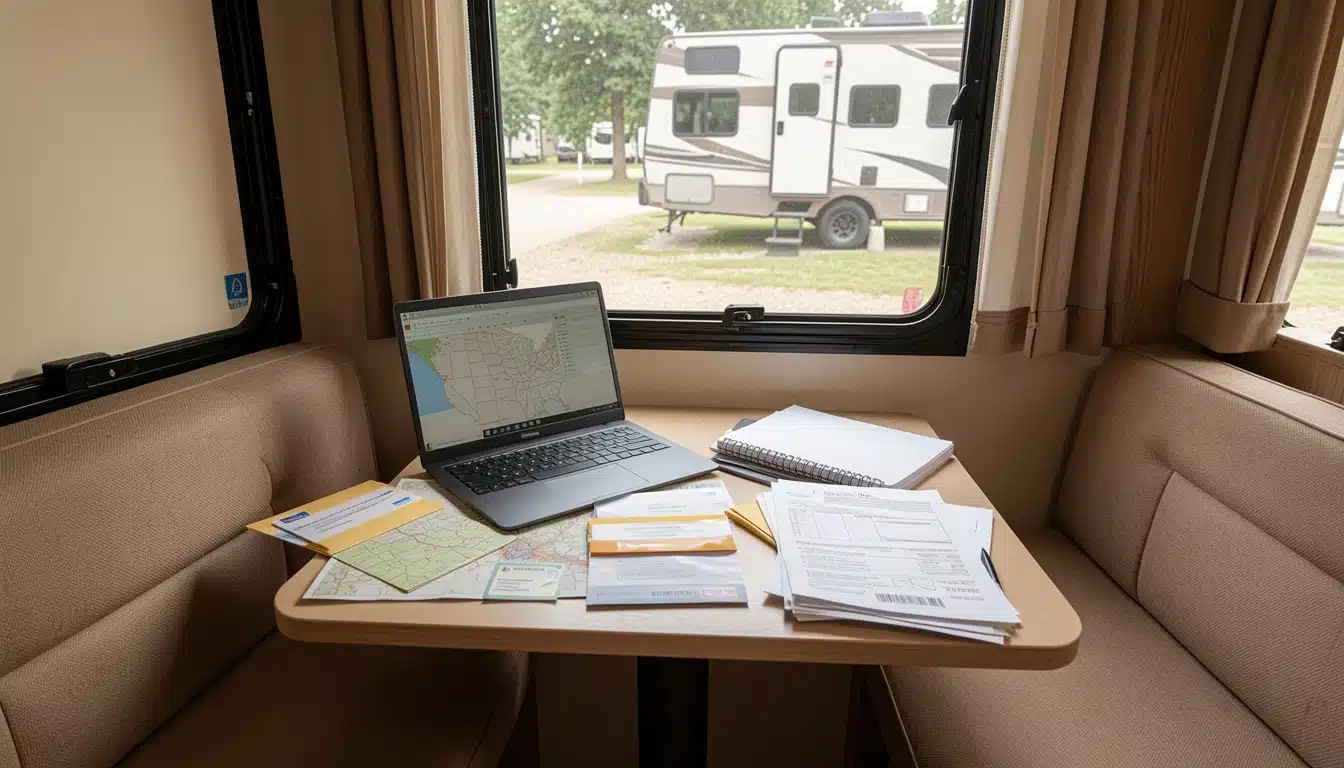
Even when you travel full-time in an RV, you still need to choose one state as your legal home base. This is called your domicile, and it affects things like taxes, voting, vehicle registration, insurance, and other official records.
Many full-time RVers use a mail forwarding service to maintain a usable address while traveling. Check that the address works for your license, registration, insurance, and other official documents.
You should also check local rules before parking or staying in one place for a long time. City, county, campground, and HOA rules can differ, so a spot that allows overnight RV stays may still limit how long you can stay.
4. Match Your Setup to How You Camp
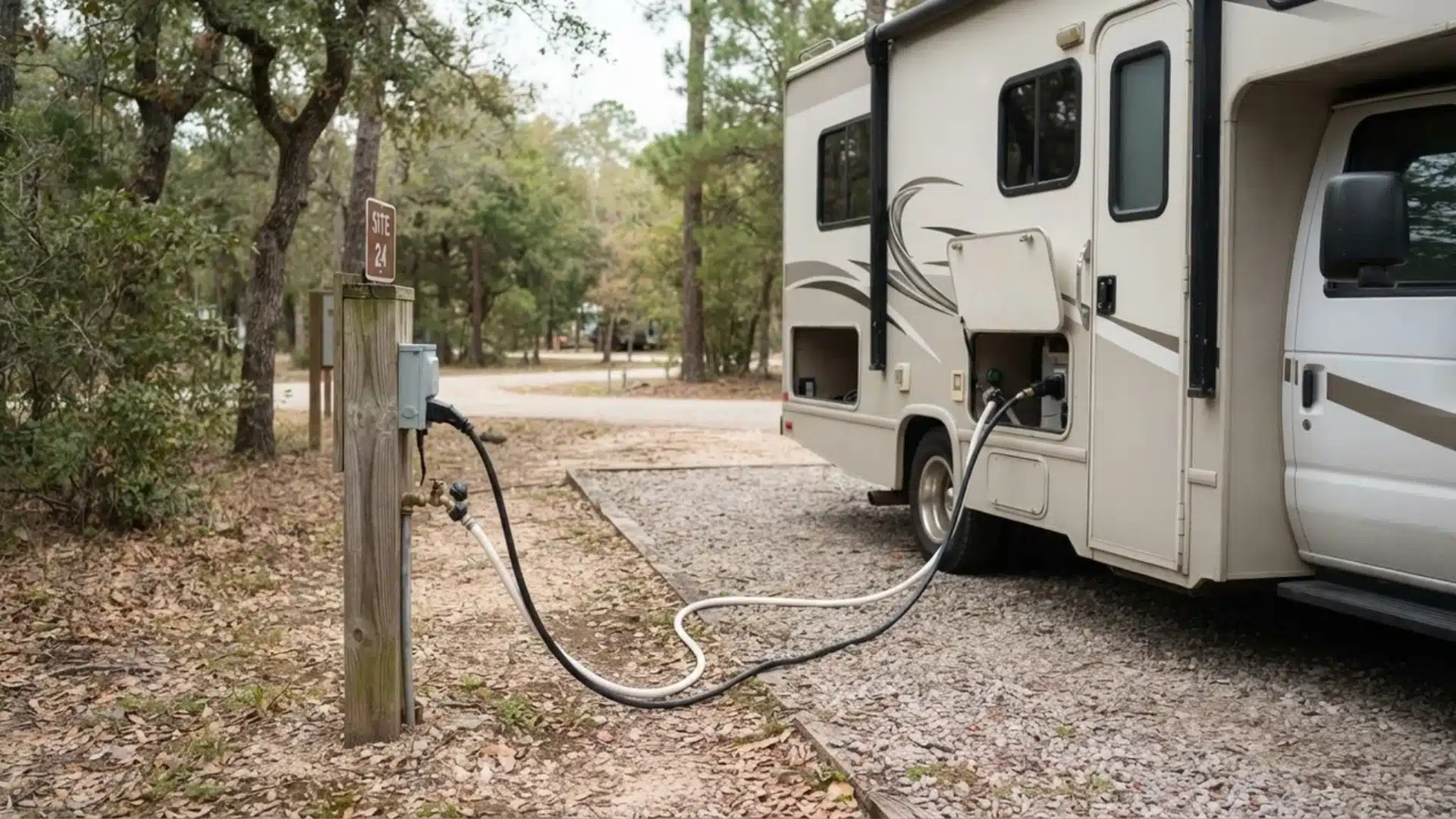
Your setup should match how you plan to travel. If you move often, campground hookups may cover more of your needs, while longer stays make it easier to settle in without constantly packing and unpacking.
That changes when you go boondocking, which means camping without standard hookups for water, electricity, or sewer. You’ll need to rely on the supplies and power your RV can carry or produce.
Because of that, boondocking takes more planning around water, battery power, propane, and waste capacity. Knowing how long each resource lasts helps you choose the equipment and storage space you actually need.
5. Pack the RV Necessities That Protect Your Systems
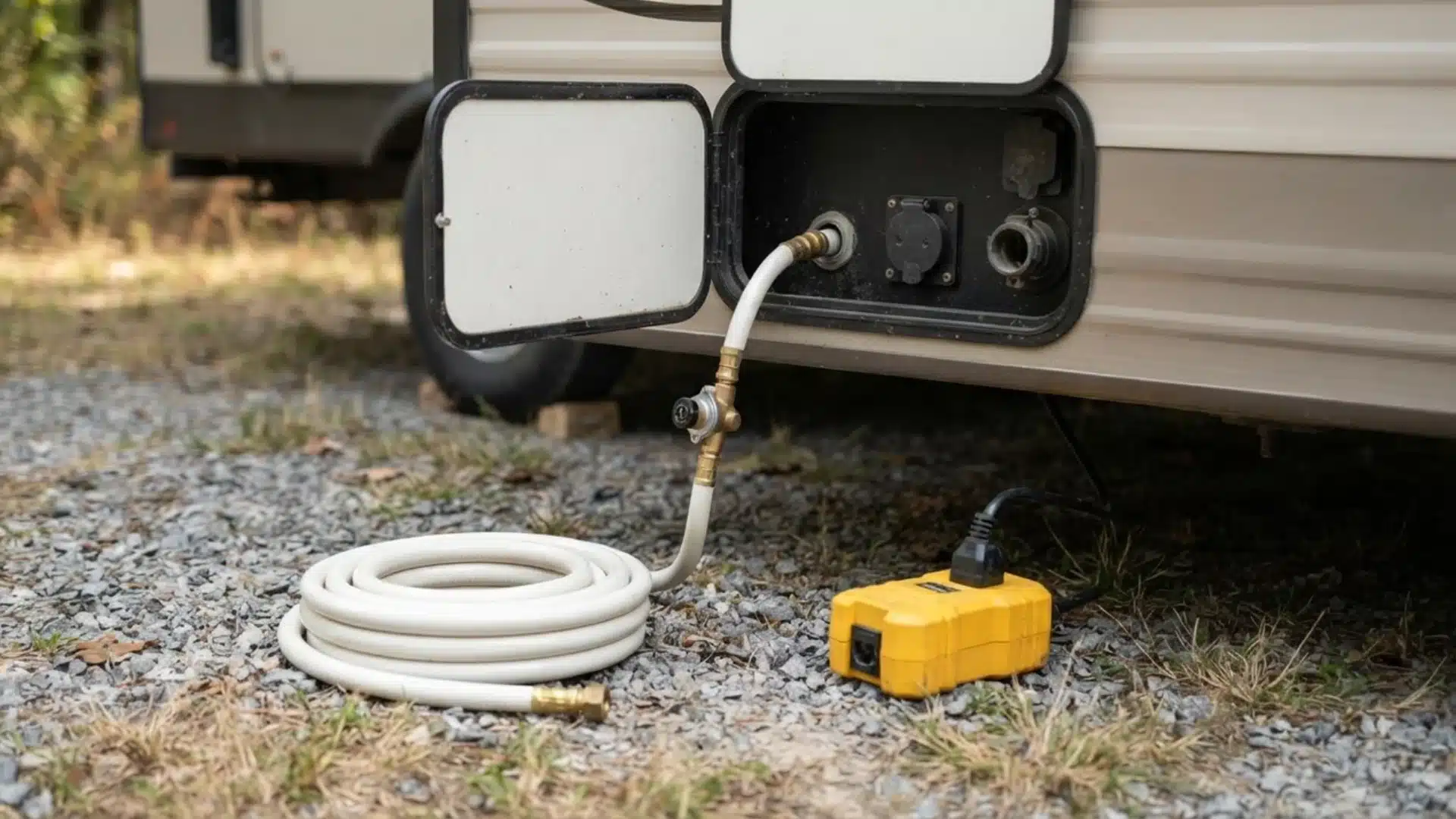
Start with gear that keeps your RV’s essential systems working safely. A few basics cover most of what you’ll actually use:
- Freshwater: A drinking-water-safe hose, pressure regulator, and filter.
- Waste: A durable sewer hose, secure fittings, and disposable gloves to make dumping cleaner and easier.
- Electrical: A surge protector or electrical management system, plus hookup adapters for different campground connections.
6. Carry Basic Safety and Repair Gear
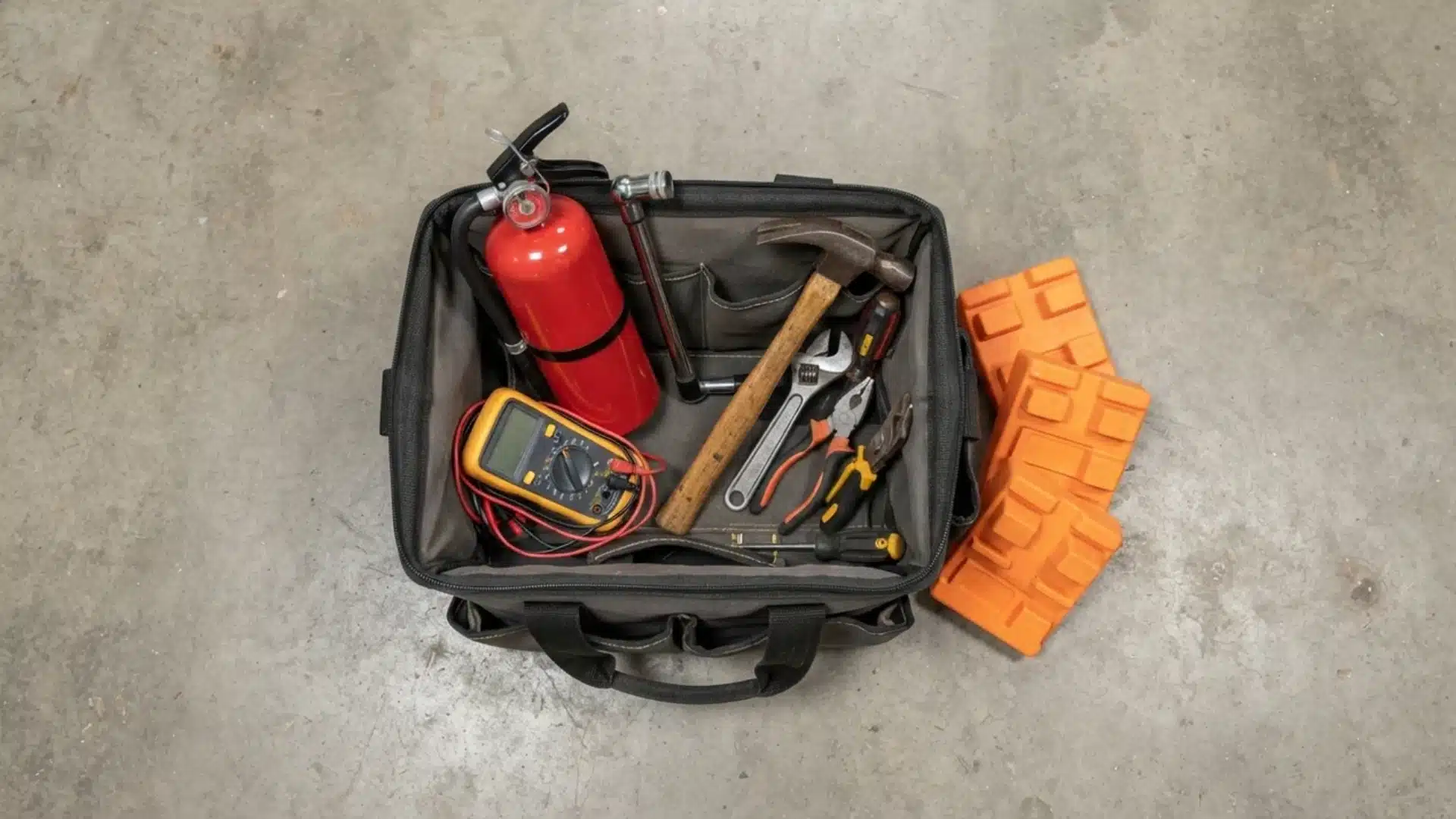
Keep safety and repair tools where you can reach them quickly. The goal is simple: handle small problems before they grow into bigger issues.
- Fire extinguisher
- Tire pressure gauge
- Leveling blocks
- Basic hand tools
- Multimeter
- Spare fuses
Regular checks and practical tools can save you from delays, unnecessary service calls, or a disrupted travel day.
7. Plan for Reliable Internet
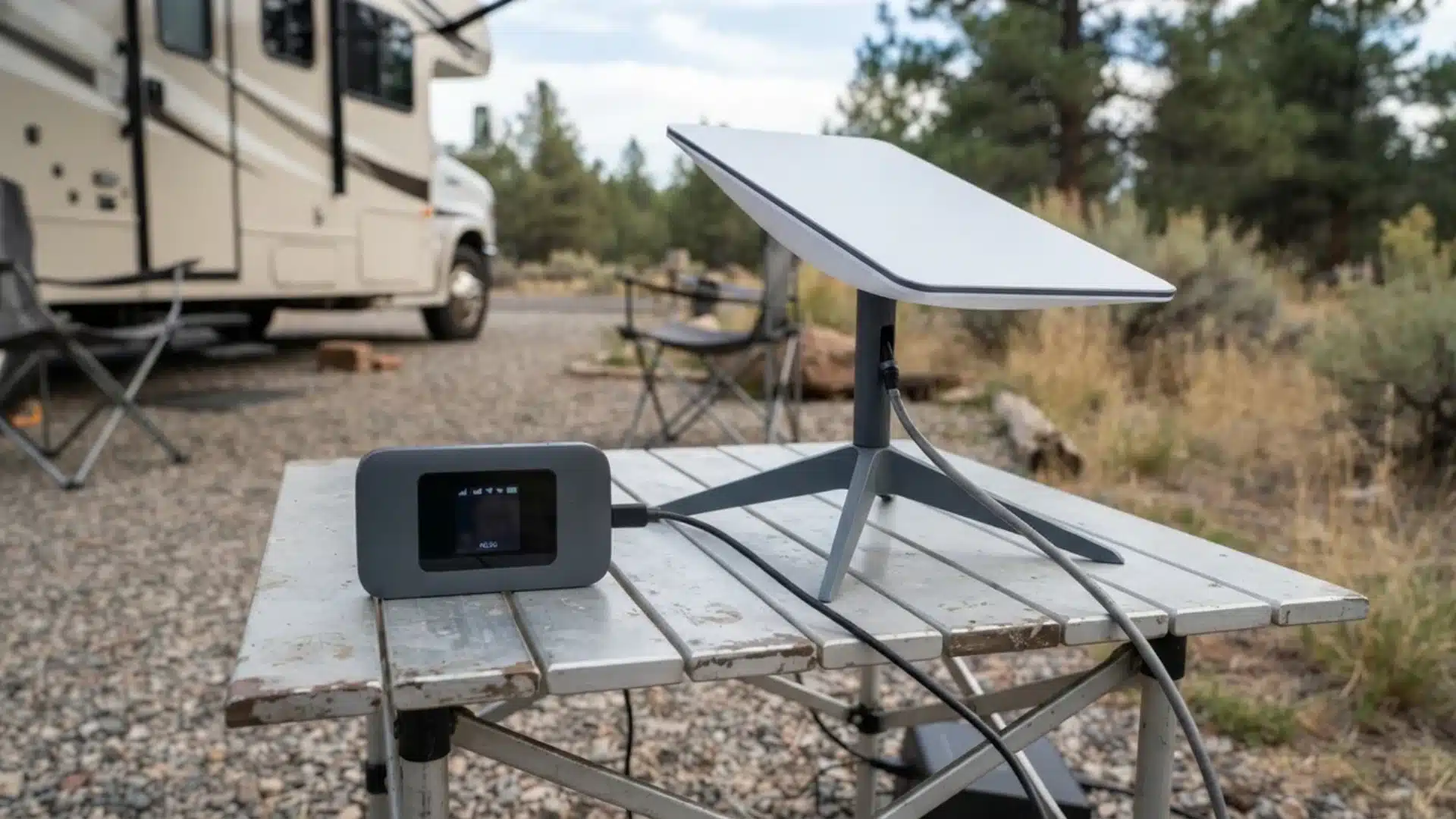
Campground Wi-Fi can be slow, crowded, or unavailable when you need it. A cellular hotspot, mobile data plan, or satellite service such as Starlink can help you stay connected while moving between campgrounds or staying in remote areas.
If you work online, keep a backup connection ready. Two ways to get online reduce stress when one signal drops and make full-time RV work much easier to manage.
What Full-Time RV Living Actually Costs Per Month
Full-time RV living can cost anywhere from $1,500 to $5,000+ a month, but your travel habits and camping choices often matter more than the RV itself
| Category | Typical Monthly Range | What Changes It |
|---|---|---|
| Campground fees | $0-$1,400 | Boondocking costs less; nightly hookups cost more |
| Fuel | $75-$1,200 | Frequent moves raise fuel spending |
| Propane | $30-$100 | Cold weather increases use |
| Utilities | $50-$150 | Heavy AC or heat raises costs |
| RV insurance | $85-$200 | Full-timer coverage costs more |
| Health insurance | $600-$900 per adult | Plans vary widely |
| Maintenance | $100-$300 | Repairs arrive unevenly |
| Internet | $100-$200 | Remote work may need multiple connections |
Costs can change from month to month, so budget around an average and review your spending regularly. Your total also depends on whether you include groceries, RV payments, and personal expenses.
A lean budget may fall between $1,500 and $2,500 per month if you travel slowly, boondock often, and limit paid campground stays. A moderate lifestyle can cost $2,500 to $4,500, especially when you mix free sites with paid campgrounds.
Frequent travel, full-hookup parks, and higher fuel costs can push spending to $4,500 to $7,000 or more. Compare these numbers with your income and travel style before committing to full-time RV living.
Is Full-Time RV Living Right for You?
Full-time RV living can offer freedom, flexibility, and the chance to change your surroundings without leaving home behind.
But the smaller space means less storage and privacy, while regular maintenance becomes part of daily life. Weather can affect travel plans, and popular campgrounds may fill up well in advance.
Internet access can also vary by location, which matters if you work online. Costs are another reality check: RV living is not automatically cheaper than renting or owning a home.
Fuel, campground fees, repairs, insurance, food, and RV payments can add up quickly.
You may also miss family, friends, or a stable community. For the right person, the lifestyle can work well, but it requires flexibility, planning, and comfort with fewer conveniences.
How to Live Full Time in an RV: Travel and Maintenance Tips
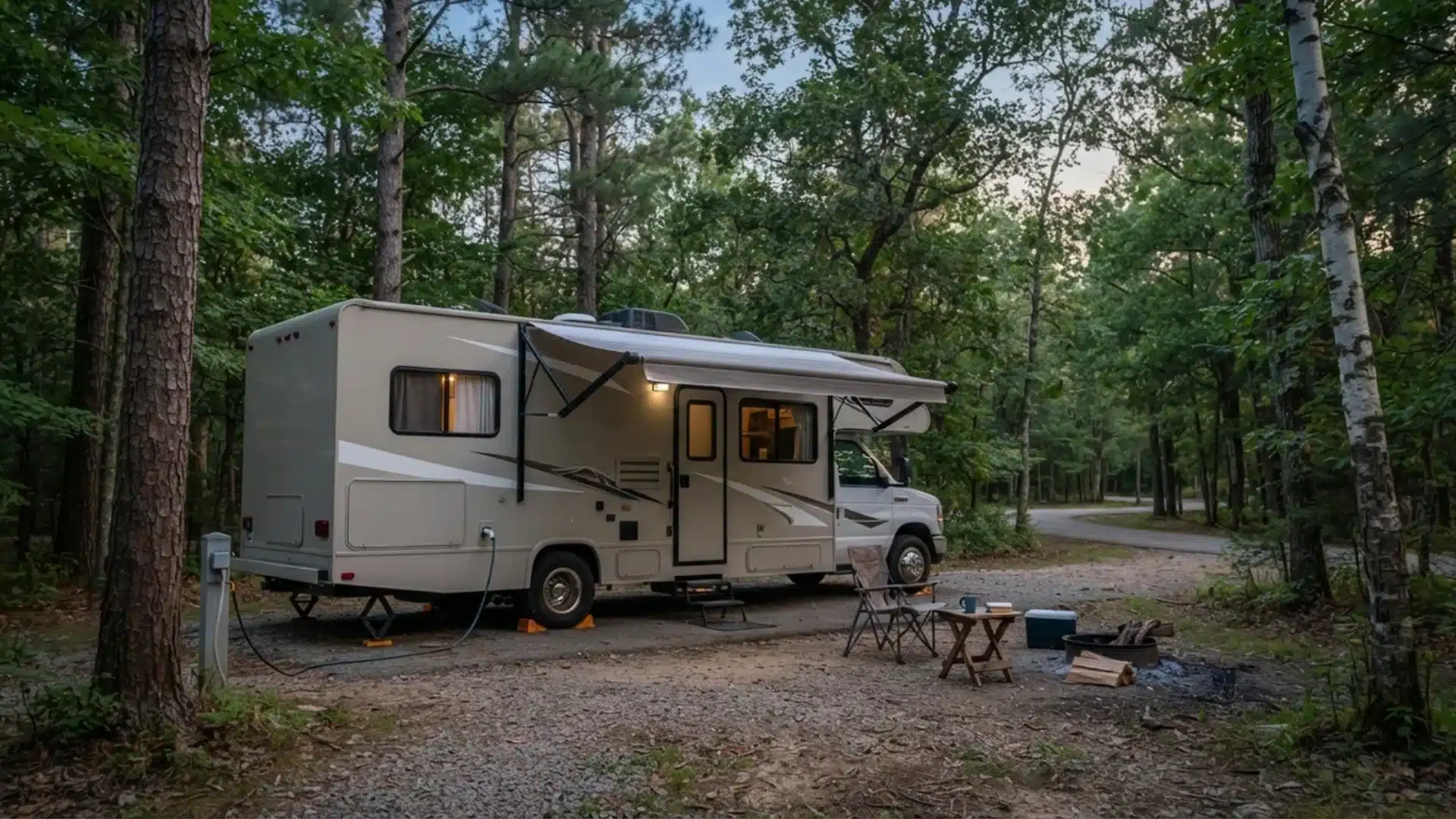
Every travel day means moving your home, belongings, and essential systems at the same time. A manageable pace gives you more room for safe driving, setup, maintenance, and unexpected changes.
Trying to cover too many miles can make small jobs easier to postpone. Over time, those missed checks can become much harder to ignore.
1. Set a Travel Pace You Can Sustain
Shorter driving days leave more time for rest, setup, and teardown. They also give you breathing room when weather, traffic, or campground plans change.
Arriving exhausted to cover extra miles adds little value. Build enough flexibility into your schedule so one delay doesn’t throw off the rest of the week.
2. Plan Routes for the RV, Not Just the Destination
An RV cannot use every road that a car can. Height, length, weight, bridge restrictions, and fuel access can all affect the route you choose.
Check clearances and road restrictions before leaving, especially on unfamiliar routes. Conditions and closures can change, so verify important details again close to departure.
3. Treat Maintenance as Part of the Living Routine
Tires, seals, batteries, connections, and roof seams deserve regular attention. Small issues are easier to deal with when you catch them before they affect the space where you sleep and live.
Add quick inspections to your normal routine. Looking over the rig before travel and checking key areas regularly can help you notice leaks, wear, or loose connections earlier.
How Do Full-Time RVers Support Themselves Financially on the Road?
Income shapes travel more than most people expect. How you earn often decides how far, how often, and how long you can move.
- Remote Employment: Fixed hours mean travel has to fit around your schedule, not the other way around. Longer stays usually work better than frequent moves.
- Freelancing or Self-Employment: More flexibility to travel on your own timeline, but inconsistent income calls for a bigger cushion and openness to cheaper sites during slow months.
- Seasonal Work and Workamping: Campground hosting, gate guarding, and seasonal park or warehouse jobs often set your route for you, trading travel freedom for steady income and sometimes free camping.
- Workspace Limitations: A small rig means fewer quiet spots for calls, less desk space, and more competition for workspace if others are also working remotely. A dedicated corner beats the dinette table long-term.
- Income Type and Travel Pace: Steady paychecks support planning routes in advance. Variable income often means deciding week to week whether to move, stay, or line up a short-term gig.
The way you earn money can shape your entire RV lifestyle. Choose work that fits your travel pace, keep a financial cushion for slow periods, and make sure your workspace and internet can support your routine.
With the right balance, earning on the road can feel much more manageable.
Wrapping It Up
None of this comes down to luck. Full-time RV living works when you plan for it before you ever hit the road. Pack around what your rig can actually carry, build a budget with room to breathe, and settle on a home base that fits your paperwork needs.
Keep the right gear on hand for water, waste, and power, and match your setup to how you actually camp, whether that’s frequent moves or long stays.
Add income and travel pace into that same equation, and you’ve got a routine that holds up instead of one that falls apart by week three. Try applying even a few of these steps before your next trip, and let me know how it goes.
Frequently Asked Questions
How Much Money Do You Need to Start Full-Time RV Living?
Besides buying the RV, plan for insurance, registration, emergency repairs, campsite costs, fuel, food, and setup expenses. A cash reserve can help cover unexpected problems.
Is Full-Time RV Living Cheaper Than Renting?
It can be cheaper for some people, but not automatically. RV payments, fuel, campground fees, insurance, maintenance, food, and healthcare can make costs similar to traditional housing.
What Is the Best RV for Full-Time Living?
The best RV depends on your space needs, budget, travel style, and driving comfort. Consider storage, sleeping space, workspace, bathroom size, payload, and maintenance before choosing.
How Do Full-Time RVers Handle Healthcare?
Full-time RVers need health coverage that works while traveling between states. Check provider networks, out-of-state coverage, prescriptions, telehealth options, and your domicile state’s insurance rules before leaving.