Most businesses either overpay for cleaning they don’t need or underpay and end up wondering why the office feels grimy by Wednesday.
There’s a smarter way to approach this.
Cleaning frequency is not random. It scales with three things: people, traffic, and usage. Once you understand those variables, the right schedule becomes obvious.
Let’s break it down by company size.
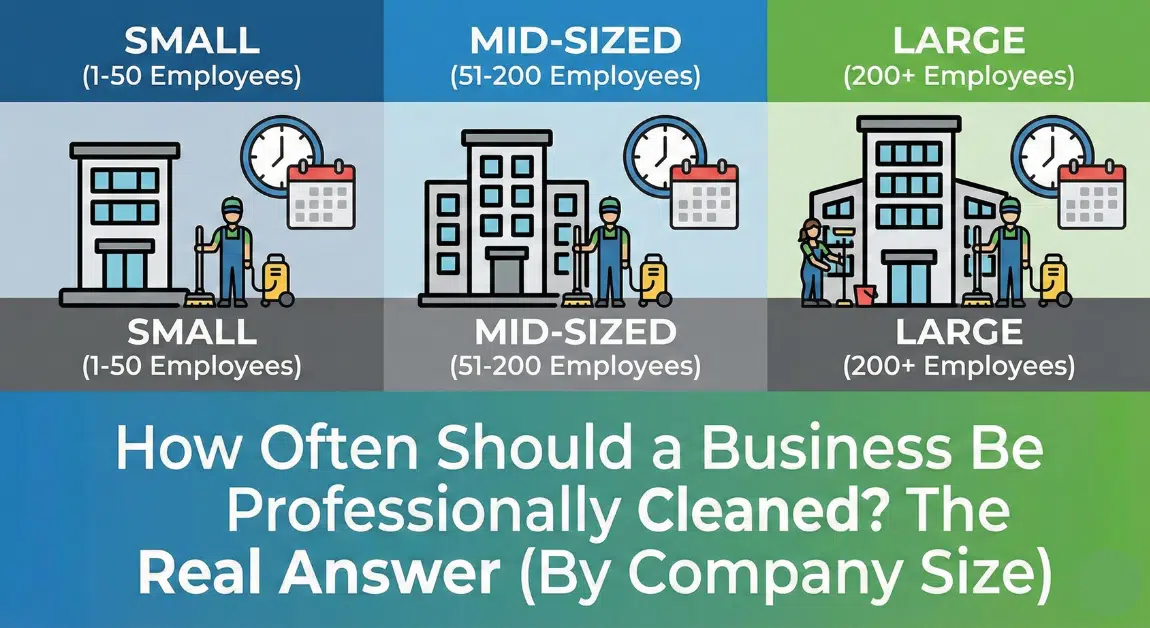
Small Offices (Under 15 Employees)
Typical need: 1 to 2 times per week
If you run a small administrative office with limited walk-in traffic, weekly cleaning is often enough.
That usually covers:
- Trash removal
- Restroom sanitation
- Surface wipe-downs
- Light vacuuming
But here’s where small businesses miscalculate.
Even a team of 8 to 12 people can generate heavy usage in shared kitchens and bathrooms. If clients visit regularly, twice-weekly service keeps things professional and prevents visible buildup.
Simple rule:
Low traffic equals weekly. Moderate traffic equals twice weekly.
Medium Offices (15 to 50 Employees)
Typical need: 2 to 5 times per week
This is where cleaning becomes a system instead of a chore.
More employees means:
- More restroom usage
- More shared desks
- More conference room turnover
- More high-touch surfaces
At this size, most businesses benefit from:
- Restrooms cleaned at least three times weekly
- Trash removal multiple times per week
- Floors maintained two to five times weekly
- Frequent disinfection of shared areas
If your office starts looking worn down midweek, you’re likely under-cleaning.
For companies expanding across multiple cities, consistency becomes critical. National providers such as Impact Commercial Cleaning in Nashville help multi-location businesses standardize service quality across regions, ensuring offices maintain the same professional standard no matter where they operate.
Large Offices (50+ Employees)
Typical need: Daily cleaning
Once you cross the 50-employee mark, daily cleaning becomes operationally necessary.
Large offices generate:
- High restroom traffic
- Heavy garbage volume
- Constant surface contact
- Faster floor wear
Daily cleaning typically includes:
- Full restroom sanitation
- Nightly trash removal
- Vacuuming or mopping
- Surface disinfection in shared spaces
Some facilities even add daytime porter services to maintain lobbies and common areas during business hours.
At this scale, cleaning affects brand perception as much as hygiene. Clients notice. Employees notice. Leadership notices.
Retail, Medical, and High-Traffic Businesses
Typical need: Daily, sometimes more
Foot traffic often matters more than staff size.
A 12-person retail store may require daily cleaning because hundreds of customers pass through. Medical clinics and healthcare offices need daily disinfection to meet compliance and safety standards.
In high-traffic regions like Florida, businesses often rely on local specialists such as Clean Space Commercial Cleaning to tailor schedules around seasonal volume and peak business hours. In customer-facing environments, visible cleanliness directly impacts trust and reputation.
Public-facing businesses cannot afford to look neglected.
Warehouses and Industrial Facilities
Typical need: 1 to 3 times per week plus scheduled deep cleaning
Industrial spaces follow different rules.
They may not need daily cosmetic detailing, but they require structured maintenance for:
- Floor safety
- Dust mitigation
- Debris removal
- Restroom sanitation
Cleaning frequency in these facilities depends more on operational intensity than headcount. A high-activity warehouse may require multiple weekly floor cleanings to remain safe and compliant.
What Actually Determines Cleaning Frequency?
Company size provides a starting point, but these factors finalize the decision:
- Foot traffic volume
- Industry regulations
- Number of shared spaces
- Operating hours
- Climate and seasonal conditions
- Brand expectations
A 20-person accounting office may operate efficiently with twice-weekly service. A 15-person showroom with steady customer flow may need daily cleaning.
Same headcount. Completely different requirements.
The Cost of Under-Cleaning
Businesses often reduce cleaning frequency to cut expenses.
The usual outcome:
- Restrooms deteriorate quickly
- Odors develop
- Carpets wear out faster
- Employees take more sick days
- Clients notice
Cleaning is preventative maintenance. It protects assets and supports productivity. Over time, consistent service reduces replacement costs and maintains professional standards.
Businesses can also find professional cleaning supplies and equipment from Commercial Cleaning Depot to support their ongoing maintenance needs.”
The Quick Reference Guide
Small office: 1 to 2 times per week
Medium office: 2 to 5 times per week
Large office: Daily
Retail or medical: Daily or more
Warehouse: 1 to 3 times weekly plus deep cleaning
The Bottom Line
Cleaning is not just about appearance. It protects employee health, preserves facility assets, and reinforces brand credibility.
The smartest businesses treat cleaning as infrastructure, not an afterthought.
Match your cleaning schedule to your traffic and operational intensity, and your workspace will support growth instead of slowing it down.