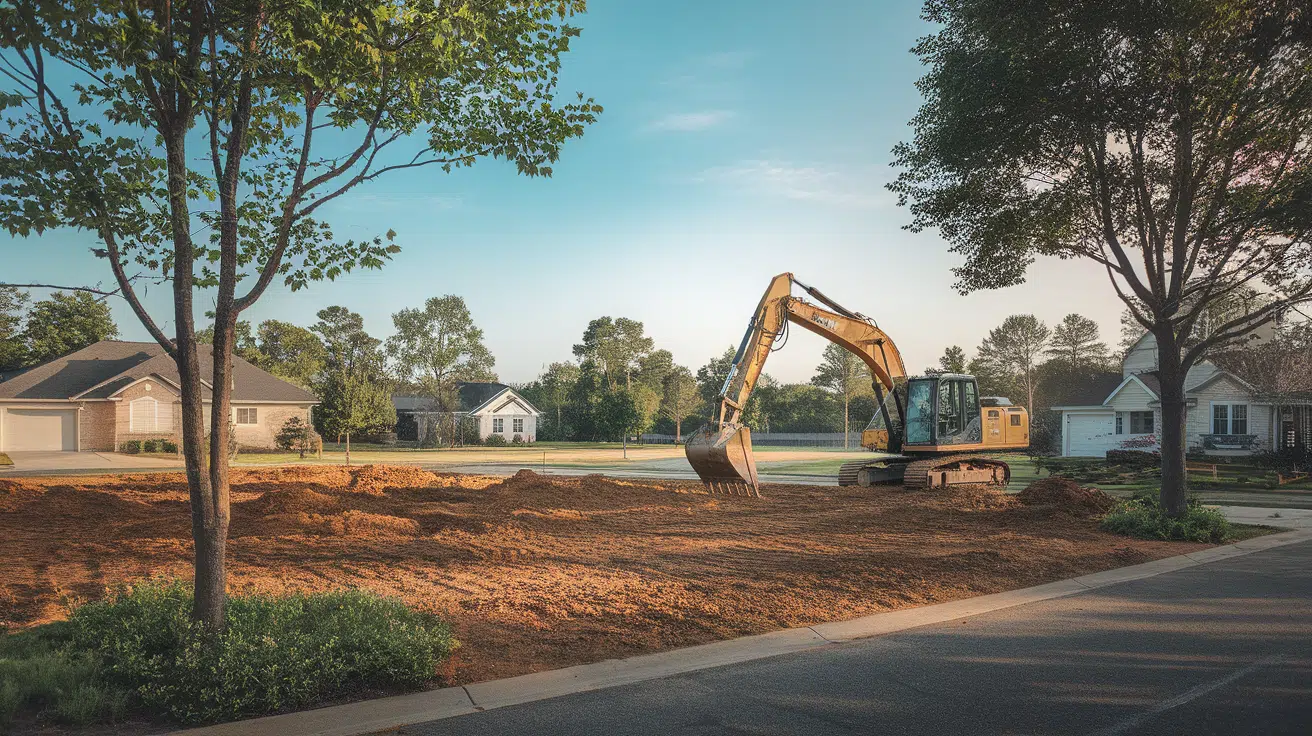
I know how tempting it is to pick a retaining wall based on looks alone, then watch it crack after one hard winter because nobody planned for drainage.
The best retaining wall ideas start with matching material to your slope, height, and soil, not just your favorite photo.
Here you will find real installed costs per square foot, which materials hold up in which conditions, and small extras that turn a plain wall into a feature you actually enjoy.
A few of these options might surprise you. Before picking a style, though, lock down a few site basics first.
Before You Start: A Few Basics That Apply to Every Wall
A few things matter before you pick a style, as they apply no matter which wall you build.
Call 811 first. It’s the federally designated 811 service that marks your underground lines for free before you dig.
Next, check your local height limit. Some areas need a permit or an engineer’s approval past a certain height. That rule can knock a few ideas off your list before cost even comes up.
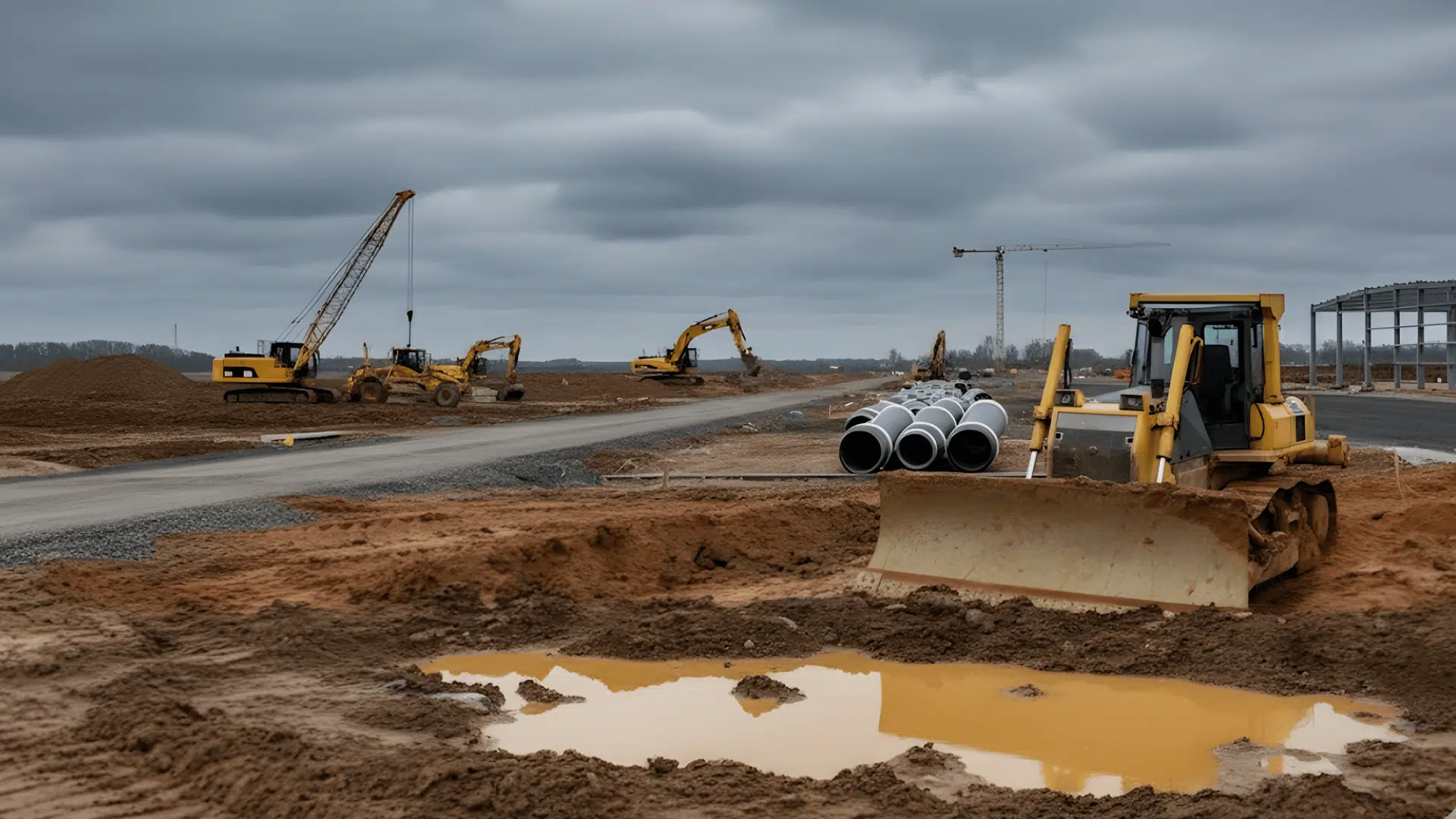
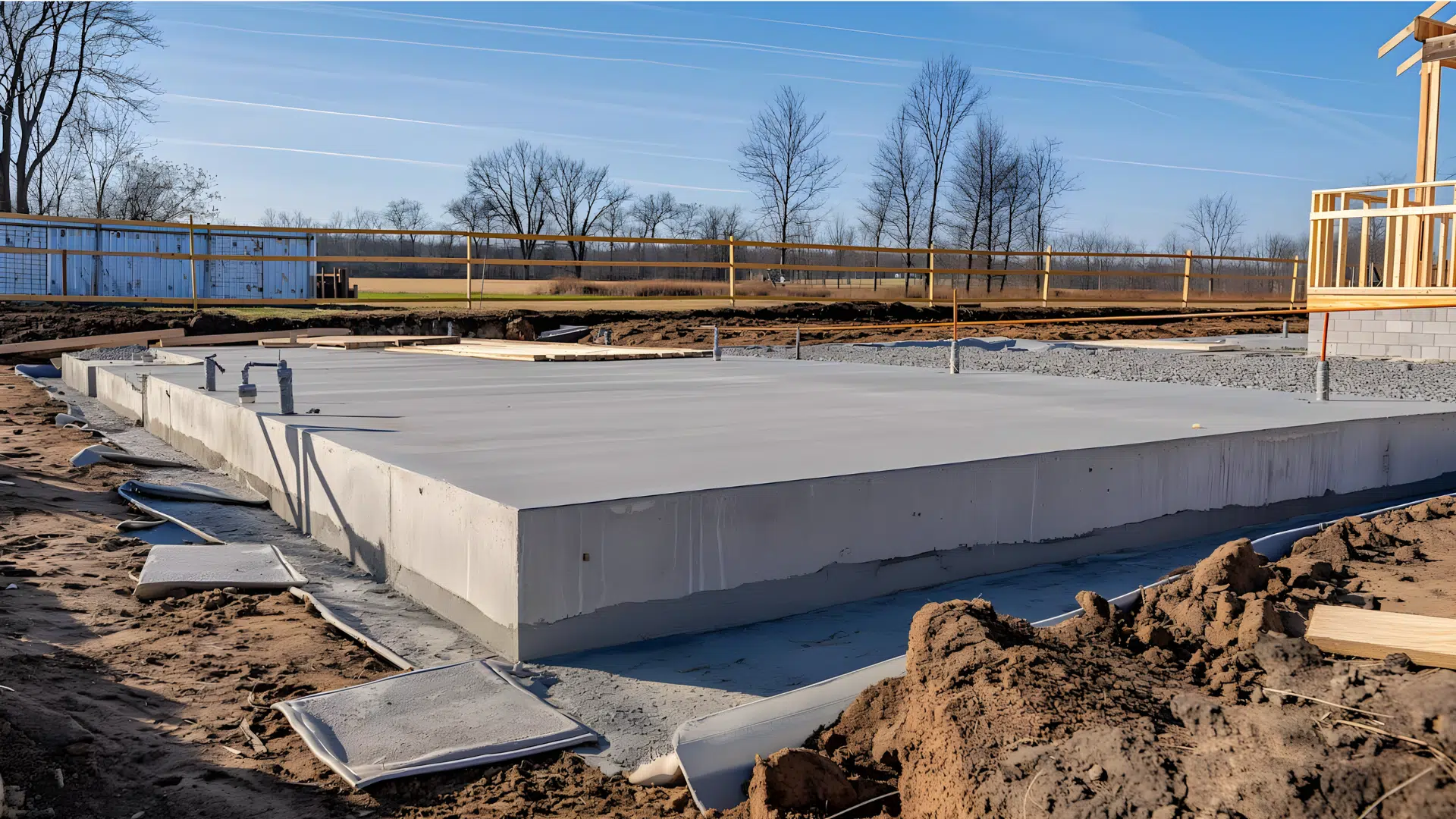
Last, plan for a compacted base and real drainage. Think about gravel backfill, weep holes, or a drain pipe behind the wall.
Skipping this step will make even the best-looking wall fail early. Keep these three basics in mind as you go through the ideas below.
Best Retaining Wall Ideas for Every Style, Slope, and Budget
You’ve got the site essentials down. Now let’s get into your options. Choose whatever fits your yard and budget. Below are some ideas, each one different from the last:
1. Natural Stone Wall
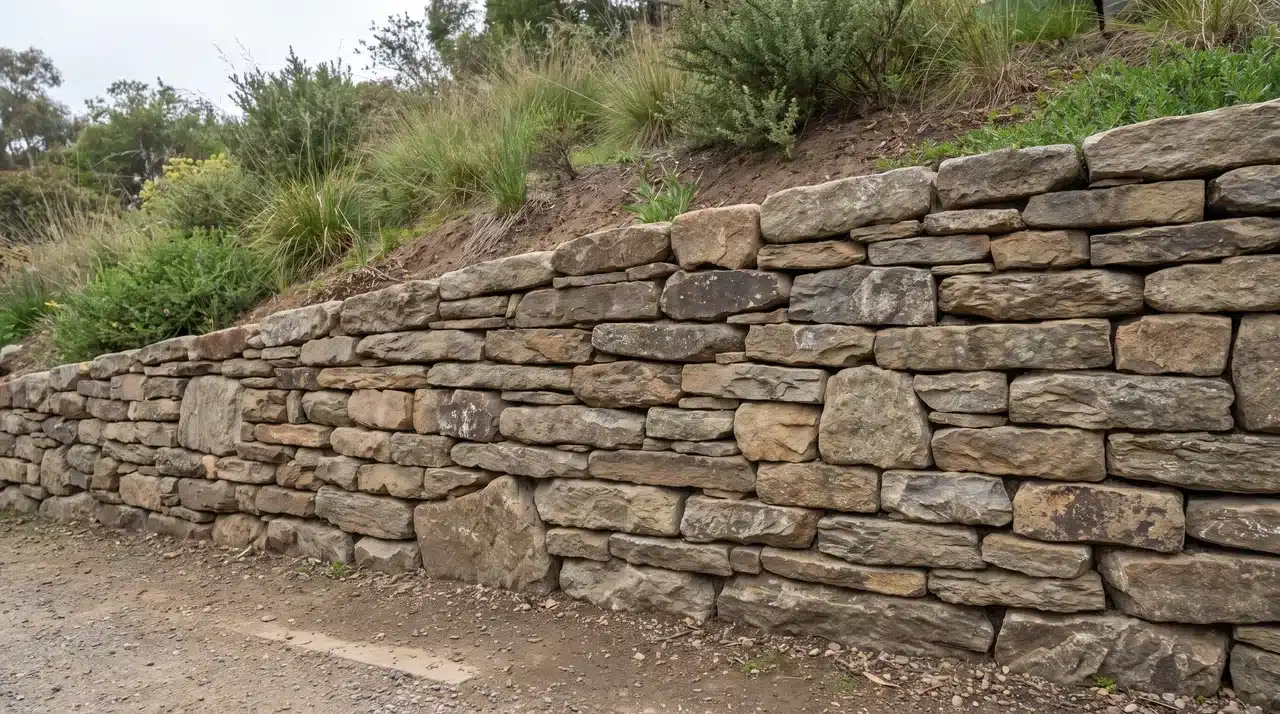
Nothing beats natural stone for a wall that looks like it’s always been there. Fieldstone and ledgestone, whether dry-fit or mortared, give you that organic, high-end texture no manufactured block can match.
Expect to pay $25 to $60 per square foot installed. If you source stone yourself and go DIY, materials alone can drop to $15–$30 per square foot.
That price range swings hard depending on two things: the stone type you pick and how it’s assembled. Mortared walls need more labor and cure time.
Dry-stacked walls skip the mortar but demand real skill to keep every course locked in place.
2. Tire Retaining Wall
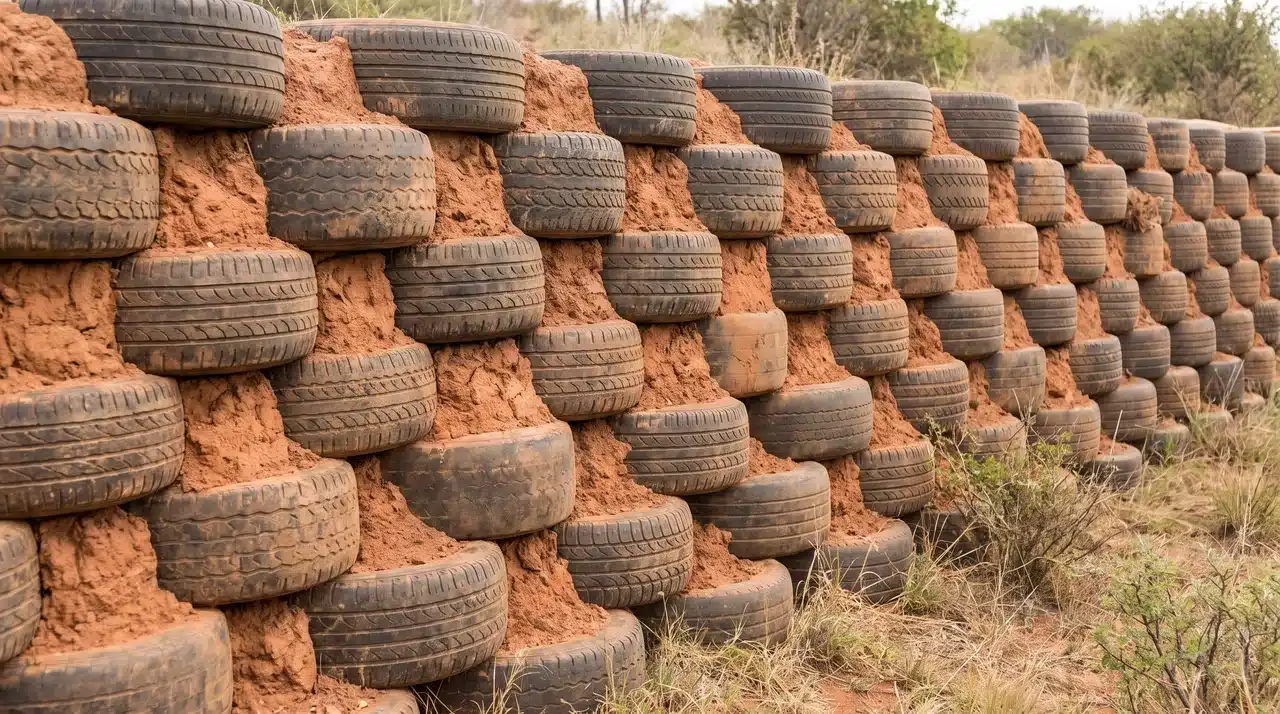
Material costs can run $0 to $10 per square foot if you’re sourcing used tires yourself. Each tire pins to the one below with rebar or wood stakes, locking the staggered rows together.
Packing one tire with tamped soil takes 30 to 45 minutes by hand, so a full wall adds up fast.
Bare rubber breaks down under UV light, so most builds cover the sidewalls with earthen plaster or stucco. Left exposed, tire treads can trap standing water and draw mosquitoes over a season.
3. Interlocking Concrete Block (Segmental) Wall
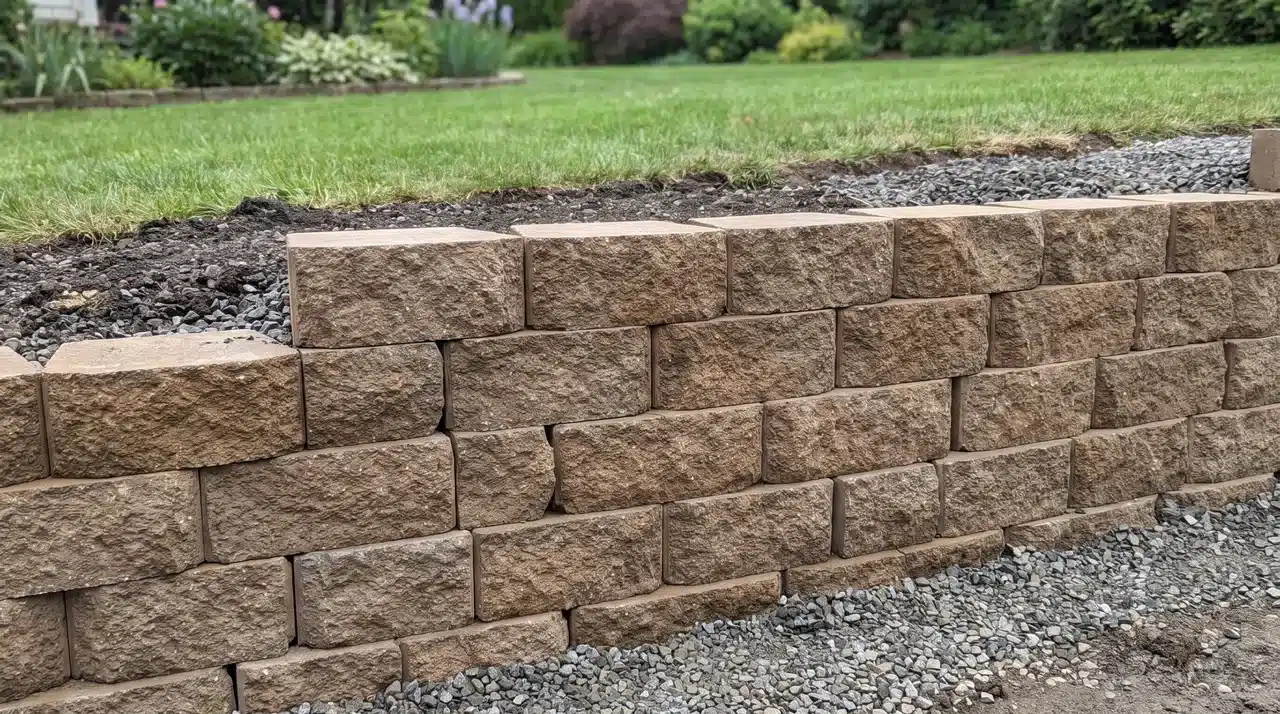
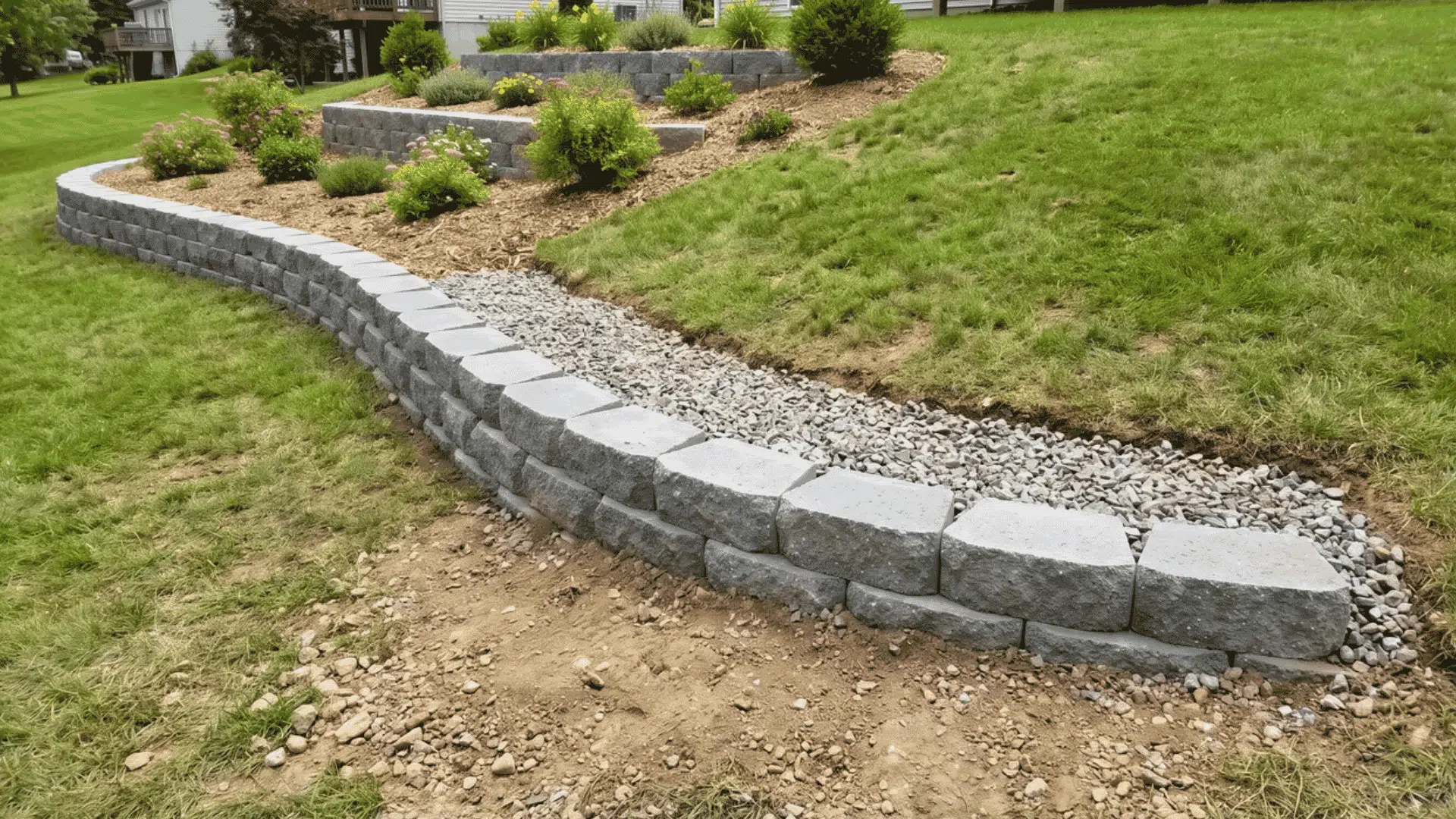
Segmental block systems, like Keystone Gardenwall or Pavestone RockWall, interlock or pin together without any mortar. That no-mortar design makes this the most DIY-friendly wall on this list.
Installed cost runs $15 to $30 per square foot.
If you’re buying block by the pallet, expect $200 to $1,000 or more. Price depends on the style and how much coverage you need.
This system’s popularity comes down to balance. You get solid durability, a manageable install, and dozens of face styles to match your yard’s look.
Few other options hit that same mix of cost, strength, and design choice.
4. Timber / Landscape Timber Wall
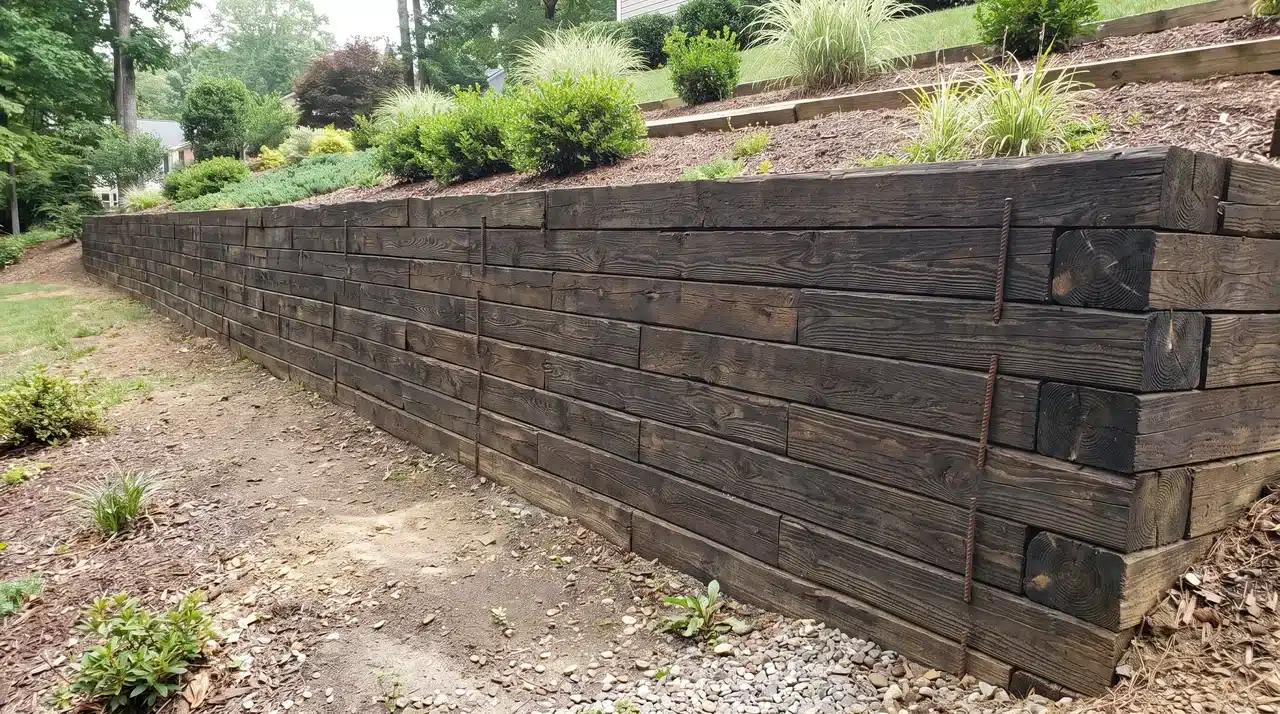
Stacked pressure-treated timbers give you that warm, cabin-style look. They’re also some of the easiest materials to cut and place if you’re doing this yourself.
Cost runs $15 to $25 per square foot, making it one of the cheapest professional-grade options out there.
Wood eventually rots, even treated wood, so you’re looking at 15 to 20 years before replacement. Stone or concrete can outlast it by decades.
5. Brick Retaining Wall
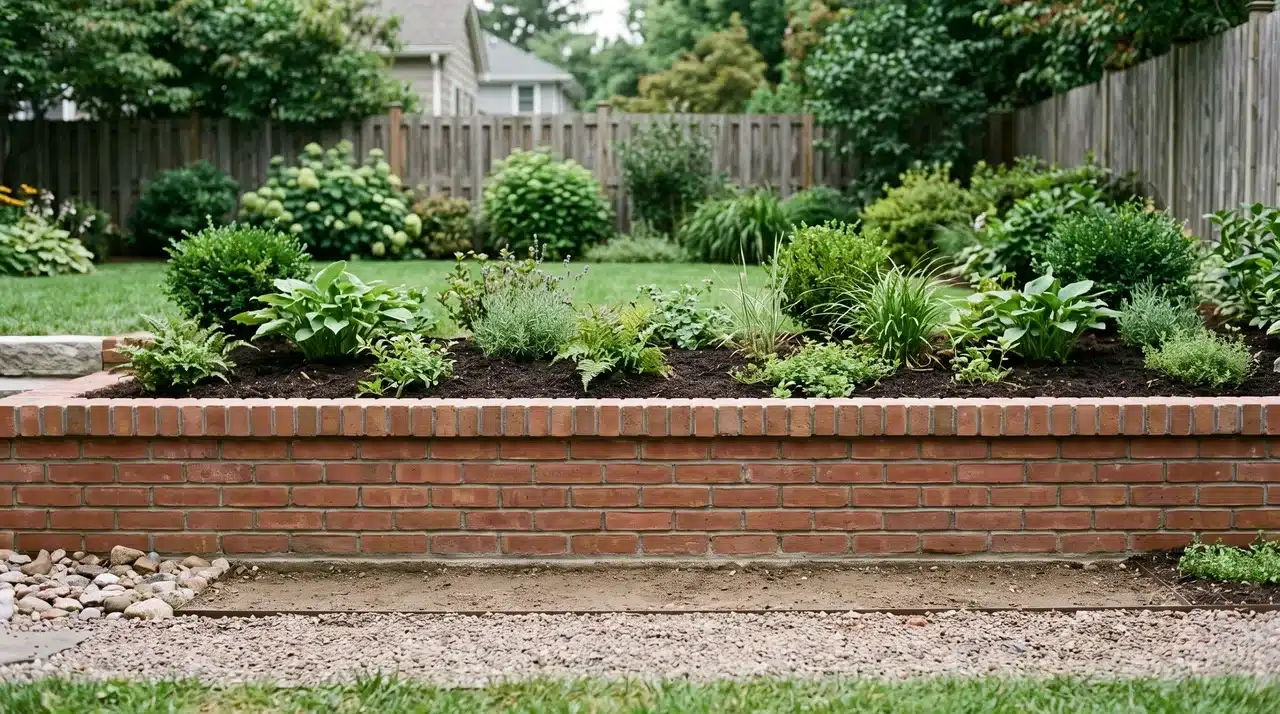
Mortared brick brings a formal, traditional feel. It’s a natural match if your house or existing hardscaping already uses brick.
Expect $20 to $30 per square foot installed, a bit more than block once you factor in mortar, labor, and materials.
Brick works best on shorter, decorative walls. It isn’t engineered to hold back heavy soil loads, so it’s not the right pick for tall retaining applications.
6. Gabion Wall
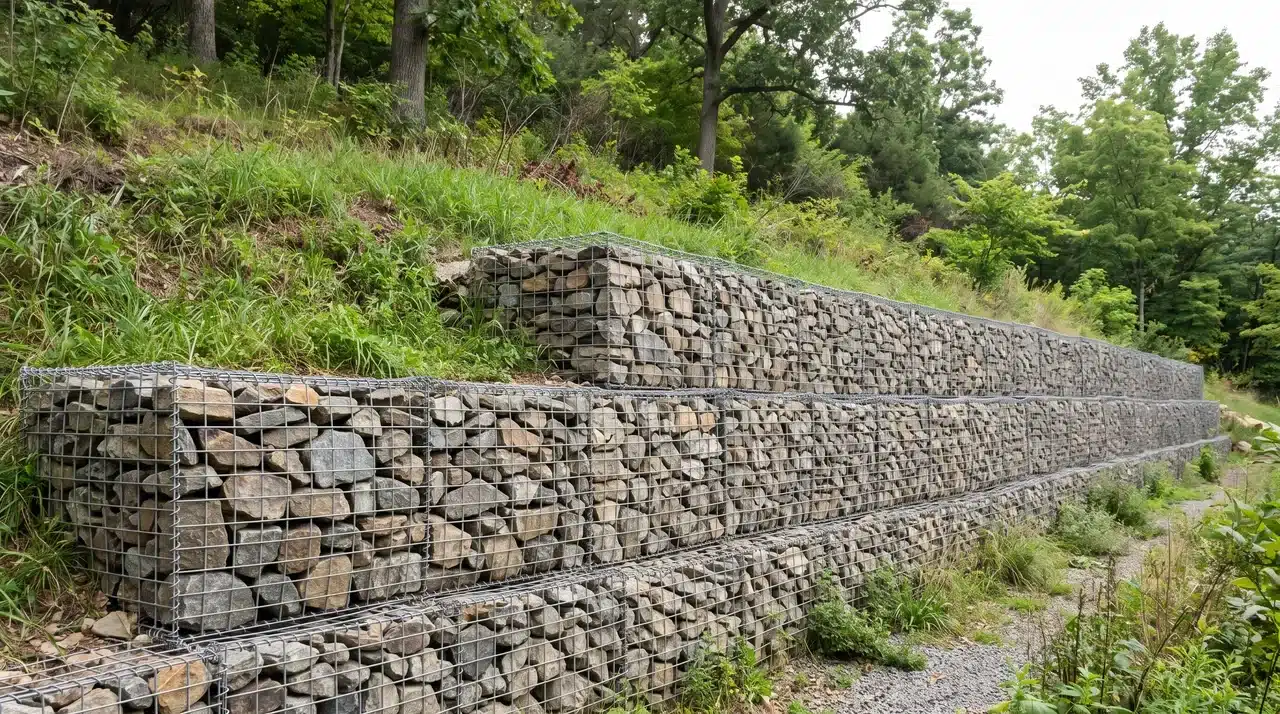
Gabion walls use wire cages packed with stone, giving you a modern, textured look. The open structure drains water fast by design.
Installation costs run $20 to $30 per square foot. Modular gabion units alone often run $600 to $800 each, though sourcing your own fill rock cuts that cost fast.
Drainage is where gabion walls really shine.
Water passes straight through the gaps between stones instead of pooling behind the wall, which is exactly what causes other wall types to crack or bulge over time.
7. Corten (Weathering) Steel Wall
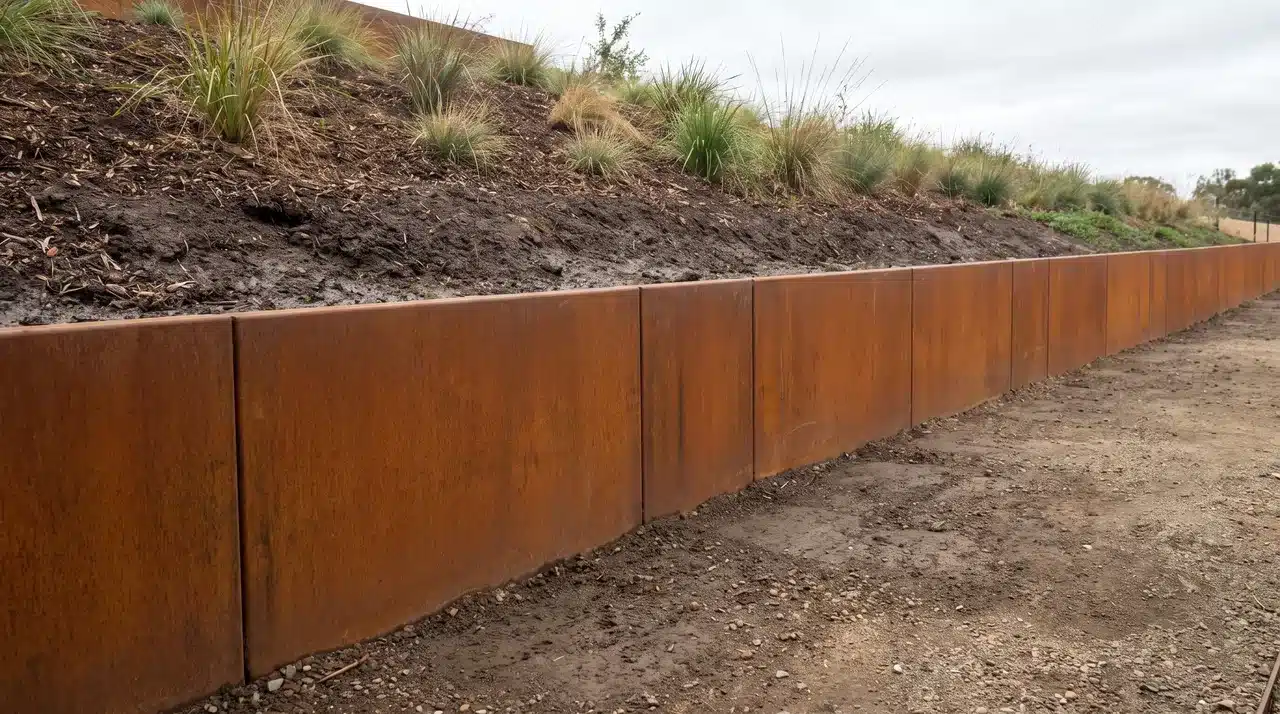
Corten steel panels develop a rust-colored patina over time, a look that’s become a favorite in modern and industrial landscape design.
It’s not cheap. You may expect $30 to $70 per square foot, and single steel wall units alone can run close to $1,800.
Once that patina forms, the steel is tough and needs almost no upkeep. Because of the price, though, most homeowners use it for accent walls or shorter runs rather than lining an entire yard.
8. Boulder Retaining Wall
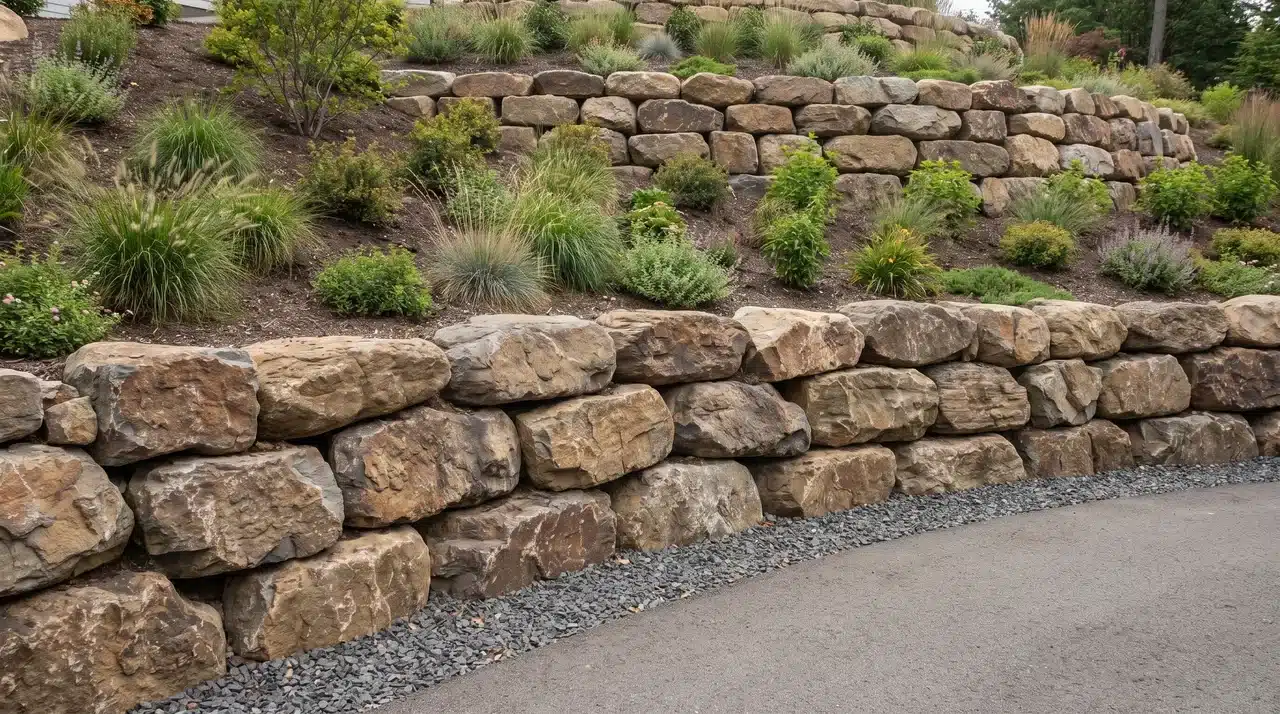
Large, stacked boulders build a rugged wall that handles steep or very tall slopes better than most smaller-unit systems.
Their sheer weight does a lot of the structural work smaller materials can’t.
Pricing depends on how you buy them. Delivered boulders run $100 to $600 per ton, or roughly $20 to $40 per square foot installed.
The stone itself can be cheap per ton, but moving it usually isn’t. Boulders heavy enough to hold back a slope often need an excavator or crane to place, and that equipment and operator time is where the real cost shows up.
9. Railroad Tie Wall
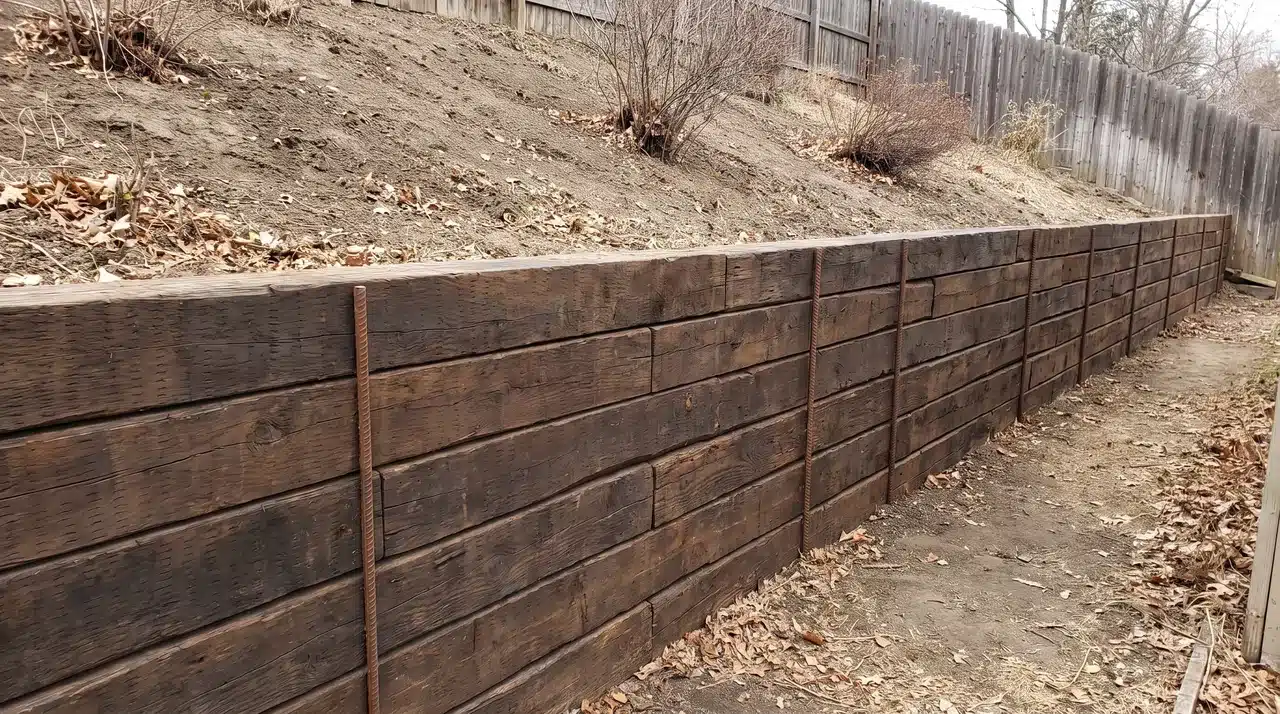
Railroad ties, stacked and pinned together, give you that rustic, salvaged look that’s distinct from newer landscape timber.
It’s one of the cheapest walls you can build, running $10 to $20 per square foot.
One thing to watch: older ties are treated with creosote, and many local codes now restrict or ban it. Newer builds typically swap in untreated or differently treated timber instead.
10. Cinder Block Wall
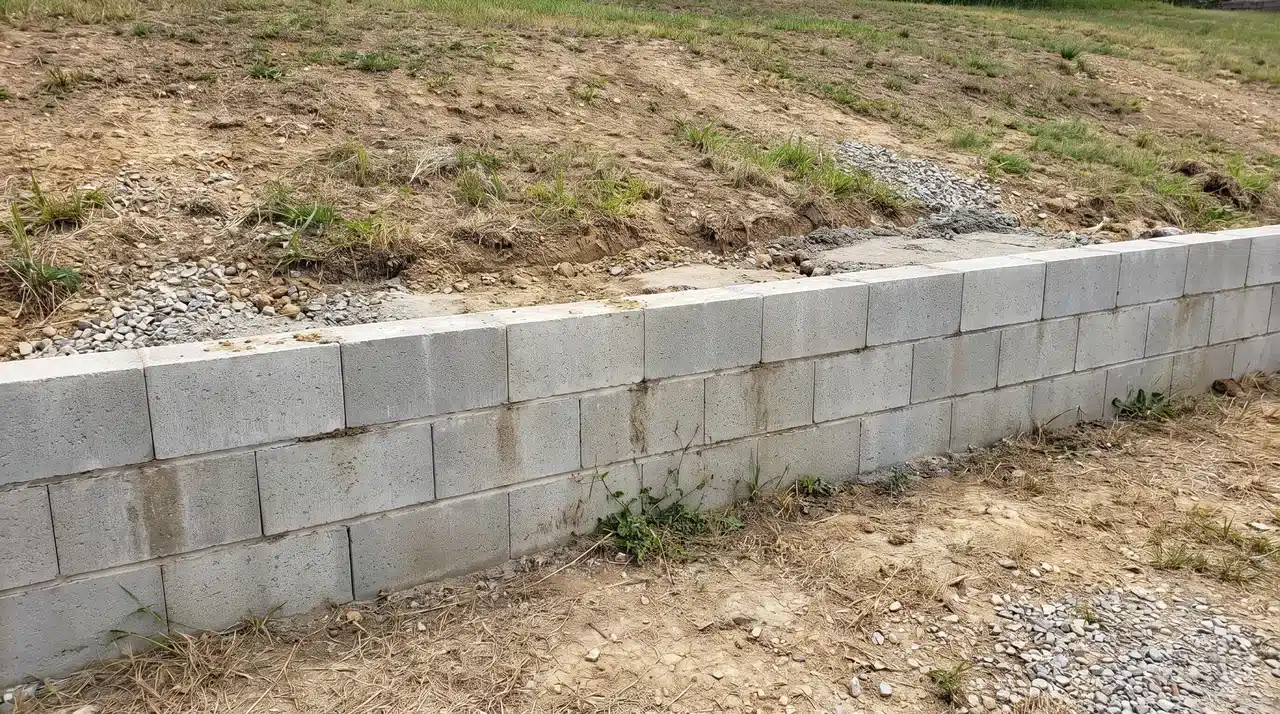
Plain CMU block, stacked and often finished with stucco or stone facing, is the most budget-focused block option out there.
Materials run $10 to $15 per square foot, cheaper than decorative segmental systems.
Keep it short, though. Plain cinder block doesn’t have the interlocking pins that taller segmental systems use to stay locked together, so it’s best suited to low walls rather than tall retaining jobs.
11. River Rock Veneer Wall
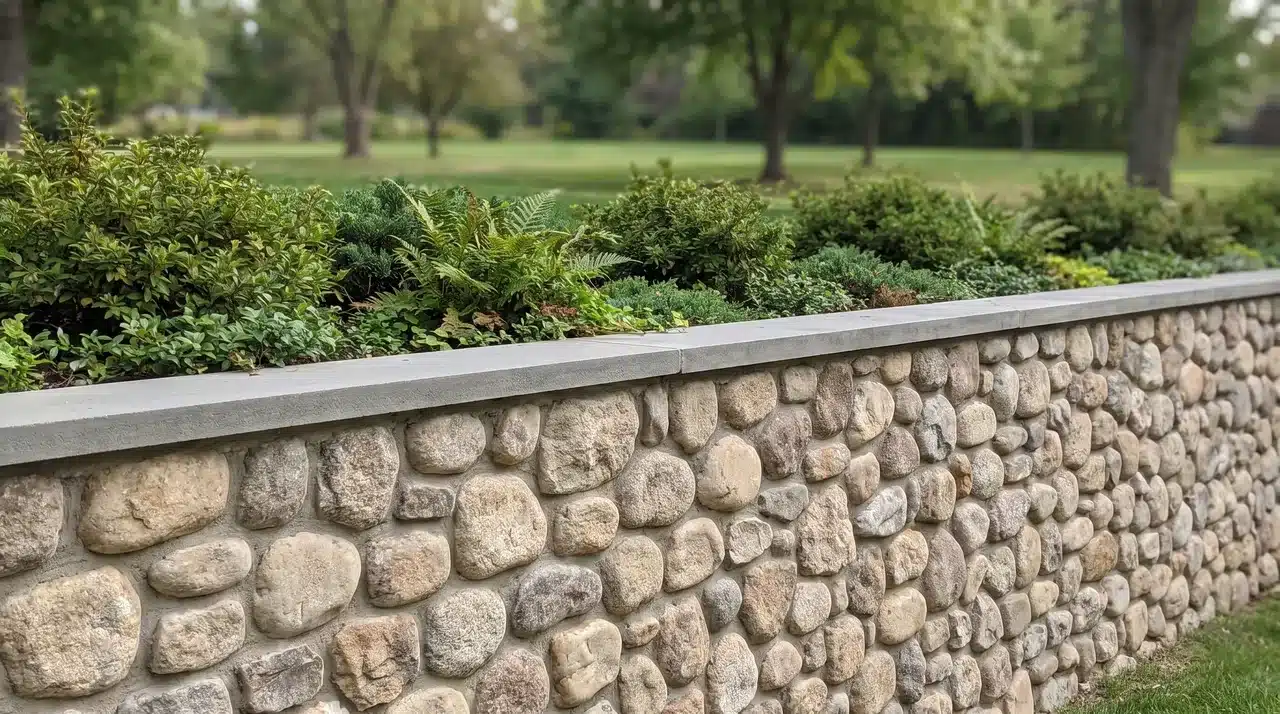
A river rock veneer is a thin layer of stone applied over an existing block or poured concrete wall. It’s a facelift, not a rebuild.
Expect to pay $10 to $25 per square foot for the veneer alone, separate from whatever cost went into the wall underneath.
Key thing to understand here: veneer isn’t structural. It only works layered onto a wall that’s already load-bearing, so it’s never a standalone option on its own.
12. Dry-Stack Stone Wall
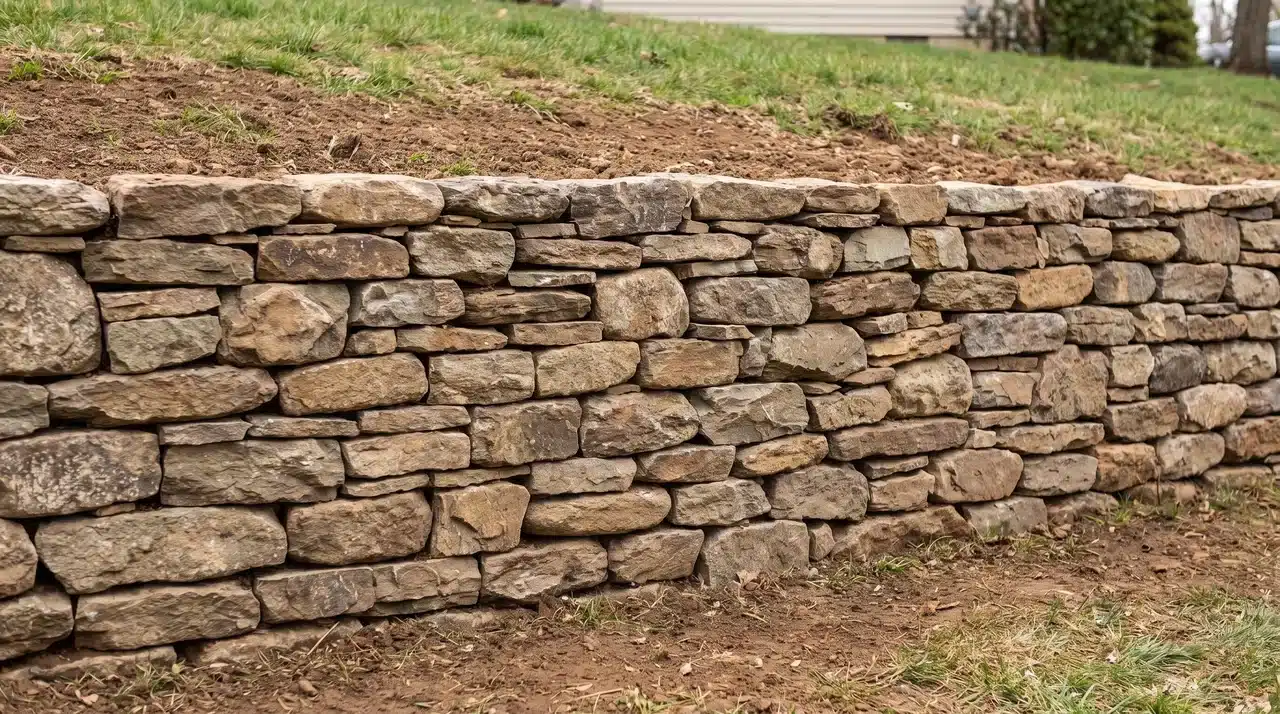
Dry-stack stone relies on nothing but gravity and precise placement. No mortar, no binding material, just stones fitted together by hand.
That’s what makes the cost so split. Locally sourced stone can bring material cost down to $5 to $15 per square foot.
But skilled dry-stack labor is rare and slow, and it can push total cost past $40 per square foot. Height is the real limiting factor here.
A short wall, a few feet tall, is forgiving. Go taller, and you need someone who really knows how to lock each course so the wall doesn’t shift or collapse years down the line.
13. Sandstone Retaining Wall
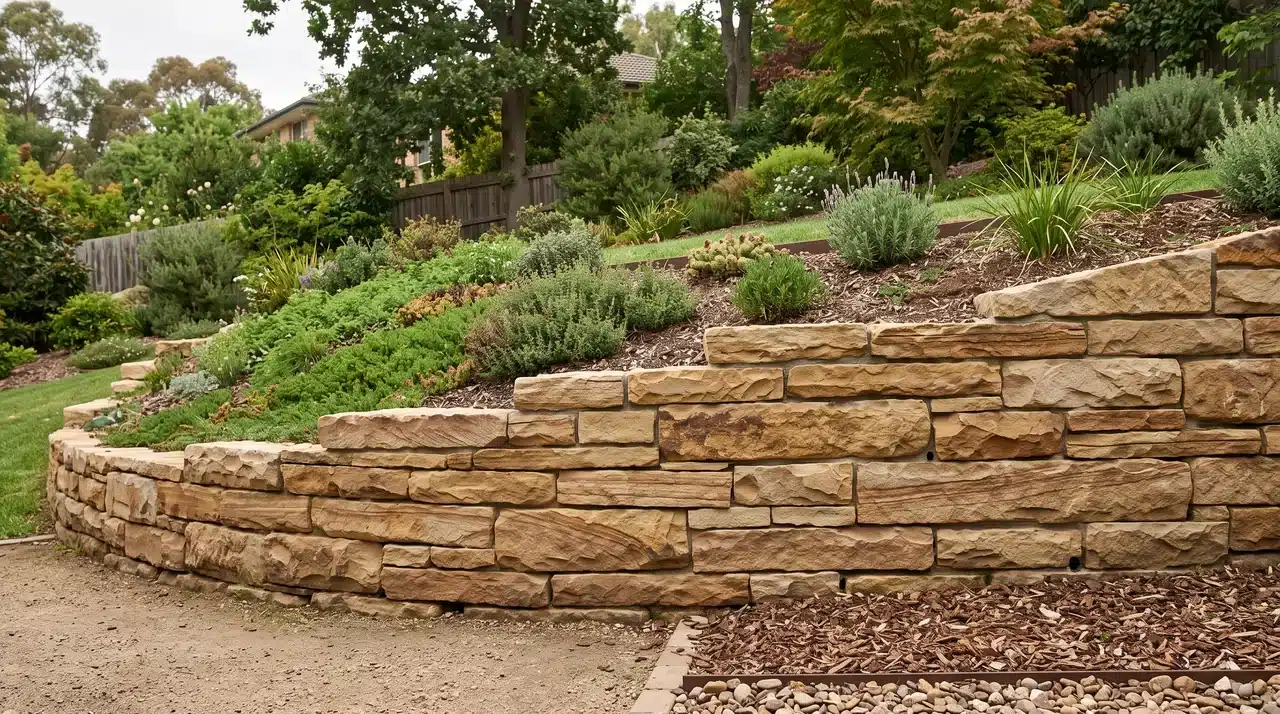
Sandstone brings warm, layered coloring that fits softer, earth-toned landscapes better than gray granite or stark limestone.
Cost lands at $25 to $50 per square foot installed, similar to other natural stone, though your exact price depends heavily on what’s quarried near you.
Sandstone is softer than granite or limestone. In colder regions, freeze-thaw cycles wear it down faster, so it’s a better fit for milder climates.
14. Living / Vertical Garden Wall Blocks
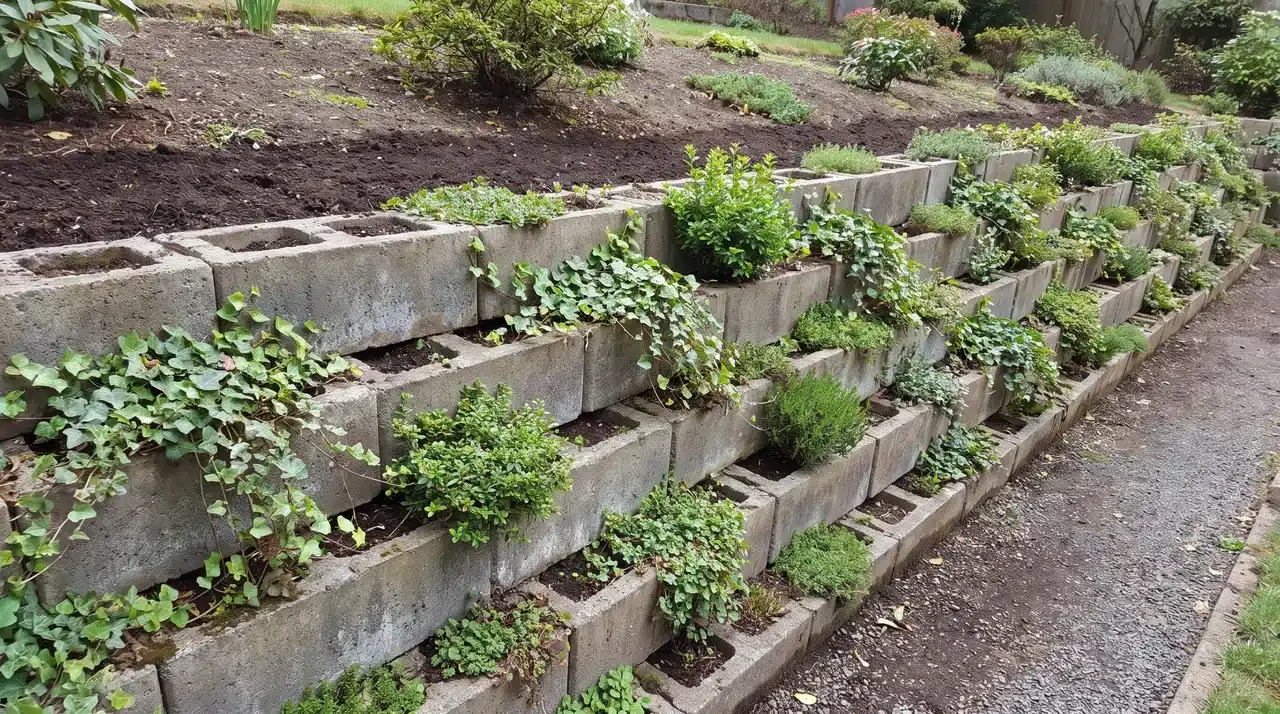
Living wall blocks have planting pockets built right into the block, so the retaining wall doubles as a vertical garden.
Installed cost runs $20 to $35 per square foot. Smaller modular starter sets often run around $150 on their own.
You’re managing irrigation, soil, and replacing plants as they die back, on top of everything a standard wall needs.
In exchange, you get a wall that actually looks alive instead of just holding back a slope.
15. Reclaimed / Recycled Material Wall (Urbanite)
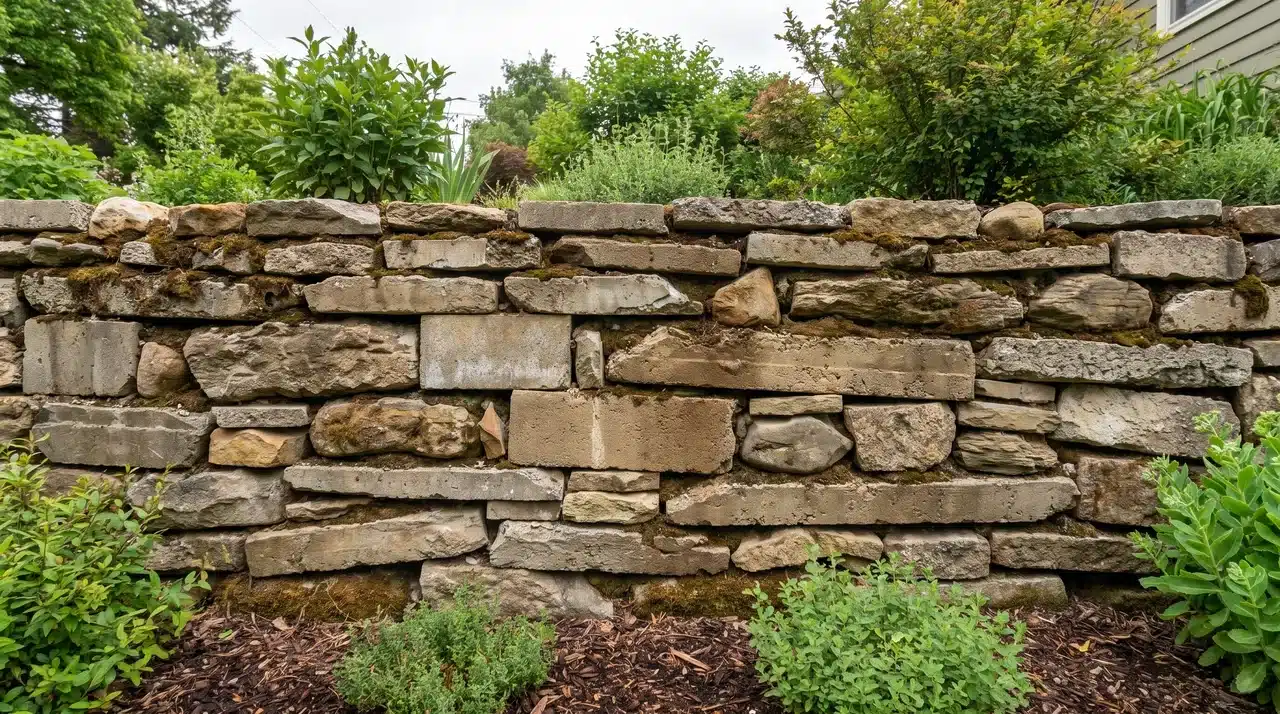
Urbanite is broken concrete slabs, often free demolition scraps, stacked into a wall alongside salvaged block or reused stone.
Material cost can run $0 to $10 per square foot if you’re sourcing it yourself, making this the cheapest wall on this list by far.
The catch is time, not money. Every piece is a different size and shape, so fitting them into a stable, decent-looking wall takes real patience compared to stacking uniform blocks.
16. Retaining Wall with Mural or Art Panel
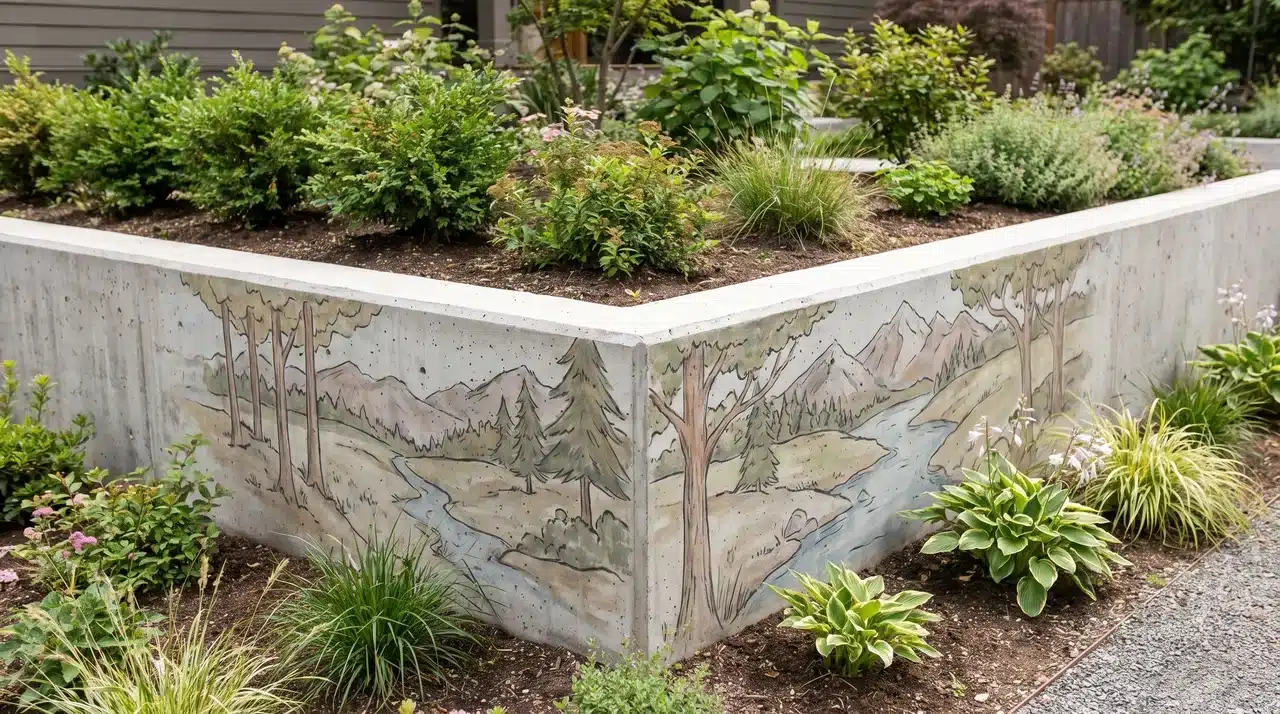
Budget runs $500 to $5,000 or more beyond the base wall, depending on the artist and materials used.
Surface prep matters most. Painted murals need a sealed, primed masonry face or the color fades and peels within a few seasons.
Mosaic tile holds up longer outdoors, since grout and tile resist UV fading better than paint pigment. Metal art panels bolt onto anchors set into the wall face.
Plan those anchor points before the wall gets built, not after.
Full sun bleaches paint fastest. A shaded or partly shaded wall face keeps a painted mural looking sharp for years longer.
17. Living Willow / Wattle Wall
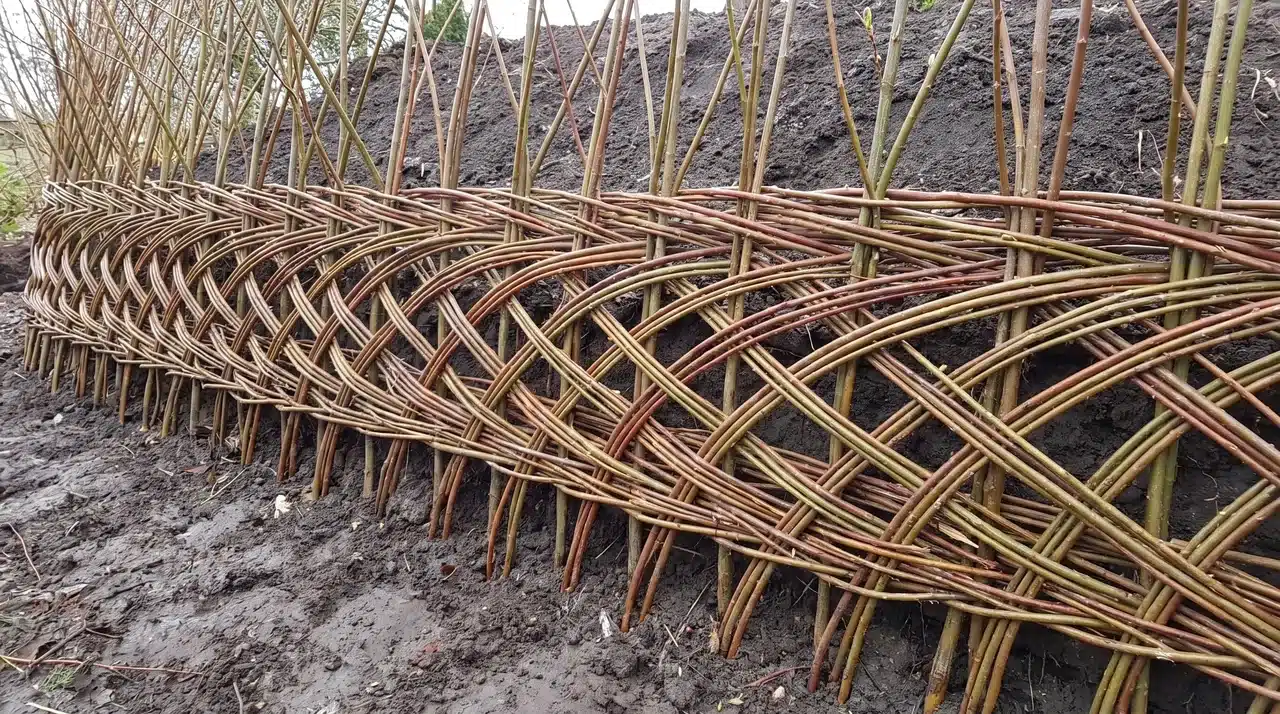
Materials run $5 to $15 per square foot for cuttings, though the weaving itself takes real hand skill.
Plant cuttings in late winter or early spring, while the willow is still dormant. Fast-rooting varieties, like basket willow, take best to this kind of live construction.
The soil behind the weave needs to stay consistently moist, or the cuttings fail to root. Once established, the weave still needs yearly pruning to keep the lattice tight as new growth spreads.
Individual stems eventually die off with age, so sections need replacing every several years.
18. Modern Minimalist Wall
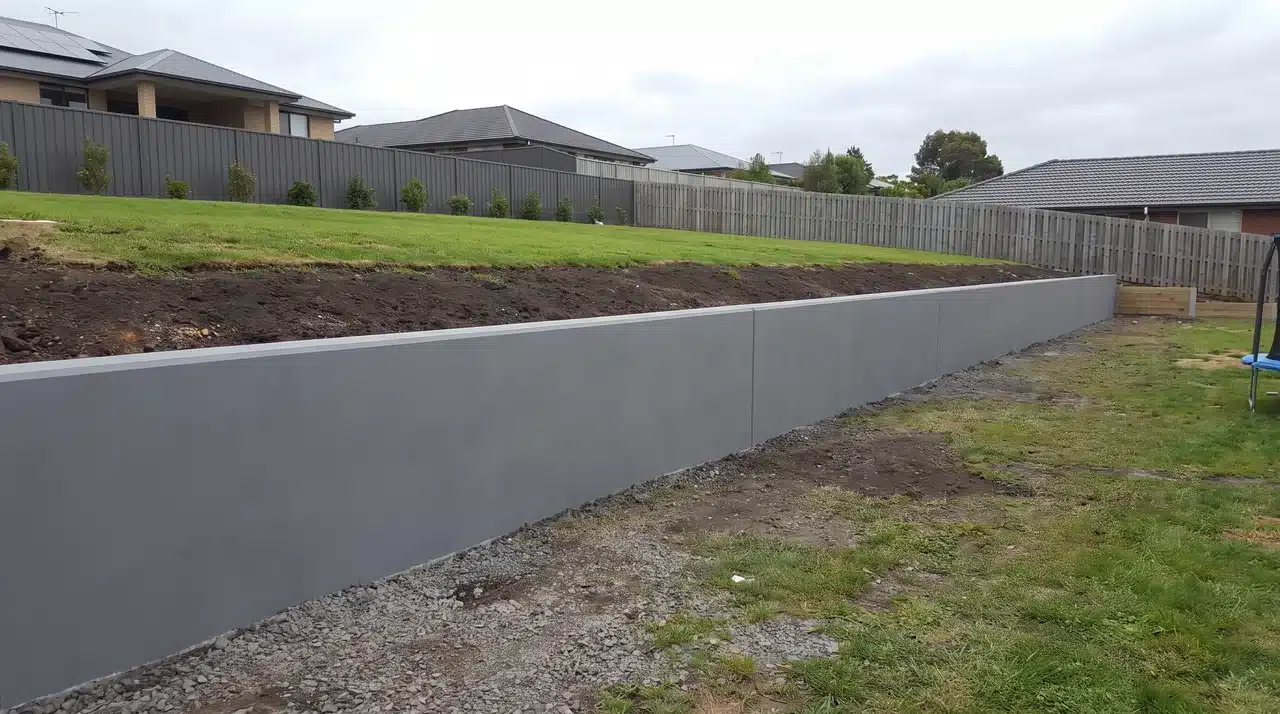
This style leans on smooth-face concrete, steel, or large-format stone with clean lines and zero ornamentation.
That clean look isn’t cheap. Expect $30 to $70 per square foot, since precise lines and smooth finishes require more skilled labor.
This wall works best as a deliberate design statement. If you just need to hold back a slope, you’re paying for looks you may not need.
19. Rustic Wall
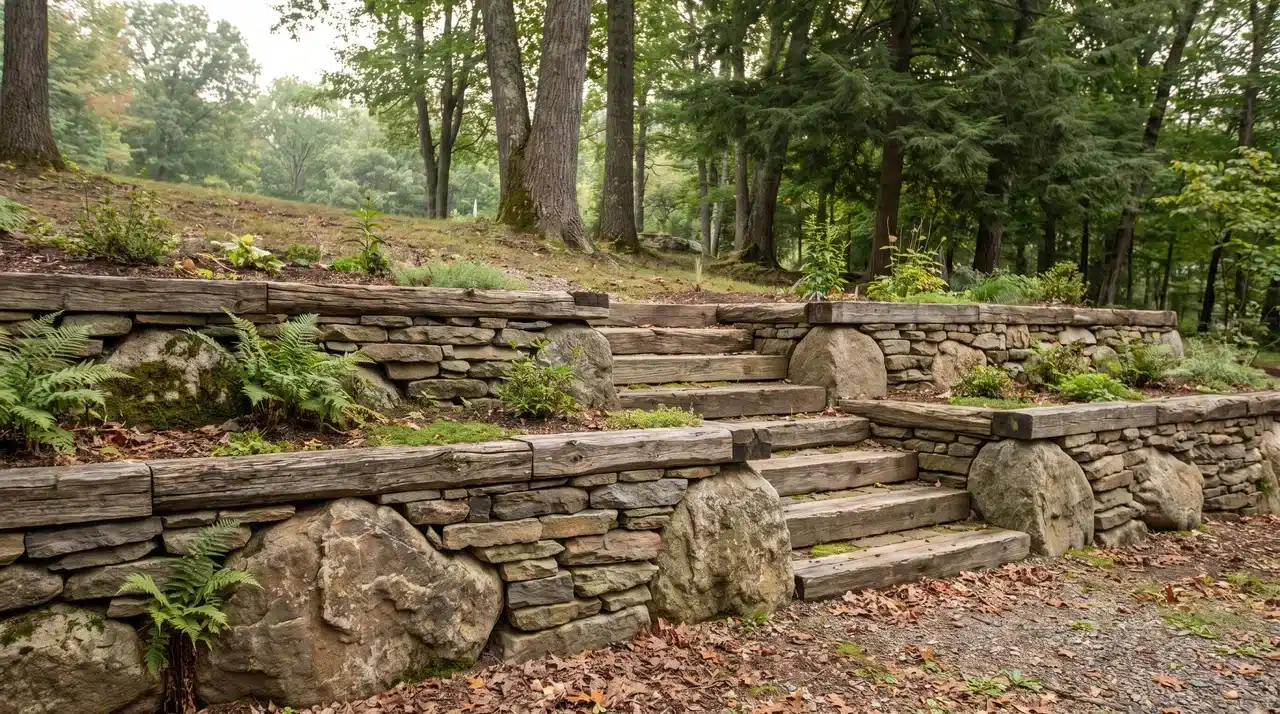
This style mixes natural stone or boulders with timber accents for a weathered, cabin-style look.
Cost runs $20 to $40 per square foot, swinging depending on how much stone versus timber goes into the mix.
It works best on wooded or hillside properties. On a manicured, formal lawn, that weathered look tends to feel out of place instead of intentional.
20. Retaining Wall with Built-In Seating
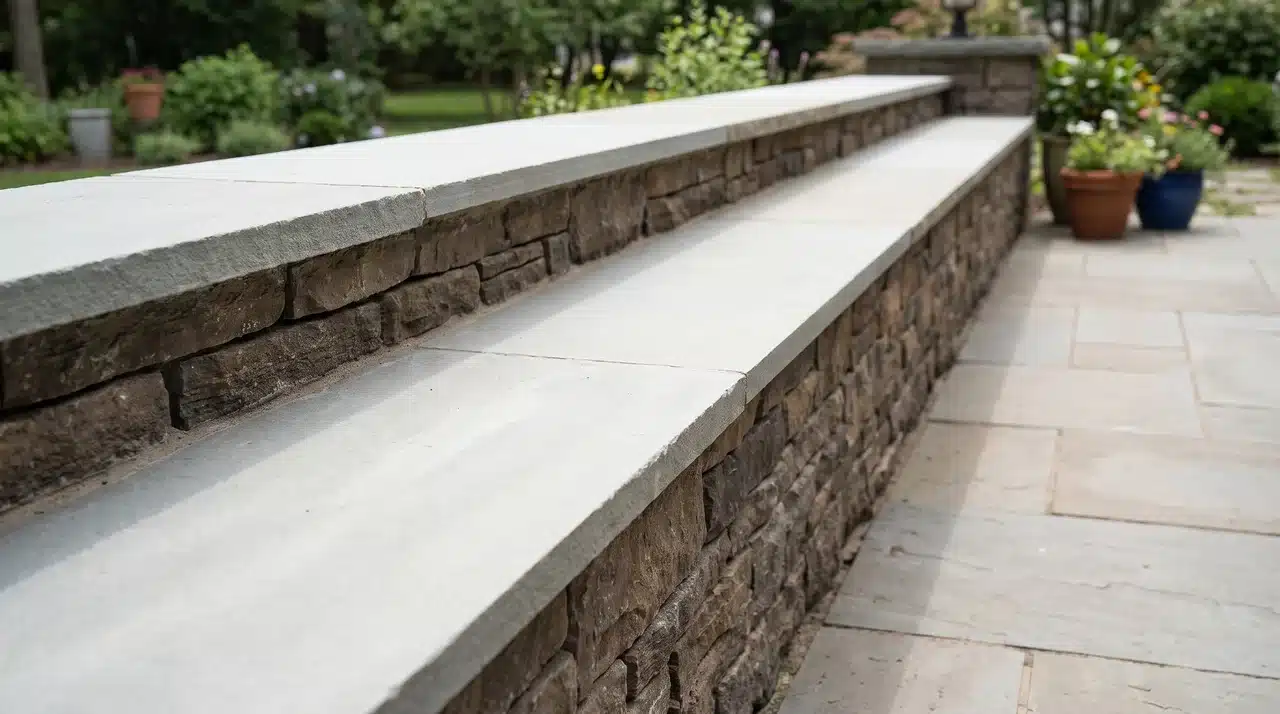
A wide, flat capstone turns a low retaining wall into a bench, perfect around a patio or fire pit.
That extra width costs extra. Budget roughly $50 to $150 per linear foot on top of your base wall material.
Height matters more here than with most walls. Keep it at 16 to 24 inches, a comfortable sitting height, and you also stay clear of taller engineered-wall requirements.
21. Crib Wall
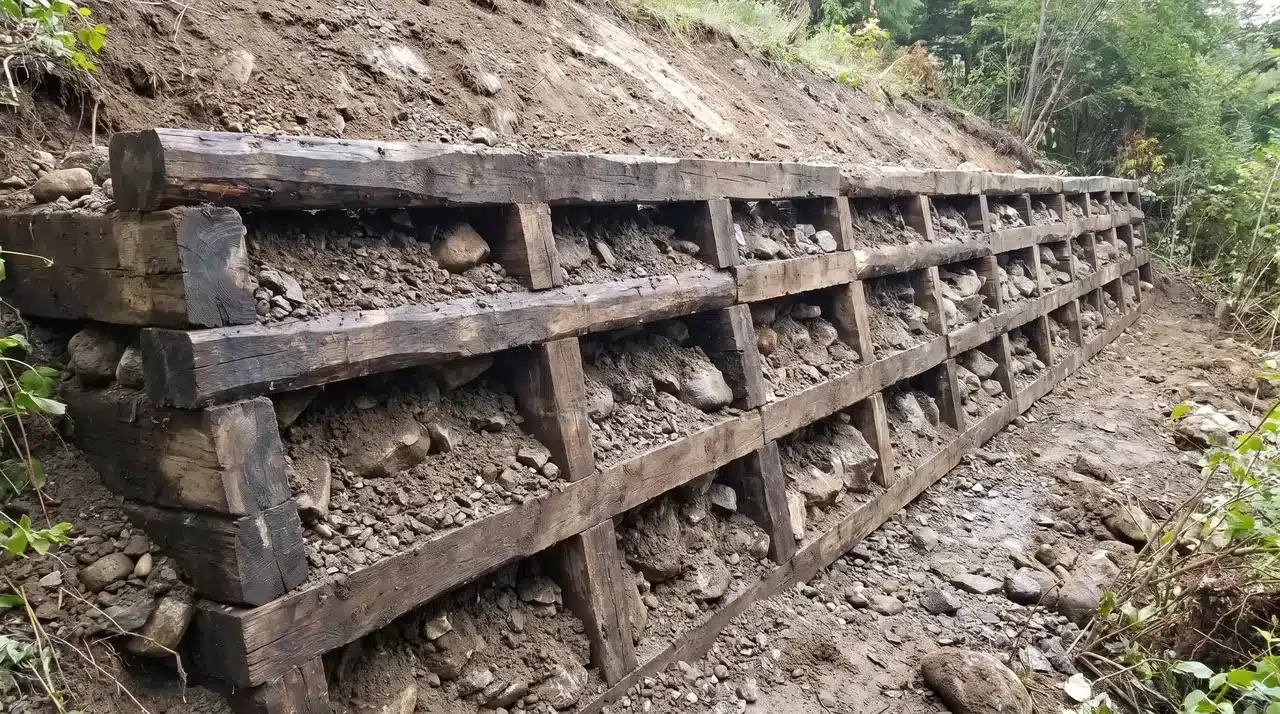
Cost runs $25 to $40 per square foot installed, depending on whether the frame is timber or reinforced concrete.
Each cell holds its own soil and rock fill, so the wall flexes instead of failing as one rigid piece.
That flexibility makes crib walls a strong pick for shifting or poorly compacted soil.
Timber crib walls need rot-resistant lumber, since the frame sits in constant contact with damp fill. Concrete crib members cost more upfront but skip the replacement timeline that timber eventually needs.
Access to the site matters. Crib wall members are bulky, so tight yards can slow the build.
22. Aspen Log Wall
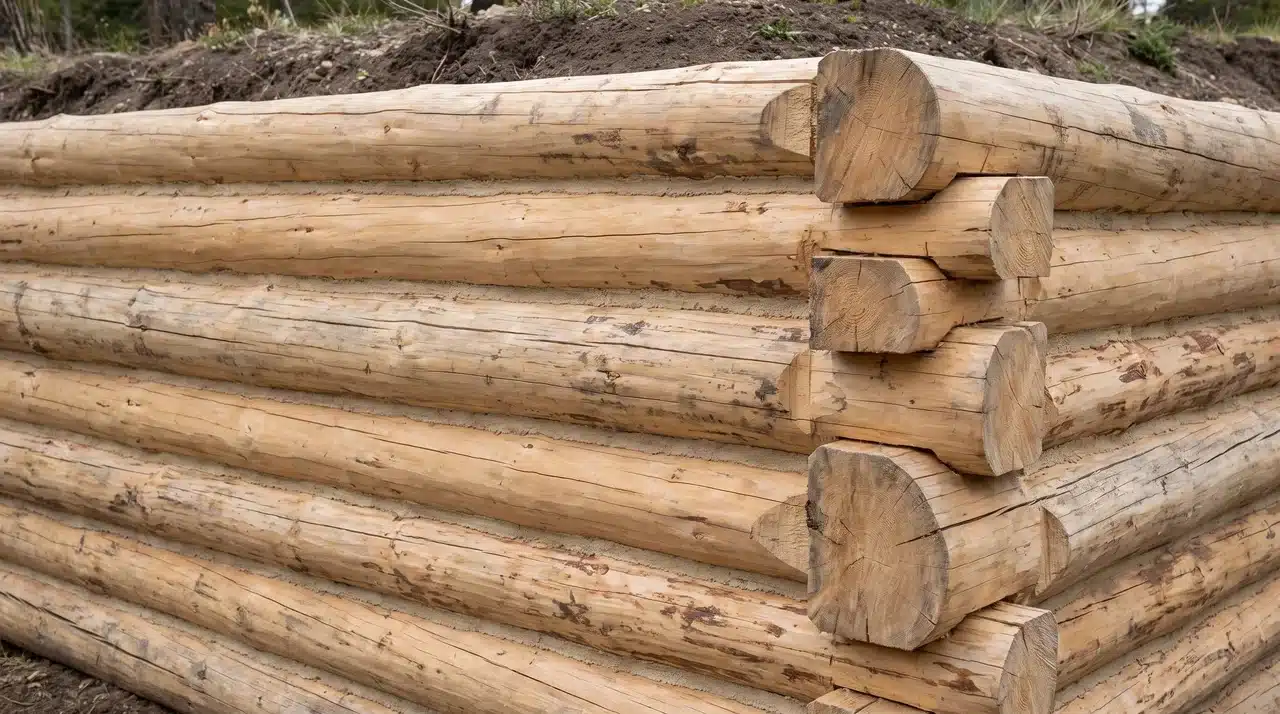
Cost runs $20 to $35 per square foot installed, since the logs need peeling, treating, and precise stacking.
Peeling removes bark and the cambium layer, which slows insect and fungal damage.
Saddle-notched corners lock each course in place without hardware, echoing traditional log cabin construction. Logs taper from end to end, so builders alternate thick and thin ends each course to keep the wall level.
Green aspen shrinks as it dries, opening small gaps between logs that need chinking to block drafts and moisture.
Sourcing straight, uniform aspen logs gets harder outside mountain regions, which can push freight costs higher.
23. Wall with Integrated Water Feature
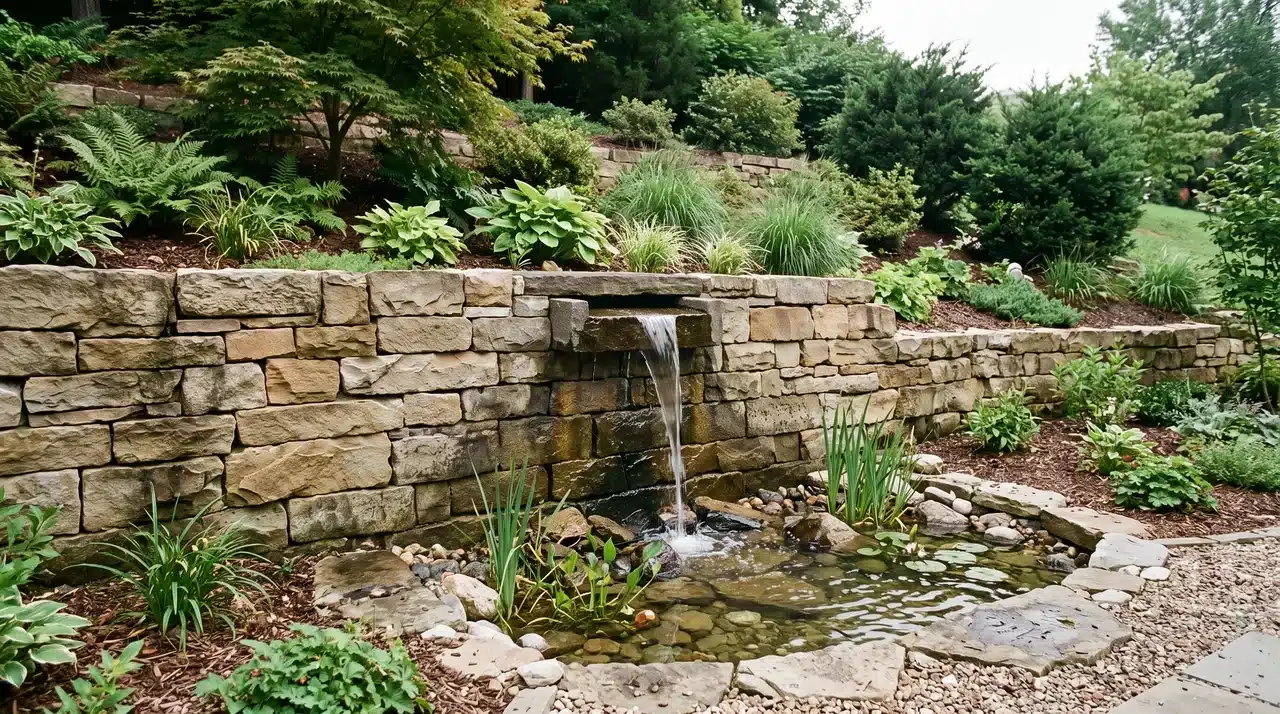
A spillway or small waterfall built into the wall turns a functional slope fix into a real focal point.
This one is the priciest add-on here. Expect $500 to $3,000 or more beyond the base wall, driven by the pump, plumbing, and basin.
The wall’s normal backfill drainage won’t cover this.
You need separate waterproofing and drainage planning built specifically around the water feature itself, so it is worth reading up on pond and fountain design before you commit to a layout.
24. Retaining Wall with LED Accent Lighting
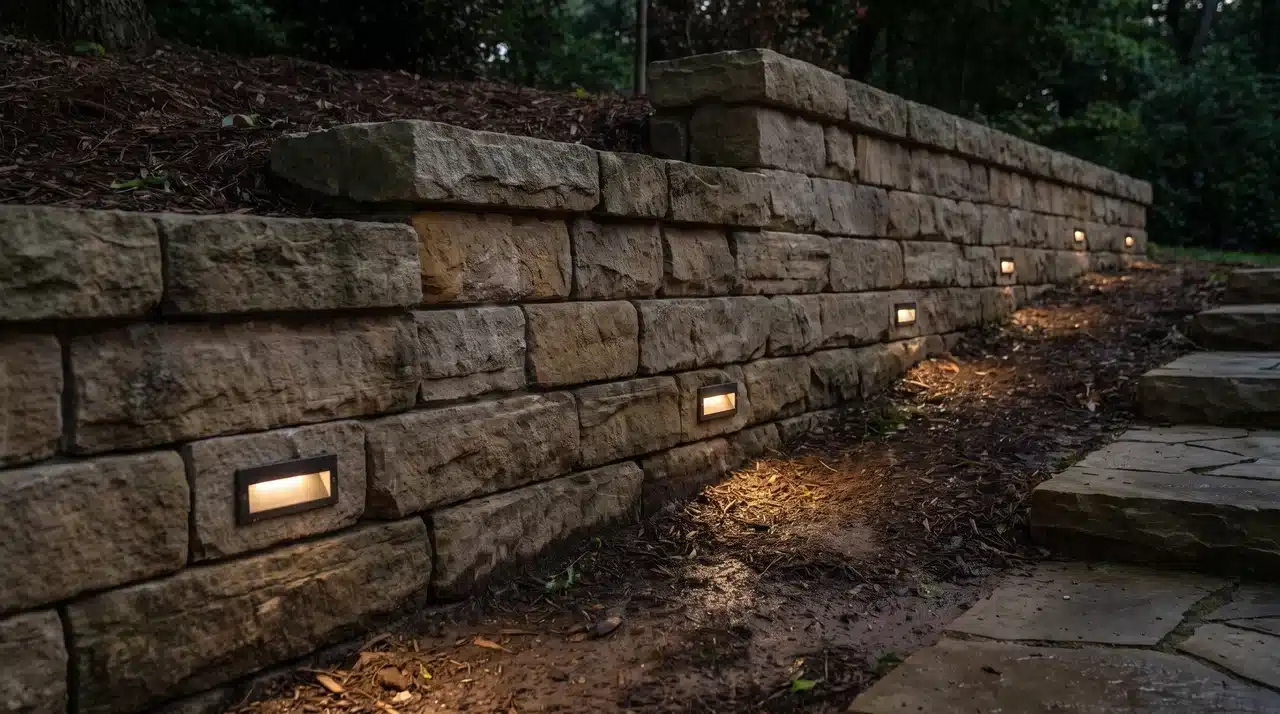
Low-voltage LED fixtures set into the wall face highlight texture and light up steps or slopes at night.
Budget runs roughly $150 to $400 per fixture installed. A modest multi-light run typically lands between $500 and $1,500 total.
This add-on works with almost any material. It shows up best on textured stone or block, where the light catches shadows across the surface.
25. Wall with Fire Pit or Outdoor Kitchen
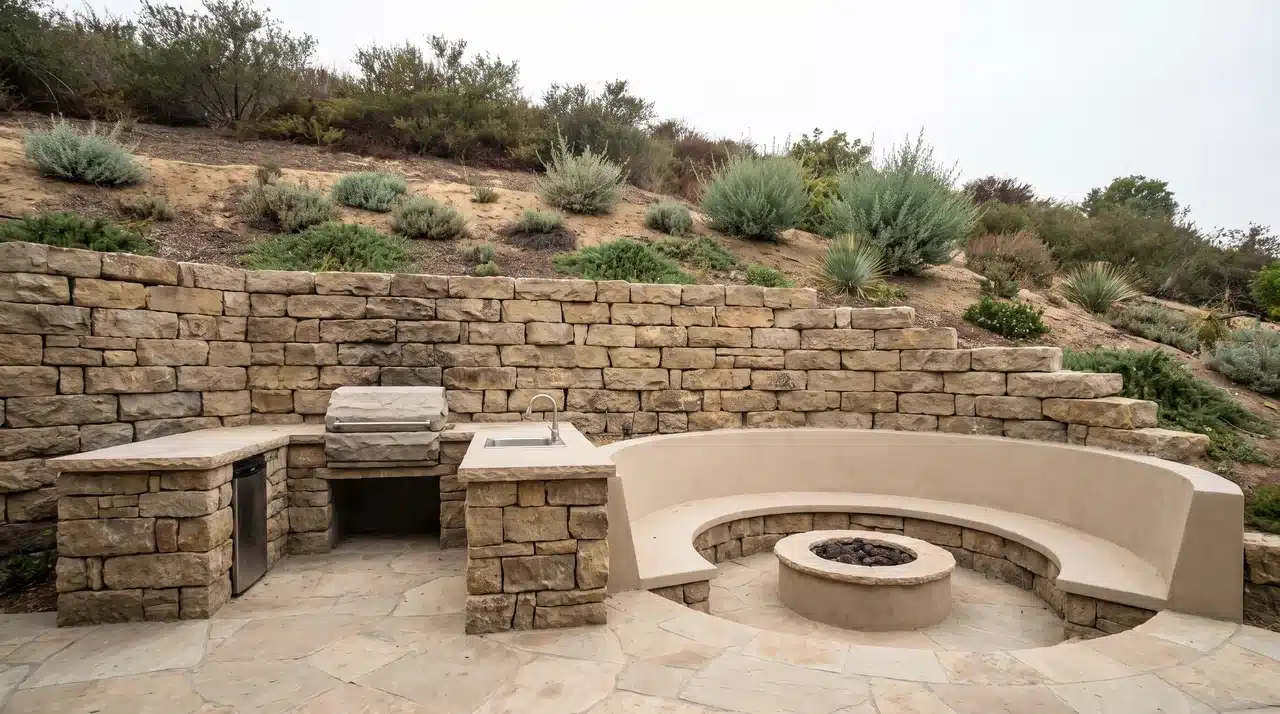
Building the wall to also form the back or side of an outdoor kitchen or fire pit combines two projects into one footprint.
This is the biggest jump in scope on this list. Expect $2,000 to $10,000 or more, since you’re now building a full outdoor living space.
Treat this as its own project, not a retaining wall upgrade.
Gas lines, electrical, and permitting usually apply here in ways a standard wall never triggers, so start with the basics of outdoor kitchen planning before the wall design locks anything in.
26. Corrugated Metal Wall
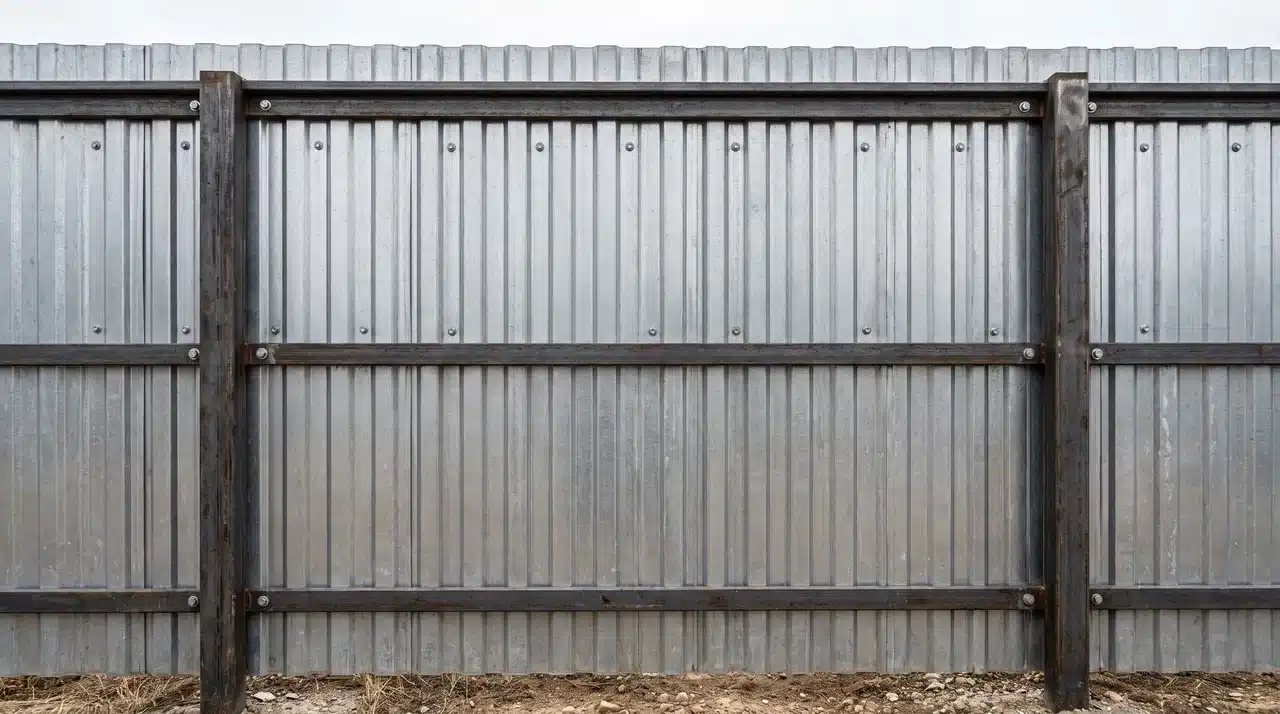
Cost runs $20 to $35 per square foot installed, well below Corten’s premium patina finish.
Panels attach to steel or treated posts, so the frame carries the load rather than the sheet metal itself. Ridges run vertically in most builds, which helps shed water down the face instead of pooling.
Galvanized coating protects against rust for years, though coastal salt air wears it down faster.
Powder-coated panels hold color longer than paint and resist chipping from yard tools and mowers.
27. Retaining Wall for a Driveway
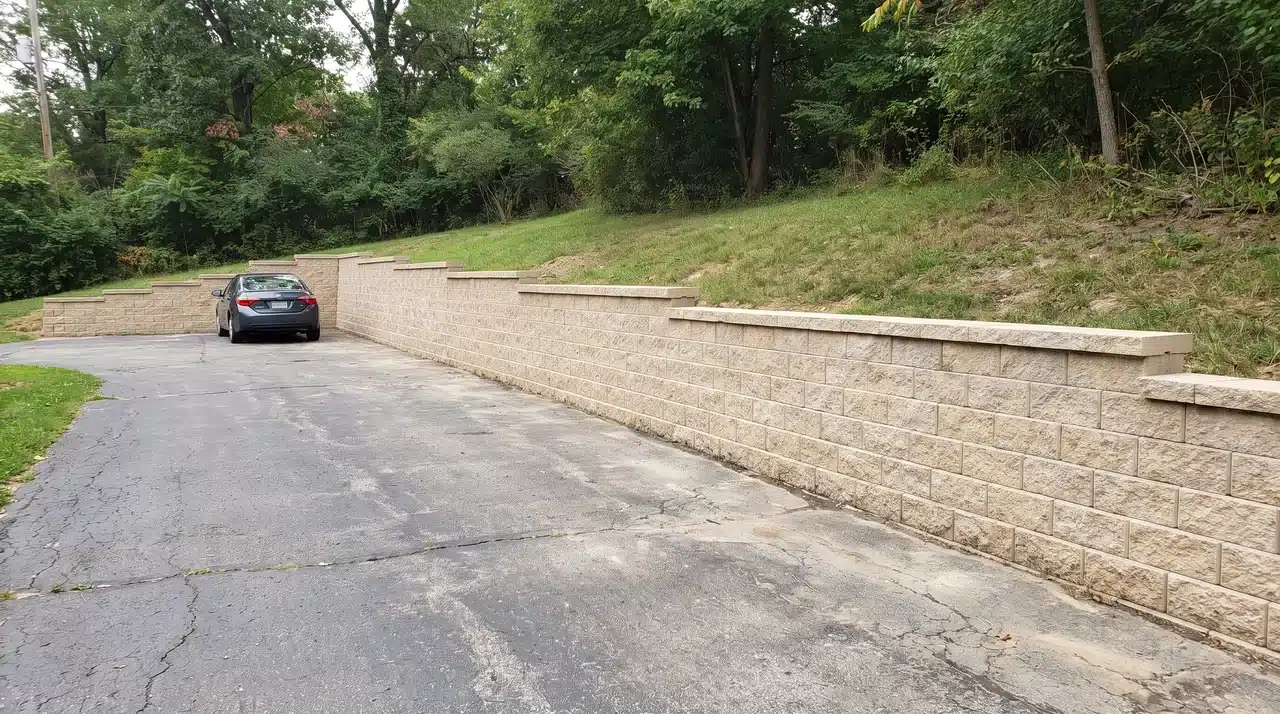
A wall holding back soil under a driveway carries something extra: the weight of vehicles rolling over it.
That added load usually means reinforced or engineered construction, no matter which material you pick. Soil pressure alone doesn’t cut it here.
In many cities, four feet typically triggers the point where a stamped engineer design and a permit become mandatory, driveway or not, so confirm your local threshold before you finalize a design.
Expect to pay 20 to 30% more than a standard garden wall of the same material and height. Deeper footings and extra reinforcement account for that jump.
Poured concrete and engineered segmental block handle vehicle loads best. Timber and dry-stack stone aren’t built for this kind of pressure and fall out of contention fast.
28. Basalt Column Wall
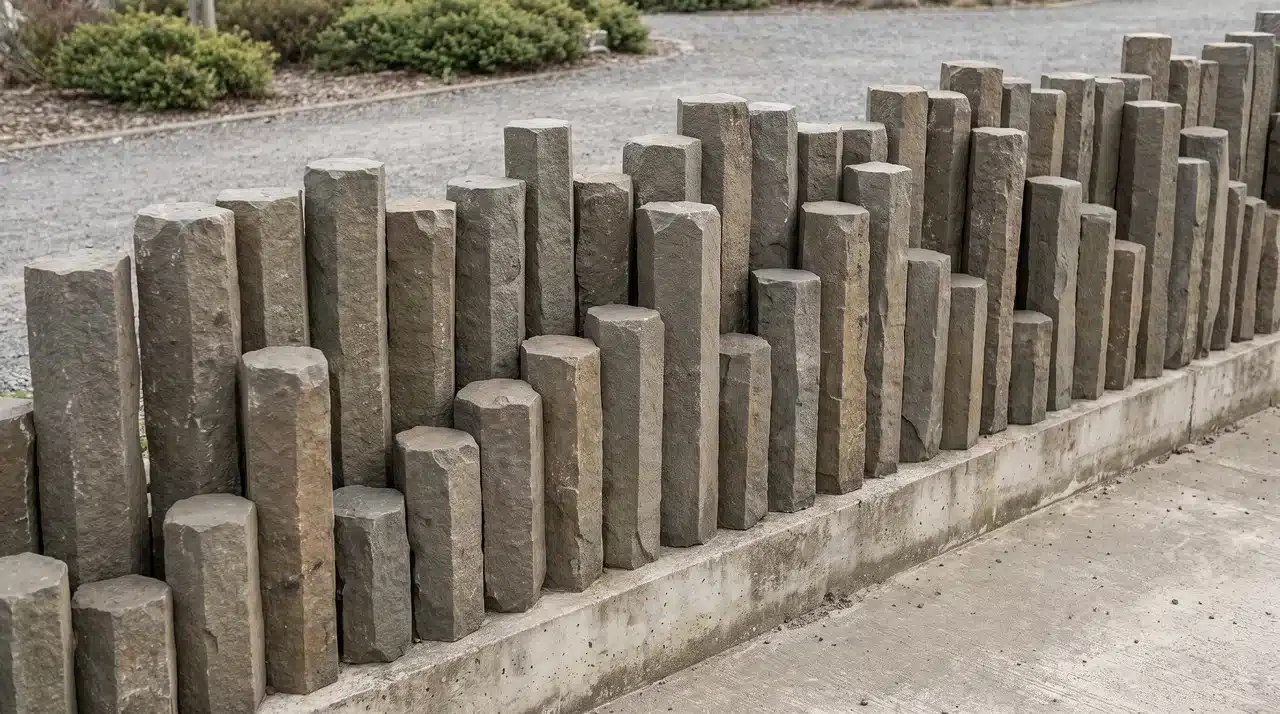
Cost runs $40 to $90 per square foot installed, making it one of the priciest natural stone options on this list.
Basalt’s natural hexagonal shape comes from cooling volcanic lava, so no two columns look identical. The stone’s density gives it strong resistance to freeze-thaw cracking in cold climates.
Columns are typically set on a concrete footing rather than dry-stacked, given their weight and narrow base.
Matching column height across a run takes careful sourcing, since natural breaks vary the length of each piece.
29. Precast Concrete Panel Wall
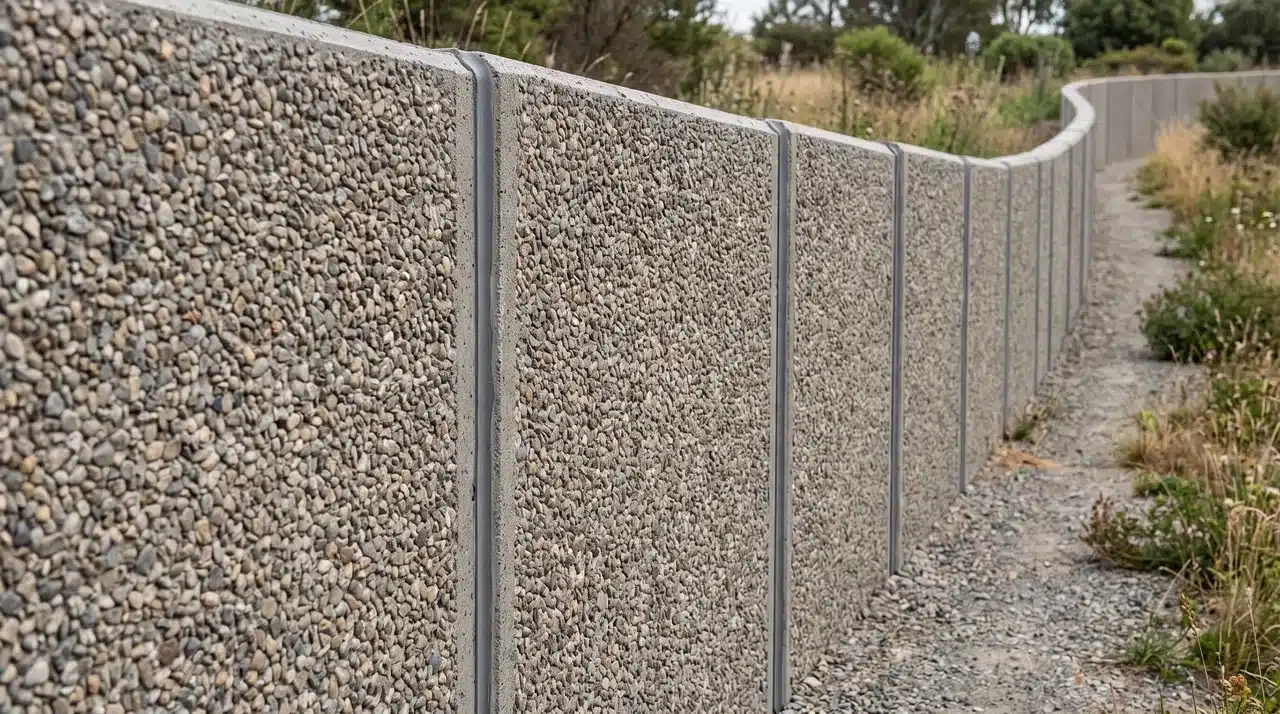
Cost runs $25 to $40 per square foot installed, similar to poured concrete but with a faster build time.
Panels connect edge to edge with keyed joints, sealed to keep soil and water from pushing through the seams. Standard panel widths run up to 10 feet, which limits how tall a single tier can go.
Transport trucks need clear road access, since finished panels are too heavy to carry by hand.
Textured or exposed-aggregate finishes are molded in at the factory, giving a more uniform look than site-poured concrete.
Common Mistakes to Avoid
These mistakes show up across every material and style covered above, not just one specific idea. The single most common miss on real jobsites is drainage, not material choice.
For a deeper walkthrough of grading, compaction, and drainage groundwork, see this guide to site preparation basics before you break ground.
- Skip the compacted gravel base: The wall will settle and shift within a season or two.
- Ignore drainage: Without gravel backfill, weep holes, or drain pipe, water and pressure build up behind the wall.
- Undersize the base width: A base too narrow for the wall’s height lets it bow outward over time.
- Backfill with topsoil or clay instead of gravel: Clay holds water and swells, adding pressure the wall isn’t built for.
- Ignore property line or structure setbacks: This can trigger legal disputes or undermine a nearby foundation.
- Match the wrong material to the load: Timber under a driveway fails early under weight it wasn’t built for.
Get any one of these wrong, and you’re looking at repairs, not just touch-ups, within a few years.
Wrapping Up
A retaining wall is more than a fix for a slope. It becomes part of how your yard functions every day, holding soil, framing a patio, or doubling as a seat by the fire pit.
The material you choose only works if the basics come first: a permit check, a compacted gravel base, and real drainage behind the wall.
Skip those steps and even the best retaining wall ideas fail within a season or two, no matter how much you spent.
Match your choice to your slope, budget, and climate, then build it to last.
Walk your slope, note where water already pools, and choose the option that solves that problem, not just the one that looks best in photos.
Frequently Asked Questions
How Long Does A Retaining Wall Usually Last?
A properly built retaining wall can last anywhere from 20 to 100 years, depending on the material, drainage quality, soil movement, local climate, and how well it gets maintained. Stone, concrete, and segmental block walls tend to last the longest, while timber and railroad tie walls typically need replacement within 15 to 20 years as the wood breaks down.
Can You Put A Fence On Top Of A Retaining Wall?
Yes, but the wall needs to be designed for the added weight and wind load a fence creates, especially when posts sit near the top edge. A wall built only to hold back soil may not handle that extra lateral force safely, so tell your contractor if a fence is part of the plan before construction starts.
What Is The Best Time Of Year To Build A Retaining Wall?
Dry, mild weather works best because excavation, base compaction, drainage installation, and concrete curing all go faster and hold up better without saturated or frozen soil. In most regions, that means late spring through early fall, though local climate and rainfall patterns can shift the ideal window earlier or later in the year.
Do Retaining Walls Need Regular Maintenance?
Yes, retaining walls need a yearly check for leaning sections, loose blocks, clogged drainage, erosion at the base, and damaged caps. Catching these small issues early keeps a minor repair from turning into a full rebuild, especially after heavy rain or a hard freeze-thaw winter that can shift soil and put extra pressure on the structure.