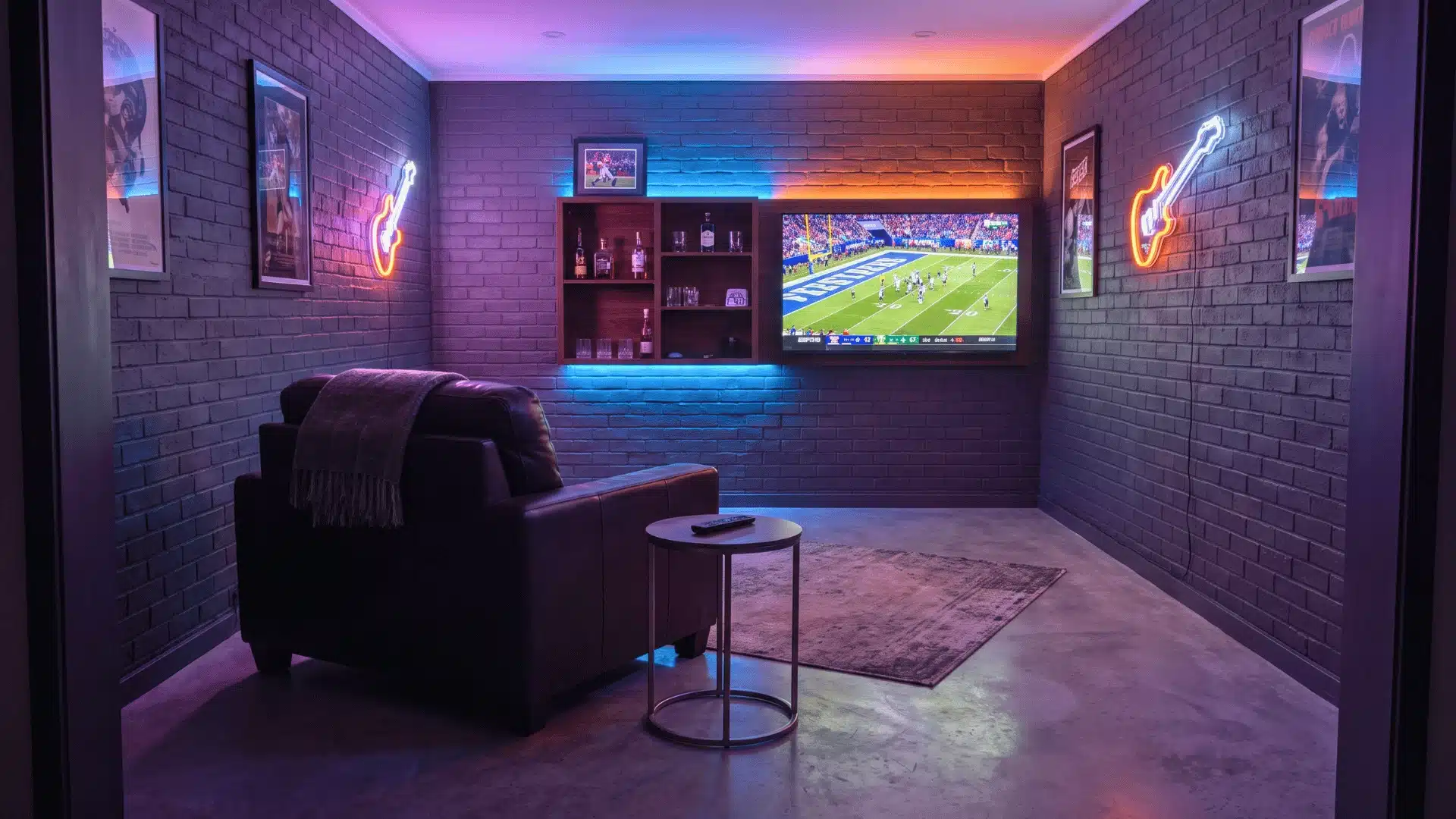
A small man cave usually copies a big one, just squeezed down. That’s where it falls apart.
I’ve observed guys copy ideas from man-cave photos built for garages twice their size, then wonder why nothing fits. The look was never the problem. Scale always was the issue.
Small man cave ideas need their own rules, not shrunk versions of someone else’s basement. The ideas below are based on your actual square footage, not any Pinterest board.
You’ll see picks for tight budgets, rentals you can’t drill into, guest sleepovers, and the odd nook most rooms waste.
Note: Prices below reflect typical national ranges and can shift by retailer and region, so treat them as a starting point for budgeting rather than a fixed quote.
How to Make a Small Man Cave Feel Complete, Not Cramped
I’ve seen this go wrong the same way every time. Someone fills every inch of a small room, and it ends up feeling smaller, not bigger.
Here’s what really works:
- Keep It Tight: Fewer, well-chosen pieces make the room feel more finished. Concentration beats volume.
- Measure First: Apply small room layout principles that actually hold up, measure usable floor space, then subtract the room you need to walk comfortably.
- Choose One Anchor: Give the remaining space to your main seating or bar setup.
- Build Around It: Add other pieces only after the anchor has earned its spot.
A small man cave can feel just as finished as a big one. It just needs the right piece prioritized first, not more stuff crammed in. That’s the logic behind the small man cave ideas below: pick the anchor, then add only what earns a spot after it.
For a broader walkthrough of anchor-first layouts, this man cave setup guide covers the same approach at any size.
Small Man Cave Ideas That Actually Fit
You’ve picked your anchor piece. Now it’s time to fill in around it.
Here we cover everything from low-budget small man cave ideas to bigger investment pieces, ordered on purpose, starting with seating and moving through storage, the bar, tech, and personal touches.
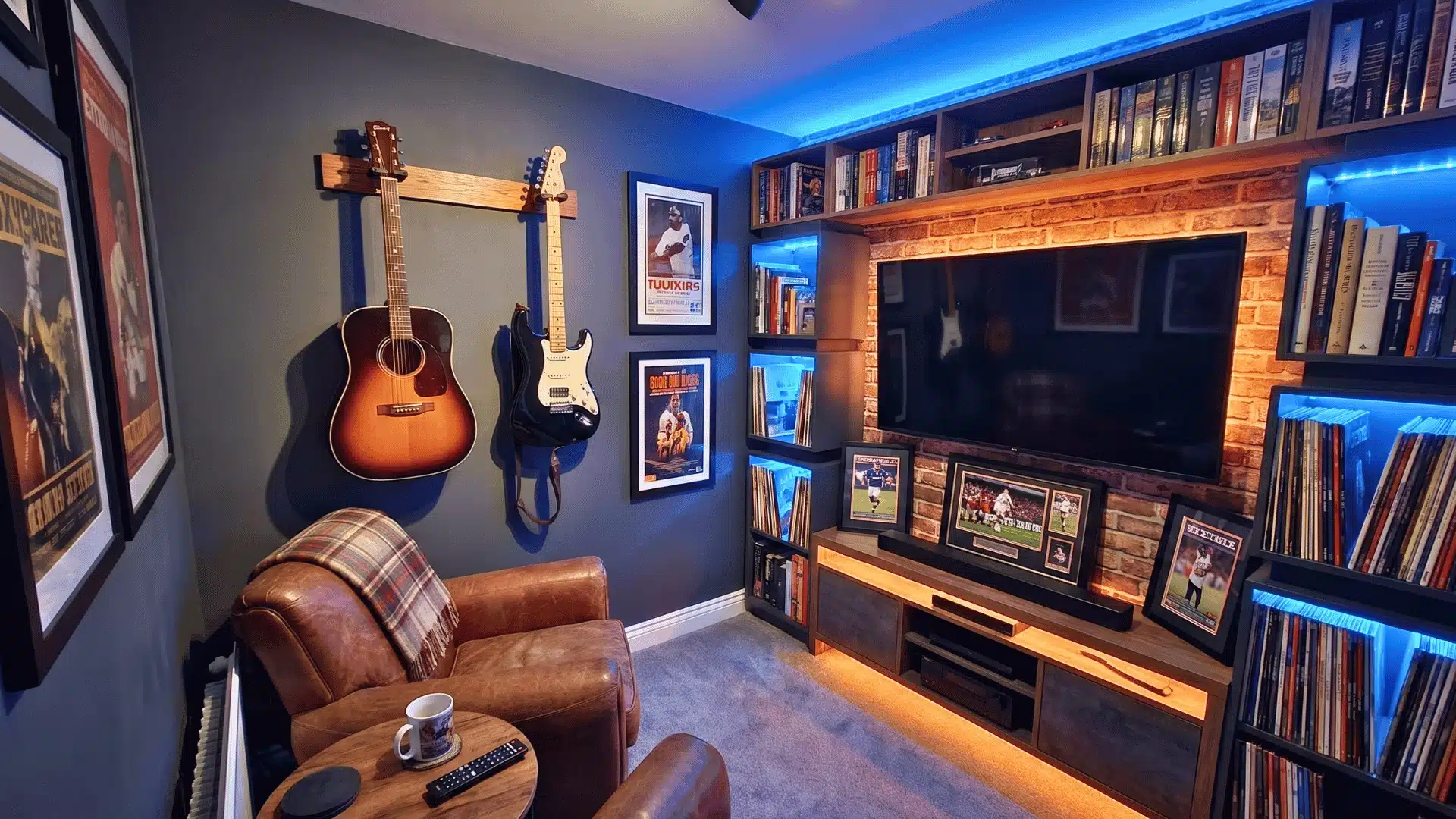
1. Wall-Mounted Guitar or Instrument Display
Cost: $20-$80
A guitar in a case never gets played. Mine sat in a closet for two years before I finally hung it up.
Guitar hangers and wall mounts put the instrument in view instead of behind a zipper. This pick is for players, not collectors. You want it within reach, not preserved behind glass.
Leave a few inches of clearance between hangers. Headstocks knocking together is how you end up with a chipped neck.
2. Blackout Curtains for Movie Nights
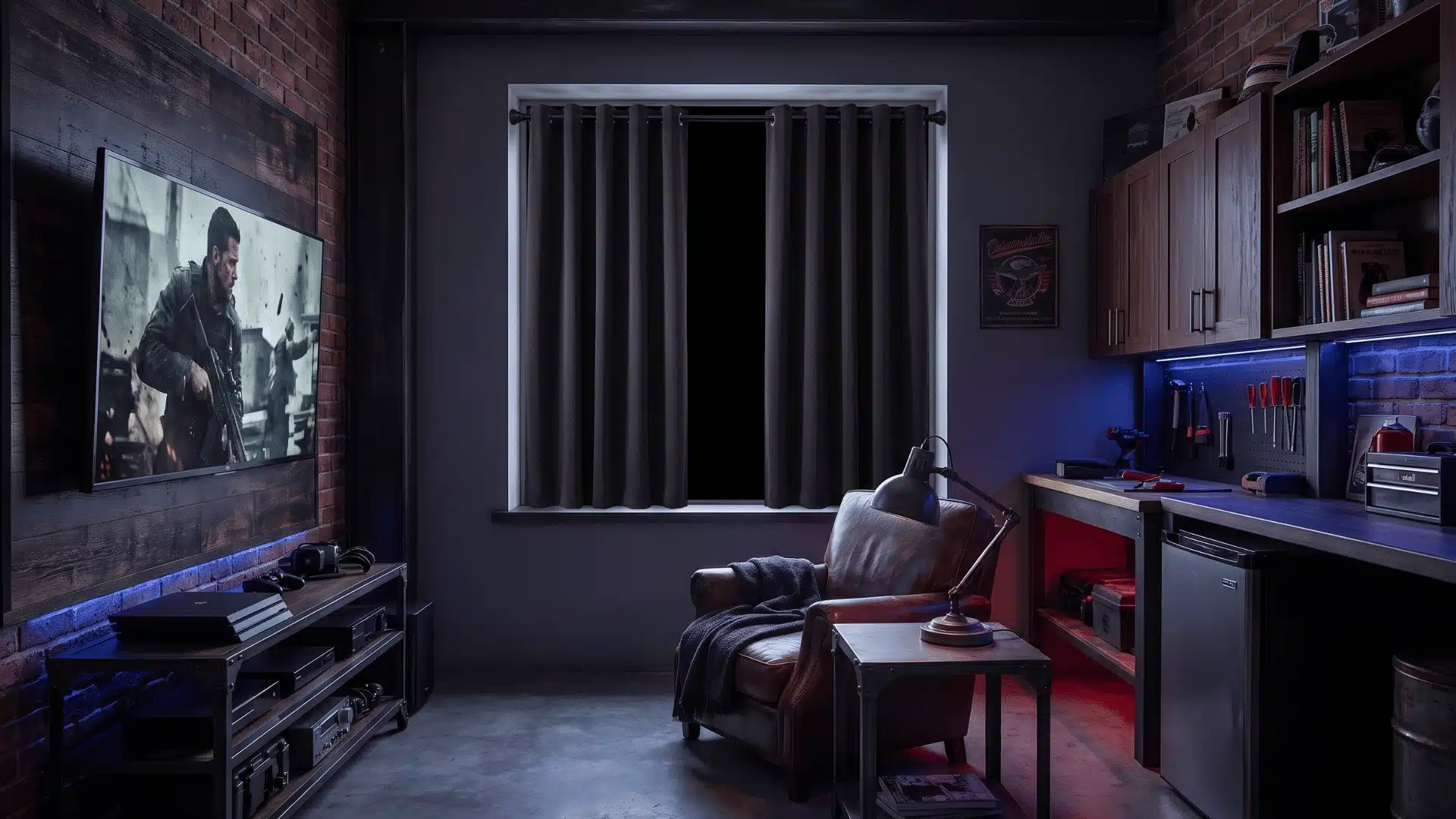
Cost: $30-$100
Most small man caves have one window doing all the daylight work. That single window can wreck a movie night.
Even a little afternoon sun washes out a TV screen or a cheap projector. Blackout curtains cut that light out completely.
The picture looks sharper the moment the room goes dark. You haven’t touched the TV or the projector at all.
Renting? Use a tension rod instead of a mounted one. No drilling, and it still blocks the light just as well.
3. Wall-Mounted Key and Coat Hook Rail
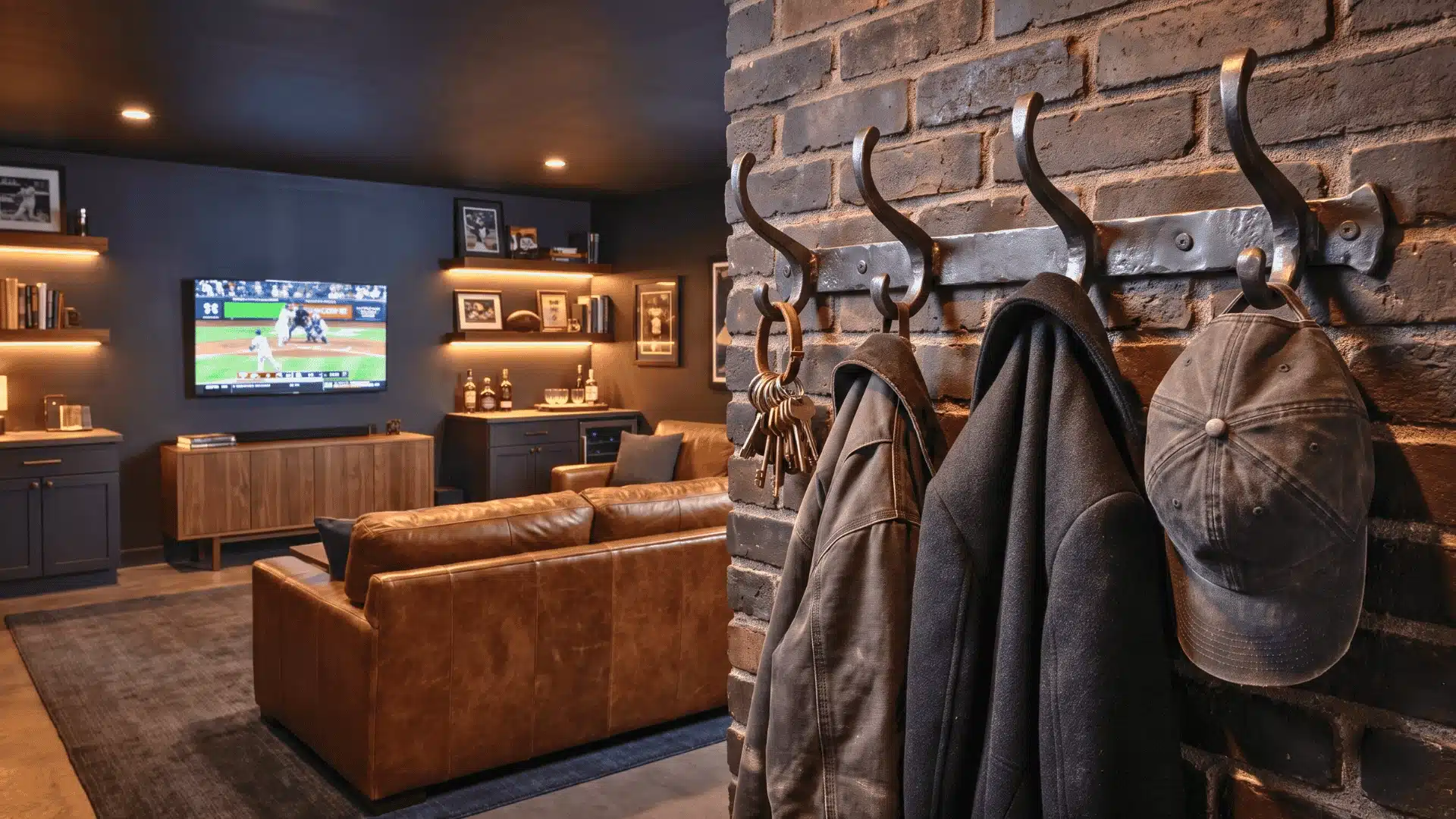
Cost: $15-$50
A short hook rail by the door catches keys, jackets, and hats. They stop ending up on the floor or the back of a chair.
This is one of the easier low-budget small man cave ideas on the list. It’s a small fix. But it’s the one that keeps the room from looking lived-in in the wrong way.
Mount it at the entrance, not across the room. It only works if it’s the first thing you reach on the way in.
Tip: Pick a rail with at least four hooks, even if you live alone. One hook always ends up jammed with three jackets, and that’s how the pile starts.
4. Compact Coffee and Espresso Nook
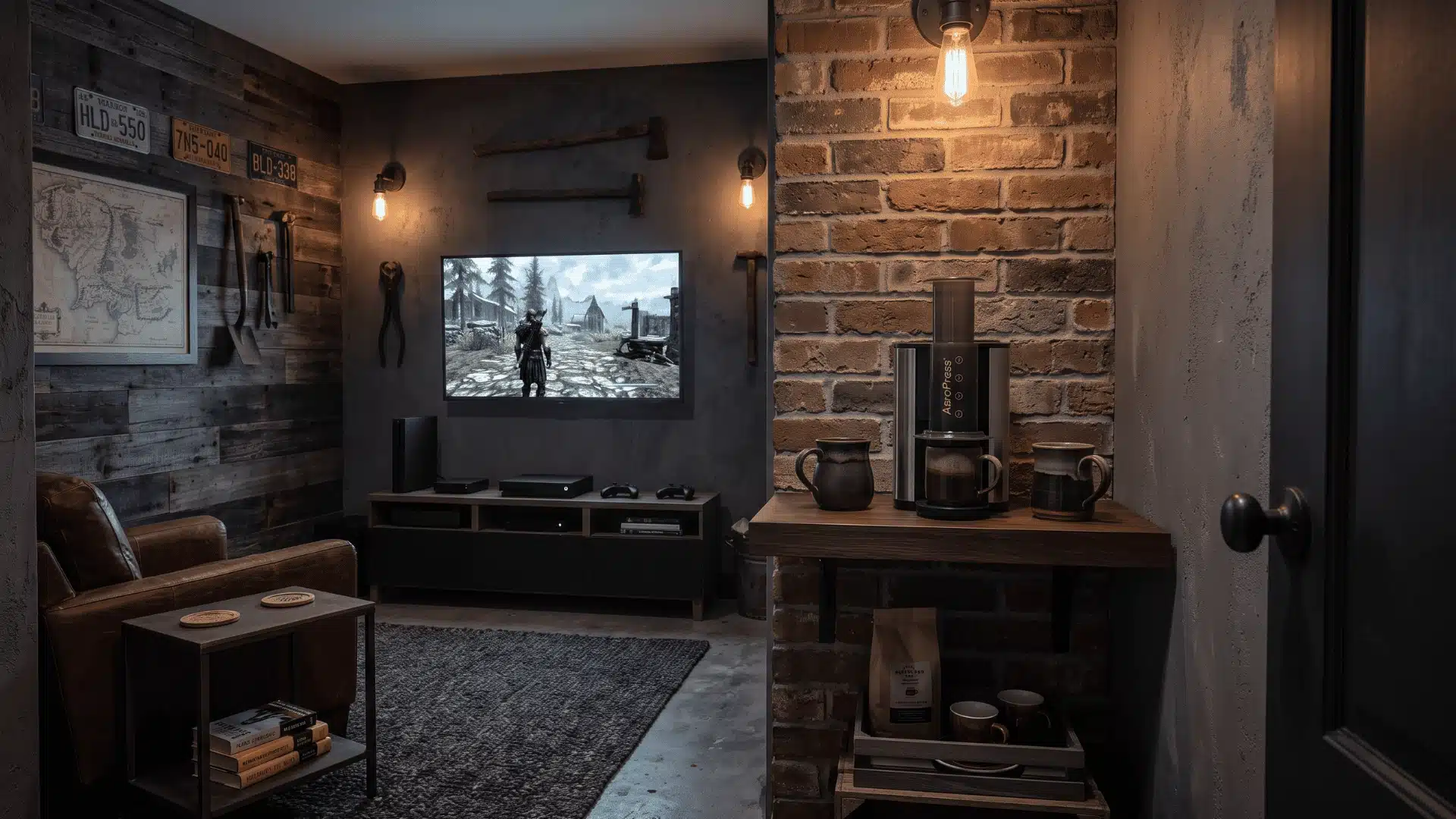
Cost: $60-$300
A single-serve machine and a couple of mugs on a floating shelf cover mornings or slow weekend afternoons. This works even in rooms too small for a full bar setup.
Skip the countertop machine if your shelf runs under 12 inches deep. Go with a slim single-serve model instead.
5. Ceiling-Mounted Bluetooth Speaker System
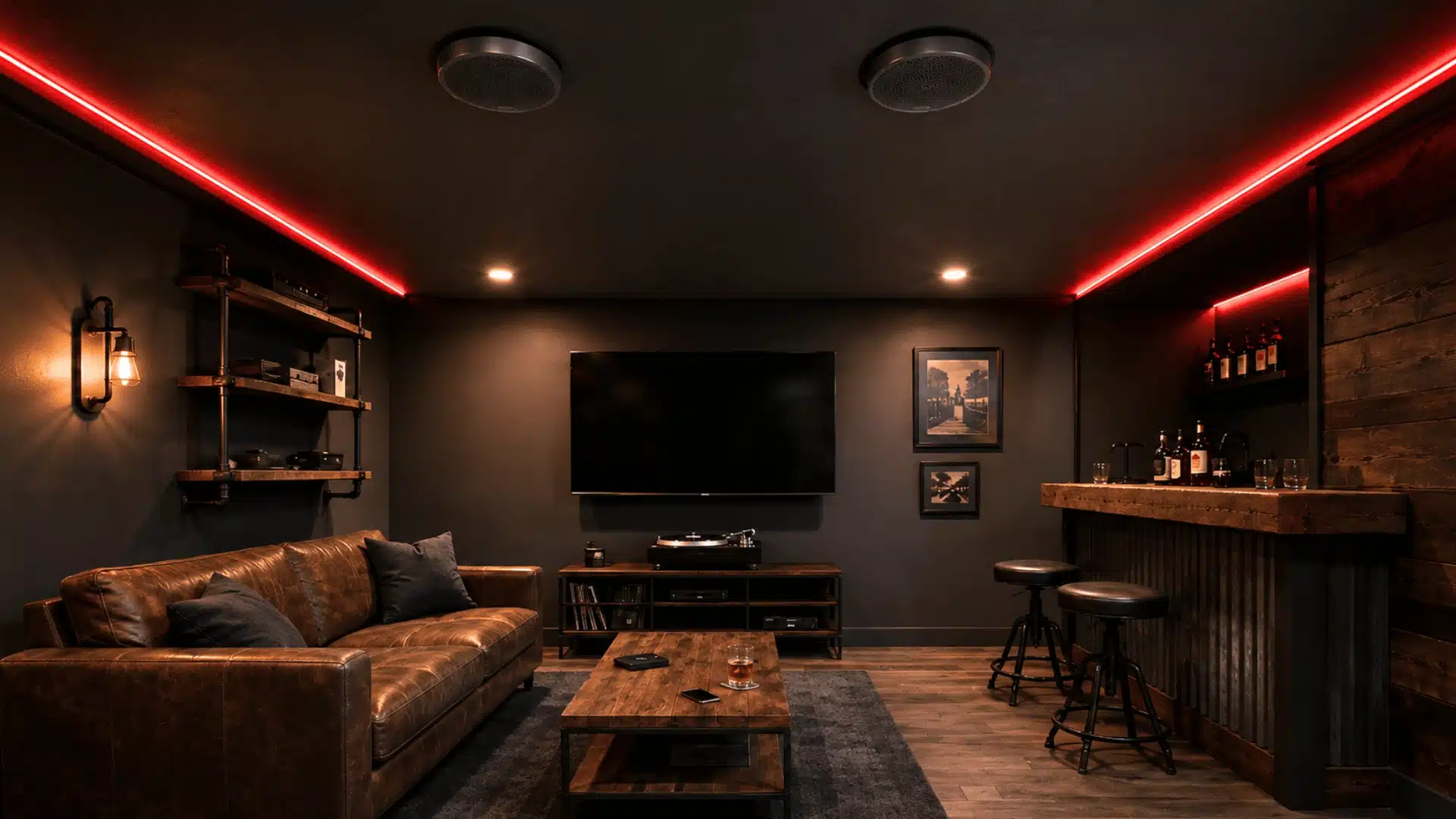
Cost: $60-$200
Ceiling-mounted speakers free up every inch of wall and floor a normal speaker setup would take. That matters more in a small room, where wall space is already spoken for.
Pair them with your TV, turntable, or phone. One system covers all three without extra boxes on a shelf.
6. Compact Punching Bag Corner
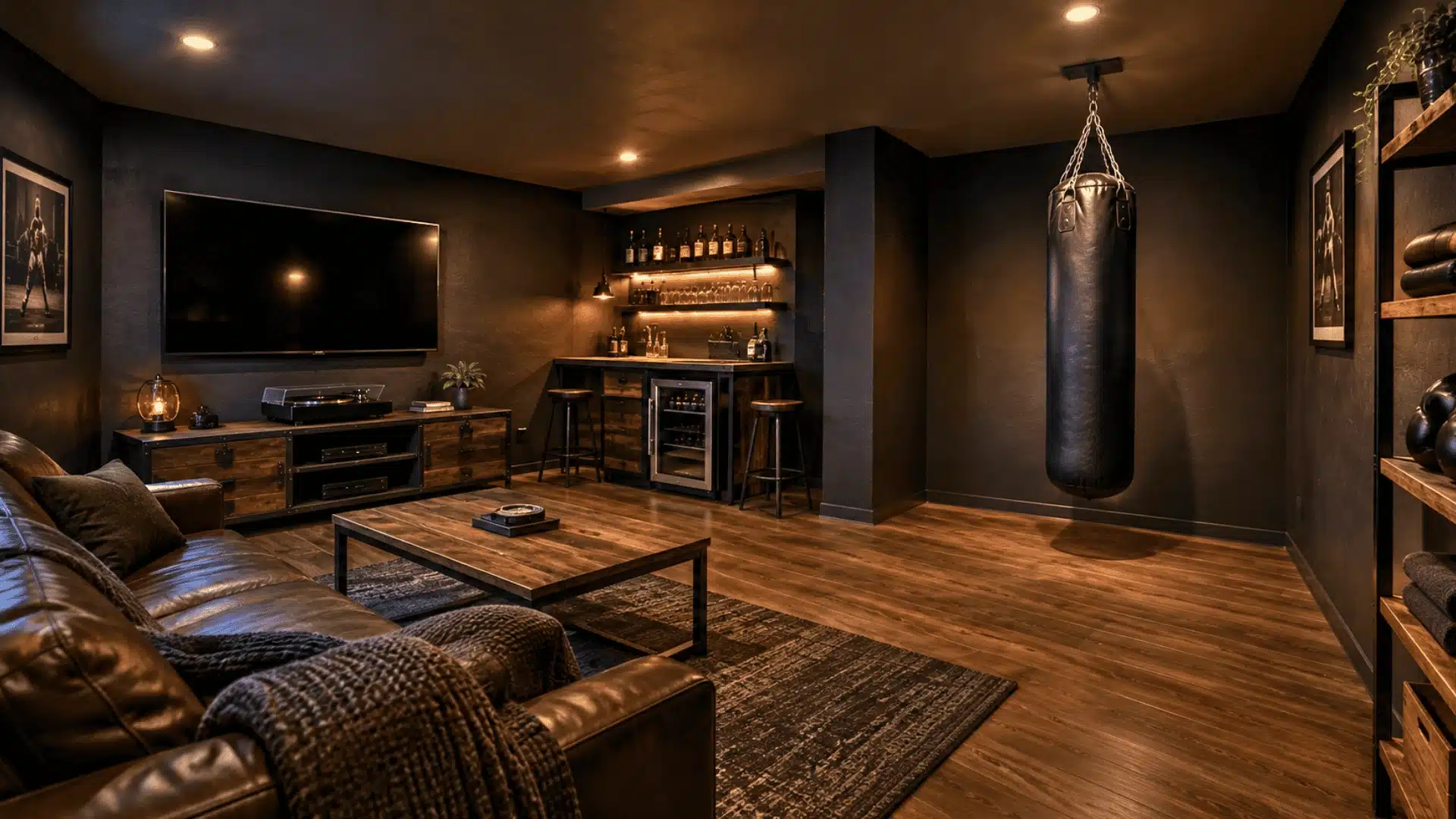
Cost: $60-$200
A freestanding or ceiling-mounted bag needs one clear corner, not a dedicated room.
This is for single-person use at a time. Same idea as the single gaming chair pick, but for a physical outlet instead of a screen.
Check ceiling height before mounting one overhead. Most bags need at least 7 feet of clearance to hang and swing without hitting the ceiling.
7. Indoor Putting Green Mat
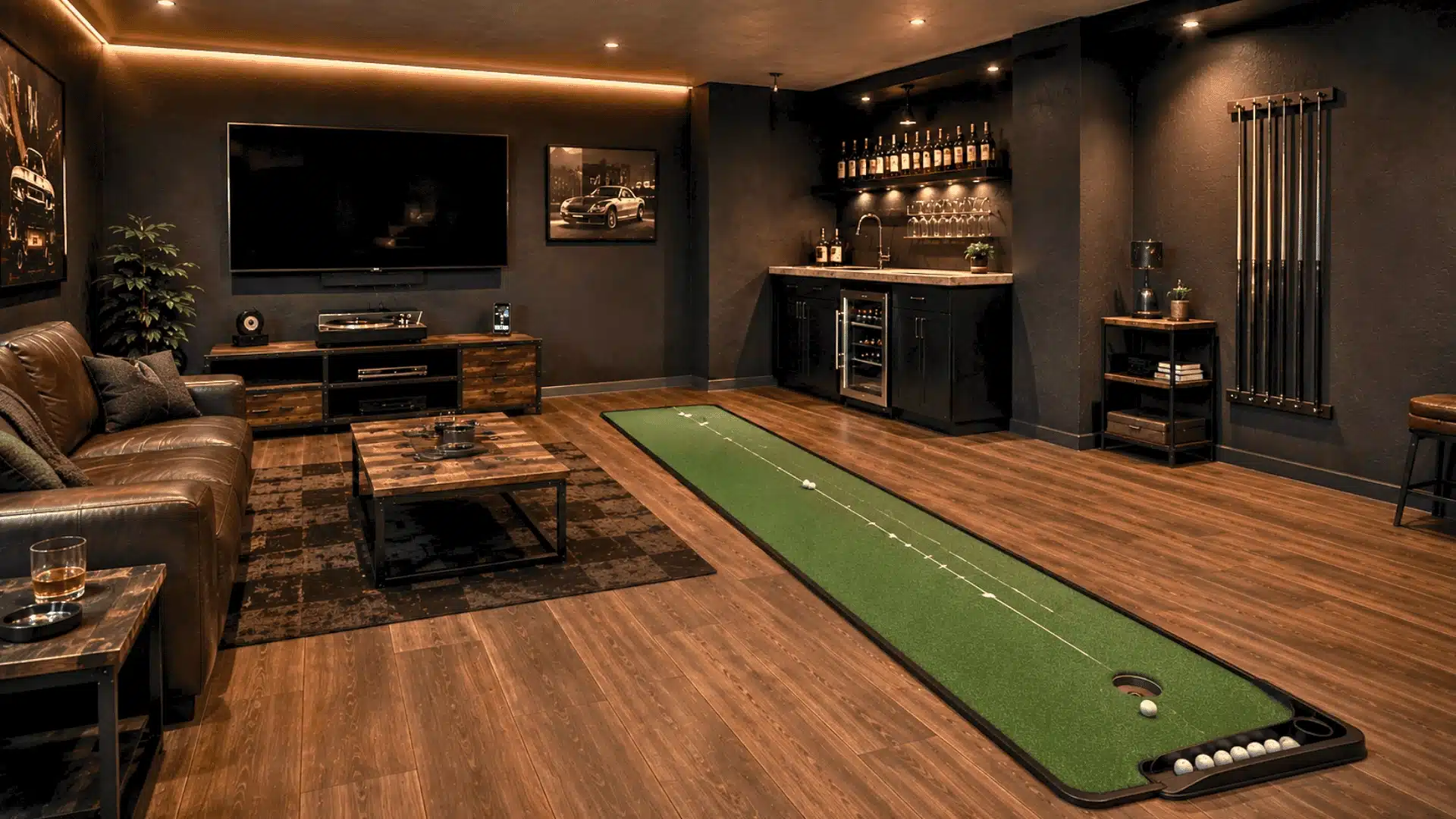
Cost: $30-$150
A roll-out putting mat gives golfers something to do without needing a simulator or a dedicated room. It rolls up and slides under a couch or behind a door when you’re done.
Look for one with a built-in ball return. It saves you from chasing putts across the room.
Tip: Lay it on the flattest stretch of floor you’ve got. Carpet of any thickness throws the roll off, even on a good mat.
8. Smart App-Controlled LED Lighting
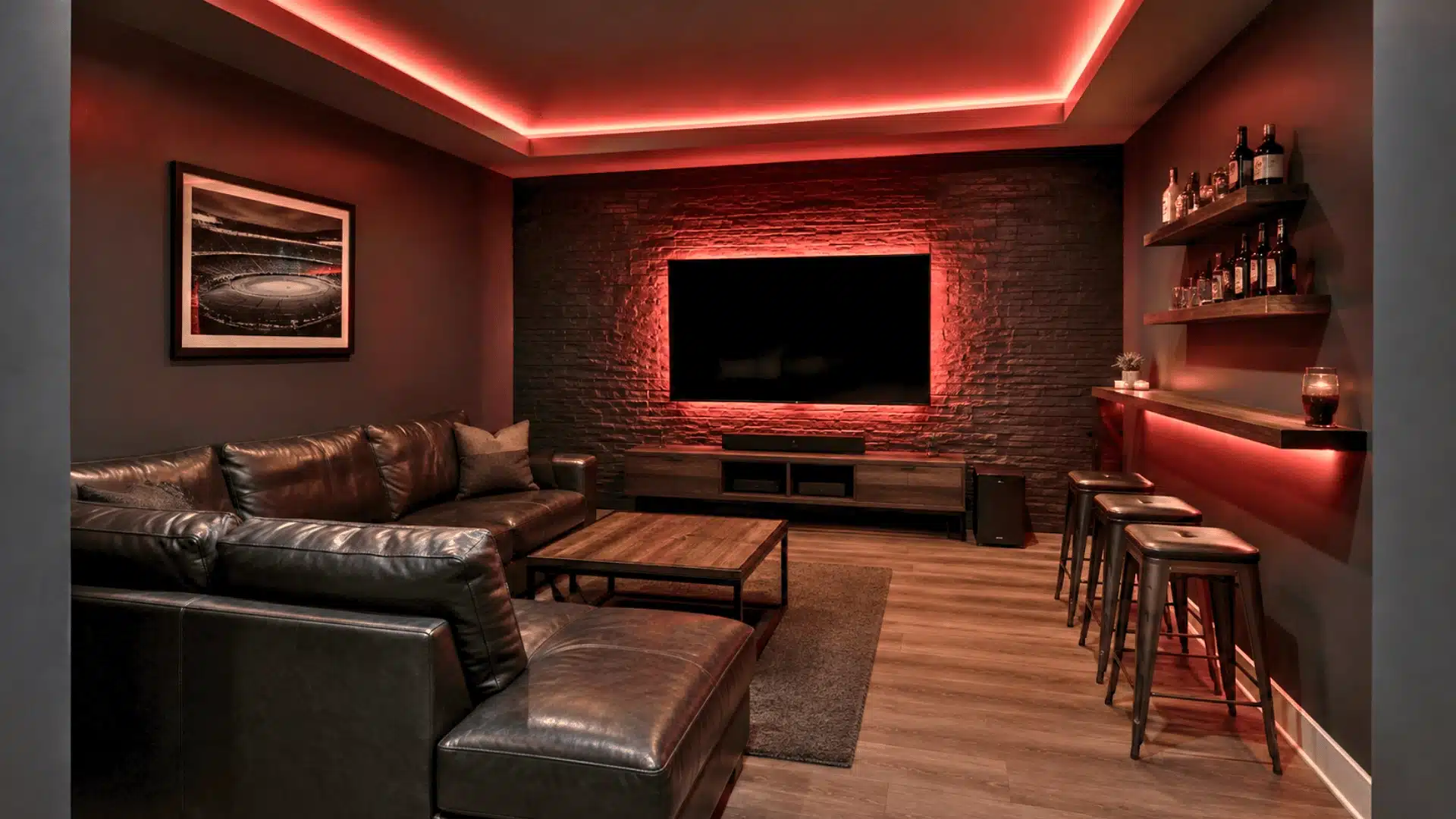
Cost: $30-$100
App-controlled LED strips change color and brightness from your phone. That’s different from warm string lights or a lamp.
This is the pick if you want the room to shift moods between game day and movie night without swapping fixtures.
Stick to one or two strips in a small room. Wrapping every edge in LEDs reads as a dorm room, not a finished space.
9. Fold-Down Murphy Bed for Guest Sleepovers
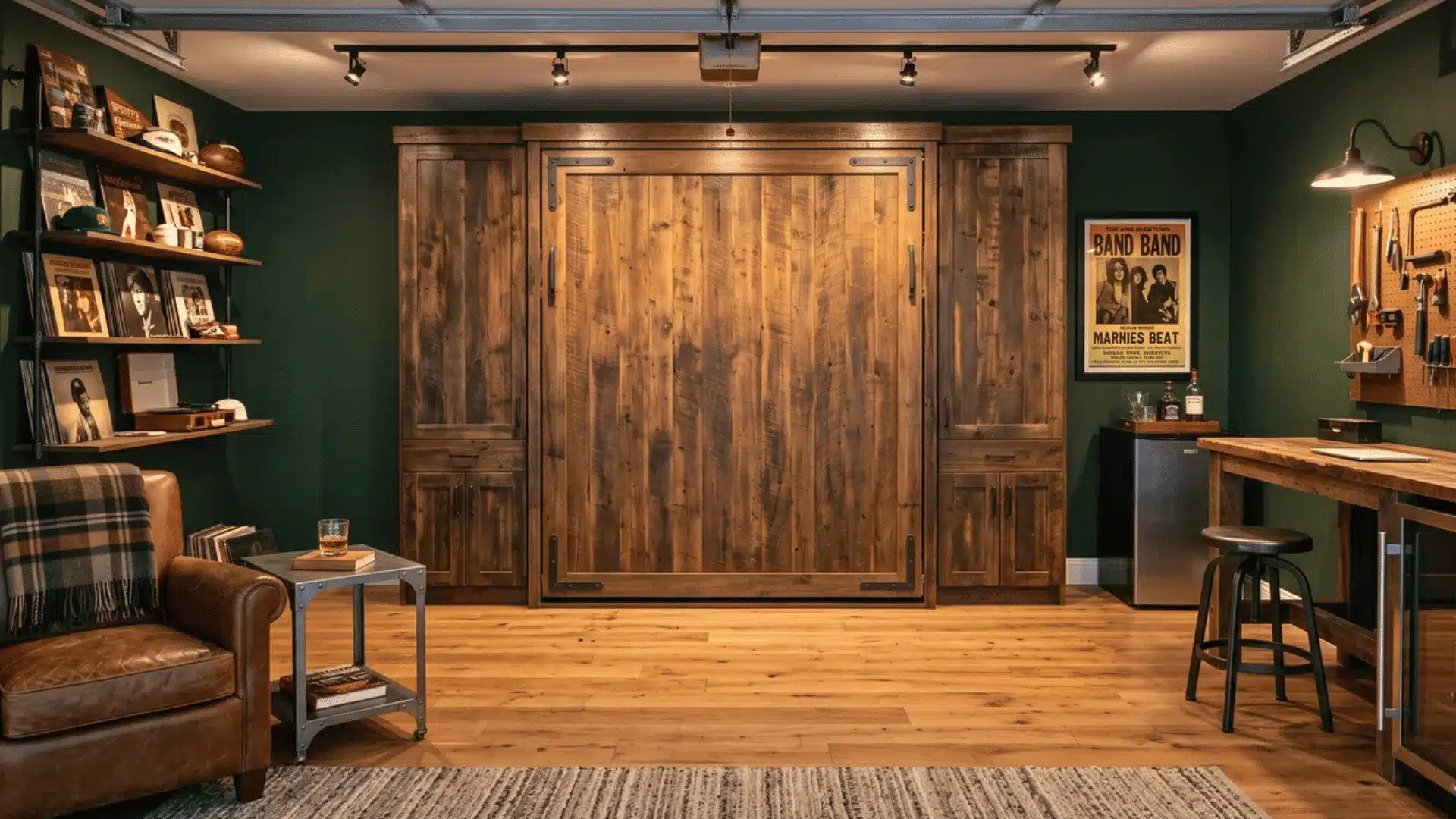
Cost: $300-$1,200
A wall-mounted Murphy bed clears the entire floor when folded up. A fold-out sofa can’t quite match that, since the sofa still takes up its seating footprint either way.
This is the bigger investment version of solving the same guest-sleepover problem.
It only makes sense if guests stay over often enough to justify the cost and the install. For occasional use, a fold-out sofa is still the easier call.
10. Wall-Mounted Bar Shelf
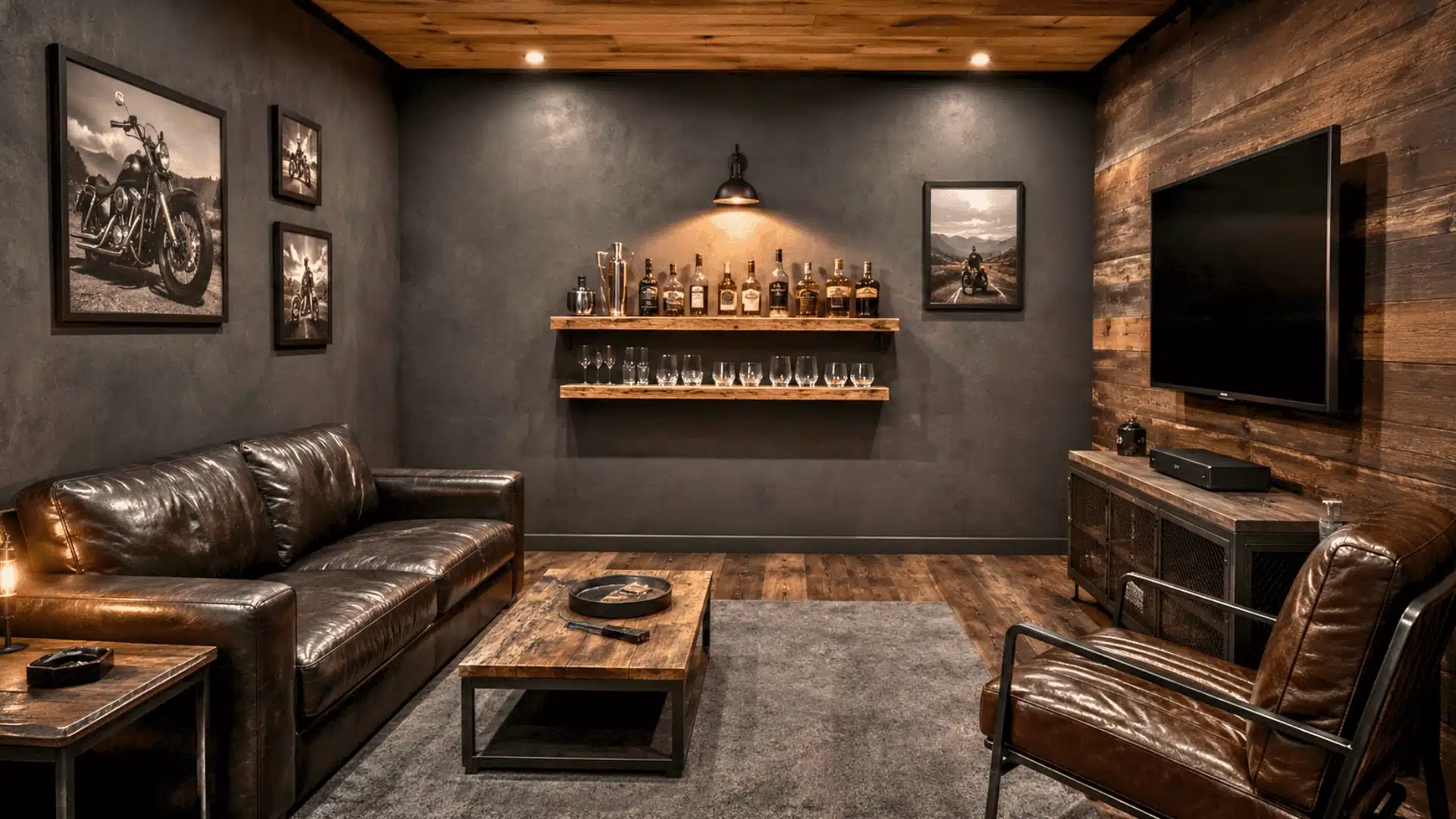
Cost: $60-$180
This is the smallest-footprint bar option on the list. No floor space needed, just one wall segment.
Mount a shelf at counter height, then add a second shelf below it for glasses. That combination turns a bare stretch of wall into a real drink station.
Adding a small mirror behind it makes the whole setup read bigger than it is.
11. Bar Cart on Wheels
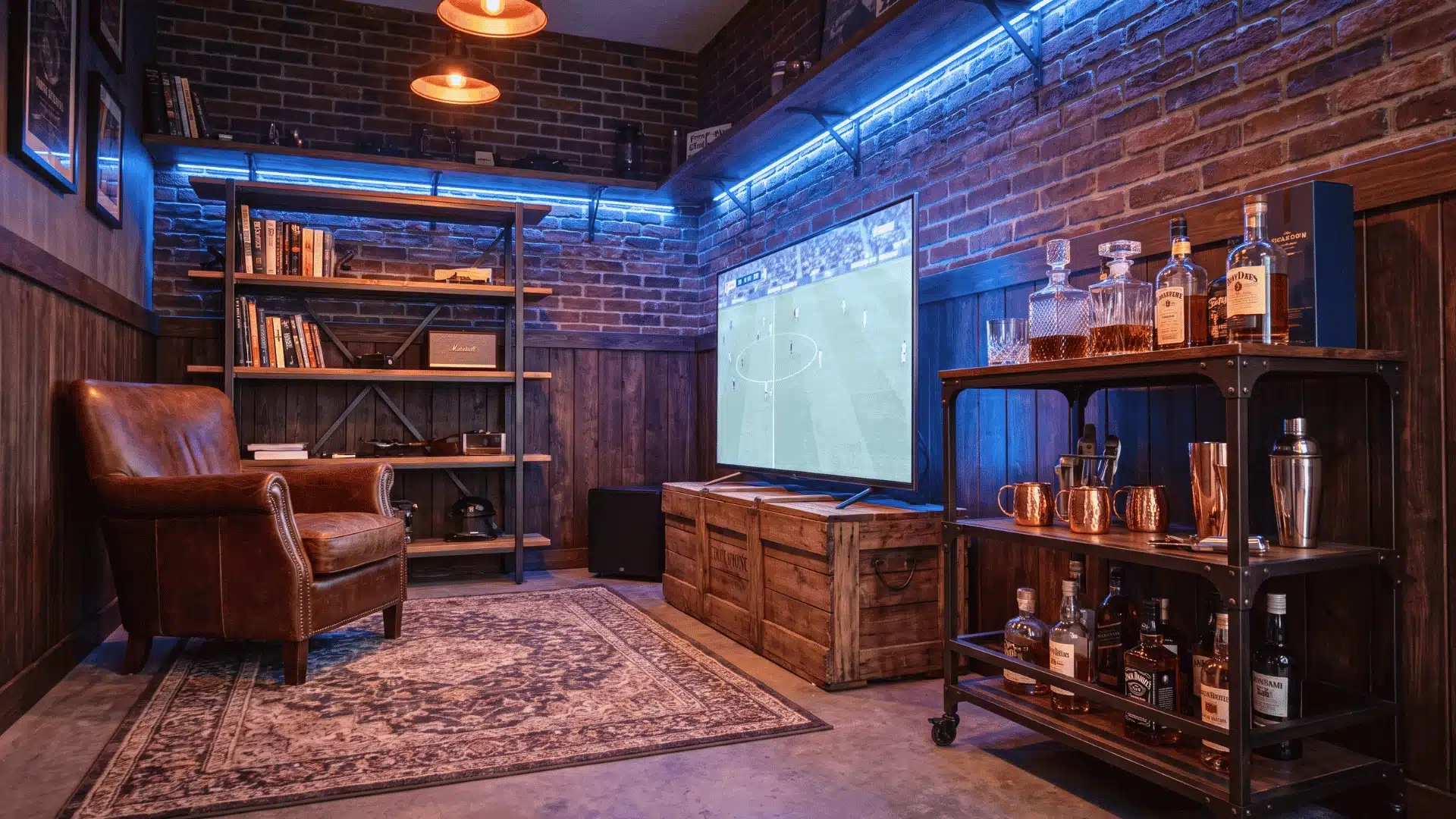
Cost: $80-$250
A bar cart is the move when your room is an open rectangle with no dead wall segment to mount a shelf. It gives you a bar without touching the walls at all.
Roll it into a corner when you’re not using it. Roll it out when people are over. The wheels are the whole point.
You get bar function without giving up a fixed spot in the room.
Tip: Lock the wheels once it’s parked. A loaded cart that rolls on its own is how bottles end up on the floor.
12. Growler and Tap Wall Station

Cost: $100-$350
A wall-mounted tap system pours from a growler or keg without needing a mini fridge underneath.
It’s a different mechanism than the bar shelf or cart ideas above, built specifically for draft beer.
This is a bigger investment than the other bar add-ons, so it only makes sense if draft beer is a regular thing for you, not an occasional pour.
13. Mini Fridge Tucked Under a Shelf or Counter

Cost: $100-$250
A mini fridge doesn’t need its own floor space. It fits under whichever bar setup you already picked, whether that’s the wall shelf or the bar cart.
Measure the gap under your shelf before you buy one. Most mini fridges run 18 to 20 inches wide, and you don’t want to guess and come up short.
Keep it stocked with the basics: beer, mixers, ice. That’s really all a small bar needs.
14. Under-Stairs Mini Bar

Cost: $150-$450
This is the nook-specific version of the bar ideas above. It only works if your room actually has an understair or alcove gap.
No nook? Skip this one and go with a bar cart or a wall-mounted shelf instead. Forcing a bar into a space that isn’t there just crowds the room.
If you do have the space, add a small shelf for bottles and a hook underneath for glasses. That’s enough to make the nook function like a real bar.
15. Compact Cigar and Whiskey Tasting Corner

Cost: $100-$300
A whiskey and cigar corner isn’t a full bar. It’s one side table, a small wall-mounted glass rack, and a compact humidor.
That’s the whole setup. You don’t need a lounge nook or extra seating to make it feel like a ritual spot.
One detail people skip: airflow. If you’re smoking indoors, crack a window or run a small filter fan so the room doesn’t hold the smell for days.
16. Wall-Mounted TV to Free Up Floor Space

Cost: $30-$100
Mounting the TV clears the floor space a stand would otherwise take up. That alone matters in a room this size.
It also fixes your sightlines. In a small room, your seating options are limited, and a mounted TV sits at the right height no matter where you’re sitting.
Mount it at eye level for whichever chair you use most. That’s more important here than in a bigger room, since you likely only have one or two seating spots to work with.
17. Compact Gaming Corner or Desk Setup

Cost: $150-$500
In a small home gaming setup, a corner desk uses two walls’ worth of dead space instead of eating into your open floor. That’s the whole advantage over a standalone desk.
Pair it with one gaming chair, not a full seating setup. This zone is built for one person at a time.
Run your cables along the wall instead of across the floor. In a small room, a stray cable is the first thing you’ll trip over.
For a deeper walkthrough of outfitting one corner for gaming, see this guide to building a small home gaming setup.
Tip: Add a surge-protected power strip mounted under the desk. Consoles, monitors, and chargers add up fast, and a single wall outlet won’t cover it.
18. Fold-Down or Wall-Mounted Poker/Card Table

Cost: $60-$200
This one’s for game nights specifically, not everyday lounging. A fold-down table gives you a real surface for cards without eating floor space the rest of the week.
Mount one to the wall, or pick a compact card table that folds flat and slides behind furniture. Either way, the room opens back up once the game’s over.
Pull out the bean bags or floor pillows for extra seating when people show up. You don’t need permanent chairs sitting around a table nobody uses on a Tuesday.
19. Dart Board on an Open Wall

Cost: $40–$150
A dart board adds a real activity without needing any floor space for equipment. The board itself is the only thing you’re mounting.
Before you commit to the wall, measure the throw distance. You need roughly 8 feet of clearance from the board to the throw line.
If you come up short on that measurement, the whole setup feels cramped instead of fun.
20. Custom Signage or Neon Sign

Cost: $50-$300
One statement sign does more for a small wall than five small ones. In a tight room, more pieces just read as clutter.
Choose one sign that says something about you, whether that’s a team logo, a phrase, or your name. Let it anchor the wall on its own.
Skip the temptation to fill every inch around it. Empty space next to a bold sign makes the piece look intentional.
21. Team Colors or Sports Memorabilia Display

Cost: $50-$200
A memorabilia display works best on one wall, not every wall. Contain it, and it reads as a real interest instead of noise.
Jerseys, signed photos, ticket stubs. Pick out a single wall or one shelf run and build the display there.
Spread that same collection across the whole room and the space starts to feel smaller, not more personal.
Tip: Use uniform frames or matching mount hardware across the pieces. A mismatched jumble of frame styles reads as clutter even when it’s contained to one wall.
22. Small Display Case for a Beer Glass or Collectibles Collection

Cost: $50-$180
This one’s for readers who already have a collection to organize, not a general decor add. If you’ve got beer glasses, bottle caps, or old cards piling up, a display case gives them a real home.
It pairs naturally with the floating shelves already on this list. You don’t need a separate cabinet taking up its own footprint.
A glass-front case or a simple shadow box both work. Pick whichever fits the wall space you’ve got left.
23. Mini Foosball or Air Hockey Table

Cost: $100-$300
Tabletop or 4-foot versions of foosball and air hockey exist for one reason. They fit rooms the full-size table never could.
You still get the real game. It’s just scaled to the room, not the other way around.
Measure clearance on all four sides, not just the table’s footprint. Players need room to move while playing, not just room for the table.
Man Cave Seating Ideas That Bring the Masculine Edge
Masculine seating comes down to material and finish. Leather, wood, and metal do the work, not the shape of the piece.
Here are five seating picks that bring that rugged look into the room:
- Leather Chesterfield Sofa: Deep-buttoned leather, rolled arms, and a worn-in look that gets better with age and use over time.
- Oversized Leather Recliner: A broken-in, bold-toned recliner built for solo lounging, game nights, and long stretches parked in front of the TV.
- Whiskey Barrel Chair: Reclaimed oak barrel reshaped into a seat, giving the room a rustic, industrial edge without feeling overdone or staged.
- Industrial Pipe-and-Wood Bench: Black metal pipe legs paired with raw or reclaimed wood, built tough enough for a garage bar or workshop corner.
- Plaid or Camo Accent Armchair: A patterned upholstered chair that adds rugged personality fast, without committing the whole room to one bold look.
Pick one or two pieces, not all five. A room full of statement seating fights itself instead of pulling together.
In my experience walking homeowners through small-space retrofits, one strong seating piece does more for how a room feels than three mismatched ones ever will.
Pair any of these seating picks with the small man cave ideas above and the room reads finished, not just filled.
Best Small Man Cave Ideas for Your Situation
Whether you’re working with low-budget small man cave ideas or a bigger renovation, use the table below to match your situation to the idea that solves it.
If your layout has room to spread outdoors instead, a garden man cave build follows a different set of rules entirely.
| Your Situation | Best Idea From This List | Why It Fits |
|---|---|---|
| Tightest budget | Pallet bar shelving + bean bags | Cheapest build and cheapest seating on the list |
| Room has a nook or understair gap | Under-stairs mini bar or nook conversion | Only works with this specific layout |
| Working with a closet or spare room | Closet micro conversion | Built around scaled-down furniture, not garage-size pieces |
| Hosting poker or card nights | Fold-down poker table + bean bags | Clears the room the rest of the week |
| Primary use is gaming | Compact gaming corner or desk setup | Built for one dedicated hobby zone |
| Want a slower, ritual-style space | Compact cigar and whiskey tasting corner | For one quiet activity, not general hosting |
| Want personality without clutter | Custom signage or neon sign | One focal piece instead of many small ones |
Treat this as a shortlist, not a rulebook. Once you’ve picked your anchor piece, combining two or three rows is normal.
Conclusion
The best small man cave ideas work because they make the room feel complete without stuffing every corner.
A compact space needs one strong anchor, like a recliner, gaming desk, wall bar, or display wall, then only a few pieces that support it.
That is what keeps the room useful, comfortable, and easy to move through. You do not need a huge basement or garage to build a space that feels personal.
You just need the right scale, smart storage, and a clear purpose for every item you add.
Planning your own small man cave? Pick your anchor piece first, then tell us which idea you want to try.
Frequently Asked Questions
What are Good Seating Ideas for a Small Man Cave?
Bean bags, floor pillows, a single recliner, or a fold-out sofa bed all work well in a small man cave. Stick to one main seat for one or two people instead of a full sofa set. A worn-in leather recliner or a Chesterfield-style chair adds a masculine edge without eating up floor space.
How Much Space Do You Need for a Man Cave?
A small man cave can work in a closet, an under-stairs nook, or a bedroom corner. There’s no minimum square footage that qualifies. Scale the furniture to the room, choose one anchor piece like a recliner or a wall-mounted bar, then build outward from there instead of copying a garage-size layout.
Can a Small Man Cave Work in a Rental?
Yes. Use freestanding furniture such as bar carts, storage ottomans, tension-rod curtains, and shelving units that avoid drilling or permanent changes to the walls. Wall-mounted items like a TV or a dartboard usually need landlord approval, so check your lease terms before adding anything that requires anchors, brackets, or wall hardware.
What is the Best Flooring Option for a Small Man Cave?
Area rugs, interlocking foam tiles, or the existing flooring all work well in a small man cave. Skip anything that eats into usable floor space, like thick padding or oversized rugs. The goal is comfort underfoot without shrinking the room, since every square foot matters more in a tight layout.